No products in the cart.
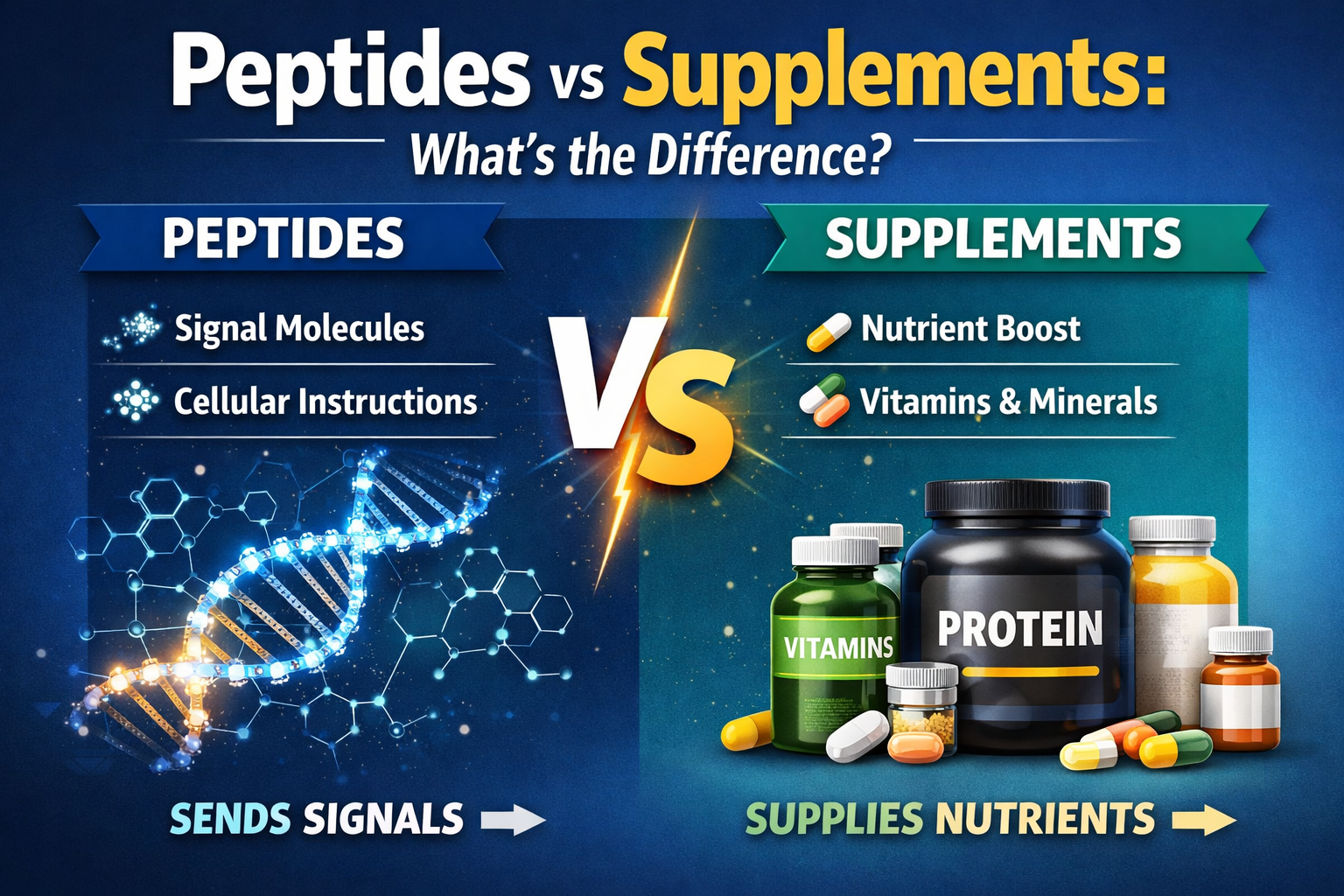


Peptides and supplements are often grouped together, but they are fundamentally different in how they work and how they are studied.
Understanding this difference is important for anyone exploring peptide research.
Supplements typically provide nutrients such as:
They support general health by adding to what the body already uses.
Peptides are signaling molecules made up of amino acids. Instead of providing nutrients, they send instructions to cells.
They are studied for their role in:
The biggest difference:
👉 Supplements = provide resources
👉 Peptides = provide signals
For example:
Understanding the difference helps explain why peptides are studied differently than traditional supplements.
They are not interchangeable and serve completely different purposes.
Peptides and supplements operate in different categories. Recognizing how they function helps clarify their role in research and why they are often misunderstood.
👉 Browse research peptides:
https://peptidewarehouseusa.com/buy-research-peptides-usa/