No products in the cart.



A common question is, “Can you buy peptides over the counter?” as if peptide were one single product category. It isn’t. That’s where the confusion starts.
A collagen powder, a prescription peptide drug, and a vial labeled “research use only” may all contain peptides, but they do not belong to the same legal or practical world. If you don’t separate those buckets first, the market looks far more open than it really is.
The short answer is yes, some peptides can be bought over the counter, but many of the peptides people search for online are either prescription drugs or research chemicals not intended for human use. The safe answer depends on classification, intended use, and source.
If you want a direct answer to can you buy peptides over the counter, the honest response is: sometimes, but not in the way many people assume.
The word peptide covers several very different product types. Some are ordinary consumer products sold as supplements or cosmetic ingredients. Some are regulated therapeutic drugs. Others are sold as laboratory materials with labels that explicitly say they are not for human use.
That split matters more than the molecule name alone. A shopper might see “peptides for sale” online and assume they’re looking at the same kind of product they’d find on a pharmacy shelf. In practice, the channel tells you very little unless you also know the product’s regulatory category.
Here’s the simplest framework:
For example, people curious about semaglutide often start by searching broad peptide terms when what they really need is a legitimate medical pathway. If that’s your interest, a practical starting point is this Wegovy prescription guide UK, which shows what a regulated prescription route looks like rather than treating peptide access like ordinary retail shopping.
The safest first question isn’t “Can I click buy?” It’s “What category of product is this?”
The peptide market makes sense once you stop treating it as one shelf. Think of it as three separate rooms with different rules, different sellers, and different intended users.
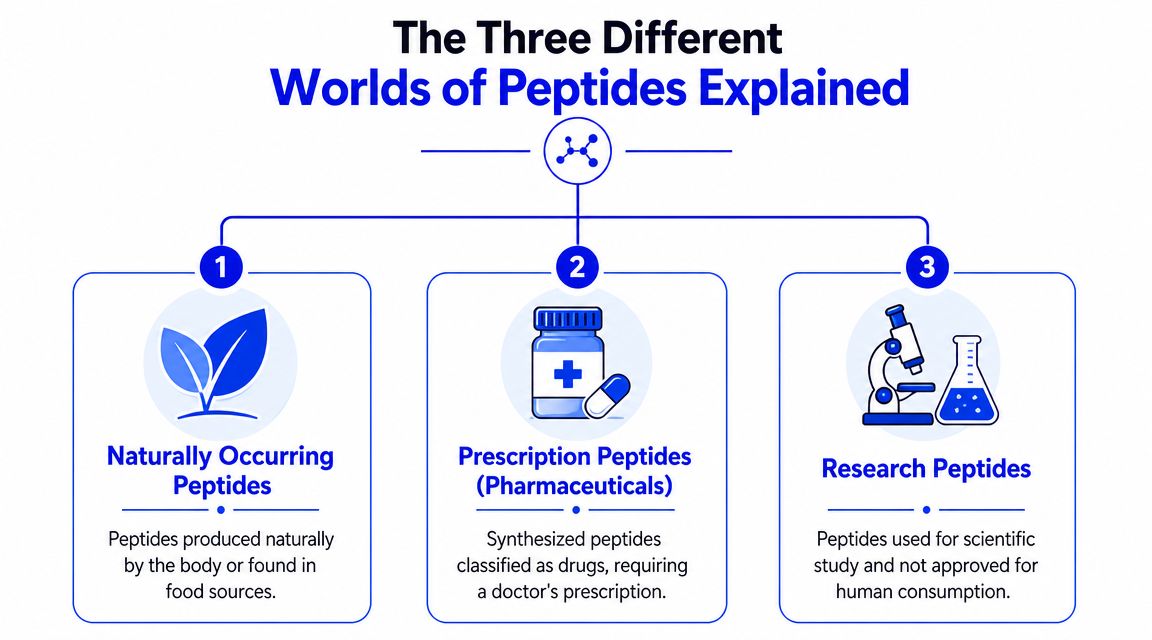
This is the category many individuals mean when they think of something sold freely at retail. These products are commonly found in supplement aisles, beauty stores, and wellness shops.
Examples include:
Major retailers do sell peptide supplements like collagen peptides, which is one reason the public gets mixed signals about the whole category, as shown by GNC’s peptide supplements listings.
These products are not the same thing as prescription peptide therapy. They may share the word peptide, but that does not make them interchangeable.
This is the medical side of the peptide world. Here, peptides are treated as drugs, not as general consumer goods.
The American Society of Plastic Surgeons notes that the FDA has approved over 100 peptide drugs, including insulin and semaglutide, and also warns consumers to never purchase peptides online from non-approved sources because those products may lack the clinical trial data needed to establish safety and effectiveness, as described in this ASPS overview of peptides.
These products move through regulated channels such as:
| Category | Typical access path | Intended use |
|---|---|---|
| Collagen supplement | Retail purchase | Consumer wellness |
| Insulin | Prescription and pharmacy | Therapeutic medical use |
| Semaglutide | Prescription and pharmacy | Therapeutic medical use |
A pharmacy-dispensed peptide drug is not “over the counter” just because it can be discussed online or appears in social media conversations.
The third category causes the most confusion. These are products sold for lab, analytical, or preclinical purposes. They are often labeled “research purposes only” or “not for human consumption.”
That wording matters. It tells you the seller is not presenting the product as an ordinary consumer medicine.
Classification rule: If a product is sold as RUO, you should read it as a laboratory material first, not as a self-use wellness product.
Many online searches frequently go wrong. A person starts by asking where to buy a peptide, but the search results mix together consumer supplements, prescription compounds, and laboratory reagents. If you don’t sort those apart, you can mistake availability for legitimacy.
What decides whether a peptide can be sold like a normal consumer product, dispensed through a pharmacy, or offered only as a lab chemical? The answer is classification.

A label does more than describe a bottle. It places the product into a legal bucket.
A peptide sold as a cosmetic ingredient is treated one way. A peptide sold as a dietary supplement falls under a different set of rules. A peptide sold as a drug enters a much stricter category tied to medical claims, prescribing, and pharmacy channels. A peptide sold as Research Use Only belongs in a laboratory context, not a consumer health aisle.
That is the core framework for this market. Same broad peptide family, three very different worlds.
In the U.S., some peptide-containing products can appear in over-the-counter consumer categories, especially cosmetics and certain supplements. Therapeutic peptide drugs usually require a prescription or another legally recognized medical pathway. RUO products sit apart from both. Earlier sources in this article explain that RUO disclaimers do not make personal use lawful when a product is plainly being presented for human administration.
A simple comparison helps here. Acne washes and prescription injectables are not judged by the same standard, even if both are sold for health-related purposes. The same basic classification logic appears in other consumer categories such as best over the counter benzoyl peroxide. The product type and the claims around it determine the rule set.
Federal law is only one layer. State rules can change what sellers must do with age checks, marketing language, and where certain products may be shipped.
Recent state laws have targeted products marketed for muscle building or weight loss to minors. That can affect online sellers through age-gating, geofencing, and checkout restrictions, as discussed in this peptide compliance overview.
For a new researcher or consumer, the practical lesson is straightforward:
If you can’t clearly identify whether a peptide is being sold as a supplement, a drug, a cosmetic ingredient, or an RUO chemical, you don’t yet understand the product.
When a compound is discussed constantly online, people assume retail access should follow. That assumption breaks down fast with peptides.
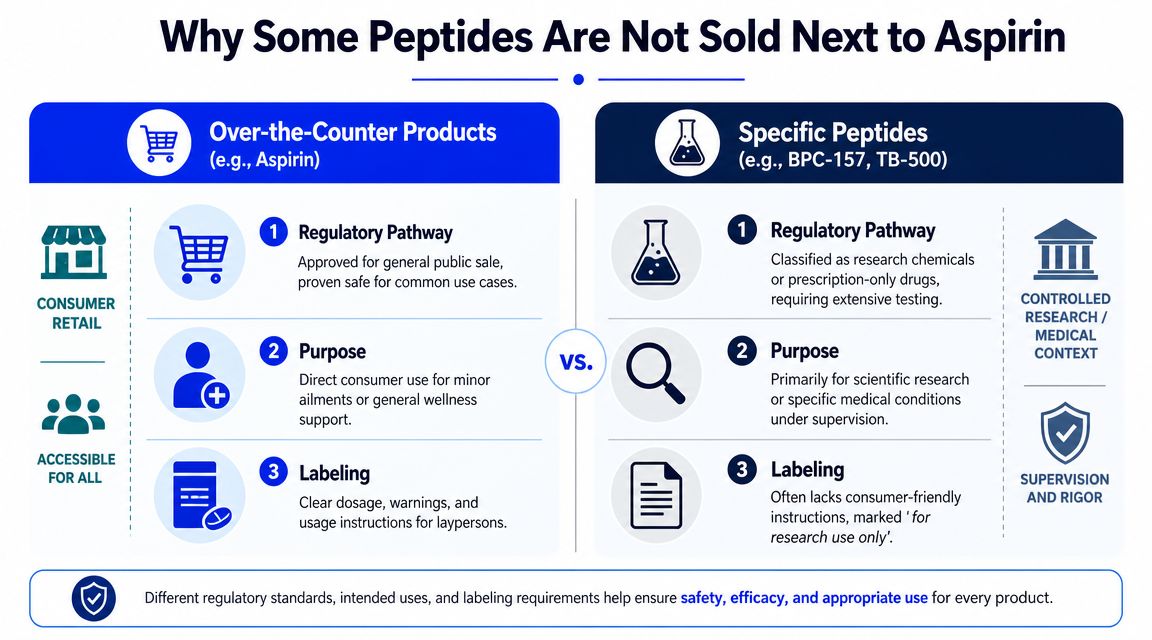
A large share of what looks “buyable” online sits in a gray market. The Biotechnology Industry Organization and BSCG report says peptides have become widely available through major retailers such as Amazon and Alibaba even though many are developmental drugs that cannot legally be sold for human consumption, and some are packaged as lab reagents, solvents, dietary supplements, or nasal sprays. The same report also identifies peptides on the WADA Prohibited List and describes independent testing that found heavy metals such as arsenic and lead at up to 10 times acceptable injectable limits, along with bacterial contamination capable of causing sepsis, as described in the BSCG report on unapproved peptides sold online.
That is not what a clean over-the-counter category looks like.
A true OTC medicine sits in a regulated consumer lane. Many online peptide listings do not. They occupy a mixed space that includes prescription drugs, unapproved imports, mislabeled products, and laboratory materials.
Here is the practical difference:
To make that difference more concrete, it helps to compare with a familiar OTC category. If you look at a guide to the best over the counter benzoyl peroxide, you’re dealing with a normal consumer framework: standard retail access, consumer labeling, and expected use instructions. That is very different from the way many peptide listings are presented online.
A short explainer helps visualize the gap between those two markets.
Aspirin is sold next to other OTC products because it belongs in a consumer medication environment. Many talked-about peptides do not.
The main reasons are straightforward:
| Question | Typical OTC product | Many discussed peptides |
|---|---|---|
| Intended buyer | General consumer | Researcher or patient under medical pathway |
| Labeling style | Consumer instructions | Often technical or RUO language |
| Retail setting | Pharmacy or mass retail | Specialty online channels, clinics, or gray-market listings |
Availability on a website is a storefront fact, not a safety verdict.
That distinction protects buyers from a common mistake. A shopping cart button tells you the item can be purchased. It does not tell you the item belongs in ordinary self-directed use.
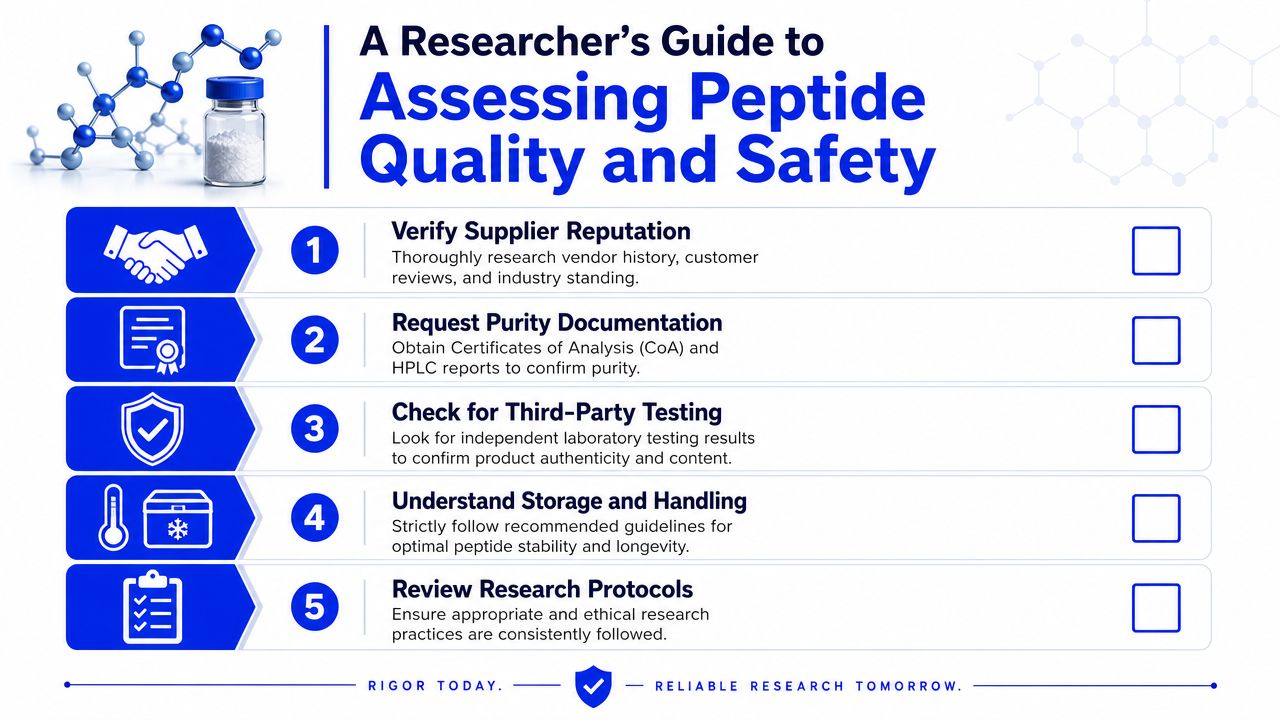
For a researcher, peptide quality starts with a different question. You are not just asking whether a vial is available for purchase. You are asking whether the material can be identified, traced to a specific lot, and supported by records that match a research setting.
Many articles warn about questionable peptides but don’t provide useful guidance. Useful guidance starts with documentation.
A peptide listing works like a specimen label in a lab freezer. The name on the tube matters, but the record behind the tube matters more. If a supplier cannot show what was tested, which lot was tested, and how the result connects to the vial being sold, you are working from trust alone.
Legitimate suppliers often provide a Certificate of Analysis (COA) and testing records such as HPLC results. Those records help answer the basic research question: is this material what the label says it is, and is there evidence about purity and contamination risk.
A practical screening checklist helps:
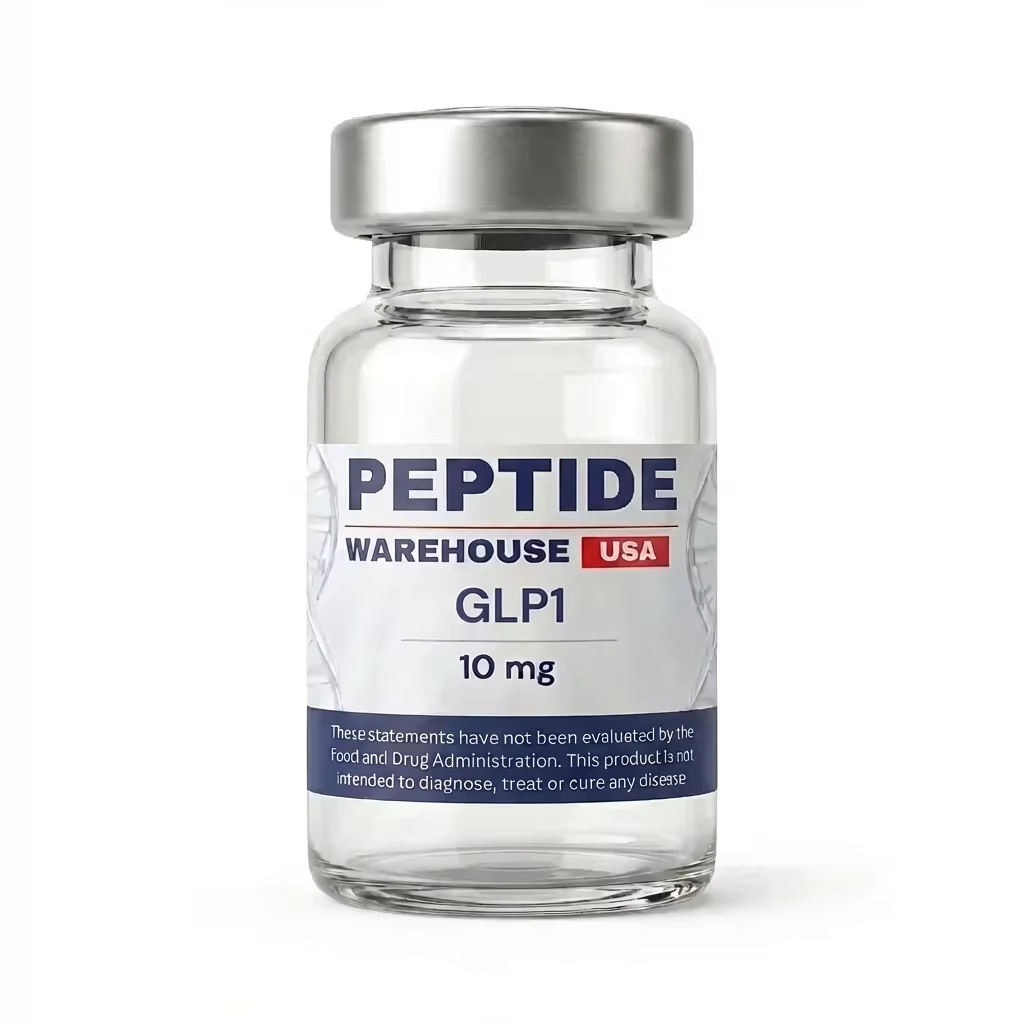
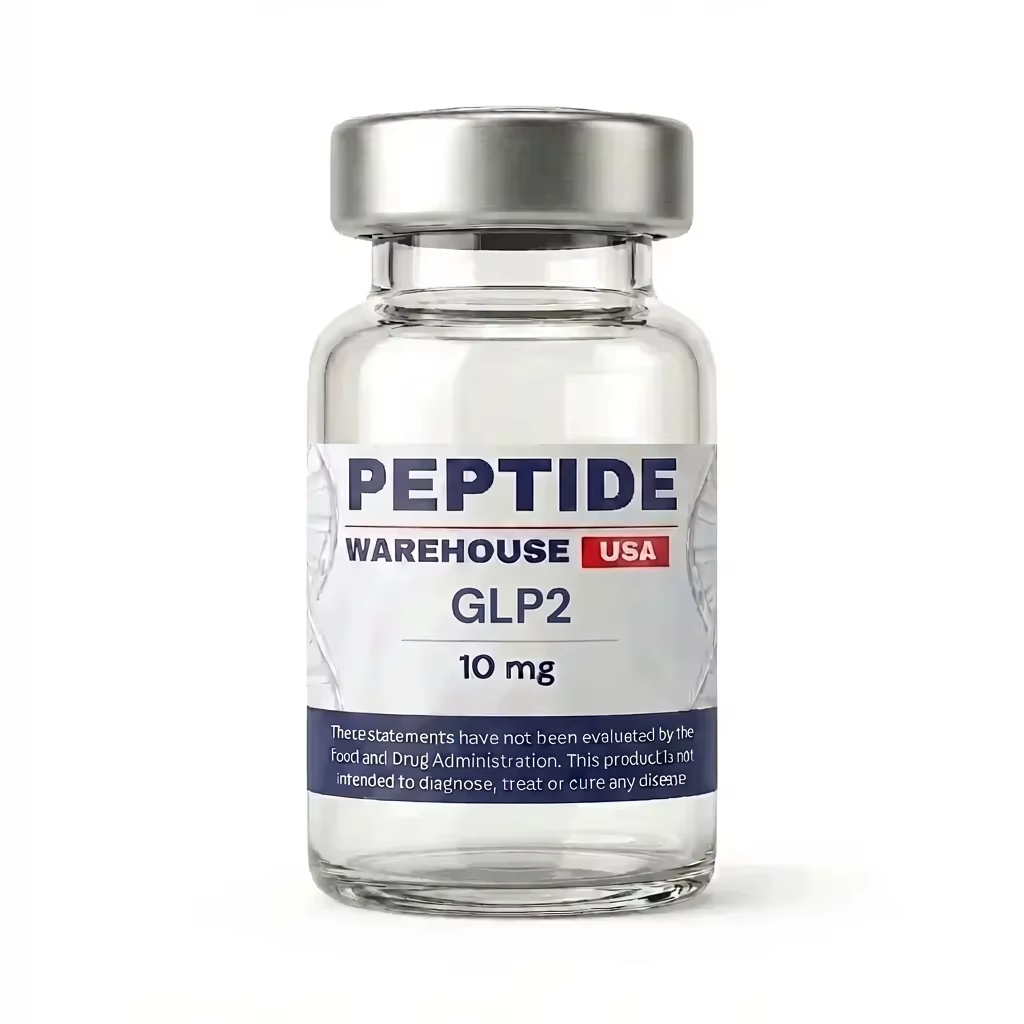
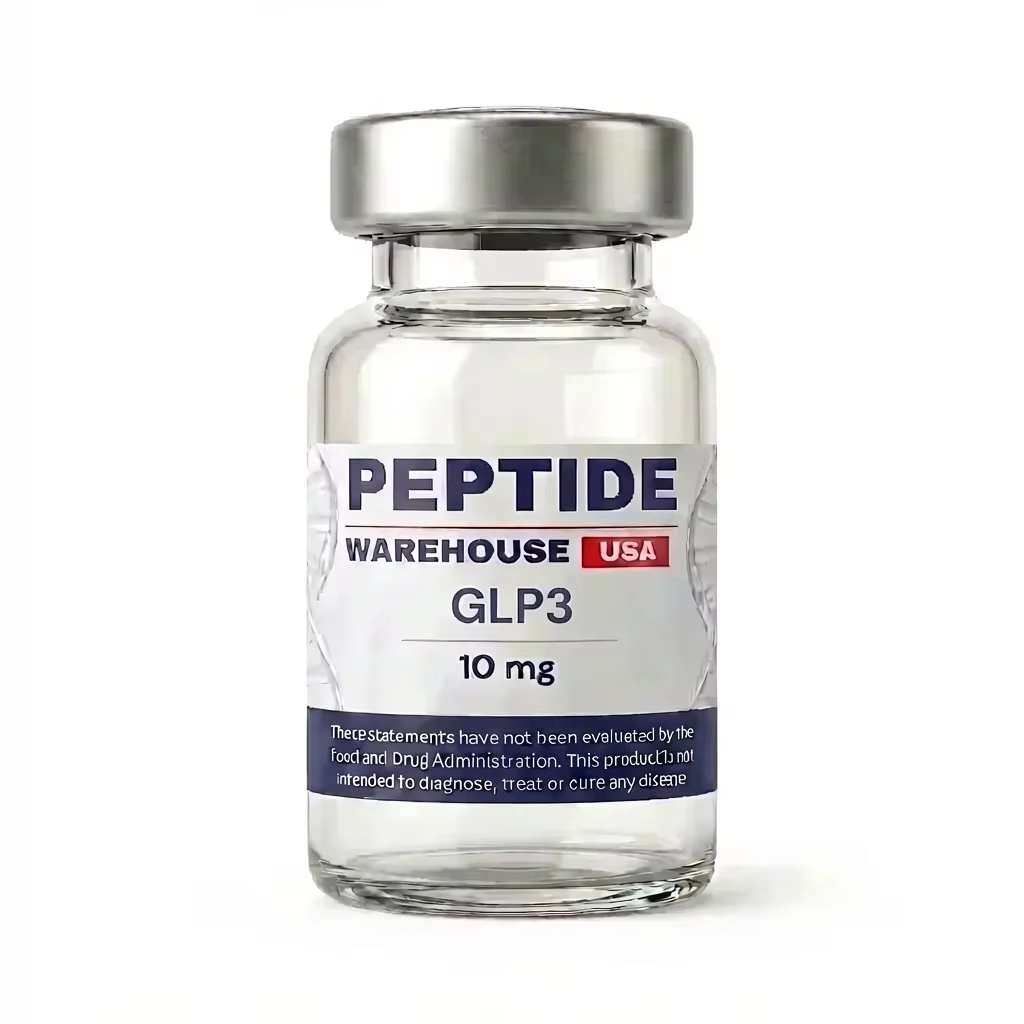
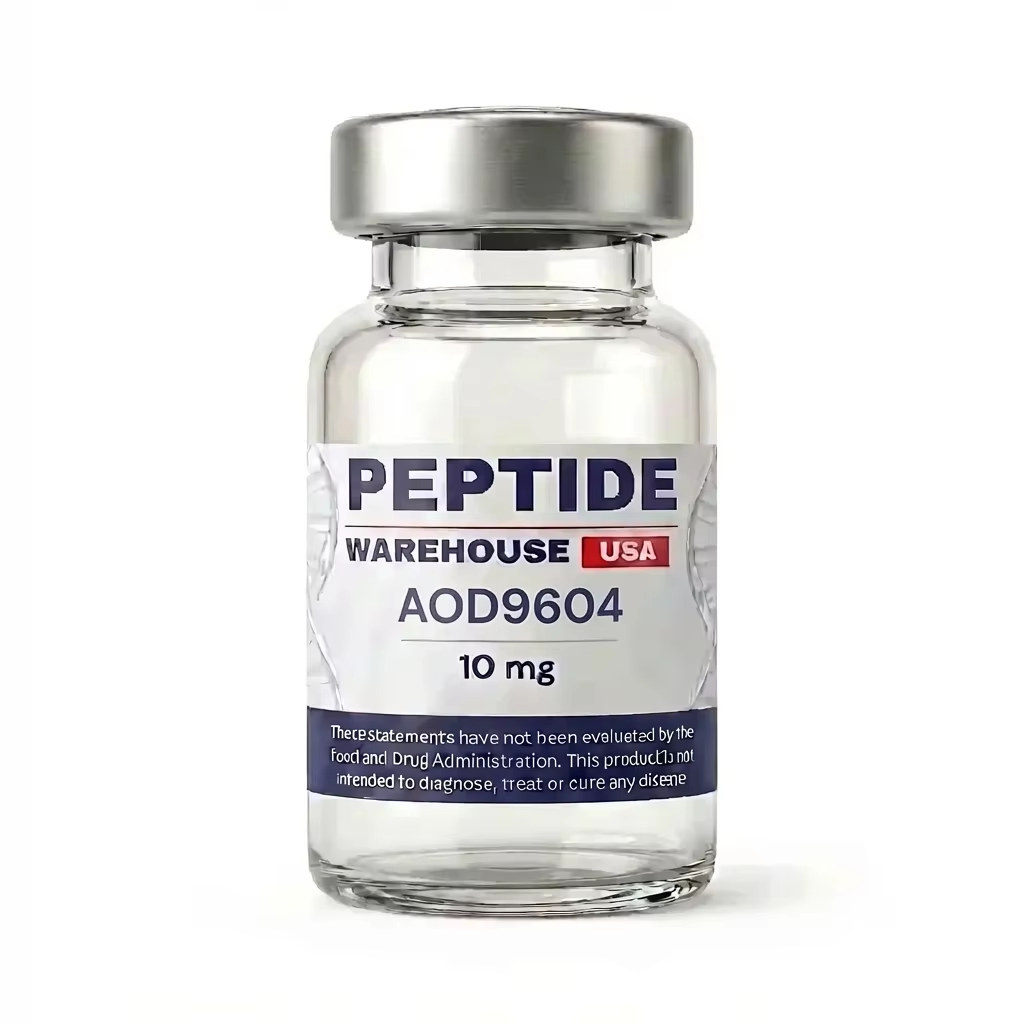
Peptide Warehouse USA is one example of a supplier presentation that researchers can evaluate in factual terms. It states that its products are intended for laboratory, analytical, and preclinical applications, provides lot-supported documents such as COAs and microbial or endotoxin reports, and states that the products are not for human consumption. That is the type of records-first approach a researcher should expect from any RUO source.
Some warning signs appear before you ever open a lab document.
If a product is labeled Research Use Only but the sales page reads like a treatment guide, the classification and the marketing are pulling in different directions. That mismatch matters. In the three-bucket framework used throughout this article, a true RUO chemical should look and sound like a research material, not like an over-the-counter wellness product or a prescription therapy being sold through the wrong channel.
Watch for these problems:
Research standard: Strong peptide sourcing depends on records that support identity, purity, and traceability.
For a new researcher, that habit of checking classification first and paperwork second is what prevents category confusion. It separates a consumer-style purchase from a research procurement decision, which is exactly the distinction this market often blurs.
So what should you do with all of this information?
Start by sorting the peptide in front of you into the right bucket. That single step clears up much of the confusion around can you buy peptides over the counter. The word “peptide” covers products that may look similar on a screen, yet belong to very different categories under the rules that govern how they are sold and used.
For a consumer, the question is straightforward. Are you looking at a cosmetic or supplement sold for ordinary retail use, or are you trying to obtain something intended as a drug? Those are different channels, with different standards and different risks.
Some peptides do appear in consumer products such as skin care items or dietary supplements. Prescription peptide drugs sit in a separate category and belong in licensed medical channels. Products labeled Research Use Only form a third category. They may be sold online, but that label does not make them suitable for human or veterinary use, and it does not erase regulatory concerns if the actual purpose is personal use, as noted earlier.
If your goal is treatment, symptom relief, or performance enhancement, the practical next step is medical, not retail. Speak with a qualified clinician and use a licensed pharmacy or other legitimate healthcare channel.
A simple rule helps:
For a researcher, the task is different. You are not shopping as a consumer. You are checking whether the supplier is handling a chemical standard or test article the way a real research supplier should.
That means reviewing the paper trail with the same care you would use for any other lab input. A peptide works like any specialized reagent. Its value depends not only on the name on the label, but also on whether its identity, purity, and batch history can be verified.
Focus on these points:
Here is the core framework of the article in one sentence. Consumer products, prescription therapies, and RUO chemicals are three separate buckets, not interchangeable versions of the same thing.
Keep that framework in view, and the peptide market becomes easier to sort. You can match the product to its intended use, choose the proper buying channel, and avoid the common mistake of treating a research chemical like an over-the-counter medicine.
If you’re sourcing peptides for laboratory, analytical, or preclinical work, Peptide Warehouse USA offers a catalog of USA-made research compounds with COAs and supporting batch documentation. Review the available product information and confirm that it fits a research-only workflow.