No products in the cart.



You’ve probably seen the term Klow peptide stack in vendor catalogs, forum threads, or lab discussions and noticed that the explanations rarely line up. One page treats it like a single compound. Another talks about recovery, inflammation, skin, connective tissue, and barrier models all at once. For a lab manager or PI trying to decide whether the blend belongs in an experimental workflow, that kind of fragmented information isn’t useful.
What matters is the design logic. KLOW is interesting because it isn’t built around one dominant hypothesis. It’s built around a coordinated one. The stack combines peptides that are commonly discussed for different but related research pathways, which is why it keeps showing up in conversations about repair-oriented models.
A clear understanding starts with a few practical questions. What exactly is in the blend? Why these four peptides together? Where might a stacked design make more sense than testing a single peptide alone? And just as important, what does the current regulatory environment mean for sourcing and documentation?
The challenge with peptide blends is that the label often sounds simpler than the biology. A stack name can make a complex formulation look like a neat product category, when in reality, the key question is whether the component selection fits the model you’re running.
That’s why the Klow peptide stack deserves a more careful read. In research discussions, it’s usually framed as a repair and inflammation-focused blend rather than a single-pathway tool. That distinction matters when you’re planning assays, setting controls, or deciding whether a combination experiment is justified.
KLOW makes the most sense when a team wants to test coordinated pathway coverage, not when the goal is to isolate one mechanism as cleanly as possible.
Some labs encounter KLOW after first looking at GHK-Cu or BPC-157 alone. Others come to it from wound-healing, connective-tissue, or barrier-model work where inflammation and remodeling are both part of the endpoint. In both cases, confusion usually comes from the same place. People know the names of the peptides, but not the rationale behind putting them together.
A useful way to evaluate the blend is to think like a study designer. Start with composition. Then look at the role each peptide is meant to play. Then decide whether a multi-pathway stack helps answer your research question or muddies it. That sequence keeps the conversation grounded.
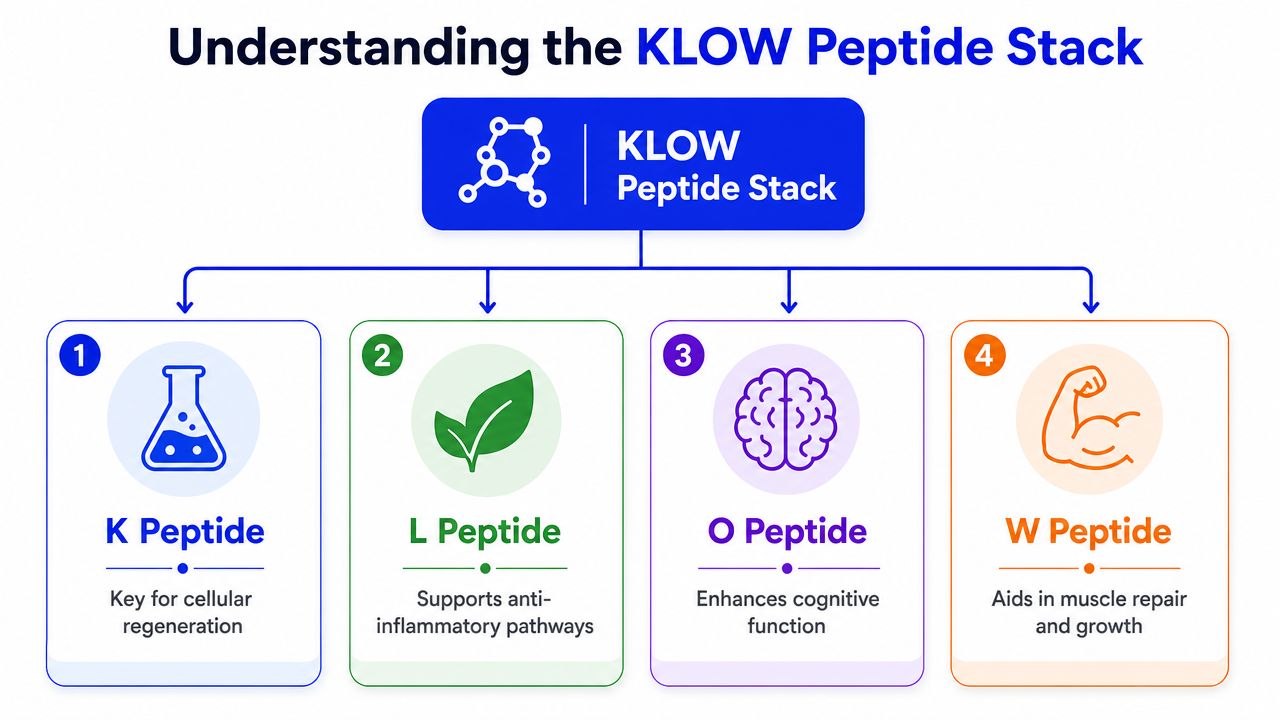
KLOW is typically described as a four-peptide research blend rather than a standalone molecule. One commonly cited formulation lists 50 mg GHK-Cu, 10 mg KPV, 10 mg BPC-157, and 10 mg TB-500 per vial, for a total of 80 mg, with GHK-Cu accounting for 62.5% of the blend and each of the other three peptides contributing 12.5% by mass, according to Protide Health’s KLOW peptide guide.
The significance of the ratio lies in its ability to indicate the intended emphasis. A blend weighted heavily toward GHK-Cu suggests a design centered on collagen and repair-related signaling, while the inclusion of KPV points toward added interest in inflammatory regulation.
Here’s the visual shorthand many readers find useful first:
Common formulation
GHK-Cu: 50 mg
KPV: 10 mg
BPC-157: 10 mg
TB-500: 10 mg
The term itself also has some history behind it. Independent educational coverage commonly describes KLOW as an extension of the GLOW concept by adding KPV. That framing is helpful because it shows the identity of the stack isn’t tied to one peptide alone. It’s tied to a multi-pathway combination.
That makes KLOW different from buying a vial of GHK-Cu and calling it a repair study. In a stacked format, the working idea is broader. Researchers aren’t only looking at fibroblast-related signaling or one tissue response. They’re trying to observe whether combining repair, remodeling, and inflammation-related inputs changes the overall pattern in a model.
For readers coming from aesthetic medicine rather than lab procurement, it can also help to compare the broad idea of tissue-support research with adjacent regenerative categories such as anti-aging polynucleotide treatment, which are often discussed in the context of repair signaling and tissue quality, even though they’re not the same class of material.
Later in the section, it also helps to see the blend in discussion format:
The easiest way to understand KLOW is to stop thinking of it as a brand-style label and treat it like a deliberate assembly of components. Each peptide brings a different research emphasis, and the blend only makes sense if those emphases are complementary to the model under study.
| Peptide | Primary Area of Research |
|---|---|
| GHK-Cu | Collagen and fibroblast signaling |
| KPV | Inflammatory signaling and barrier-tissue models |
| BPC-157 | Repair and angiogenesis-related pathways |
| TB-500 | Cell migration and remodeling |
For readers who want a quick refresher on how peptide signaling differs from broader hormone categories, this USMLE hormone master guide offers useful background on peptide versus steroid hormone logic.
GHK-Cu is the anchor of the blend by mass in the commonly cited formulation. That weighting alone tells you it likely plays the lead role in shaping the stack’s identity.
In research contexts, GHK-Cu is commonly associated with collagen and fibroblast signaling. That makes it relevant to models where investigators care about matrix behavior, connective tissue response, or visible signs of tissue rebuilding in culture or preclinical settings.
For a lab manager, the practical interpretation is straightforward. If your assay already centers on repair architecture, GHK-Cu gives the blend a strong structural logic. It points the stack toward regeneration-oriented questions rather than purely immunologic ones.
KPV changes the character of the blend more than its small proportion might suggest. It’s associated with inflammatory signaling and barrier-tissue models, which means its role isn’t to dominate the blend but to widen the experimental lens.
That’s why many people describe KLOW as a modified version of a more repair-centered stack. KPV adds a specific interest in inflammation control and tissue barrier behavior. In gut-related or epithelial research, that can be an important distinction.
A common point of confusion is assuming KPV is there to duplicate what other components already do. It isn’t. The rationale is closer to this: if repair is only one part of the model and inflammatory tone is another, KPV gives the stack a reason to exist as a stack rather than a simple peptide pairing.
BPC-157 is commonly discussed in relation to repair and angiogenesis-related pathways. That makes it one of the components researchers often recognize first, especially if they’ve looked at soft-tissue or recovery-oriented literature and product catalogs.
Its contribution to the blend is conceptual as much as practical. GHK-Cu leans toward matrix and fibroblast signaling. BPC-157 broadens the stack into tissue repair territory that isn’t limited to one surface or one structural compartment.
When a peptide blend includes both structural-signaling and repair-related components, the experiment should define whether the endpoint is local, systemic, or comparative. Otherwise, the blend can generate signals that are hard to interpret.
That’s especially important for PIs building proof-of-concept work. If BPC-157 is present, controls matter even more because it contributes to the “whole-repair” framing of the stack.
TB-500 is generally associated with cell migration and remodeling. This is the component that often makes researchers think beyond static tissue response and toward dynamic recovery processes.
If you’re working in models where cells need to move, reorganize, or participate in broader remodeling behavior, TB-500 helps explain why KLOW is not merely a collagen blend plus an inflammation modifier. It adds a different operational layer.
In plain terms, GHK-Cu can be thought of as helping define repair signaling, KPV as shaping inflammation-related context, BPC-157 as extending repair logic, and TB-500 as bringing movement and remodeling into the picture. That combination is the foundation of the Klow peptide stack concept.
The most important question isn’t “what are the four peptides?” It’s “why these four together?” That’s where KLOW becomes more than a list of ingredients.
According to EllieMD’s KLOW product description, the practical value of the blend is multi-pathway stacking. In that description, GHK-Cu is associated with collagen and fibroblast signaling, KPV with inflammatory signaling and barrier-tissue models, BPC-157 with repair and angiogenesis-related pathways, and TB-500 with cell migration and remodeling. The same description notes that this kind of combination can be useful when researchers want to observe whether coordinated pathway coverage produces broader repair or recovery endpoints than single-peptide testing.
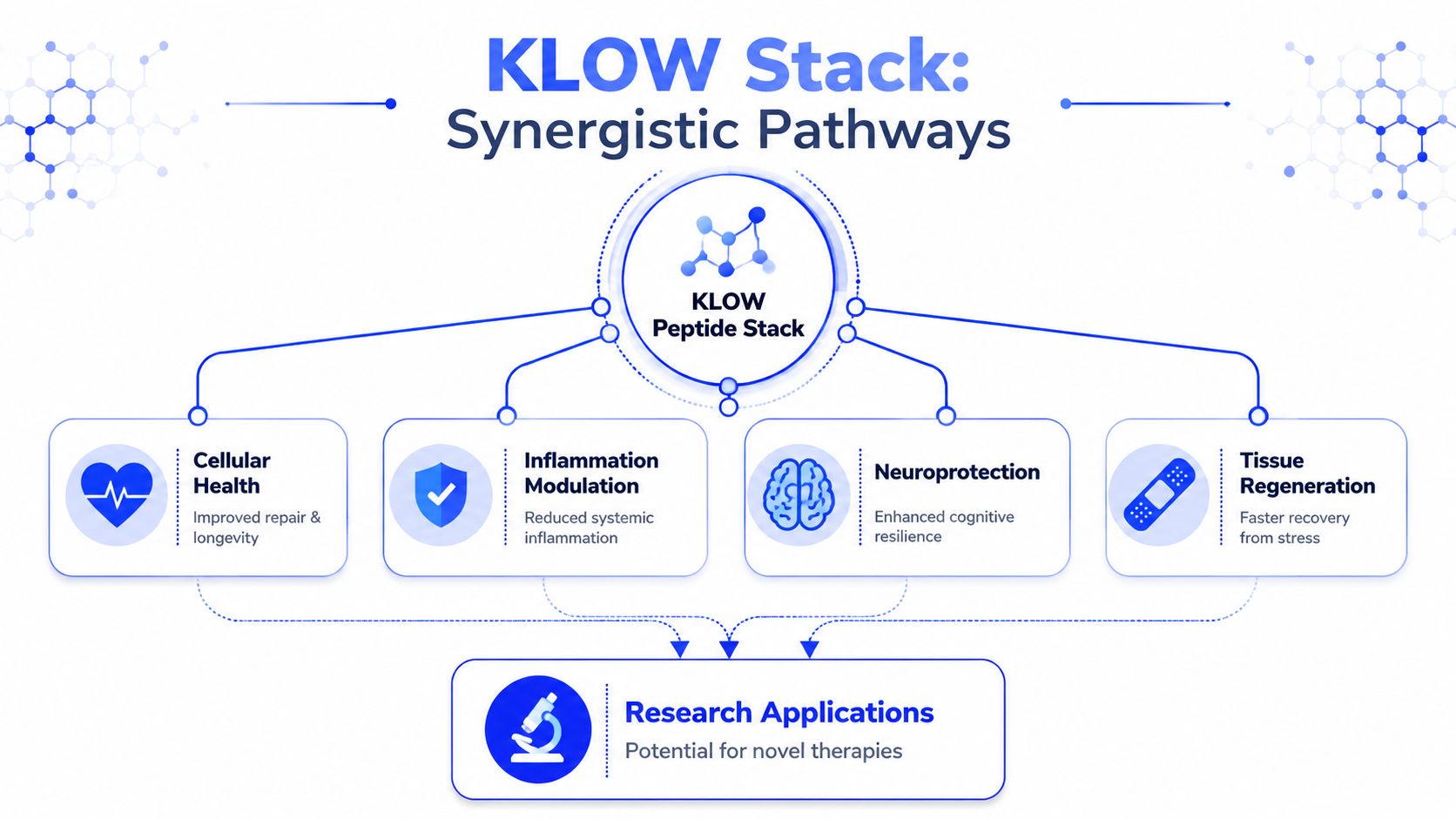
Single-peptide studies are cleaner. They’re easier to interpret, easier to control, and usually better for mechanism-first work. But they can also miss how biological systems behave when multiple signaling domains interact at once.
KLOW is built for that second type of question.
If a model includes tissue remodeling, inflammatory context, and structural repair at the same time, a single compound may only illuminate one slice of the response. A stack can test whether broader pathway coverage changes the pattern of results. That doesn’t automatically make it better. It makes it different.
Consider a wound-healing model. Researchers may care about:
That’s the logic behind the stack. The four components don’t all point to the same mechanism. They point to related mechanisms that may matter together in the same experimental environment.
This kind of blend tends to fit best in exploratory and comparative workflows rather than tightly reductionist designs.
Examples of research contexts where that logic may be useful include:
A practical way to frame KLOW is as a hypothesis about coordination. The hypothesis isn’t that one peptide does everything. It’s that several partial signals, combined intentionally, may produce a broader experimental response worth measuring.
That’s useful in early-stage screening. It’s less useful if your only goal is to assign causality to one pathway with high confidence.
A PI reviewing a purchase request for a KLOW blend usually faces a practical problem before any experiment begins. The blend may look organized and purpose-built on paper, but that packaging can suggest a level of validation that the underlying evidence does not yet provide.
That matters because a four-peptide stack is designed around coordinated biological hypotheses. In research terms, that is useful. In regulatory terms, it does not convert the blend into an approved drug product, a compounded therapy, or a clinically established intervention.
A widely cited inflection point came in 2023. As discussed in Scientific American’s coverage of the peptide market, the U.S. Food and Drug Administration moved several peptides, including BPC-157, GHK-Cu, and KPV, out of routine U.S. compounding channels because of stated safety concerns. The same reporting described how many peptide products then appeared more often as research-only materials, while human clinical evidence for many compounds remained limited.
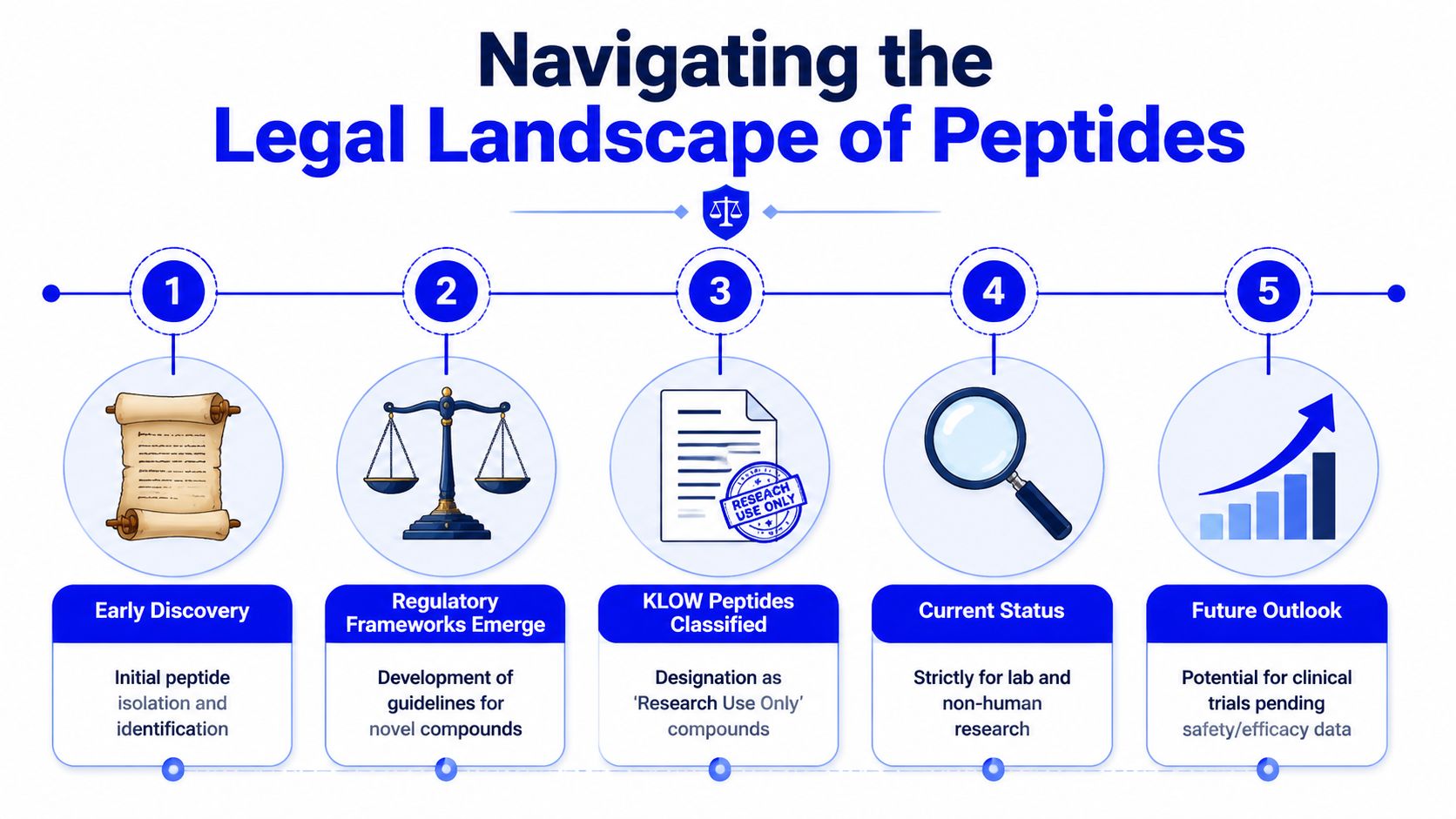
That change affects KLOW-style blends in a direct way. If a material is offered for research use only, the buyer cannot treat product availability as evidence of therapeutic legitimacy.
For a lab manager, the distinction is similar to the difference between a screening reagent and a licensed reference standard. Both may arrive in a vial. Only one carries a very different level of regulatory review, manufacturing expectation, and intended use.
In practice, this changes procurement and oversight in several ways:
A simple screening question helps: if the seller describes a KLOW-style blend like an established treatment, the compliance risk rises immediately.
“Research use only” is not filler text. It sets the boundaries for how the material is purchased, stored, described, and used inside the lab.
That means the requesting team should document the experimental purpose, confirm that internal handling aligns with non-clinical use, and keep staff clear on the difference between investigational laboratory materials and approved medical products. It also means avoiding suppliers that blur those categories through casual therapeutic wording.
This distinction is especially important for KLOW because the stack is built around a why. The blend is meant to cover several complementary pathways related to repair and inflammation in one research framework. That design can justify exploratory study. It does not change the regulatory status of the material.
A careful lab treats KLOW as a research reagent tied to a defined hypothesis, not as a therapy in waiting.
Once a peptide blend moves from theoretical interest to an actual purchase request, the conversation changes. At that point, assay design is only part of the risk. The other part is material quality.
For stacked products, documentation matters even more because four components create more ways for inconsistency to enter a study. If the lot isn’t well characterized, you can’t tell whether a result reflects biology or procurement noise.
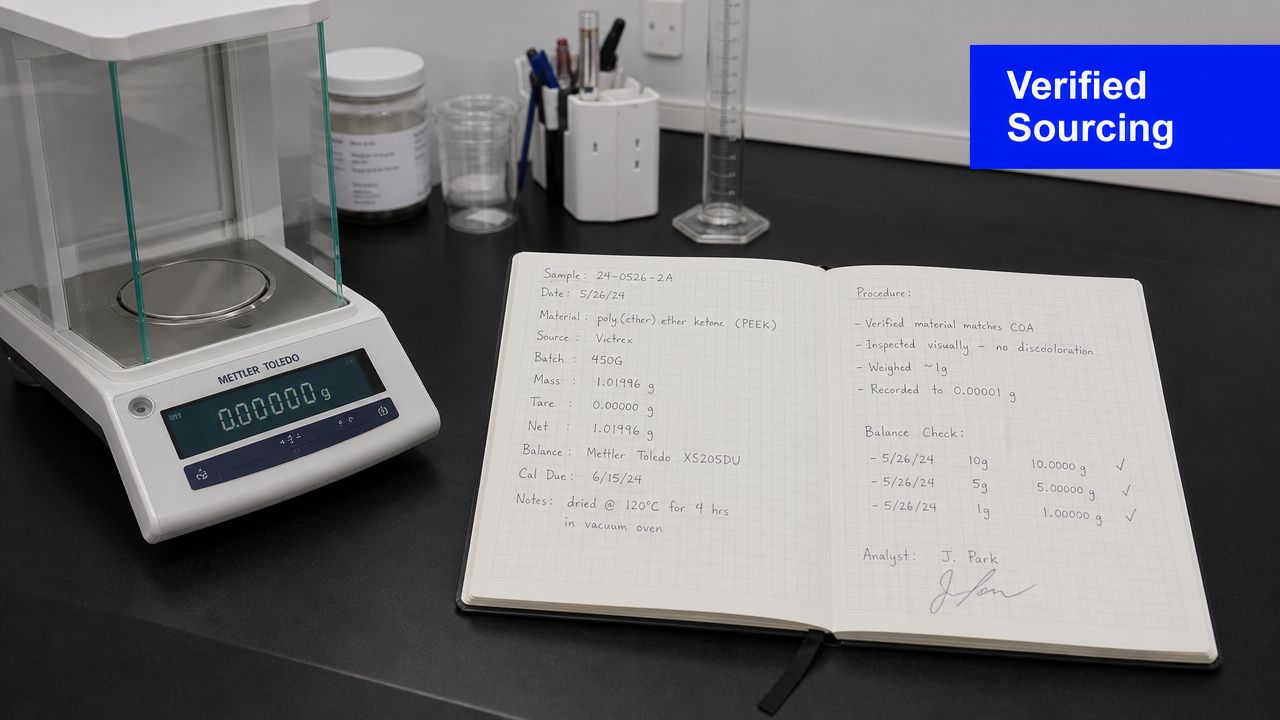
A reliable sourcing workflow usually starts with paperwork, not product photos.
Review these items before approving a vendor:
If a vendor offers only marketing copy and no lot-specific backup, that’s not enough for serious work.
Documentation isn’t just a procurement box to check. It protects interpretation.
A mixed or poorly documented lot can distort comparative work. You might think the stack underperformed relative to a single peptide, when the underlying issue was inconsistent composition or unclear handling history. In a blend, that ambiguity multiplies quickly.
A disciplined documentation process also helps with internal reproducibility. When teams archive COAs, lot identifiers, receipt conditions, and storage records, they make follow-up work much easier. That becomes important when a pilot result turns into a larger preclinical program.
For labs evaluating suppliers, the strongest option is usually the one that offers transparent batch testing, clear traceability, and easy access to quality records without making the buyer chase support for basic documentation. If you’re comparing vendors, learn about their quality standards and explore their documentation before you commit.
The simplest distinction is that KLOW is commonly discussed as the GLOW-style concept plus KPV. That added component is what shifts the blend more clearly toward inflammation-related and barrier-oriented research logic, rather than a repair-only emphasis.
Labs generally treat lyophilized peptide materials with standard controlled handling practices. That usually means documenting the reconstitution solvent used, keeping records at the lot level, minimizing repeated handling, and storing material under conditions consistent with the vendor’s instructions and the lab’s SOPs. The key point is consistency. Use one documented process across the study.
Yes. Researchers often source GHK-Cu, KPV, BPC-157, and TB-500 individually when they want to build their own controls, compare the blend against single agents, or test sequence effects. That approach is often useful in pilot work because it helps separate stack behavior from component behavior.
If you’re sourcing peptides for laboratory, analytical, or preclinical work, Peptide Warehouse USA offers a research-focused catalog with batch testing, COAs, and transparent documentation designed to support serious procurement standards. Learn more, explore options, and review the available quality materials before placing your next order.