No products in the cart.

A junior researcher usually starts with one simple question: which peptide synthesis company should we use? In practice, that question hides three different decisions. Are you buying a custom sequence, a catalog research peptide, or support for regulated manufacturing?
Get that wrong, and the experiment starts drifting before the vial even arrives. Poor documentation, unclear batch history, or mismatched purity expectations can turn a clean study design into weeks of troubleshooting.
The market is also getting more crowded. One recent market estimate places the peptide synthesis sector at USD 686.59 million in 2024, rising to USD 774.06 million in 2025 and projected to reach USD 2,277.59 million by 2034, reflecting a 12.74% CAGR according to Towards Healthcare's peptide synthesis market sizing analysis. More vendors creates more options, but it also creates more room for confusion.
The buying standard should stay simple. You need the right supplier model, the right quality package, and a supply chain you can defend in front of a PI, procurement office, or quality reviewer.
Most buyers don't fail because they ignored science. They fail because they treated peptide procurement like ordinary lab ordering.
A peptide synthesis company isn't just selling a chemical name on a label. It's selling sequence execution, purification discipline, analytical transparency, and chain-of-custody confidence. If any of those pieces are weak, your downstream work absorbs the risk.
That matters most when timelines are tight. A student may think they need a low price and fast shipping. A procurement manager knows they also need batch-specific documents, clear intended-use labeling, and a supplier that answers technical questions without dodging them.
Researchers often search one term and contact the first few vendors that appear. Then they compare quotes as if every vendor offers the same thing.
They don't.
Some companies build novel sequences from scratch. Others stock common research peptides for laboratory use. Others are set up for manufacturing support, quality systems, and regulated production environments. If you send the wrong inquiry to the wrong supplier type, you'll waste days before anyone even discusses the right deliverable.
Practical rule: Choose the supplier category before you compare pricing. Otherwise you're comparing different services under the same label.
When I review a new peptide vendor, I want clear answers to a short list of operational questions:
A reliable peptide synthesis company makes those answers easy to find. A weak one pushes you toward marketing language instead of records.
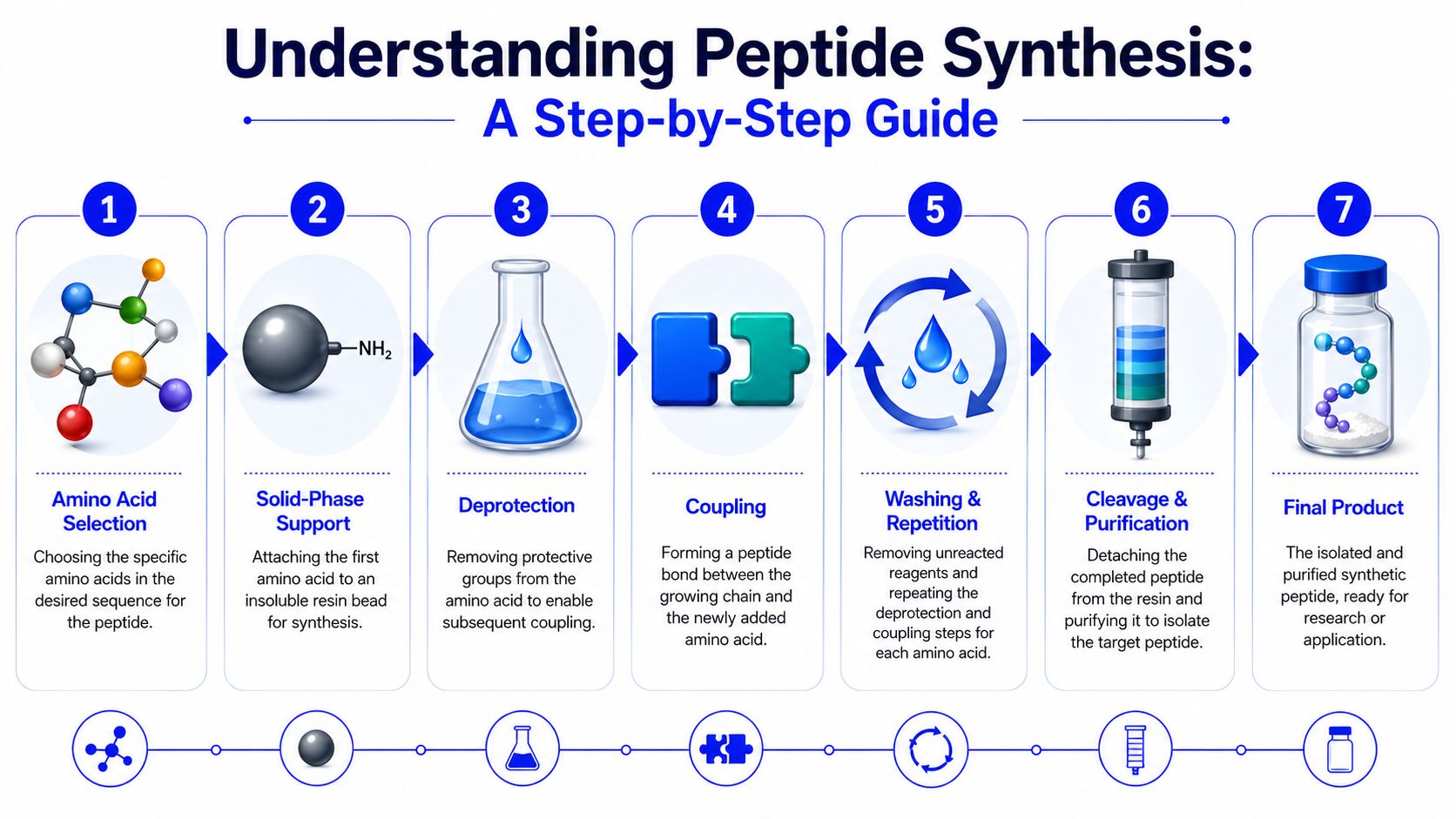
At a practical level, peptide synthesis is controlled sequence assembly. This means assembling a chain one amino acid at a time in a fixed order. If the order is wrong, if one step doesn't finish cleanly, or if purification isn't done well, the final material may contain the wrong product or too many related impurities.
In most research and production settings, the core method is solid-phase peptide synthesis, or SPPS. Sterling Pharma Solutions describes the workflow as iterative: protect the N-terminus and side chains, activate and couple the incoming amino acid, deprotect, and repeat until the sequence is complete, with crude peptide typically purified by HPLC, which it identifies as the gold standard for purification in this context in its overview of peptide synthesis and production from discovery to manufacturing.
You don't need to run a synthesizer yourself to buy well. But you do need to understand where quality comes from.
Each synthesis cycle includes a few critical actions:
If a supplier can't explain this process in plain language, I get cautious. It usually means sales is detached from operations, or documentation is thin.
Most peptide problems don't look dramatic at first. They show up as inconsistent assay behavior, odd solubility, unexplained peaks, or poor reproducibility between lots.
A buyer should assume risk can enter at several points:
If purification is treated as an afterthought, the COA may still look tidy while the experiment becomes messy.
The important point isn't memorizing synthesis chemistry. It's recognizing why two peptide suppliers can list the same sequence and still deliver very different research outcomes.
A common procurement mistake starts with the right peptide and the wrong supplier type. A researcher requests a sequence, purchasing finds a catalog listing with a similar name, and the lab receives material that fits neither the protocol nor the documentation standard the study requires.
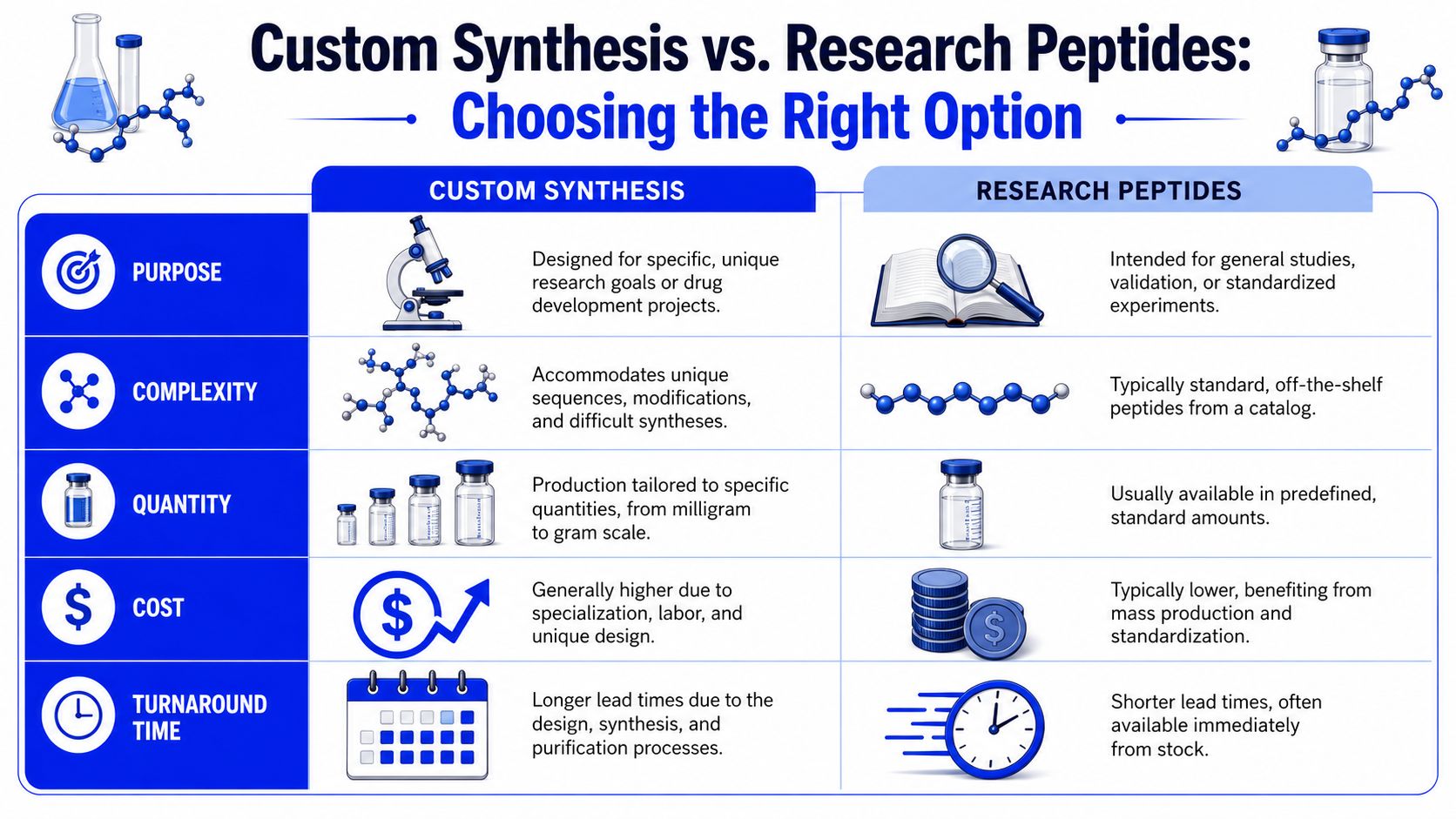
That confusion happens because peptide synthesis company is used loosely. In practice, buyers are choosing between at least two very different paths. One is a custom synthesis service that makes the exact sequence you specify. The other is a catalog research peptide supplier that sells prelisted compounds with defined product records. Some vendors also support regulated manufacturing, but that is a separate procurement track with its own quality and compliance burden.
Industry coverage on custom peptide company options at Peptide.com explains this split clearly. Custom providers handle client-defined sequences and project-specific requirements, while catalog suppliers focus on standardized research products. That difference affects quoting, lead time, confidentiality, documentation, and how much technical review has to happen before a PO goes out.
Choose custom synthesis when the sequence itself is the project.
That usually means one or more of the following applies:
Custom synthesis gives the lab more control, but it also creates more checkpoints. Expect quote revisions, sequence review, questions about target purity, and occasional feasibility limits. For high-value experiments, that extra friction is usually justified.
Choose a catalog supplier when the compound is already established and your main goal is fast, repeatable procurement.
This path usually fits when you need:
For common research peptides such as BPC-157, GHK-Cu, TB-500, Selank, or Semax, a catalog supplier is often the more practical choice than opening a custom project. The sequence is not the variable. Availability, lot documentation, and fit-for-purpose testing are the variables.
| Decision point | Custom synthesis | Catalog research peptides |
|---|---|---|
| Starting point | Your submitted sequence | Supplier's listed product |
| Best fit | Novel designs, sequence-specific studies, modified peptides | Established compounds used in routine research workflows |
| Technical interaction | Usually involves pre-order discussion and feasibility review | Usually limited to product availability and lot documents |
| Documentation emphasis | Project records, sequence confirmation, custom specifications | Product listing, batch records, and lot-specific paperwork |
| Lead time | Longer and less predictable | Shorter if the item is stocked |
| Procurement burden | Higher, especially for approvals and confidentiality review | Lower for standard lab purchasing |
The practical rule is simple. If your experiment depends on a sequence you control, buy custom synthesis. If your experiment depends on obtaining a known compound quickly and consistently, start with a catalog research supplier.
If you only compare vendors on the purity percentage printed on a product page, you're not doing quality review. You're reading ad copy.
A usable quality file starts with a batch-specific Certificate of Analysis. It should tie the exact lot you receive to the tests performed on that lot. Anything generic, undated, or obviously templated deserves follow-up before purchase.
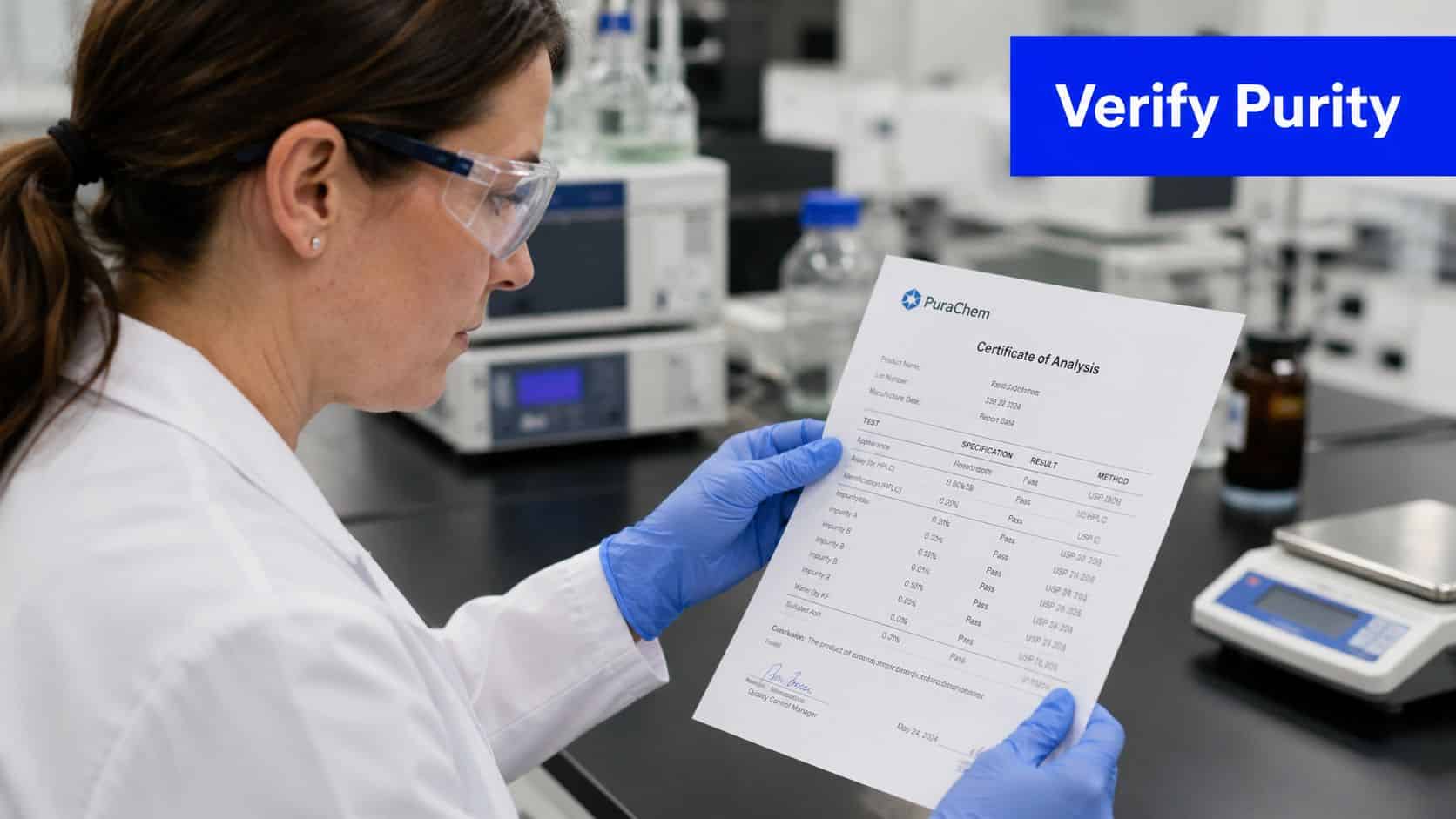
The first thing I check is whether the COA identifies the material clearly. Sequence name, lot number, and test date should align with the label and packing records.
Then I look for the analytical backbone:
A COA should reduce uncertainty, not create more of it.
Buyer advice: Ask for the actual lot COA before you place the order if the experiment is high stakes or hard to repeat.
Purity matters, but it isn't the whole story. Depending on the research setting, supplementary testing can be just as important as the main chromatogram.
I generally ask whether the supplier can provide or routinely includes:
Traceability becomes operational through vendor practices. Good vendors don't just say the peptide is high purity. They show what was tested, on which lot, and under what documentation controls.
Some warning signs are easy to miss if you're new to procurement.
Watch for these:
The technical side matters here too. Gyros Protein Technologies highlights that sequence-dependent failure from aggregation can create difficult couplings, deletions, side reactions, and rework in SPPS, and recommends tools such as predictive sequence analysis, pseudoproline or Dmb dipeptides, double couplings, extended coupling times, temperature screening, and deprotection monitoring in its discussion of peptide purity and yield challenges in SPPS.
That matters to buyers because a polished product page can't erase a hard sequence. If the peptide is difficult to synthesize, the supplier's process discipline shows up in the quality package.
Once you've identified the right supplier type and reviewed the quality file, the next set of risks is operational. Most delays happen in the handoff between science, purchasing, and shipping.
Procurement should lock down the transaction details before a quote becomes a purchase order. Otherwise you get the familiar chain of emails about missing labels, unclear documents, or shipping assumptions nobody confirmed.
I start with practical questions that influence whether the order will move cleanly through internal review.
Use a checklist like this:
A vendor that answers these clearly is easier to work with when something goes wrong.
Domestic sourcing doesn't guarantee quality, but it often simplifies accountability. That matters when your institution needs clear records and predictable delivery.
Grand View Research's U.S. outlook estimates that the U.S. peptide synthesis market generated USD 320.7 million in 2024 and projects USD 604.1 million by 2033, reinforcing why U.S.-based manufacturing and transparent supply chains matter to buyers who need reliable fulfillment, as shown in its United States peptide synthesis market outlook.
In practical terms, a domestic supplier may reduce avoidable friction in these areas:
Legal clarity matters just as much as shipping accuracy.
For catalog products, look for clear research use only boundaries and labeling that matches your institution's compliance expectations. For custom work, you may also need an NDA before sharing a novel sequence, or an MTA if the project includes additional transfer restrictions.
A peptide order isn't just a material purchase. It's a documentation event that has to survive review by procurement, compliance, and the lab bench.
If a supplier blurs intended use, avoids labeling questions, or can't explain its return and support process, move on.
A peptide order can fail long before the vial reaches your bench. The usual failure points are simpler than people expect: the lab needed a custom sequence but bought from a catalog supplier, the supplier shipped material without the right batch records, or procurement approved a quote before anyone checked what the COA covered.
That is why the final check is not about price alone. It is about fit, documentation, and whether the supplier can support the exact type of purchase your project requires.
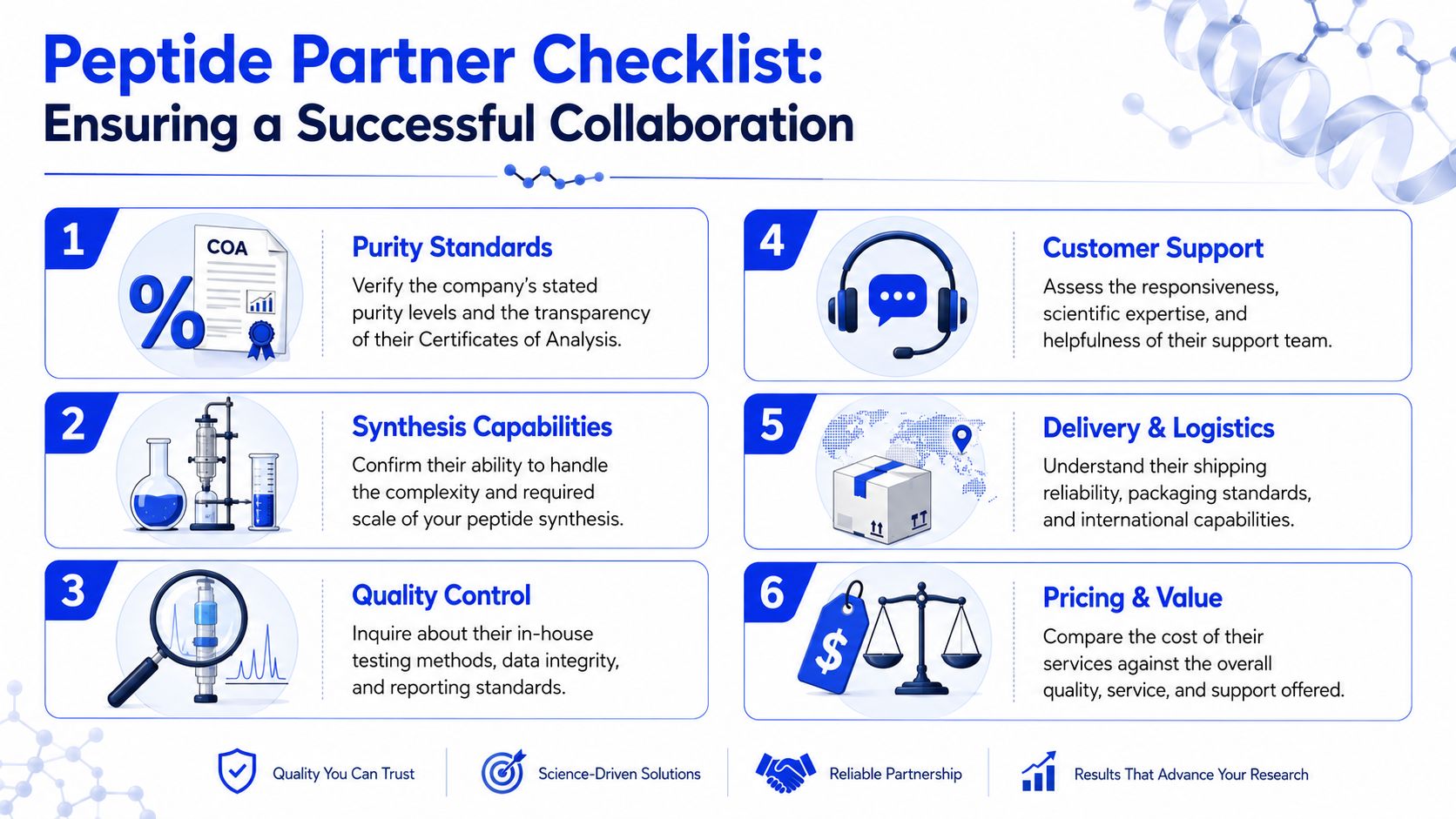
I tell junior buyers to make one decision first. Are you sourcing a custom-made sequence or an off-the-shelf research peptide? That choice determines the vendor type, the documents you should request, and the risks you need to control.
The right peptide synthesis company supports reproducible work because its materials, records, and communication stay consistent. That consistency protects data quality and saves time when someone asks the unavoidable follow-up question: what, exactly, did we receive?
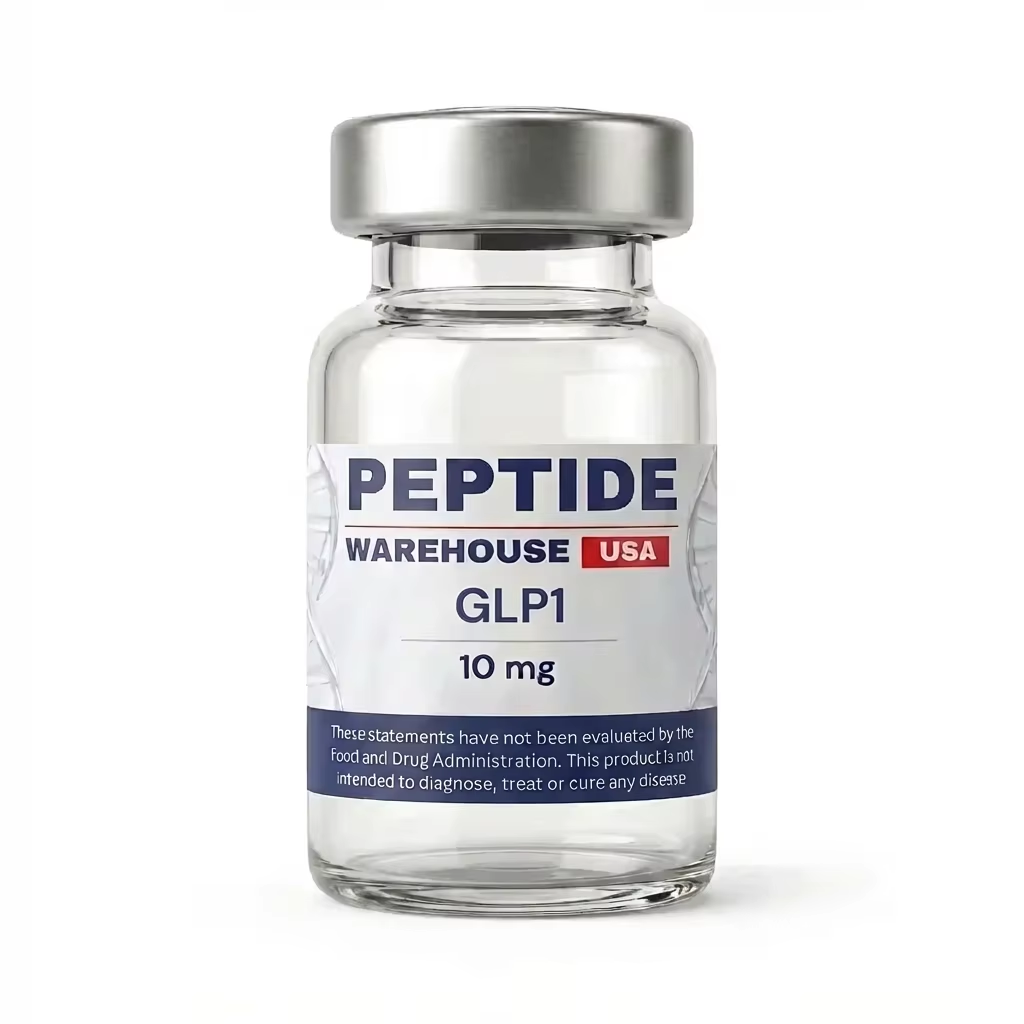
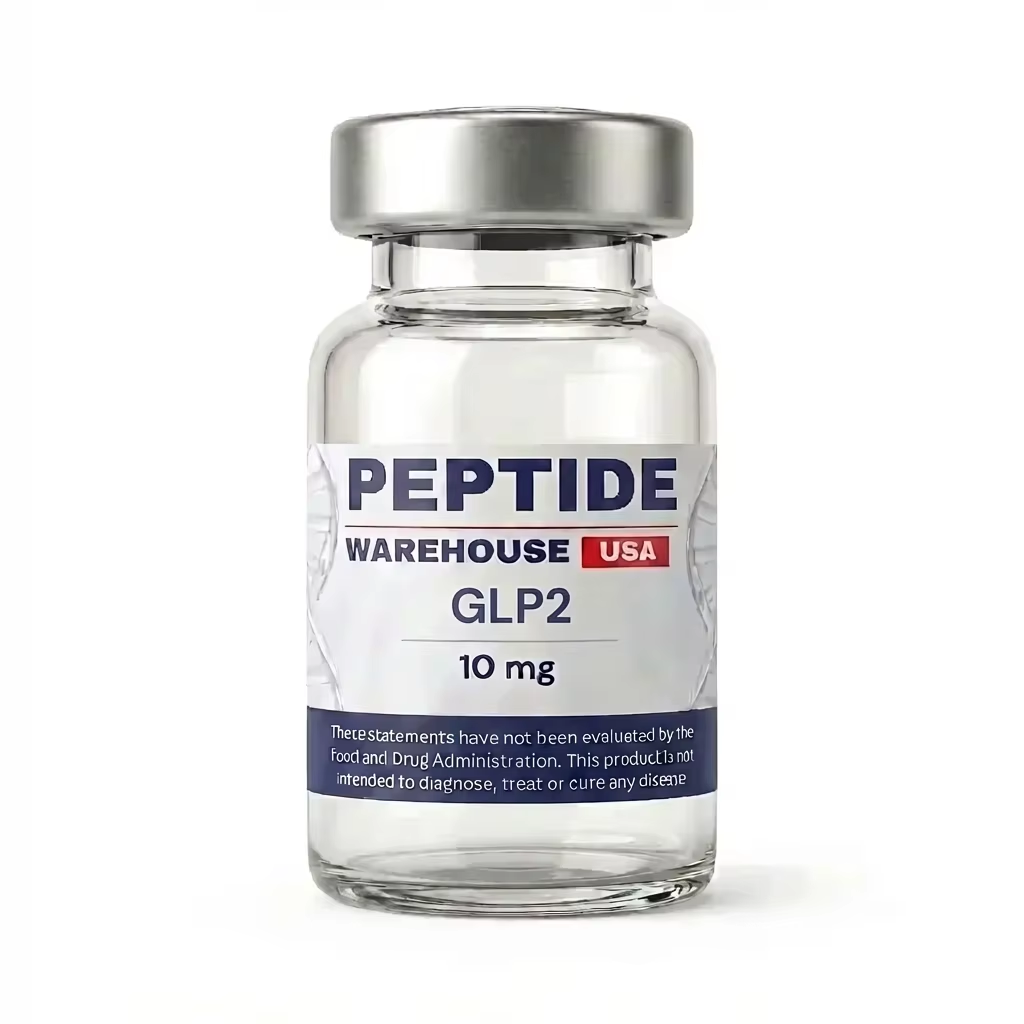
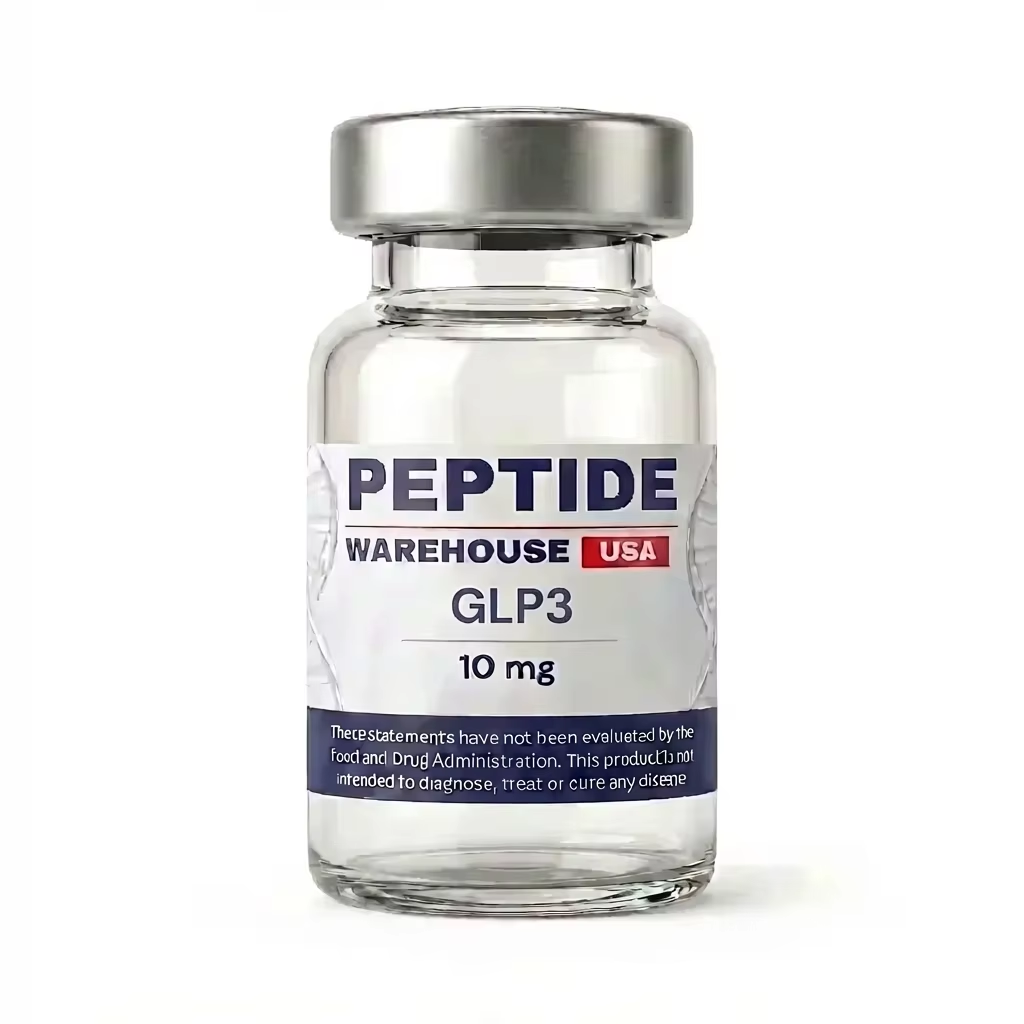
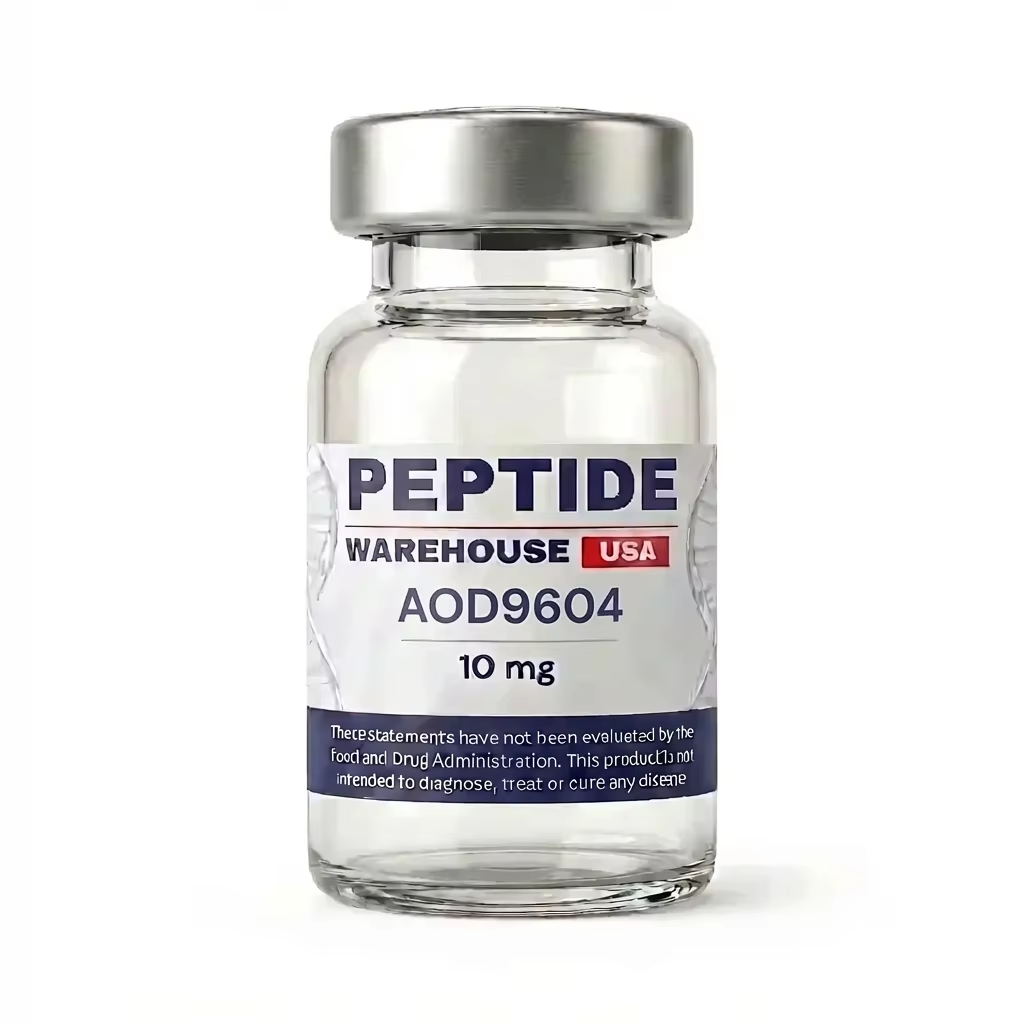
For labs comparing research peptide suppliers and wanting a U.S.-based option with catalog products, batch-specific documentation, and research-use-only positioning, learn more about Peptide Warehouse USA and assess whether its documents and product format fit your procurement requirements.