No products in the cart.


N-Acetyl Semax is a chemically enhanced version of Semax with an added acetyl group that increases its molecular weight by about 42 Da and makes it more resistant to enzymatic breakdown. In practical research terms, that means a more durable peptide than standard Semax, which is why N-Acetyl Semax often comes up when stability matters more than direct comparability to older Semax literature.
If Semax already has a long history in neuropharmacology, why would researchers want a modified version at all? That question exposes a gap in a lot of peptide content. Many explainers stop at “it's more stable” and leave out the harder part: what that change does, what it might trade away, and where the current literature still leaves real uncertainty.
N-Acetyl Semax sits in that interesting middle ground. It isn't a completely different peptide, but it also isn't just Semax with a cosmetic tweak. A small chemical change at the N-terminus can alter degradation, handling, and how you think about experimental design. For anyone studying neurotrophic signaling, peptide stability, or route-of-delivery choices, those differences matter.
Why would a researcher modify a peptide that already has a recognized place in neuroscience?
Because peptide research is rarely limited by the idea behind a molecule. It is often limited by how that molecule behaves before it reaches its target, how quickly enzymes break it apart, and how consistently it performs across an experimental protocol.
N-Acetyl Semax is a chemically modified version of Semax in which the N-terminus is acetylated. The peptide backbone remains the same, but the exposed front end of the molecule is capped. That small change matters. In peptide chemistry, the N-terminus often functions like an unsecured end on a cord, one of the first places enzymes can attack. Acetylation can reduce that vulnerability and can make the compound more attractive for studies that need longer persistence rather than a brief signal.
That framing helps avoid a common mistake. N-Acetyl Semax should be understood as a research refinement of Semax, not as an entirely new class of compound.
The parent molecule, Semax, comes from work on synthetic ACTH-derived peptides designed to preserve neuroactive effects without reproducing the broader endocrine actions associated with the native hormone. That background is useful, but the more interesting question for a critical reader is narrower. Does acetylation produce a meaningful difference in real experimental settings, or does it mostly change expectations on paper?
At present, that question is only partly answered. The rationale for improved stability is chemically plausible, and it fits what researchers often see with terminal peptide modifications. But direct comparative literature on N-Acetyl Semax remains limited, especially for questions many labs are concerned with, such as whether nasal and subcutaneous delivery produce meaningfully different exposure profiles for this specific derivative. That evidence gap matters because delivery route can shape absorption, degradation, and interpretability of results just as much as the molecular modification itself.
So the right starting point is disciplined curiosity. N-Acetyl Semax is interesting because it combines a familiar Semax scaffold with a conventional medicinal chemistry strategy aimed at improving durability. It is not interesting because it has been proven superior in every context.
If your broader interest includes how peptides fit into bigger conversations about cognitive support and resilience, Lola's longevity-focused brain health guide offers helpful context without treating any single compound as a complete answer.
What changes when Semax becomes N-Acetyl Semax?
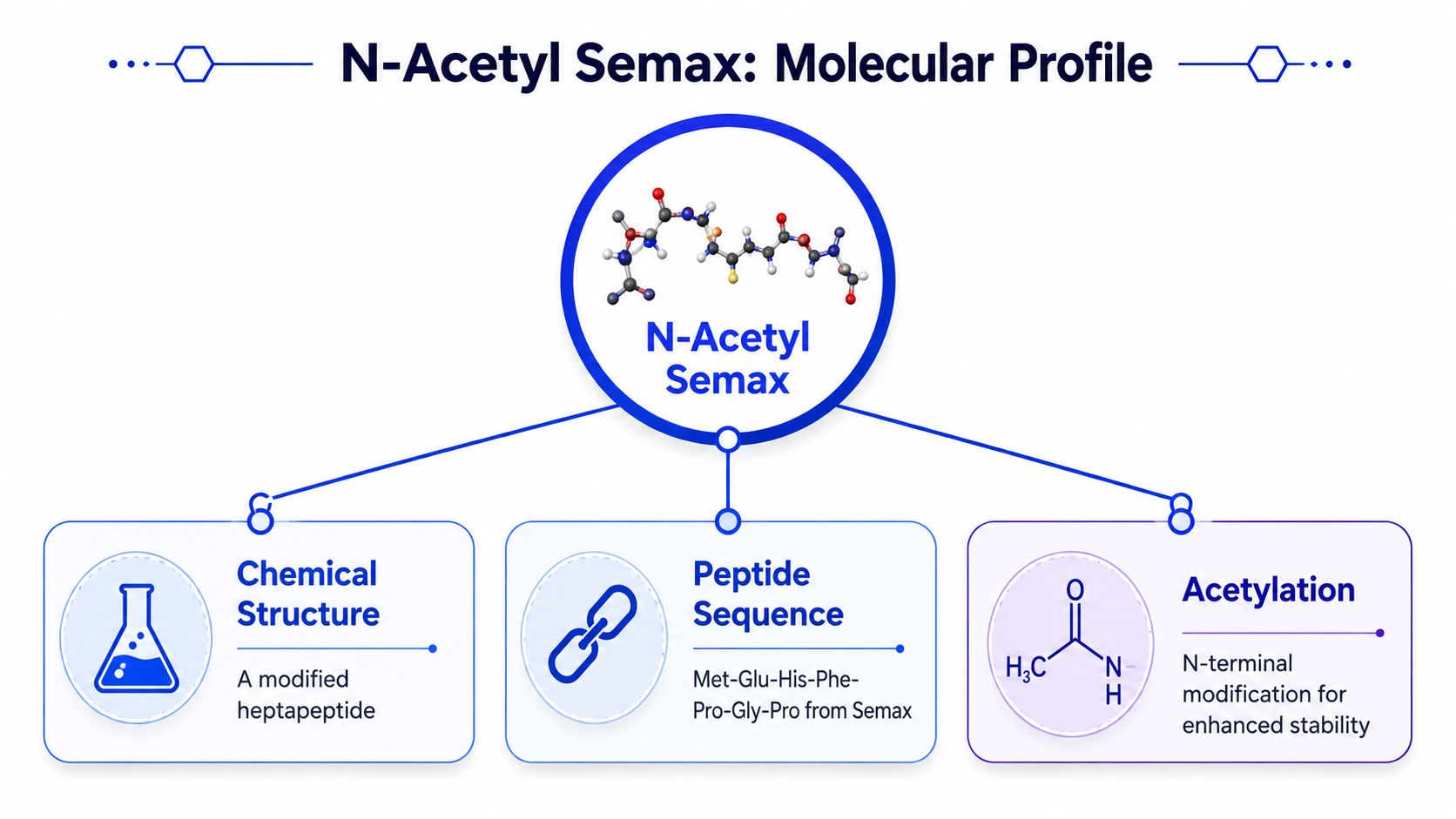
The answer is narrower than the name suggests. N-Acetyl Semax remains a heptapeptide with the same inherited sequence: Met-Glu-His-Phe-Pro-Gly-Pro. The amino acid backbone is unchanged. The modification occurs at one chemically important position, the N-terminus of the methionine residue.
That distinction is easy to miss. “Acetylated” can sound like a major redesign, but it usually means a targeted edit rather than a new scaffold. Here, the edit is the addition of an acetyl group (CH₃CO-) to the free N-terminal amine. For a peptide chemist, this is a familiar move. It changes how the molecule presents itself to enzymes without rewriting the sequence that gives the parent peptide its identity.
A useful way to frame it is to separate sequence from surface chemistry. The sequence is the same string of residues. The surface chemistry at the front end is different, and that front end is one of the first places peptidases inspect.
The N-terminus works like an exposed end on a cable. If that end is open, aminopeptidases can access it more easily. If it is capped by acetylation, that access becomes less straightforward.
This does not create a new pharmacological class. It changes the peptide's vulnerability to enzymatic trimming. In practical terms, researchers use this kind of modification because peptide survival often depends as much on terminal protection as on the core sequence itself.
That is the central molecular logic behind N-Acetyl Semax. The compound is designed to preserve the Semax scaffold while making one common route of degradation less accessible. Chemically, that rationale is sound. Experimentally, the harder question is how much that change matters under real study conditions, since direct head-to-head data for this derivative remain limited, especially across delivery routes such as nasal versus subcutaneous administration.
Here is the molecular comparison that matters most:
| Feature | Semax | N-Acetyl Semax |
|---|---|---|
| Core sequence | Met-Glu-His-Phe-Pro-Gly-Pro | Met-Glu-His-Phe-Pro-Gly-Pro |
| N-terminus | Free amine | Acetylated |
| Expected consequence | More accessible to aminopeptidase activity | Greater resistance to N-terminal cleavage |
| Research use case | Parent scaffold studies | Stability-focused derivative studies |
Two verification points help separate a real acetylated derivative from a mislabeled parent peptide:
Practical rule: If a supplier cannot provide identity data consistent with the acetylated form, the material should not be treated as confirmed N-Acetyl Semax.
That point matters because the molecular profile is not just a naming detail. It determines what question the compound is suited to answer. If your study depends on whether terminal modification improves peptide persistence, purity and identity testing are part of the experiment, not an administrative afterthought.
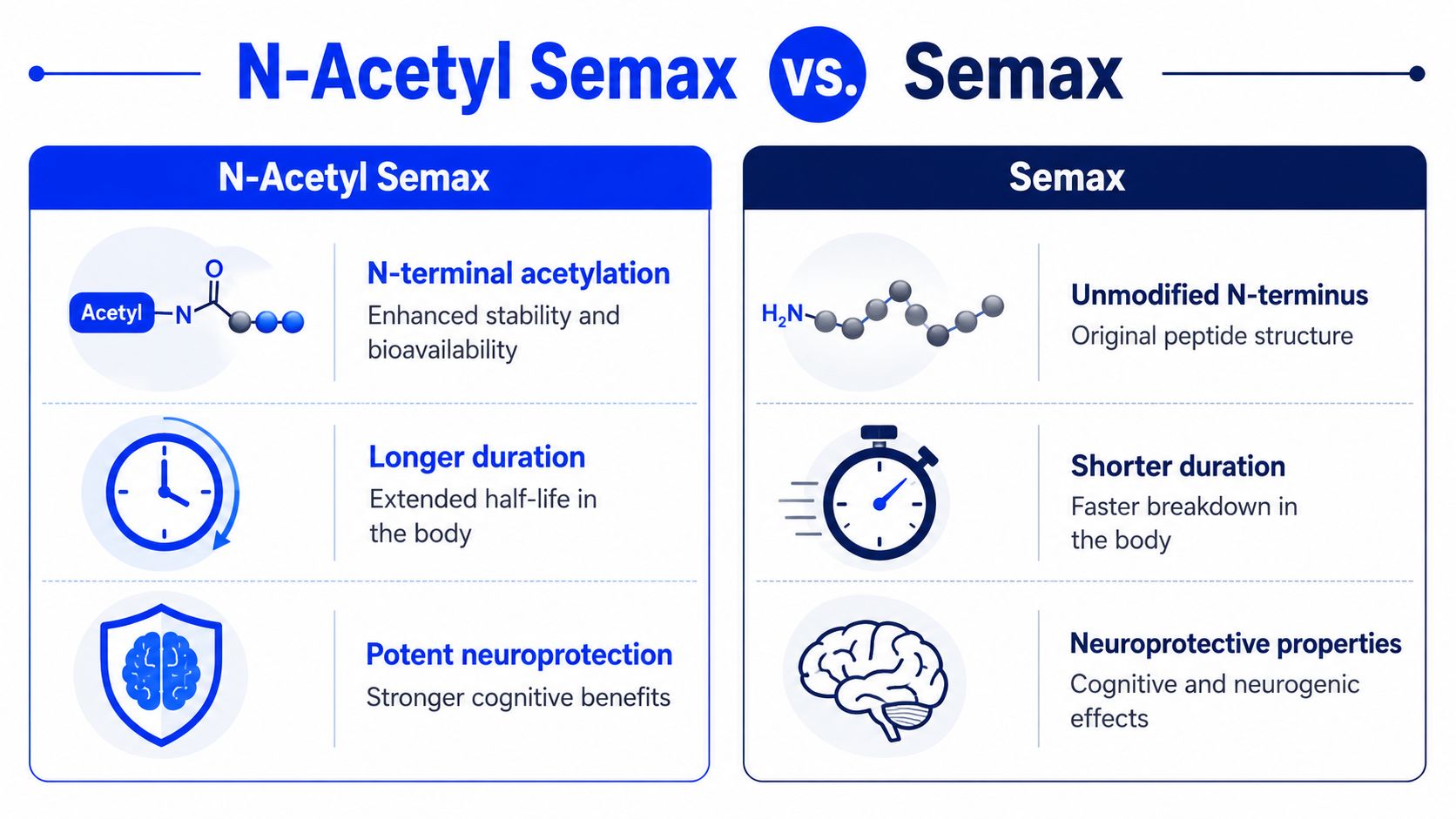
Semax was developed historically as a synthetic analog derived from the ACTH 4–10 fragment, with the goal of preserving neurotrophic properties without the systemic hormonal effects associated with the parent hormone. That historical context matters because most of the foundational literature was built around the unmodified parent compound, not the acetylated version.
N-Acetyl Semax comes from a different research priority. Instead of asking, “Can this peptide work?” the acetylated variant asks, “Can this peptide be made more durable without losing the basic pharmacological logic of the parent scaffold?”
That distinction helps explain why the two compounds are related but not interchangeable in every protocol.
The strongest reason to compare them side by side isn't branding. It's experimental fit.
While original Semax was developed in Russia and is approved there for several conditions, N-Acetyl Semax represents a next-generation research compound with similar mechanisms but quantifiably superior resistance to serum degradation and enhanced penetration across the blood-brain barrier, making it a preferred candidate for preclinical studies.
That statement sounds broad, so it helps to unpack it in decision terms:
| Research question | Semax may fit better | N-Acetyl Semax may fit better |
|---|---|---|
| Replicating older Semax literature | Yes, because the historical comparator is the parent peptide | Less ideal if exact comparability is the priority |
| Maintaining peptide integrity over time | More vulnerable to breakdown | Better aligned with stability-focused protocols |
| Testing a refined analog | Useful as the parent reference | Useful as the modified research candidate |
| Mechanism extrapolation | Stronger historical base | Stronger rationale for prolonged exposure |
There's another subtle point that often gets lost in surface-level comparison articles. A more stable peptide isn't automatically a better peptide for every experiment. If your goal is replication of parent-compound literature, modification itself becomes a variable. If your goal is persistence in vitro or in preclinical designs where degradation is a major confound, N-Acetyl Semax may be the more practical tool.
A useful mental model is this:
When researchers compare peptides, the right question isn't “Which one is stronger?” It's “Which one introduces fewer confounders for this exact study?”
That's also where conversations about benefits of peptides need more discipline. Stability, handling, and route selection can be genuine benefits, but only when they align with the experimental goal.
Near the start of any mechanistic discussion, it helps to remember that N-Acetyl Semax keeps the same core sequence logic as Semax. The acetylation changes durability. It doesn't rewrite the peptide's entire biological identity.
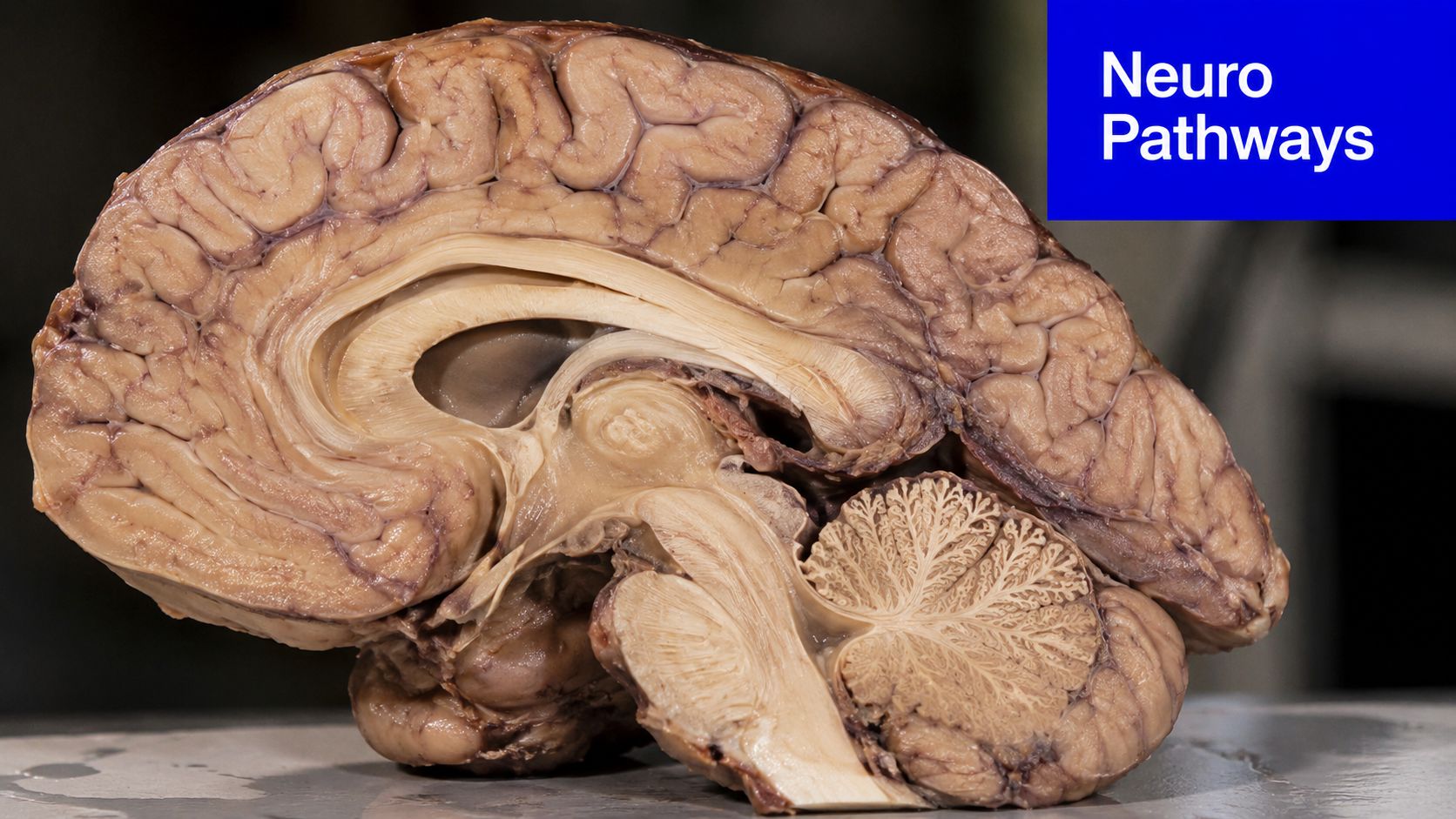
The parent Semax literature has linked this peptide family to neurotrophic pathways, especially BDNF and NGF regulation. In simplified terms, those factors support neuronal maintenance, plasticity, and adaptive signaling. That's one reason Semax and its derivatives keep showing up in discussions of cognition, stress response, and neuroprotection.
The acetylated version is generally understood as preserving that core mechanistic direction while improving stability and exposure. It's akin to sending the same message through a carrier that's harder to destroy before delivery.
That's why N-Acetyl Semax is often framed as useful in preclinical work centered on neuroplasticity. The interest isn't only in receptor interaction. It's in whether sustained peptide presence changes the quality of downstream signaling.
N-Acetyl Semax also appears relevant beyond neurotrophins alone. It interacts with multiple neurotransmitter systems, specifically modulating dopaminergic and serotonergic pathways that regulate mood and cognition, while also inhibiting enkephalinase enzymes. This multi-target mechanism has been linked in animal models to significant improvements in selective attention and memory.
That combination matters because it offers a more layered explanation for observed cognitive effects. A compound can influence plasticity-related signaling while also affecting neurotransmitter tone and peptide degradation pathways. Those are different levels of brain chemistry, but they can converge functionally.
A clean way to picture it is as three overlapping domains:
Here's a useful overview if you want a visual complement to the molecular discussion:
The important mechanistic takeaway isn't that N-Acetyl Semax does one dramatic thing. It's that researchers study it because several moderate mechanisms may reinforce one another.
That said, a careful reader should keep one caveat in mind. Mechanistic plausibility isn't the same as a complete human evidence base. The mechanism is scientifically interesting. The translation question remains open.
The strongest evidence surrounding this peptide family still comes from the broader Semax literature rather than large English-language randomized trials of N-Acetyl Semax specifically. That's an important distinction. It keeps the conversation grounded.
Semax has documented preclinical and clinical milestones that include neuroprotective effects in ischemia models. In focal ischemia work, Semax has been associated with the upregulation of genes encoding immunoglobulins and chemokines, with studies showing that three hours post-ischemia treatment enhanced the expression of transcription regulator genes and that 24 hours post-ischemia the immunomodulating effects increased considerably. Those findings support a neuroprotective interpretation tied to vascular and immune pathways in the parent compound's research profile.
For a researcher, that means the Semax family isn't interesting only because of “nootropic” language. It's interesting because the signaling footprint appears to involve immune regulation, vascular biology, and neurotrophic effects together.
The most important nuance in the N-Acetyl Semax discussion is that better stability doesn't mean every property is preserved.
N-Acetyl Semax is a chemically modified derivative of Semax, and this N-terminal acetylation, while enhancing stability, eliminates the peptide's protective effects against copper(II)-induced toxicity. This highlights the vital role of the free NH2 terminus in certain cellular defense mechanisms, a critical nuance for researchers to understand.
That's not a minor footnote. It's a real reminder that medicinal chemistry changes can produce trade-offs. The same acetyl cap that helps defend against enzymatic breakdown also alters what the peptide can do in at least one biologically meaningful setting.
A balanced reading of the literature should include all of the following:
Better stability can improve a research tool, but it can also remove functions that depended on the original structure.
There's another open question worth keeping in view. Chronic use is often discussed casually in peptide circles, yet the literature doesn't clearly resolve whether repeated long-term exposure could create receptor-level adaptation or off-target melanocortin pathway effects. That doesn't prove a problem exists. It means the evidence gap is real.

If a peptide is only as good as the material in the vial, then sourcing is part of the science, not a separate purchasing chore.
For N-Acetyl Semax, accepted quality benchmarks for research material require HPLC purity of 98% or greater, along with mass spectrometry verification to confirm identity, and endotoxin testing for in vivo applications. Those checks matter because this variant's identity depends on a specific chemical modification, not just a familiar peptide name.
A solid procurement checklist should include:
Readers looking at peptide catalogs often focus on labels like “high purity” or “research grade.” Those phrases don't mean much by themselves. The useful question is whether the supplier provides the actual analytical support.
Once material is sourced, handling becomes the next variable. Lyophilized peptides need careful reconstitution, clean technique, and storage conditions that preserve consistency across experiments. Even a strong compound can produce noisy data if the handling workflow is sloppy.
One issue deserves special attention because the literature still leaves it unresolved. A critical gap in preclinical research is the lack of clear data comparing CNS penetration rates of intranasal vs. subcutaneous N-Acetyl Semax. While nasal delivery may bypass the BBB, it can suffer from rapid mucosal clearance, a trade-off researchers need to consider, as noted in this discussion of delivery-route uncertainty for N-Acetyl Semax.
That gap matters more than many buyers realize. Route selection shapes the experiment itself.
Consider the trade-off qualitatively:
| Delivery question | Intranasal | Subcutaneous |
|---|---|---|
| Theoretical attraction | Potential nose-to-brain access | Predictable systemic exposure |
| Primary concern | Rapid mucosal clearance | CNS entry may depend on transport processes |
| Best use case thinking | Acute CNS-focused questions | Systemic exposure-focused designs |
If you're planning a protocol, don't treat route as an afterthought. Treat it as part of the hypothesis.
No. They're related names, but they don't describe the same terminal chemistry.
N-Acetyl Semax refers to acetylation at the N-terminus. “Amidate” usually refers to a C-terminal amidation change. A researcher should treat those as distinct variants unless the analytical documentation confirms exactly what modification is present.
They can compare them conceptually, but they shouldn't assume they serve the same purpose.
Semax-derived compounds are typically discussed in relation to neurotrophic and cognitive signaling, while Selank is more often explored in a different functional context. If a study includes both, the cleanest approach is to define why each peptide is in the design rather than treating them as interchangeable “brain peptides.”
Research peptides like this are commonly supplied as lyophilized powder. The exact appearance can vary by batch and formulation details, so visual inspection should never replace analytical verification.
What matters more is whether the documentation supports identity, purity, and application suitability.
Not automatically.
If you need alignment with historical Semax literature, the parent compound may be the better reference. If your protocol is more vulnerable to enzymatic degradation or depends on longer peptide persistence, N-Acetyl Semax may be the more suitable choice.
The biggest misconception is that “more stable” means “better in every way.”
It doesn't. Stability can be a major advantage, but the acetylation also changes function in ways that matter. The loss of protection against copper(II)-induced toxicity is the clearest documented example of why researchers need to think beyond marketing shorthand.
Yes, as long as the language stays precise.
The benefits of peptides in a research context often include better control over signaling, stability, and experimental specificity. But those benefits only mean something when they're tied to documented properties rather than inflated claims.
If you're sourcing N-Acetyl Semax or comparing peptide options for laboratory and preclinical work, Peptide Warehouse USA is worth exploring. The company focuses on high-purity research peptides with lot-specific documentation, including COAs and supporting batch data, which helps researchers evaluate consistency before they buy. Learn more, explore options, and review product details with the same standard you'd apply to any serious research input.