No products in the cart.


Those searching for the best peptides for HGH often start with the wrong question. They ask which compound is strongest, fastest, or most effective, but skip the harder issue: are they comparing a clinical therapy, a laboratory tool, or a marketing story dressed up as endocrinology?
That distinction changes everything. In research settings, peptides such as CJC-1295, Ipamorelin, and Tesamorelin are discussed because they interact with the growth hormone axis in different ways. But the biological mechanism, the regulatory status, and the evidence base aren't interchangeable. If you're evaluating the best peptides for HGH, you need a framework that separates receptor biology from hype, and research utility from unapproved human use.
This guide does that step by step. You'll see how HGH-releasing peptides work, how the main categories differ, which compounds researchers study most often, and what quality control and study design entail when the goal is disciplined preclinical work rather than sales copy.
The first distinction is simple but often blurred. Growth hormone-releasing peptides don't supply growth hormone directly. They try to influence the body's own signaling system so the pituitary releases more HGH.
That matters because replacing a hormone and stimulating its release are not the same experiment. One is like pouring water into a tank from the outside. The other is like adjusting the valve system that controls the tank's flow.
According to this explanation of HGH versus growth hormone peptides, growth hormone-releasing peptides are synthetic short-chain compounds that indirectly stimulate the pituitary gland to secrete HGH rather than providing the hormone itself. The same source notes that these peptides aren't included in treatment guidelines for childhood growth disorders because long-term safety data are lacking.
In laboratory terms, peptide secretagogues are useful because they let investigators probe the signaling machinery upstream of growth hormone release. That includes receptor activation, pulse timing, downstream IGF-1 changes, and interactions with other hormonal signals.
For those seeking the best peptides for HGH, the phrase usually points to one of two goals:
Core principle: A peptide can be biologically interesting without being validated for broad human use.
A common mistake is treating all “HGH peptides” as one category. They aren't. Some act like GHRH analogs, which mimic the signal that tells the pituitary to release growth hormone. Others act more like ghrelin mimetics, which stimulate a different receptor pathway.
Another mistake is assuming that because a peptide raises an endpoint like IGF-1 in a defined clinical population, it automatically has the same meaning in healthy adults. That jump isn't supported by the evidence base described later in this article.
Your body doesn't release growth hormone as a steady drip. It releases it in pulses. That pulsatile pattern is central to how researchers think about secretagogues.
A useful analogy is a symphony orchestra. The hypothalamus is the conductor. The pituitary is the lead instrument that produces the note the audience hears. Signals such as GHRH and somatostatin shape when the instrument plays, how loudly it responds, and when it stays quiet.
Peptides enter that score as selective cues. Some enhance the “play now” signal. Others reduce the brake indirectly or activate a separate route that still leads to more GH release.

In plain endocrine language, the process works like this:
A secretagogue behaves more like a dimmer switch than an on-off button. It nudges an existing rhythm instead of replacing the entire circuit.
Because GH follows a natural rhythm, administration timing can shape what a study measures. If a researcher ignores circadian biology, the data can look noisy or contradictory even when the compound itself is active.
That's one reason bedtime timing often comes up in discussions of secretagogues. Natural nighttime GH pulses create a biological window that may interact with compound half-life and receptor behavior. Researchers who care about sleep-associated hormone dynamics sometimes also think about feeding patterns. For broader context on evening nutrition and circadian habits, nutrition tips for pre-bed carbs offers a useful practical overview.
A clean experiment asks a narrower question than marketing does. Not “does this peptide boost HGH?” but “under what timing, through which receptor pathway, and with what downstream pattern?”
Most of the confusion around the best peptides for HGH disappears once you sort the compounds by receptor target. Think of each receptor as a different lock. A peptide works only if its molecular “key” fits that lock well enough to trigger a response.
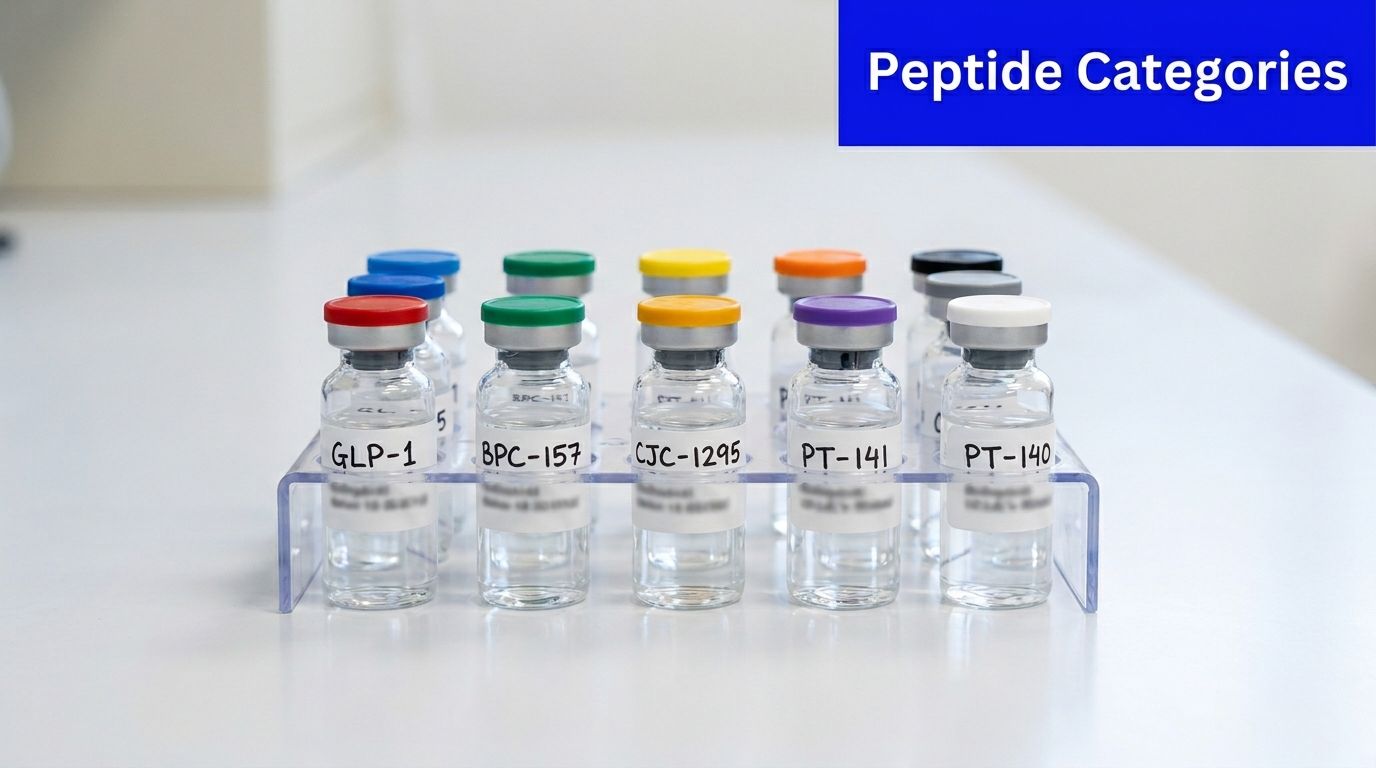
These compounds mimic growth hormone-releasing hormone. Their main job is to bind the GHRH receptor on pituitary somatotrophs and encourage GH release through that native route.
Examples commonly discussed in research include:
Why this class matters:
This class acts through the ghrelin receptor pathway, often called the growth hormone secretagogue receptor. These peptides don't copy GHRH. They activate a separate signaling lane that can still increase GH output.
Examples include:
The distinction matters because receptor selectivity can influence what else happens besides GH release. Some ghrelin-pathway compounds are discussed in relation to appetite effects or broader endocrine spillover, while Ipamorelin is often highlighted for a more selective profile.
A short visual explainer helps here:
When two compounds act on different receptors inside the same hormonal network, researchers often test them together. The logic is straightforward. Two distinct signals may produce a stronger or more physiologic GH pattern than either signal alone.
That's why GHRH analog plus GHRP combinations appear so often in discussions of peptide stacks. But in serious research, a stack isn't “better” by default. It's only better if it answers the exact question the experiment asks.
If you strip away hype, the best peptides for HGH are the ones that fit a defined research objective. Some are useful for studying broad GH pulsation. Others are more relevant to fat distribution, receptor specificity, or combined pathway activation.
Sermorelin sits in the GHRH analog category. Researchers use it when they want a cleaner model of upstream pituitary stimulation through the GHRH receptor pathway.
Its value is conceptual as much as practical. Sermorelin helps answer a focused question: what happens when the pituitary is prompted through a signal that resembles endogenous GHRH rather than through a ghrelin-type receptor?
In experimental planning, Sermorelin is often treated as a “baseline physiology” tool rather than a maximal-output tool.
CJC-1295 is also a GHRH-pathway compound, but it attracts attention because of its modified pharmacokinetic profile. Verified data describe the modified release variant, CJC-1295 ImEA, as a potent GHRP acting by mimicking endogenous GHRH, binding to GHRH receptors on pituitary somatotrophs, and stimulating a 24-hour pulsatile release of GH with subsequent IGF-1 elevation, as discussed in this overview of CJC-1295 and related HGH peptides.
For researchers, the practical implication is duration. A longer-acting signal changes study design. It may support a prolonged endocrine response, but it may also blur the boundary between a distinct pulse and a broad exposure window.
Ipamorelin belongs to the ghrelin mimetic / GHRP side of the map. It's notable because verified data describe it as binding to ghrelin receptors without impacting cortisol levels, making it useful when the research question involves more selective HGH elevation rather than a wider endocrine disturbance.
That receptor selectivity explains why Ipamorelin is frequently paired with a GHRH analog. It contributes a second, distinct signal into the same GH axis.
For a practical explanation of the pairing logic, how sermorelin ipamorelin works gives a readable summary of the blend concept.
Tesamorelin is the most clinically defined compound in this group. Verified data state that it is FDA-approved specifically for reducing visceral fat in HIV-associated lipodystrophy and that clinical studies showed an average 181 micrograms per liter increase in IGF-1 in patients, with reductions in visceral and adipose fat accumulation and increases in lean tissue mass, as described in this clinical discussion of growth hormone-stimulating peptide therapy.
That's important, but the context matters just as much as the number. The signal was documented in a specific patient population. It doesn't automatically establish the same use case in healthy adults or general fitness settings.
Interpretation rule: Tesamorelin has the clearest clinical niche of the compounds discussed here, but a clear niche is not the same as universal applicability.
Verified data note that the combination of CJC-1295 and Ipamorelin is recognized for a synergistic effect. CJC-1295 acts as a GHRH analog to stimulate HGH production, while Ipamorelin, a GH secretagogue, enhances the release of both HGH and IGF-1, leading to improved protein synthesis and muscle recovery in research models, as summarized in this peptide comparison article.
In receptor terms, this makes sense. One compound speaks the GHRH language. The other speaks the ghrelin-receptor language. Used together, they let researchers test dual-pathway stimulation rather than a single upstream cue.
| Peptide | Class | Primary Mechanism | Half-Life | Primary Research Focus |
|---|---|---|---|---|
| Sermorelin | GHRH analog | Mimics GHRH signaling at the pituitary | Shorter-acting relative to extended-release analogs | Physiologic GH stimulation models |
| CJC-1295 | GHRH analog | Prolongs GHRH-type stimulation and supports sustained GH secretion | Verified data describe prolonged activity with a 24-hour pulsatile release pattern for the modified release variant | Extended GH pulse modeling, combination studies |
| Ipamorelin | GHRP / ghrelin mimetic | Activates ghrelin receptor pathway to enhance GH release | Shorter-acting relative to long-duration analogs | Selective GH secretagogue studies, stack design |
| Tesamorelin | GHRH analog | Stimulates GH release with documented downstream IGF-1 response in a defined clinical population | Verified data describe a prolonged profile, and one source references approximately 24 hours | Visceral fat and IGF-1 pathway research in lipodystrophy-related models |
What changes when a peptide is discussed as a research tool rather than as a product for human use? Almost everything. The legal category determines how the material can be sold, what claims can be made about it, and how a careful investigator should design and describe the work.

A recurring problem in the HGH-peptide market is category confusion. A peptide may have a documented effect in a defined clinical setting and still lack evidence for broad use outside that setting. Tesamorelin is a good example. Its reported IGF-1 response in HIV-associated lipodystrophy belongs to that studied population, under that protocol, with that endpoint. Extending that result to healthy subjects, general body composition goals, or unsupervised use changes the question being asked.
For endocrinology researchers, this distinction works like changing the calibration on an instrument. The readout may still move, but the interpretation changes because the system around it has changed. Disease state, baseline hormone status, concomitant therapies, and endpoint selection all affect what a GH-axis result means.
That is why marketing language around "best peptides for HGH" often obscures more than it clarifies. A compound can be scientifically interesting without being approved, validated, or appropriate for human use in the way advertisers imply.
Anti-doping policy provides another signal about how regulators view these molecules. Verified data indicate that two of these peptides appear on the World Anti-Doping Agency prohibited list as agents relevant to performance enhancement. That classification does not establish therapeutic benefit, and it does not tell a laboratory how to design an experiment. It does show that GH-axis manipulation is treated as a meaningful intervention in sport regulation.
Product status is a separate issue and often the more important one for preclinical work. Many HGH secretagogues are sold as research chemicals rather than as approved drugs with established human safety labeling, standardized dosing instructions, and FDA-reviewed indications. In practical terms, the "research only" label should be treated as a boundary condition for the entire project.
A useful analogy is receptor binding versus receptor activation. Binding alone does not tell you the full biological outcome. In the same way, access to a peptide does not define its legal or scientific status. Procurement channel, labeling, approved indication, and intended use all matter.
If a product is labeled for research only, treat that label as a hard boundary.
For laboratories, this affects recordkeeping, storage, protocol language, and the claims attached to any findings. For readers, it provides a simple filter. If a source moves from preclinical mechanism to casual human-use advice without showing approval status, population-specific evidence, and dosing standards, the scientific framing has already started to slip.
What ends more peptide studies than a weak hypothesis. Often, it is weak input material.
A GH secretagogue can have a plausible mechanism, published receptor data, and a sensible place in a preclinical model, yet still produce uninterpretable results if the vial contains the wrong sequence, excessive impurities, or contaminants that trigger independent biological effects. Procurement is therefore part of the experimental system, not an administrative step that happens before the science begins.
A useful comparison is assay calibration. No researcher would trust a receptor-binding curve generated on an instrument with unknown calibration status. Peptide sourcing deserves the same scrutiny. If identity, purity, and contamination status are uncertain, the downstream readout becomes difficult to interpret.
A supplier review should answer a narrow question. Can this material support a reproducible preclinical experiment?
Key checks include:
One factual example in this market is Peptide Warehouse USA, which states that it supplies research peptides for laboratory, analytical, and preclinical use and provides third-party documentation such as COAs, microbial reports, and endotoxin reports. That kind of documentation is more informative than brand claims because it gives a lab something testable.
A Certificate of Analysis works like a chain-of-custody document crossed with an analytical snapshot. It is not proof that a peptide will behave as expected in vivo, but it does show whether the starting material was characterized in a way that supports serious bench work.
Read it in layers.
First, check whether the analytical method is named. HPLC and mass spectrometry mean more than vague language like “verified by our lab.”
Next, confirm that the COA is batch-specific. A generic PDF reused across lots has limited value, especially in studies where subtle differences in purity profile could alter results.
Then check dates and internal consistency. The lot number on the COA, the microbial report, and the endotoxin report should match. If the dates are widely separated or the identifiers do not align, the documentation may describe different material than the vial being purchased.
Procurement habit: If a supplier cannot provide batch-specific documents promptly, do not base a study on that material.
Handling errors can mimic biology. A poorly reconstituted peptide, repeated freeze-thaw cycles, adsorption to plastic surfaces, or inconsistent cold-chain storage can change apparent activity before the compound ever reaches the assay.
That matters in GH-axis research because the measured endpoint is often already dynamic. When the biological signal is pulsatile, pre-analytical noise is especially hard to separate from a real effect. A degraded aliquot can look like a weak secretagogue. A contaminated aliquot can look like an off-target response.
For that reason, procurement records should sit beside protocol records. Batch number, reconstitution solvent, storage temperature, aliquot history, and time-from-reconstitution are all variables worth logging. In preclinical peptide work, quality control does not sit outside the experiment. It defines the starting conditions under which the experiment can be interpreted at all.
What makes one HGH-related peptide experiment interpretable while another produces noise that only looks biological?
The answer usually starts with question design. A useful preclinical study asks a narrow mechanistic question tied to a defined endpoint. “Which peptide is best?” cannot do much scientific work. “How does a GHRH analog compare with a GHSR agonist in shaping GH pulse amplitude, pulse frequency, or downstream IGF-1 under a fixed sampling schedule?” can.
Secretagogues do not belong in one experimental bucket merely because marketers group them under “HGH peptides.” Their receptor targets differ, their half-lives differ, and their temporal effects can differ. Using the same schedule for all of them is like testing a short-acting neurotransmitter agonist and a depot hormone formulation with one blood-draw plan, then treating the outputs as comparable.
A cleaner mapping between question and compound looks like this:
That last point matters because combination protocols can blur attribution. If two pathways are stimulated at once, a larger signal may be easy to observe and hard to explain. Stronger output is not the same as cleaner inference.
A common misconception in biohacking discussions is that all peptides should be timed around training. That framing is poorly suited to preclinical endocrinology. GH secretion is pulsatile and circadian. The peptide is entering a system that already has its own rhythm, much like adding a stimulus to an oscillator that is already cycling. If sampling ignores that pattern, the study can miss a true effect or create an apparent effect from timing alone.
This is why dosing time and sampling time should be paired at the design stage rather than added later as logistical details. A short-acting secretagogue may require dense early sampling to capture peak response and decay. A longer-acting analog may call for a wider observation window with attention to delayed downstream markers such as IGF-1. For studies involving sleep-wake biology or circadian alignment, the light cycle, feeding schedule, and collection interval should be treated as experimental variables, not background conditions.
A practical sequence is:
Good GH-axis experiments treat hormone release like waveform analysis, not like a single before-and-after snapshot. If the pulse pattern is the biology, the protocol has to capture the pattern.
What does “best” mean if two peptides raise growth hormone through different receptors, different timing profiles, and different experimental constraints?
In HGH-axis research, the more useful question is usually narrower. Which peptide best fits the endpoint being measured, the model being used, and the level of control the study can maintain? CJC-1295, Ipamorelin, Sermorelin, and Tesamorelin are not interchangeable tools. They probe different parts of the system, much like using different ligands to map separate nodes in the same signaling network.
That distinction matters because the gap between mechanism and marketing is wide. A peptide that produces a measurable secretory response in a controlled preclinical setting does not validate broad claims about physique change, healthy aging, or generalized performance effects. It shows pathway behavior under specific conditions. The scientific value comes from defining those conditions carefully, then documenting them well enough that another lab could interpret or repeat the work.
Good next steps are practical. Start with a clear endpoint, confirm batch-specific identity and purity records, and choose materials labeled for laboratory or preclinical use only. Then build the experiment around the biology rather than around convenience. In endocrine work, timing acts like part of the instrument. If sampling misses the pulse, the study can miss the phenomenon.
If you're sourcing materials for laboratory, analytical, or preclinical peptide work, Peptide Warehouse USA offers a catalog of research-use compounds with batch documentation such as COAs, microbial reports, and endotoxin reports. Review the available documentation and select materials that fit a research-first workflow.