No products in the cart.


You’re probably in the same spot many researchers hit the first time they try to buy peptides online. One tab shows polished branding and “research grade” claims. Another lists the same compound at a steep discount. A third offers almost no documentation, but promises fast delivery and easy checkout.
That’s where most procurement mistakes happen. The problem usually isn’t finding a peptide listing. It’s deciding whether the powder in that vial is the compound, purity, and condition the seller claims.
Reliable sourcing comes down to verification, not marketing. If you want to know how to buy peptides online without compromising your work, focus on legality, batch-level testing, shipping controls, and supplier transparency. The details matter because every weak point in the chain can distort research outcomes.
Buying peptides online looks simple until you try to verify what’s behind the listing. Many sites use the same language, the same compound names, and the same broad claims about purity. Very few make it easy to confirm batch identity, independent testing, or supply-chain handling.
That creates a practical dilemma for researchers. You may know exactly which compound you need, but still have no clear way to judge whether the vendor is a careful laboratory supplier or just a reseller moving untraceable stock.
A peptide purchase can fail long before the vial reaches your bench. The product may be mislabeled. The purity claim may be generic rather than batch-specific. The shipment may arrive warm, with no reliable way to confirm whether the material remained stable in transit.
Practical rule: Treat every peptide listing as unverified until the seller proves otherwise with traceable documentation.
The market gets even harder to discern because presentation often hides quality differences. A polished website doesn’t prove analytical discipline. A low price doesn’t prove efficiency. In my experience, researchers get better outcomes when they ignore branding first and inspect evidence first.
A defensible purchasing process usually answers five questions:
If any one of those breaks, the procurement decision gets weaker.
Researchers often search for the benefits of peptides, compare compounds such as BPC-157, Semax, Selank, GHK-Cu, TB-500, or PT-141, and then move straight to checkout. That’s backwards. You should qualify the seller before you compare products, and you should decode the documentation before you trust the label.
The phrase Research Use Only isn’t decorative copy. It draws the legal and operational boundary around the product.
A legitimate research supplier sells materials for laboratory, analytical, and preclinical use. That is different from a compounding pharmacy. It is also different from a direct-to-consumer platform that blurs the line between experimental compounds and medical treatment.

The biggest misunderstanding in this market is that “research grade” somehow means appropriate for personal use. It doesn’t. Material sold under a research-use framework is explicitly not for human use.
That point matters because buyers often encounter off-label peptide offers on consumer-facing platforms. A discussion of this risk from the Medical Transformation Center video on buying peptides online notes that many direct-to-consumer sellers market compounds not approved for human use, while the “research grade” label itself means the product was never intended for injection or consumption.
If you ignore that distinction, you create two problems at once. You step outside the intended regulatory framework, and you make it harder to evaluate the product using the standards that apply to research sourcing.
A credible supplier makes the use case narrow and explicit. The site should clearly state that the products are sold for research, laboratory, or analytical use only. You should also expect to see age-gate controls, an FDA disclaimer, and company policies that match that positioning.
The cleaner the boundary around intended use, the easier it is to evaluate the supplier on research standards instead of consumer marketing.
This is one reason serious buyers should be cautious around websites that make body transformation promises, therapeutic claims, or personal wellness pitches. Those claims usually distract from the fundamentals that matter in a research procurement workflow: identity, purity, sterility-related documentation, and traceability.
If you’re learning how to buy peptides online, this is the first filter to apply. Don’t start by asking whether a product page sounds compelling. Start by asking whether the seller behaves like a research supplier at all.
A new buyer usually makes the same mistake first. They compare peptide names, vial sizes, and prices before they confirm whether the seller can document what is in the vial. That order creates avoidable risk. Vet the organization first, then the product, then the batch record.
A credible vendor leaves a paper trail that stands up under scrutiny. A weak vendor relies on polished product pages, vague purity claims, and support that disappears once payment clears.
Check the business itself before you look at any peptide listing. A supplier should show a real company name, physical address, working support channels, clear shipping terms, and return or replacement policies. Missing business details matter because they limit your options if there is a labeling error, a damaged shipment, or a batch discrepancy.
I also look for consistency across the catalog. If one product has a batch record and another does not, or if documentation is only available after repeated requests, that tells you documentation is not part of the vendor’s normal process.
For researchers who want a broader procurement framework, this 2025 vendor due diligence guide is a useful reference because it focuses on verifying the seller, not just reviewing the storefront.
Before you request a full COA, confirm whether the vendor handles records in a controlled way. Product pages should identify the compound clearly and avoid mixing marketing copy with analytical claims. Labels, catalog names, and batch identifiers should follow the same naming convention across the site. Sloppy naming often leads to sloppy records.
Response quality matters too. Ask a specific pre-purchase question about batch documentation or testing format. A serious supplier usually answers directly and can explain what records are available. A vague reply, copied sales language, or refusal to discuss lot-level documentation is enough reason to stop.
Purity is one of the first filters I use, but only as part of a larger verification process. In practice, many research buyers treat 98% purity as a minimum screening threshold for standard peptide sourcing. That is a procurement guideline, not a guarantee of quality on its own.
The point is simple. A percentage on a product page means very little unless the vendor can tie it to the exact batch being sold. If a supplier lists compounds such as BPC-157, Selank, Semax, or GHK-Cu with no lot-specific purity result, the claim does not help you make a controlled purchasing decision.
Use this rule set:
| Verification Point | What to Look For | Pass/Fail |
|---|---|---|
| Business identity | Verifiable company details, physical address, and responsive support | |
| Intended use language | Clear Research Use Only positioning, age-gate, and FDA disclaimer | |
| Batch transparency | Lot-specific documentation available before or at purchase | |
| Purity standard | Batch purity shown at 98% or higher | |
| Testing source | Independent third-party analytical reporting, not vague in-house claims | |
| Labeling | Clear compound name, batch details, and consistent packaging information | |
| Policy transparency | Shipping, returns, and help desk information that’s easy to find |
One failed check can be enough to disqualify a supplier. If the address is vague, support is unresponsive, product records are inconsistent, and testing language stays generic, keep looking. Good procurement is conservative for a reason.
A Certificate of Analysis is the point where a routine purchase turns into a verification exercise. A polished PDF can reassure an inexperienced buyer, but in procurement, appearance is irrelevant. The document has to prove that the specific batch you are buying was tested, how it was tested, and what the lab found.
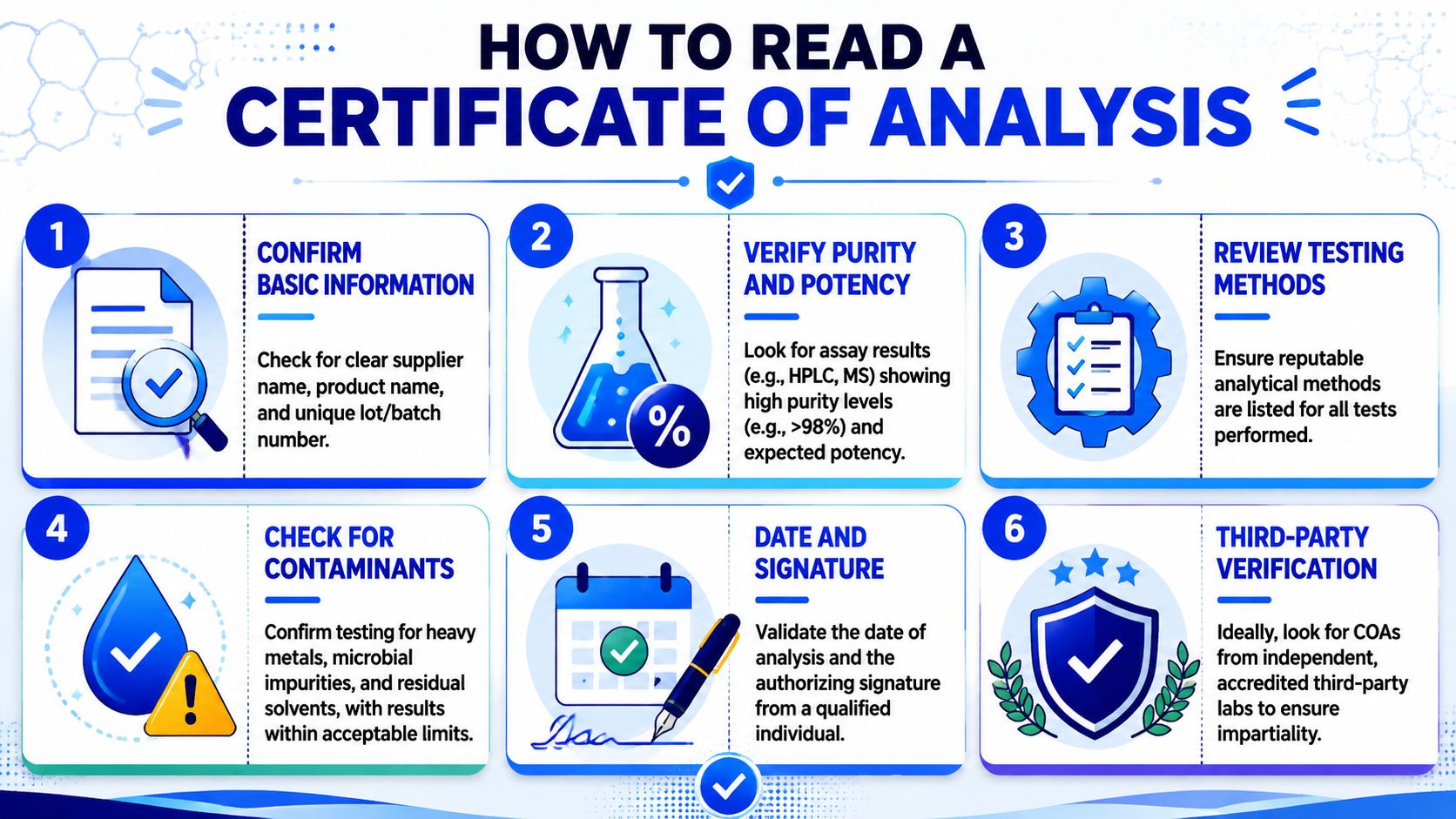
Start with traceability. A usable COA identifies the peptide, the lot or batch number, the test date, and the laboratory that performed the work. If any of those fields are missing, you cannot connect the report to the vial in front of you.
The next question is origin. A third-party laboratory report carries more weight than a seller-generated template because it creates some separation between the commercial claim and the analytical result. That does not make every outside lab report trustworthy by default. It still needs to be internally consistent.
I check five items first:
A COA with no batch identifier is marketing material. It is not batch evidence.
Purity also needs context. A high percentage is useful, but a single purity number does not answer every quality question. It does not tell you whether the material is the correct peptide, whether minor peaks were characterized, or whether the report was recycled across multiple listings. That is why I read the raw analytical sections before I accept the headline claim.
HPLC is usually the first screen for purity. On a peptide COA, review the chromatogram and the summary table together. A credible report will usually identify the major peak, show the retention time, and assign an area percentage. The purity figure on the front page should match what appears in that table.
Look for practical inconsistencies. If the COA claims 99% purity but the chromatogram shows several visible secondary peaks with no explanation, stop and ask questions. Small impurity peaks are not unusual, but they should not disappear between the graph and the summary.
Mass Spectrometry addresses identity. The reported mass should align with the expected molecular weight of the peptide being sold, allowing for the common charge states or adducts used in the method. If the mass data is missing, you may know the sample is relatively clean without knowing that it is the right compound.
That distinction matters in real purchasing decisions. HPLC can suggest a sample is clean. MS helps confirm the sample is the peptide named on the label.
Weak COAs tend to fail in predictable ways:
I also look for signs that the file itself was assembled for display rather than recordkeeping. Cropped headers, missing page numbers, blurred signatures, and mismatched fonts do not prove fraud on their own, but they justify a closer review.
A good COA does more than exist. It allows you to verify the chain from product listing to batch record to analytical result. That is the standard. If a vendor cannot meet it, do not fill in the gaps for them.
A peptide can clear your documentation review and still fail at the loading dock. I have seen clean paperwork attached to material that arrived warm, mislabeled, or impossible to trace back to the lot that was ordered. Ordering, transit, and storage need the same level of control as COA review.
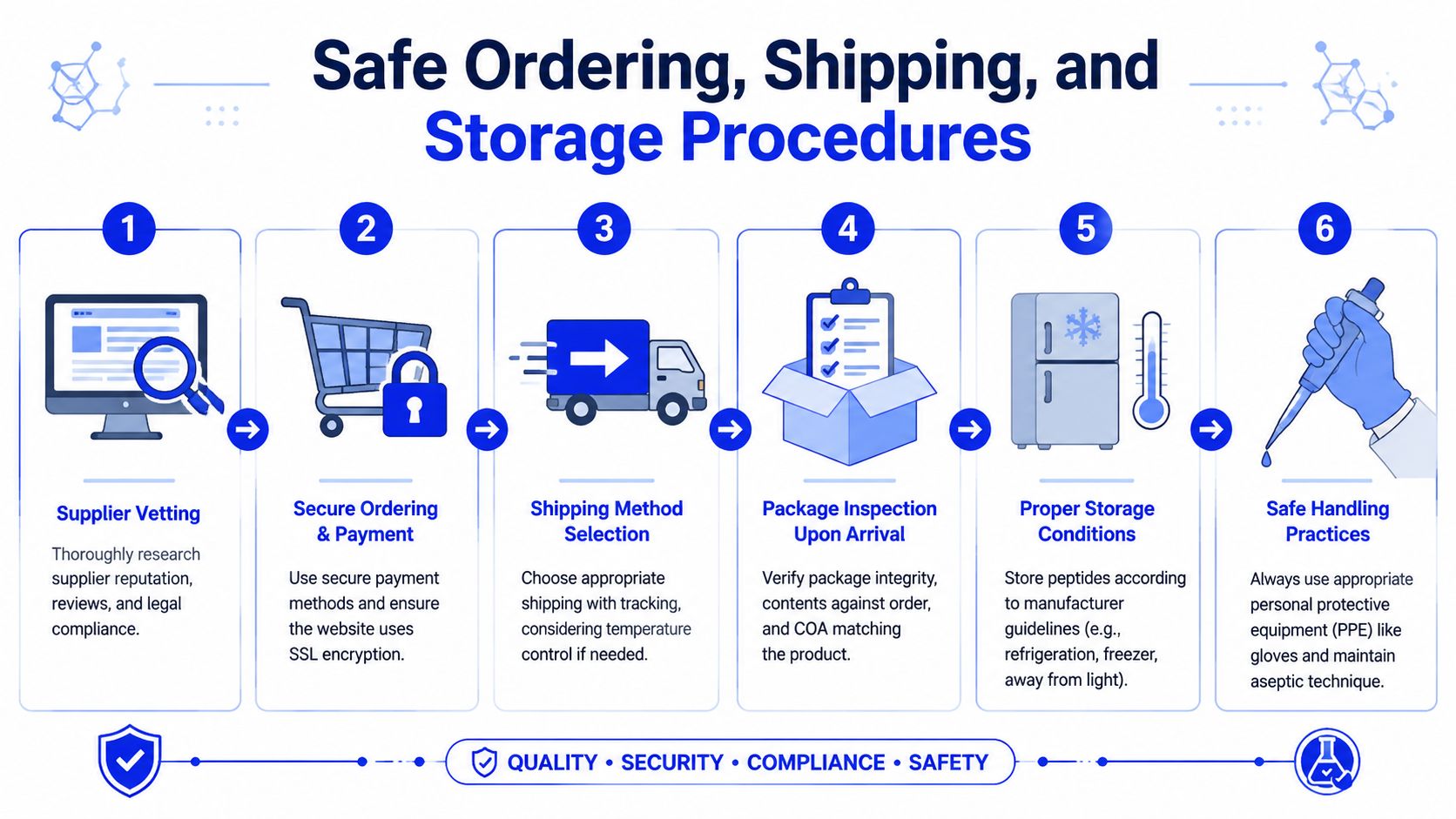
Ask the vendor specific shipping questions before you pay. How is the peptide packed. Is the shipment insulated. Are cold packs included for temperature-sensitive material. What service level is used, and on which days do they ship to avoid a weekend hold. A legitimate supplier should answer these questions plainly.
Payment method matters too. Standard checkout channels create a record, support dispute procedures, and make it easier to document the transaction for lab purchasing files. If a seller pushes wire transfers, crypto, or person-to-person payment apps while staying vague about packaging and transit controls, treat that as a procurement risk.
A review of telehealth peptide sourcing practices from One Twenty on peptide companies points to a practical issue many buyers miss. Unlabeled vials, poor packaging, and melted ice packs are not cosmetic problems. They are signs that the product may have been mishandled before it reached your bench.
Temperature control during shipping matters for thermolabile compounds. If insulation fails or cold packs are fully thawed, you cannot assume the material remained within an acceptable range during transit. Some suppliers include temperature indicators or data loggers for sensitive shipments. If they promise that level of control, confirm that the device is present and readable on arrival.
Inspect the box before anything goes into storage:
Do not discard the shipping materials until the lot is verified and logged. If there is a problem, photos of the package, label, packing materials, and vial condition are often the difference between a useful complaint and an argument you cannot prove.
Store the peptide according to the manufacturer’s instructions and the format you received. Lyophilized material is usually more stable than reconstituted material, but that does not excuse casual handling. Control temperature, limit moisture exposure, and protect from light when the supplier specifies it.
Keep the vial with its identifying information. Keep the paperwork with the lot record. If your lab aliquots material after receipt, label the daughter containers immediately with the compound name, lot number, concentration if reconstituted, date, and operator initials.
I recommend a simple receiving log for every shipment. Record arrival date, carrier, package condition, cold-pack status, lot number, storage location, and any deviations. That log gives you a way to investigate failed assays, compare lots over time, and decide whether a vendor’s shipping process is reliable enough to use again.
Traceability often breaks after delivery, not before. A rushed unboxing, a missing lot entry, or a vial separated from its COA can turn usable material into questionable inventory. Good procurement ends only when the shipment is verified, documented, and stored under the right conditions.
A fraudulent peptide supplier rarely announces itself with an obvious scam page. The pattern is subtler. A low price, a polished claim, a generic COA, and a checkout flow that pushes speed over verification.
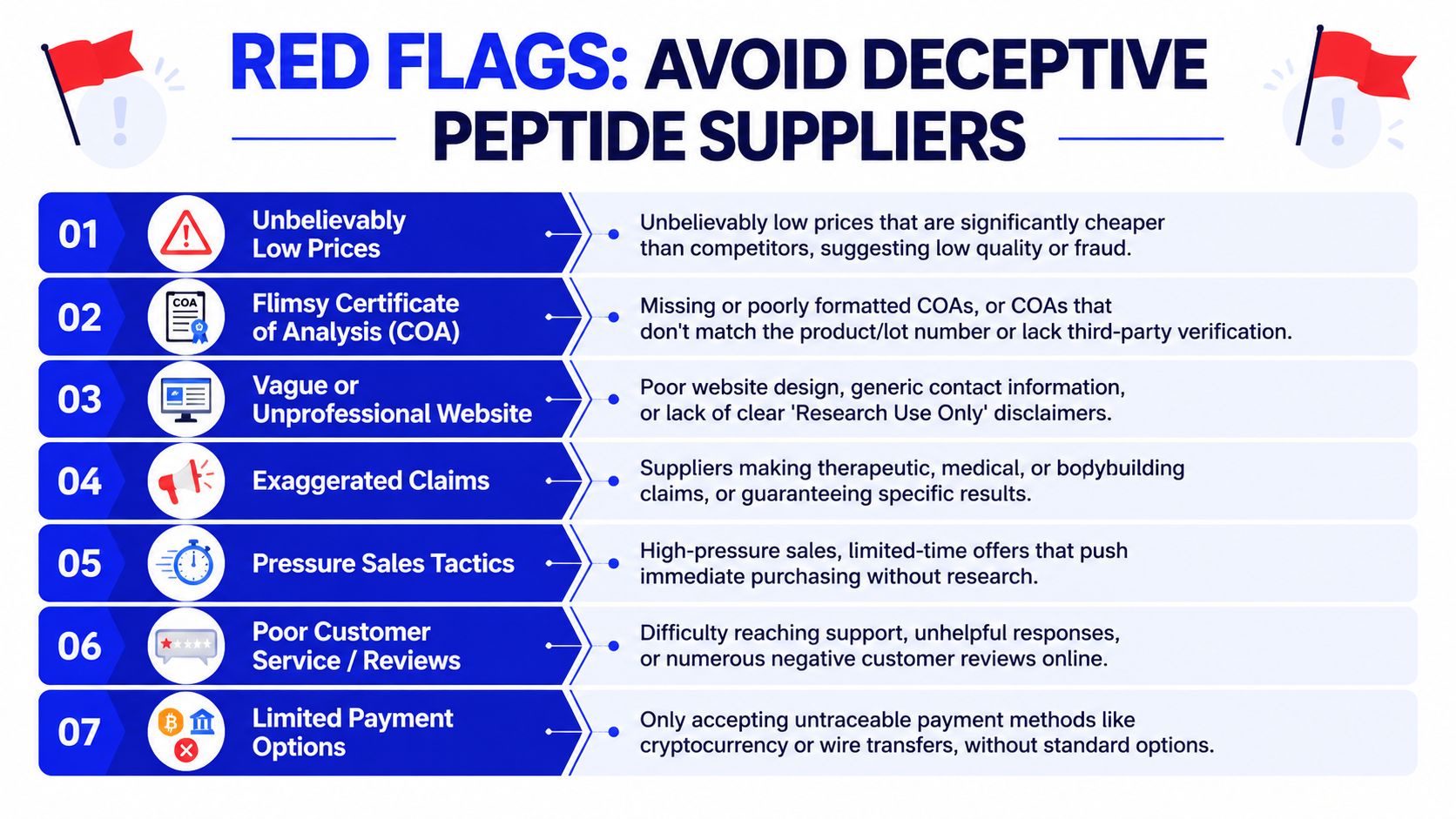
Price alone does not prove fraud. Some vendors buy in volume, some package more efficiently, and some accept lower margins to win repeat business. But a listing that sits far below the range of other traceable suppliers deserves scrutiny, not optimism.
In practice, the missing cost usually shows up somewhere else. The supplier may be skipping identity testing, purity confirmation, stability controls, cold-chain discipline, or customer support after the sale. A credible vendor can usually explain why its pricing differs and still produce batch-level records that match the product you are buying.
Cheap material becomes expensive fast if a failed assay forces a repeat study or contaminates a larger workflow.
Fraudulent suppliers often copy the appearance of compliance without providing evidence you can verify. In such cases, researchers must stop reading the page like marketing and start reading it like an audit.
Common warning signs include:
This is the point many new buyers miss. A COA is not trustworthy because it exists. It is trustworthy only if the identifiers, methods, and results can be checked against the lot in your hand.
Fraudulent sellers want fast purchases and low-friction disputes. Their sites often use countdown timers, exaggerated scarcity claims, and language designed to move buyers past the verification step. The pressure itself is the warning sign.
Payment behavior matters too. Be careful with vendors that steer buyers toward irreversible payment methods while avoiding standard merchant channels. That does not prove fraud by itself, but it raises the cost of recovering funds if the shipment is wrong, mislabeled, or never arrives.
This short explainer is worth watching because it mirrors the practical warning signs buyers run into during real searches:
The easiest fraudulent suppliers to avoid are often the ones trying hardest to make you buy before you verify.
One final test helps. Send a specific pre-purchase question about a lot number, analytical method, or storage recommendation. Serious suppliers answer with details. Fraudulent ones usually reply with sales language, delay, or silence.
Researchers don’t need perfect certainty before they buy. They need a repeatable process that filters out weak vendors and confirms the quality signals that matter.
That process starts with a hard boundary around Research Use Only. It continues with vendor vetting, but the turning point is learning to inspect a COA as evidence instead of accepting it as a prop. After that, shipping controls and receiving checks protect the material you already worked hard to qualify.
If you remember one rule, make it this: verify the seller, verify the batch, and verify the shipment. That’s how to buy peptides online without turning your study into a quality-control experiment.
A careful supplier should make this process easier by offering clear documentation, transparent sourcing, and visible compliance signals. If you’re comparing options, prioritize the vendors that let you inspect before you trust. Learn more, explore options, and buy only when the paperwork, packaging, and process all line up.
If you’re ready to source from a research-focused supplier with batch-level documentation, transparent COAs, and a clear Research Use Only framework, explore Peptide Warehouse USA to review available compounds, shipping details, and support resources before placing an order.