No products in the cart.



Are most conversations about hormone support missing a key question? People often ask what a compound increases, but the more important question is how it communicates with cells in the first place. That shift matters with Testagen, because this peptide sits in a very different category from standard supplements or direct hormone replacement.
Interest in Testagen peptide benefits comes from its unusual role as a peptide bioregulator. Instead of acting like a replacement hormone, it has been studied as a signaling compound tied to gene regulation, endocrine communication, and tissue-specific support. For readers comparing advanced peptide options with broader resources like ProMD Health Bel Air hormone optimization, the useful distinction is simple: Testagen is discussed as an endogenous-support strategy, not as exogenous testosterone.
The scientific appeal is in the mechanism. Researchers have explored its relation to testicular tissue, the male hypothalamic-pituitary-gonadal axis, thyroid signaling, immune differentiation, and cellular aging patterns. Those topics can get technical quickly, so the goal here is clarity. You’ll get the biology in plain language, the researched benefit categories, and the limits that matter if you’re evaluating this compound seriously.
Peptide bioregulators attract attention because they don’t fit the usual categories. They aren’t vitamins, and they aren’t classic hormone replacement agents. Researchers study them as short amino acid sequences that may influence how cells maintain tissue-specific function.
That framing is important for Testagen. The compound is discussed in the literature as a tissue-focused bioregulator associated with male endocrine and reproductive biology, especially where age-related decline in testicular function is a concern. It’s also been described as a fertility-preserving endogenous-support option rather than a direct testosterone therapy in the available research context linked through published discussion of Testagen’s background and mechanism.
Testagen makes more sense when you think of it as a cellular instruction signal, not a hormone replacement product.
Many readers get confused here because “hormone support” sounds like one thing. In reality, there’s a major difference between supplying a hormone from outside the body and trying to influence the internal systems that help regulate production. Testagen belongs to the second category, at least in the way it’s described in research and educational material.
At the molecular level, Testagen is very specific. It isn’t a broad extract or a loose peptide blend.
Core definition: Testagen is a specific tetrapeptide bioregulator composed of exactly four amino acids: lysine (Lys), glutamic acid (Glu), aspartic acid (Asp), and glycine (Gly), forming the sequence H-Lys-Glu-Asp-Gly-OH, also referred to as KEDG.
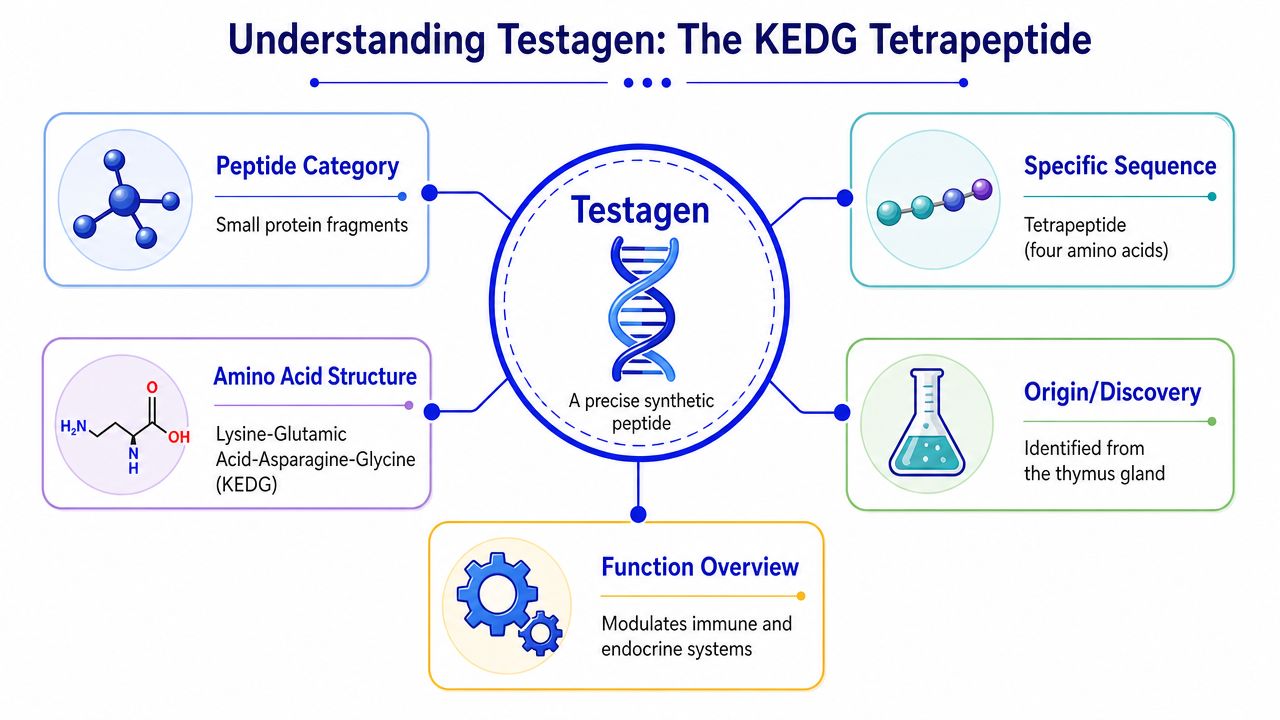
That sequence matters because peptide function depends on structure. Change the amino acid order, and you may change what the peptide interacts with, where it travels, and what biological signals it may influence. With Testagen, the scientific interest centers on a compact four-amino-acid sequence tied to tissue-specific regulatory activity.
The compound is associated with the Russian school of gerontopeptide research and with work by Dr. Vladimir Khavinson. In that framework, Testagen is positioned as a peptide aimed at testicular tissue and the broader male endocrine network. That doesn’t make it testosterone itself. It makes it a candidate signaling molecule.
A simple analogy helps here. If a hormone is like delivering a finished product to a factory, a peptide bioregulator is more like handing the factory supervisor a short written instruction. The point isn’t to replace the finished output directly. The point is to influence how the factory runs.
That’s why many descriptions of benefits of peptides can be misleading when they flatten everything into one category. Testagen is not typically discussed as a direct anabolic agent. It’s discussed as a peptide that may help regulate tissue behavior through molecular signaling.
A few identity points make the distinction easier:
For educated readers exploring peptide stacks, comparisons, or use cases, this is the baseline concept to keep in mind. Testagen is best understood as a precise regulatory peptide with a defined sequence and a narrow biological focus.
The most unusual part of Testagen is the proposed mechanism. According to descriptions of the peptide in research-based materials, Testagen is a synthetic tetrapeptide bioregulator composed of Lys-Glu-Asp-Gly (KEDG) that uniquely traverses both cellular and nuclear membranes to directly interact with DNA and histone proteins, driving epigenetic modulation of gene expression patterns in the source discussion at Core Peptides’ review of Testagen thyroid and senescence research.
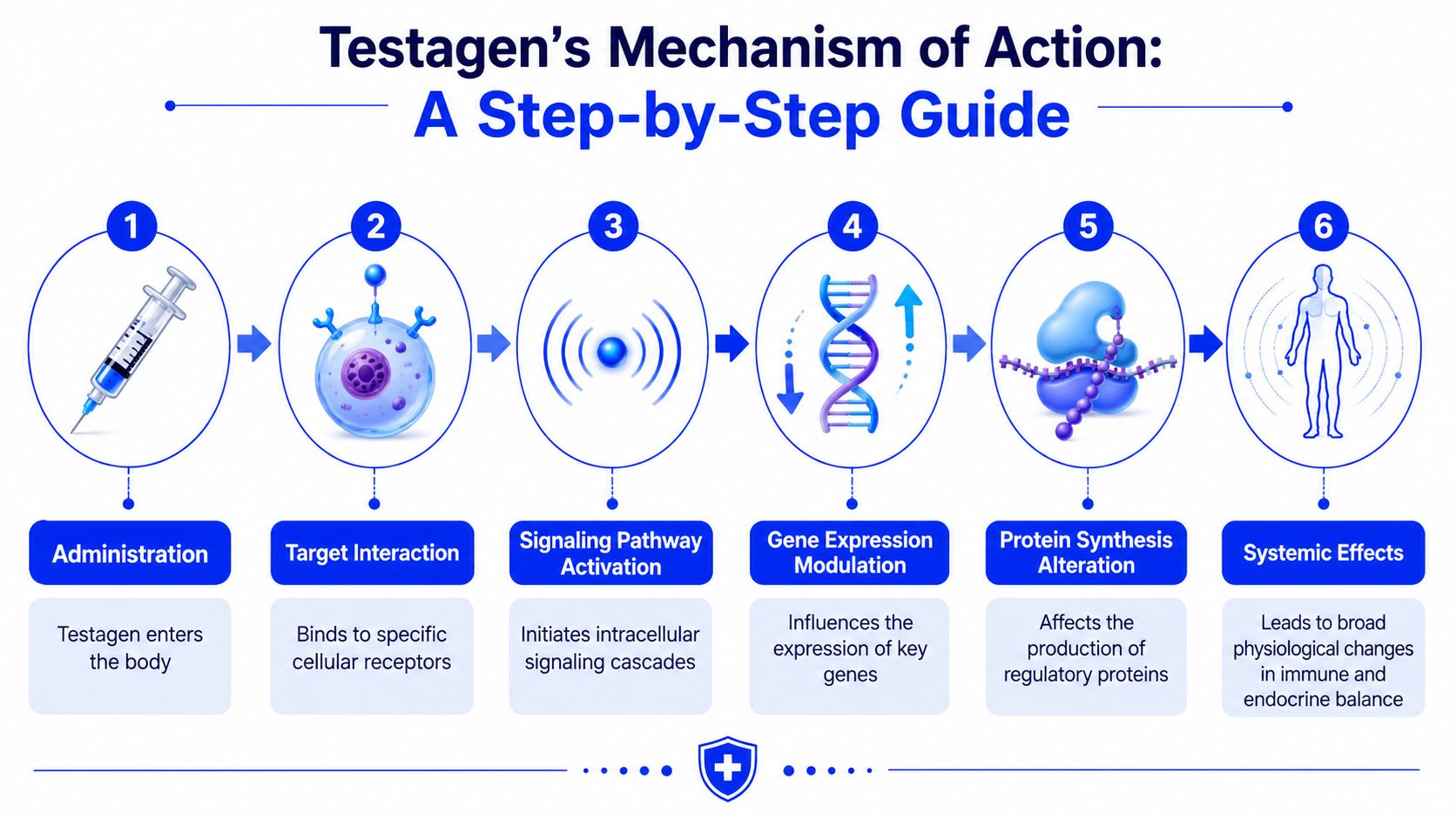
That sounds abstract, so translate it into plain language. Your DNA contains the full library of cellular instructions, but cells don’t read every page at once. Epigenetic regulation affects which instructions stay accessible and which stay quiet. Testagen is studied as a peptide that may influence that accessibility.
Think of it as a small key that may help reopen selected instruction folders inside a cell nucleus. It doesn’t rewrite the genome. It may alter how existing instructions are read. That’s why Testagen is often described as gene-regulatory rather than hormone-replacing.
The hypothalamic-pituitary-gonadal axis, often shortened to the HPG axis, is the communication line that links brain signaling to testicular function. In simplified terms:
If this axis loses efficiency with age or stress, downstream function can decline. Testagen is investigated as a compound that may support endogenous regulation within this system rather than bypassing it.
Readers often mix up “stimulating the system” with “replacing the output.” They aren’t the same. A peptide that modulates signaling may preserve natural feedback loops in a way that differs from introducing outside hormone.
The central idea behind Testagen is restoration of signaling quality, not brute-force hormone substitution.
For people who like broader hormone education tools, Lila’s AI-powered hormone insights is a useful example of how hormone networks can be interpreted as interconnected systems rather than isolated lab values.
Testagen’s proposed biology also reaches beyond the HPG axis. Research descriptions indicate that in specific models, the peptide stimulated the anterior pituitary to enhance thyroid-stimulating hormone release, which then influenced T3 and T4 production. That matters because endocrine systems rarely operate in isolation.
A practical way to think about this is to picture a control room with linked circuits. If one signaling pathway affects pituitary output, that may shape both reproductive and thyroid-related physiology. Researchers find that dual-axis possibility especially interesting because it suggests Testagen may influence endocrine homeostasis through regulatory signaling rather than through direct replacement chemistry.
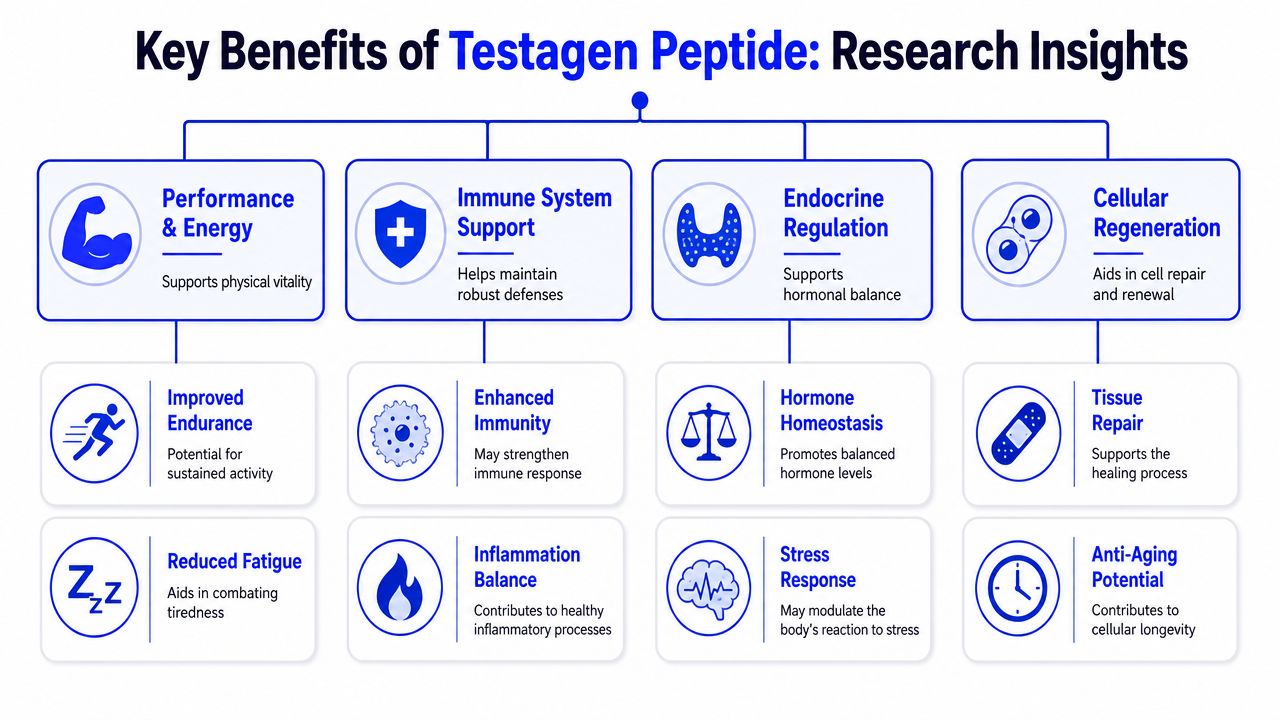
Interest in Testagen peptide benefits usually starts with a list. That’s understandable, but lists can hide the logic behind the findings. The more useful approach is to group the researched benefits by the biological systems they may affect.
In sports physiology contexts, Testagen has been described as enhancing mitochondrial activity and reducing lactic acid accumulation, leading to measurable improvements in endurance capacity and recovery times after exhaustive muscle stress in the review at Pen Peptides USA on Testagen. The same source states that its glycine component contributes to neuroprotective effects, reducing neural overstimulation and supporting stress adaptation.
That combination is why performance-minded readers pay attention. Mitochondrial activity connects to energy production. Lower lactic acid accumulation relates to perceived fatigue and post-exertion recovery. Stress adaptation matters because recovery isn’t just muscular. It also involves nervous system load.
Here’s the practical takeaway for this category:
A short explainer can help ground the idea:
Another major reason researchers discuss Testagen is its place in the peptide bioregulator and anti-aging conversation. The proposed mechanism points to epigenetic modulation, so the question becomes whether altered signaling changes how aging tissues behave.
One cited finding is that clinical trials indicate Testagen treatment reduces cellular senescence markers by up to 3.23-fold in stem cell cultures, while also improving uroflowmetry indicators and reducing prostatic inflammation in hormonal deficiency models, according to NewBioRx’s summary of Testagen research findings.
That doesn’t mean aging has been “reversed” in any broad consumer sense. It does mean researchers have reported changes in markers associated with senescence and tissue function in specific models. For a scientist, that’s a signal worth following, not a final verdict.
A simple way to frame the anti-aging angle is this:
| Research area | Why it matters |
|---|---|
| Cellular senescence markers | Suggests interest in how tissues age at the cellular level |
| Uroflowmetry indicators | Connects peptide effects to functional readouts in hormonal deficiency models |
| Prostatic inflammation | Points to tissue-specific regulatory effects beyond a single hormone measurement |
The endocrine angle gets most of the attention, but immune biology also appears in the literature. Scientific studies have demonstrated that Testagen may induce the differentiation of stem cells into immune system cells, identifying positive implications for immune function support in the PMC article discussing Testagen and related bioregulators.
That’s a useful reminder that peptide bioregulators may have broader system effects than their tissue label suggests. A compound associated primarily with testicular and endocrine support may still intersect with immune differentiation, inflammatory balance, and tissue maintenance.
Research interest in Testagen comes from convergence. Endocrine support, cellular aging, and immune differentiation aren’t separate stories. They may reflect one regulatory mechanism showing up in several places.
For readers evaluating benefits of peptides more generally, this is the pattern to notice. Testagen is compelling not because it promises one dramatic outcome, but because it appears in research across several linked biological domains.
How much confidence should a reader place in the current Testagen literature?
The answer depends on the level of evidence being discussed. Testagen research spans cell culture experiments, animal models, and a smaller number of human-facing reports. Those layers do not answer the same question. A cell study can suggest a mechanism, such as altered gene expression in a target tissue. An animal study can ask whether that molecular signal is followed by a physiological change. Human research has to answer the hardest question of all, which is whether the effect is meaningful, reproducible, and clinically relevant in real patients.
That distinction matters because Testagen is often described by its outcomes rather than by the chain of reasoning behind them. The proposed mechanism involves short peptide signaling that may interact with chromatin and gene regulation in tissue-specific ways. A useful analogy is a dimmer switch rather than an on-off button. The hypothesis is not that Testagen forces the body to produce one hormone directly. The hypothesis is that it may shift how certain cells read regulatory instructions, which could then influence endocrine function through the hypothalamic-pituitary-gonadal axis.
That is scientifically interesting. It is also exactly where caution belongs.
A mechanistic signal is not the same as a settled therapy. If a peptide appears to affect transcriptional activity in testicular cells, researchers still need to show that the effect is consistent across species, doses, formulations, and patient populations. The HPG axis adds another layer of complexity because it behaves like a feedback network, not a straight line. Changing one part of the system can alter gonadotropin signaling, steroidogenesis, and downstream reproductive function in ways that vary from person to person.
The main limitations are fairly clear:
Regulatory status reinforces that point. Testagen is not listed as an FDA-approved drug in the United States in the FDA Drugs@FDA database. For readers, that means scientific interest should be kept separate from assumptions about established medical use, manufacturing uniformity, or broad clinical consensus.
Time course is another source of confusion. Readers interested in hormone and fertility outcomes often expect a direct, rapid effect, but reproductive biology runs on staged cycles of cell development and feedback signaling. Broader educational material on the sperm cycle and supplement timeline can help place those expectations in a more realistic physiological context, even though it is not specific to Testagen itself.
The balanced conclusion is straightforward. Testagen remains interesting because its proposed mode of action points to gene regulation and axis-level signaling rather than a simple replacement effect. At the same time, the evidence base is still limited enough that strong practical claims would run ahead of the science.
What does “safe” mean for a peptide that sits in a research setting rather than a standard prescription framework?
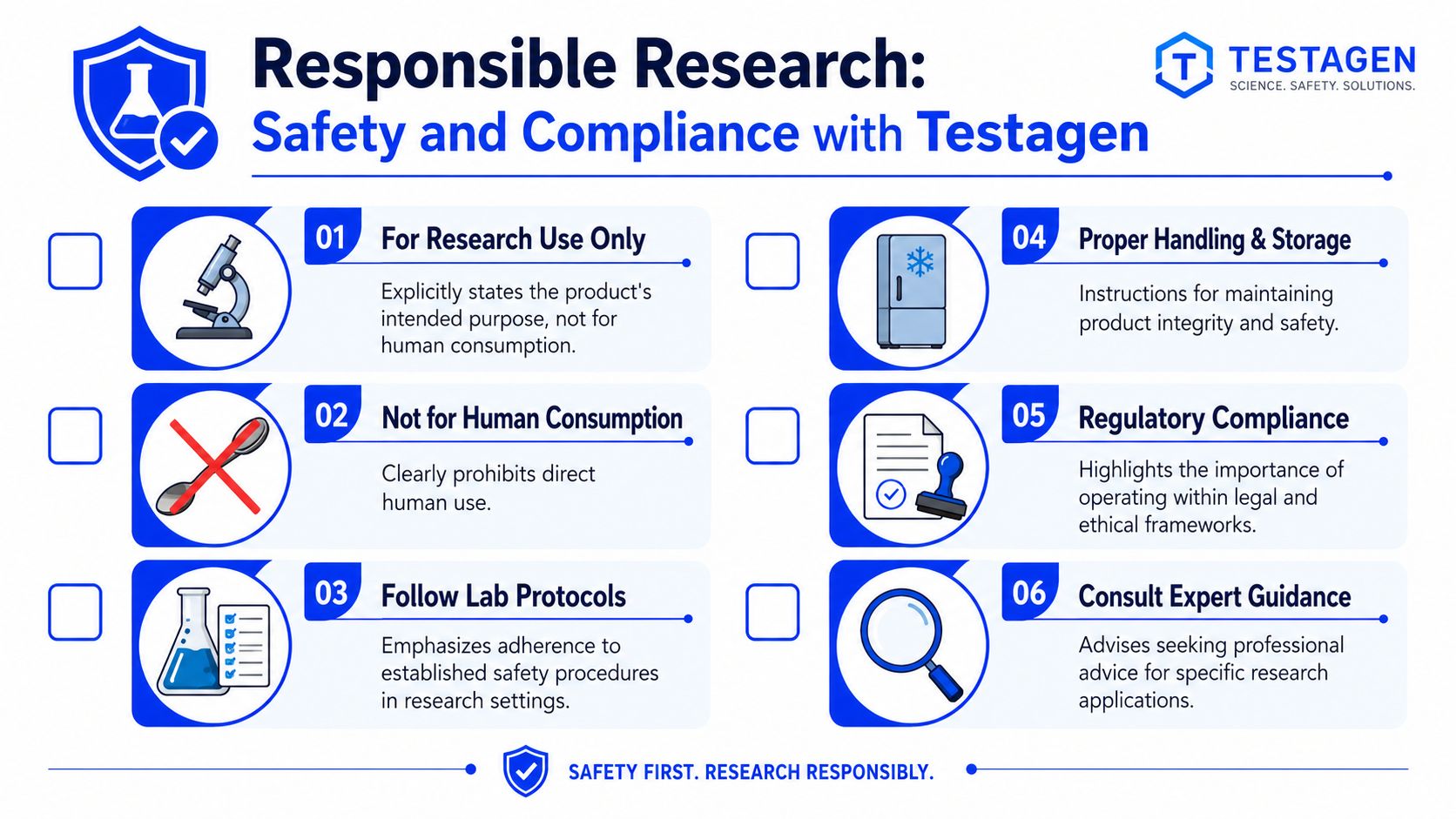
For Testagen, the first question is regulatory context. Testagen is not an FDA-approved drug in the United States for general consumer use. In practical terms, that changes how it should be approached. The standard is not casual interest or anecdotal enthusiasm. The standard is documentation, controlled handling, clearly defined research use, and careful separation between mechanistic curiosity and personal medical experimentation.
That distinction matters even more with compounds discussed in terms of gene regulation. A peptide proposed to influence transcriptional activity is not like a simple nutrient added to a system. It behaves more like a signaling input introduced into a dense control network. In endocrine biology, and especially in systems tied to the hypothalamic-pituitary-gonadal axis, small upstream shifts can lead to wider downstream effects through feedback loops, receptor sensitivity, and tissue-specific responses. That is why research discipline matters more here, not less.
Published discussion around peptide bioregulators has also included observations related to cell aging, tissue state, and functional markers in experimental settings, including work indexed in the biomedical literature at the National Library of Medicine. Those signals are scientifically interesting, but they do not remove uncertainty about formulation quality, reproducibility across suppliers, or real-world applicability outside controlled research conditions.
A careful lab treats peptide sourcing the way a molecular biologist treats sample integrity. If the input is poorly characterized, every downstream interpretation becomes less reliable.
Use this checklist when evaluating any peptide source for laboratory or analytical work:
A short comparison helps clarify what useful documentation looks like:
| What to examine | Why it matters |
|---|---|
| Batch documentation | Supports traceability and lot-to-lot comparison |
| Third-party reports | Adds independent confirmation of identity and purity |
| Storage instructions | Helps preserve peptide structure and reduce degradation risk |
| Intended-use language | Shows whether the supplier understands research compliance boundaries |
Practical rule: If a seller spends more time promising dramatic outcomes than explaining identity testing, purity methods, and batch controls, treat that as a warning sign.
Research best practice also means avoiding self-experimentation narratives and medical-style claims. The more a compound is discussed in terms of epigenetic signaling or endocrine regulation, the more important it becomes to handle it like a laboratory reagent rather than a lifestyle product. That mindset keeps the focus where it belongs: source quality, mechanistic clarity, and limits of inference.
Testagen stands out because the conversation isn’t just about outcomes. It’s about mechanism. The peptide’s defined KEDG structure, its proposed interaction with DNA and histone proteins, and its relationship to endocrine and cellular regulation make it more scientifically interesting than a simple “testosterone support” label suggests.
The current picture is promising but still incomplete. Research points toward potential roles in performance recovery, tissue function, immune differentiation, and hormone-related support, yet the evidence remains limited and context-dependent. That’s why Testagen belongs in a careful research discussion, not a hype cycle.
For readers exploring advanced compounds, the best next step is to keep the same standard you’d apply to any serious scientific purchase. Learn more, compare documentation, and explore options with a focus on purity, traceability, and intended research use.
If you’re sourcing compounds for laboratory, analytical, or preclinical work, Peptide Warehouse USA offers a research-focused catalog with USA-made supply, batch testing, third-party documentation, and clear compliance language designed for serious peptide procurement.