No products in the cart.

You're probably here because you need a peptide source you can trust, and the search results aren't helping. One supplier says “USA made,” another says “research grade,” a third promises premium purity but won't show batch data until after checkout. If your assay, stability work, or preclinical study depends on material integrity, that's not a minor inconvenience. It's a risk to your timeline, budget, and data quality.
Among Peptide Manufacturers USA searches, the hard part isn't finding vendors. It's separating legitimate manufacturing and quality systems from polished marketing. The useful question isn't “Who sells peptides?” It's “Who can prove what's in the vial, how it was made, and whether this lot matches the next one?”
A researcher orders a peptide for a time-sensitive experiment. The listing looks clean, the purity claim looks impressive, and the checkout is easy. Then the package arrives with minimal paperwork, no clear lot traceability, and no way to confirm whether the analytical report belongs to that batch or to a generic reference file. That's where sourcing mistakes begin.
This happens because the peptide market is crowded with companies that sound similar but operate very differently. Some are actual manufacturers. Some are resellers. Some understand analytical quality. Some understand only front-end ecommerce.
The U.S. peptide therapeutics market was valued at approximately USD 17.8 billion in 2022 and is projected to reach USD 35.7 billion by 2032 at a CAGR of around 7% from 2023 to 2032, according to U.S. peptide therapeutics market analysis from Global Market Insights. Growth attracts serious manufacturers, but it also attracts noise.
Before comparing prices, check the basics:
Practical rule: If a supplier hides quality documents until after payment, treat the product listing as incomplete.
Researchers lose time when they rely on labels like “premium,” “ultra pure,” or “pharma quality” without supporting records. Those phrases don't replace chromatograms, impurity discussion, microbial controls, or documented handling practices.
The buyers who get more consistent outcomes usually work backward from documentation, not forward from branding. That's the difference between shopping and qualification.
The biggest sourcing mistake isn't buying from the wrong website. It's applying the wrong expectations to the wrong product category.
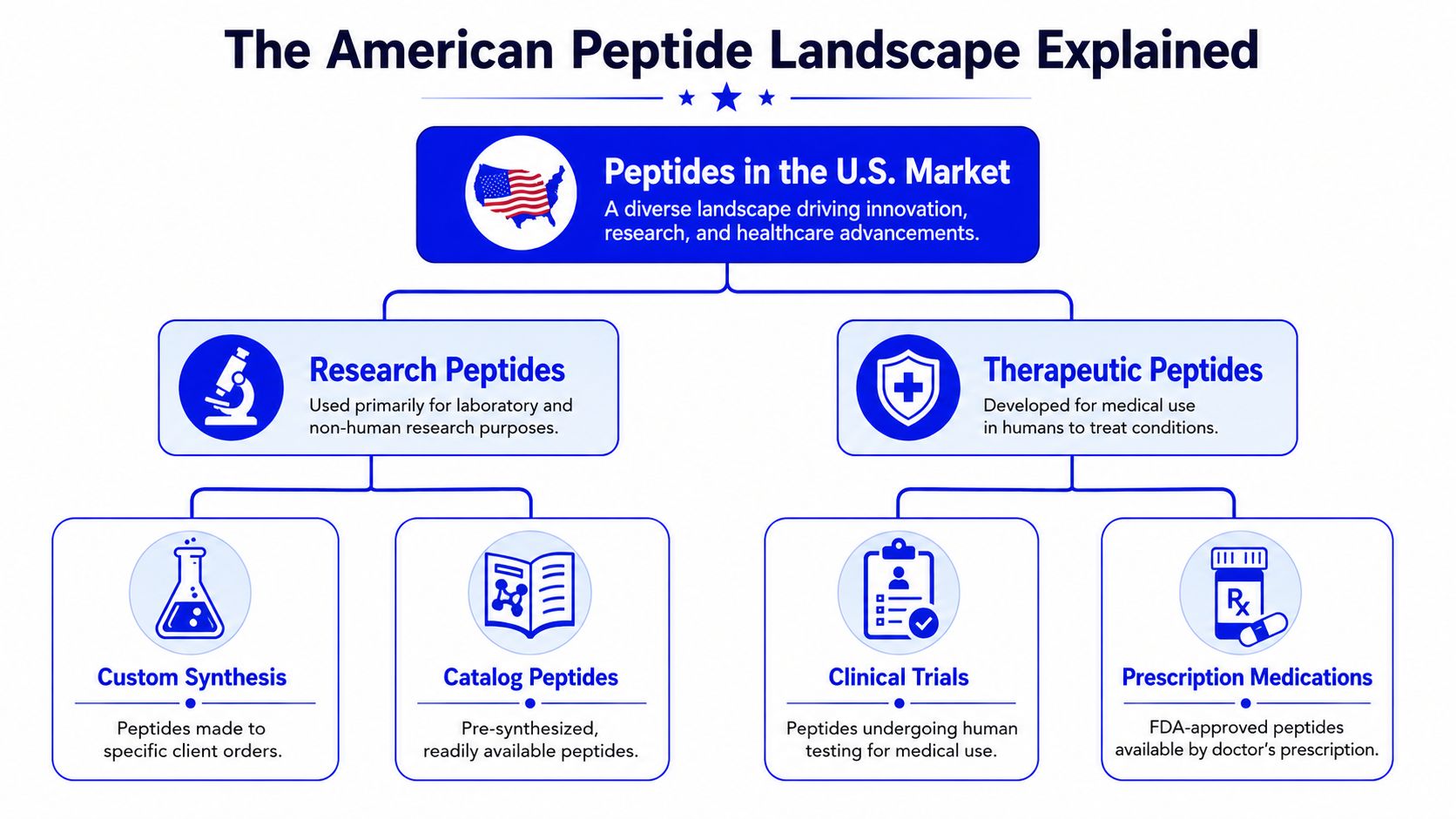
Think of peptides in the U.S. market like fuel grades for different engines. They may all be called fuel, but the intended use, handling standards, and consequences of misuse are not the same.
FDA-approved pharmaceutical peptides are manufactured and regulated as approved drugs. Their use case, controls, labeling, and distribution framework are significantly different from research chemicals.
Compounded peptides sit in a different lane. They are not interchangeable with approved pharmaceuticals, and they are not the same as catalog research products. Their status depends heavily on regulatory context, ingredient sourcing, and permissible compounding rules.
Research-grade peptides are sold for laboratory, analytical, or preclinical use. They are commonly labeled for research use only, and that label matters. It signals intended use and sets boundaries around how the product may be marketed and purchased.
A major source of confusion is the assumption that “American-made” equals approved, prescribed, or clinically validated. It doesn't. As reported in ABC7 Chicago's coverage of peptide safety concerns, a critical gap in the market is confusion between American-made research peptides and FDA-approved pharmaceuticals. The same report notes that in 2023, the FDA added nearly 20 peptides to its list of substances that should not be compounded due to safety risks.
A peptide can be synthesized in the United States and still be sold strictly as a research chemical. “USA made” may describe where synthesis occurred. It does not automatically describe regulatory category, intended use, or clinical status.
That distinction matters when evaluating supplier claims. A professional supplier should state what the product is, what it is not, and what documentation supports the batch.
For labs building procurement workflows, operational support matters too. Teams coordinating storage, movement, and staging across development environments often benefit from specialized Material Handling USA solutions for labs when they need better control over materials flow and lab logistics.
American origin can improve supply chain visibility. It does not remove the need for batch verification.
A good peptide isn't defined by a headline purity number alone. It's defined by how reliably the manufacturer controls synthesis, purification, testing, documentation, and release.
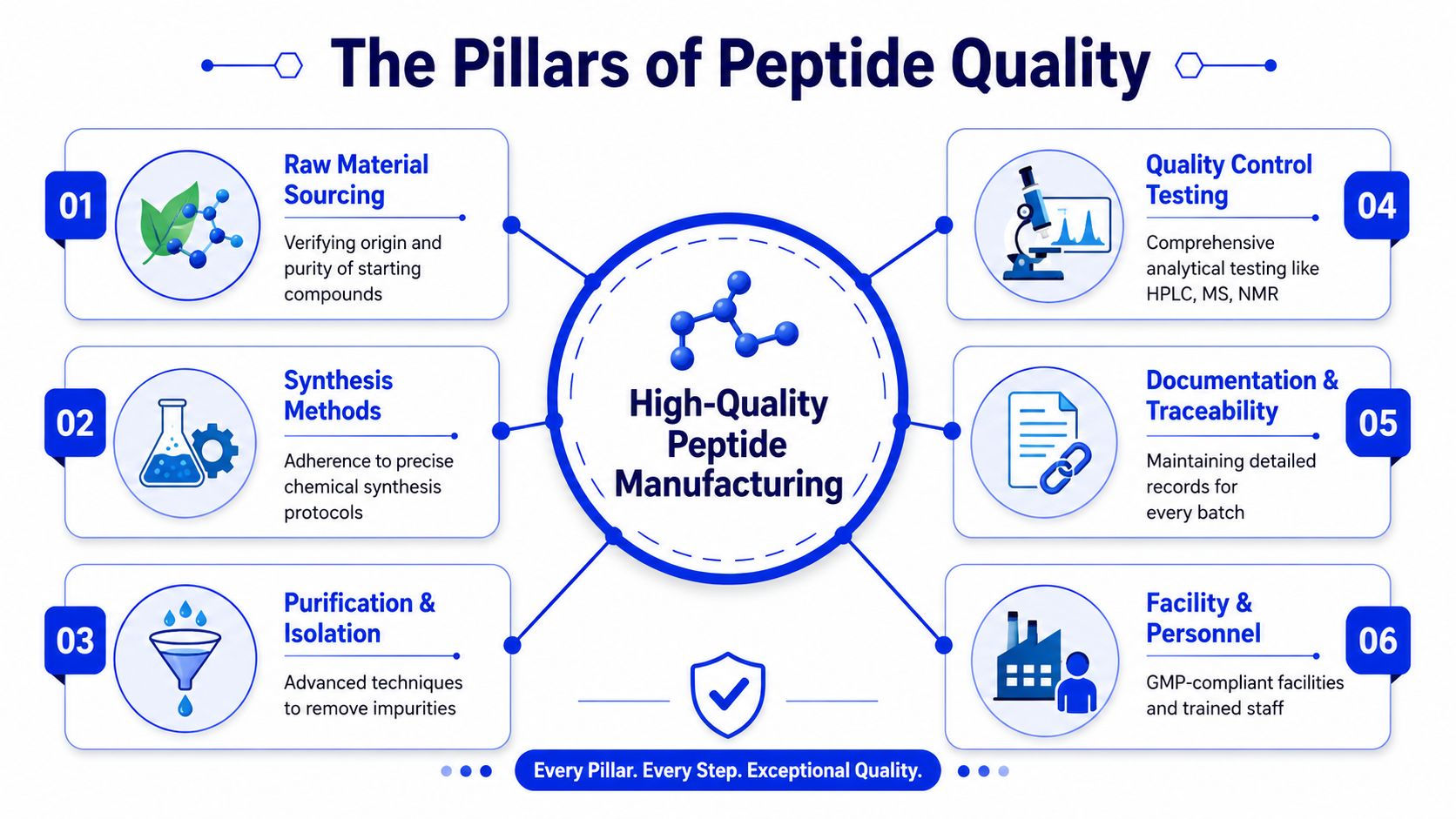
Most peptide manufacturing relies on solid-phase peptide synthesis, often shortened to SPPS. In practical terms, that means the sequence is assembled step by step on a solid support. Every coupling, deprotection, cleavage, and handling step creates opportunities for incomplete reactions, side products, or sequence-related impurities.
That's why “we purify everything later” isn't a strong quality philosophy. Purification is important, but upstream process discipline matters just as much.
Look for manufacturers that can speak clearly about:
For research peptides, three core quality questions matter more than the marketing language around them.
| Quality question | Typical evidence | Why it matters |
|---|---|---|
| Is it the right molecule? | Mass spectrometry | Confirms expected molecular weight and helps verify identity |
| How clean is it? | HPLC chromatogram and reported purity | Shows the main peak and whether notable impurities are present |
| Is it suitable for the intended lab setting? | Microbial and endotoxin testing when relevant | Reduces avoidable contamination-related problems |
Purity is usually presented through HPLC. A chromatogram with a dominant main peak and limited secondary peaks is more useful than a bare percentage printed on a product page. Identity is commonly supported by mass spectrometry, which should align with the expected mass of the peptide.
For synthetic peptide drug substances, the FDA's guidance is specific. Any new specified peptide-related impurity should not exceed 0.5 percent of the drug substance, and all impurities at or above 0.10 percent must be identified, according to FDA guidance on synthetic peptides. Even when you're sourcing research material rather than an approved drug product, that threshold is a useful reminder: impurity discussion is not a cosmetic detail.
Experienced QA teams don't treat paperwork as an afterthought. If the supplier can't produce organized records, the technical quality may be fine, but you can't verify it.
An effective quality management system should include detailed batch records, validation reports, and quality control data from all production stages, as described in Intavis guidance on peptide QMS and GMP-oriented documentation. That's what supports traceability, audit readiness, and investigation when something goes wrong.
Here's the practical takeaway. A peptide vial without traceable documentation is incomplete inventory.
Bench reality: When a result looks off, the first thing a lab needs is a lot number tied to real records, not a customer service promise.
Most peptide buyers don't need more claims. They need to know how to read the evidence in front of them.
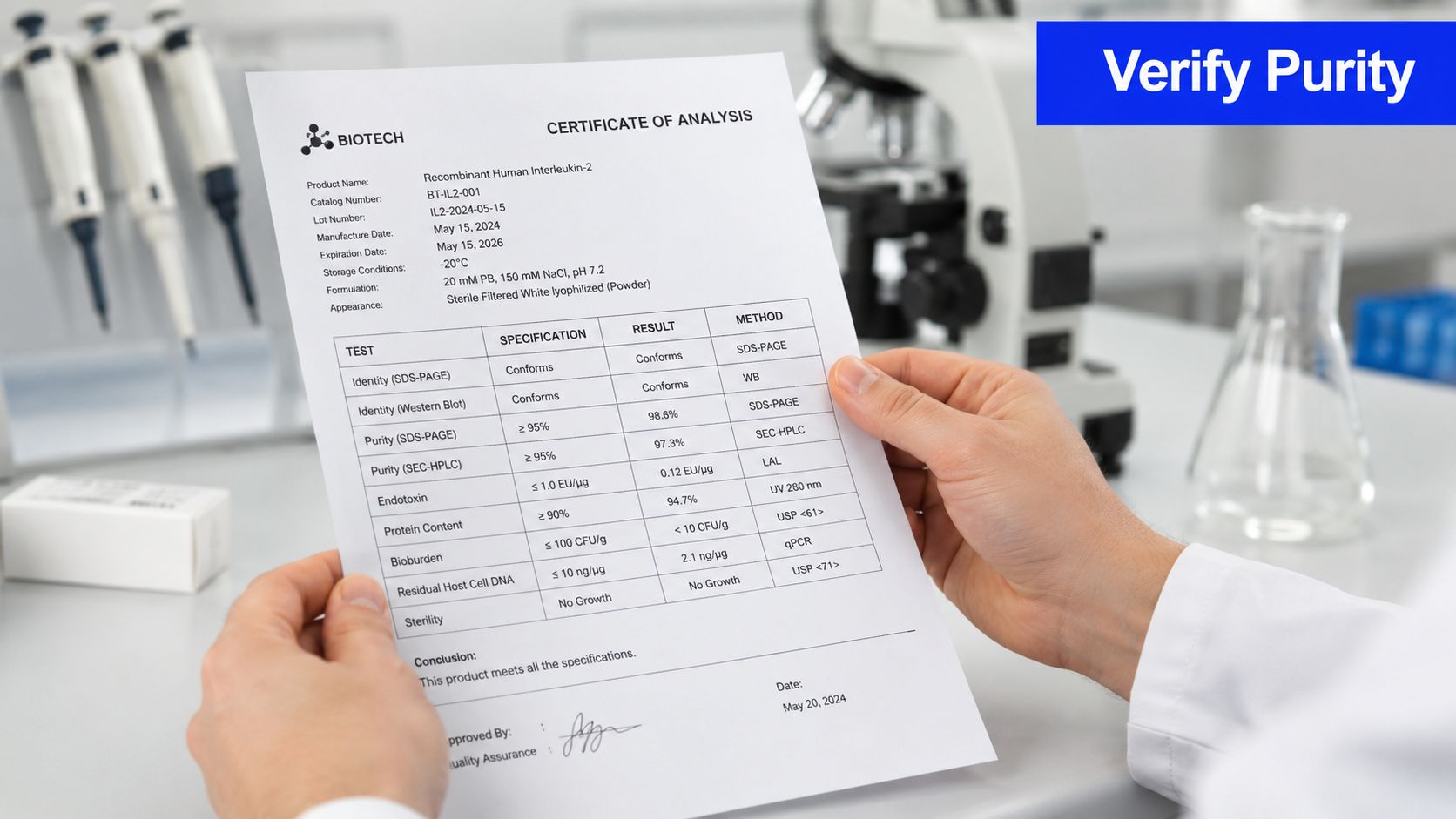
Start with the Certificate of Analysis, or COA. A usable COA should match the exact material being sold and should answer basic release questions without forcing you to guess.
Check these fields first:
Many buyers run into a familiar problem. Vendors advertise high purity but only promise documentation after purchase. That's a real trust gap. As noted by American Peptides on COA transparency and batch documentation, many consumers struggle to verify third-party purity documentation, while reputable suppliers should provide verifiable data upfront, including claims such as 99.7% average purity based on 500 batches when they use that as part of their transparency model.
A COA shown before purchase doesn't guarantee quality. But refusing to show one removes your ability to qualify the vendor.
HPLC reports deserve a closer look than most buyers give them. Don't stop at the summary line that says “purity.” Look for a chromatogram that appears batch specific and readable.
A useful HPLC review usually asks:
Mass spectrometry is more direct. You want the measured mass to line up with the expected peptide mass. If the report is cropped, generic, or detached from the lot number, confidence drops fast.
For a visual primer on how labs approach peptide characterization, this overview is a useful starting point:
Some quality packets look professional at first glance but fail basic verification.
The strongest suppliers make validation easier, not harder. They present the documents in a way that lets a careful buyer say yes with confidence.
The legal label on a peptide product isn't just wording for the website footer. It shapes how a compliant supplier markets, ships, documents, and supports the order.
Under the Food, Drug, and Cosmetic Act, peptide sellers can operate without certain licenses if their products are strictly marketed for laboratory use and not for human consumption. But advertising that implies therapeutic effects can negate that exemption and lead to regulatory action, as explained in LumaLex Law's analysis of peptide sales requirements under the FDCA.
That legal boundary shows up in supplier behavior. Compliant companies tend to be careful about product descriptions, intended-use statements, disclaimers, and customer communication. They usually avoid language that drifts into treatment claims or performance promises.
You can often tell how mature a supplier is by how they handle routine questions. Professional teams answer sourcing, lot, storage, and testing questions directly. Weak operators pivot immediately to lifestyle claims.
A peptide may leave the production line in good condition and still arrive compromised if shipping practices are sloppy. Some compounds need tighter handling than others, and temperature sensitivity should be addressed realistically.
Procurement teams should ask about:
For teams managing classification and customs planning, this guide on HTS codes for logistics is a practical reference.
Procurement quality is still quality. If the supplier can't trace the lot through fulfillment, you're accepting preventable risk.
The supplier market is getting larger, and that makes screening discipline more important. The U.S. peptide synthesis market was valued at USD 239.15 million in 2025 and is projected to reach USD 563.82 million by 2035, according to Roots Analysis coverage of peptide synthesis market growth. More vendors will enter the field. Not all of them will support long-term research consistency.
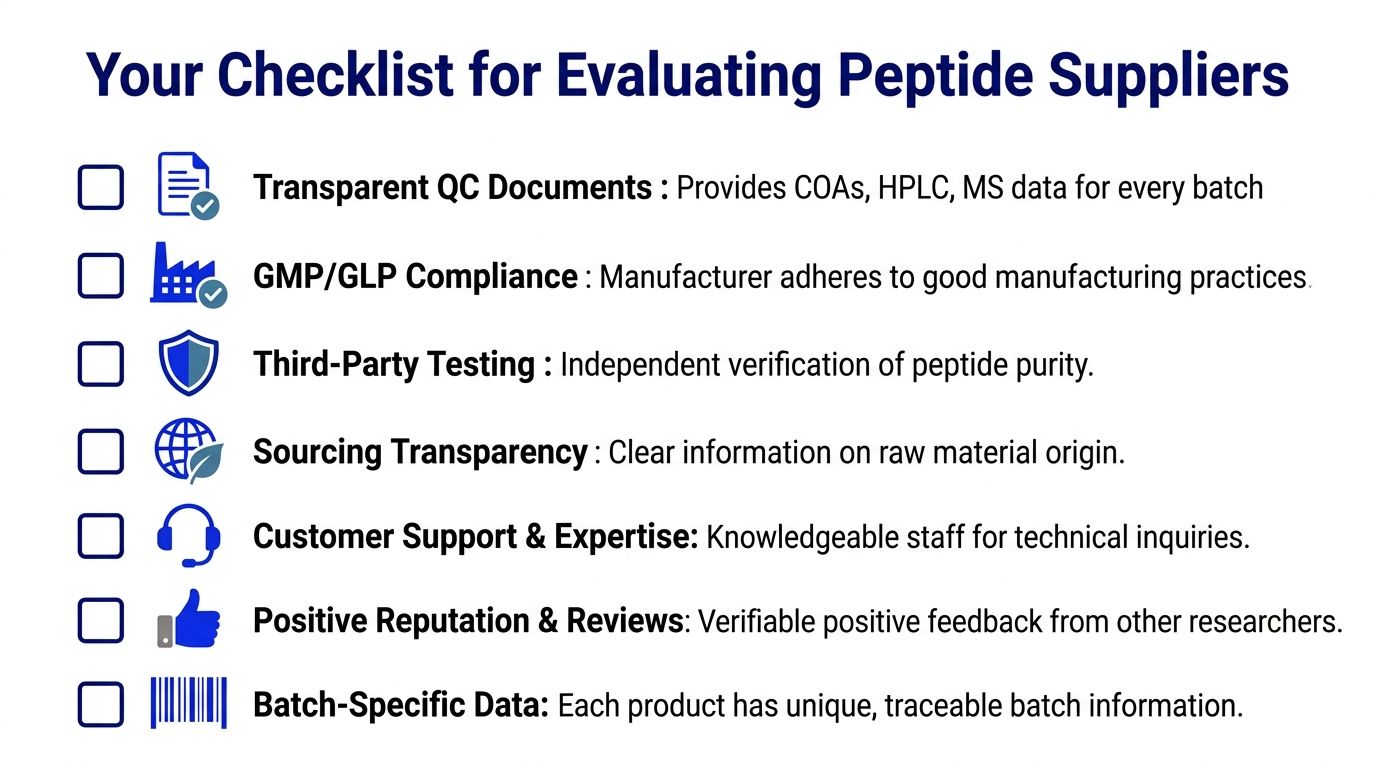
Use this as a practical qualification screen, not a wish list.
Low-friction ordering can hide high-friction troubleshooting.
| Red flag | Why it matters |
|---|---|
| Purity claims without underlying reports | You can't verify whether the claim belongs to your lot |
| COAs available only after purchase | You lose leverage and screening power |
| “USA made” used as the main proof point | Origin alone doesn't confirm analytical quality |
| Marketing language implying human use | Compliance risk rises immediately |
| Weak record linkage across product, label, and report | Investigations become difficult if results drift |
One useful habit is scoring suppliers before the first order and again after receipt. A vendor may look strong on the website and fail on packaging discipline, responsiveness, or document completeness.
In this context, serious buyers save time. They don't try to predict perfection. They build a repeatable screening process that lowers the odds of bad inventory entering the lab.
Which is better for research use?
That depends on your workflow. Lyophilized material usually gives labs more control over storage and reconstitution timing. Liquids can be convenient, but convenience should never replace clear stability handling from the supplier.
Should I avoid one format entirely?
No. You should evaluate whether the supplier provides handling guidance that matches the format being sold and whether the documentation clearly identifies that format.
Can I ask for a COA before ordering?
Yes, and you should. A serious supplier should be prepared to provide batch-specific quality documentation or explain exactly what documentation is available for the lot being sold.
Why does Made in the USA matter?
It can improve communication, shipping predictability, and manufacturing visibility. It can also make lot follow-up easier. But it's only valuable when paired with transparent testing and traceability.
What should I look for after delivery?
Confirm the product name, batch number, packaging condition, and alignment between the received item and its QC documents before introducing it into your workflow.
What's the best storage practice?
Follow the supplier's product-specific instructions and keep your internal handling consistent. The main mistake labs make is informal storage and undocumented reconstitution decisions that make later troubleshooting impossible.
Are benefits of peptides enough reason to buy from a supplier with limited documentation?
No. Potential benefits don't replace quality evidence. If the batch can't be verified, the research risk remains.
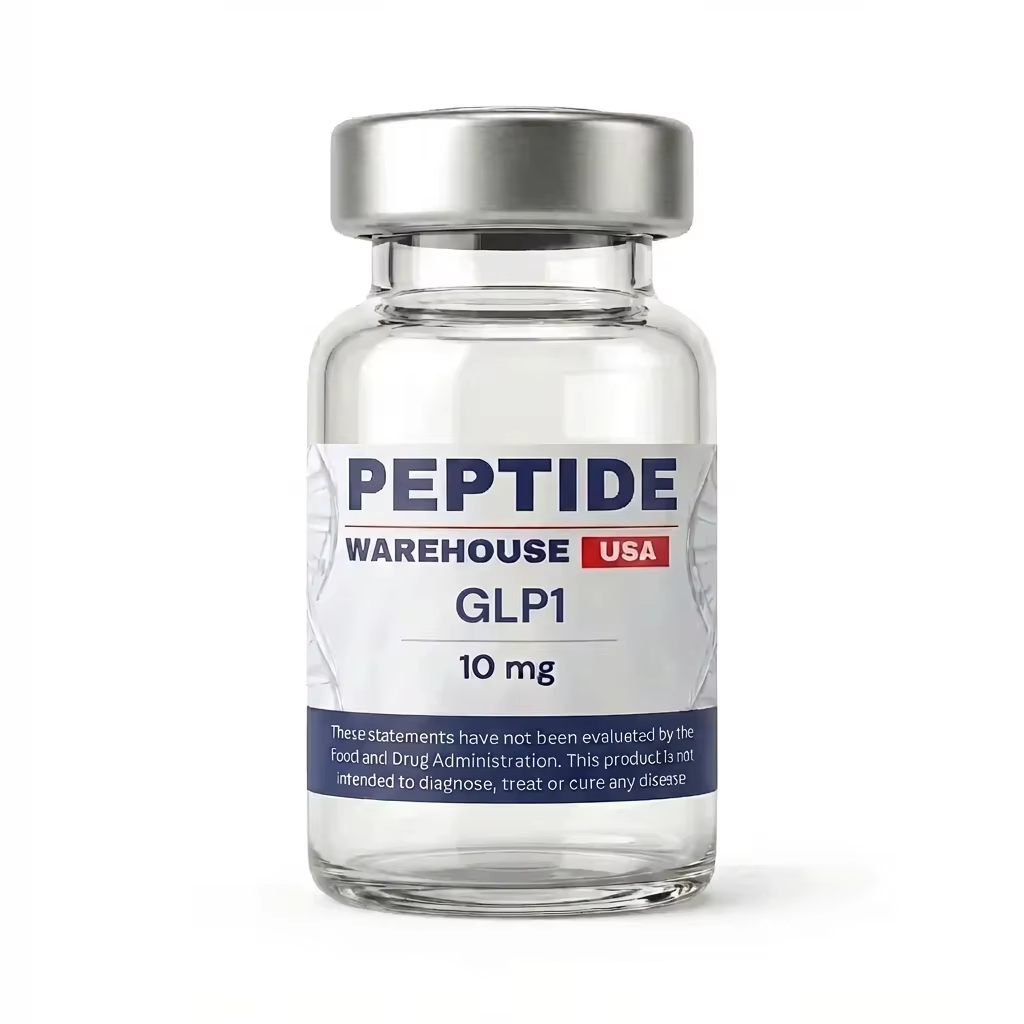
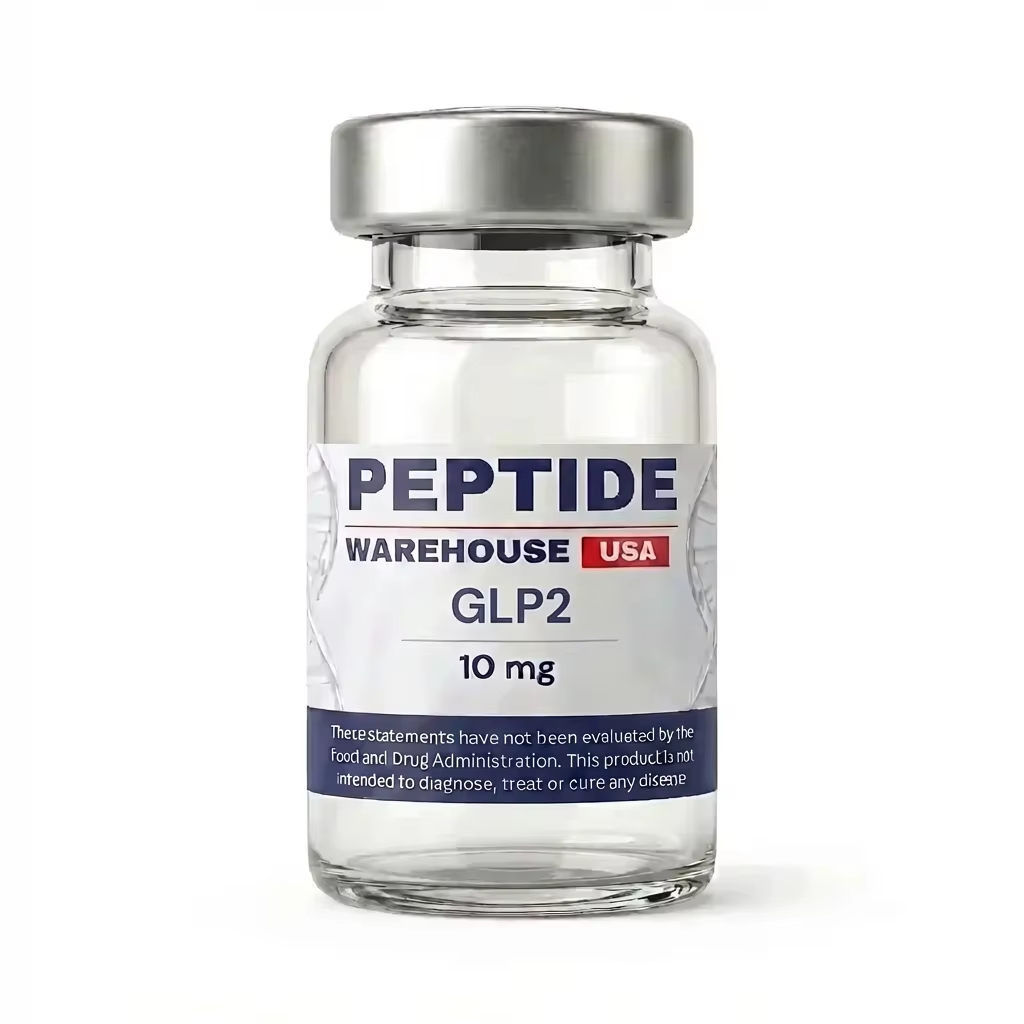
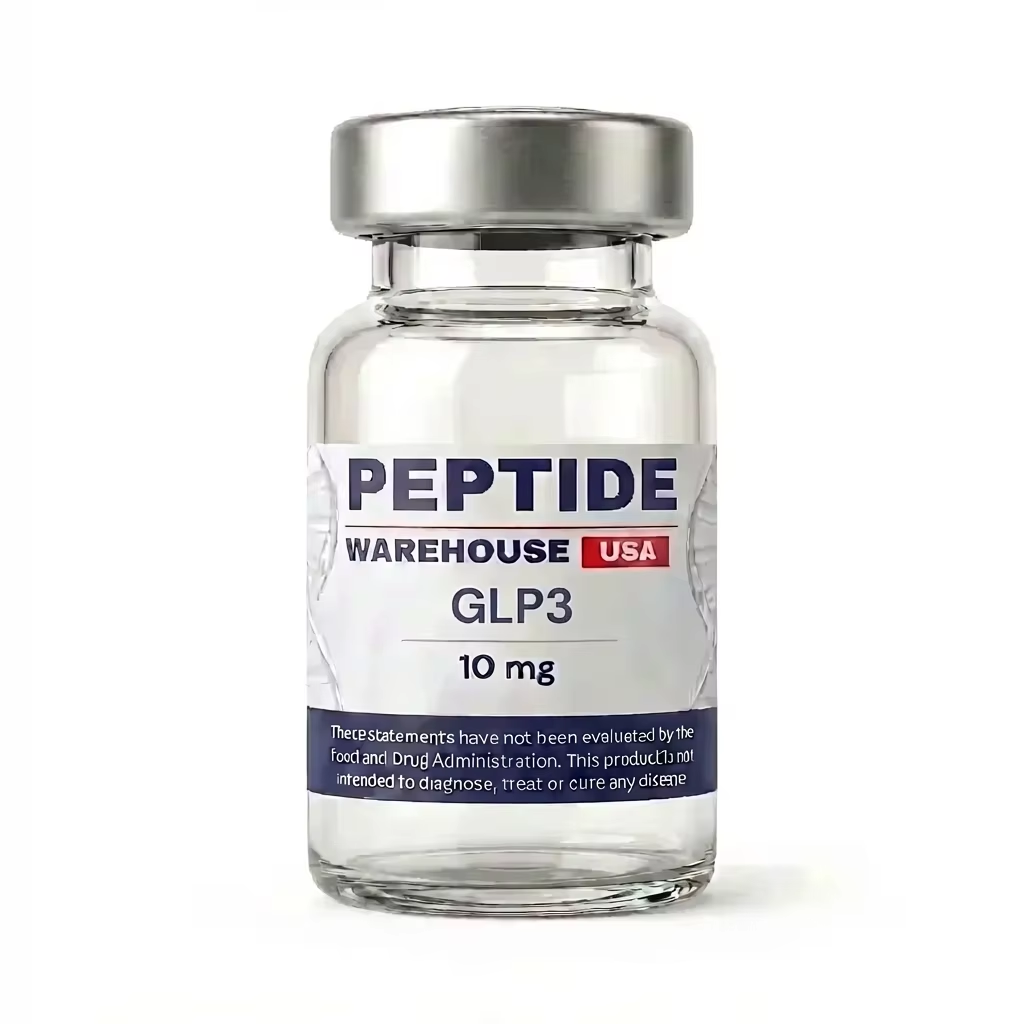
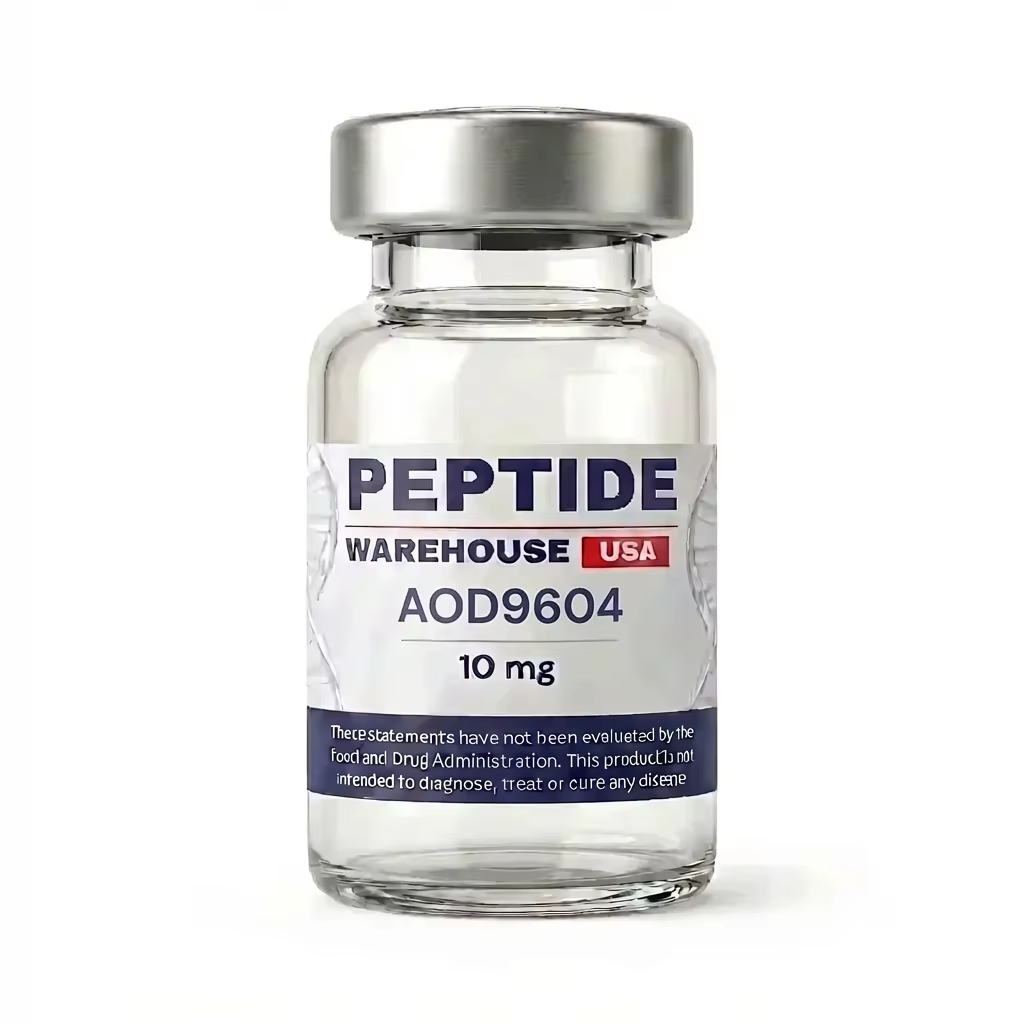
If you want a research-focused supplier with transparent batch documentation, U.S.-made inventory, and products sold strictly for laboratory use, learn more at Peptide Warehouse USA and explore options that prioritize COAs, lot traceability, and consistent procurement support.