No products in the cart.

You're staring at a crowded search result page with a simple goal, find a glutathione peptide for sale that's fit for research. The listings look similar, the prices jump around, and the documentation is all over the place, so it's easy to confuse a real research-grade material with a polished product page.
That's exactly where buyers lose time and reproducibility. A good purchase starts with the right questions, not the flashiest headline.
If you're also dealing with import or logistics questions, an external operations resource like AUSFF's Australian import guide can help frame the paperwork side of cross-border buying. The scientific side still comes first, though, because a peptide's structure, purity, and testing record matter more than the marketing language around it.
A lab manager sees three glutathione listings on the same morning. One says high purity, one says pharmaceutical grade, and one says research use only, but the documents underneath don't look comparable. That's a common buying problem, and it's why the phrase glutathione peptide for sale needs to trigger a quality review, not a quick checkout.
The market for glutathione is no longer tiny. One estimate placed the glutathione market at USD 398.59 million in 2025, rising to USD 429.30 million in 2026, with a projected USD 720.60 million by 2032 at an 8.82% CAGR (360iResearch). Another forecast projected growth from US$0.47 billion in 2023 to US$0.85 billion by 2030 at 8.7% CAGR (360iResearch). That growth explains why more sellers are competing for attention, but it doesn't guarantee better material.
For a researcher, the key decision points are simpler. Does the product match the intended use, is the identity confirmed, and does the paperwork support reproducibility?
Practical rule: if the listing can't explain the molecule, the form, and the test methods in plain language, keep looking.
This guide focuses on the technical filters that matter before you buy. You'll see how to separate research powder from supplements and compounded forms, how to read a COA without guessing, and how to judge whether a supplier is giving you a traceable batch or just a label.
Glutathione, usually written as GSH, is a tripeptide made from glutamate, cysteine, and glycine (PubChem). That molecular identity is the first quality checkpoint in any purchase. If one residue is wrong, the material is no longer the compound your protocol assumes, even if the label still says glutathione.
Glutathione acts like a molecular sponge for redox stress. It helps neutralize reactive oxygen species, lipid peroxides, and other electrophilic stressors, while also supporting detoxification pathways that process endogenous and exogenous compounds (PubChem). In experimental systems, that means activity depends on the correct tripeptide structure and free-thiol availability, not on broad antioxidant language from a vendor page.
The chemistry sets the behavior. If the material is degraded, incorrectly labeled, or contaminated, the redox response you measure can shift in ways that have nothing to do with your model.
A legitimate glutathione supply item should give you more than a name on a bag. It should let you verify identity, assess orthogonal purity, and confirm that the batch is suitable for the route or assay you are using.
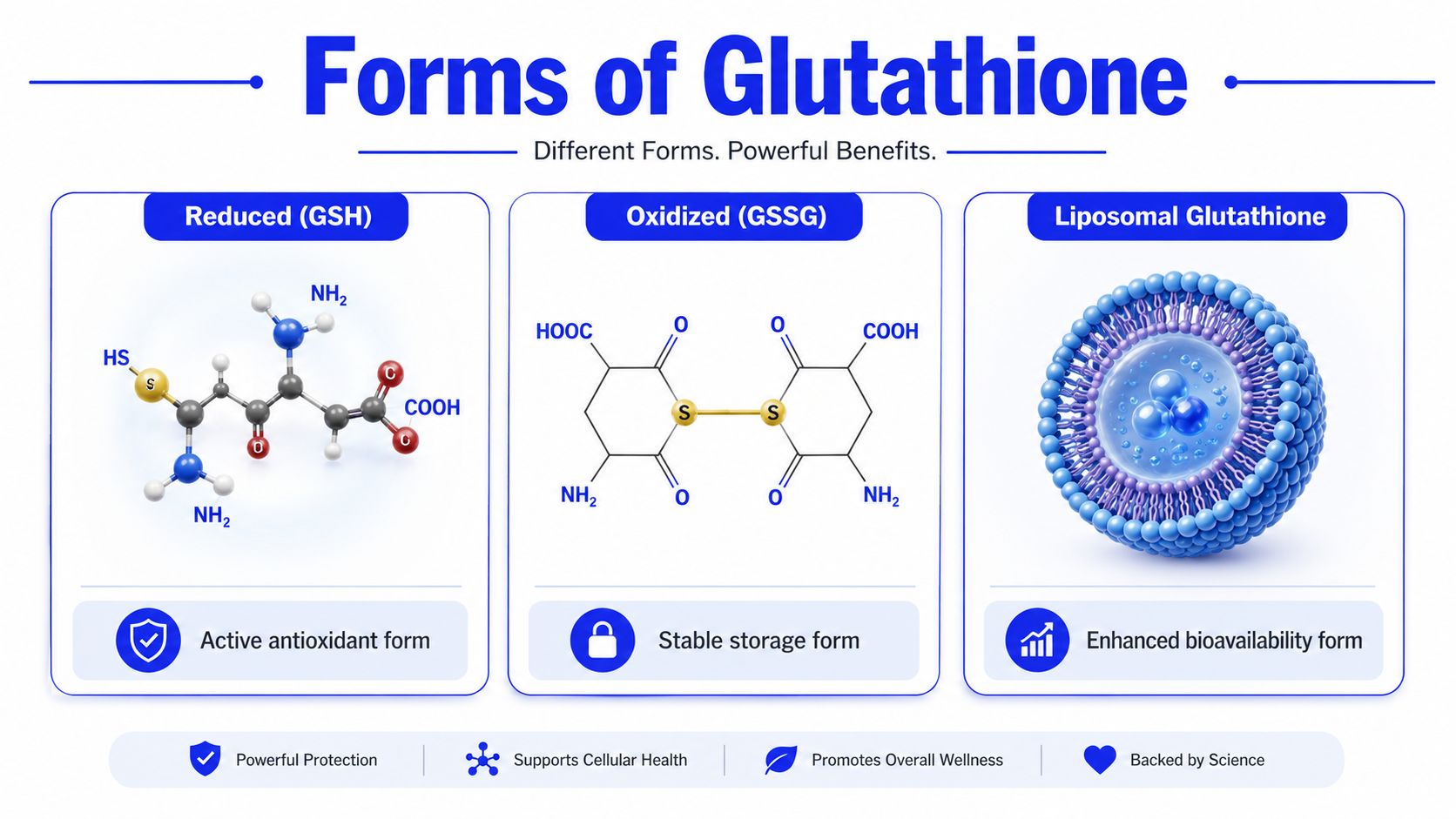
The practical lesson is simple. A listing that identifies the form, shows the testing, and makes the chemistry easy to check gives you something you can evaluate before you order. That is the level of detail researchers need when sourcing a compound that will affect downstream results.
Buyers often use the same search phrase for very different products. A lab may want lyophilized powder for analytical work, while a consumer may be looking at an oral supplement, and a clinic may be discussing a compounded injectable. Those are not interchangeable products, and the standard for one can't be assumed for the others.
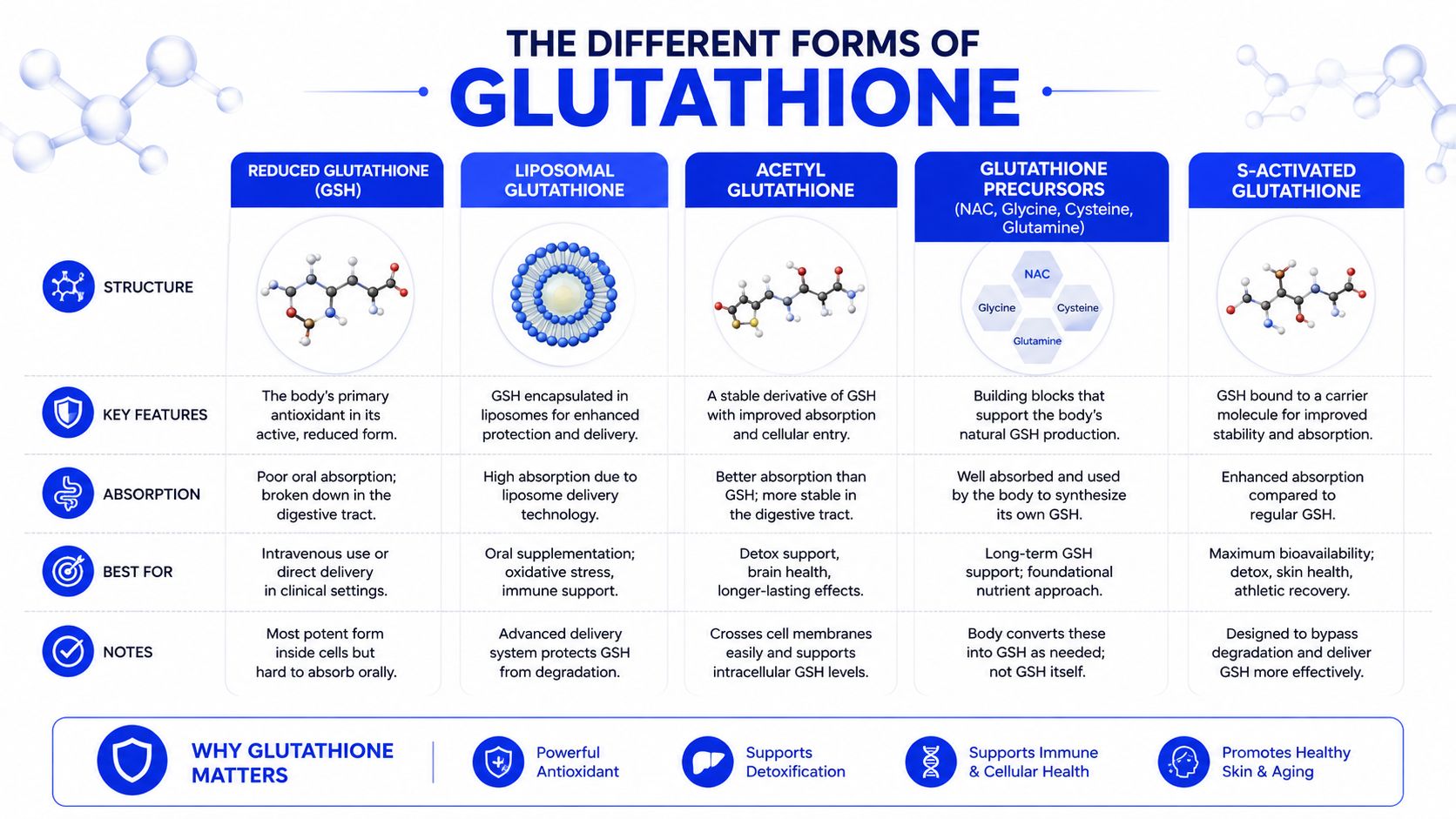
Lyophilized research powder is the format most directly tied to lab workflows. The point of this format is traceability, documentation, and compatibility with controlled experiments. In that setting, the material itself matters more than any consumer-facing benefit claim.
Oral glutathione supplements are sold in the United States under DSHEA rules, and FDA does not approve dietary supplements for safety or effectiveness before they're sold (Molecular Reference; Superpower). That's a major boundary. It means the market can sell the supplement, but it can't treat it like an approved drug.
Compounded injectable glutathione sits in a different risk category again. Compounded IV material introduces sterile-processing and endotoxin-control risks that noninvasive formats don't have, and an FDA-linked alert described patients becoming ill minutes after compounded IV glutathione when testing found excessive bacterial endotoxin in the material (Molecular Reference). For buyers, that's a reminder that route of administration changes the quality standard.
One research listing says injectable glutathione is preferred because oral bioavailability is poor, while other sources note injectable and IV use are experimental and not FDA-approved (The Peptide List; Superpower). That tension is exactly why buyers get confused.
A product can be chemically real and still be the wrong choice for your endpoint.
If you're comparing options, start with the intended application. A research-grade powder, a supplement, and a compounded solution each carry different documentation expectations, different safety issues, and different limitations on what they can legitimately claim.
A supplier's website can look polished while the batch paperwork stays thin. The Certificate of Analysis, or COA, should be the first document you inspect. If you are buying glutathione peptide for sale for research, the paper trail should show what the material is, how it was measured, and where uncertainty could still affect the batch.
A useful COA should let you verify identity, purity, and contamination controls. For glutathione, that means checking whether the supplier used a method that can separate the target molecule from synthesis byproducts and degradation products. A purity figure by itself is only a headline. It does not prove the sample is the right peptide.
The details that are often skipped are the ones researchers need most. Existing coverage often refers to third-party testing in broad terms, but the useful specs are more specific, such as salt form, residual TFA, assay method, endotoxin, microbial limits, and lot-to-lot consistency (NovoProLabs). Residual TFA deserves attention because peptide synthesis can leave TFA salts, and those residues can shift experimental readouts even when the nominal purity looks acceptable.
| Specification | What to Look For | Why It Matters for Research |
|---|---|---|
| Identity | Clear method and batch-level confirmation | Shows the material is glutathione, not a lookalike impurity |
| Purity | Stated analytical method, not just a label claim | Helps you judge whether the sample is suitable for your assay |
| Endotoxin | Documented low contamination risk | Relevant for biological systems and injectable-context discussions |
| Microbial limits | Testing that supports clean handling | Reduces avoidable variability and contamination concerns |
| Salt form and TFA | Transparent disclosure of residual counterions | Residual TFA can interfere with data consistency |
After you read the document, compare it with the product page. If the page promises a lot but the COA stays vague, that mismatch is the clearest warning sign.
One practical option for researchers is to choose a supplier that publishes batch-level COAs and contamination reports alongside the listing, such as Peptide Warehouse USA. That kind of documentation does not replace your own review, but it makes the first screening much easier.
High-purity peptide listings often carry For Research Use Only and Not for Human Consumption language for a reason. Those labels signal that the product is being offered outside the framework of an FDA-approved drug, and they set expectations for how the material can be marketed and used.
In the United States, glutathione is sold as an oral dietary supplement under DSHEA, but FDA does not evaluate dietary supplements for safety or effectiveness before sale (Superpower). IV or compounded glutathione is not approved for any indication (Superpower). That line matters for procurement because the same molecule can sit in very different legal categories depending on the format and claim structure.
The buyer's job is to stay inside the intended category. A research chemical supplier should be transparent about laboratory use, while a supplement seller should not imply drug approval. Those are not cosmetic differences, they shape what the product can legally and ethically claim.
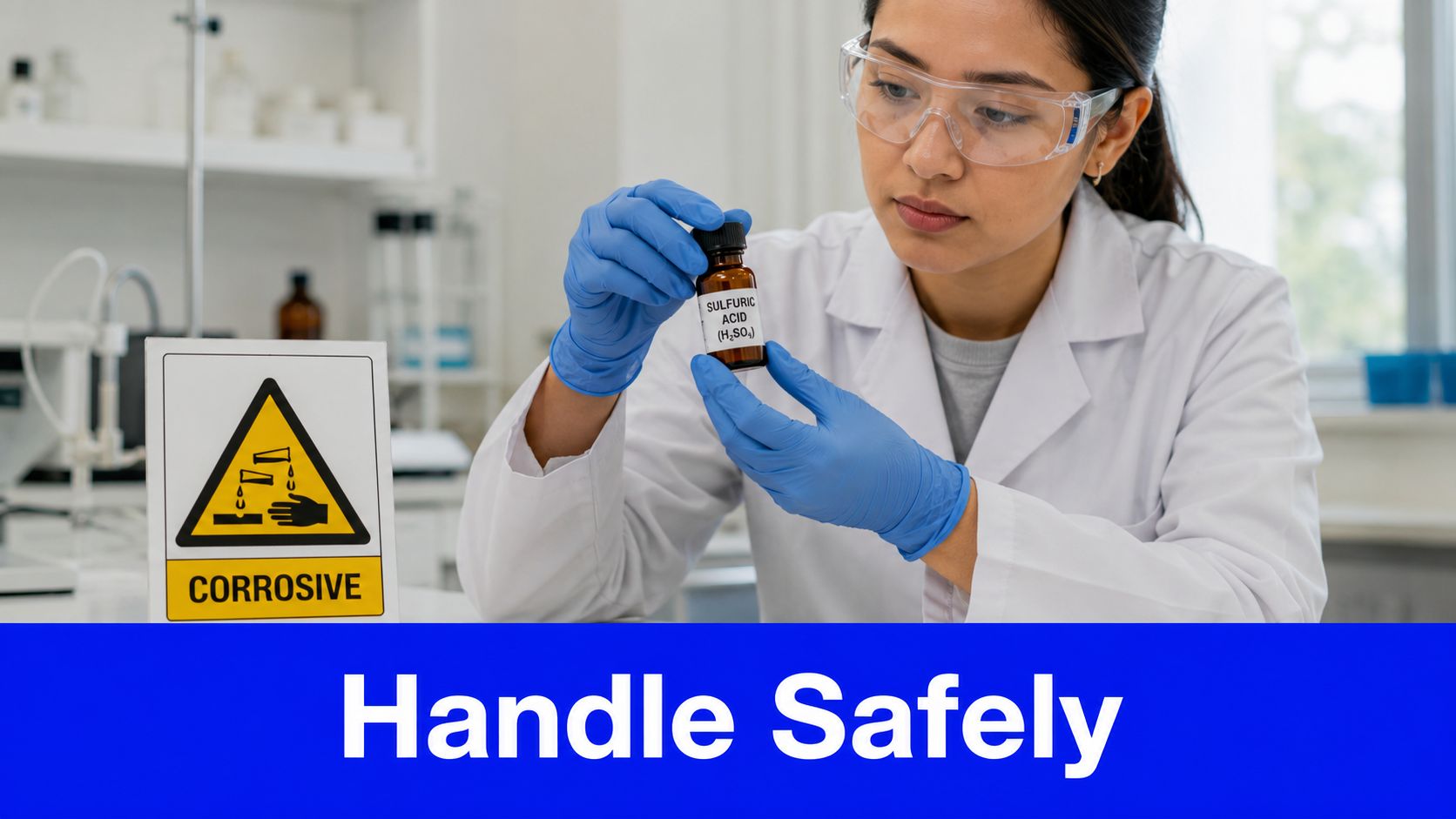
Once the shipment arrives, storage and handling are part of quality control. Lyophilized peptide should be kept cold, protected from light, and handled with tools that reduce contamination. Reconstitution should be done with clean technique so the sample you test is still the sample you ordered.
Keep the container closed, work quickly, and avoid repeated warming and cooling.
For day-to-day lab handling, the safest habits are usually the simplest ones:
This is also where route-specific sourcing comes back into play. A powder bought for research shouldn't be treated like an injectable preparation, and a supplement label shouldn't be mistaken for a batch report. The storage protocol only helps if the starting material was sourced for the right use.
Glutathione is one of the more competitively priced compounds in the research-peptide market. Pep-Index tracks it across 26 research-peptide vendors, and its live index listed the lowest observed price at $0.03 per mg for a 1500 mg listing on 2026-06-07 and again on 2026-07-07. Another price index showed a market price of $0.06 per mg (Pep-Index). That spread tells you two things. Glutathione is widely available, and price alone doesn't tell you much about quality.
A cheap listing can still be a poor value if the documentation is weak. If the supplier skips identity testing, hides salt form details, or offers no contamination data, the apparent savings can disappear fast when you're trying to reproduce results.
The broader market data also suggests this is a growing category, not a niche leftover. With market forecasts showing sustained expansion through the decade (360iResearch), you should expect more vendors to enter the space and more variance in documentation quality.
If two listings differ by a small amount in price but one includes better batch evidence, the documented batch is usually the smarter buy.
For researchers, the useful benchmark isn't the cheapest milligram. It's the most defensible milligram, the one you can trace, verify, and cite in your own lab records.
Buying glutathione well comes down to three checks. First, match the product form to the intended use, because research powder, supplements, and compounded material live under different rules. Second, read the COA like a scientist, not a shopper, and look for identity, purity, endotoxin, microbial screening, salt form, and consistency markers. Third, choose a supplier that gives you transparent batch records, because reproducibility starts with documentation.
That framework keeps the buying decision grounded. It also protects you from a common mistake, assuming that a familiar molecule automatically means a reliable product.
If you remember only one thing, remember this. A glutathione peptide for sale listing is only as good as the evidence behind it, and the evidence should be specific enough for you to defend the batch in your own work.
Use the product form, COA, and supplier record as your filter every time, and you'll cut through most of the noise in the market. Explore options carefully, compare the paperwork side by side, and choose the batch you can trust in the lab.
If you're sourcing research peptides with batch-level documentation, Peptide Warehouse USA offers high-purity research materials supported by COAs, endotoxin reports, and microbial reports. Visit Peptide Warehouse USA to review current research-use options and compare the documentation before you place an order.