No products in the cart.



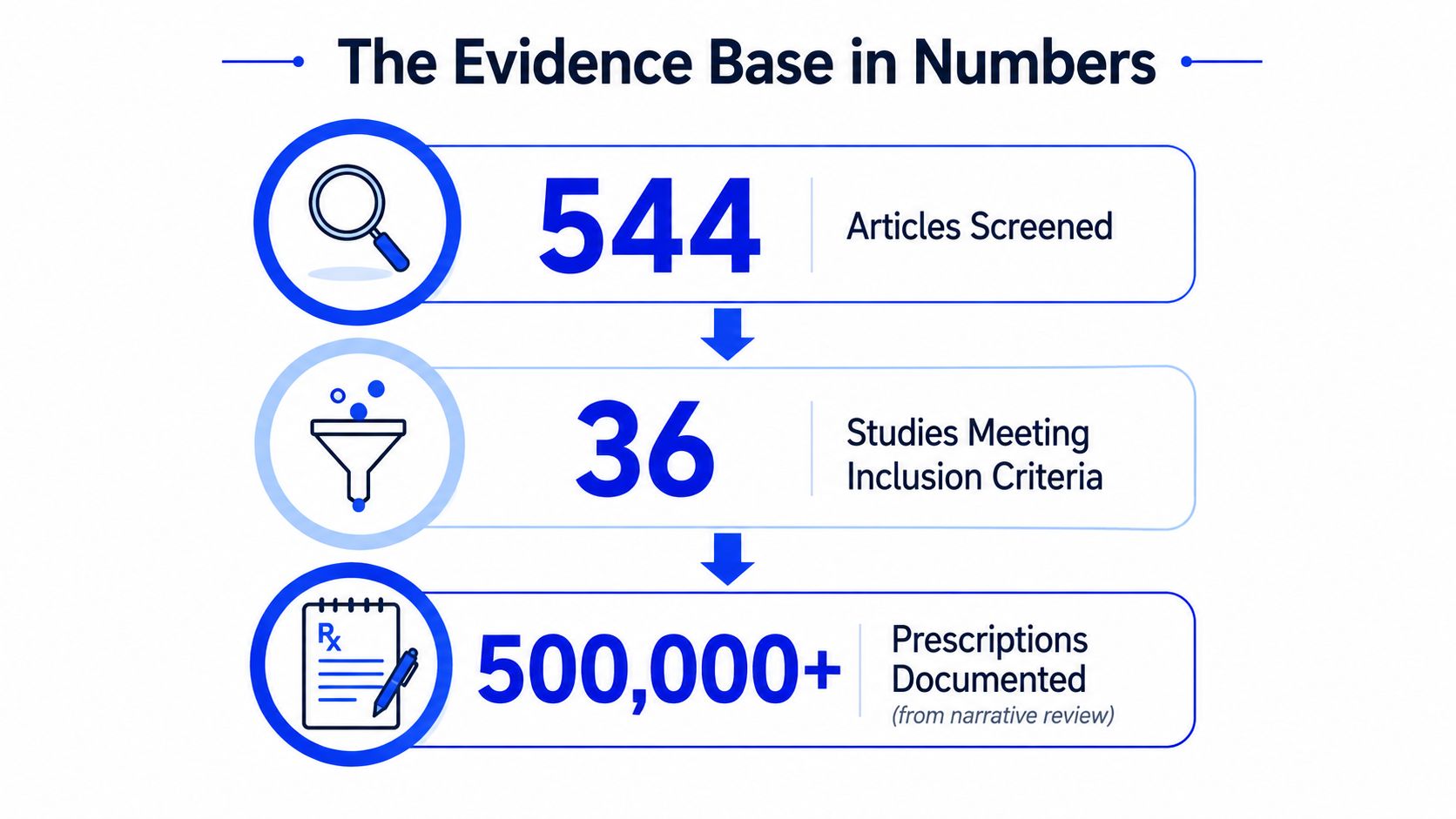
BPC 157's modern reputation has raced far ahead of its human evidence base. A 2025 review screened 544 articles published between 1993 and 2024, but only 36 met the authors' inclusion criteria for orthopaedic applications, and just 1 was a human clinical study, while 35 were animal studies (the review summary). That single fact is the right starting point for any serious BPC 157 review, because it tells you what this peptide is today, a mechanistically interesting research compound with a thin controlled human record, not an established therapy.
That gap matters because the online conversation often treats BPC-157 like a settled answer for tendon repair, gut healing, recovery, or anti-aging. The actual literature is much narrower, and the practical questions are more basic, what the molecule is, how it might work, what the human data really show, what safety means in an evidence-light environment, and why sourcing and regulatory status matter so much when the research use boundary is the whole point.
BPC-157 sits in an awkward space that a lot of casual reviews skip over. It has enough preclinical signal to attract interest, but not enough human data to justify confident clinical claims. That tension is the core of this article, because the molecule's reputation has been built faster than its controlled evidence.
The right way to read a BPC 157 review is to separate mechanism from proof. A peptide can have plausible biology, and still be a weak candidate for real-world use if the human studies are tiny, uncontrolled, or absent. That's exactly why the article leans on the published literature instead of anecdotes, marketing language, or wishful extrapolation.
You'll see five lenses throughout: what it is, how it's proposed to work, what the evidence contains, what safety and handling look like in practice, and how regulation shapes sourcing. Nothing here is medical advice, and nothing here should be read as a claim that BPC-157 is proven to treat anything in humans.
Practical rule: if a peptide's reputation sounds broader than its trial record, assume the gap is real until you see controlled human data.
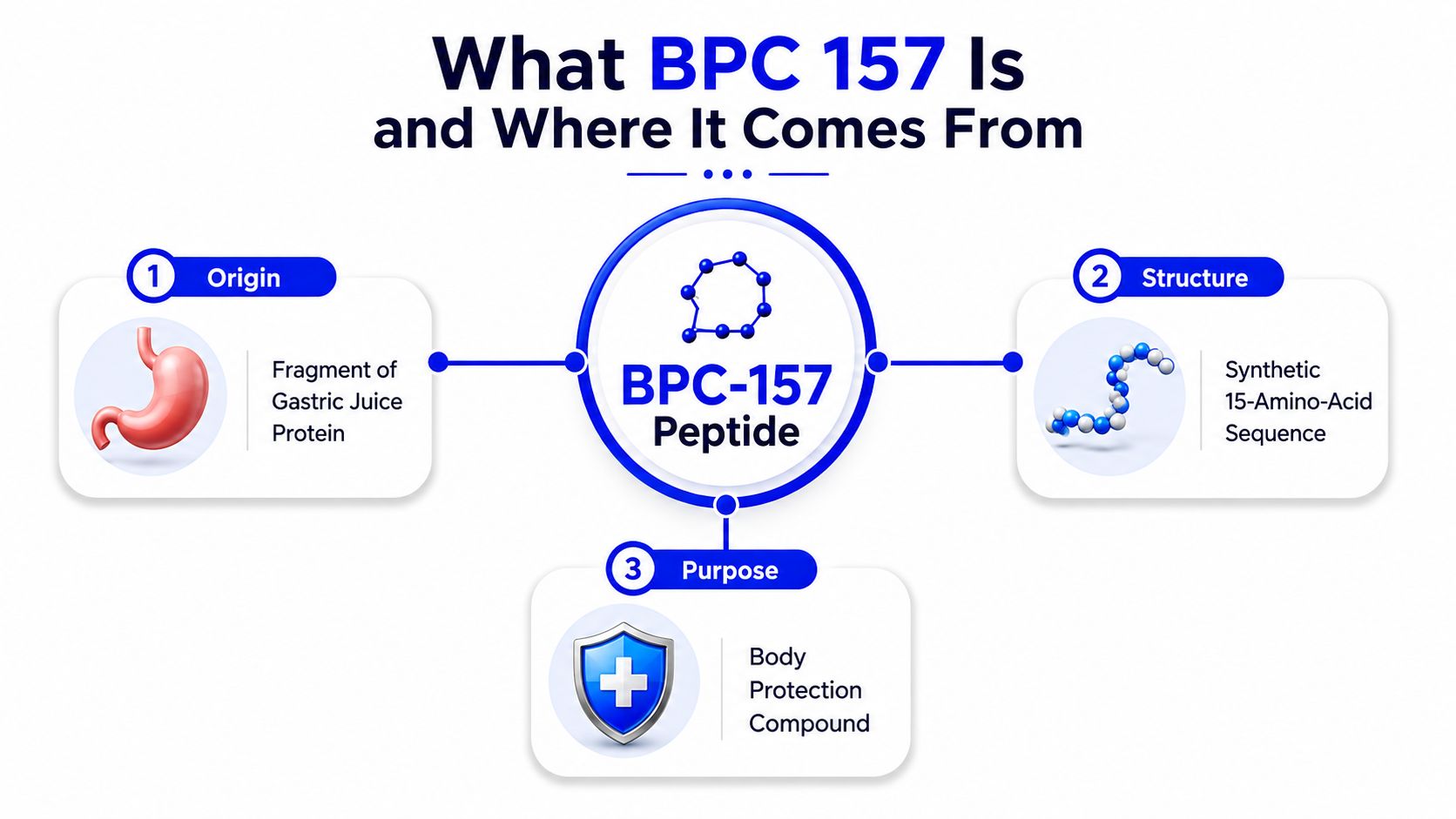
BPC-157 stands for Body Protection Compound-157. It's a synthetic 15-amino-acid peptide derived from a fragment of a naturally occurring protective protein found in gastric juice, so it's best thought of as a very short, defined sequence pulled from a much larger biological context. One useful analogy is that it's a single, carefully isolated paragraph from a much bigger book of stomach-derived signaling.
That origin matters because BPC-157 isn't a typical supplement and it isn't a large biologic protein. It's a small peptide, which changes how people discuss it, how researchers handle it, and how compounders or suppliers present it. In research settings, it's commonly supplied as lyophilized powder, which keeps the material stable until it's prepared for analytical or preclinical work.
The phrase “body protection” also explains part of the branding momentum around it. The name itself suggests a broad restorative role, and that's one reason BPC-157 gets discussed in recovery, musculoskeletal, and anti-aging circles. But naming isn't evidence, it's only a label.
The gastric-juice connection helps explain why BPC-157 has been framed as a signaling peptide rather than a conventional drug or a nutritional product. It's not a longer recombinant protein, and it's not an oral wellness capsule in the usual sense. The practical implication is simple, anyone working with it needs to think in terms of research-grade handling, batch documentation, and controlled use boundaries, not consumer supplement expectations.
For readers comparing peptide modalities, the difference between a short signaling peptide and a broad supplement matters a lot. If you're exploring related regenerative approaches in clinical care, a local overview like regenerative medicine in Charlotte can help you understand how peptide discussions fit into wider tissue-repair strategies.
The mechanistic story around BPC-157 is best understood as a toolbox, not a single magic switch. Different papers point to different but overlapping pathways, and the most consistent theme is tissue remodeling support in preclinical models. That means the biology is interesting, but the model systems matter just as much as the molecular pathways.
One common thread is the nitric oxide system, which appears in the literature because blood flow and signaling around injured tissue can influence repair conditions. Another is VEGFR2 signaling, which shows up in discussions of blood vessel formation and tissue support. The literature also points to tendon outgrowth, cell survival, and cell migration, all of which are relevant to how damaged tissue repopulates and reorganizes itself.
The key detail is where those effects were observed. The strongest signals come from rodent tendon explants, cell-based migration assays, and other preclinical models, not from human trials. That doesn't make the biology meaningless, it just means the same mechanism can't be assumed to behave the same way in people.
Mechanistic work is useful because it tells researchers what kinds of tissue responses BPC-157 might influence. If a peptide supports cell migration in a lab model, that suggests a plausible role in tissue remodeling. If it appears to interact with signaling tied to vascular support, that helps explain why it keeps coming up in musculoskeletal recovery discussions.
But mechanism is not proof of clinical benefit. A molecule can move cells around in a dish and still fail to improve outcomes in people. That's why careful readers should treat BPC-157 as a preclinical candidate with plausible regenerative mechanisms, not a confirmed therapeutic.
If you're evaluating any peptide claim, ask two questions first, what model produced the effect, and how far is that model from a real patient?
For clinicians or researchers comparing pathways in adjacent fields, replace guesswork with clinical testing is a useful frame for separating compelling theory from validated outcomes.
The evidence gap is the central fact most BPC-157 coverage skips. A 2025 review screened 544 articles published between 1993 and 2024, but only 36 met its orthopaedic inclusion criteria, and of those 35 were animal studies and just 1 was a human clinical study. A flowchart showing research methodology steps: 544 articles screened, 36 studies included, and over 500,000 prescriptions documented. That is a preclinical-heavy literature with a very narrow human tail, and the gap matters more than the headline count.
The published record does not show a mature clinical evidence base. The review literature points to zero randomized controlled trials supporting the common online claims around tendon repair or gut healing, and the human evidence remains limited to a few tiny pilot reports with roughly 30 total subjects across them. That is a thin foundation for making confident claims about efficacy, dose-response, or durability.
The strongest signals in the literature are still in soft tissue models, especially tendon and muscle. Those findings are enough to keep BPC-157 in the research conversation, because they suggest a plausible healing signal. They are not enough to support certainty in human use, particularly when the controlled clinical layer is so small.
A lot of peptide enthusiasm depends on the assumption that a large paper count equals a large evidence base. BPC-157 does not fit that pattern. Most of the papers are preclinical, and the human studies are too few and too small to settle questions about who might benefit, at what dose, or for how long.
Bottom line: BPC-157 is best described as a preclinical candidate with promising biology, not a proven treatment.
That distinction matters for research use. If the evidence base is this thin, then batch quality, documentation, and clear use boundaries deserve more attention, not less.
For readers who prefer evidence-first training philosophies, return to play resources can be a useful comparison point for how sports recovery guidance is usually built, step by step, from validated practice rather than peptide hype.
People usually encounter BPC-157 through three very different channels, online anecdotes, tiny human pilot studies, and the much larger animal literature. The biggest mistake is treating those buckets as interchangeable. They aren't, and the differences matter more with BPC-157 than with many better-studied compounds.
Anecdotal reports are the loosest bucket. They're useful for spotting what people care about, pain, mobility, recovery, sleep, or digestion, but they can't show causality. A person may feel better after using a peptide, but timing, placebo effects, concurrent rehab, and natural recovery all sit inside the story.
The published human pilots are more interesting, but they're still extremely limited. The recent literature describes only three human pilot areas, intra-articular knee pain, interstitial cystitis, and an intravenous safety/pharmacokinetics study. Those reports did not produce the kind of controlled, large-sample evidence needed to establish efficacy.
No adverse effects were reported in those small human reports, and that's worth noting as a preliminary tolerance signal. It does not prove long-term safety, dose stability, or broad generalizability. A small pilot can miss uncommon reactions, delayed effects, and issues that only appear in wider real-world use.
That distinction is the whole game with BPC-157. A claim can be sincere, a pilot can be encouraging, and the broader conclusion can still be weak. The evidence hierarchy doesn't flatten just because the story is attractive.
For athletes and active patients, the temptation is to treat a few positive experiences as practical proof. That's understandable, but it's not how reliable guidance gets built.
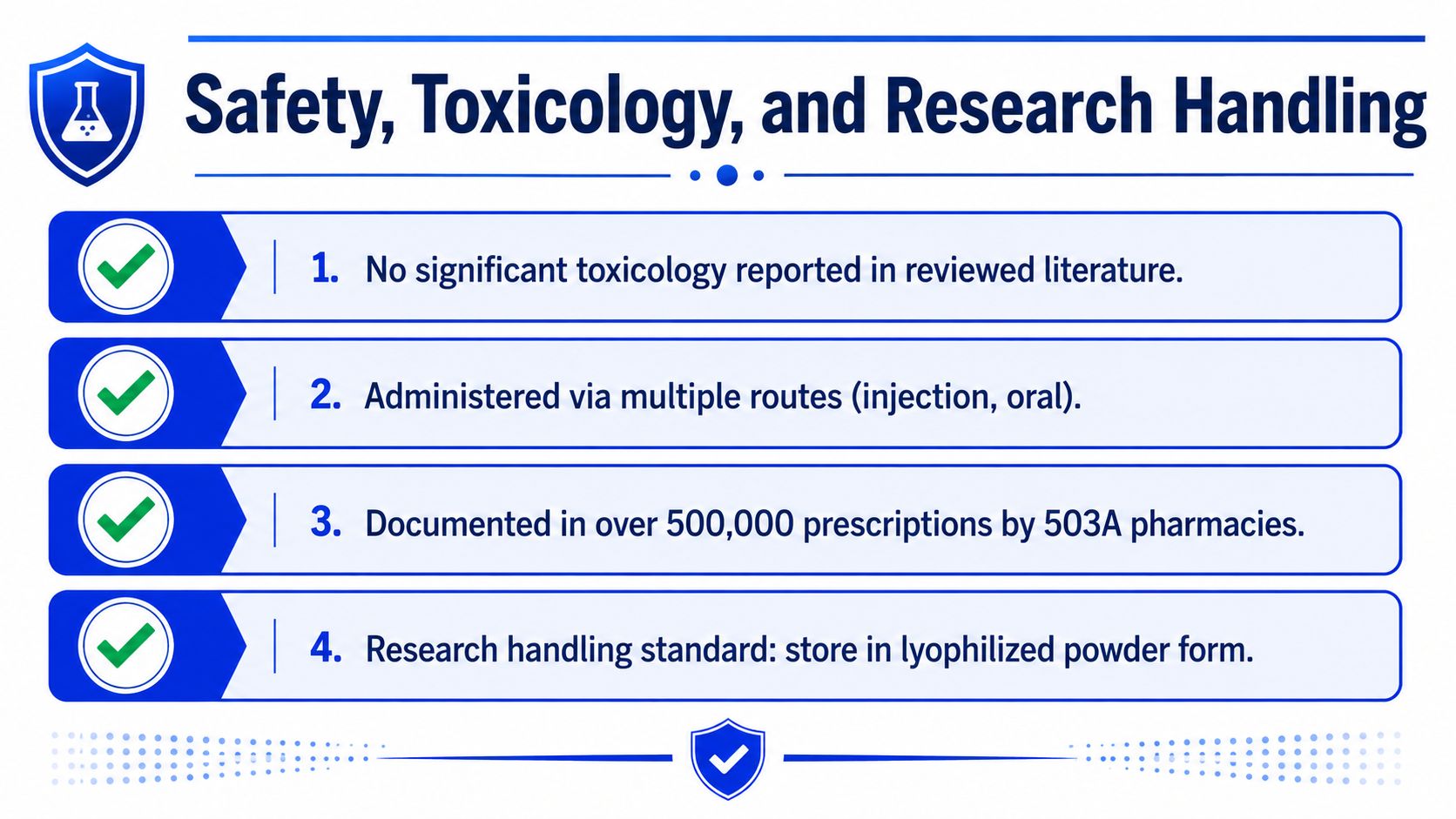
Safety discussions around BPC-157 sit between thin human tolerance data and an incomplete controlled risk profile. A narrative review reported that 503A compounding pharmacies filled over 500,000 prescriptions for BPC-157 between 2018 and 2024, and that no side effects were reported by patients to those pharmacies during that period (PMC review). The same broader literature still cautions that adverse effects remain possible because of unregulated manufacturing, contamination, and the lack of a full clinical safety record.
The most defensible reading is cautious. Reports of tolerance in limited real-world use do not establish a complete safety profile. They only show that many users did not report problems to the pharmacies involved, not that the compound has been shown harmless under controlled conditions.
Research handling matters for the same reason. BPC-157 is generally handled as lyophilized powder, stored cool, dry, and protected from light. For laboratory workflows, reconstitution is typically done with sterile or bacteriostatic water, and the material should be checked for endotoxin and microbial integrity before any preclinical use.
Practical rule: if a vial has a clean label but weak testing, treat it as incomplete documentation, not a trustworthy reagent.
For a laboratory or preclinical buyer, safety and handling cannot be separated. If the compound's controlled human safety record is thin, then even small manufacturing errors matter more than they would for a mature therapy.
A Certificate of Analysis is the closest thing a researcher gets to a spec sheet for a peptide reagent. For BPC-157, that document should show identity testing by a method such as HPLC or mass spectrometry, a stated purity level, a batch number, and relevant endotoxin and microbial results. If those elements are missing, the buyer is being asked to trust marketing instead of documentation.
The regulatory posture around BPC-157 is thin enough that quality controls carry extra weight. That's why third-party testing matters. A vendor can say a product is research grade, but a COA is what lets a lab check whether the product's composition matches the claim on the label.
Peptide Warehouse USA is one example of a U.S.-based research supplier that emphasizes third-party documentation, including COAs, microbial and endotoxin reports, and stated purity levels up to 99.5%, with products sold for laboratory, analytical, or preclinical use only. That kind of documentation doesn't prove clinical value, but it does give researchers a clearer basis for evaluating a batch.
The phrase research use only isn't a marketing flourish. It's a compliance boundary that tells the buyer the material is not being sold as a therapy. In a market with weak clinical evidence and sensitive regulatory oversight, that distinction matters.
BPC-157 is not in a normal retail-drug category. According to a 2023 orthopaedic sports medicine review, the FDA has no approved indication for BPC-157 and classified it as a Category 2 bulk drug substance, which means it cannot be compounded by commercial pharmaceutical companies because there is insufficient evidence on whether it would cause harm to humans (PMC review). That classification is the clearest signal that regulators see meaningful uncertainty, not settled safety.
FDA materials on BPC-157 in ulcerative colitis state that available data do not support use, note only a single small trial, and say the agency proposed not adding BPC-157 to the 503A bulks list (FDA material). That doesn't just slow down access, it tells you how the agency is interpreting the evidence. It's not seeing enough human data to justify routine compounding or human-use claims.
The anti-doping layer adds another wrinkle. BPC-157 is on the World Anti-Doping Agency prohibited list, so athletes face risk even when they're not thinking about regulation in the same way a clinician or lab buyer is. If you compete, the issue isn't just whether a product can be obtained, it's whether use could create a sports rule violation.
How strong is the human evidence? Very thin. The literature is still dominated by animal studies and tiny human pilots.
Is it legal? The legal picture is constrained by FDA classification, compounding limits, and sports prohibition rules.
What should a COA show? Identity, stated purity, batch number, and contamination testing, at minimum.
For researchers who want to compare documentation standards before buying, visit Peptide Warehouse USA and review how its batch documentation, third-party testing, and research-use-only labeling are presented alongside BPC-157 and related peptides.