No products in the cart.



What happens when two peptides get talked about as if they're interchangeable, but the actual evidence for one of them is still missing from human research? That's the core issue with BPC 157 KPV, especially for labs, buyers, and researchers trying to separate practical study design from online hype. The two compounds are often grouped together in peptide discussions, yet their structures, pathways, and evidence base are different enough that treating them as the same tool can blur the science.
For researchers, the core question isn't whether these peptides are interesting. It's whether the current literature supports the use case being proposed, whether the delivery route makes sense, and whether the material being sourced is analytically defensible. In that context, BPC-157 and KPV are better understood as distinct research compounds with different strengths, different unknowns, and different gaps.
A useful way to approach the topic is to start with the evidence, not the marketing language. Tools that support literature review can help with that process, including AI for academic research, which is useful when you're mapping claims back to primary sources and separating mechanistic discussion from speculation.
Why do BPC 157 KPV discussions sound so definitive when the human evidence is still so limited? That gap matters because it shapes what a lab should expect from these peptides before a study even starts. If a project begins with the wrong assumptions, the protocol can end up measuring delivery behavior or handling effects instead of peptide biology.
BPC-157 is a 15-amino-acid synthetic peptide derived from a human gastric juice protein, and KPV is a tripeptide fragment made from lysine, proline, and valine, derived from alpha-MSH source. They are not variants of the same molecule, and they do not behave like simple substitutes. For researchers, that difference is similar to comparing two tools that can both cut, but one is built for coarse work and the other for fine manipulation. The distinction helps explain why the two peptides are framed around different questions in the literature.
The regulatory backdrop also matters. On July 23, 2026, an FDA advisory committee voted 8–6 with 1 abstention to recommend both peptides for inclusion on the Section 503A Bulks List source. That was a recommendation, not final approval, and the reporting from that meeting still described KPV as not FDA-approved with human evidence absent or preclinical.
Practical rule: if a peptide's human evidence is missing, do not let formulation enthusiasm outrun study design.
That is why researchers need to decide early whether the goal is mechanistic exploration, formulation development, or a preclinical translational model. A close look at peptide sourcing, evidence tracking, and, where relevant, AI for academic research can help keep the project grounded in what the literature supports.
BPC-157 and KPV often appear in the same research discussions, but their chemistry places them in different categories. One is a longer peptide with a broader preclinical footprint. The other is a short fragment with a narrower evidence base and a different functional profile.
| Property | BPC-157 | KPV |
|---|---|---|
| Core identity | Synthetic 15-amino-acid peptide derived from a human gastric juice protein | Synthetic tripeptide fragment, Lys-Pro-Val, from alpha-MSH |
| Amino acid length | 15 amino acids | 3 amino acids source |
| Published formula and mass | Around C62H98N16O22 and 1419.5 to 1419.6 g/mol | Around C16H30N4O4 to C17H32N6O4 and roughly 342.4 to 384.5 g/mol, depending on salt or formulation context source |
| Origin context | Derived from a gastric protein fragment | Derived from positions 11 to 13 of alpha-MSH |
| Analytical implication | Larger mass and distinct footprint support peptide-specific verification | Lower mass means it can be easier to miss without proper identity testing |
That mass difference is not a minor analytical detail. It changes how a laboratory should verify identity, purity, and composition in a blended lot. A mixed BPC-157/KPV sample should be checked with orthogonal methods such as LC-MS plus HPLC purity analysis so the lower-MW KPV is not mistaken for a co-eluting impurity.
The practical takeaway is straightforward. If a supplier treats the two peptides as analytically interchangeable, that is a red flag. They are structurally distinct, and the chemistry should be reflected in the certificate, the assay method, and the handling plan.
The mechanism gap between BPC-157 and KPV matters as much as the structural gap. Each peptide points researchers toward a different biological question, and collapsing those questions into one model can blur the meaning of a result.
BPC-157 is described as acting through angiogenesis-related pathways, including VEGFR2 activation, nitric oxide signaling, growth hormone receptor upregulation, and ERK1/2 signaling source. That profile fits why it is often discussed in tissue repair and injury-recovery contexts, since those pathways sit near vascular support and cellular remodeling.
KPV works through a different route. It is described as entering cells through the PepT1 transporter and suppressing inflammation through NF-κB inhibition, IκB-alpha stabilization, and MAPK suppression source. For researchers, that places it closer to an inflammation-focused tool, especially in gut and skin models.
The contrast matters because pathway overlap is often assumed before it is shown. A repair-oriented peptide and an inflammation-oriented peptide could, in theory, complement each other, but that remains a mechanistic hypothesis rather than a demonstrated outcome. The literature does not yet establish synergy, sequencing, or dose response for the pair.
A pathway diagram can be useful, but it does not substitute for a matched model. If the readout is epithelial inflammation, KPV's intracellular anti-inflammatory profile may fit the hypothesis better. If the readout is vascular remodeling or repair signaling, BPC-157's pathway profile may be more relevant.
That is the practical gap researchers need to keep in view. Popular claims often describe the two peptides as if they were interchangeable or obviously additive, yet the actual evidence base still separates them into different biological questions. A study design that treats them as the same kind of intervention is likely to produce muddy results rather than clear ones.
Why do some peptide discussions sound settled when the underlying evidence is still thin? With BPC 157 KPV, the short answer is that the publication record is uneven, and the distance between preclinical interest and human validation remains large.
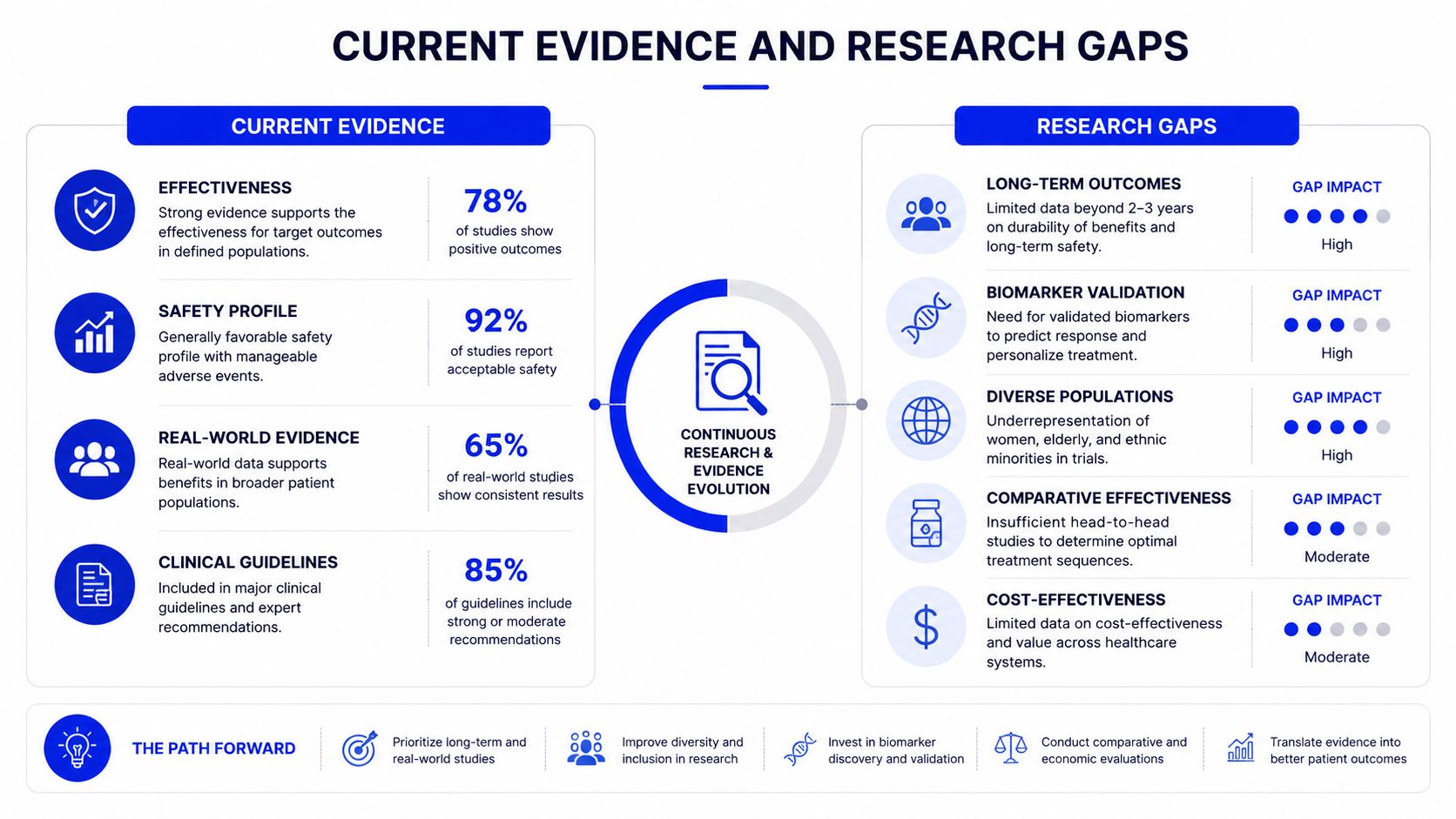
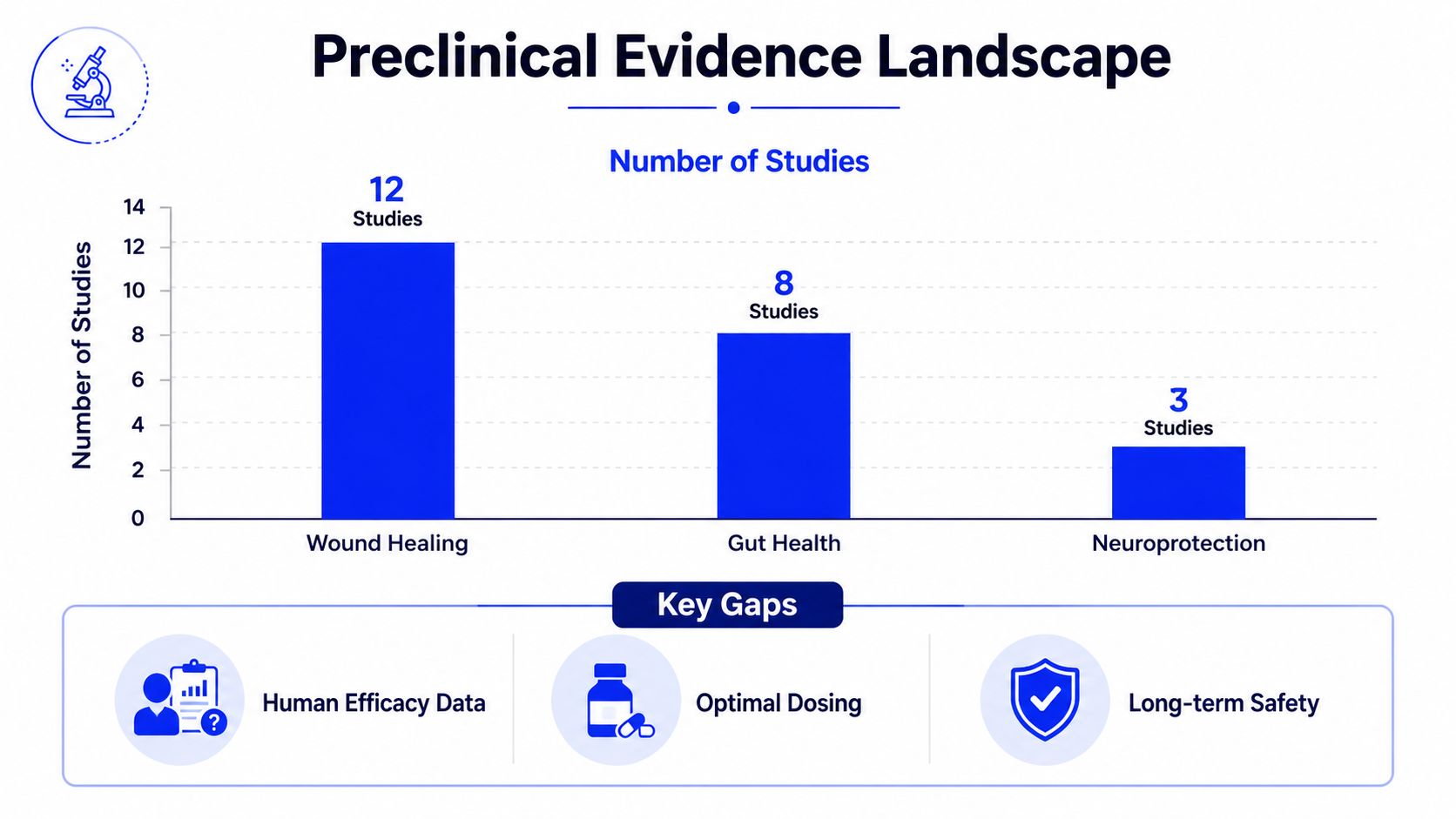
A 2026 review-style source reports that BPC-157 has broad preclinical support but only three small human pilot studies, while KPV has no published human clinical trials as of 2026 source. That difference matters because even limited human data changes how much confidence a lab can place in translational relevance.
The same source identifies another blind spot, the question of combination vs. monotherapy. Although the pair is often discussed together, no controlled study has tested the blend against placebo or against the single agents source. There is also no head-to-head evidence on synergy, sequencing, or whether KPV adds a measurable effect to BPC-157 alone.
The missing human data for KPV is especially important. Preclinical anti-inflammatory findings do not, by themselves, define the right route, endpoint, or dose for a human study. For BPC-157, the problem is different but connected, since broad preclinical support does not replace formal clinical validation.
That asymmetry should shape study design. If a lab wants to evaluate BPC-157 and KPV together, the protocol should first define whether the goal is additive anti-inflammatory activity, tissue repair support, or a staged combination strategy. Without that definition, the study may generate signal, but it will not answer a clear research question.
What does a peptide study need to answer, before the first vial is opened? For BPC-157 and KPV, that question should come before route selection, because a compound can look promising on paper while the delivery path fails to reach the intended tissue in a meaningful way.
A 2026 formulation-focused review notes that BPC-157 still lacks pharmaceutical-grade formulation validation, BCS data, permeability characterization, and formal excipient-compatibility studies source. That gap matters for study design. Researchers should not treat oral, injectable, or local delivery as settled choices, because the route is part of the hypothesis, not a background detail.
For KPV, the evidence base is narrower still. Existing coverage emphasizes PepT1-mediated oral uptake in intestinal inflammation, yet it also notes that no human GI trials have been completed source. That leaves a design problem that is easy to miss. Oral delivery may be biologically plausible, but plausibility is not the same as confirmation in a human study.
The model should determine the route, not the other way around. If the endpoint is local gut inflammation, oral or local delivery may be the most direct place to start. If the readout is a systemic injury model, the formulation question becomes more complex, because tissue exposure, distribution, and stability all influence whether the result can be interpreted at all.
A clean protocol usually needs three things:
That framework becomes even more important if a lab is comparing formulations or sourcing options. The broader peptide market includes suppliers that offer research-use products with documentation. One example is Peptide Warehouse USA, which provides BPC-157, KPV-containing blends, and batch documentation for lab use only.
Peptide handling is where small mistakes become expensive. If a vial is degraded, mislabeled, or poorly reconstituted, no downstream assay can rescue the data. That's why quality control has to come before interpretation.
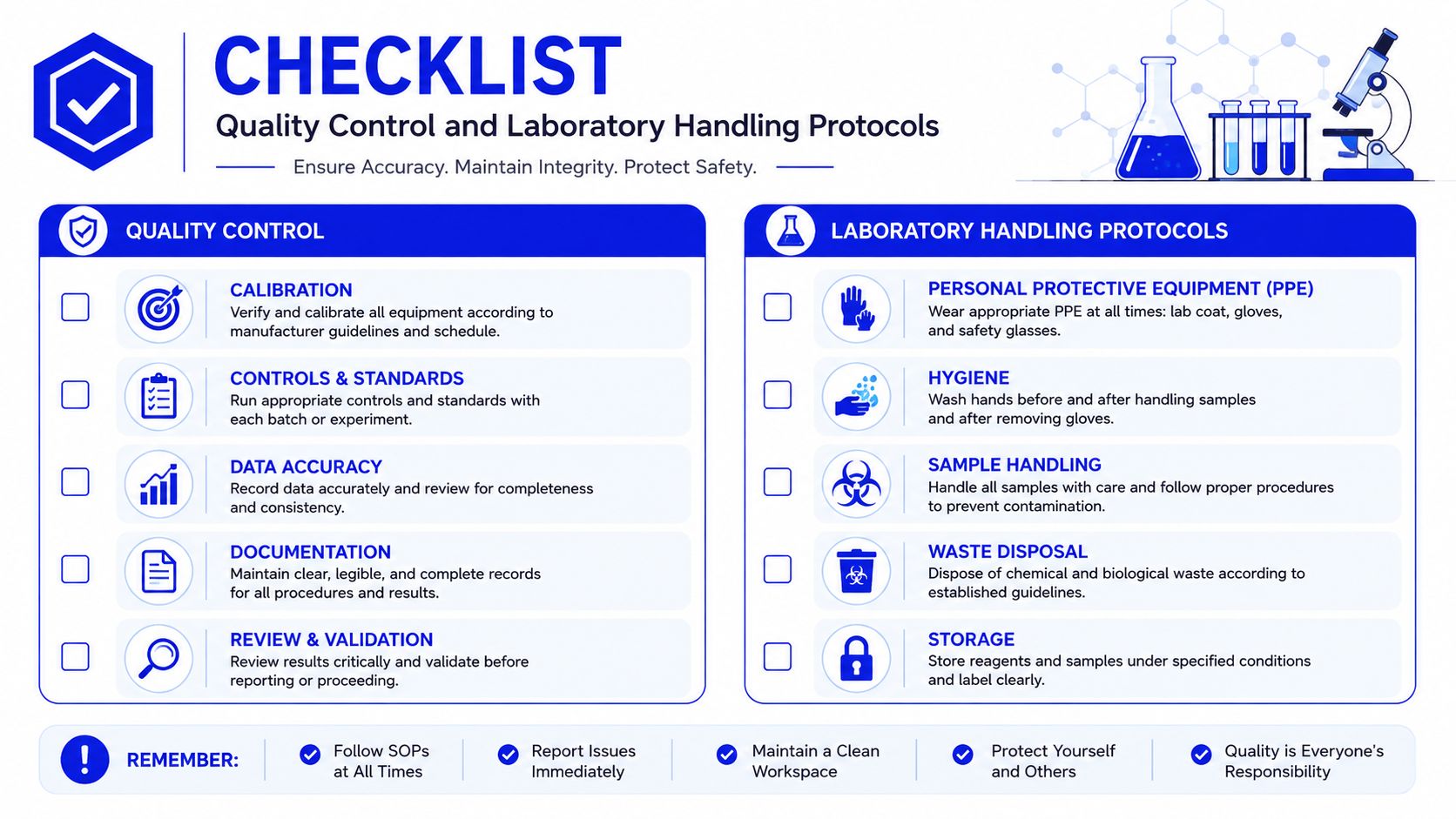
Mixed BPC-157/KPV lots should be verified with LC-MS and HPLC purity analysis so the identity of both components is confirmed and the lower-mass KPV isn't mistaken for a contaminant source. That's the simplest way to reduce ambiguity before the material reaches the bench.
Storage and handling still matter even when the identity is confirmed. Lyophilized peptides should be protected from heat, light, and moisture, and reconstitution should follow a method that preserves stability rather than convenience. For a practical walkthrough on that step, the guide on how to reconstitute peptides safely is a useful laboratory reference.
A Certificate of Analysis should tell you more than a purity claim. It should let you connect the lot number, the assay method, and the batch record so you can trace the material later if a result doesn't replicate.
Practical rule: if the supplier can't explain how purity was measured, treat the lot as unverified, even if the label looks polished.
Batch testing is also important because peptide handling is vulnerable to degradation during shipping and reconstitution. If a lab wants reproducible results, the peptide identity, storage history, and preparation steps all need to be documented before the first data point is collected.
How should a research team treat BPC 157 KPV when the regulatory picture is still developing? The safest reading is that sourcing decisions should be based on research documentation, not on marketing language or assumptions about clinical use. As noted earlier, the regulatory discussion has moved the peptides into closer scrutiny, but that does not remove the need for institutional review or careful procurement practices.
A useful way to think about supplier evaluation is to separate what a vendor says from what a lab can verify. A supplier should be able to show where the peptide was manufactured, how the batch was produced, and how the material was tested. Independent identity and purity testing matter here because a label alone does not tell you whether the vial matches the claimed sequence or whether the material has been handled consistently across lots.
A supplier should be able to provide:
Microbial and endotoxin reports also help internal review because they add another layer of documentation about the material's handling. Those records do not demonstrate efficacy, but they do make the supply chain easier to assess when a study has to stand up to later review.
For laboratories that want a documentation-first benchmark, meeting USP requirements in research gives a practical framework for reviewing quality systems, batch expectations, and recordkeeping. It is especially useful when a vendor needs to show that its files are complete enough for audit-ready procurement decisions.
The broader point is simple. Research teams should treat the supplier file as part of the experimental design. If a project depends on a stable peptide with verified identity, documented sourcing, and traceable batches, the paperwork has to support that claim before the first sample is run.
If you're sourcing research peptides for a study on inflammation, tissue repair, or combination design, explore the documentation and product options at Peptide Warehouse USA. Their research-use catalog includes BPC-157, KPV-containing formulations, and batch-level documentation that can support lab procurement decisions.