No products in the cart.


A peptide batch arrives just before a critical assay. The supplier's certificate of analysis reports impressive purity, but the document lacks a matching chromatogram, the lot number appears generic, and there's no endotoxin result. Your team now has to decide whether to use the material, delay the study, or spend more money on independent testing.
That situation is becoming more common as reform research peptides attract attention from laboratories, analytical teams, and preclinical programs. The challenge isn't finding a product page. It's proving that the material is correctly identified, appropriately documented, legally positioned, and suitable for the intended research workflow.
This guide focuses on the decisions that matter in practice: how research peptides differ from approved medicines and compounded products, why HPLC alone doesn't establish identity, how to read a batch-specific COA, what the 2026 regulatory changes mean for procurement, and which supplier behaviors should stop an order before it reaches your receiving dock.
A reform research peptide purchase often begins as a routine sourcing task. A researcher needs BPC-157, GHK-Cu, Semax, or another compound for an in vitro, analytical, or preclinical project. The lab compares price, stated purity, shipping time, and availability, then discovers that the supplier's documentation doesn't answer the questions the principal investigator or compliance office will ask.
That gap matters because research-use-only material sits outside the category of approved human medicines. It's purchased for laboratory research, analytical chemistry, animal testing, or preclinical investigation, not for diagnosis or treatment. These products haven't undergone the testing required for human use and don't carry FDA or other health-authority approval, as described in this overview of research-use-only peptide status.
The term “reform” is useful when it describes a more disciplined approach to sourcing. It means treating the peptide as a traceable research reagent rather than accepting a marketing number as a complete quality assessment. The procurement file should connect the product, batch, testing methods, storage conditions, receiving record, and end-use restriction.
The broader peptide field has developed over roughly a century. Insulin entered clinical use in the early 1920s, and a review of FDA-authorized peptide medicines describes around 100 peptide-based drugs approved since then, including insulin in 1923, sermorelin in 1991, exenatide in 2005, semaglutide in 2017 and 2019, and setmelanotide in 2020. These milestones are documented in the review of FDA-authorized peptide medicines.
Commercial interest has expanded with that clinical history. One 2026 market summary estimates the regulated global peptide therapeutics market at roughly US$47 billion to US$53 billion in 2025, while another estimate projects growth from US$46.19 billion in 2025 to US$91.79 billion by 2035, with a 7.11% CAGR. The same source notes that the FDA approved 50 novel drugs in 2024, including four peptides and oligonucleotides. These figures come from the 2026 peptide market summary.
Those commercial signals don't make every research peptide reliable. They do make supplier diligence more important. A growing market can contain excellent documentation, inconsistent manufacturing, and confusing product positioning at the same time.
Procurement principle: A peptide is ready for research use only when its identity, purity, contamination controls, batch record, and intended use all make sense together.
Start by defining the material according to its actual role in the laboratory. A research peptide is manufactured and sold as a research reagent for applications such as in vitro experiments, animal studies, analytical chemistry, or preclinical investigation. It isn't the same thing as an FDA-approved pharmaceutical, and it isn't automatically equivalent to a product prepared by a compounding pharmacy.
That distinction controls how your team should label, store, document, and discuss the material. A research peptide shouldn't be represented as a therapy, diagnostic, or human-use product. Under the FDA's intended-use framework, a label such as “for laboratory research use only” or “not for human consumption” doesn't settle the question by itself. Actual marketing, product claims, instructions, and customer communications also matter under 21 CFR 201.128, as explained in this guide to FDA intended use and research-only enforcement.
Different compounds appear in different experimental contexts, but a product name alone doesn't define a valid use case.
The practical question isn't “Which peptide is most popular?” It's “Which characterized material fits the assay, model, and controls?” Researchers should define the target sequence, salt or formulation requirements, quantity, storage expectations, and acceptable impurity profile before contacting suppliers.
A supplier that presents a research peptide as a human-use solution creates a compliance problem, even if the vial itself is chemically authentic. Your purchasing record should preserve the research purpose and avoid therapeutic language.
Purity affects interpretation, but it doesn't answer every quality question. A high-purity result can still leave uncertainty about sequence identity, oxidation, deamidation, truncated species, residual solvents, microbial contamination, and endotoxin. Those variables can influence assay behavior and reproducibility without changing the headline purity claim.
The strongest workflow treats the peptide as one component of a controlled experiment. Confirm what the material is, document what else is present, and record how the lab handled it from receipt through disposal.
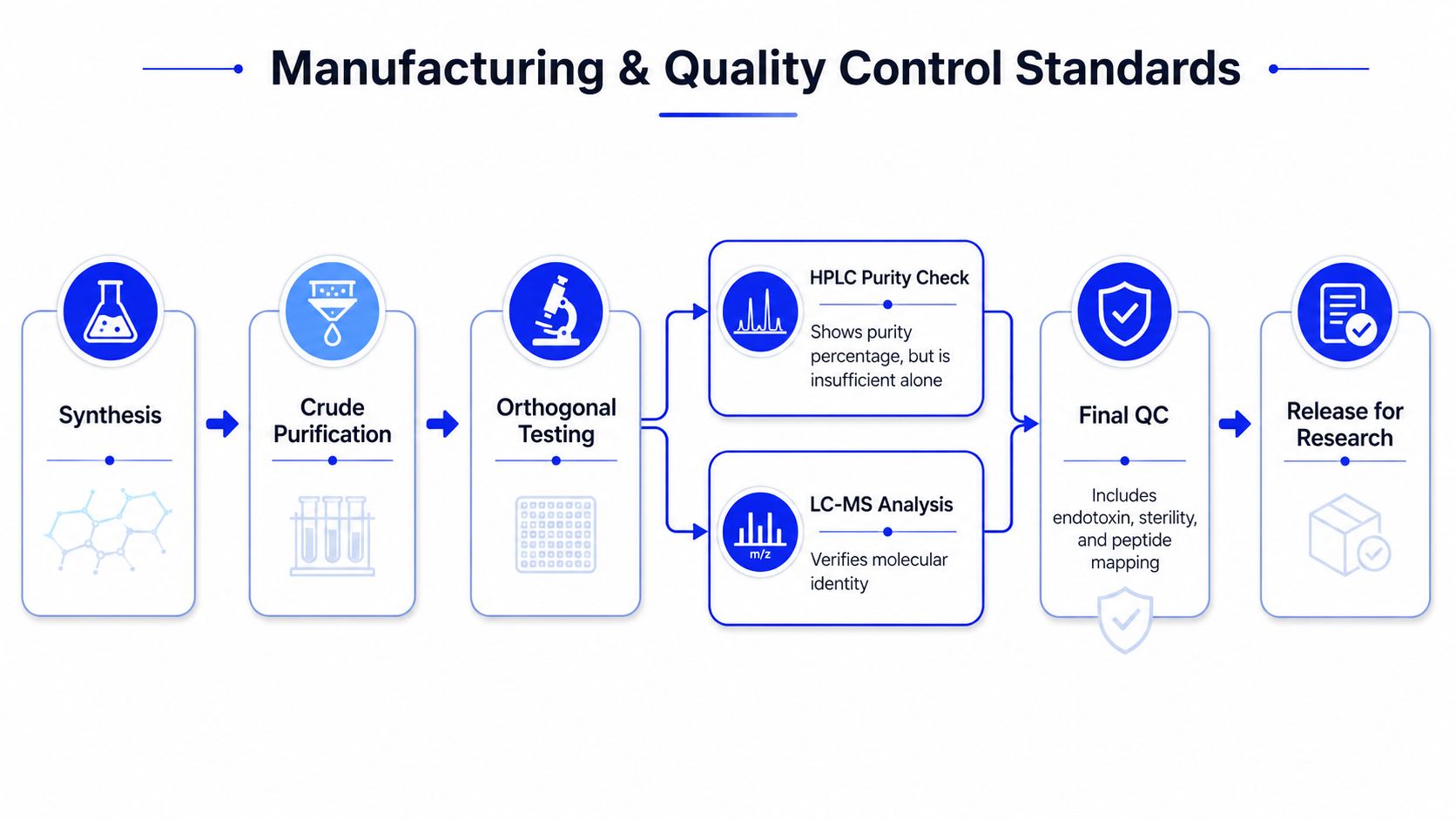
The most important quality-control mistake is treating HPLC purity as a complete release decision. Reversed-phase HPLC is valuable because it helps quantify the main peptide-related component and separate related species, including oxidized, deamidated, and truncated forms. It still may not prove that the principal peak has the correct molecular identity or complete sequence.
LC-MS addresses a different question. Mass spectrometry can confirm molecular mass and identify degradation products through mass shifts. When a batch is intended for sensitive cell-based, immune-relevant, or preclinical work, the laboratory should interpret HPLC, LC-MS, and impurity information together, not select whichever result looks most favorable.
A defensible certificate of analysis should identify the exact lot tested. The batch number on the vial, invoice, shipping paperwork, chromatogram, mass spectrum, and COA should match. If a supplier sends a generic document that could apply to every batch, it doesn't provide adequate traceability.
Look for these elements:
The distinction between purity and endotoxin deserves special attention. HPLC measures peptide-related species. It doesn't measure bacterial endotoxin. A peptide can therefore appear analytically pure while still producing inflammatory artifacts in cell culture or immune-relevant experiments if endotoxin is present. Technical guidance commonly uses sub-1 EU/mg as a practical benchmark for sensitive research use, but the appropriate specification depends on the assay and institutional protocol. The distinction is explained in this guide to peptide purity and endotoxin verification.
Orthogonal testing reduces the risk that one method hides a problem another method would reveal. HPLC may show a clean separation profile, while LC-MS exposes an incorrect mass. Endotoxin testing may identify a biological contaminant that neither chromatographic purity nor mass confirmation captures.
Labs that work under formal quality systems can also use the principles described in Good Manufacturing Practices Safety Space when reviewing documentation, change control, cleaning records, and release procedures. Research-use-only status doesn't automatically mean pharmaceutical GMP manufacturing, so the supplier should state exactly what controls are in place instead of implying a standard it doesn't meet.
The 2026 peptide arena requires buyers to separate two questions. The first is whether a product is positioned and documented as a legitimate research-use-only material. The second is whether a pharmacy or other authorized entity can prepare a product for a human-use context under applicable rules. Those pathways aren't interchangeable.
Recent coverage says HHS announced roughly 14 peptides moving back from Category 2 to Category 1 in February 2026. FDA-linked updates in April 2026 affected BPC-157 and scheduled further review. These developments show why a static “are peptides legal?” article isn't enough for a procurement decision. The regulatory position can vary by substance, use, jurisdiction, and supply channel, as discussed in this 2026 overview of research-peptide status.
A research supplier should sell the material as a laboratory reagent and avoid human-use claims. A compounding or pharmacy pathway, where legally available, involves a different intended use, different professional responsibilities, and different oversight expectations. A laboratory shouldn't use an RUO label to justify administration to people, and a pharmacy product shouldn't be treated as a substitute for a research reagent without reviewing the relevant documentation.
The label is only one part of the analysis. Product pages, advertisements, dosing language, testimonials, packaging, customer support responses, and purchasing instructions can all contribute to intended use. Disclaimers can't cure contradictory claims.
A responsible lab should establish a written procurement process that answers:
Chain of custody becomes especially important when multiple researchers share a freezer or when a project may be audited. Preserve the invoice, COA, shipping record, receiving inspection, storage log, and internal transfer record.
EU procurement adds another layer. Recent independent summaries tie research-only legality to recognized research entities and documented scientific need. A buyer in the EU should therefore check local rules, institutional status, import requirements, and the product's stated use before ordering. U.S. and EU teams should avoid assuming that an RUO designation travels across borders without additional review.
A reliable workflow begins before the purchase order. Define the scientific specification first, then evaluate suppliers against it. If the assay needs identity confirmation, low endotoxin, microbial information, or a particular formulation, those requirements belong in the procurement record rather than in an informal email after shipment.
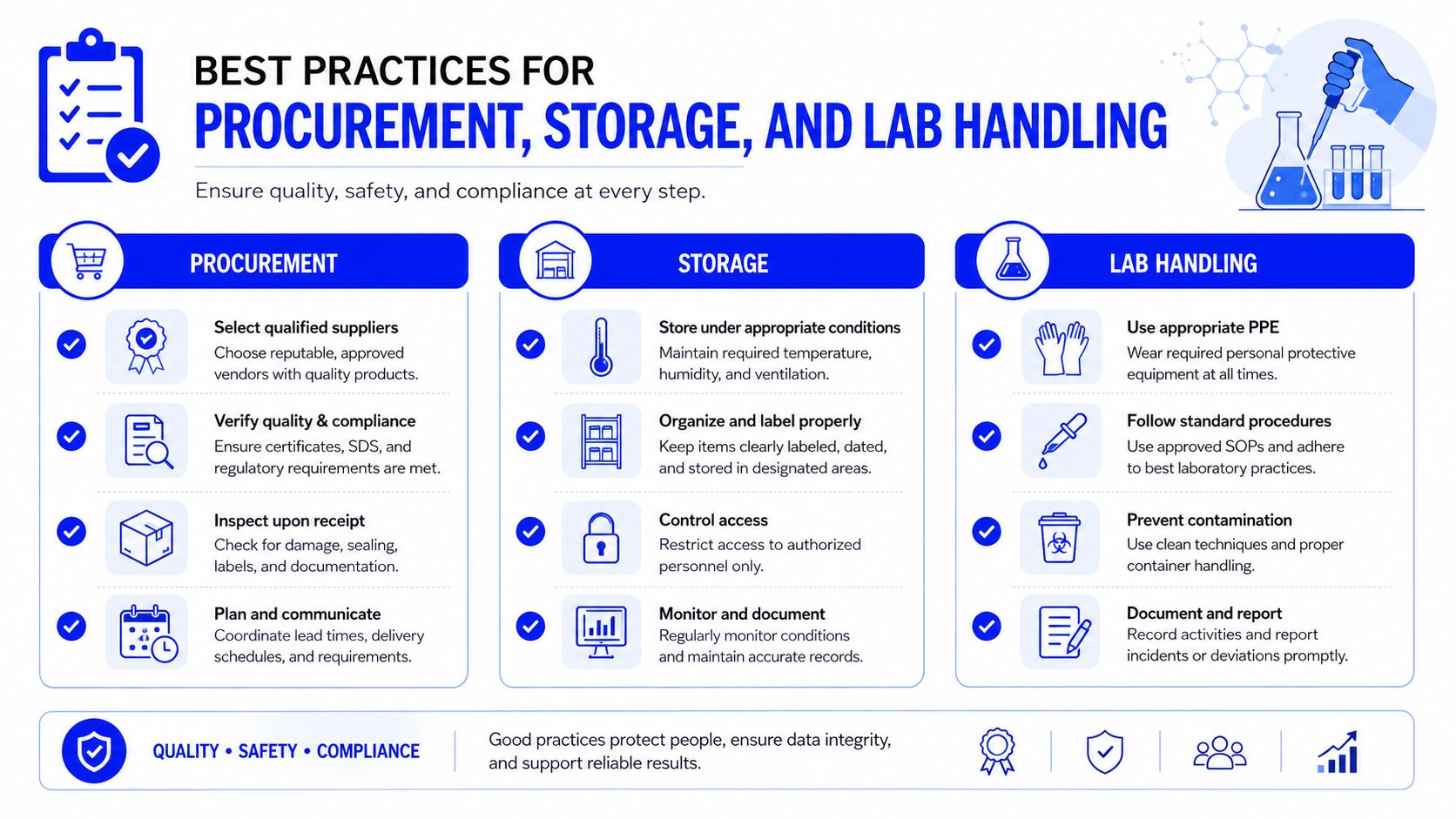
Assign one person to inspect every shipment before the material enters general inventory.
The receiving record should preserve the material's history. If a result later looks unusual, the team needs to determine whether the cause was the peptide, the assay, reconstitution, storage, or handling.
Follow the supplier's documented storage instructions and your institutional SOP. Keep containers protected from conditions that can accelerate degradation, including unnecessary exposure to heat, moisture, and light. Maintain clear segregation between unopened material, reconstituted solutions, and waste.
Reconstitution deserves the same care as procurement. Use the validated solvent and concentration for the protocol, avoid repeated freeze-thaw cycles where the SOP prohibits them, and label every prepared solution with the compound, concentration, lot, preparation date, operator, and discard date. Don't improvise a solvent system because a product page is vague.
Cross-contamination can undermine a carefully tested batch. Use clean, dedicated equipment where appropriate, change tips between transfers, close containers promptly, and keep preparation areas organized. If the peptide is used in a cell-based assay, include controls that can help distinguish compound activity from vehicle effects or contaminant-driven artifacts.
A polished website doesn't establish analytical quality. The warning signs usually appear in the details, especially when a buyer asks for records that connect a specific vial to a specific test result.
The most common failure is a generic COA. It may display a strong purity claim, but without a matching lot number, chromatogram, LC-MS data, endotoxin result, or residual-solvent information, the document is closer to marketing collateral than a release record. Neutral guidance on how to read a peptide COA highlights those verification details for exactly this reason.
| Criteria | Red Flags | Green Flags |
|---|---|---|
| Batch traceability | COA has no lot match or uses a reusable template | COA, vial, invoice, and test records share the same batch identifier |
| Identity testing | Purity is reported without molecular confirmation | HPLC is paired with LC-MS or another identity method |
| Contamination control | No endotoxin or microbial results | Separate endotoxin and microbial documentation is available |
| Impurity reporting | Only one headline purity number appears | Related impurities, degradation, and residual solvents are addressed |
| Intended use | Product pages include dosing or treatment language | Research, analytical, and preclinical uses are stated clearly |
| Manufacturing claims | Supplier implies pharmaceutical standards without evidence | Supplier describes its actual controls and limitations |
| Customer support | Staff avoid technical questions or send unrelated documents | Staff can explain methods, lots, storage, and documentation |
| Chain of custody | Origin, testing laboratory, and shipping conditions are unclear | Sourcing, testing, labeling, and shipment records are transparent |
“High purity” doesn't tell you whether the sequence is correct. “Third-party tested” doesn't tell you which laboratory performed the test, which method it used, or whether the report belongs to your batch. “Pharmaceutical grade” can also mislead if the supplier doesn't define the standard or provide evidence that the material was manufactured for pharmaceutical use.
Ask direct questions before paying:
A supplier that treats these questions as unreasonable probably isn't prepared to support a reproducible research program.
There isn't one universal purity specification for every experiment. A simple analytical method may tolerate a different impurity profile than a sensitive cell-based or immune-relevant assay. Start with the assay's tolerance, required controls, and institutional SOP, then request orthogonal evidence instead of selecting a product solely by its advertised purity.
For sensitive work, review endotoxin separately. The practical benchmark often discussed in technical guidance is sub-1 EU/mg, but your laboratory should set the acceptance criterion based on the model and protocol rather than copying a number without context.
Request a batch-specific COA and match its lot number to the vial and invoice. Review the HPLC chromatogram, LC-MS identity result, impurity information, endotoxin result, microbial report, and residual-solvent documentation. If the project is high consequence, arrange independent testing or require a retained sample for confirmation.
No. RUO products are sold for laboratory research and aren't approved for human use. Compounding pharmacy access involves a different intended-use framework and regulatory analysis. Your compliance team should review the product category, supplier claims, project design, and jurisdiction before anyone changes the intended use.
Create a written peptide specification, approve suppliers against the evaluation matrix, and quarantine any shipment with incomplete records. Ask your institutional compliance team to review research-use language, animal or human-cell work, import requirements, and storage procedures.
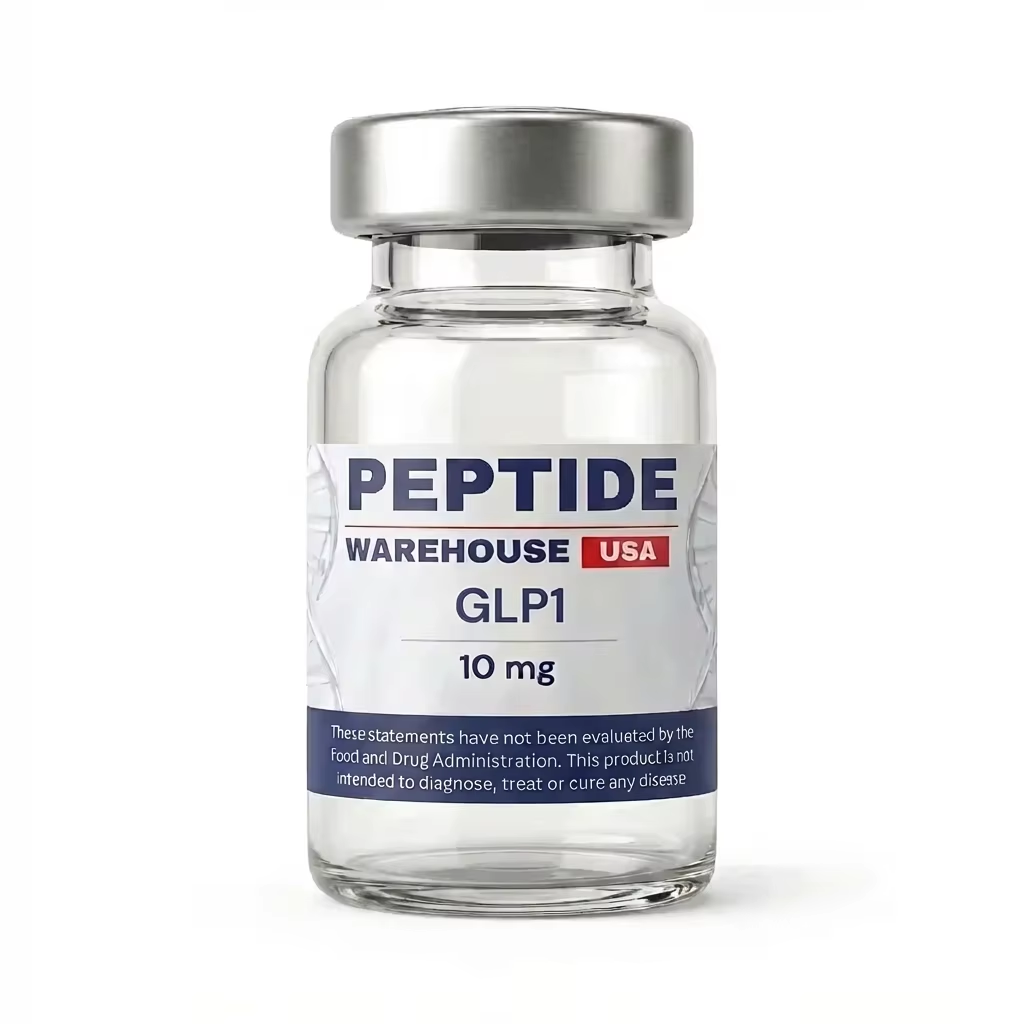
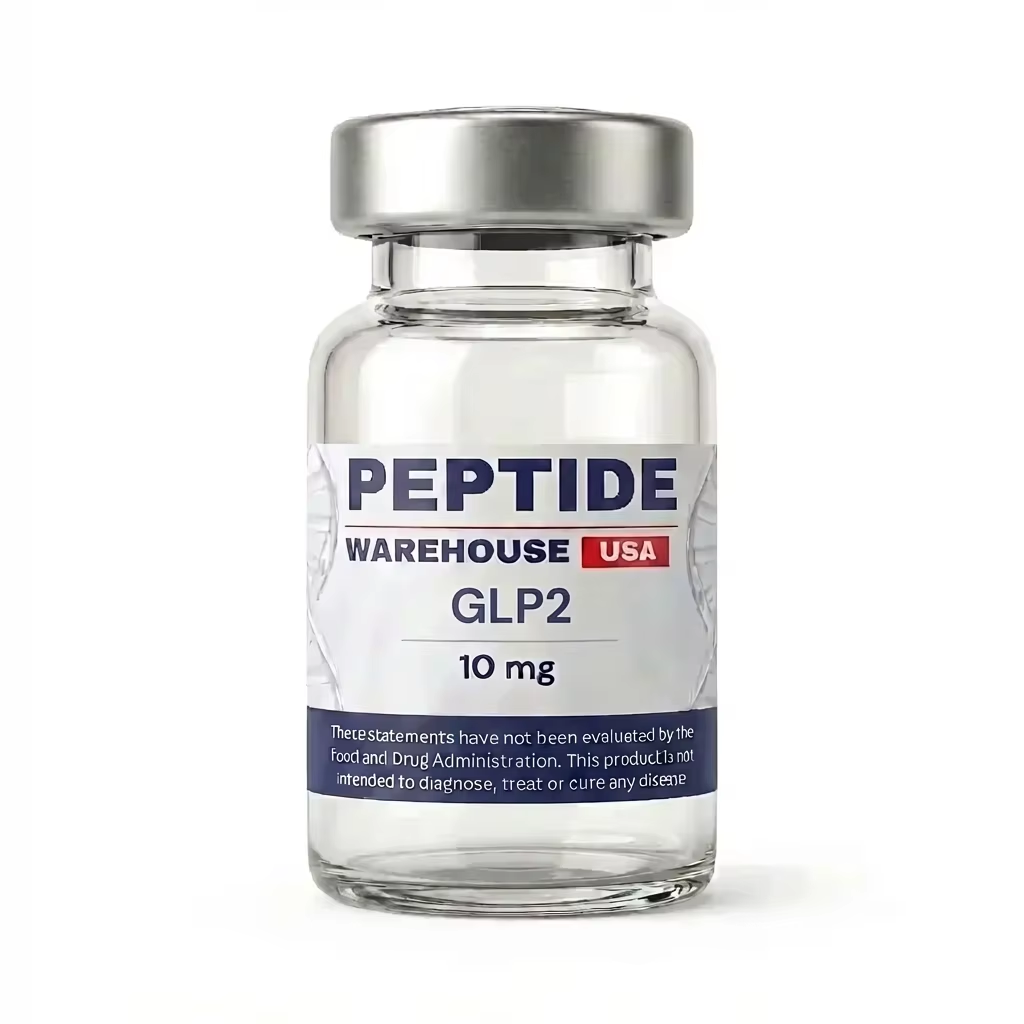
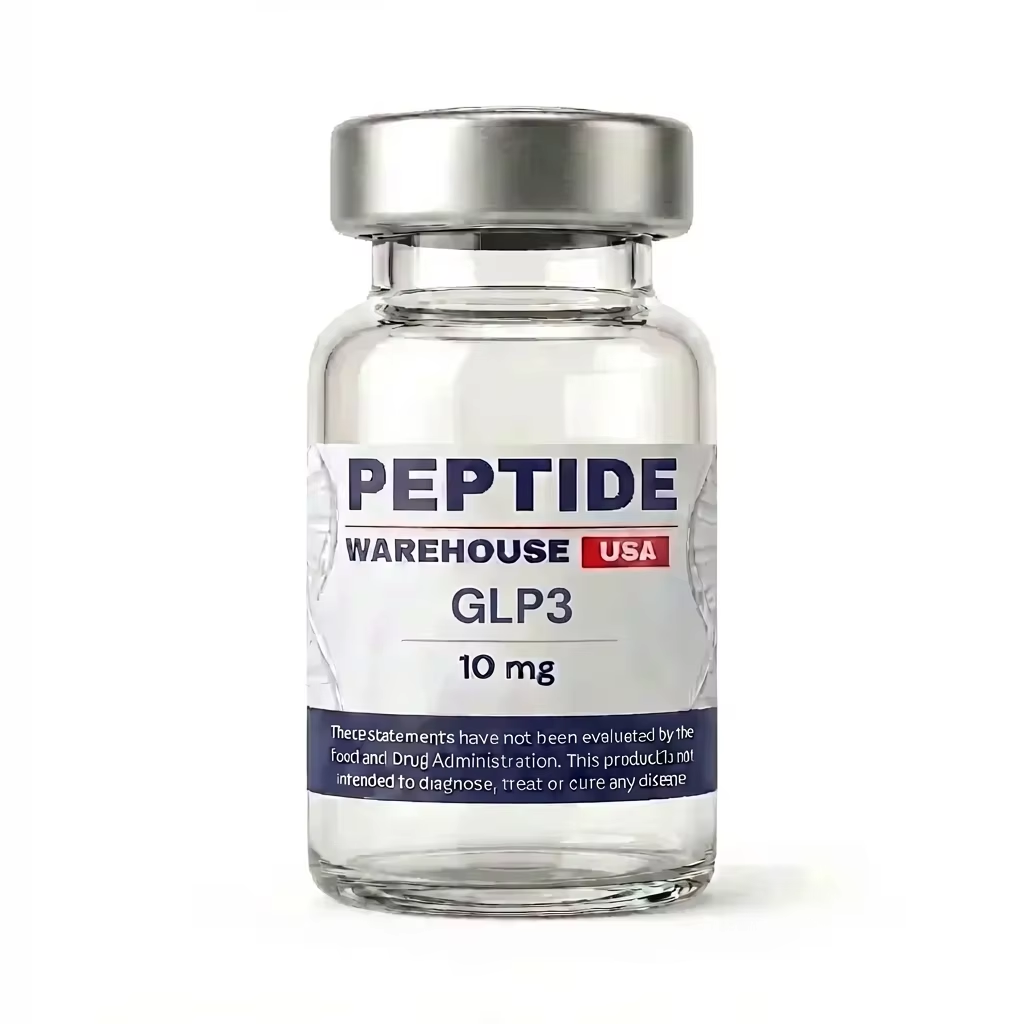
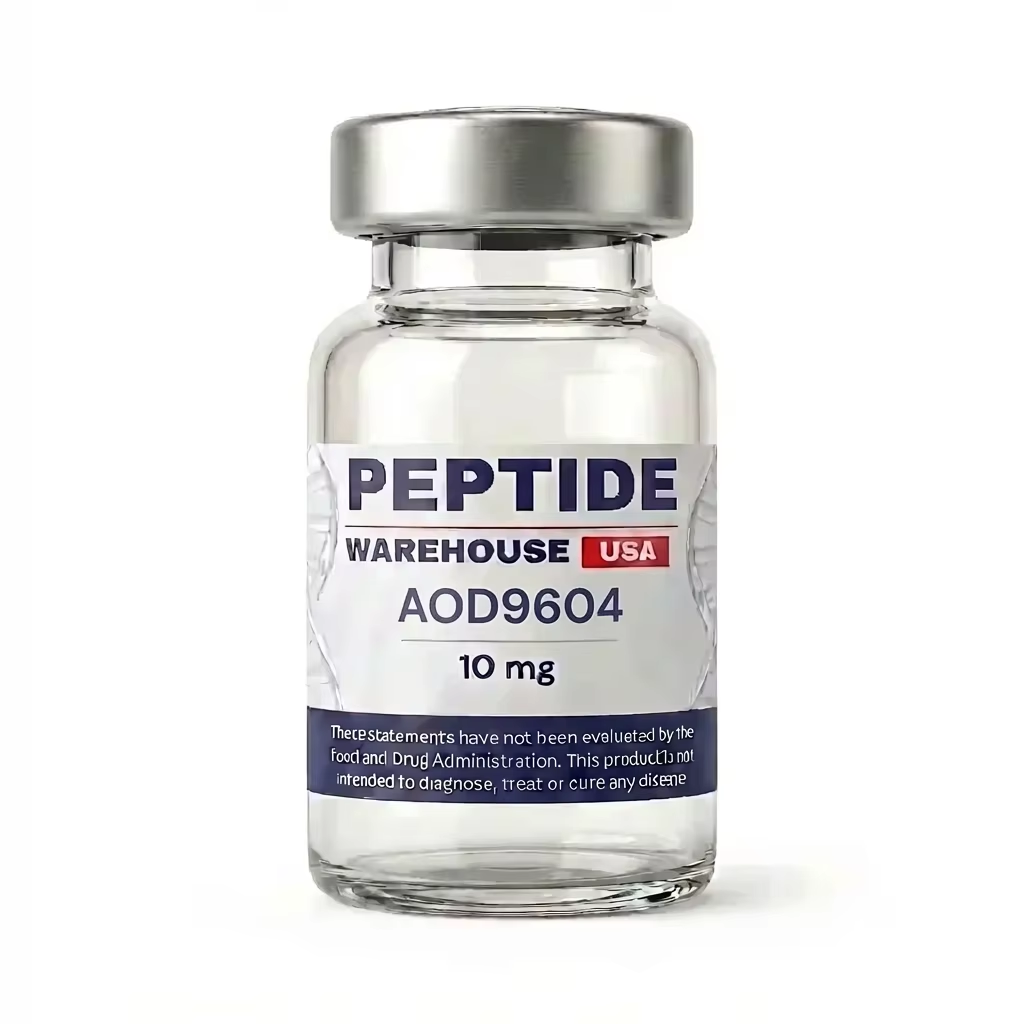
For procurement comparison, labs can also explore the catalog from Peptide Warehouse USA, which lists research peptides and related compounds including BPC-157, GHK-Cu, TB-500, Selank, Semax, and PT-141. The company states that its products are USA-manufactured, sold for research, laboratory, or analytical use only, and supported by batch documentation including COAs, microbial reports, and endotoxin reports.
The central lesson is simple. Reform research peptides are not defined by a purity headline alone. They're defined by traceability, analytical verification, appropriate labeling, controlled handling, and a documented fit with the research question.
Peptide Warehouse USA provides USA-manufactured research peptides and related compounds for laboratory, analytical, and preclinical applications, with batch-specific COAs plus microbial and endotoxin documentation. Review the available compounds and documentation at Peptide Warehouse USA, then confirm your specifications with your laboratory and institutional compliance teams before ordering.