No products in the cart.

A researcher opens a shipment, sees a clean vial and a nearly perfect COA, then discovers that the assay results don't match the previous experiment. The repeat run consumes more samples, more instrument time, and more budget. In many laboratories, the problem isn't the experimental design. It's a batch-to-batch verification gap that wasn't visible during procurement.
US research peptides are synthetic amino acid chains produced and supplied for laboratory, analytical, in vitro, animal-model, or preclinical investigation. They aren't finished medicines, and a high-purity label doesn't establish clinical suitability. For procurement teams, confidence comes from traceable manufacturing, lot-specific testing, appropriate contamination controls, and documentation that can survive an internal review.
The U.S. peptide therapeutics market illustrates why this category matters to research buyers. One industry estimate places the U.S. market at USD 80,796.1 million in 2025, with a projection of USD 186,344.6 million by 2033, implying a 10% CAGR from 2026 to 2033. A separate estimate projects USD 78.48 billion in 2026 and USD 150.46 billion by 2035, showing sustained expansion even under different market definitions, as reported by Roots Analysis. That downstream demand supports laboratories, preclinical developers, and life-science procurement channels, not only consumer-facing supplement markets.
This guide takes a procurement-first view. It covers how to distinguish domestic synthesis from repackaging, interpret HPLC and mass spectrometry data, identify contamination risks that purity percentages can hide, compare suppliers, and separate legitimate research use from compounding and human-use claims.
A peptide order can look routine until the data fail to reproduce. The vial may arrive on schedule, the label may identify the expected sequence, and the supplier may provide a polished PDF. Yet if the lot number doesn't match the document, the chromatogram is missing, or microbial and endotoxin testing wasn't performed, the laboratory has little evidence that the material is comparable to the reagent used previously.
That matters in cell assays, analytical method development, binding studies, and preclinical work. Peptides can carry sequence-related impurities, oxidation products, residual solvents, counter-ions, water, or microbial contaminants. A researcher may attribute an unexpected result to biology when the actual variable is the material.
US-made research peptides generally appeal to laboratories that want a shorter and more transparent procurement path. Domestic production doesn't automatically prove quality, but it can make several operational questions easier to resolve:
These are procurement advantages, not guarantees. A US address can describe a distributor, packager, or importer rather than the actual synthesis site. The buyer still needs evidence of manufacturing origin and lot-specific quality control.
Practical rule: Treat “made in the USA” as a claim to verify, not as a substitute for a COA, chain of custody, or independent testing.
Peptide science has a deep foundation. Insulin was isolated in 1921 and first used clinically in 1922, a milestone that demonstrated how a short-chain biologic could progress from discovery into therapeutic use, according to Grand View Research. The same source places the global peptide therapeutics market at USD 140.9 billion in 2025 and USD 164.0 billion in 2026, with a projection of USD 294.6 billion by 2033 at an 8.7% CAGR. That history helps explain why peptides remain important laboratory tools, while it doesn't change the RUO boundary on research products.
US research peptides are synthetic chains of amino acids manufactured in the United States and sold for scientific investigation. A useful analogy is to think of them as molecular building blocks or biological probes. They help researchers examine mechanisms, develop assays, compare sequences, and conduct preclinical experiments, but they aren't finished drugs.
The term “US-made” should also be read precisely. It may refer to domestic synthesis, purification, analytical testing, packaging, or some combination of those activities. Ask the supplier to identify which steps happen domestically and whether any crude material, active ingredient, or finished vial comes from another country.
Products labeled Research Use Only or Not for Human Consumption are intended for laboratory experiments, in vitro testing, analytical work, or animal research. They aren't FDA-approved for human administration or medical treatment, as explained in Healthline's comparison of research chemicals and FDA-approved peptides.
That classification separates a research reagent from an approved peptide drug such as semaglutide or oxytocin. Approved medicines pass through clinical development, regulatory review, and manufacturing controls appropriate to patient-facing use. A research peptide COA can confirm analytical characteristics, but it doesn't establish human safety, therapeutic efficacy, sterility for injection, or FDA approval.
A high purity result doesn't convert an RUO compound into a pharmaceutical product. It also doesn't authorize a supplier to make medical claims or a buyer to administer the material to people. RUO products need accurate labeling, appropriate sales language, and a clear separation between laboratory investigation and patient treatment.
Regulatory questions become more complicated when a buyer discusses compounding, clinical use, or consumer sales. Those activities involve requirements that don't apply because a peptide was synthesized domestically or accompanied by analytical data. Laboratories should involve their compliance office, institutional review board, biosafety team, or legal counsel when a project moves beyond ordinary research procurement.
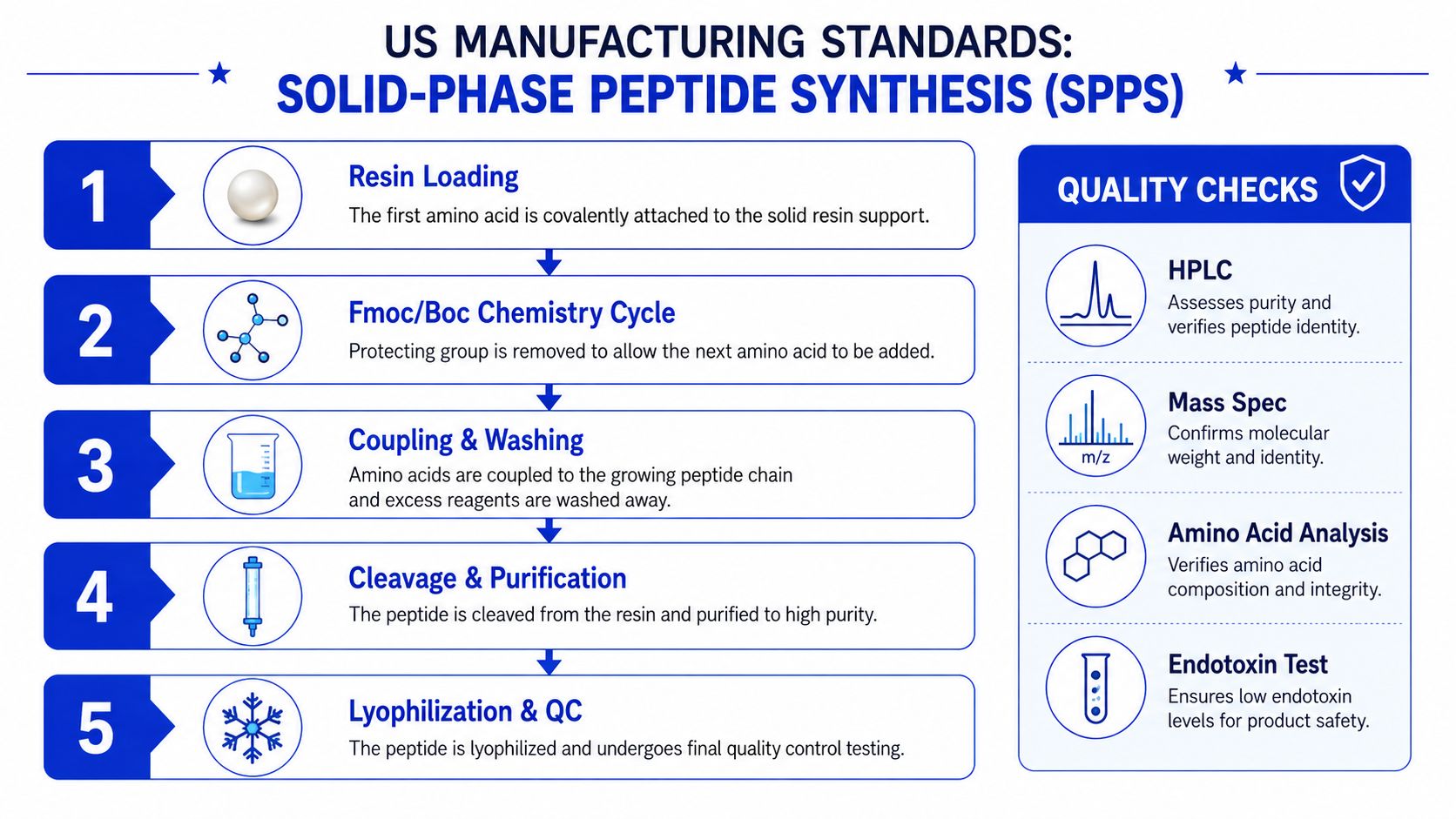
Most synthetic research peptides are produced through solid-phase peptide synthesis, or SPPS. In this process, the growing chain remains attached to a resin while amino acids are added in sequence. Fmoc or Boc chemistry protects reactive groups during each cycle, and the manufacturer performs coupling, deprotection, washing, and monitoring steps until the intended sequence is assembled.
The synthesis itself is only part of the quality story. After chain assembly, the manufacturer cleaves the peptide from the resin, removes protecting groups, purifies the material, and typically converts it into a dry powder through lyophilization. Preparative reverse-phase HPLC is commonly used to separate the target from synthesis-related impurities before final analytical testing.
A supplier with strong operational discipline should be able to explain more than the final purity result. The production record should connect raw materials, equipment, operators, processing steps, deviations, and release tests to one identifiable lot.
Look for evidence such as:
RUO manufacturing doesn't automatically mean full pharmaceutical cGMP production. Still, cGMP-adjacent habits, including controlled procedures, environmental oversight, training documentation, and traceable release decisions, make a supplier easier to evaluate.
A domestic shipping address doesn't answer where synthesis occurred. Ask direct questions:
A supplier that can answer clearly demonstrates better control than one that relies only on a generic product page. Manufacturing timelines and technical explanations don't replace testing, but they reveal whether the business understands its own process.
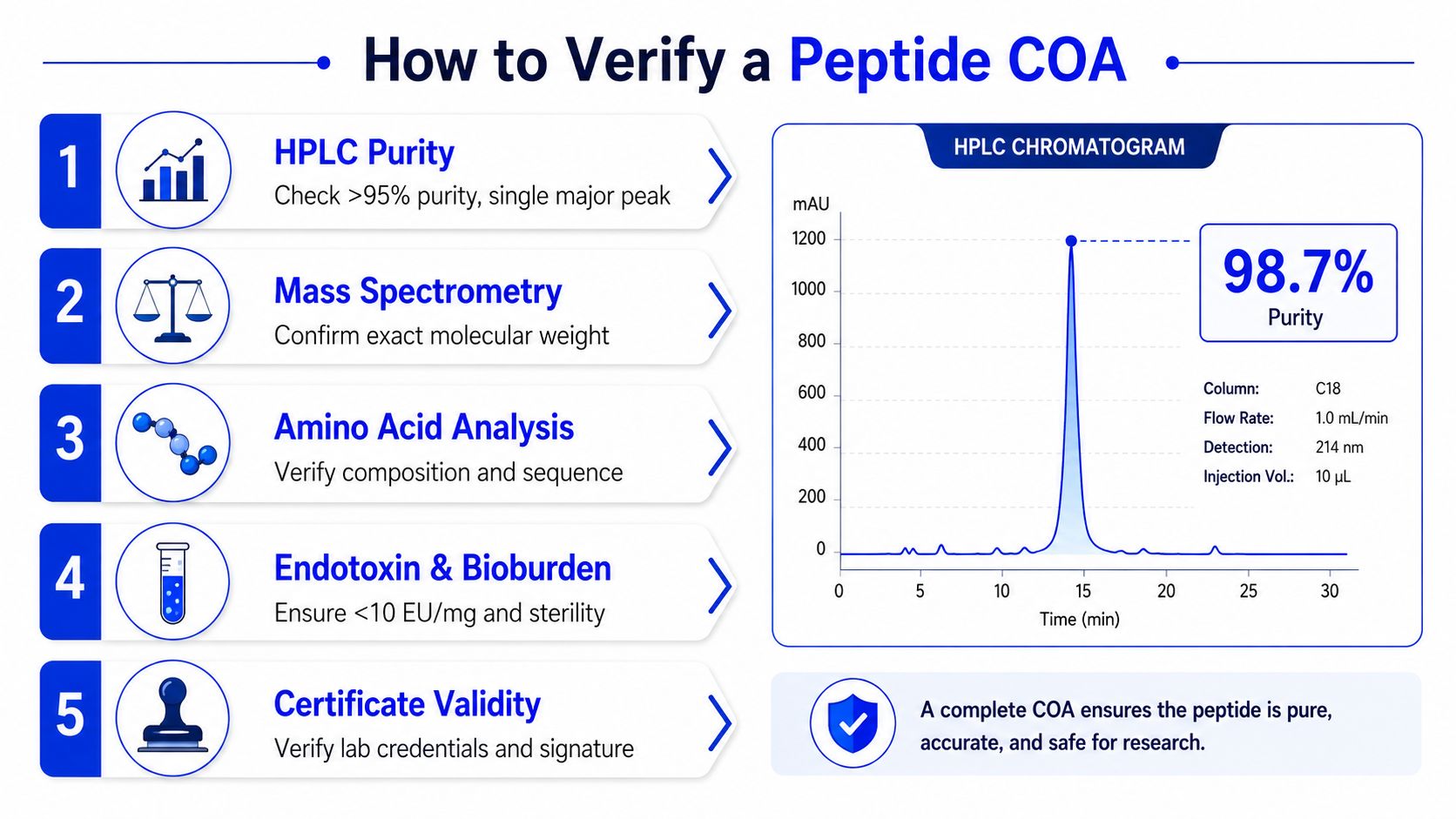
A Certificate of Analysis is a batch document, not a marketing decoration. A credible COA should identify one production lot and connect that lot to the vial, analytical results, test dates, and laboratory responsible for the work. Modern Bio's COA guidance emphasizes the importance of matching identity, purity, contaminant data, and batch information on the same document.
Start with the lot number. Compare the COA number with the vial label, invoice, packing list, and outer packaging. A document that identifies only a product name, without a lot-specific reference, can't establish that the supplied material was tested.
Reverse-phase HPLC with UV detection at 214–220 nm is a core quantitative method for research-peptide purity, as described by Prodigy Labs' peptide testing guidance. The reported purity commonly reflects the target peak area divided by the total chromatographic area. It helps separate the intended peptide from truncation products, deletion sequences, oxidized variants, and synthesis byproducts.
A percentage alone isn't enough. Review:
HPLC can show how much chromatographic material behaves like the target under that method. It doesn't prove molecular identity and doesn't detect every contamination category.
Mass spectrometry, using approaches such as ESI-MS or MALDI-TOF, addresses a different question: does the observed molecular mass correspond to the intended sequence? Peptides NYC's verification guidance notes that HPLC and mass spectrometry don't detect bacterial endotoxin, so a dedicated endotoxin assay is necessary.
A useful COA review checks whether:
Don't accept identical purity values across unrelated products without asking how the laboratory calculated them. A clean-looking template, missing raw data, or a third-party letterhead that can't be verified should stop the release process until the supplier responds.
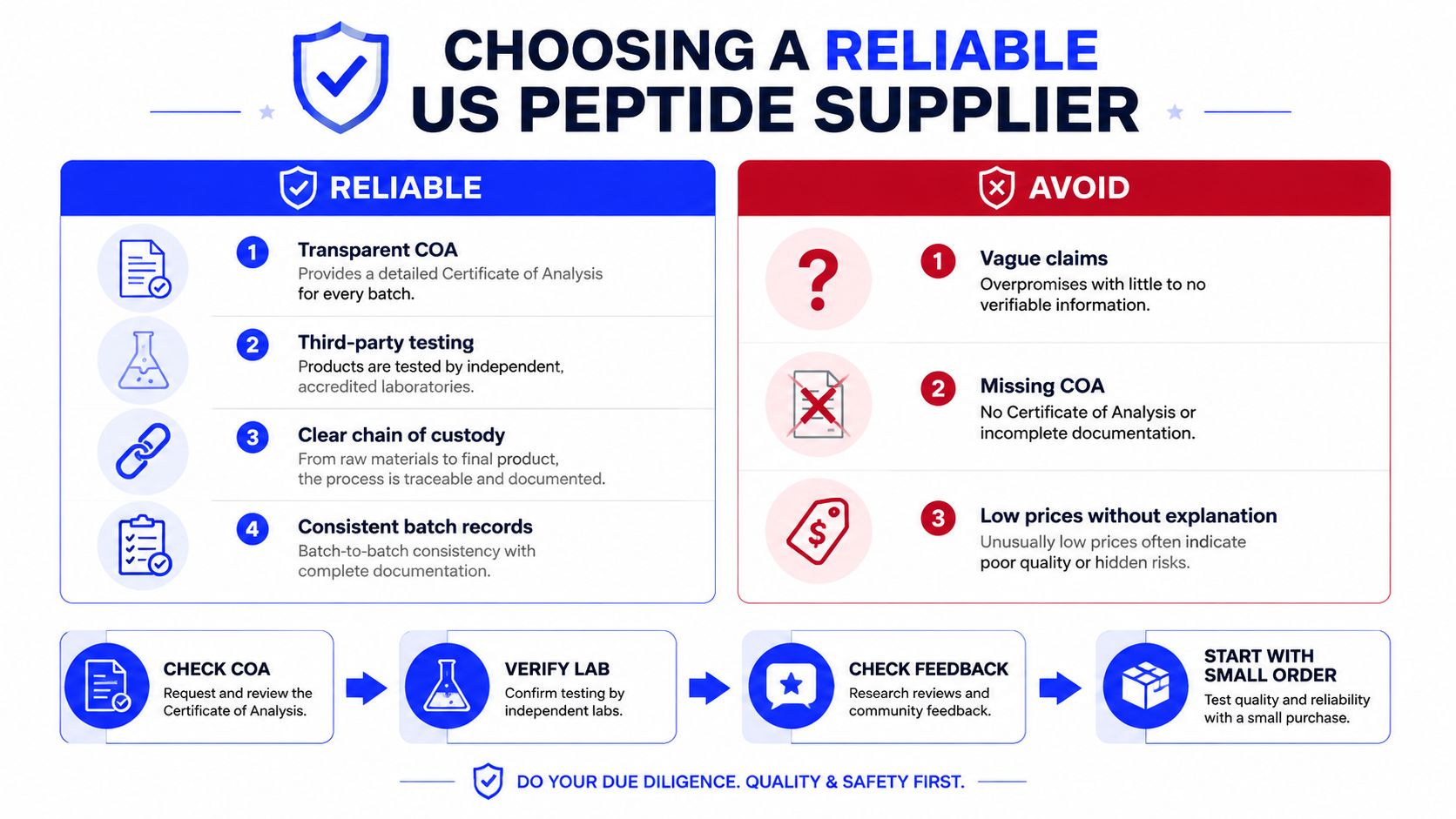
A high HPLC purity result can still leave important questions unanswered. The chromatographic method may not quantify water, counter-ions, residual solvents, microbial contamination, endotoxin, or metals. It may also fail to distinguish closely related impurities if they co-elute with the target.
The most common procurement mistake is treating “high purity” as a complete quality profile. In practice, purity, identity, net peptide content, and contamination control are separate attributes.
| Contaminant | Typical Source | Risk to Research | Detection Method |
|---|---|---|---|
| Residual counter-ions | Cleavage and purification chemistry | Changes mass, concentration calculations, and assay conditions | Counter-ion analysis, method documentation, or quantitative characterization |
| Truncation and deletion sequences | Incomplete coupling during SPPS | May alter binding, activity, or assay background | HPLC with suitable separation, MS, and sequence characterization |
| Oxidized variants | Exposure to oxygen or reactive process conditions | Can change peptide behavior and stability | HPLC and MS |
| Bacterial endotoxin | Contaminated water, equipment, handling, or inadequate process hygiene | Can interfere with cell and animal experiments | LAL or recombinant Factor C testing |
| Heavy metals | Raw materials, reagents, catalysts, or equipment contact | May affect enzyme, cell, or analytical results | ICP-MS or another validated metals method |
| Residual solvents and water | Synthesis, purification, drying, and storage | Changes actual concentration and can affect sensitive assays | Residual-solvent testing, water-content testing, or quantitative analysis |
Independent guidance on research-peptide COAs describes panels that may include HPLC purity, MS identity, endotoxin testing by LAL, water content, bioburden or sterility, and sometimes ICP-MS for metals, as outlined by Loti Labs. The exact panel should reflect the experiment, but a supplier should explain what was tested and what wasn't.
If the vial contains peptide plus water, counter-ion, salts, or residual solvent, the labeled mass isn't necessarily the mass of the target peptide. Amino acid analysis or quantitative NMR can provide a more useful estimate of net peptide content than a purity area percentage alone.
Ask whether the supplier performed counter-ion exchange, especially when TFA, acetate, or hydrochloride forms could affect your assay. Also request batch-specific endotoxin and microbial data. Two lots with similar HPLC purity can produce different experimental behavior if their non-target burdens differ.
A chromatogram tells you what the method separated. It doesn't tell you everything inside the vial.
Supplier evaluation works best when you compare evidence rather than promises. A credible vendor should be able to explain its manufacturing origin, provide lot-specific documents, identify testing partners, and respond to technical questions without redirecting every answer to a sales page.
Manufacturing origin confirmation comes first. Ask whether the company synthesizes domestically or imports finished material for repackaging. “Ships from the USA” describes fulfillment, not necessarily production.
Documentation depth separates a real release package from a templated PDF. Request a sample COA before placing an order, then verify that the final document includes the same level of detail. Raw chromatograms, MS identity data, contaminant results, dates, signatures, and matching lot numbers carry more weight than a single purity statement.
Independent testing adds an important layer of separation. In-house testing can be useful, but an independent laboratory provides a less conflicted check. Ask for the testing laboratory's identity, the method used, and whether the report applies to the exact production lot.
Inventory and fulfillment practices affect sample integrity. Lyophilized stock with documented storage is generally easier to assess than a pre-reconstituted solution with unclear preparation date, handling history, or storage conditions.
Scientific support should sound technical rather than scripted. A knowledgeable team can discuss sequence-specific issues, coupling and purification, counter-ion form, storage, reconstitution for laboratory use, and the limits of its testing.
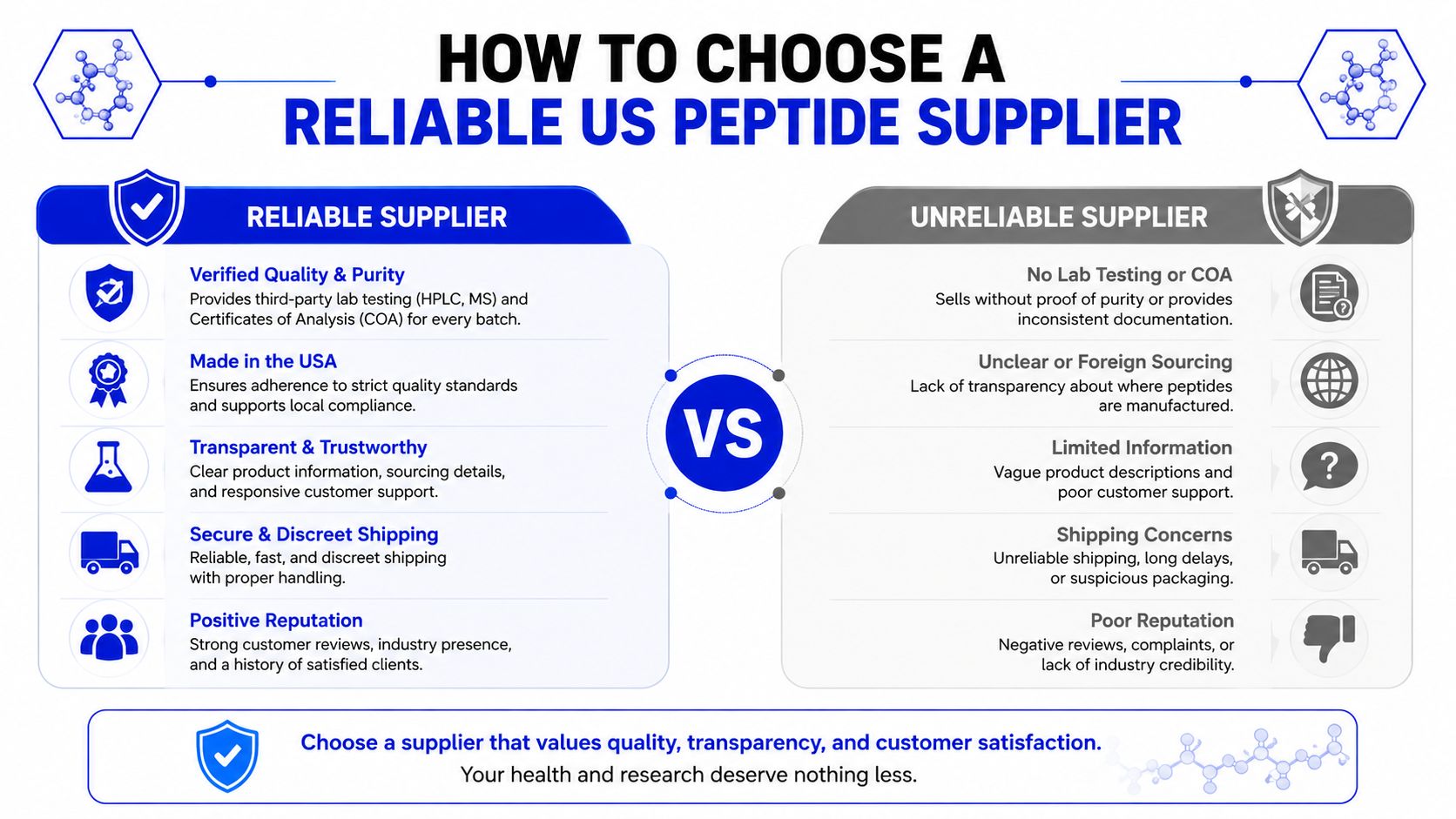
An unusually low price needs an explanation. It may reflect scale, inventory strategy, sequence complexity, or a different documentation package. It may also indicate imported crude material, relabeled origin, limited testing, or a product that isn't comparable to the quoted domestic alternative.
Before approving a vendor, place a small qualification order if your institution permits it. Confirm that the received lot, packaging, COA, invoice, and shipping records agree. Then record the result in your approved supplier file rather than relying on an informal email exchange.
Research-peptide procurement has become more documentation-heavy, particularly where a transaction could be confused with compounding, medical treatment, or consumer distribution. The central distinction remains simple: RUO material is for research, not human administration. The operational details still require care.
Product pages, vials, invoices, and packing documents should use consistent RUO language. Avoid supplier or buyer language that implies diagnosis, treatment, weight loss, healing, anti-aging, muscle growth, or another human benefit. A research product doesn't become a medicine because a buyer describes a desired outcome.
Reputable suppliers may use age gates, institutional verification, account controls, or affiliation checks. These safeguards don't replace legal review, but they help separate laboratory procurement from consumer sales. Institutions should retain:
Regulatory coverage in 2025 and 2026 has created confusion around FDA changes, compounding, and the meaning of “legal” research peptides. RUO peptides aren't FDA-approved for human use, and human studies require an appropriate clinical research framework, such as an IND and IRB oversight where applicable, as discussed in MedicalResearch.com's 2026 overview of research-peptide legal status. State requirements can differ, so institutional counsel should review any activity beyond ordinary research supply.
Lyophilized peptides are generally easier to transport than prepared solutions, but the correct storage and shipment conditions depend on the product and supplier's stability information. Buyers should confirm temperature expectations, packaging, carrier restrictions, customs documentation, and whether dry ice is involved.
Cross-border orders add customs and chain-of-custody variables. Domestic sourcing can reduce those variables, but it doesn't eliminate the need to inspect packaging, document receipt, and quarantine material until the lot records are verified.
Reproducible peptide work starts before reconstitution. The procurement team needs to know what was made, where it was made, which lot was tested, how identity was confirmed, and which contamination categories remain untested.
Use a consistent release checklist for every supplier and every new lot:
A supplier should earn approval through repeatable evidence. Score vendors on documentation completeness, independent testing, manufacturing transparency, response quality, shipping controls, and how quickly they resolve discrepancies. The lowest quote shouldn't automatically win if the missing data create repeat-experiment risk.
For laboratories comparing US research peptides, a practical decision tree is straightforward. If the supplier can't provide a lot-specific COA, pause. If the COA lacks orthogonal identity and contamination data, request clarification. If the company can't explain domestic manufacturing or chain of custody, classify the origin as unverified. If the documents pass review, qualify a small order before committing to a larger program.
The benefits of peptides in research depend on experimental context and material quality. A well-characterized reagent can support cleaner comparisons, while an undocumented reagent introduces uncertainty that no statistical analysis can fully repair. Rigorous sourcing isn't administrative overhead. It's part of the experiment.
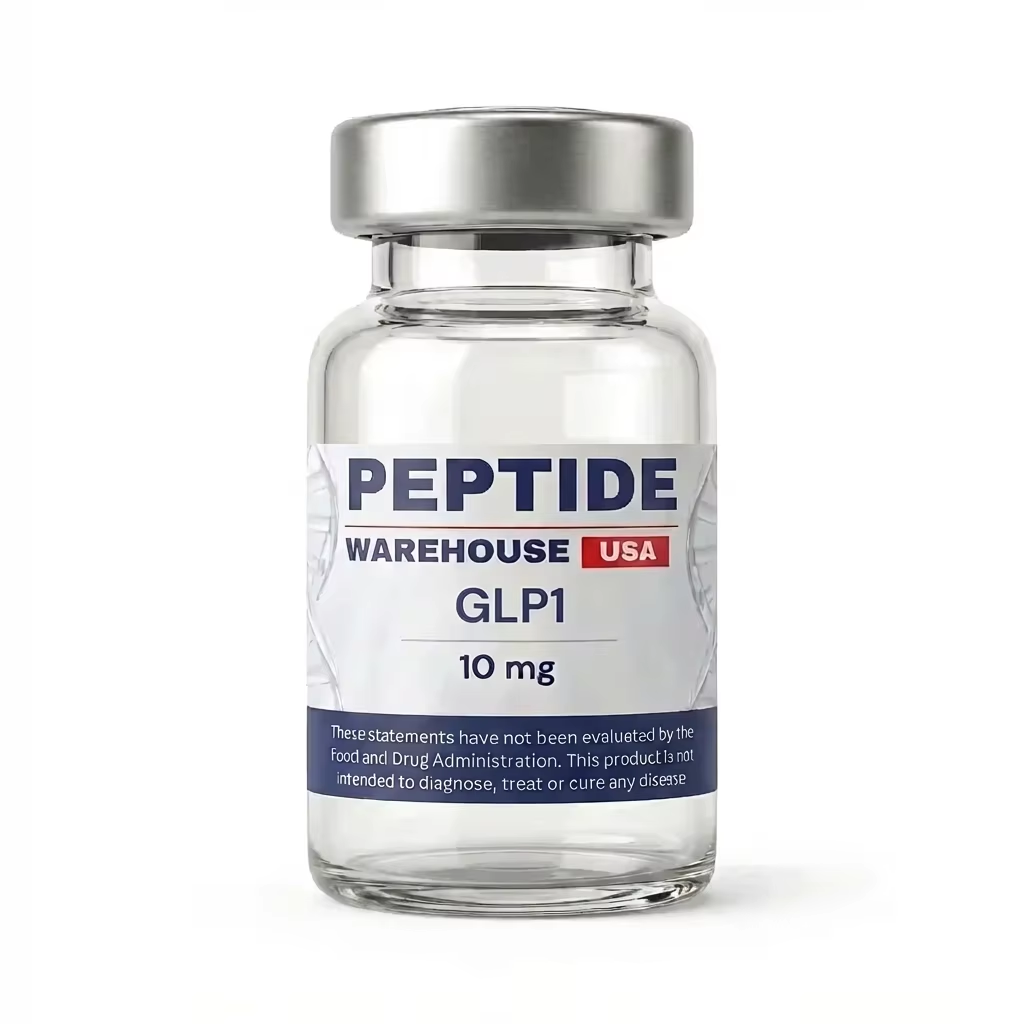
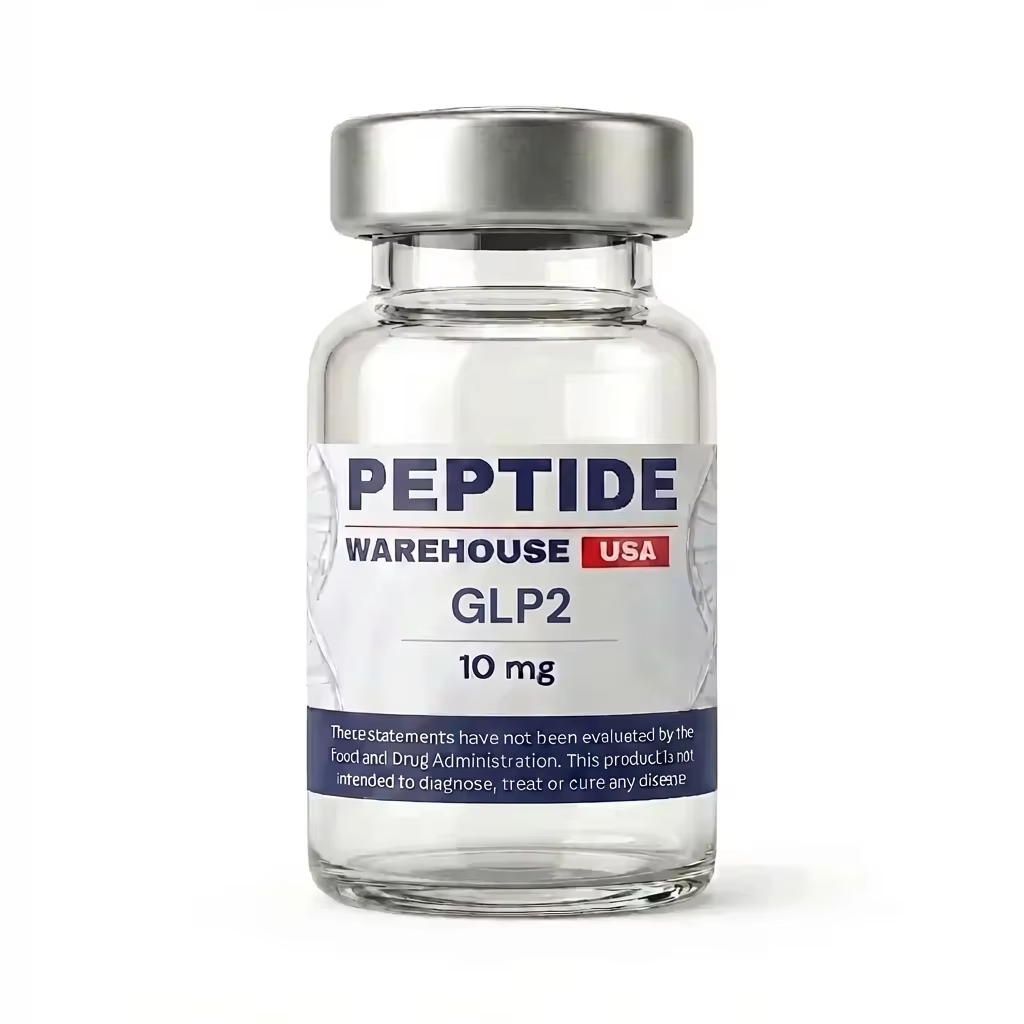
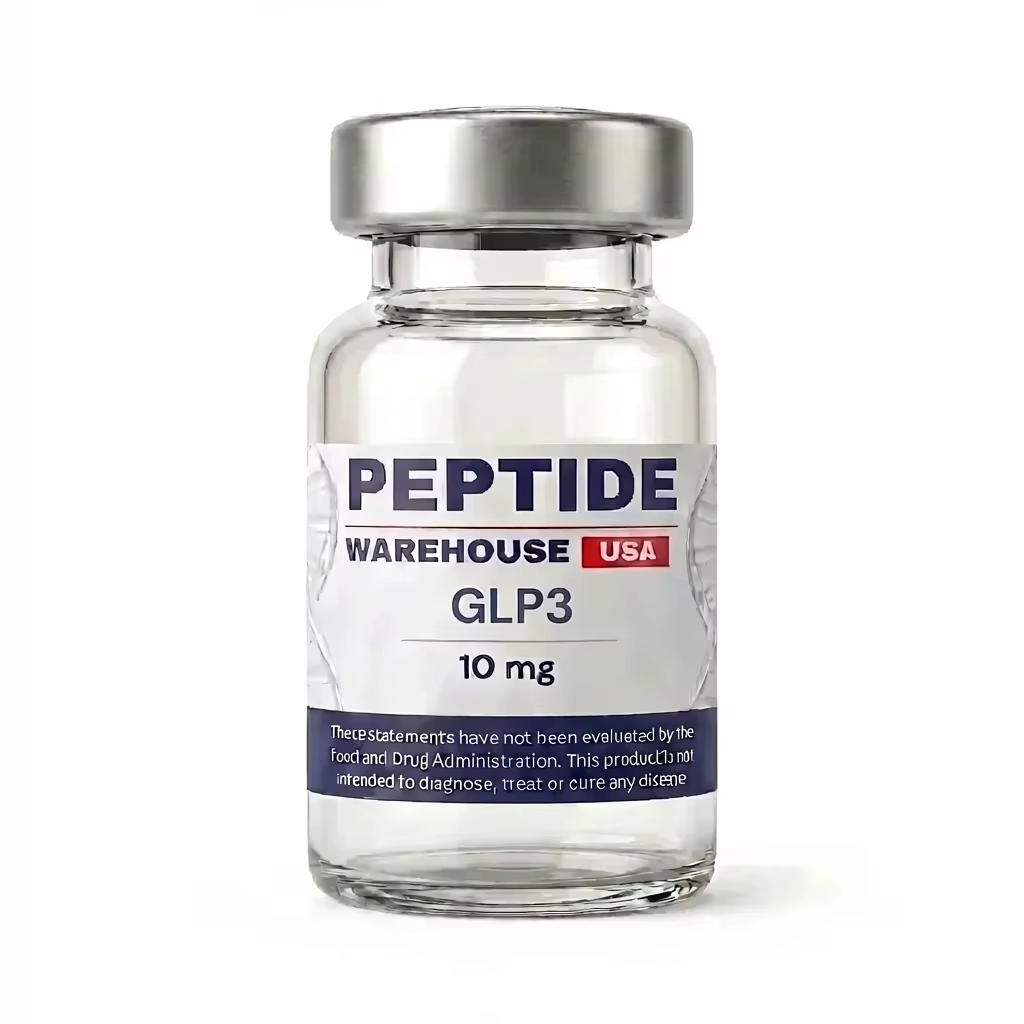
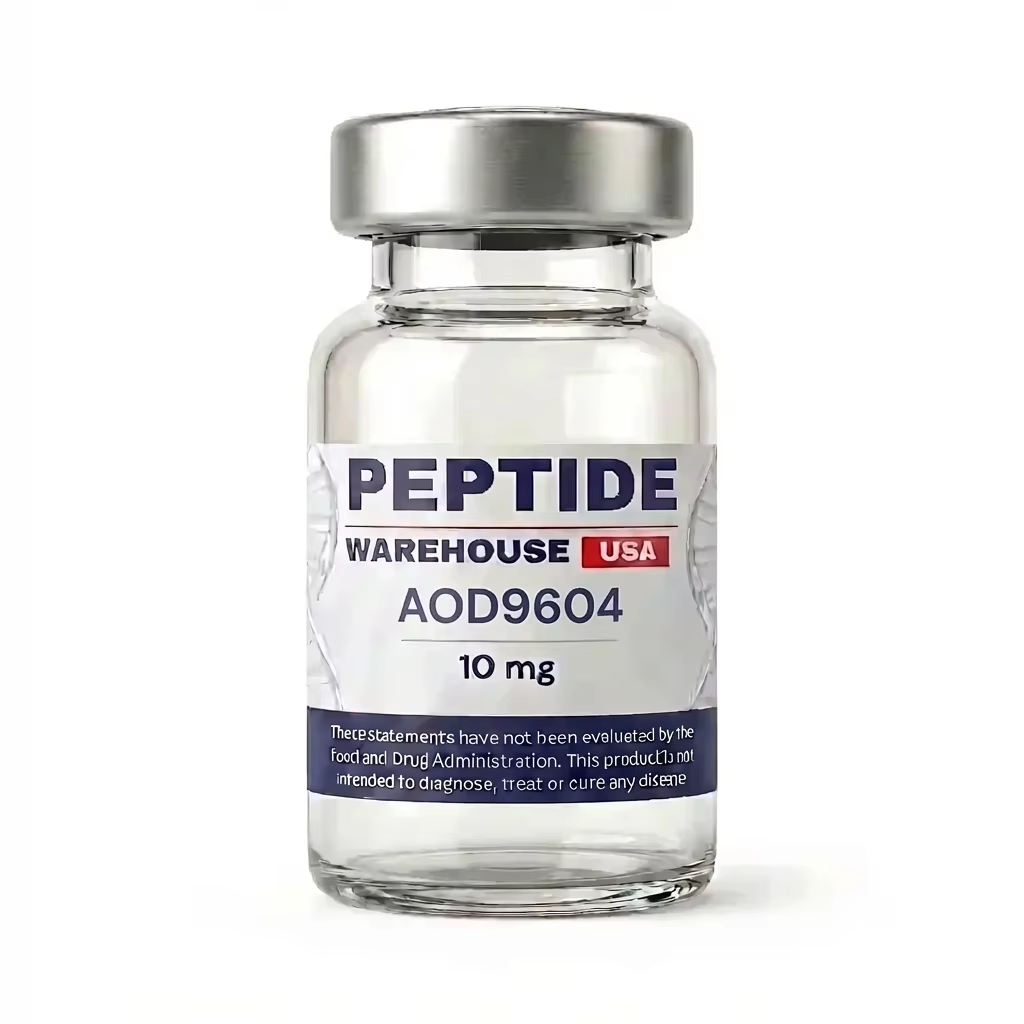
Peptide Warehouse USA offers US-made research peptides and related compounds for laboratory, analytical, and preclinical applications, with lot documentation that includes COAs and reported microbial and endotoxin testing. Review the available research-use-only options and procurement information at Peptide Warehouse USA, then contact the supplier to confirm the current batch documents and shipping requirements before ordering.