
No products in the cart.


GLP-1 peptide research has moved far beyond a narrow diabetes topic. The shift started when a 1992 report isolated and characterized human GLP-1 from intestinal tissue, then a 1993 clinical study showed that a 30-minute intravenous infusion of GLP-1(7-37) in diabetic patients significantly raised insulin and lowered glucose, with insulin rising about 3-fold (source). That single arc, from gut peptide to human glucose control, is why today's researchers treat GLP-1 as a serious biological system, not just a headline drug class.
A lab team can feel that shift immediately. One person is choosing a receptor assay, another is comparing obesity models, and a third is trying to decide whether a molecule's route of administration matters more than its potency. Those aren't abstract questions. They determine whether the data are useful, reproducible, and relevant to the endpoint that matters.
This guide breaks GLP-1 biology into practical pieces. You'll see how the peptide works, which targets modern studies focus on, how researchers compare models, how they verify identity and purity, and what to look for when sourcing research materials. The aim is simple, clear understanding that helps you choose the right model and assay for the question in front of you.
GLP-1 peptide research now sits at the center of metabolic medicine because the evidence base got too large to ignore. A 2024 systematic review and network meta-analysis included 76 trials with 39,246 participants and found that all 15 GLP-1 receptor agonists significantly lowered HbA1c versus placebo in adults with type 2 diabetes (BMJ). In obesity development, the STEP-1 trial reported mean body-weight reduction of 14.9% at 68 weeks with semaglutide versus 2.4% with placebo, and by 2022 global GLP-1 drug sales had reached $22 billion (BMJ).
That kind of expansion changes how researchers think. GLP-1 is no longer just a molecule to catalog, it's a platform with different readouts, different comparators, and different trade-offs depending on whether you care about glucose handling, appetite, route of delivery, or tolerability.
Practical rule: Pick the endpoint first, then choose the model, assay, and compound class to match it.
A lot of confusion comes from treating all GLP-1 work as if it asks the same question. It doesn't. A receptor-binding study answers something very different from a body-composition study, and neither one tells you much if the material is impure or the handling is sloppy.
The useful way to read GLP-1 peptide research is as a sequence. Start with mechanism, move to therapeutic targets, then compare models, and only then check assay quality and sourcing. That order keeps the biology clean and the interpretation honest.
If you're building a research plan, this framework gives you the working vocabulary to do it well. If you're evaluating materials or designing experiments, it also gives you the filters to tell strong GLP-1 data from noisy data.
GLP-1 is easiest to understand as a messenger with two jobs. First, it helps the body respond to glucose in a more controlled way. Second, it changes appetite and digestion through signals that reach both the gut and the brain.
The gut side is straightforward. GLP-1 receptor agonists slow gastric emptying and suppress food intake, which helps explain why they can change meal size and post-meal handling of nutrients (BMJ). The brain side matters just as much, because GLP-1 receptor-positive pathways in the brain regulate appetite and nausea, so the signal isn't only peripheral.
A thermostat doesn't create heat, it tells the system when to respond. GLP-1 works in a similar way, it tells the body to coordinate insulin support, satiety, and digestion in a more ordered pattern.
That's why the peptide is so interesting in research. It links a gut-derived signal to whole-body energy regulation, which is a much bigger idea than “a weight-loss drug.” The 1993 clinical infusion study mattered because it showed the mechanism operating in humans, not just in a test tube (PMC).
Central concept: GLP-1 is not one isolated effect, it's a coordination signal that links nutrient sensing, insulin response, and appetite control.
The broad physiological picture also helps explain why timing matters in experiments. If you only measure one downstream readout, you can miss the pattern entirely. A rise in insulin, a change in food intake, and a slowing in gastric emptying can all be part of the same response, but they don't peak on the same schedule.
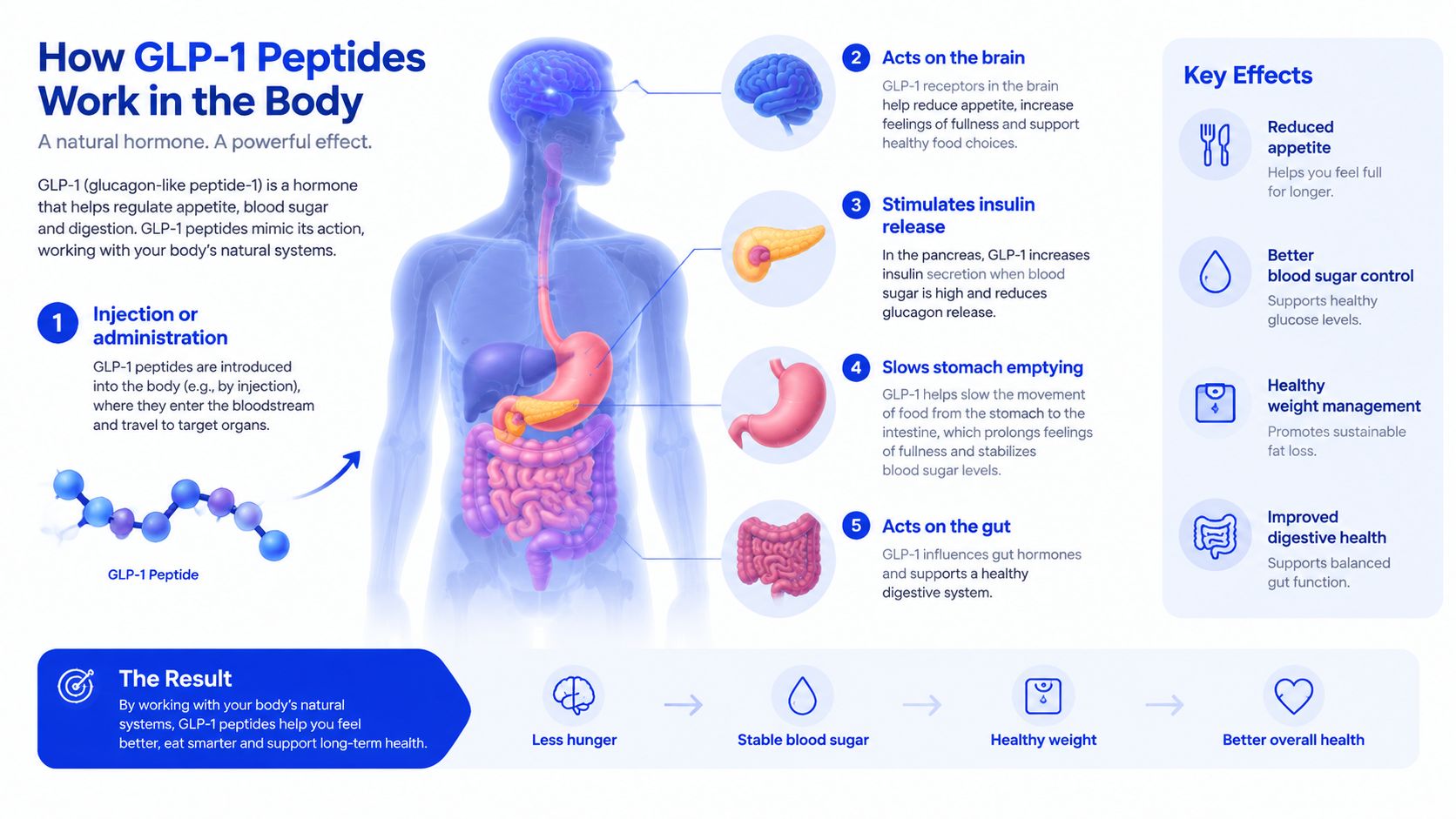
Later studies pushed that biology into the clinic. Exenatide became the first GLP-1 receptor agonist approval in 2005, marking the transition from experimental peptide biology to approved therapy (PMC).
The research question is not whether GLP-1 peptides have activity. The key question is which biological endpoint a study is meant to change, and how much mechanism the assay, model, or trial needs to capture. That is why the benefits of peptides belong in research design, not just in product language.
For glucose control, the evidence base is direct. The 2024 network meta-analysis found that all 15 GLP-1 receptor agonists tested lowered HbA1c versus placebo in adults with type 2 diabetes (BMJ). For weight-focused studies, semaglutide's STEP-1 result of 14.9% mean reduction at 68 weeks changed expectations about what GLP-1 biology can do in obesity research (BMJ).
Potency differences matter once the endpoint shifts from broad efficacy to study design. In obesity trials, benchmark data show a gradient from liraglutide to semaglutide to tirzepatide, and the reported gains increase over time (PMC). For researchers, that means the compound should fit the question. A smaller effect can still be useful if the study is about dose response, tolerability, or comparative biology.
A review in Nature Communications described trends toward improvement across endocrine and metabolic, cardiovascular, renal, and respiratory outcomes, with possible reductions in fracture risk and all-cause mortality in certain populations. The point is not that every signal is settled, but that the field now reaches beyond glycemia and body weight.
A practical way to organize current GLP-1 studies is by endpoint class:
Research takeaway: Bigger weight loss does not automatically mean better science. The best compound is the one that matches the outcome you are measuring.
Potency alone does not settle the question. If a compound produces a stronger signal but worsens adherence, tissue composition, or tolerability, the result may look better on paper than it does in practice.
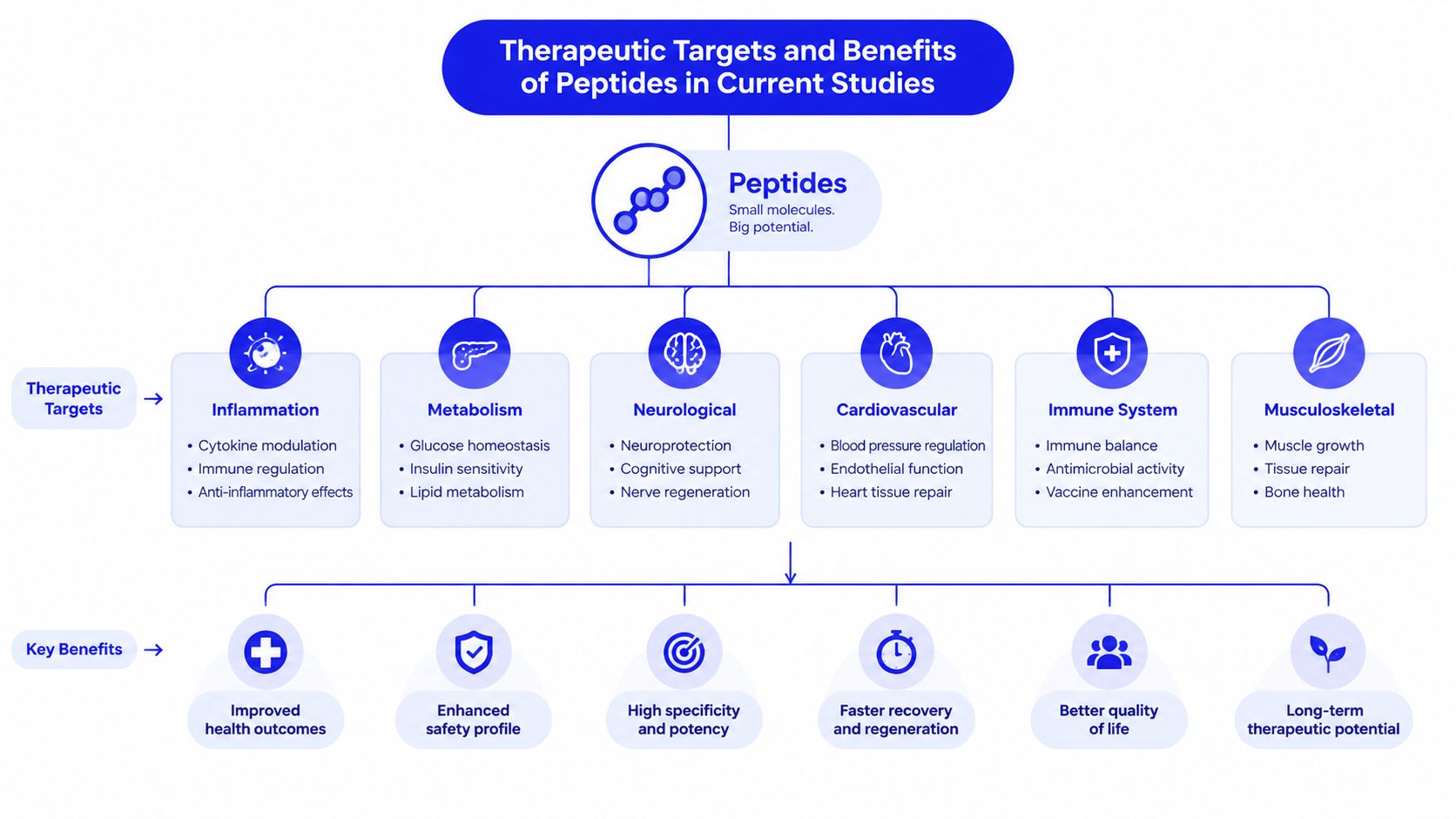
Newer reviews keep returning to bone, muscle, gastrointestinal function, and treatment duration. Those are not side issues. They help determine whether a peptide's effect is biologically meaningful in a given setting.
Choosing a GLP-1 model is mostly about matching the question to the system. A cell assay can tell you about receptor interaction, but it can't tell you how a whole organism handles appetite or tissue composition. A rodent obesity model can show integrated physiology, but it won't answer every translational question.
For early screening, in vitro receptor binding and cell-based cAMP assays are useful because they isolate receptor signaling. They're the right choice when you care about potency, selectivity, or whether a compound behaves like a real GLP-1 agonist.
For intermediate work, isolated islet systems help when glucose-handling mechanisms are the focus. They're more biologically grounded than a single-cell readout, but still controlled enough to separate signaling from whole-body noise.
For integrated physiology, diet-induced obesity rodent models are the usual workhorse. They're useful for food intake, body-weight trajectory, and broader metabolic outcomes, though they can't fully recreate human adherence or subjective tolerability.
A simple comparison looks like this:
The harder part is knowing what each model cannot do. A compound may look impressive in a receptor assay and still be a poor candidate if it behaves badly in longer studies. That's especially true now that the field is moving toward oral non-peptide GLP-1s and multi-agonists such as GLP-1/GIP, GLP-1/glucagon, and GLP-1/amylin combinations in the pipeline review literature (Medpace whitepaper).
Human translational work has its own logic. The GLP-1 trial base expanded from about 100 studies in 2021 to 476 in 2025, which shows how quickly the research field has crowded out one-size-fits-all assumptions (Medpace whitepaper). That growth makes the model choice even more important, because the field now spans different routes, mechanisms, and populations.
Useful filter: If the endpoint is behavioral or whole-body, don't stop at a dish assay. If the endpoint is mechanistic, don't bury it under a model that adds too much noise.
The best experimental design usually pairs levels of evidence. A receptor assay can justify a candidate, an animal study can test integrated effects, and a translational design can show whether the biology survives contact with reality.
A GLP-1 study is only as good as the material behind it. If identity, purity, or handling is unclear, the data can drift away from the biology you thought you were measuring.
The first checkpoint is documentation. A Certificate of Analysis should match the lot you're using, and the identity claim should be supported by analytical testing rather than marketing language. In practice, that means checking whether the documentation describes the material in your vial.
For identity and purity, labs commonly rely on HPLC and mass spectrometry. Those methods do different jobs. HPLC helps with purity profiling, while mass spectrometry confirms molecular identity, so the pair is stronger than either one alone.
A basic QC workflow is:
A functional assay only means something if the material is what it claims to be. That's why potency readouts belong after identity and purity checks, not before them.
Storage matters too. For lyophilized powder, cool, dry, and light-protected handling reduces avoidable variability. If a sample has been mishandled, the assay may be measuring damage instead of activity.
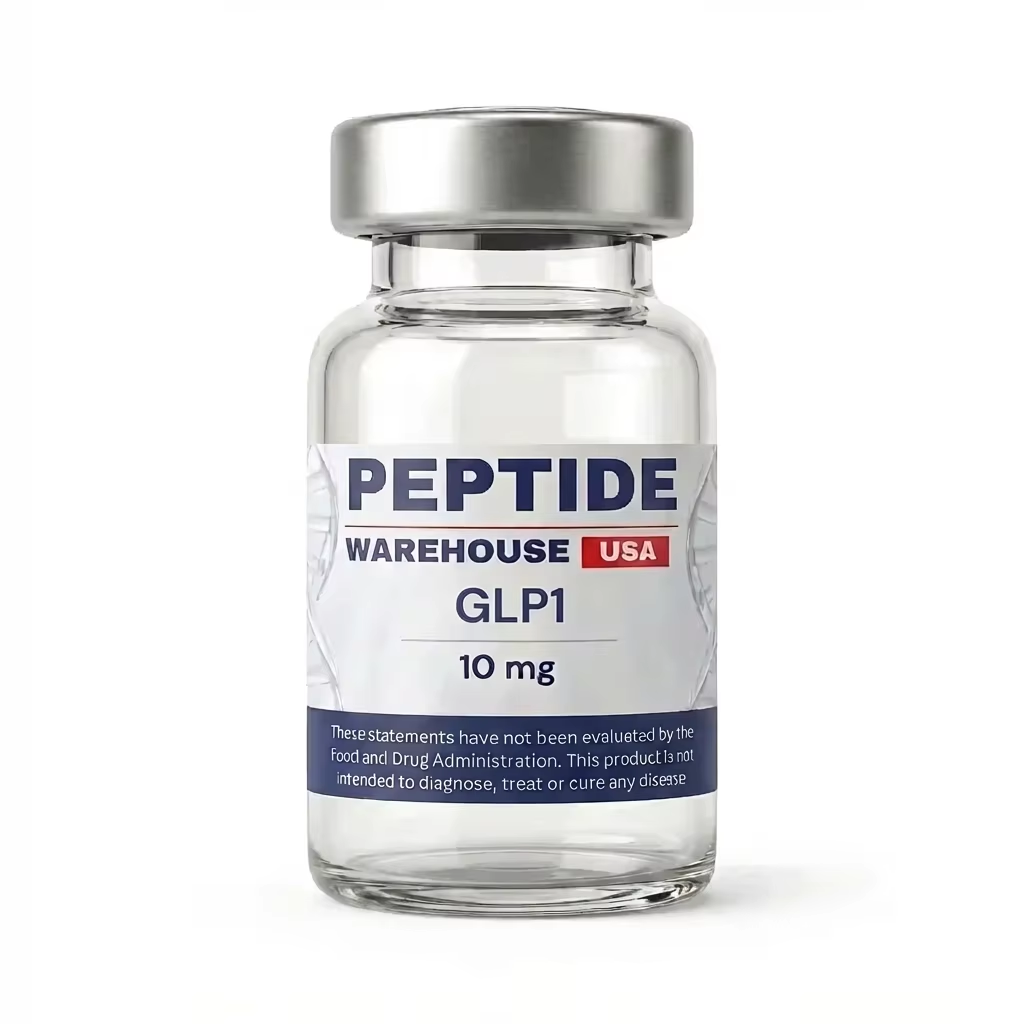
Some researchers also source from suppliers that provide transparent third-party documentation and lot traceability. One example is Peptide Warehouse USA, which describes its materials as US-made research peptides with batch production and batch testing protocols, COAs, microbial and endotoxin reports, and stated purity levels up to 99.5%. That kind of documentation is useful because it lets the lab verify what's in hand before starting the study.
A good rule here is simple.
Practical rule: Never let a functional result outrun the paper trail. Identity, purity, and handling have to be settled first.
If you're comparing batches, the point isn't just consistency for its own sake. It's reproducibility. Reliable documentation makes it easier to interpret whether a change came from the peptide, the model, or the assay itself.
Researchers usually want three things from a supplier. They want the material to be traceable, the documentation to be transparent, and the logistics to be simple enough that the study doesn't stall. That's especially important in GLP-1 work, where route, dose, and handling can all change the readout.
The cleanest sourcing question is not “What's popular?” It's “Can I verify what this lot is, where it came from, and how it was tested?” For GLP-1 research, that means looking for US manufacturing, batch production, and batch testing protocols that are documented rather than implied.
Researchers should also ask for:
The practical reason is simple. Research peptides are handled differently depending on format, and poor storage can complicate interpretation. If a compound is lyophilized, it still needs proper handling once it's out of the package. If the study depends on reproducibility, the supplier's paperwork matters as much as the vial label.
A lot of confusion comes from treating all peptide suppliers as interchangeable. They're not. Some provide better documentation, some provide better logistics, and some are easier to audit.
For GLP-1 studies, a strong sourcing decision usually balances documentation with use case. If you need a material for analytical work, the question is whether the identity and purity claims are well supported. If you're building a comparative study, the question is whether every batch can be traced and handled the same way.
This is also where researchers should stay strict about use language. These are research-use-only materials, not clinical products, and the sourcing choice should reflect that boundary. Clear labels and clear documentation help keep the study aligned with that expectation.
The field keeps expanding, but the basics haven't changed. Good sourcing is still about documentation, consistency, and handling discipline. If those aren't there, the biology gets harder to trust.
The most useful GLP-1 workflow is still the simplest one. Start with the mechanism, choose the model that fits the endpoint, verify the assay before you trust the result, and source the material with enough documentation to defend the data. That sequence keeps the study aligned from first concept to final readout.
The reason this matters now is that the field has become crowded. The global study base has expanded quickly, the pipeline is moving toward oral and multi-agonist formats, and long-term questions around adherence, muscle, bone, and gastrointestinal tolerance are still open (Medpace whitepaper, PubMed). In a crowded field, the strongest work is the work that can explain why one mechanism, model, or assay was the right choice.
A good planning question is this. What exact endpoint am I trying to understand, and what level of biology is needed to answer it? If you can answer that cleanly, the rest of the study gets easier.
For related peptide topics, it also helps to compare GLP-1 against other research peptides, look at assay-focused guides, and review sourcing pages that explain lot-level documentation and handling. That kind of reading keeps your choices grounded in the practical details that affect reproducibility.
If you're ready to refine your GLP-1 peptide research workflow, start with the endpoint, confirm the assay, and compare sourcing options that publish clear documentation. Then use the evidence to decide whether you need a receptor model, a whole-organism model, or a translational comparison.
Peptide Warehouse USA supplies research-use-only peptides with batch documentation, COAs, and lot traceability that fit the needs of GLP-1 peptide research. If you want to compare formats, review sourcing details, or explore research options for your lab, visit Peptide Warehouse USA and evaluate the materials against your study design.
Leave a comment