
No products in the cart.



Why does raising NAD+ in a blood sample sometimes fail to produce a measurable change in the outcome a study cares about? That question sits at the center of modern NAD research. A higher metabolite reading can show target engagement, but it doesn't automatically prove better cellular function, improved healthspan, or an anti-aging effect in humans.
NAD+ biology began in core biochemistry and now reaches into aging, metabolism, neurodegeneration, cardiovascular research, and cellular signaling. This guide explains the subject in practical terms, moving from NAD+ and NADH fundamentals to research history, experimental methods, precursor compounds, delivery routes, and result interpretation.
You'll learn how to:
The most reliable way to approach NAD+ biology is progressively. First understand what the molecule does, then see how the field developed, then examine how researchers measure it. Only after that can you judge whether a reported result supports a mechanistic finding, a translational possibility, or a proven human outcome.
Why can two studies report higher NAD+ yet reach different conclusions about health? The answer begins with what was measured, where it was measured, and what biological outcome followed. NAD+ supports electron transfer during energy metabolism, while broader research connects it with DNA repair, chromatin remodeling, gene expression, RNA processing, immune signaling, and circadian control.
Those roles place NAD research across aging models, metabolic studies, neurobiology, cardiovascular research, and cellular stress experiments. They also create an interpretation problem. A rise in blood NAD+ may not reflect a matching change in brain or muscle, and a higher reading in one assay may not be directly comparable with a result from another method.
A biomarker elevation shows that a compound reached, or affected, a measured system. It does not by itself establish improved cellular function, longer healthspan, or an anti-aging effect in humans. Delivery route adds another layer. Oral NR, NMN, oral NAD+, and IV NAD+ differ in absorption and distribution, so their results should not be treated as direct head-to-head evidence.
Human research illustrates the distinction. In a randomized Parkinson's study, oral nicotinamide riboside raised cerebral NAD, but participants did not respond identically. The finding supports target engagement in the brain, while leaving broader functional and clinical questions open (PubMed study of NR and cerebral NAD).
This guide focuses on how to reason about those results. It introduces NAD+ biology, follows the field's development, explains common experimental methods and reagents, and examines how precursor choice and delivery route shape interpretation. The aim is practical: help researchers distinguish a measured molecular change from a mechanistic signal, a translational possibility, or a demonstrated human outcome.
It also keeps research interpretation separate from medical advice and treatment claims. That boundary matters because assay choice, tissue sampling, timing, and endpoint selection can change what a study appears to show.
What happens when a cell needs to move energy from one reaction to another? NAD+ and NADH work as a reversible redox pair. NAD+ accepts electrons and becomes NADH. NADH can then donate those electrons during metabolic reactions, helping transfer energy through connected pathways.
A rechargeable delivery system provides a useful comparison. NAD+ is the available carrier, while NADH is the loaded carrier. The cycle keeps carriers in circulation so reactions can receive or release electrons as needed. The analogy has limits, but it clarifies why the relationship between NAD+ and NADH matters.
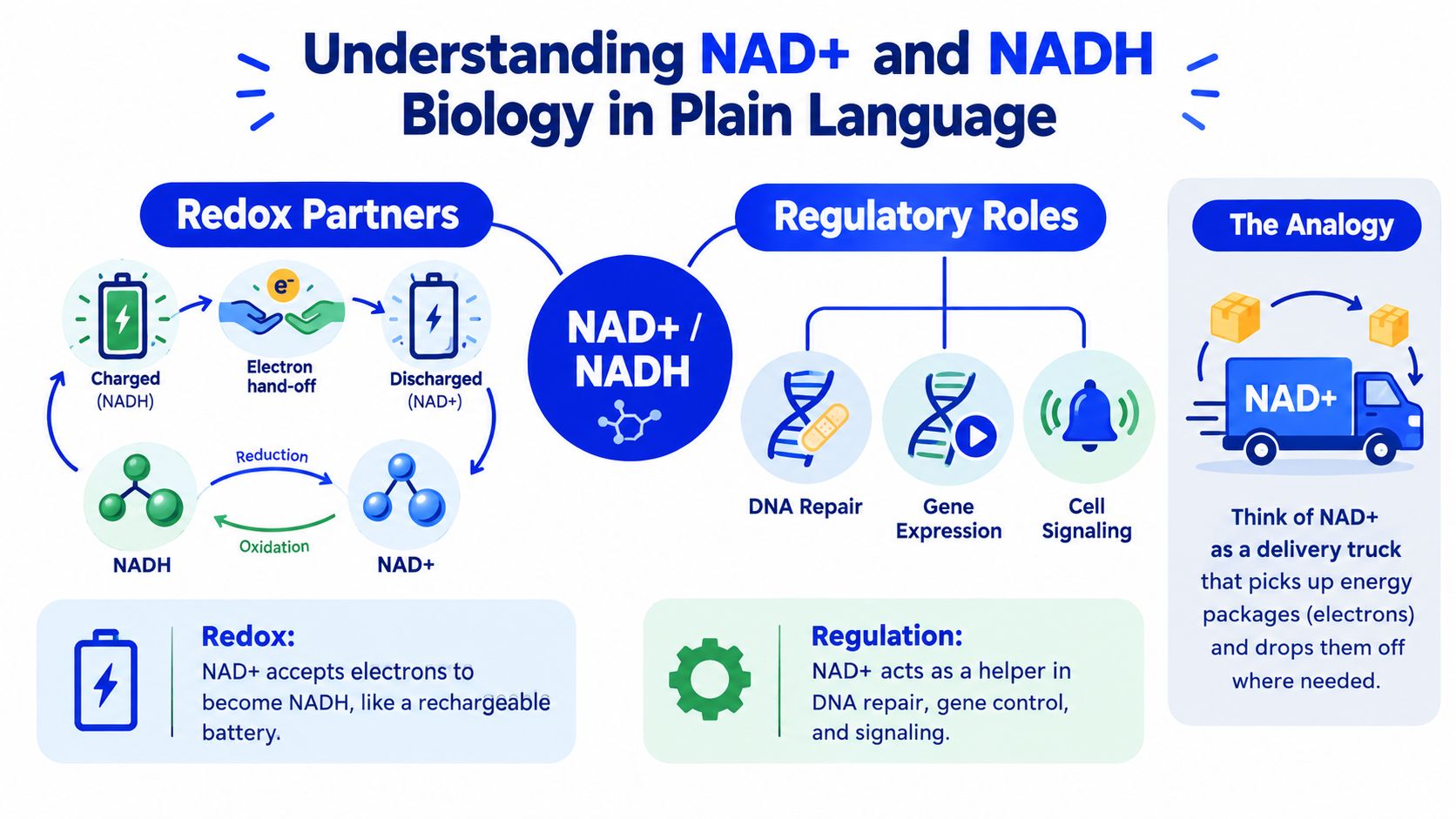
During glycolysis and the tricarboxylic acid cycle, NAD+ accepts electrons from metabolic intermediates. The resulting NADH can support later stages of energy production. If the available NAD+ pool is too limited, metabolic flux may become constrained, which can reduce the cell's ability to generate ATP.
That redox activity is only one part of NAD+ biology. NAD+ also serves as a substrate or helper for enzymes involved in cellular maintenance and signaling.
Mechanistic reviews connect NAD+ with several regulatory systems:
Core concept: NAD+ is both an electron carrier and a link between metabolism, repair, gene control, immune activity, and cellular timing.
A lower NAD+ supply can therefore affect several processes at once. Energy metabolism may change, while NAD+-dependent enzymes involved in genomic stability and stress responses may also have less substrate available. Researchers study NAD restoration as a systems-level question, rather than assuming that changing one measured value will produce a defined health outcome (mechanistic review of NAD+ functions).
The distinction between NAD+ and NADH also shapes experimental interpretation. A total NAD-related measurement can conceal a shift in redox balance. A single reported value may reflect more oxidized NAD+, more reduced NADH, altered turnover, or changes in related metabolites. Tissue, delivery route, sampling time, and assay choice further affect the result, so a raised NAD reading does not automatically demonstrate improved cellular function or a health benefit. Researchers should define the biological question first, then select an assay that measures the relevant form, tissue, and time point.
What began as a question about fermentation became a way to study metabolism, enzyme regulation, and aging. The history of NAD research shows how each milestone changed the questions researchers could ask.
In 1906, Arthur Harden and William John Young identified NAD during fermentation studies. This established NAD as part of biochemical reaction control, giving modern researchers a reason to examine how sample conditions and metabolic context affect measured NAD rather than treating the molecule as an isolated longevity marker.
In 1948, Arthur Kornberg discovered the first NAD biosynthetic enzyme. Researchers could now investigate how cells produce and maintain NAD pools. That distinction still matters when choosing assays, because a measured concentration may reflect synthesis, recycling, or breakdown.
In 2000, scientists showed that sirtuin enzymes break NAD into its component parts. NAD therefore became relevant to enzyme-regulated signaling as well as redox chemistry. Studies of NAD-consuming enzymes may require different endpoints from studies that only quantify total NAD.
In 2004, Charles Brenner and colleagues identified how nicotinamide riboside is converted into NAD. The finding strengthened interest in precursor biology and helped frame delivery route and precursor choice as experimental variables, not interchangeable details. A precursor that raises NAD in one tissue or compartment may not produce the same result elsewhere.
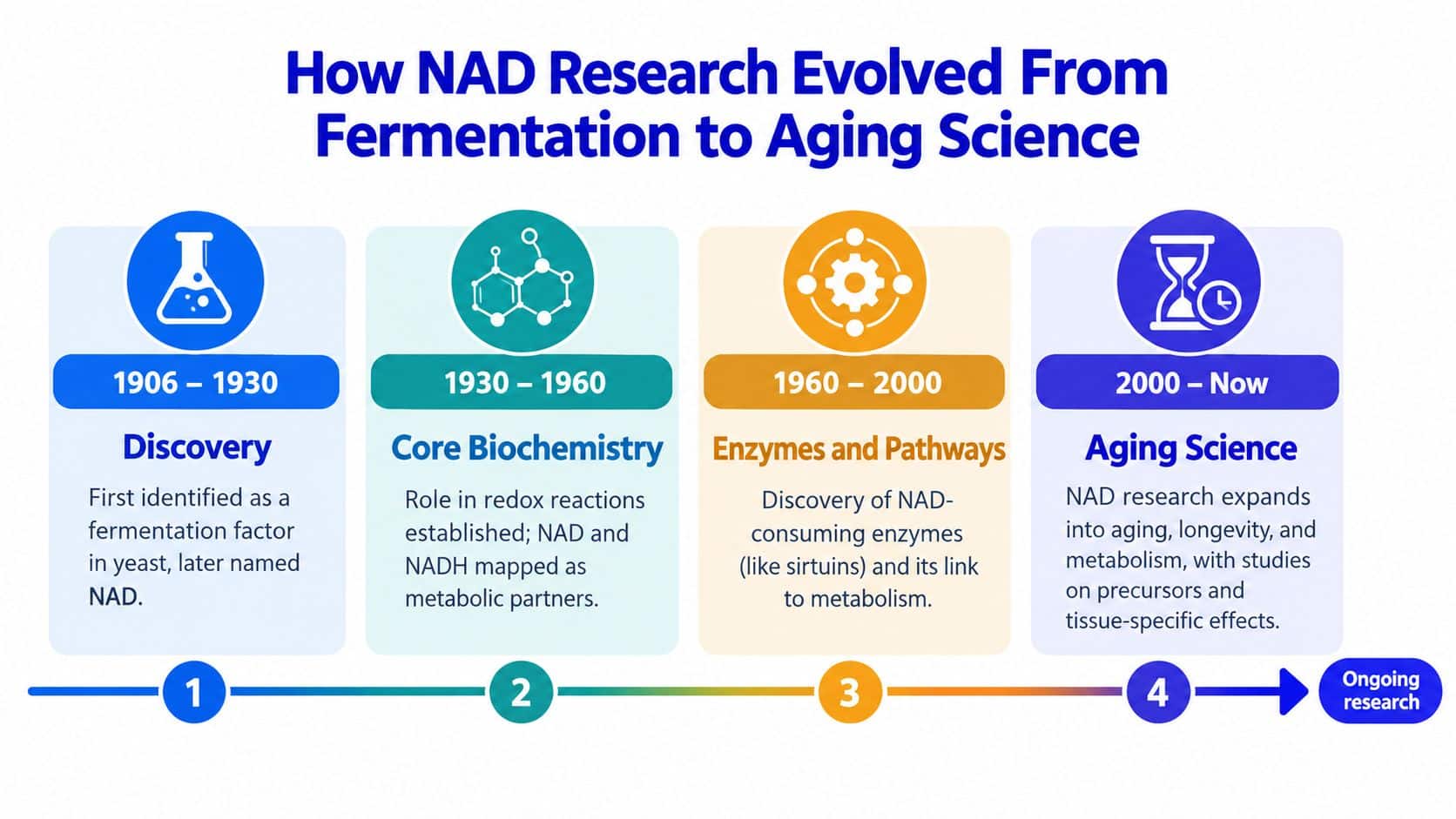
Across nearly 120 years, NAD research moved from fermentation chemistry into metabolism, aging, and cellular signaling (history of NAD research). The sequence explains why modern studies ask different questions:
These milestones also explain why NAD results cannot be compared by headline values alone. Organism, tissue, delivery route, formulation, exposure period, sampling time, and assay choice can all change the result. A rise in circulating NAD-related metabolites is evidence of biochemical exposure, not proof of improved health. A cell culture assay measuring enzyme activity and a human study measuring blood metabolites are answering different questions.
NAD biology now reaches aging, neurodegeneration, cardiovascular health, and metabolic disease models. Its history keeps one boundary clear: showing that a pathway changes is an important research result, while demonstrating a health outcome requires separate evidence.
What does a higher NAD measurement prove? Current research supports NAD as a biologically plausible target because it connects energy metabolism, DNA repair, chromatin regulation, immune signaling, and circadian biology. Those connections justify further study, yet they do not establish broad anti-aging benefits in humans.
A systematic review of research from 2010 to 2025 identified 113 eligible intervention studies, including 33 human trials. Oral NR and NMN generally increased circulating or cellular NAD-related metabolites, while functional, metabolic, vascular, and other healthspan findings were mixed and often null. The same review found no eligible trials testing intravenous or intramuscular NAD+ itself for anti-aging or wellness endpoints (systematic review of NAD replenishment).
The practical lesson is simple: biomarker elevation is not the same as a proven health outcome. A compound may show target engagement without improving performance, weight regulation, aging-related function, or disease status. Researchers should therefore define the endpoint before interpreting a higher NAD value.
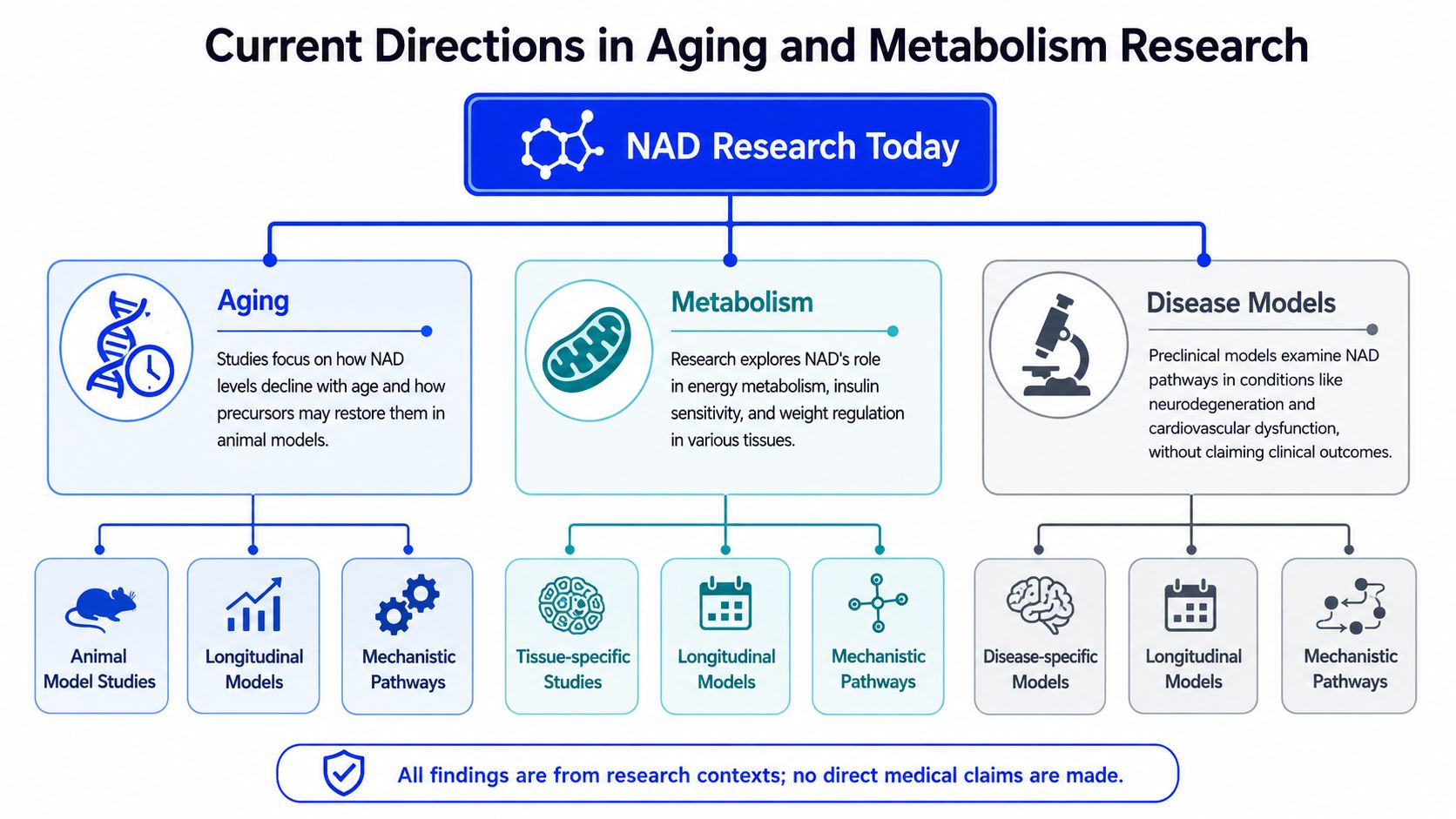
Aging studies examine whether NAD availability changes with age and whether precursor administration affects pathways linked to cellular stress, repair, or metabolism. Animal and cell models can show pathway behavior with precision, but they cannot by themselves establish a human healthspan benefit.
Metabolic research examines how NAD pathways relate to energy use and tissue function. Neurodegeneration and cardiovascular models also assess mitochondrial activity, inflammation, and cellular stress. These remain valid research areas, provided preclinical findings are described as preclinical.
Comparing delivery routes requires particular care. A 2026 phase 0/1b randomized trial in healthy adults found that a physicochemically modified oral NAD+ formulation rapidly increased whole-blood intracellular NAD measures over 5 days (phase 0/1b oral NAD+ study). The finding helps characterize absorption and biomarker behavior. It does not rank oral NAD+, NR, NMN, and IV NAD+ across studies, because route, formulation, dose, tissue, sampling time, assay, duration, and endpoint can all change the result.
A route cannot be called “best” unless studies compare the same formulation, dose, tissue, assay, duration, and endpoint.
A sound NAD experiment begins with a defined question, not a preferred product. Quantifying a metabolite in a prepared sample may require only a biochemical assay. Mapping tissue distribution or examining redox behavior calls for a more specialized platform. The method determines which part of the biology becomes visible.
Common options include enzymatic cycling assays, liquid chromatography with mass spectrometry, and imaging methods such as 31P magnetic resonance spectroscopy. These approaches are more like different camera lenses than interchangeable rulers. A rise in one biomarker does not establish a health benefit, and results cannot be compared fairly when delivery route, tissue, sampling time, assay, or endpoint differs.
| Method or Reagent | Best Use Case | Key Consideration |
|---|---|---|
| Enzymatic cycling assay | Fast screening of NAD+ or NADH in prepared samples | Sensitive to extraction quality, interference, and protocol consistency |
| LC-MS | Broad metabolite profiling and compound-specific measurement | Requires validated sample preparation, standards, and instrument access |
| 31P magnetic resonance spectroscopy | Noninvasive assessment of cerebral NAD-related signals | Provides tissue-level information but requires specialized imaging infrastructure |
| NR or NMN | Precursor studies focused on NAD biosynthesis | Formulation, dose, timing, and tissue response must be defined |
| Modified oral NAD+ formulation | Absorption and intracellular biomarker studies | Whole-blood changes may not represent every target tissue |
| Research-grade NAD+ material | Analytical, biochemical, or laboratory investigation | Confirm identity, purity, storage requirements, and certificate documentation |
A randomized phase I Parkinson's study shows how the platform shapes the question. Researchers used 31P magnetic resonance spectroscopy to measure brain NAD, then assessed cerebral glucose metabolism with FDG-PET and inflammatory cytokines in serum and cerebrospinal fluid. The study reported that 1,000 mg/day for 30 days was well tolerated, with responses differing among participants (randomized phase I Parkinson's study). Those findings describe biomarker and exploratory responses. They do not prove that raising NAD improves health, nor do they establish that one delivery route is superior to another.
NAD-related materials may respond to moisture, temperature, light, oxygen exposure, and repeated handling. Follow supplier storage instructions, record lot numbers, and define preparation and freeze-thaw procedures before starting the study. Consistent handling helps separate biological effects from preventable technical variation.
For procurement, review:
Researchers comparing precursor biology may find this educational overview of what is NMN useful for clarifying terminology before selecting an experimental design.
Higher NAD does not automatically mean better health. It may show that an intervention reached a biological target, but the meaningful question is whether the change improved the function the study set out to measure. Biomarker elevation and clinical benefit are separate conclusions.
Results also depend on where and how NAD was measured. Blood, cerebrospinal fluid, muscle, brain, liver, and cultured cells are different compartments, like separate rooms rather than one shared container. A rise in whole-blood NAD may coexist with a different response in the target organ. Delivery route, tissue exposure, timing, and assay choice can therefore make results from two studies difficult to compare directly.
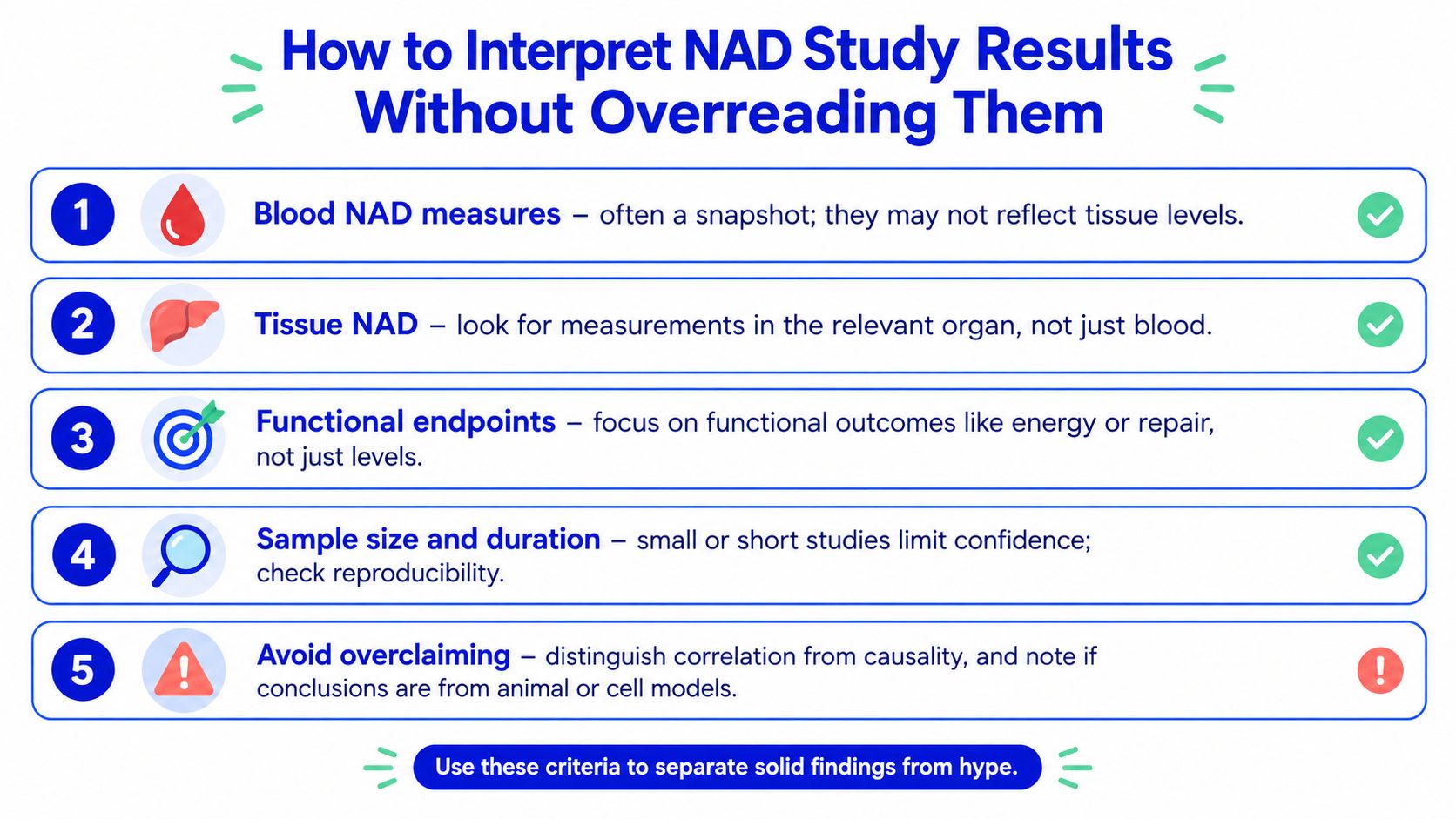
Start with the study's endpoint. Was the intended result a metabolite change, altered energy metabolism, repair activity, inflammatory marker, physical function, or another prespecified measure? A metabolite increase supports target engagement, not a broad health claim.
Read the assay description closely. NAD+, NADH, total NAD, and downstream metabolites are different measurements. Extraction, sample processing, and assay platform can affect the value reported.
Match the intervention to the biological question. Oral precursors, oral NAD+, and IV NAD+ differ in absorption, distribution, and tissue exposure. Route and formulation are part of the intervention, not minor protocol details.
Test the interpretation with a concrete example. Suppose a study reports a rise in NAD+ from a muscle biopsy measured by liquid chromatography, while its functional endpoint is unchanged muscle respiration. The finding supports higher measured muscle NAD+, but not improved muscle performance. A separate blood-based assay cannot confirm or refute that tissue result without matching samples and methods.
Look for response variability. The randomized Parkinson's study found variable cerebral responses, with glucose metabolism changes in responders and lower inflammatory cytokines in serum and cerebrospinal fluid. Such variation may identify biological subgroups rather than merely weaken the average result.
Keep model types separate. Cell and animal experiments can clarify mechanisms. Human trials address translation, but neither model replaces the other.
Evidence for IV NAD+ remains preliminary, heterogeneous, and limited by methodological differences. Human studies also provide limited insight into tissue-specific responses. Researchers examining related cardiometabolic questions may consult educational material on heart risk assessment in Delaware, while keeping that assessment separate from claims about NAD biology.
Interpretation rule: Ask first whether the intervention changed the intended target. Then ask whether that change produced the prespecified function. Do not treat the first answer as proof of the second.
NAD research is strongest when it connects molecular detail with disciplined interpretation. NAD+ and NADH support redox chemistry, while NAD+-dependent systems also participate in DNA repair, chromatin remodeling, gene expression, immune signaling, RNA processing, and circadian control.
The field's long history supports serious investigation, but it doesn't justify collapsing every result into an anti-aging claim. Human studies show that NR and other NAD precursors can raise NAD-related metabolites, yet functional and healthspan outcomes remain heterogeneous. Delivery route, tissue, assay, formulation, duration, and endpoint all influence what a result means.
For a defensible study, define the biological question first, select a method that measures the relevant compartment, document compound identity and lot information, and distinguish target engagement from functional performance. Use research-grade materials with appropriate COAs and keep all compounds within their stated laboratory or analytical purpose.
Next, review your protocol for tissue specificity and prespecified endpoints. Then compare available NAD+, NR, NMN, or related research compounds by documentation, handling requirements, and analytical fit. Learn more about the underlying biology, and explore options only after the measurement strategy is clear.
Peptide Warehouse USA offers research-grade NAD+ and related compounds for laboratory, analytical, and preclinical applications, with lot-specific documentation such as Certificates of Analysis and stated purity information. Visit Peptide Warehouse USA to review available research materials and match procurement with your NAD study requirements.
Leave a comment