
No products in the cart.



You're probably here because your energy feels off, your recovery isn't what it used to be, or you keep seeing mitochondrial supplements promoted as the missing link for fatigue, aging, metabolism, or performance. The marketing usually sounds simple. Support your mitochondria, make more ATP, feel better.
The biology is real. The simplicity usually isn't.
Mitochondrial supplements aren't one thing, and they don't all target the same step of cellular energy production. Some act as electron carriers. Some support fatty acid transport. Some are studied as redox helpers. Others are meant to influence NAD+ metabolism or mitochondrial signaling. That's why a useful question isn't “Do mitochondrial supplements work?” It's “Which compound, for which mechanism, in which kind of person?”
Readers often get misled. A shelf full of products gets framed as interchangeable “cellular energy” support, when the human evidence is much narrower and more conditional than the labels suggest. The clearest benefits tend to show up in people with defined deficiencies, specific disorders, or well-described metabolic stressors, not in every healthy adult who feels run down.
You search for help with low energy and quickly run into the same cluster of products. CoQ10. NAD+ boosters. Carnitine. Alpha-lipoic acid. PQQ. Creatine. Many are sold side by side under a single promise of “mitochondrial support,” which makes the category look more settled than it is.
That popularity makes sense. Mitochondria sit close to several concerns people care about, including aging, exercise recovery, metabolic function, and some forms of fatigue. Wellness marketing has also turned mitochondria into a catch-all explanation for feeling worn down, even though low energy can start far upstream from the mitochondria, such as poor sleep, anemia, thyroid disease, depression, under-fueling, or medication effects.
The result is a very crowded shelf.
Part of the confusion comes from how these compounds are grouped. “Mitochondrial supplement” sounds like one category with one outcome. In practice, it is more like a toolbox. A screwdriver, a battery tester, and a replacement wire can all belong in the same repair kit, but they do different jobs and help different problems. The same is true here. Some compounds help move electrons. Some help shuttle fats into the mitochondria. Some are studied for redox balance or cellular signaling. Some have a clearer rationale in a deficiency state than in a healthy person looking for more energy.
That difference matters because the people most likely to benefit are not always the people targeted by the ads. The strongest use cases usually involve a defined deficiency, a diagnosed disorder, a medication effect, or a setting with unusually high metabolic stress. A healthy adult with vague afternoon fatigue is a very different case from someone with documented low carnitine status, statin-associated CoQ10 depletion concerns, or a condition where mitochondrial function is already under strain.
Retail categories expand faster than human evidence does. Once a mechanism sounds plausible, brands can build stacks around it long before clinical trials answer the harder question: who benefits, and by how much?
That is why mitochondrial supplements are best viewed as mechanism-first compounds, not interchangeable energy boosters. The mechanism may be reasonable. The human benefit may still be uncertain, small, or limited to specific groups.
A more useful map is to match each supplement class to the part of mitochondrial biology it is trying to influence:
Once you sort them this way, the category gets easier to evaluate. Two products in the same “mitochondrial” aisle may act on entirely different steps. Two products aimed at the same step may still differ in who they help, whether oral supplementation changes tissue levels meaningfully, and how much human evidence exists behind the claim.
A mitochondrion is often called the cell's power plant, which is useful as long as you don't take it too far. A better analogy is a battery factory with its own wiring, quality control team, and instruction manual.
Each mitochondrion has a double membrane. The outer membrane acts like a boundary. The inner membrane folds inward into structures called cristae, and that's where much of the cell's energy machinery sits. Mitochondria also carry their own mitochondrial DNA, separate from the DNA in the cell nucleus.
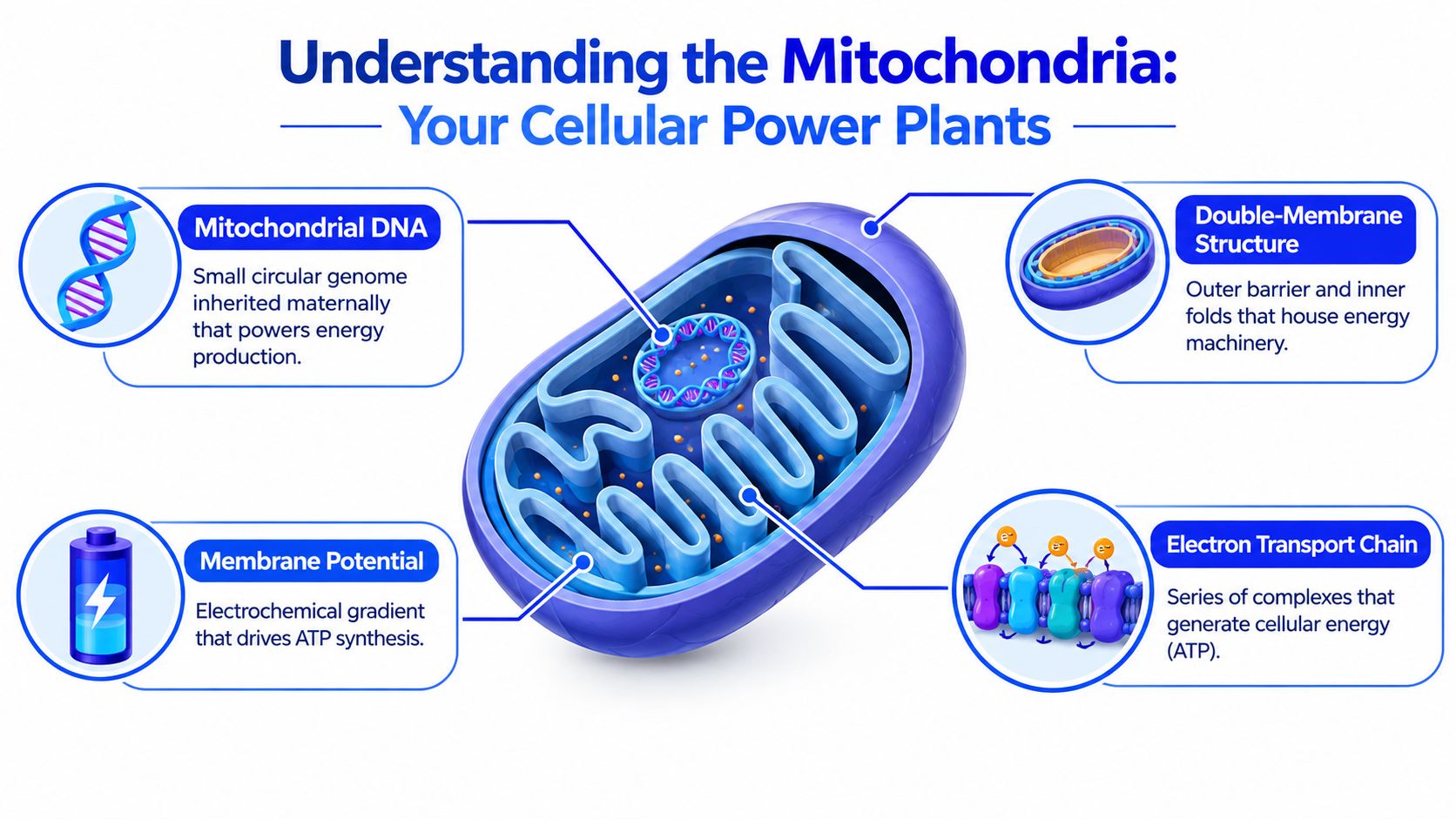
Most cellular ATP is produced through oxidative phosphorylation. In plain language, electrons move through a chain of protein complexes embedded in the inner mitochondrial membrane. As that happens, the mitochondrion builds an electrochemical charge difference called the membrane potential. That stored charge powers ATP synthase, the enzyme that makes ATP.
This is one reason oxygen matters so much to energy metabolism. If you want a broader plain-English refresher on cellular energy and hyperbaric therapy, that overview helps connect oxygen use to mitochondrial function without drifting into supplement hype.
Energy production isn't perfectly clean. Some electrons leak and contribute to reactive oxygen species, which cells have to manage. That's why antioxidant systems matter, and it's part of why redox-focused nutrients keep showing up in mitochondrial formulas.
Mitochondria also need turnover. Cells build new mitochondria through mitochondrial biogenesis and remove damaged ones through mitophagy. When those maintenance systems slip, cells don't just make less energy. They often become less efficient and more stressed.
Here's a short visual primer if you want to see the organelle in motion and connect the vocabulary to the structure.
Mitochondria sit at the intersection of energy production, redox balance, and tissue function. That makes them a tempting target for supplements.
The catch is that “supporting mitochondria” can mean very different things. A compound that helps shuttle fats into mitochondria isn't doing the same job as one that participates in electron transfer, and neither works like a compound intended to raise intracellular NAD+.
One of the fastest ways to get confused is to compare mitochondrial supplements by popularity instead of by mechanism. Mechanism isn't everything, but it tells you what a supplement is at least trying to influence.
A review of mitochondrial nutrients repeatedly groups alpha-lipoic acid, CoQ10, and carnitine as the three major mitochondrial cofactors or nutrients commonly discussed for aging-related mitochondrial dysfunction (review of mitochondrial nutrients). That doesn't make them equivalent. It shows they keep appearing in the same conversation.
CoQ10 and ubiquinol belong here. CoQ10 works as an electron carrier in the mitochondrial respiratory chain and also acts in lipid environments as an antioxidant. Ubiquinol is the reduced form often used in supplement formulas.
This class makes the most sense when the issue involves electron transport strain, low tissue CoQ10 status, or conditions where CoQ10 handling is directly relevant.
L-carnitine and acetyl-L-carnitine help move long-chain fatty acids into mitochondria, where those fats can be used for energy production. If fat transport is the bottleneck, carnitine is conceptually relevant. If the bottleneck lies elsewhere, it may do little.
This is why carnitine gets attention in deficiency states and in some metabolic settings, but not as a universal answer for low energy.
Nicotinamide riboside and nicotinamide mononucleotide are NAD+ precursors. They aren't electron carriers like CoQ10. They aim to increase intracellular NAD+ availability and influence the NAD+/NADH ratio, which affects redox balance and mitochondrial metabolism.
That distinction matters. People often lump NAD+ precursors into the same category as CoQ10, but they act upstream in a different biochemical lane.
Alpha-lipoic acid functions as a cofactor in mitochondrial enzyme systems and also participates in redox recycling. It's often marketed as antioxidant support, but the mitochondrial angle comes from its role in energy metabolism and redox handling.
Creatine sits slightly outside the “mitochondrial nutrient” label but matters because it helps buffer ATP demand through the phosphocreatine system. In tissues with rapid energy swings, that buffering role can be more relevant than trying to push mitochondrial output directly.
PQQ is commonly marketed for mitochondrial biogenesis, though human proof is still limited. It's better understood as a compound with signaling and redox-related interest than as a clinically established mitochondria builder.
B vitamins and magnesium also matter, though they're less glamorous. They act as essential cofactors across energy metabolism. If a basic cofactor deficiency exists, fixing that may matter more than stacking trendier compounds.
| Supplement Class | Mitochondrial Mechanism | Evidence Strength |
|---|---|---|
| CoQ10 and ubiquinol | Electron transport support and lipid-phase antioxidant activity | Stronger than most classes, but highly indication-specific |
| L-carnitine and acetyl-L-carnitine | Fatty acid transport into mitochondria | Strongest in deficiency-related settings, mixed elsewhere |
| NAD+ precursors such as NR and NMN | Raise intracellular NAD+ and influence redox balance | Mechanistically compelling, human outcomes still early |
| Alpha-lipoic acid | Mitochondrial cofactor and redox recycling | Moderate for some uses, weaker for broad energy claims |
| Creatine | ATP buffering through phosphocreatine system | Practical and well-known, not a universal mitochondrial fix |
| PQQ | Proposed signaling and mitochondrial biogenesis support | Interesting but still thin in humans |
| B vitamins and magnesium | Foundational enzyme cofactors in energy metabolism | Essential when deficient, not a targeted booster by default |
A reader who buys a “mitochondrial support” supplement for low energy is often mixing together very different ideas. One product may try to support electron transport. Another may raise NAD+ levels. Another mainly helps if a person is low in a basic cofactor. Human trials make more sense once you sort compounds by mechanism instead of treating them as one category.
That sorting also explains why results are uneven. A supplement aimed at a specific bottleneck has a clearer path to helping. A supplement sold as a general energy enhancer has a much harder job in human studies.
CoQ10 has one of the longest clinical histories in this area, especially in cardiovascular research and in conditions where impaired electron transport or low tissue CoQ10 is part of the rationale. A historical review of CoQ10 research describes decades of clinical interest across heart-related settings and helps explain why CoQ10 became the reference compound for “mitochondrial” supplementation (clinical research history of CoQ10).
That long history should not be mistaken for a blanket endorsement. Benefits tend to look more plausible when there is a defined reason to use CoQ10, such as replacement in deficiency or support in selected clinical contexts. Trials tied to broad fatigue or “more energy” claims are much less consistent.
NAD+ precursors such as NR and NMN attract attention because they target a real part of mitochondrial biology. NAD+ helps shuttle electrons during energy metabolism and affects redox balance. If mitochondria are power plants, NAD+ is part of the delivery system that keeps fuel moving through the machinery.
The catch is that raising a biomarker is not the same as improving symptoms or disease outcomes. A systematic review of mitochondrial-targeted nutraceuticals found little consistent improvement in major glycemic, cardiovascular, or oxidative stress outcomes overall. The one signal for better brachial flow-mediated dilation came from only a few trials and was judged very low certainty (systematic review on mitochondrial-targeted nutraceutical outcomes).
Research in primary mitochondrial disorders is easy to overread because case reports, open-label studies, and biochemical improvements can sound more decisive than they are. The NIH summary is more cautious. For these disorders, randomized trials have not shown clear overall clinical benefit from CoQ10, except in primary CoQ10 deficiency, where targeted replacement can help (NIH fact sheet on primary mitochondrial disorders).
This is one of the most useful lessons in the entire literature. The closer a supplement matches a named defect, deficiency, or transport problem, the stronger the rationale becomes.
| Supplement Class | What Human Research Best Supports | Where Evidence Is Weak or Pending | Typical Trial Population |
|---|---|---|---|
| CoQ10 and ubiquinol | Indication-specific use, especially where deficiency or electron transport support is a credible target | Broad energy claims in otherwise healthy adults | Cardiac populations, statin users, mitochondrial disorder populations |
| NAD+ precursors | Early biomarker and mechanistic findings | Hard clinical outcomes and general wellness claims | Healthy older adults and mixed metabolic research groups |
| Alpha-lipoic acid | Uses where cofactor and redox roles match the condition being studied | General fatigue and broad mitochondrial marketing claims | Metabolic and neuropathy-related populations |
| L-carnitine | Deficiency-related settings and disorders involving fatty acid transport | Standalone use as a universal mitochondrial aid | Deficiency states and selected clinical populations |
| PQQ | Early human interest with limited signals | Few large randomized trials | Small and limited human study populations |
The bottom line is narrower than the marketing. Human evidence is strongest when a compound is matched to the mitochondrial step it affects, and to the patients most likely to have a problem in that step.
A person with a confirmed carnitine deficiency and a person with ordinary afternoon fatigue should not expect the same result from a “mitochondrial” supplement. Their mitochondria may be affected for completely different reasons, and the compounds being sold under one label act on different parts of the system.
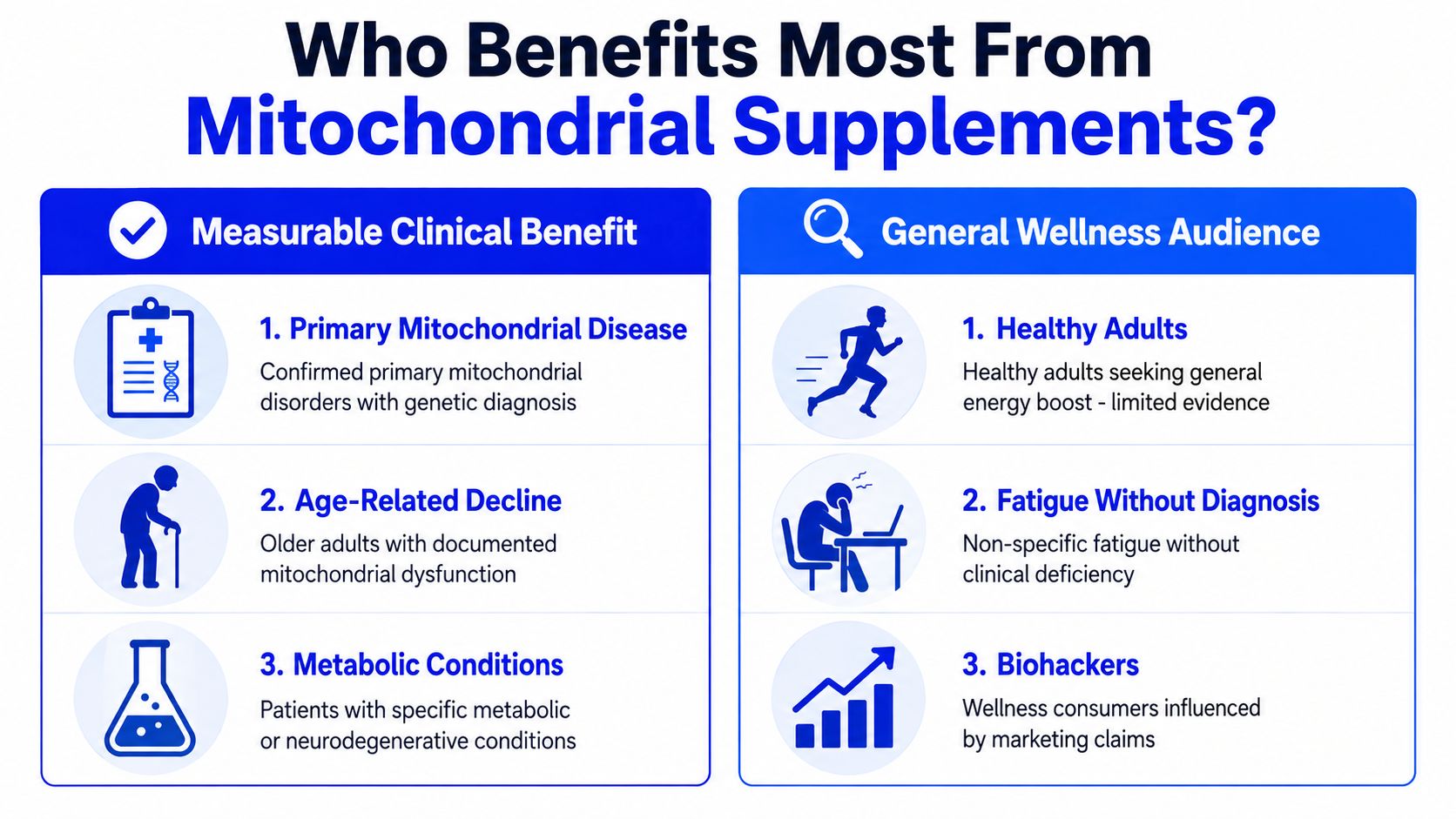
The clearest candidates are people who have a named problem that matches the mechanism of the supplement. That includes a documented deficiency, a diagnosed mitochondrial disorder, a nutrient-depleting medication exposure, or a condition where a specific mitochondrial step is plausibly impaired. In plain terms, these compounds make the most sense when they are replacing a missing part or supporting a bottleneck, not when they are used as generic “cellular energy” products.
People with primary CoQ10 deficiency are one of the best examples. CoQ10 sits inside the electron transport chain, where mitochondria pass electrons along to help make ATP. If that component is deficient, replacing it has a direct logic that broad wellness use does not.
People with carnitine deficiency or disorders involving fatty acid transport are another. Carnitine works like a shuttle that helps long-chain fatty acids get into mitochondria so they can be burned for fuel. If the shuttle is impaired or depleted, supplementation may address a defined transport problem. If fatty acid transport is already normal, the case is weaker.
Some people with primary mitochondrial disease are also reasonable candidates for carefully selected compounds, but expectations should stay measured. Reviews of treatment approaches describe common use of CoQ10, ubiquinol, carnitine, creatine, and related agents in mitochondrial care, while also noting that trial evidence is mixed and often modest rather than dramatic (review of treatment approaches for mitochondrial disorders). That is a good example of the difference between biologic plausibility and proven clinical benefit.
A fourth group includes people with a treatment-related reason to replace a depleted nutrient. Statin-associated CoQ10 depletion is the example readers usually hear about. The point is not that every statin user needs CoQ10. The point is that a known depletion mechanism gives this supplement class a more specific rationale than a general promise of “more energy.”
Healthy adults with nonspecific tiredness sit in a very different category.
Mitochondria are not one switch. They are more like a power grid with multiple inputs, control points, and failure modes. Sleep loss, anemia, depression, infection, thyroid disease, under-fueling, overtraining, and medication effects can all feel like “low energy.” A mitochondrial supplement only makes sense if the problem touches the mitochondrial step that compound affects.
That is why broad claims often disappoint. A person can take carnitine without having a fatty acid transport issue, or take CoQ10 without having a CoQ10-related bottleneck, and notice little or nothing. The mismatch matters.
Athletes and high performers without a known deficiency also fall into the lower-certainty group. If nutrient status is already adequate and mitochondrial function is not meaningfully impaired, adding more of a substrate or cofactor may not change performance in a noticeable way.
Who is most likely to benefit: people with a defined deficiency, a diagnosed mitochondrial or metabolic disorder, or a clear reason to target a specific mitochondrial mechanism.
The practical takeaway is simple. Match the compound to the problem. CoQ10 and ubiquinol target electron transport support. Carnitine targets fatty acid transport into mitochondria. Alpha-lipoic acid relates more to redox balance and enzyme cofactor roles. NAD precursors aim at cellular NAD availability, a different layer of metabolism again. Once those mechanisms are separated, the likely-benefit group gets much easier to see.
Dose is where readers often get misled.
A bottle label can make a compound sound like a general energy aid, but clinical papers usually test it in a much narrower setting: a defined disorder, a suspected deficiency, or a protocol supervised by a clinician. So the most useful way to read dosage ranges is as a map of what researchers have tried in specific populations.
For the three compounds most often included in mitochondrial disease protocols, the published clinical ranges commonly cited earlier in this article are:
Those numbers are better treated as study context than self-prescribing instructions. A trial dose answers one narrow question: what amount was used for that formulation, in that population, for that indication? It does not answer whether a healthy person with vague fatigue should take the same amount, or whether a higher dose is automatically better.
Mechanism helps here. CoQ10 and ubiquinol are aimed at electron transport support. Carnitine is aimed at fatty acid transport into the mitochondria. If the biological bottleneck differs, the relevant dose range differs too.
Form matters. Ubiquinol and CoQ10 are related but not interchangeable in practice, because the formulation changes how a study protocol is built and how the dose is reported. Carnitine also appears in more than one delivery format, which means the same milligram number may not mean the same thing across settings.
Duration matters too. Some studies look for symptom change over weeks. Others are part of longer disease-management protocols. A dose that appears in a specialist mitochondrial clinic paper should not be read like a casual wellness recommendation.
For other supplement classes discussed earlier, the human literature is much less standardized. NAD precursors, alpha-lipoic acid, and PQQ are a good example. Trial design, participant group, formulation, and outcome measures vary enough that giving one neat “standard dose” would create false confidence.
| Supplement Class | Typical Clinical Range | Common Trial Duration | Key Formulation Notes |
|---|---|---|---|
| Ubiquinol | 2 to 8 mg/kg/day divided into two doses | Varies by protocol | Reduced form related to CoQ10, often split across the day |
| CoQ10 | 50 to 600 mg/day | Varies by protocol | Broad range reported in clinical mitochondrial protocols |
| L-carnitine | 10 to 100 mg/kg/day in divided doses | Varies by protocol | Oral use is common. IV use appears in some clinical settings |
| NAD+ precursors | Study-dependent | Study-dependent | Form and endpoint vary widely |
| Alpha-lipoic acid | Study-dependent | Study-dependent | Interpretation depends on indication and formulation |
| PQQ | Study-dependent | Study-dependent | Human evidence remains limited |
A simple rule helps: the narrower the indication, the more meaningful the dose. Dosing ranges are most informative for readers with a diagnosed condition that matches the mechanism being targeted. For everyone else, they are a reminder that these compounds are not interchangeable, and neither are the amounts used to study them.
The biggest misconception is also the most marketable one. Every low-energy problem gets blamed on failing mitochondria, and every mitochondrial supplement gets sold as if it restores lost ATP on demand.
Cells don't work that way.
Cells tightly regulate energy production. A person with nonspecific fatigue doesn't automatically have a simple ATP shortage that an oral supplement can fix.
That's especially important because different mitochondrial supplements act on different parts of the system. An NAD+ precursor influences salvage pathways and redox state. CoQ10 participates in electron transport. Carnitine influences fatty acid entry. Stacking them doesn't guarantee additive effects.
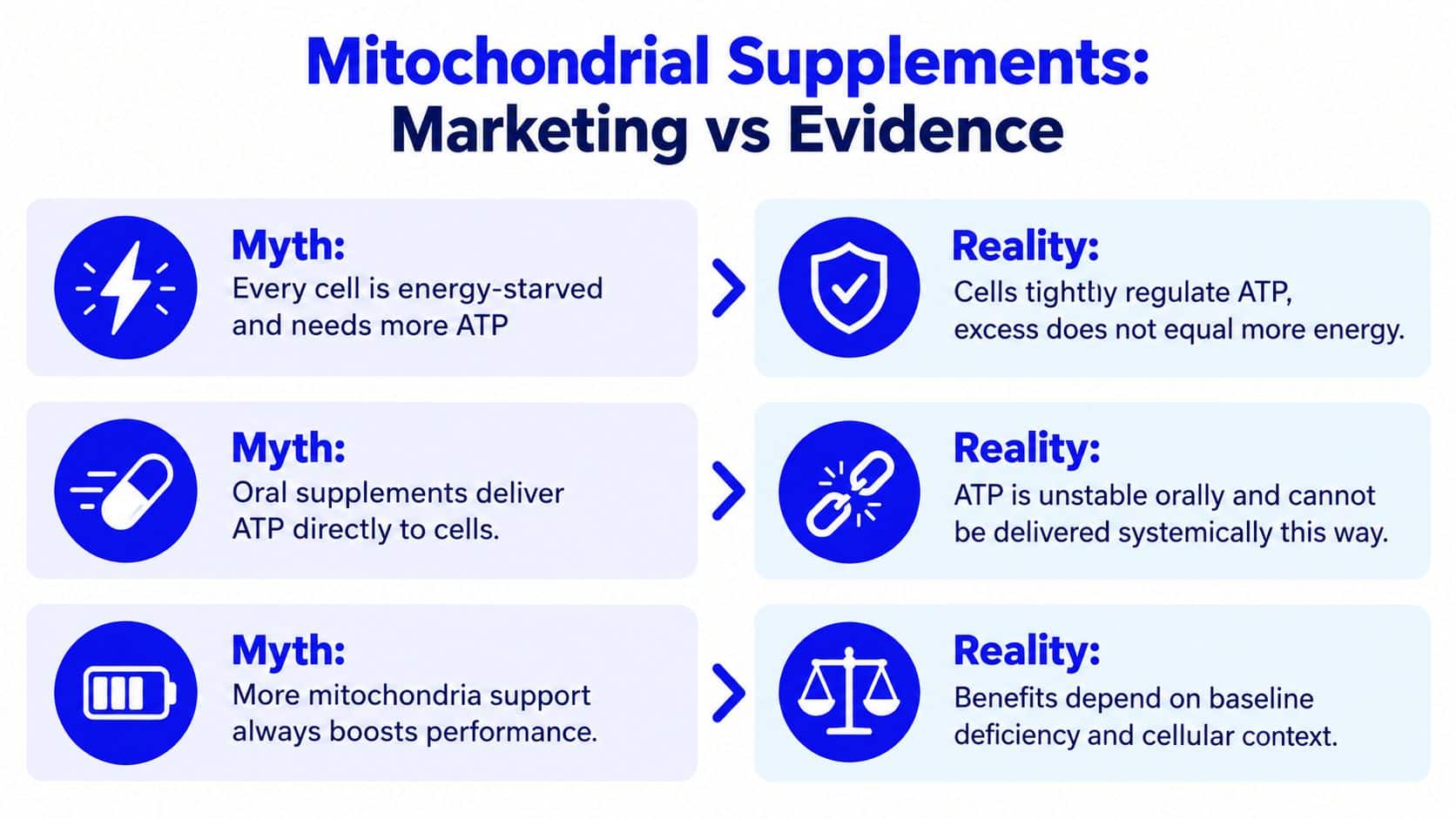
A lot of mitochondrial excitement starts in cell culture and animal models. That's useful for hypothesis generation. It's not the same as a confirmed human outcome.
The gap matters because even in healthy older adults, the direct human evidence base for mitochondrial-targeted nutraceuticals remains small, as noted earlier. That's why compounds with elegant mechanisms can still have underwhelming real-world trial results.
Readers often hear that ubiquinol is universally better than ubiquinone. That's too simplistic. Formulation can matter, but the right comparison depends on context, absorption, dose, and the clinical question being asked.
The same oversimplification happens with “food versus supplements.” Food matters for baseline nutrition, but it's not the same thing as correcting a documented deficiency or matching a clinically studied intervention.
When you read a label or a blog post, ask:
Don't ask whether a supplement “supports mitochondria.” Ask which mitochondrial process it targets, and whether that process is actually impaired in the person taking it.
That one shift filters out a lot of hype.
A mitochondrial experiment can fail before the first measurement. If the compound is the wrong form, partly degraded, or contaminated, you may end up blaming the biology for a sourcing problem.
That matters more here than many readers expect. Mitochondrial assays often measure small changes in respiration, redox balance, membrane potential, or signaling. Small quality differences in the input material can push those readouts in the wrong direction.
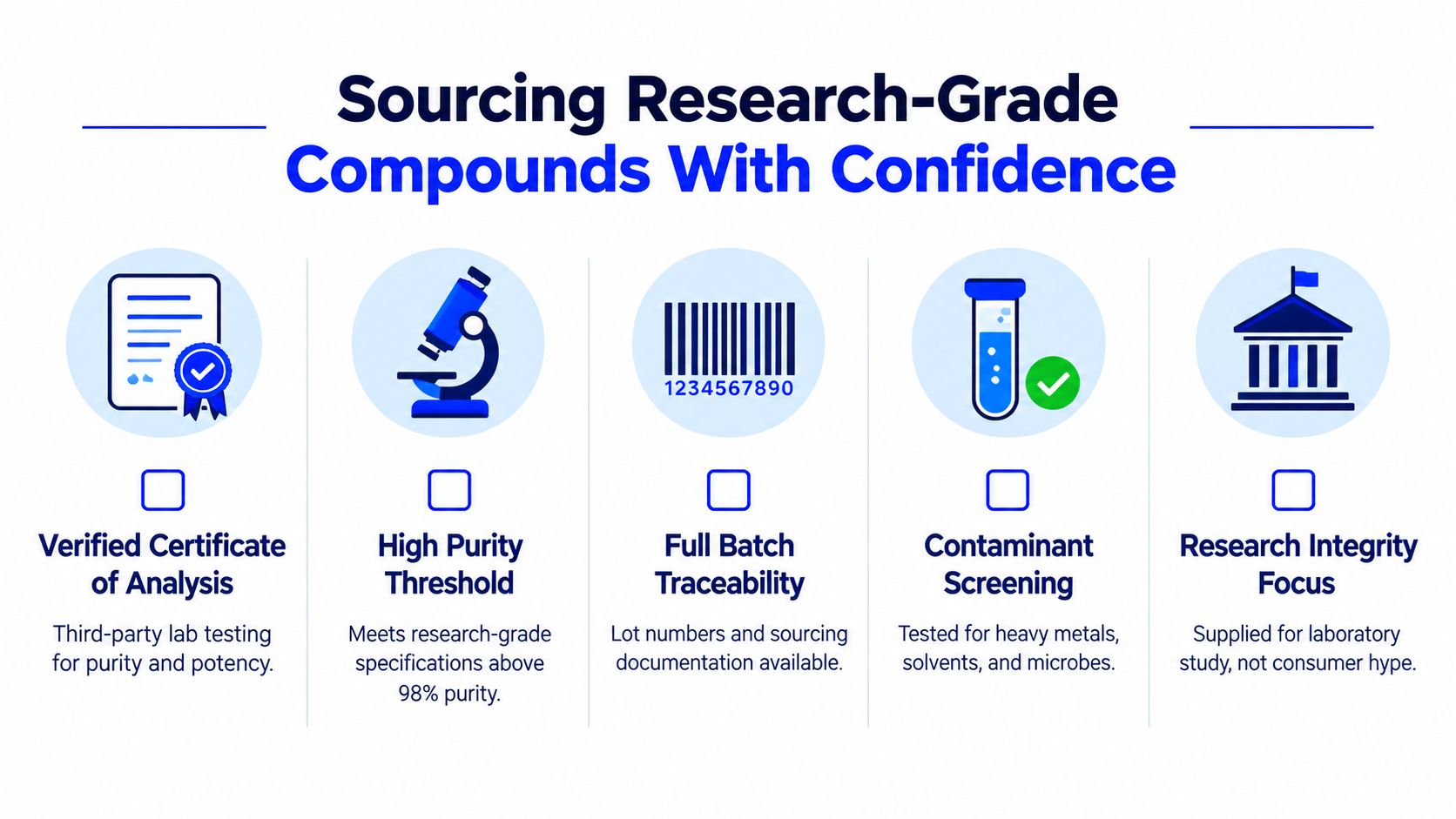
For laboratory and preclinical work, the main question is simple. Can another team identify exactly what was used, verify its quality, and reproduce the result?
A dependable supplier should be able to provide:
These details are not paperwork for its own sake. They help explain results. If one lab uses an oxidized or unstable version of a compound and another uses a well-characterized lot, the studies may appear to disagree even if the underlying mechanism is real.
Peptide work makes this especially clear. A peptide tied to mitochondrial signaling, such as MOTS-C, needs accurate identity confirmation, handling instructions, and lot documentation because storage and degradation can affect experimental behavior. Peptide Warehouse USA is one example of a supplier in this category for research-use peptides and related compounds used in laboratory, analytical, and preclinical settings.
Before ordering, ask for five things:
The broader point is the same one that runs through this article. Mitochondrial compounds are not interchangeable energy boosters. Each one targets a different part of mitochondrial biology, and the material itself has to be well-defined before any mechanism can be tested with confidence.
If you are evaluating suppliers for research-use peptides and related compounds, review the available documentation at Peptide Warehouse USA.
Leave a comment