No products in the cart.

The problem usually starts the same way. You've got three supplier tabs open, each page says research chemicals, each COA looks polished, and the prices are different enough to make you hesitate. If the study date is close, the temptation is to pick the cheapest lot and move on, but that's usually where bad procurement starts.
Research chemicals deserve a tighter process than a quick headline purity scan. A COA is useful, but it is only the first checkpoint, not the finish line. The core task is to separate marketing language from a defensible lot-release file, then decide whether the material is fit for your lab use, your assay, and your documentation standard.
The first mistake is treating all supplier pages as if they're describing the same product in different packaging. They're not. One lot may have solid traceability, batch-specific test data, and a clear analytical method, while another may lean on a single purity number and a polished description that doesn't tell you much at all.
That gap matters because procurement isn't just a purchase, it's a risk decision. A lot can look identical online and still differ in identity confirmation, impurity reporting, storage history, and the quality of the supporting documentation. If the only thing you compare is the name on the page, you're leaving out the parts that usually cause problems later.
Practical rule: if you can't tell what method produced the number, you don't really know what the number means.
A checklist-driven workflow beats brand loyalty because it gives you something repeatable. You can compare suppliers on the same criteria, ask the same questions every time, and keep your lab from reinventing the process for each order. That's especially useful when a PI, a technician, and a purchasing lead all need to agree quickly without lowering standards.
In practice, I want the article in front of me to answer four questions: what the material is, how it was verified, what impurities remain, and whether the documentation is strong enough to support my study file. If a supplier can answer those cleanly, I keep going. If not, the price tag doesn't matter much.
Research chemicals are compounds produced or sold for laboratory, analytical, or preclinical investigation, not for direct human or veterinary administration. That definition matters because the category is broader than many buyers assume, and the intended use shapes everything from labeling to test expectations.
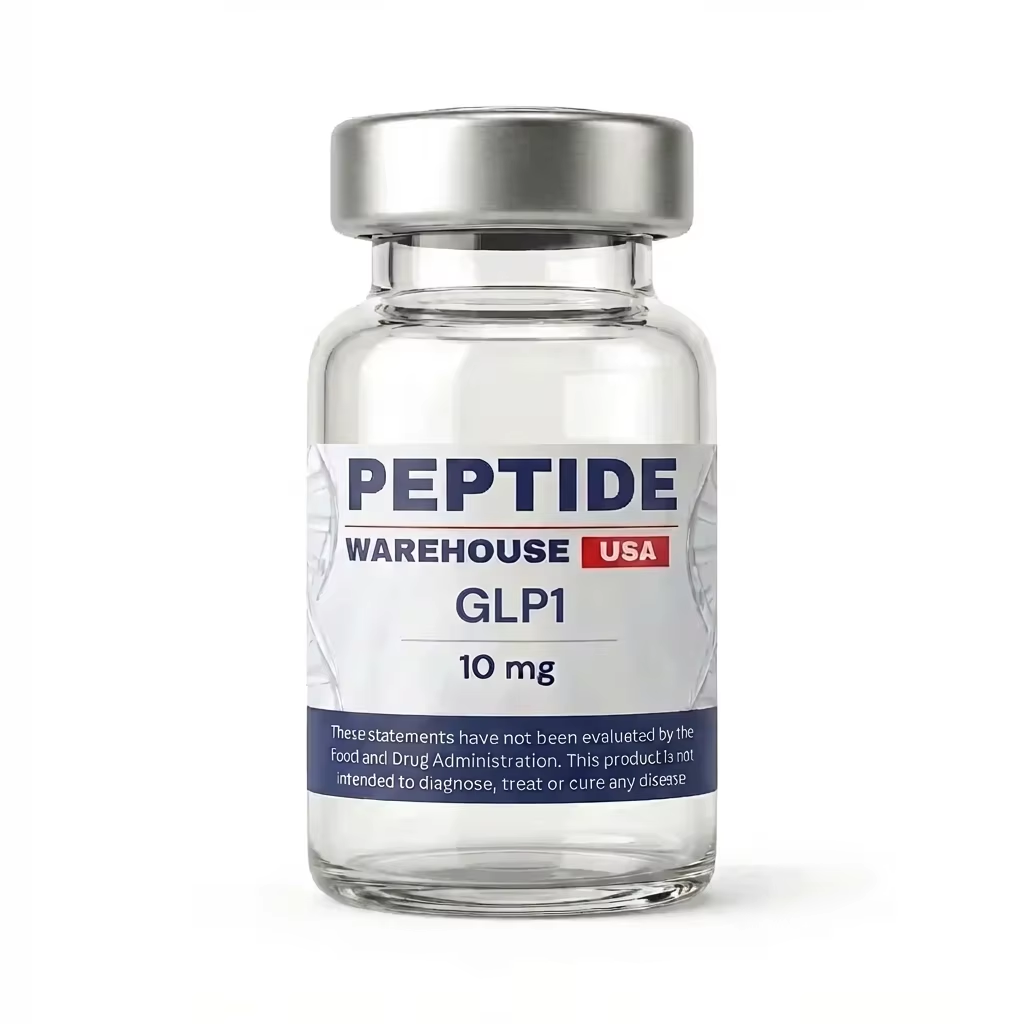
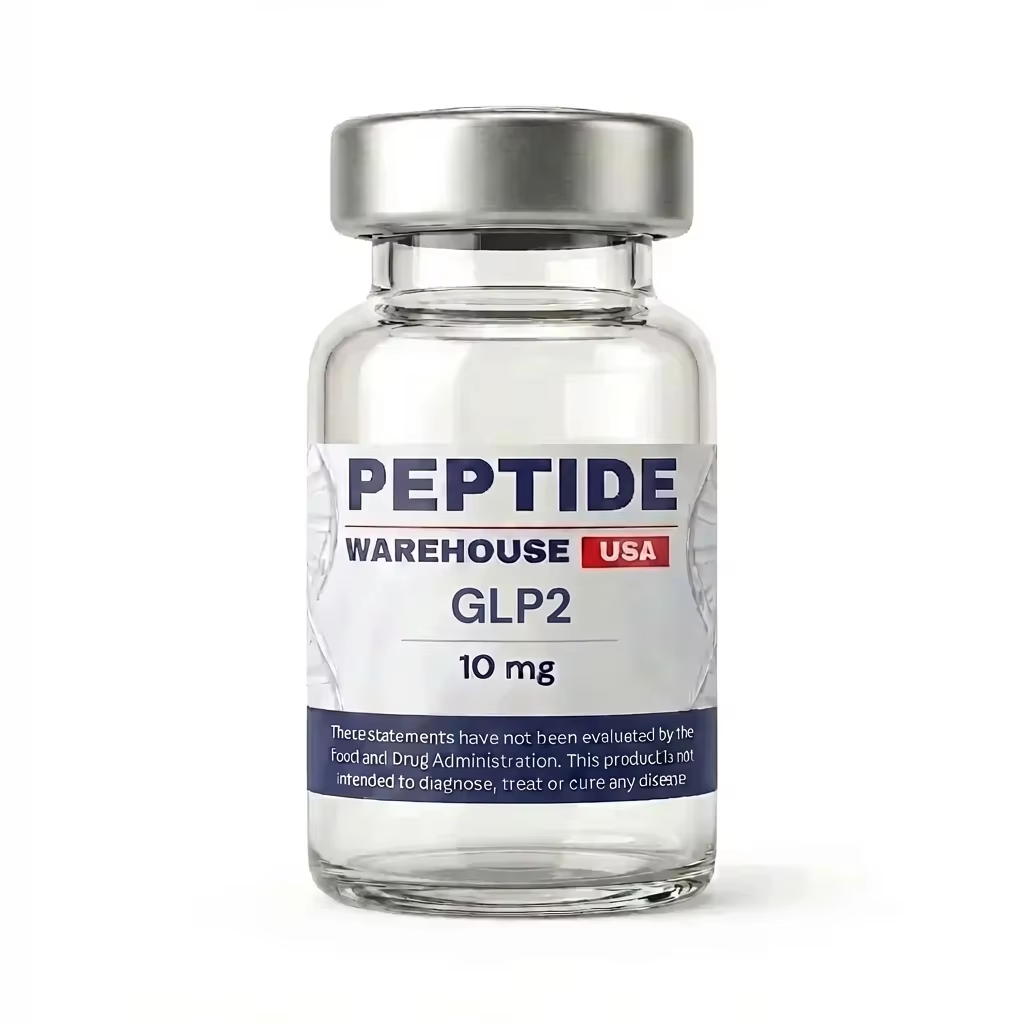
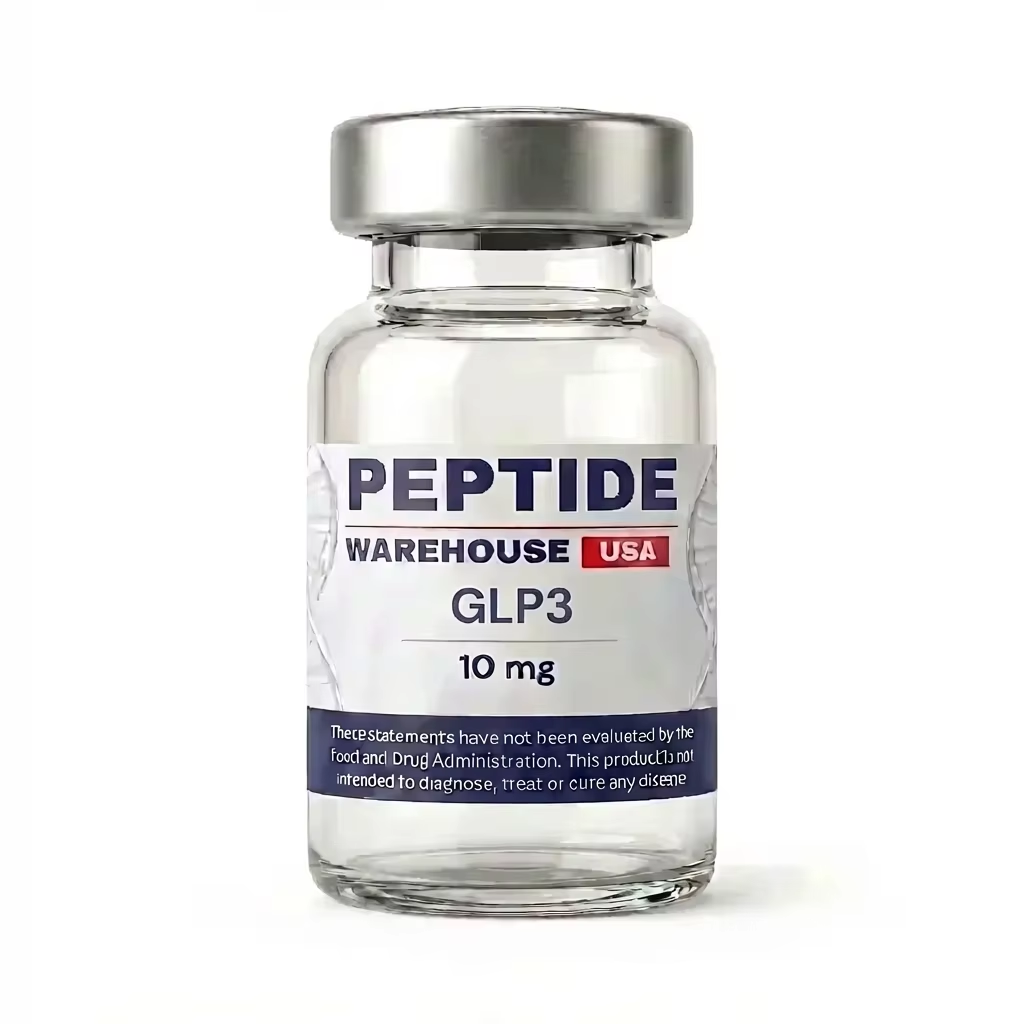
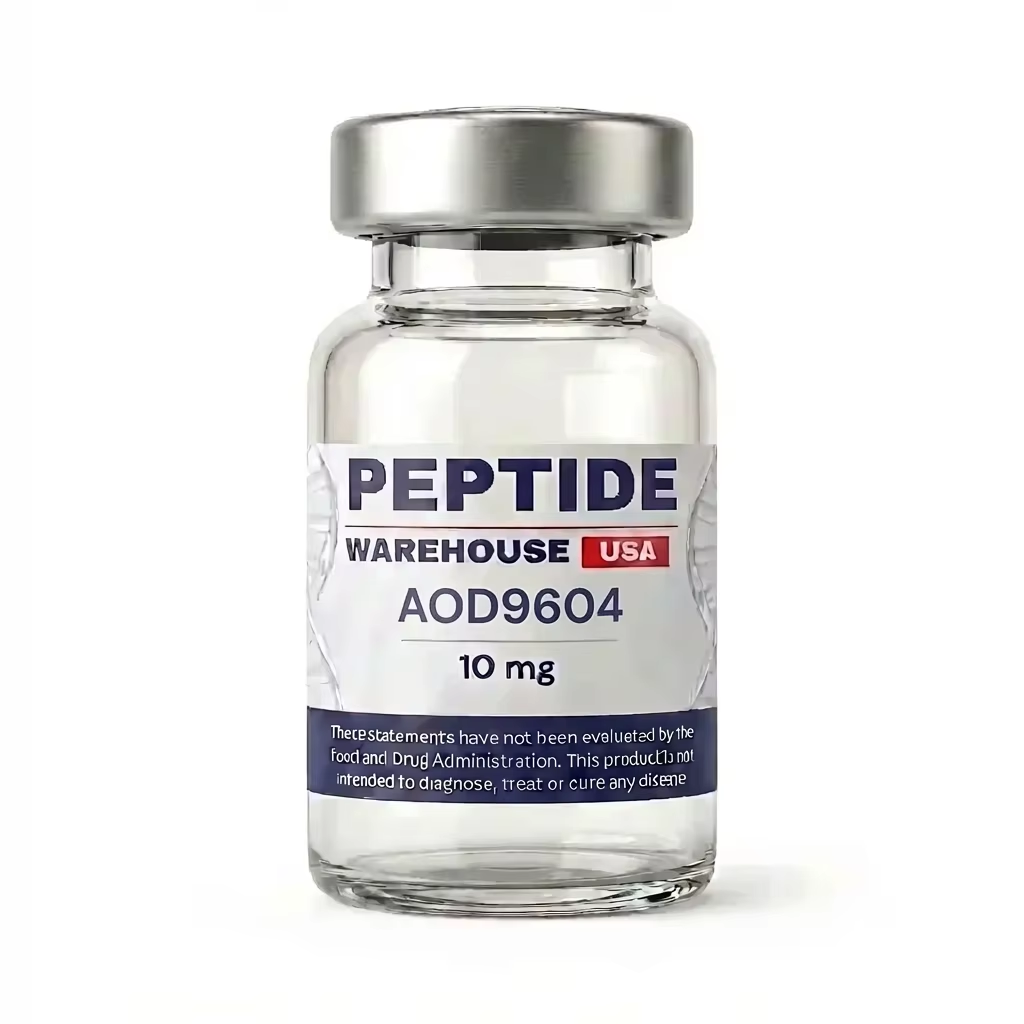
They can include synthetic peptides, reference standards, novel compounds examined in forensic or analytical settings, and emerging materials used in academic or preclinical work. In peptide procurement, the clearest mental picture is a lyophilized vial backed by a COA, batch record, and related testing documentation. A supplier such as Peptide Warehouse USA fits that kind of use case, with lots described for research use and supported by batch documentation rather than consumer-style product claims.
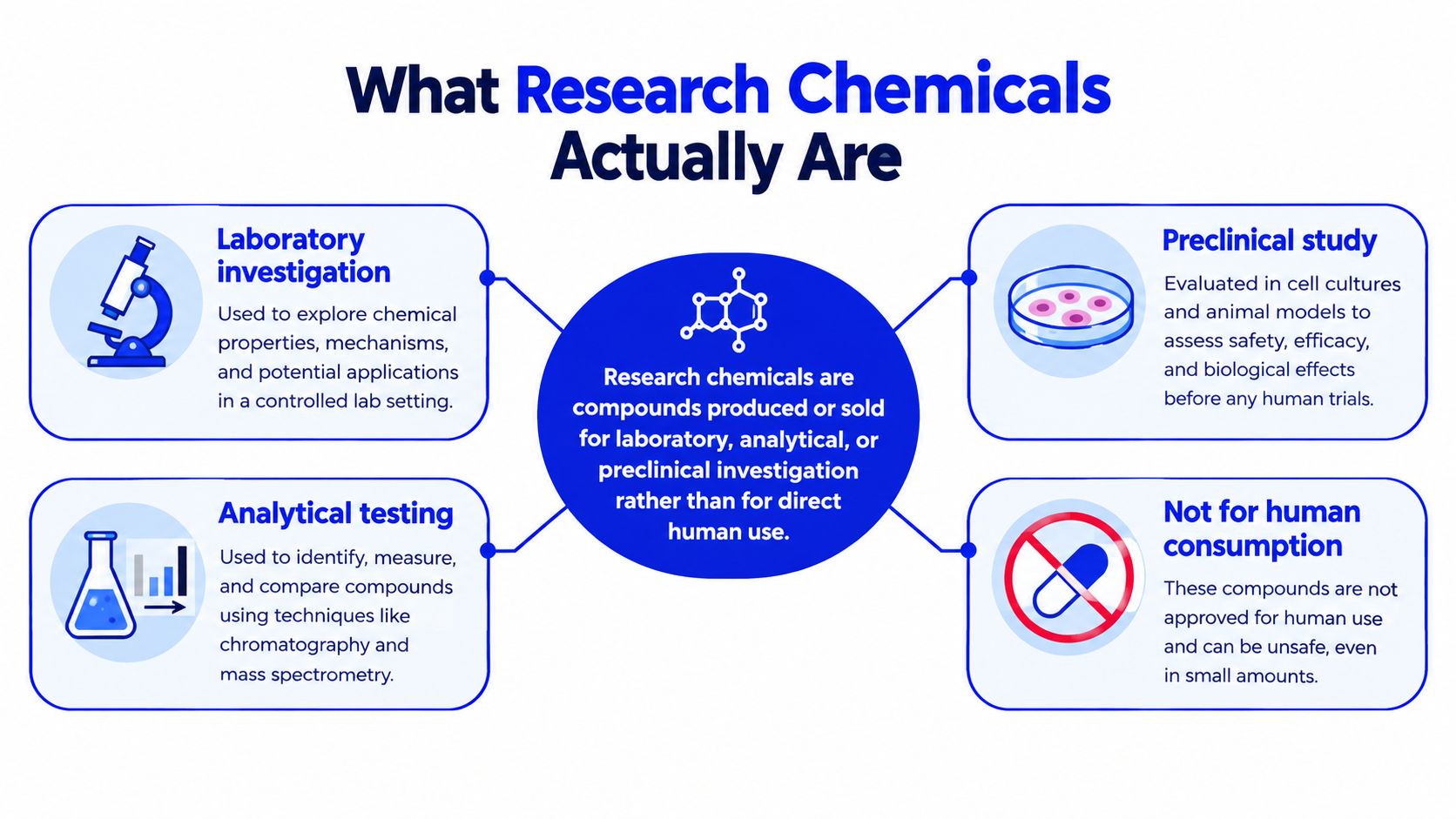
The category is intentionally broad, but the intent stays consistent. If the compound is being used to examine identity, stability, structure, or activity in a controlled setting, it belongs on the research side of the line. If the product page, checkout flow, or support materials start drifting into human-use language, that's a separate issue.
For context on a specific compound family, it can help to compare how different psychoactive structures are discussed in research settings. A useful example is this overview to compare 4-MeO-DMT with other psychedelics, which shows how the same broad market can still contain very different research questions.
Research chemicals are not the same as approved pharmaceuticals, compounded drugs, or consumer supplements. Approved drugs are regulated for specific uses. Compounded products are prepared for patient-specific medical needs under a different framework. Supplements are sold for dietary use, not analytical or preclinical investigation.
A disclaimer that says “research use only” helps frame intent, but it doesn't rescue sloppy labeling or weak documentation.
That's the key distinction. The phrase is a regulatory signal, not a guarantee that the product, seller, or accompanying documents are automatically suitable for your protocol. The rest of the article is about what a serious buyer should ask for before placing an order.
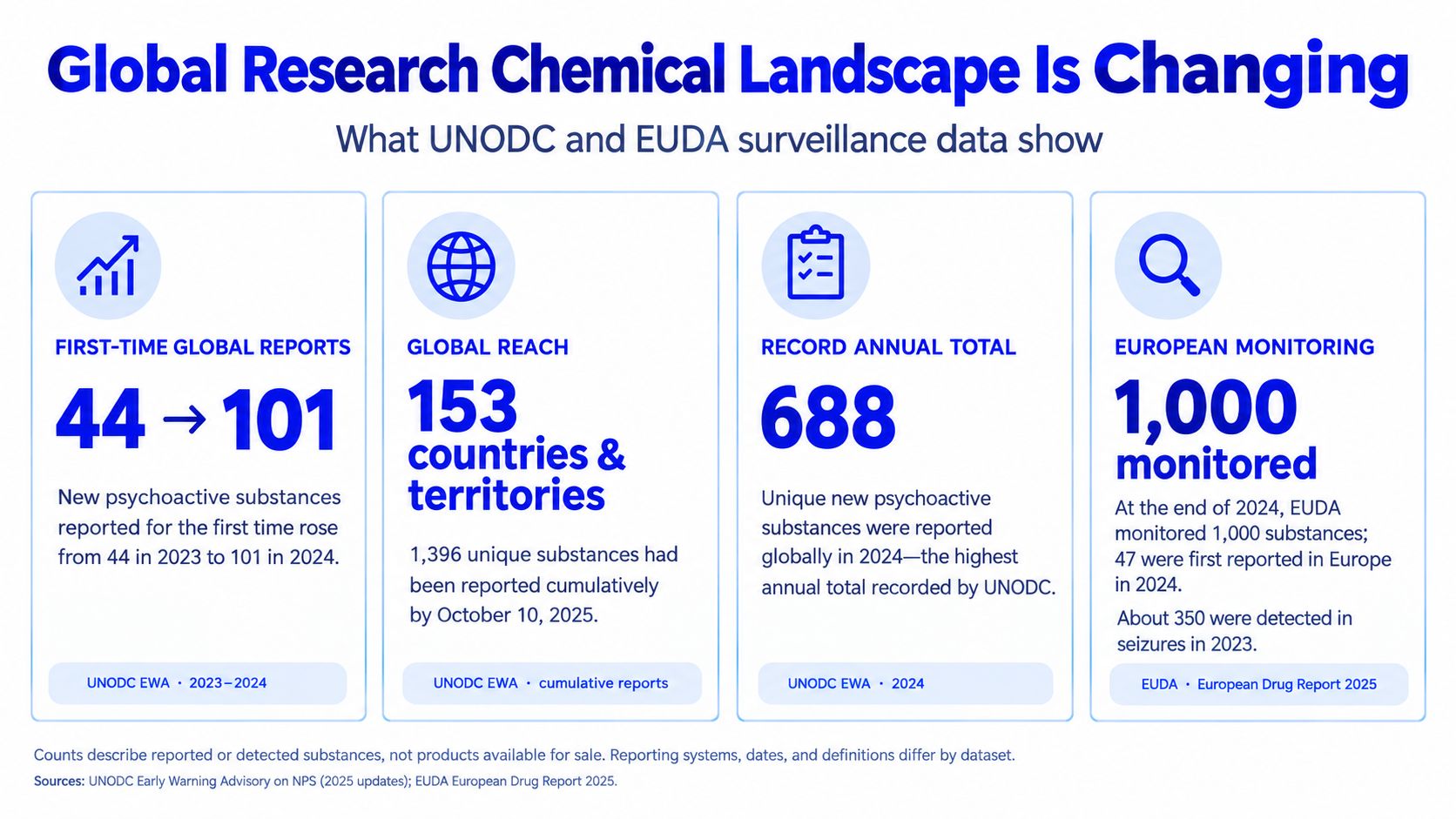
Procurement gets harder when the catalog stops behaving like a catalog. The wider research-chemical field has been shaped by the rise of new psychoactive substances (NPS), compounds designed to produce effects similar to internationally controlled drugs but not originally controlled under the 1961 or 1971 UN conventions. UNODC data show that 1,396 individual NPS had been reported to its Early Warning Advisory by 153 countries and territories, and 688 unique NPS were identified in drug samples in 2024, with 101 reported for the first time. UNODC's 2024 NPS update makes the point plainly. This is a globally distributed category that changes fast.
The mix of substances is broad, which affects how buyers should screen vendors and lot files. In the 2024 UNODC data, stimulants represented 33% of the total, followed by synthetic cannabinoid receptor agonists at 24% and classic hallucinogens at 14%. Synthetic opioids and unassigned substances each accounted for 9%, while sedatives/hypnotics and dissociatives represented 7% and 4%. That spread shows a market made up of several moving targets, not one narrow product class.
Europe offers a second reference point. The EUDA reported that its surveillance network was monitoring more than 950 NPS by the end of 2023, after 26 substances were first reported in Europe that year. It also noted roughly 400 different NPS detected in seizures in 2022. EUDA's 2024 European drug report on NPS shows why procurement teams cannot rely on old assumptions about what is already known, documented, or stable.
The practical response is straightforward. If novel substances can appear faster than formal schedules update, then batch documentation, traceability, and test methods stop being optional extras. A vendor relationship based only on familiarity is fragile. A documented, audit-ready process holds up better because it can handle unfamiliar compounds without improvising every time.
A COA should open the door, not close the case. I've seen plenty of files where the purity number looked strong, but the method was underspecified, the chromatogram was missing, or the identity evidence stopped at a single technique. That's not enough if the study depends on reproducibility.
At minimum, I want the batch number, the actual analytical method used, system suitability criteria, a representative chromatogram, and impurity reporting thresholds. For peptides, the best practice is to connect the lot to more than one orthogonal identity measure. USP-aligned technical literature recommends combining methods because each answers a different question, and the USP-oriented peptide review lays out why RP-HPLC, LC-MS, MS/MS or peptide mapping, amino-acid analysis, and NMR are not interchangeable.
Useful test logic: HPLC tells you about separation and related substances, mass spectrometry tells you about mass, mapping and MS/MS tell you about sequence, and NMR can confirm structural features.
That's also why a single “99% pure” line item can be misleading. HPLC is a quantitative separation tool, but it isn't a complete identity test. A co-eluting impurity may escape one method, while a sequence error or modification can share a similar mass. If you're buying material for a receptor assay, a cell-signaling experiment, or a preclinical model, that distinction matters.
For a broader testing perspective, even outside peptide procurement, a standards-focused discussion like private autopsy testing reliability is a good reminder that method suitability matters as much as the result itself. A report is only as trustworthy as the process behind it.
| Method | Attribute Verified |
|---|---|
| Reverse-phase HPLC | Related substances, separation profile, lot homogeneity |
| LC-MS | Molecular mass and identity support |
| MS/MS or peptide mapping | Sequence evidence |
| Amino-acid analysis | Composition confirmation |
| NMR | Structural features |
A high assay figure can hide a lot. If the remaining fraction is made up of oxidation products, truncation variants, aggregates, or stereochemical issues, the lot may still behave differently in a bioassay even when the headline purity looks impressive. That's why I don't treat the purity number as the central question, I treat it as the starting point.
The FDA-oriented peptide literature uses 0.10% as an operational identification threshold for peptide-related impurities in the relevant analytical context, and that benchmark is useful because it forces attention on the composition of the tail, not just the top peak. The same review also emphasizes trending individual impurity peaks across lots and retaining raw chromatograms and mass spectra. FDA-linked comparative peptide guidance discussion
If you pool data from different batches without checking impurity drift, you can end up blending unlike materials into one dataset. That's especially risky when the experiment depends on receptor binding, enzymatic activity, cell signaling, or preclinical dosing. A chemically consistent lot isn't automatically biologically equivalent, and that's where a lot of procurement files fall short.
FDA materials also flag BPC-157 as an example where immunogenicity and aggregation deserve attention. The agency notes that aggregation, together with peptide-related impurities, may amplify immunogenicity risk, which is exactly why a high assay percentage is not the whole story. FDA advisory material on compounded peptides supports a more cautious reading of any lot file that omits impurity detail.
A defensible packet should also include stability data covering time, temperature, moisture, light, and freeze-thaw exposure. Those conditions can change the impurity profile after release, which means the sample you receive isn't necessarily the same sample the supplier originally tested. If your protocol spans weeks or months, that is a procurement issue, not just a storage note.
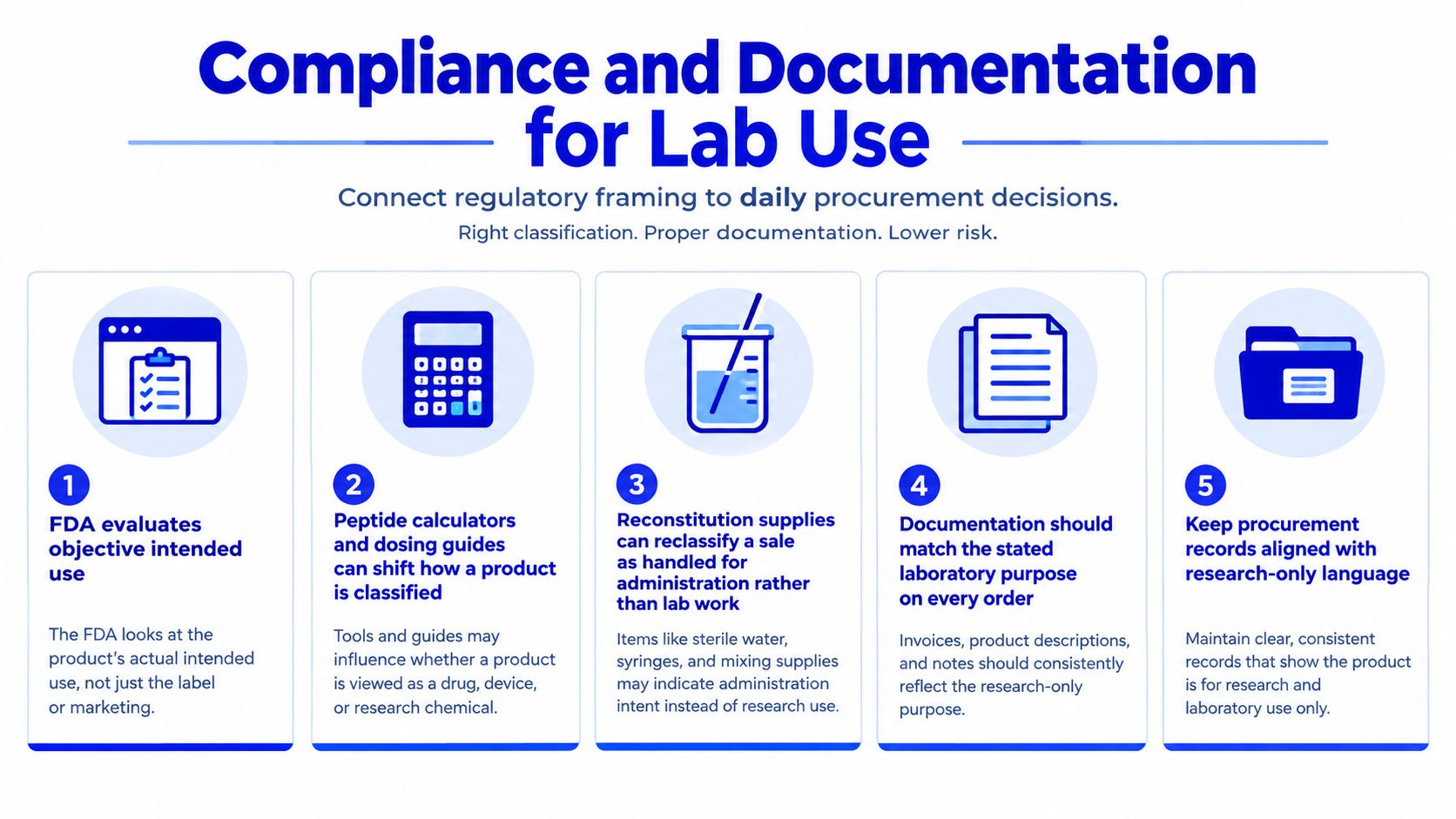
The FDA looks at objective intended use, not just a disclaimer on the page. Under 21 CFR § 201.128, website content, dosing instructions, injection guidance, peptide calculators, and even reconstitution supplies can contribute to the agency's view of how a product is being marketed. A supplier that wants to stay on the research side should keep its product pages, support content, and checkout flow aligned with laboratory or preclinical use, not human administration. A legal overview of FDA peptide enforcement captures that practical point well.
A meaningful file should include more than a generic “tested” label. Look for the test method, the sample count, the acceptance criteria, and the lot or batch number. For endotoxin, the commonly cited benchmark in the available quality documentation is less than 5 endotoxin units per kilogram, or 5 EU/kg, and the sterility workflow described uses LAL along with a USP <71>-based 14-day incubation across five vials per batch. Laboratory quality testing documentation gives a concrete example of what that kind of file looks like.
That still doesn't mean the product is FDA-approved or suitable for every use. It means the lot has a better quality-control record, which helps the lab assess whether it fits a defined research protocol. Those are different questions, and good procurement keeps them separate.
For a useful framework on records discipline, a practical compliance article like practical data compliance controls is worth reading alongside your internal SOP review. The common thread is simple, if your records can't support a decision later, they're not strong enough now.
The fastest way to improve sourcing is to turn judgment into a repeatable file. I use a simple sequence with new suppliers, start small, verify identity independently, compare against a known lot or method, then expand only if the documentation stays clean. That keeps one bad purchase from becoming a lab-wide habit.
First, build a supplier scorecard with documentation quality, batch traceability, and response quality. Second, create a COA review sheet that forces the reviewer to capture method name, chromatogram availability, impurity reporting, and storage notes. Third, define the orthogonal confirmation you want before the material touches a critical experiment.
After that, keep a deviation log and requalification schedule. If a supplier changes method, packaging, or impurity profile, the lot should be reviewed again rather than folded into the same procurement lane. That's especially important when the study spans multiple batches or when the assay is sensitive to small structural differences.
Keep the raw chromatograms and mass spectra on file for the life of the study. If the data matter enough to publish, they matter enough to trace.
For teams that want to explore COA-backed peptide research materials, a catalog with batch documentation can be one of several starting points, including Peptide Warehouse USA when the lot paperwork is part of the buying decision. The point isn't brand loyalty, it's using the documentation to decide whether the material belongs in your protocol.
If you're sourcing peptides or related research compounds, choose the supplier that can show batch-specific documentation, identity confirmation, and clear lot traceability before you place the next order. You can visit Peptide Warehouse USA to review COA-backed research materials and compare the documentation details against your lab's own acceptance checklist.