No products in the cart.



Most discussions of the ARA 290 peptide stop at a simple claim: it’s a “nerve repair” peptide. That framing is too narrow, and it leaves out the question that matters most to serious researchers. Is ARA 290 an advancing platform for targeted tissue protection, or a promising compound whose development stalled before the evidence became definitive?
That distinction matters if you’re evaluating compounds for laboratory, analytical, or preclinical work. The ARA 290 peptide has a credible mechanistic story, published preclinical support, and small human trials with measurable signals. It also has a development history that’s more complicated than most product pages suggest.
This guide takes a realistic view. You’ll see what ARA 290 is, how it was engineered, what the human data show, how it has been administered in studies, how to think about handling and quality control, and why current research appears to be shifting into narrower indications rather than broad late-stage development.
A lot of therapeutic research comes down to a difficult tradeoff. You want to activate repair pathways in stressed tissue, but you don’t want to trigger unrelated biology that creates new risks.
That tradeoff is exactly why ARA 290 attracted attention. Instead of using erythropoietin itself, researchers designed a much smaller synthetic peptide to preserve tissue-protective signaling while avoiding the red-blood-cell stimulating effects that define erythropoietin’s classic use.
The result is a compound with a very specific research identity. ARA 290 is not best understood as a general “healing peptide.” It’s better understood as an engineered signaling tool built to probe whether selective activation of repair pathways can reduce inflammation-linked dysfunction without erythropoiesis.
In practical terms, selective repair signaling is attractive for three reasons:
That’s why ARA 290 tends to come up in discussions of neuropathy, inflammatory injury, and microvascular complications. The concept is elegant. The evidence is promising in places. But the development story is still incomplete.
Practical rule: Treat ARA 290 as a research-stage molecule with a strong mechanistic rationale, not as a settled therapeutic category.
Readers often get tripped up in two places.
First, they assume that because ARA 290 came from erythropoietin research, it behaves like erythropoietin. It doesn’t. Its whole design logic was to separate tissue-protective signaling from blood-building activity.
Second, they see positive early trial language and assume the field moved into broad confirmatory development. It didn’t. The compound generated real interest, but the later-stage path has been uneven.
ARA 290, also called cibinetide, is an 11-amino-acid synthetic peptide derived from erythropoietin’s tissue-protective helix-B domain. Reported specifications include molecular formula C59H95N17O22 and molecular weight 1,382 Da, and the molecule was engineered to preserve innate repair receptor (IRR) signaling while removing erythropoietic activity, as described in this ARA-290 profile.
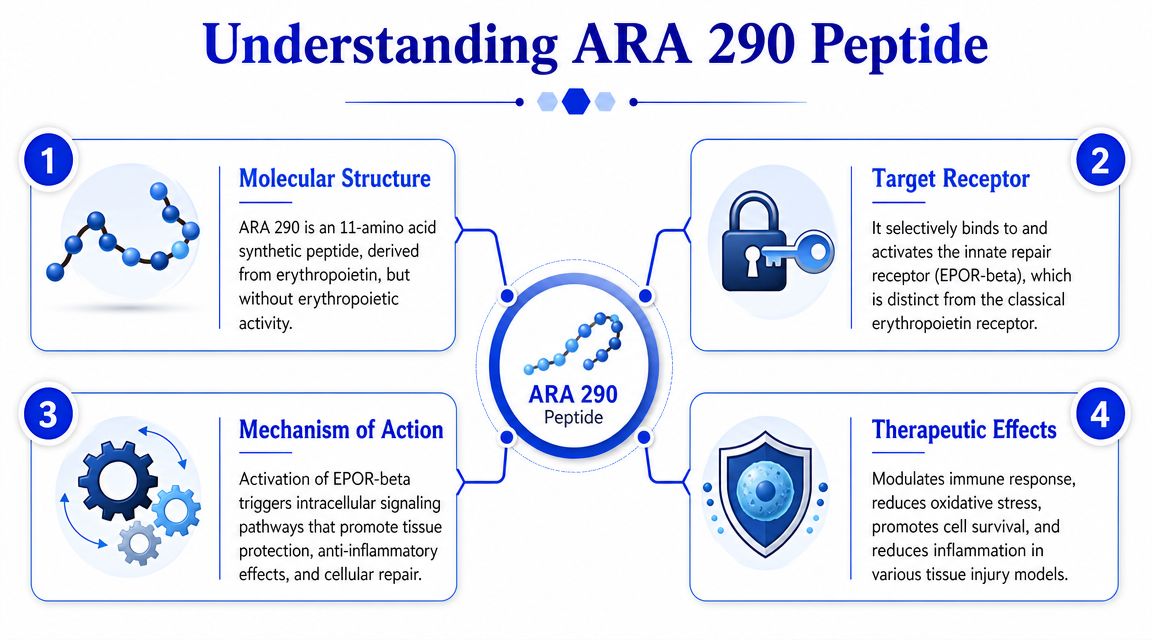
Erythropoietin is best known for its role in red blood cell production. But it also has tissue-protective biology. That created an obvious research problem. If you use the parent hormone, you don’t get a clean read on repair effects because hematologic activity comes along with it.
ARA 290 was designed as the workaround. By modeling only a tissue-protective region of erythropoietin, researchers created a smaller peptide meant to engage the repair side of the biology without driving erythropoiesis.
That design goal is what makes ARA 290 interesting. It isn’t just another small peptide. It’s a deliberately stripped-down analogue intended to test whether selective receptor signaling can preserve or restore function in injured tissue.
Think of erythropoietin as a multifunctional master key. It opens the door to blood production, but it also appears to interact with repair-related signaling. ARA 290 is more like a cut-down key made for only one lock.
The lock, in this case, is the innate repair receptor. In the literature around ARA 290, that receptor is the center of the whole thesis. If the peptide activates this pathway as intended, cells under stress may shift toward a more protective, less inflammatory response profile.
That’s why descriptions of ARA 290 often include phrases like tissue-protective analog, non-erythropoietic peptide, or IRR agonist. Those labels are all trying to communicate the same core idea: the molecule was built to isolate one branch of a larger biological system.
A few practical implications follow from that:
The appeal of ARA 290 isn’t that it does everything. It’s that it was designed to do one thing selectively.
The evidence base for ARA 290 is best read in layers. Preclinical work established biological plausibility. Small human studies then asked whether that mechanism translated into measurable clinical signals.
A published neuropathic pain study reported that ARA 290 dose-dependently reduced allodynia and suppressed the spinal microglia response, linking the effect to reduced central inflammation rather than erythropoiesis, according to this PubMed record of the preclinical study.
That matters for two reasons. First, it supported the idea that the peptide was not acting through blood-related effects. Second, it tied pain-related outcomes to inflammatory signaling in the central nervous system.
For researchers, this is the sort of preclinical result that justifies moving forward. You have a mechanistic candidate, a disease-relevant model, and an observable effect that fits the compound’s design premise.
Human data are more limited, but they’re not empty.
A clinical report available through PMC described a 4-week sarcoidosis trial in which the ARA 290 group improved significantly at week 4 on the SFNSL score compared with placebo, with a change of −11.5 ± 3.04 versus −2.9 ± 3.34. The same report also described another study that followed subjects for 56 days and found improvements in HbA1c, lipid profiles, and neuropathic symptoms measured by the PainDetect questionnaire. Those results are summarized in this PMC clinical report on ARA 290.
That combination is unusual enough to be worth noticing. The investigators weren’t only looking at symptom scores. They also tracked metabolic and inflammatory-adjacent endpoints, which widened the compound’s research profile.
Here’s the most balanced way to read those findings:
| Study context | What was reported | Why it matters |
|---|---|---|
| Sarcoidosis-related neuropathy | Significant SFNSL improvement at week 4 versus placebo | Suggests a measurable signal in a neuropathy-linked condition |
| Follow-up over 56 days | Improvements in HbA1c, lipid profiles, and PainDetect | Suggests the molecule was being evaluated beyond simple pain relief |
Many summaries often become overly enthusiastic at this juncture.
A review in PMC describes ARA 290 as an 11-amino-acid peptide modeled from erythropoietin’s helix B and says it “deserves continued clinical evaluation,” while also emphasizing that one neuropathy trial lasted only 28 days and involved patients with generally excellent metabolic control. The same discussion highlights a broader issue: published human evidence is based on small, short phase II studies rather than large confirmatory trials, as noted in this PMC review discussing the limits of the current evidence.
That’s the core reality check.
Promising doesn’t mean proven. With ARA 290, that distinction isn’t a technicality. It’s the main interpretive issue.
If you’re reading ARA 290 literature with a practical eye, dosing and route matter because they shape how comparable one study is to another. They also tell you whether a result reflects a realistic experimental protocol or a one-off setup that’s hard to reproduce.
Human research has used short study windows and subcutaneous administration in at least part of the clinical program. ClinicalTrials.gov lists a phase II, open-label study using 4 mg subcutaneous ARA 290 daily for 12 weeks in diabetic macular oedema, which is notable because it shows the compound being explored outside the classic neuropathy frame in a still-active research context through this ClinicalTrials.gov study listing.
Earlier human work discussed in the clinical literature included a 4-week trial and another study extending to 56 days, but the key point for experimental readers is simpler than any one schedule. Published protocols have generally treated ARA 290 as a repeatedly administered peptide rather than a single-exposure tool.
Peptides often rise or fall on handling and protocol consistency. With ARA 290, administration details matter for at least three reasons:
The preclinical literature also reinforces the importance of dose response. In the neuropathic pain model cited earlier, investigators reported a dose-dependent reduction in allodynia together with suppression of spinal microglia, which supports the idea that administration parameters are part of the biological signal rather than an afterthought.
If two ARA 290 studies use different durations, routes, or disease models, don’t assume they answer the same question.
Even a well-designed peptide becomes a poor research tool if it’s handled badly. Storage and reconstitution don’t sound exciting, but they directly affect whether the material in the vial still matches the structure on paper.
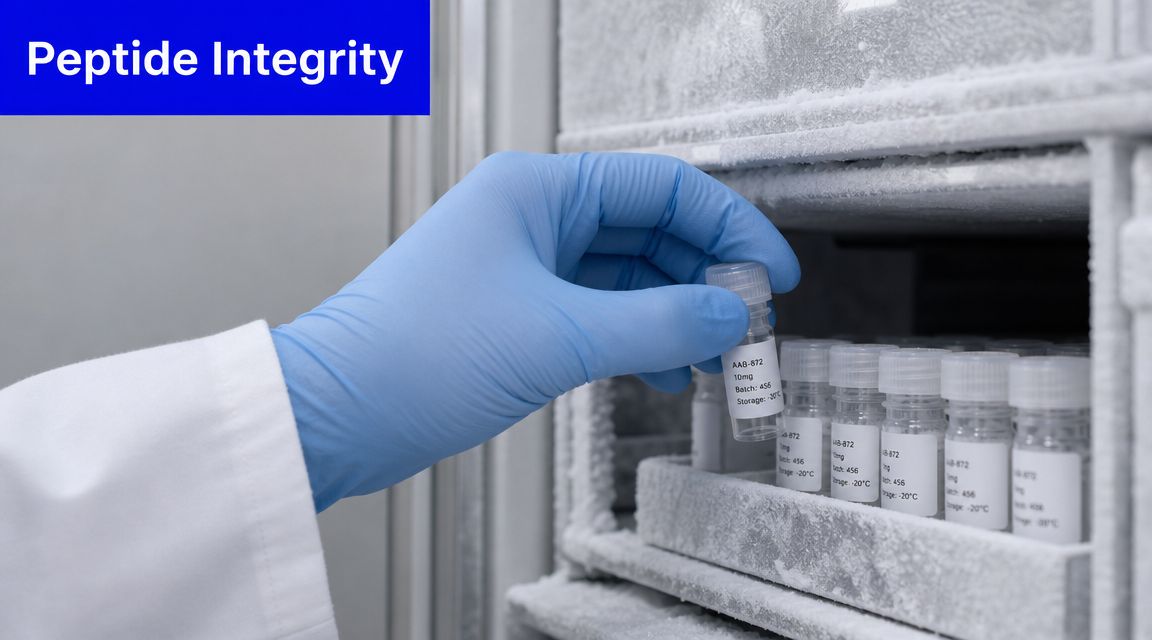
ARA 290 is typically encountered by researchers as a lyophilized peptide. That format is common because dry material is easier to store and transport without exposing the compound to the same degree of degradation risk seen in solution.
Once you move from dry powder to a reconstituted preparation, your priorities change. You’re no longer just storing a product. You’re preserving identity, concentration consistency, and sample integrity over the usable life of the vial.
Basic best practices usually include:
A cautious workflow tends to work better than a fast one.
Start by reviewing the supplier documentation before you open anything. Confirm the vial label, lot, and expected amount. Choose a sterile diluent appropriate to your lab protocol, then add it slowly so the powder hydrates without foaming or unnecessary agitation.
After reconstitution, inspect the solution visually. If appearance is inconsistent with your lab’s acceptance criteria, stop there and review the batch record rather than trying to salvage the sample by guesswork.
For teams training newer staff, a short demonstration can prevent a lot of avoidable waste.
A simple handling checklist helps:
How much confidence should a lab place in a vial label alone? For a peptide like ARA 290, the honest answer is very little. This compound has attracted interest because of its selective tissue-protective signaling, but its development history also shows why verification matters so much. The research base is promising in places, limited in scale, and not backed by a mature commercial supply chain for approved therapeutic use. That puts more weight on buyer diligence.
ARA 290 also sits in an awkward middle ground. It is well known enough to be marketed to research buyers, yet not advanced enough clinically to assume broad manufacturing standardization across sellers. In practice, that means quality review should focus on traceable evidence, not branding, claims, or a single headline purity figure.
The first question is simple: can this specific vial be tied to this specific batch and this specific set of test results?
A useful way to frame it is to treat the paperwork like a chain of custody. If one link is missing, confidence drops quickly. At minimum, look for:
Peptide Warehouse USA is one example of a supplier that states it provides COAs and batch documentation for research peptides. That is the right category of material to ask for. It is not, by itself, proof that a batch is suitable for your work.
A Certificate of Analysis works like an instrument readout summary, not a quality guarantee. The point is to test whether the supplier’s documentation is detailed enough to support your internal acceptance decision.
A common mistake is to stop at the purity percentage. Purity can look acceptable while other questions remain unresolved, such as whether the chromatogram is lot-specific, whether the mass result matches the intended sequence, or whether the document appears to be a recycled sample file. For ARA 290, those checks matter because current research interest has shifted into narrower areas rather than broad late-stage development. In a niche market, documentation quality often varies more than buyers expect.
| Document item | What you want to see | Why it matters |
|---|---|---|
| Product identity | Match to vial and order record | Reduces sample mix-ups |
| HPLC result | A lot-linked chromatogram or stated result | Helps judge batch consistency |
| MS confirmation | Expected molecular mass alignment | Supports identity |
| Test dates and lot data | Specific batch information | Improves traceability |
If your team wants a plain-language refresher, this guide on interpreting peptide certificates of analysis is a useful resource for understanding what those reports should tell you.
One more point is easy to miss. Good documents support confidence, but they do not replace internal controls. If a vial label, COA, and purchase record do not line up cleanly, the safest decision is usually to pause and verify before the material enters a study.
The cleanest way to describe ARA 290 today is this: it remains an experimental compound with meaningful early evidence, but it hasn’t matured into a broadly validated therapeutic program.
Current public information points in two directions at once.
On one hand, ClinicalTrials.gov lists a phase II, open-label study of 4 mg subcutaneous ARA 290 daily for 12 weeks in diabetic macular oedema, with best-corrected visual acuity as the primary endpoint in that study listing already cited in the article. On the other hand, expert summaries note that no phase III trials have been initiated for older indications after Araim Pharmaceuticals shut down. That combination suggests a molecule that hasn’t disappeared, but also hasn’t advanced along the conventional late-stage pathway.
For research buyers and lab managers, that’s the part worth understanding. ARA 290 is not merely “the next approved peptide” waiting in line. It looks more like a compound whose strongest future may depend on narrower, indication-specific programs.
The newest public signal sits outside the older neuropathy-heavy narrative. A diabetic eye disease study shifts the emphasis toward inflammation-linked microvascular disease, which may be a better fit for current investigator interest than trying to revive the original broad development arc.
That doesn’t invalidate the neuropathy work. It changes how you frame the molecule.
If your lab documents peptide intake, storage, handling, and study use under formal quality systems, it’s also worth reviewing standards for ALCOA+ and GxP records. Good documentation discipline matters even more when you’re working with compounds that sit in the gap between promising science and incomplete development.
ARA 290 still deserves attention. Just give it the right kind. The most useful view is neither hype nor dismissal. It’s a disciplined interest in a molecule with a smart design, encouraging early evidence, and an unfinished future.
If you’re evaluating research-grade peptide options for laboratory use, Peptide Warehouse USA offers ARA 290 alongside other analytical and preclinical compounds with batch documentation designed to support traceability and review. Learn more and explore options based on your lab’s quality and sourcing requirements.