No products in the cart.


Online advice about BPC-157 for women often moves faster than the evidence. Posts may frame the peptide as a solution for injury recovery, gut problems, fat loss, inflammation, hormonal balance, or antiaging, yet the female-specific human literature is remarkably small. The most relevant study involved only 12 women with interstitial cystitis, and it was open-label and uncontrolled, so its findings cannot establish broad effectiveness or long-term safety. The documented pilot evidence is summarized here.
That gap matters because animal findings, anecdotal reports, and mechanistic theories don't answer the questions women ask. They don't establish how BPC-157 behaves across menstrual phases, whether it affects fertility, or whether exposure is safe during pregnancy or lactation. This analysis separates plausible biology from demonstrated clinical outcomes and treats BPC-157 as an experimental research compound, not an established therapy.
BPC-157 is widely discussed as a possible aid for tissue repair, gastrointestinal symptoms, muscle recovery, and body-composition goals. Those claims run well ahead of the human evidence for women. The published record does not establish these outcomes as benefits for female patients.
A review of the modern literature identified 36 unique studies through June 2024: 35 preclinical animal studies and only 1 uncontrolled human chart review, with zero completed controlled human efficacy trials. The review in PubMed Central provides that evidence summary. This leaves a field built mainly on animal experiments, not on clinical research designed to evaluate female physiology.
Findings from a rodent model cannot be assumed to predict outcomes in women. Translation requires attention to body composition, immune signaling, metabolism, reproductive hormones, and tissue response. These factors may affect pharmacokinetics, including absorption and clearance, as well as pharmacodynamics, meaning how tissues respond to the compound.
The evidence gap extends beyond small female samples. Available research does not provide a reliable sex-stratified basis for interpreting dose, exposure, response, or risk. Strong human data are also lacking on interactions with estrogen or progesterone states, menopause, hormone replacement therapy, fertility, and reproductive disease.
For women, the practical question is therefore not which protocol appears effective online. It is which population, route, outcome, and safety question has been studied.
Evidence rule: A plausible mechanism can justify further research. It cannot replace a controlled human trial.
Forums and social media may identify questions for future studies, but anecdotes cannot distinguish a compound effect from placebo response, natural recovery, concurrent treatment, or behavioral change. Animal results can support hypotheses, yet they do not supply female-specific human outcomes. That distinction should guide any evaluation of BPC-157 for women.
BPC-157, or Body Protection Compound-157, is described in scientific literature as a gastric pentadecapeptide, first described in 1993. The historical review of BPC-157 research explains its origin and the development of the evidence base. Researchers study it because preclinical findings suggest possible effects on processes involved in tissue protection and repair. Those findings provide a rationale for investigation, while female-specific human evidence remains sparse.
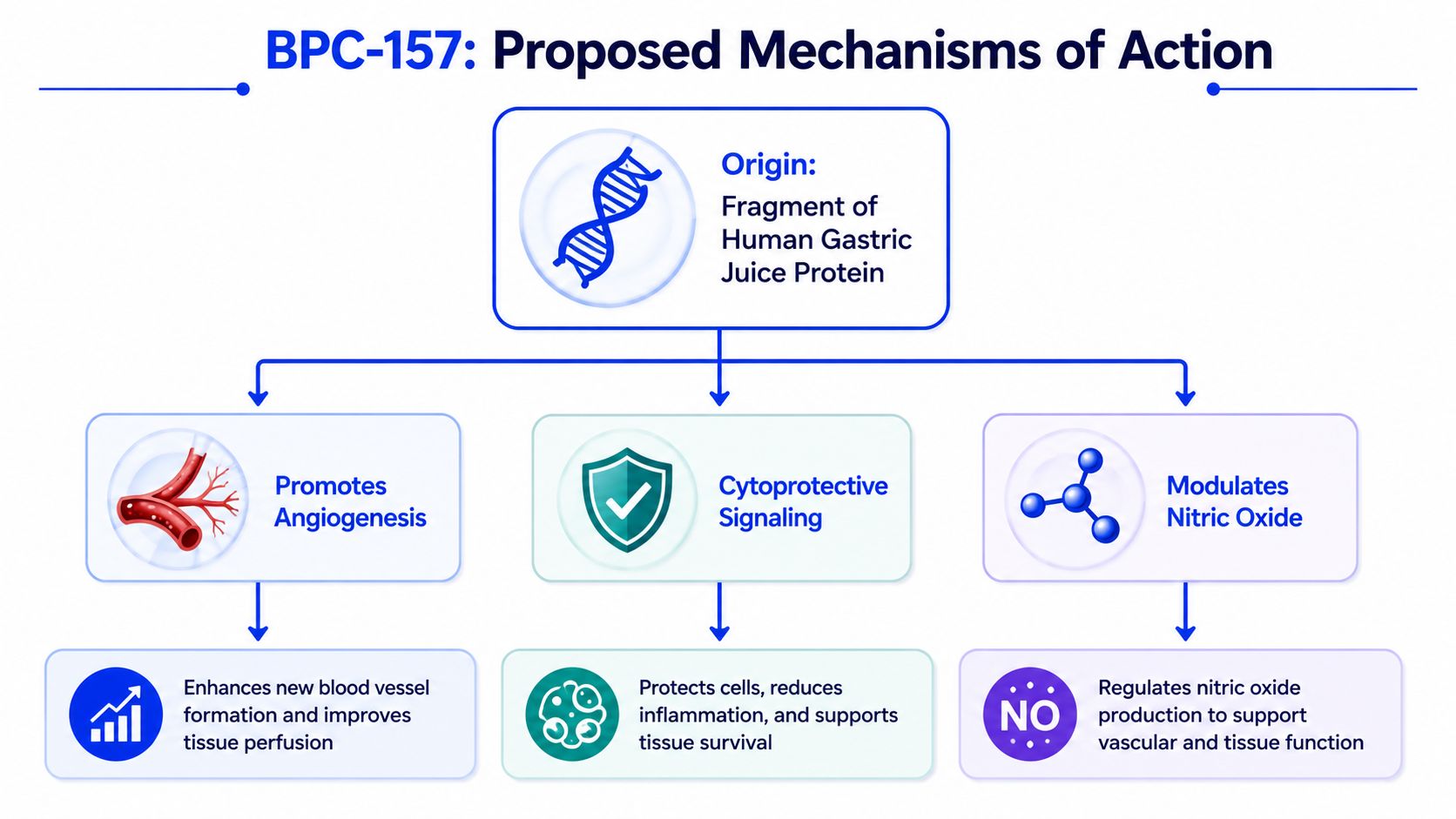
One proposed pathway involves nitric oxide modulation. Nitric oxide helps regulate vascular tone and blood flow, influencing how readily blood moves through an area. Researchers have examined whether BPC-157 affects this signaling in ways that could support injured tissue.
A second focus is angiogenesis, the formation of new blood vessels. Increased vascular supply could, in theory, improve oxygen and nutrient delivery during repair. This hypothesis has recurred in preclinical research, but biological plausibility does not demonstrate a useful or safe effect in women.
The third proposed mechanism concerns cytoprotective signaling, cellular pathways that may help tissues tolerate stress or injury. This framework has prompted studies in models involving the gastrointestinal tract, nerves, tendons, ligaments, and other tissues.
These pathways support a research hypothesis. They do not establish a clinical outcome. Mechanistic evidence comes largely from laboratory and animal studies, and the human record remains extremely limited. A recent clinical review emphasizes that human efficacy and safety remain unproven.
Female-focused research would need to test whether menstrual-cycle phase, menopause, estrogen or progesterone exposure, and sex-specific immune responses change the peptide's activity. Gut-barrier integrity, musculoskeletal recovery, and neuroprotection may merit study as research questions. Available evidence does not establish them as benefits for women.
The clearest female-specific human signal comes from a narrow urologic setting, not from the broader uses often promoted online. A 2024 pilot trial evaluated BPC-157 in 12 women aged 39 to 76 years, with a mean age of 58.3 years, who had interstitial cystitis. Each participant received a single intravesical dose totaling 10 mg. The study details and limitations are reported in this evidence summary.
Ten participants reported complete symptom resolution, while the other two reported approximately 80% improvement. No adverse events were reported. These findings describe a signal in bladder-pain symptoms after direct bladder administration. They do not establish that BPC-157 treats generalized inflammation, improves exercise recovery, supports weight loss, or changes hormone-related outcomes.
| Study Type | Sample Size (Women) | Key Findings | Major Limitations |
|---|---|---|---|
| Open-label intravesical pilot in women with interstitial cystitis | 12 | 10 reported complete symptom resolution, and 2 reported about 80% improvement; no adverse events were reported | No control group, no blinding, single dose, narrow urologic context, short-term interpretation |
| Intravenous pilot in healthy adults | 2 adults | No short-term adverse events were reported, and measured clinical biomarkers didn't show concerning changes during the observation period | Extremely small sample, healthy participants, short follow-up, not a women-specific efficacy trial |
| Broader preclinical literature | 35 animal studies within a review of 36 unique studies | Animal models provide mechanistic and biological signals for further study | Animal findings don't establish human efficacy, reproductive safety, or sex-specific dosing |
The bladder-pain study matters because it documents human exposure in women, but its design limits causal interpretation. Without randomization, blinding, or a comparator, researchers cannot distinguish a treatment effect from placebo response, regression to the mean, concurrent care, or normal symptom variability. The original report is available in the published PDF.
A separate critical review discusses the bladder-pain report and a later report involving two women who tolerated intravenous exposure, while emphasizing how little evidence exists for human effectiveness and safety. Its critical review places those reports in context.
The defensible conclusion remains narrow: female-only reports exist, and one uncontrolled pilot found symptom improvement in refractory interstitial cystitis. That result cannot support clinical recommendations for broader uses of BPC-157 in women.
The sharpest safety questions concern areas where female-specific human evidence is absent. No established female-specific dose, dependable human pharmacokinetic profile, or reproductive-safety dataset can determine whether BPC-157 is appropriate during pregnancy, breastfeeding, fertility treatment, or hormone-sensitive disease.
The unanswered questions are specific:
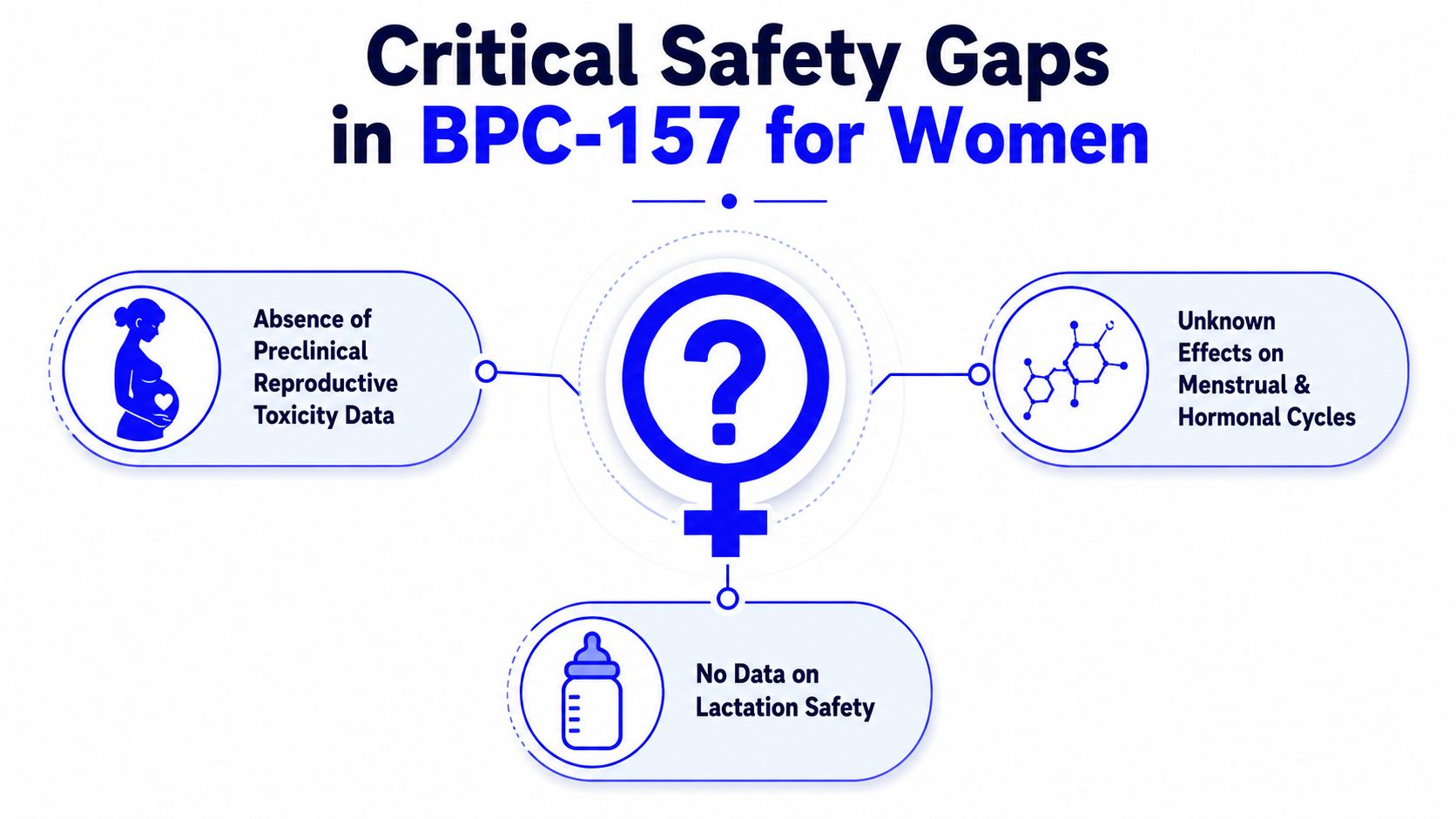
A small pilot with no reported adverse events cannot establish reproductive or hormonal safety. Limited enrollment, brief observation, and narrow monitoring may miss uncommon, delayed, or condition-specific effects.
The FDA has stated that clinical safety information is insufficient to characterize BPC-157's safety profile. It has also raised concerns about immunogenicity, peptide impurities, and whether compounded products contain adequately characterized active ingredients. Those regulatory concerns are summarized in a peer-reviewed review.
People exploring hormone-related options may review broader clinical evidence for hormonal support, but evidence for hormone-support products does not establish BPC-157's safety or efficacy.
Research protocols should define reproductive status, include pregnancy testing where appropriate, document menstrual phase, record medications and hormone use, and extend follow-up beyond immediate tolerability. Until those data exist, avoiding BPC-157 during pregnancy and breastfeeding is the cautious evidence-based position. It reflects uncertainty, not proven toxicity.
Route determines what a study can establish. A bladder-administered dose cannot show whether systemic BPC-157 improves tendon healing, while an injection in an animal cannot define the exposure from a human research product.
Published work has examined several routes, yet female-specific pharmacokinetic data remain absent or inadequate. The women-only interstitial-cystitis pilot is informative mainly because it used intravesical delivery, placing the compound directly in the bladder rather than testing a general systemic protocol. The study report provides the route and dosing context.
| Route | Common Research Doses | Female-Specific PK Data | Key Study Limitations |
|---|---|---|---|
| Intravesical | A single 10 mg dose in the documented female pilot | Not established | Local urologic exposure, open-label design, no comparator |
| Intravenous | Up to 20 mg in a pilot involving two healthy adults | Extremely limited | Tiny sample, short-term observation, no efficacy endpoint |
| Subcutaneous or other systemic experimental routes | No reliable women-specific clinical dosing standard | Not established | Much of the supporting evidence is preclinical and not sex-stratified |
| Oral or laboratory-model routes | No validated women-specific clinical standard | Not established | Absorption, stability, and exposure in women remain undefined |
These route differences explain why “What is the BPC-157 dose for women?” has no scientifically established answer. Dose interpretation depends on route, condition, formulation, systemic exposure, and the outcome being measured. A dose from a local bladder study should not be presented as a general female dosing standard.
A credible trial should report sex-specific pharmacokinetics instead of pooling women and men. It should document menstrual status, hormonal contraception, menopause, hormone replacement therapy, pregnancy status, and relevant reproductive diagnoses, because each factor may affect exposure or interpretation.
Safety outcomes should be defined in advance rather than inferred only from spontaneous side-effect reports. A controlled design with a comparator, blinding where feasible, validated endpoints, and adequate follow-up would produce more interpretable evidence than informal protocol reports. Researchers should also state the formulation, administration technique, sampling schedule, and adherence checks so exposure can be reconstructed.
The practical standard is direct: a study that cannot identify who was exposed, by which route, at what dose, and for how long cannot support a reliable women-specific recommendation.
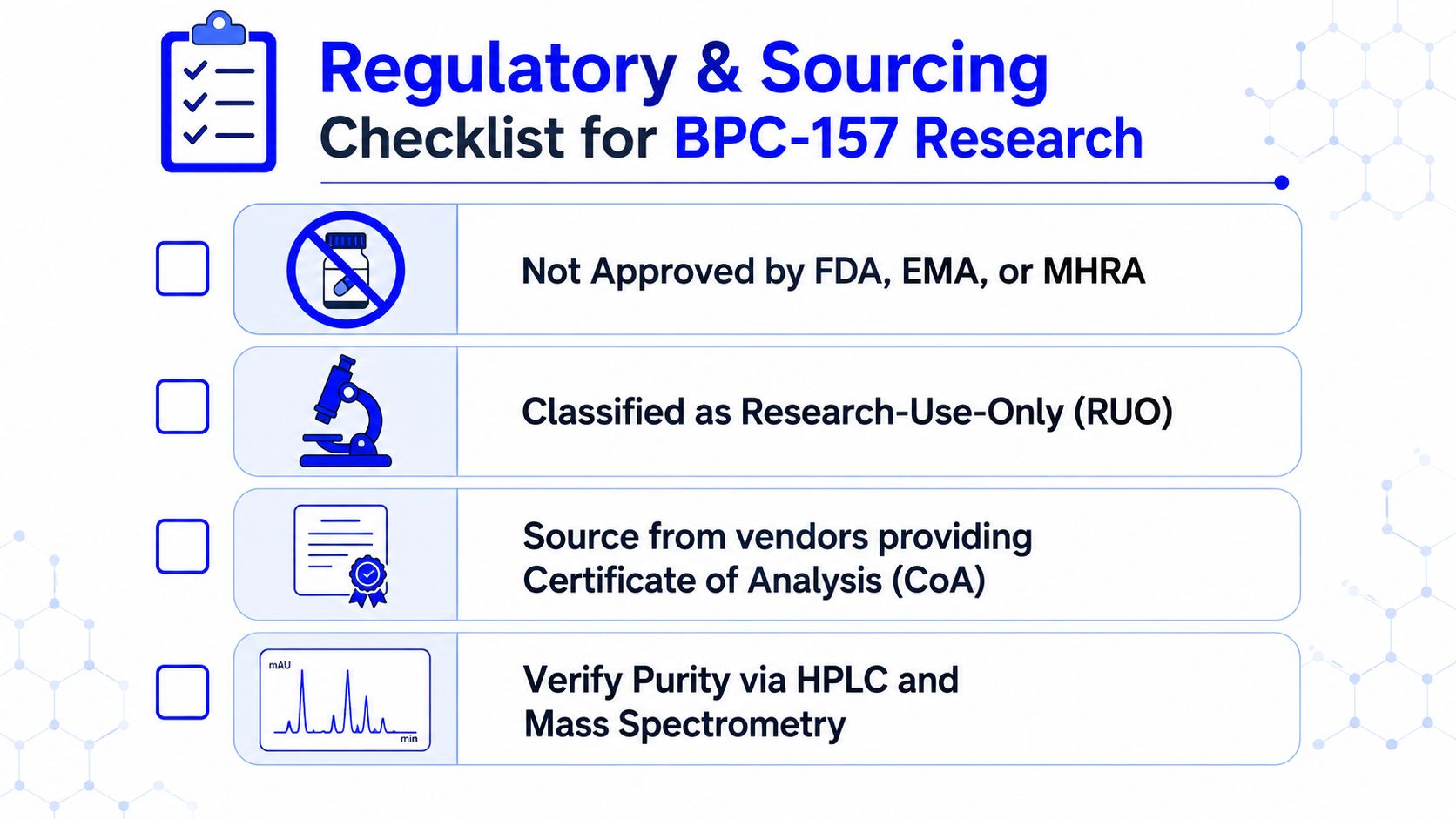
BPC-157 has no U.S. Food and Drug Administration approval for a human medical indication. Independent sports-medicine guidance likewise describes no FDA-approved indication, while human safety evidence remains limited. The sports-medicine review outlines the regulatory and clinical-status concerns.
That regulatory position should shape how researchers read product pages. A research-use-only label identifies laboratory, analytical, or preclinical supply. It does not establish clinical efficacy, medical supervision, or safety for women.
A research supply chain should provide lot-specific records covering:
A certificate of analysis also has a defined scope. It can report analytical findings for a particular lot, but it cannot establish clinical efficacy, reproductive safety, injectable sterility, or suitability for human use.
The same evaluation applies to compounded products. FDA-related safety discussions have raised concerns about immunogenicity, impurities, and uncertainty in active-ingredient characterization. “High purity” therefore describes only one part of product quality. The FDA-related safety discussion is included in this review.
Female-focused studies require especially careful procurement records. The available human evidence is too limited to resolve uncertainty about the material, formulation, or exposure received by participants or specimens. Researchers should preserve that documentation alongside study-level outcomes, so later interpretations can distinguish product quality from biological effects.
BPC-157 has a plausible biological rationale and extensive preclinical history, yet female-specific human evidence remains too limited for the confident claims often attached to it. The strongest women-only report is a small, uncontrolled bladder-pain pilot. That finding supports further study and warrants caution in clinical application.
Three gaps should shape research appraisal:
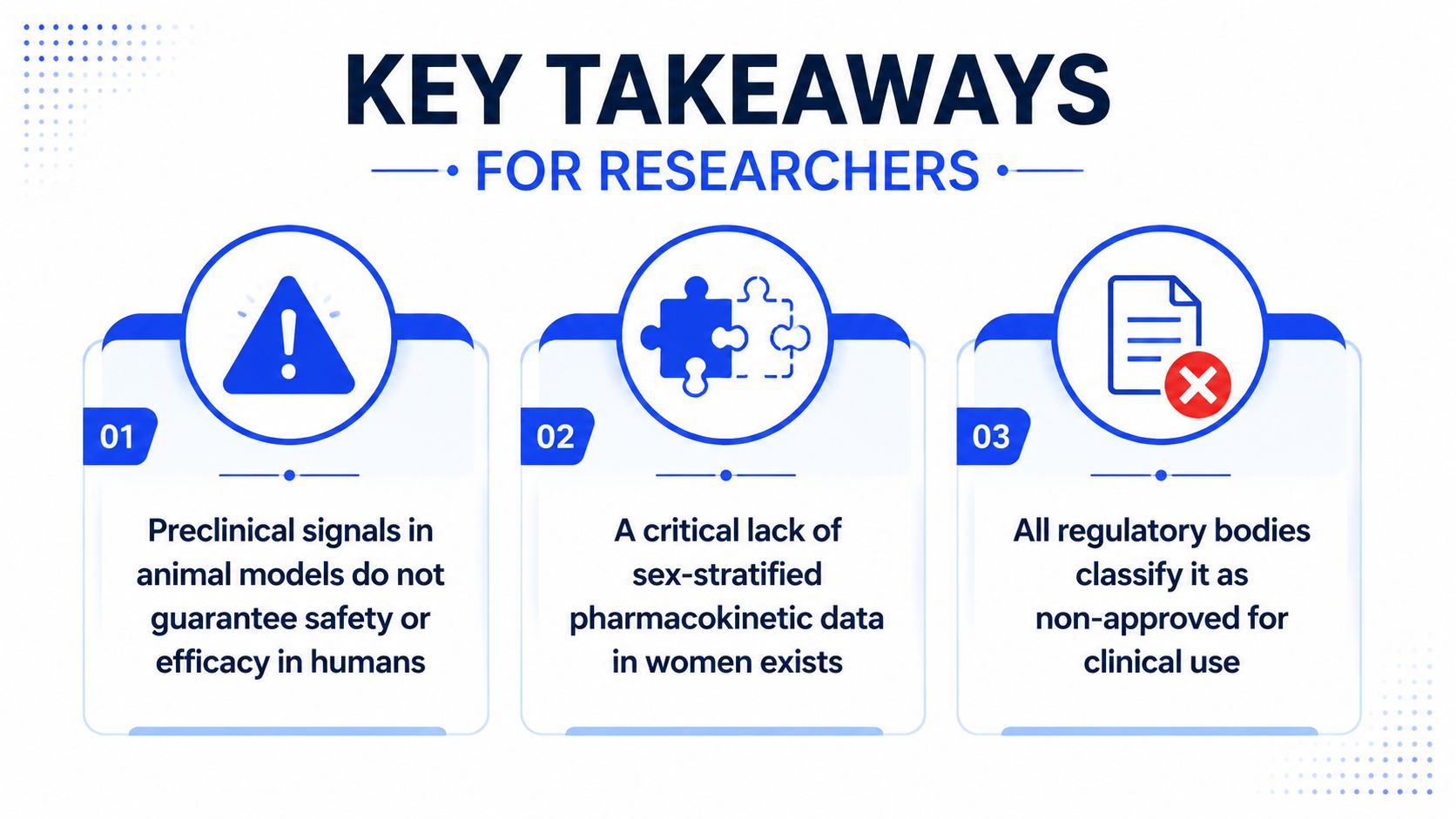
Researchers should define the unanswered question, select a route that matches it, use validated endpoints, and report female-specific outcomes rather than burying them in pooled analyses. The women-only evidence should anchor interpretation, while findings from male or animal studies remain indirect.
Procurement needs equivalent discipline. Require a lot-specific CoA, independent identity and purity testing, microbial and endotoxin documentation where relevant, and a documented chain of custody. Monitor peer-reviewed publications and clinical-trial registries for female-specific results instead of treating online protocols as evidence.
The current conclusion is straightforward: BPC-157 remains experimental and lacks approval as a therapy for women. Preclinical signals may justify investigation, while missing human data require restraint around benefits, dosing, stacks, fertility, pregnancy, lactation, and long-term safety.
Peptide Warehouse USA offers research-use-only BPC-157 products and related compounds with lot documentation, purity information, and microbial or endotoxin reports. Review the materials and research-use terms at Peptide Warehouse USA before selecting a supplier for a governed study.