No products in the cart.



If BPC-157 is associated with tissue repair, should anyone expect it to regrow hair?
That question sits at the center of the current interest in BPC-157 hair growth, and it also exposes the main analytical problem. Evidence for systemic or local healing does not automatically translate into evidence for follicle reactivation, reversal of androgen-driven miniaturization, or clinically meaningful regrowth in humans with alopecia.
BPC-157 entered this discussion through regeneration research rather than through hair-loss trials. It is a synthetic pentadecapeptide composed of 15 amino acids, first described in the 1990s. Its relevance to scalp and hair is therefore indirect. Researchers have inferred possible value from findings on wound repair, angiogenic signaling, and inflammatory modulation, then extended those observations to hair biology.
That extrapolation may be reasonable as a hypothesis. It is weak as proof.
A careful reading of the literature separates three different claims that are often blurred together: BPC-157 may support tissue healing in some experimental contexts, it may influence pathways that matter to the scalp environment, and it may directly increase human hair growth. The first claim has preclinical support. The second remains mechanistic speculation. The third has not been established by controlled human evidence.
This distinction matters because hair growth is not a generic repair endpoint. Follicles cycle through tightly regulated anagen, catagen, and telogen phases, and common hair-loss disorders involve specific pathophysiology such as androgen signaling, immune attack, fibrosis, or altered perifollicular microenvironments. A compound can improve healing without reversing any of those processes.
The useful question, then, is not whether BPC-157 sounds regenerative. It is whether the existing evidence supports a direct, reproducible effect on human hair outcomes. At present, that standard has not been met.
Why has BPC-157 become a hair-growth talking point when direct human evidence for hair regrowth is still sparse?
The pattern is familiar in regenerative research. A peptide shows interesting effects in wound healing, vascular signaling, or tissue repair, and those findings are then extended to hair biology before alopecia-specific evidence exists. BPC-157 fits that pattern closely. Its reputation comes from broader repair-related research, not from a mature body of human studies showing reliable follicle reactivation.
That distinction matters because hair loss is not a single endpoint. Scalp irritation, barrier disruption, post-procedural healing, perifollicular inflammation, and true terminal-hair regrowth are separate outcomes with different evidentiary standards. A compound could plausibly improve the local scalp environment without producing meaningful regrowth in androgenetic alopecia or other hair-loss disorders.
The current buzz persists because several ideas get merged into one claim:
Those shortcuts make BPC-157 sound further along than it is.
A more disciplined reading is less dramatic. The case for BPC-157 in hair research is largely inferential. If a peptide appears to support angiogenesis, tissue repair, or inflammatory control in non-hair models, one can argue that the scalp might benefit under certain conditions. That is a hypothesis. It is not the same thing as demonstrating that miniaturized follicles re-enter anagen, enlarge, and produce cosmetically relevant regrowth in humans.
This is also where commercial and aesthetic language can blur scientific categories. Clinics discussing regeneration, including areas adjacent to Face Studio skin correction, often frame tissue recovery in broad terms. For hair research, that framing needs tighter boundaries. Better healing is not a surrogate endpoint for better hair density.
The more useful question is narrower and more testable: Is BPC-157 mainly a systemic healing peptide being extrapolated into hair applications, or does it have direct human evidence on alopecia endpoints?
At present, the first interpretation is easier to defend. The second remains unproven.
BPC-157 remains interesting for hair research because the underlying biology isn't random. There is a coherent mechanistic argument for why it could matter to the scalp environment.
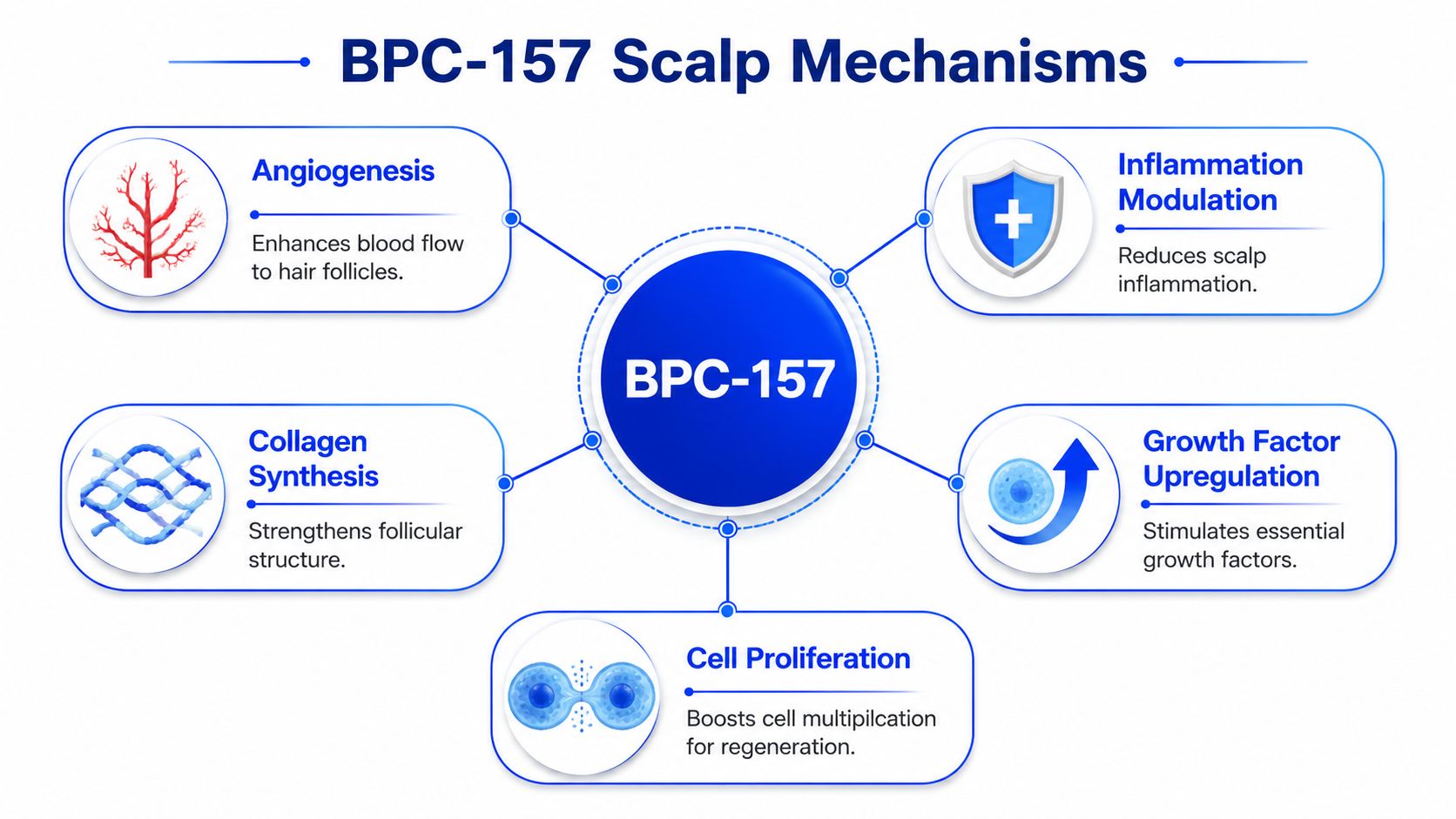
A useful analogy is soil versus seed. A healthier scalp can improve the conditions around the follicle, just as better soil improves the environment around a plant. But healthy soil doesn't guarantee that a dormant seed will sprout.
That is the core limitation of many BPC-157 hair growth claims. They often describe a better environment and implicitly treat that as equivalent to follicle reactivation.
The mechanistic case rests on a few linked ideas, summarized in a clinician-facing discussion of how peptides may support hair growth and prevent hair loss.
BPC-157 is reported to upregulate VEGF and activate VEGFR2 signaling, which could increase angiogenesis and microvascular supply around follicles. For hair biology, that matters because follicles are metabolically active structures with high dependence on local nutrient and oxygen delivery.
If this mechanism translates meaningfully to scalp tissue, the peptide could support a more permissive perifollicular environment.
The same mechanistic framing proposes that BPC-157's anti-inflammatory effects may reduce cytokine-driven scalp inflammation that can suppress anagen entry. This is one of the more plausible routes by which a healing peptide could matter indirectly to hair.
That does not mean it reverses established follicle miniaturization. It means it may reduce one class of local interference.
Hair follicles sit inside a matrix of connective tissue, signaling molecules, and local repair processes. If a peptide supports tissue repair more broadly, investigators may reasonably ask whether it helps maintain the structures that surround and support follicles.
That doesn't prove direct follicular stimulation. It does explain why the hypothesis keeps resurfacing.
BPC-157 has a plausible mechanistic rationale for hair-regrowth research, but the source base remains mostly extrapolated from tissue-repair biology and preclinical work rather than large controlled alopecia trials.
The key scientific boundary is simple. Mechanism is not outcome.
A peptide can plausibly improve circulation, reduce local inflammatory signaling, and support repair without demonstrating measurable human changes in hair count, density, shaft caliber, or percentage regrowth. Until those endpoints are shown under controlled conditions, BPC-157 hair growth remains a biologically interesting hypothesis.
Why do discussions of BPC-157 and hair growth keep returning to injury repair studies rather than hair studies themselves? Because the strongest published signal for this peptide comes from general regeneration models, and that is a narrower foundation than many hair-related claims imply.
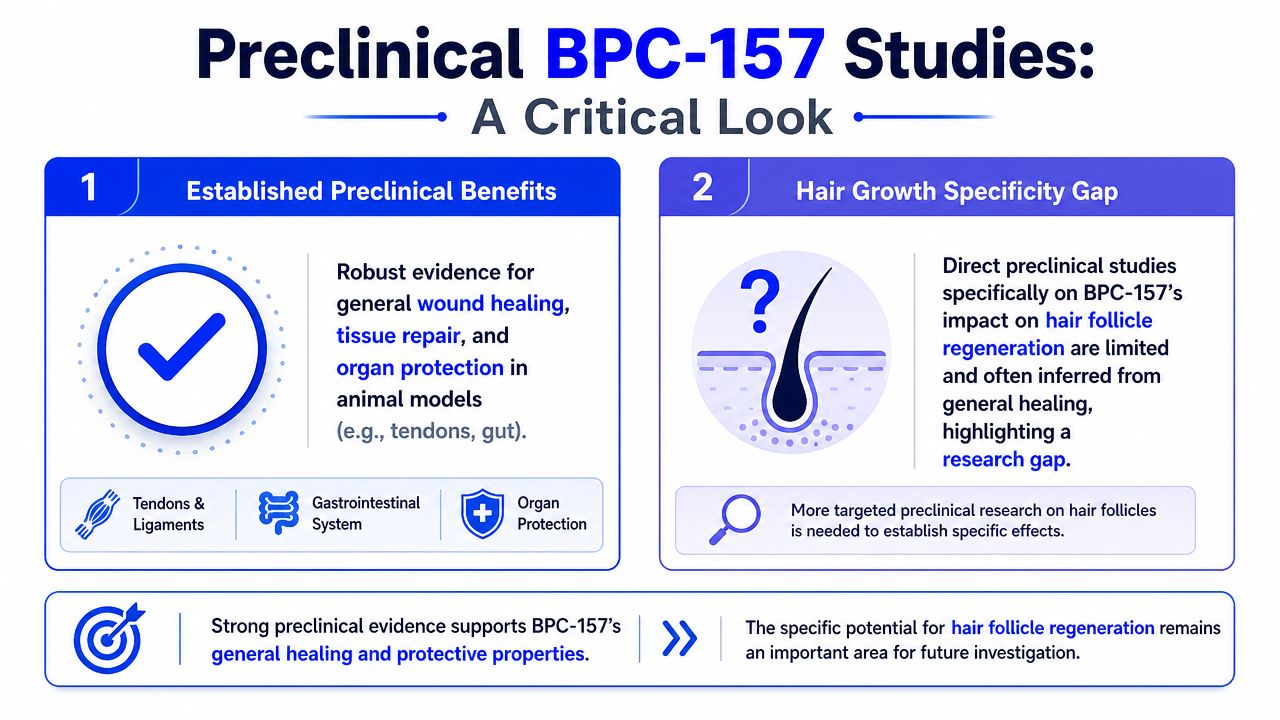
The relevant preclinical work places BPC-157 in a regeneration context. It is studied for tissue repair, angiogenic signaling, inflammatory modulation, and recovery after injury. Those domains can matter to scalp biology, but they do not answer the central trichology question: does the peptide increase human hair count, density, shaft diameter, or durable regrowth in defined alopecia populations?
That distinction should stay explicit throughout any evidence review.
| Evidence area | What it may support | What it does not prove |
|---|---|---|
| General wound-healing models | Repair signaling, tissue recovery, vascular responses | Human hair regrowth |
| Scalp-repair extrapolation | Better local conditions around follicles after injury or inflammation | Reversal of androgenetic or other alopecias |
| Hair-specific clinical research | Measurable efficacy on hair endpoints | This layer is still missing for BPC-157 |
A second issue is endpoint mismatch. Regeneration studies often measure closure, tensile recovery, histology, or local tissue condition over relatively short intervals. Hair studies need different outcomes and longer observation. A scalp that appears less inflamed or better perfused is not necessarily a scalp producing thicker terminal hairs months later.
The inferential chain is straightforward. A repair effect is observed in non-follicular tissue. That effect is projected onto the scalp microenvironment. The projected microenvironmental benefit is then translated into visible regrowth.
Only the first step is supported directly by preclinical regeneration work. The second step is biologically plausible. The third step requires hair-specific evidence, ideally in controlled human studies.
This is why BPC-157 should be framed as a candidate for scalp recovery questions, especially where tissue injury or inflammatory disruption is part of the problem, rather than as an established hair-growth agent. The distinction matters because follicles are not generic healing units. They are cycling mini-organs with specialized signaling requirements, and favorable wound-healing biology does not automatically restart or normalize that program.
For readers who work broadly across regenerative aesthetics, the comparison with Face Studio skin correction is useful at a conceptual level. Tissue quality can improve without producing the organ-specific functional outcome people want. In hair research, that means improved scalp condition could be real and still fall short of clinically meaningful regrowth.
Preclinical repair studies justify further testing. They do not establish efficacy for human hair restoration.
The non-obvious conclusion is that positive regeneration data may still overstate the case for hair if the measured benefit sits upstream of the follicle. Better healing, less irritation, or improved local support could matter in selected settings, but none of those findings should be treated as direct evidence that BPC-157 reverses established hair loss in humans.
The largest problem isn't that BPC-157 lacks an appealing mechanism. The problem is that the evidence chain breaks where decision-making matters: human alopecia data.
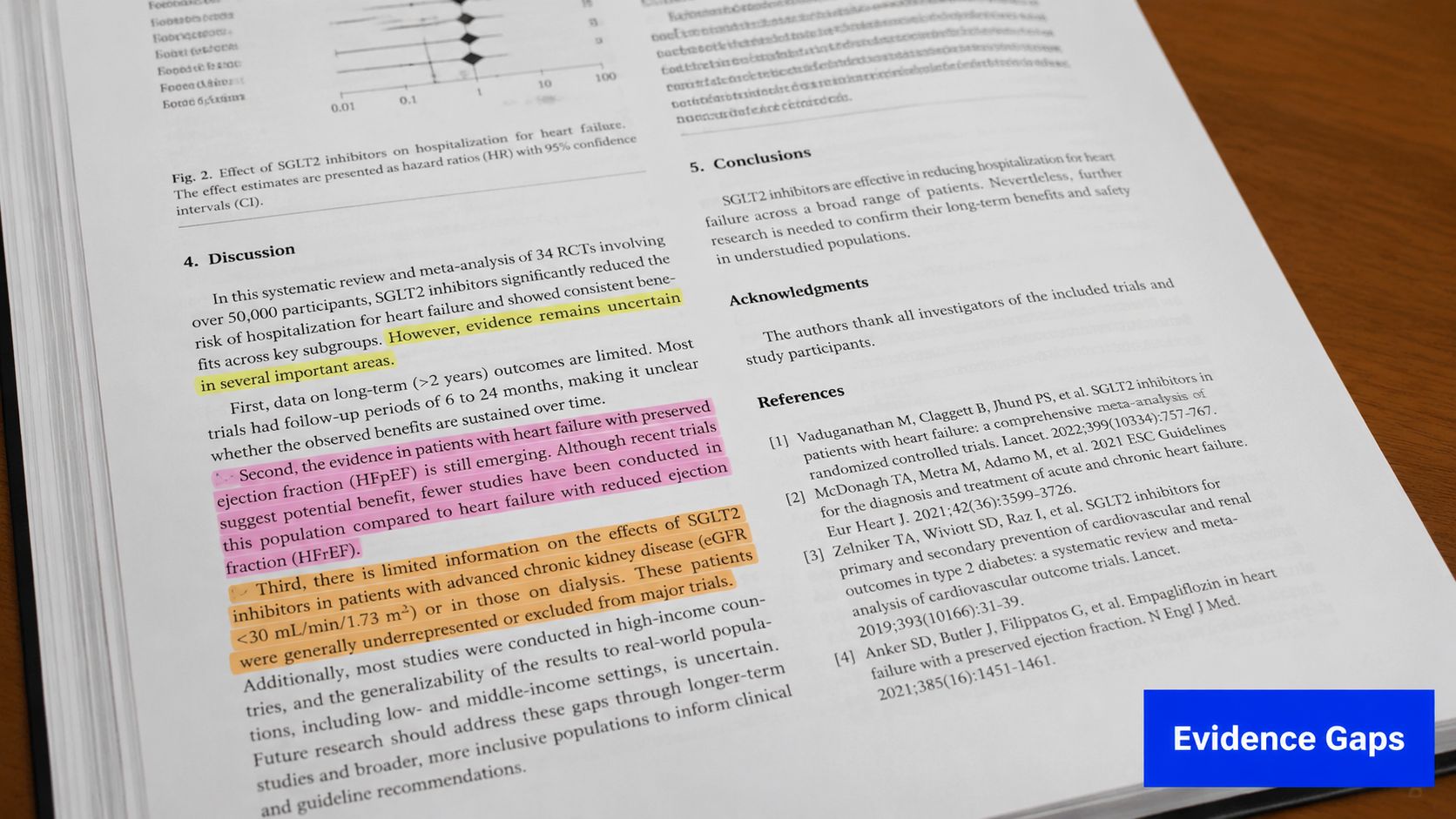
A clinician-focused review on peptide therapy and BPC-157 puts the unresolved issue directly: BPC-157 appears promising for tissue healing, but clinical evidence specific to hair regrowth remains limited. Broader academic reviews from the same period highlight other peptides and animal-model findings rather than BPC-157 human trials.
Hair research isn't just about before-and-after impressions. It needs controlled design and objective endpoints.
At minimum, serious evidence would need:
Without that structure, it's hard to distinguish true regrowth from reduced breakage, altered shedding patterns, scalp-condition improvement, or ordinary cycle variation.
The unresolved question isn't merely whether BPC-157 "helps." It's whether the peptide works mainly for scalp healing or whether it can independently produce clinically meaningful regrowth in humans.
That distinction is where many articles fail.
The missing evidence isn't a minor technicality. It is the difference between a regenerative hypothesis and a proven hair-loss intervention.
For now, BPC-157 sits in the first category.
The safety conversation around BPC-157 often gets flattened into slogans. That's not useful. The honest view is narrower and more conditional.
Most discussion of BPC-157 safety is inferred from preclinical and investigational contexts. That allows only modest conclusions. A researcher can say the compound has drawn attention partly because it has been studied across tissue-repair settings without being framed primarily as a high-toxicity molecule in that literature.
But that does not equal thorough human safety characterization for hair-related use.
Three limits matter:
BPC-157 should be treated as an investigational research compound, not as an approved hair-loss therapy. That status has practical consequences for procurement, study design, labeling, and communication.
Researchers and informed buyers should verify at least these points before handling any peptide product:
Use designation
The material should be clearly sold for research, laboratory, or analytical use only.
Documentation
Batch-level paperwork should identify the material and describe testing performed.
Boundary setting
Product pages and suppliers should avoid blurring research supply with approved clinical treatment.
A compliant supplier also needs to communicate what the material is not. It isn't a substitute for regulatory approval, and it isn't proof of efficacy in hair restoration.
Research boundary: A clean safety narrative without corresponding human efficacy data can create more confidence than the evidence supports.
That is especially important in a topic like BPC-157 hair growth, where mechanistic plausibility already makes overinterpretation easy.
How much of the discussion around BPC-157 and hair reflects peptide biology, and how much reflects inconsistent material quality? In a literature base already limited for hair-specific outcomes, sourcing errors can create false positives, false negatives, and results that no one can reproduce.
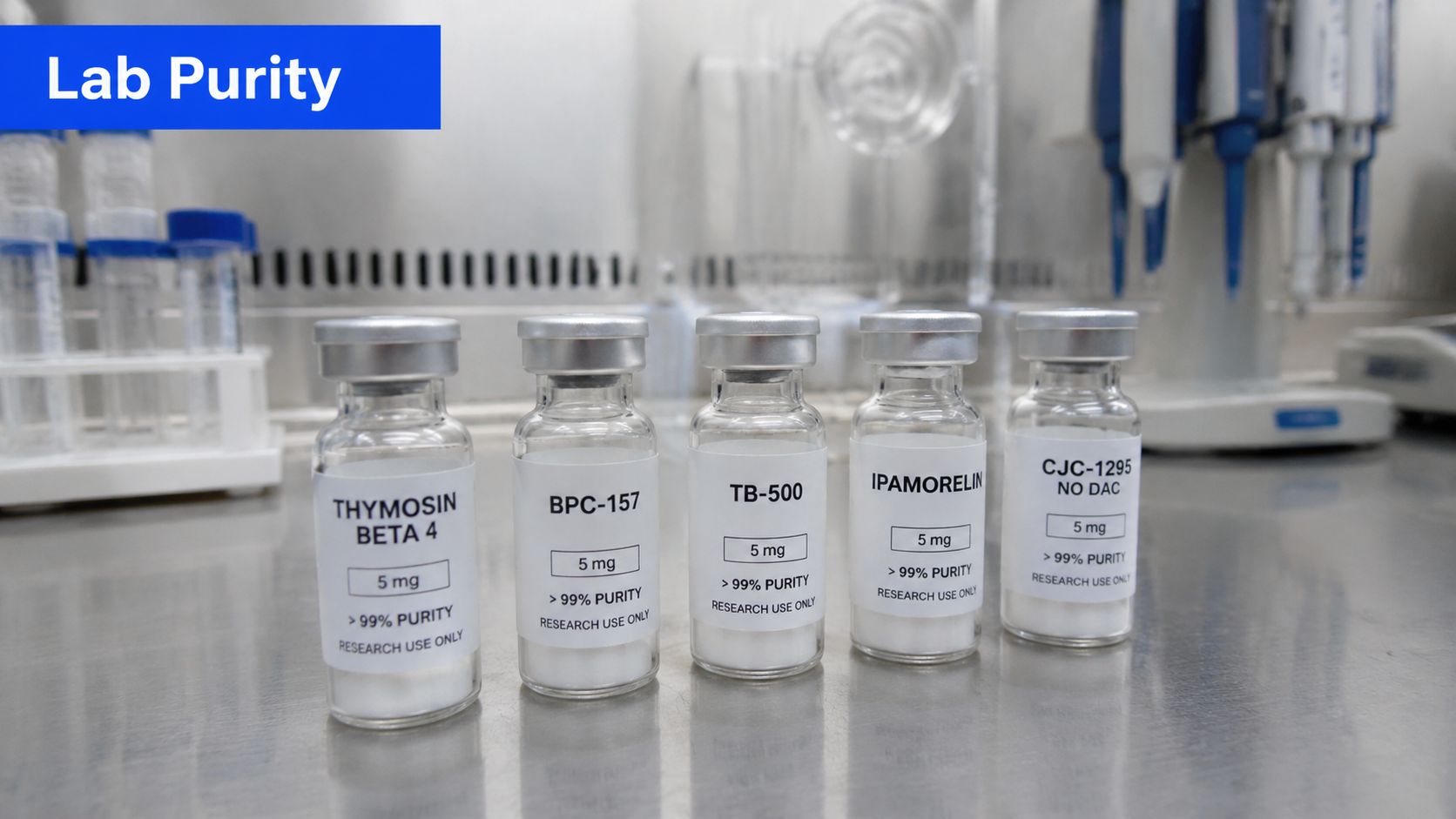
For BPC-157, purity is only one variable. Identity, batch traceability, contamination testing, and storage controls all affect whether an observed scalp or skin response can be interpreted as a peptide effect rather than a procurement artifact.
Researchers should prioritize:
A technical explainer on accurate peptide dosage calculation is useful here for a narrow reason. Dose calculations only retain meaning if the starting material has been characterized correctly. If identity or purity is uncertain, concentration math becomes precise in form but weak in interpretive value.
This matters more for BPC-157 hair research than it might for a mature drug literature. The central question is already unsettled. BPC-157 has broader associations with healing and repair in preclinical work, but claims about direct human hair regrowth remain largely extrapolated. Under those conditions, weak sourcing standards can make a speculative signal look stronger than it is.
Peptide Warehouse USA states that it supplies high-purity research peptides for laboratory, analytical, and preclinical applications, with lot-level documentation that includes COAs, microbial and endotoxin reports, and stated purity levels. That kind of documentation does not validate hair-growth efficacy. It does reduce one source of uncertainty in experimental design.
The distinction is important. High-quality material can improve the credibility of a negative result as well as a positive one.
| Procurement issue | Research consequence |
|---|---|
| Unverified identity | The tested compound may not be BPC-157 |
| Variable purity | Apparent treatment effects may reflect batch variation |
| Poor storage control | Degradation can be mistaken for biological inactivity |
| Missing batch documentation | Independent replication becomes harder |
In early-stage peptide research, sourcing is part of the method, not a purchasing detail. For anyone testing BPC-157 in scalp, skin, or follicle-adjacent models, cleaner procurement does not close the human evidence gap. It does make that gap easier to measure accurately.
The evidence on BPC-157 hair growth is neither dismissible nor mature. That's the most accurate summary.
There is a real mechanistic basis for interest. A peptide associated with angiogenesis-related signaling, inflammation control, and tissue repair could plausibly improve aspects of the scalp environment. That makes BPC-157 relevant to regeneration-oriented hair research.
But the current case remains mostly extrapolated.
The strongest support comes from broader healing biology and preclinical reasoning. The weakest point is the one that matters most for clinical confidence: controlled human evidence showing meaningful effects on hair-specific outcomes. Until that exists, BPC-157 shouldn't be described as an established hair-regrowth solution.
The more interesting scientific path forward isn't more repetition of mechanism. It's better study design.
Future work should separate at least three questions:
That framework could finally tell us whether BPC-157 belongs in hair research as a niche supportive peptide for scalp condition, or as something more direct. Right now, the field doesn't know.
Researchers who want to explore peptide biology without blurring hype and evidence can learn more about Peptide Warehouse USA and review its research-use documentation, product records, and available compound options before designing analytical, preclinical, or laboratory work.