No products in the cart.



Most advice about a BPC-157 order starts with product format, price, or shipping speed. That puts the cart before the compliance check. For a research lab, the first question isn't what to buy. It's whether the intended use, supplier documentation, and institutional rules support placing the order at all.
BPC-157 remains investigational, and a Certificate of Analysis (COA) can't turn it into an approved treatment. This guide walks through a practical procurement workflow, from documenting laboratory purpose to checking the lot-specific paperwork, receiving the shipment, and preserving traceability.
A BPC-157 order isn't just a checkout task. BPC-157 has no FDA-approved indication for any medical condition, and a 2025 systematic review reported that the available evidence consisted of 35 preclinical studies and one retrospective human study. That evidence does not establish a human treatment protocol or justify presenting a research product as a proven therapy. (Systematic review of BPC-157 evidence)
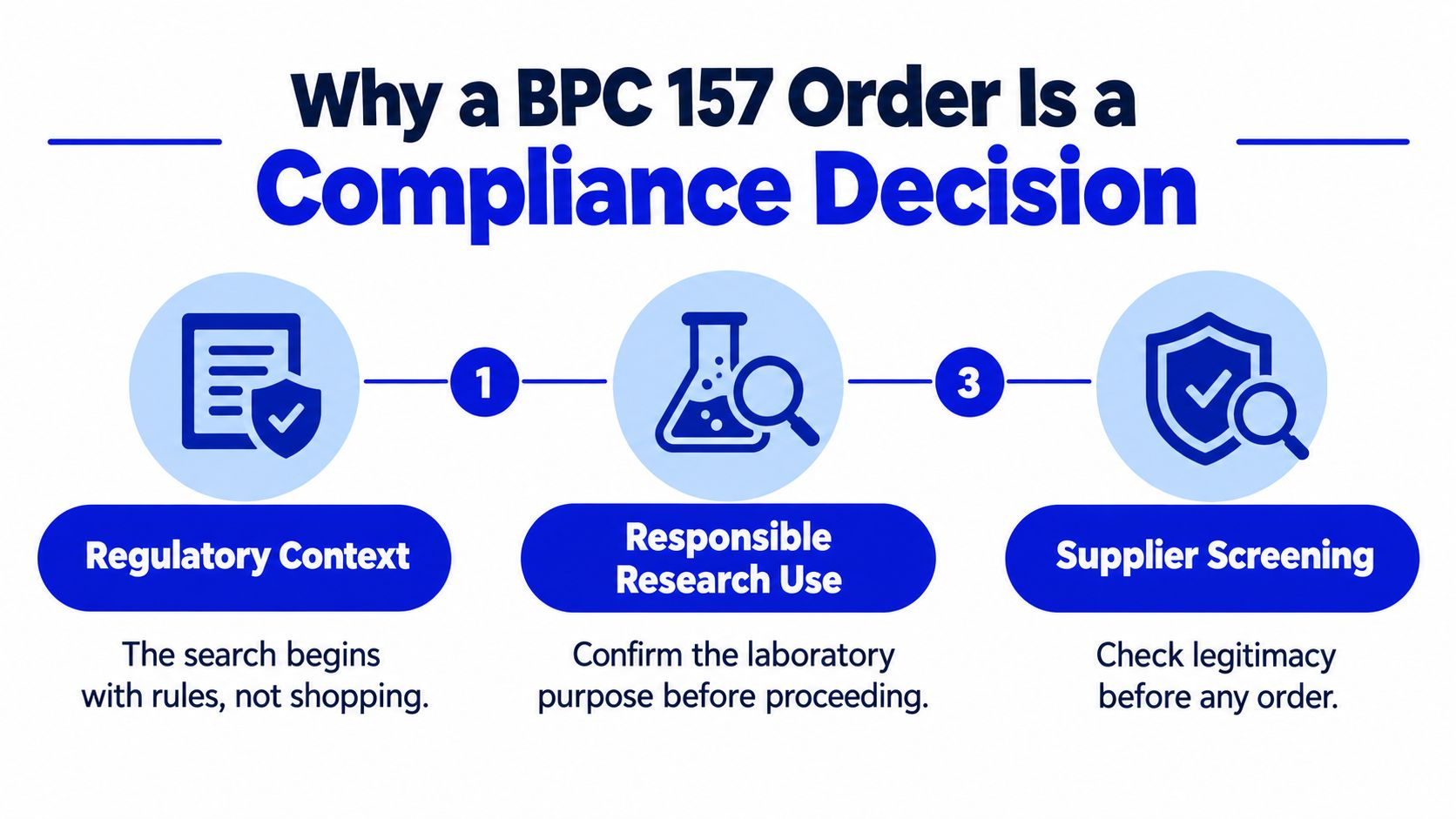
“Research use only” isn't a safety or efficacy claim. It means the buyer should have a legitimate laboratory, analytical, or preclinical purpose and handle the material under the rules that apply to that work. Purchasing records and product descriptions should avoid language suggesting dosing, treatment, injury repair, weight loss, or other human health outcomes.
The distinction matters because documentation of product characteristics is not evidence of clinical benefit. A COA may identify a tested lot and report analytical findings such as purity, but it can't establish that BPC-157 works in people, is safe for human use, or has regulatory approval. FDA materials also state that BPC-157 isn't an ingredient in an FDA-approved drug and lacks sufficient clinical safety information to characterize its safety profile. (FDA information on BPC-157)
Before comparing suppliers, write down why the lab needs the material, who is responsible for the work, and which internal approvals apply. Then screen the supplier's documentation and shipping terms before payment. The practical sequence is straightforward: establish purpose and approvals, verify lot-level records, confirm handling and delivery conditions, and document receipt. That workflow improves traceability, but it can't establish clinical effectiveness or human safety.
Start with your institution, not a supplier's checkout page. A lab manager or responsible researcher should be able to explain what work requires the material and identify the records that authorize procurement. The exact paperwork depends on the institution and jurisdiction, so confirm local requirements rather than assuming that a supplier's research-use disclaimer covers them.
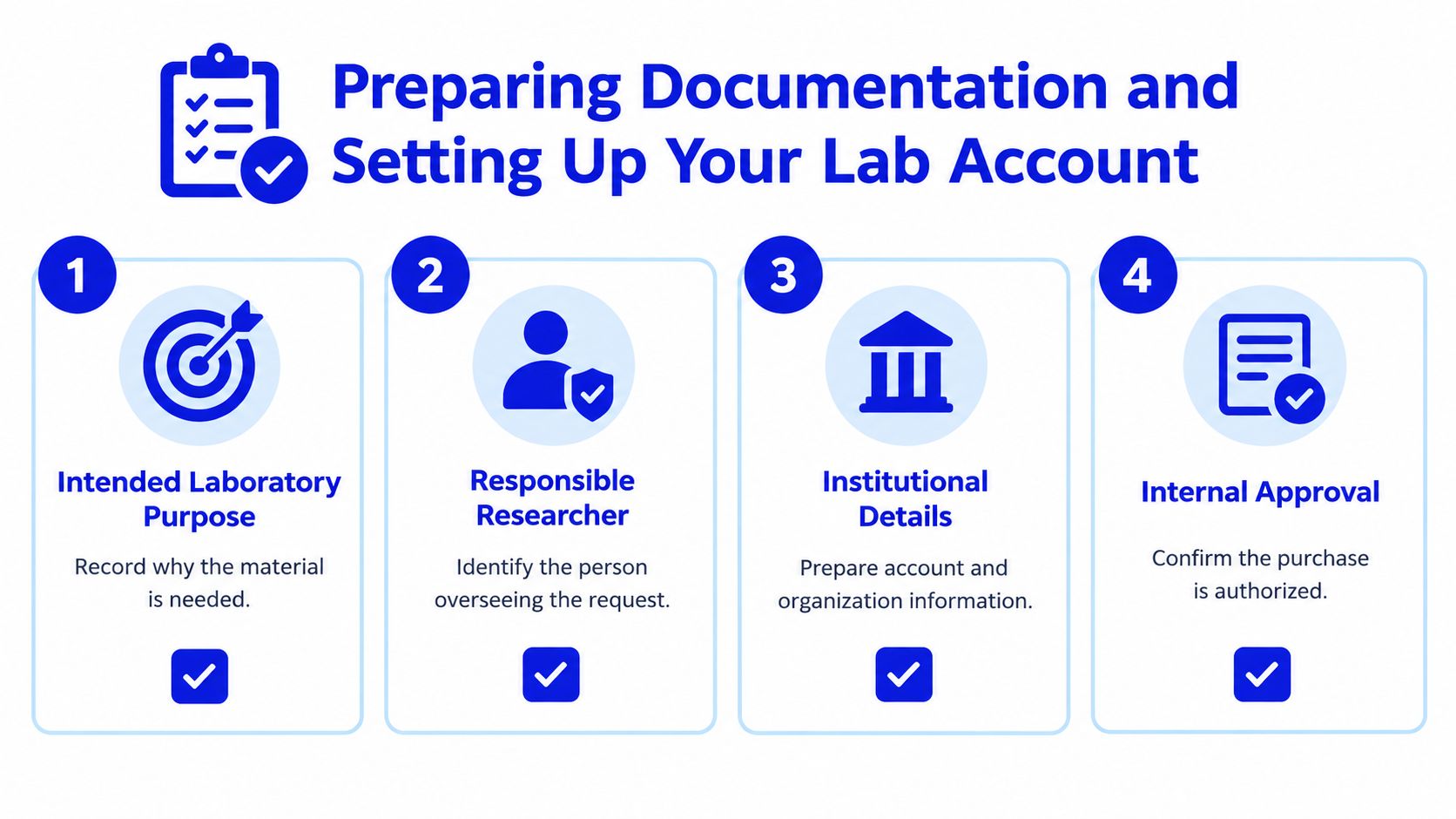
Record the intended laboratory purpose, the responsible researcher, the institutional details used for purchasing, and the approval that authorizes the request. Before placing an order, check whether the work triggers institutional biosafety review, chemical-procurement procedures, import controls, or disposal rules. These checks help prevent a package from arriving before the receiving lab is cleared to accept and manage it.
Use this checklist before requesting a quote:
Use an accurate institutional or laboratory shipping address, and check that the supplier's age gate and research-use attestation fit your organization's procurement process. Before payment, confirm whether the supplier can provide order tracking and respond to documentation requests. Keep the quote, approval record, invoice, and supplier correspondence together so the purchasing purpose remains clear from request through receipt.
A short video can help orient staff to the account setup process, but it shouldn't replace the lab's own approval checks.
The right format depends on the laboratory's approved protocol and its validated handling procedures, not on whichever listing looks most convenient. Compare lyophilized powder and liquid presentation against the requirements of your work, then check whether the supplier's documentation covers the actual lot being offered. A supplier's stated purity figure is only one element of that review.
| Factor | What to Look For | Why It Matters |
|---|---|---|
| Product format | Lyophilized powder or liquid presentation, described clearly | The form must fit the lab's approved handling and analytical workflow |
| Available size | A listed vial size that matches the documented research need | Clear specifications support controlled purchasing and inventory records |
| Lot documentation | COA identifies the relevant lot and analytical method | A generic document can't establish the characteristics of the material delivered |
| Microbial and endotoxin testing | Results or reports tied to the lot | Purity alone doesn't answer these separate quality questions |
| Shipping terms | Dispatch, tracking, and handling conditions are stated | The lab needs to plan receipt and maintain traceability |
Ask whether the COA names the lot number that will ship, which analytical method was used, and whether microbial and endotoxin results are available for that lot. Confirm the supplier's manufacturing location and whether batch production and testing practices are described clearly. A direct, documented supply chain can make it easier for the receiving lab to trace the order, but a supplier's claims still need to be checked against the records it provides.
For broader procurement processes, effective vendor management strategies can help teams standardize supplier qualification and documentation review. Apply that discipline here: verify claims before payment and keep the supporting records with the purchase file.
A COA is useful when it is specific to the material being purchased. It may document identity, purity, batch characteristics, and reported microbial or endotoxin results. It doesn't establish clinical efficacy, regulatory approval, long-term stability, or the absence of aggregation, and a purity result alone doesn't demonstrate sterility or suitability for a biological experiment.

Before paying, compare the COA's lot number with the lot the supplier says will ship. Review the document date, named analytical method, reported purity, microbial findings, endotoxin results, and storage recommendation. If the COA doesn't identify the lot, appears generic, or doesn't match the supplier's listing, ask for clarification before proceeding.
Request documentation that lets your lab assess the actual batch, rather than relying on a product-page statement. A stated high-purity value can't answer whether the peptide identity was confirmed appropriately, whether microbial and endotoxin controls were assessed, or whether the storage history supports your planned research use.
The human evidence also shows why a COA mustn't be confused with proof of efficacy. A frequently cited retrospective report described 12 people with chronic knee pain, of whom 7 reported subjective relief lasting longer than six months; this was an uncontrolled observation, not a success rate or a prediction for someone purchasing BPC-157. (Retrospective knee-pain report)
That report can't validate a supplier's product or support a human-use claim. For procurement, focus on what the records establish: the identity and documented characteristics of a particular lot. Set aside marketing language that uses purity, anecdotes, or preclinical findings to imply a proven human benefit.
Once the purpose, approvals, and batch documentation check out, align payment records with the same research description used in the procurement file. Research institutions may use purchase orders or institutional billing; whatever method applies, keep the quote and invoice with the approval and supplier records. Confirm shipping availability and handling terms before checkout, especially when the order crosses borders or the product has specific storage requirements.
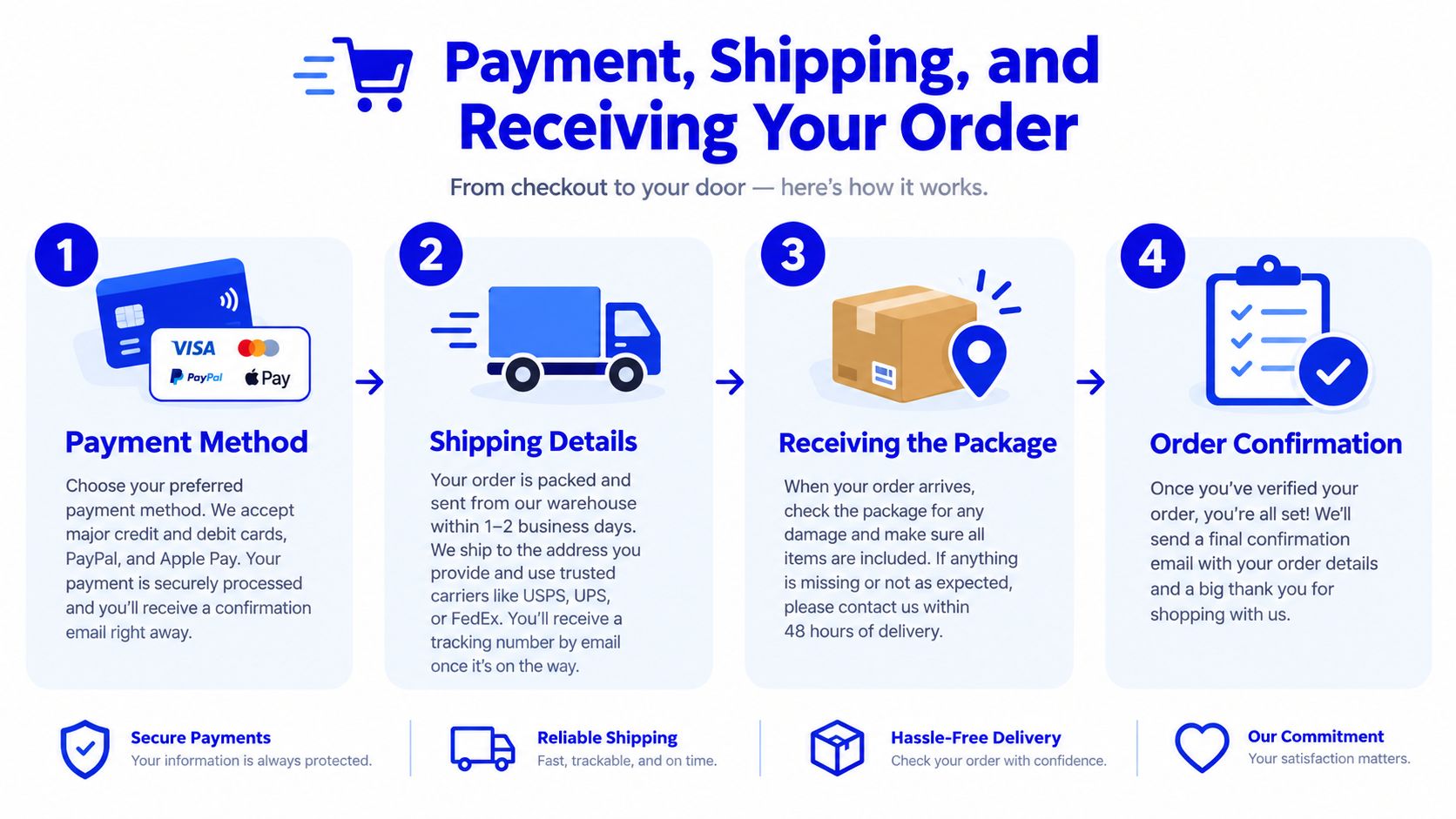
Ask the supplier whether delivery is domestic or international, what dispatch expectations apply, whether tracking is provided, and how the product is shipped under its stated storage conditions. The lab should know who will receive the package and how to document any delay or handling concern. Don't assume that the shipping method is appropriate just because an order can be placed online.
At delivery, inspect the package and record the result:
Receiving rule: Don't put the material into research inventory until the package, lot number, and accompanying records have been checked and logged.
If anything doesn't match, hold the material in accordance with institutional procedures and contact the supplier for documentation or instructions before use.
After receipt, follow the supplier's stated storage conditions and the lab's approved handling procedure. For lyophilized research peptides, avoid substituting a generic rule of thumb for the conditions provided with the specific product. The lab should also control access, label inventory clearly, and retain the records that connect the material to its lot and receipt.
Research chemical returns may be limited once a lot has been opened or its shipping conditions have been interrupted. Read the supplier's return policy before payment, including what to do if the shipment arrives damaged or the paperwork doesn't match. That's easier to resolve in advance than after the package has entered the lab's chain of custody.
Keep the compliance boundary intact after delivery. Purchasing records should describe the research purpose, not medical claims, dosing, or treatment outcomes. Institutional biosafety, procurement, import, and disposal rules continue to apply when the package is in the lab.
Before placing the order, confirm that the intended use is authorized, the lot-level COA matches the offered material, and the shipping, storage, and return terms are acceptable. Proceed only when the documentation is complete and the receiving lab is prepared to preserve traceability.
Peptide Warehouse USA offers BPC-157 and other research compounds with lot-level documentation, including COAs and microbial and endotoxin reports, for laboratory, analytical, and preclinical use only. Review the available product information and documentation before you order, and visit Peptide Warehouse USA to explore its research supply options.