No products in the cart.



You’re ready to buy tirzepatide peptide for a study, but the search results don’t make the decision easier. Product pages blur together. Some vendors look clinical, some look consumer-facing, and some mix research language with wellness marketing in ways that should make any serious lab stop and look twice.
That caution is justified. Tirzepatide drew intense attention because of unusually strong clinical outcomes, including a mean body-weight reduction of 22.5% at the 15 mg dose at 72 weeks in SURMOUNT-1 according to the NCBI clinical summary. When a compound becomes that visible, low-quality listings follow quickly.
A compliant procurement process has to do three things well. It has to verify the supplier, preserve the chain of documentation, and protect sample integrity after delivery. If you’re evaluating vendors for preclinical, analytical, or laboratory use, those are the checks that matter.
A new vial arrives, the label looks clean, and the product page sounded credible. Then the paperwork does not match the lot number, purity is listed without a test date, and no one on the supplier side can answer a basic traceability question. That is how weak procurement decisions get into a research program.
Tirzepatide requires a tighter sourcing standard than an ordinary catalog reagent. Demand is high, seller quality varies, and product pages often reuse the same research language while offering very different levels of documentation. The practical question is not whether a vendor can ship a vial. It is whether the material can be identified, traced, stored, and defended in your records if results are questioned later.
That is the standard I use in peptide procurement. Price matters, but only after authenticity, lot control, and document quality are settled.
Before comparing vendors, run a short screen that filters out sellers built for impulse purchases rather than reproducible lab work.
Practical rule: If checkout is simple but lot verification is difficult, the supplier is not organized around research controls.
Tirzepatide drew serious attention because its research relevance is unusually high. That visibility has produced a noisy market. Legitimate research suppliers now sit alongside relabelers, consumer-facing sellers, and listings that borrow technical wording without supplying the records a lab needs.
That creates a specific procurement problem. Two listings can look similar at first glance and differ sharply where it counts: lot traceability, analytical support, storage controls, and response quality when you ask for primary documentation.
In practice, buying tirzepatide peptide responsibly starts with the same habits used in ensuring medical device safety. Verify the chain of documentation first. Confirm that the vial, label, certificate, and seller records point to the same material. If those pieces do not align, do not try to rationalize the purchase.
You are not only buying a peptide. You are deciding whether the material can support reproducibility, internal audit readiness, and defensible downstream interpretation.
The hardest part of this market isn’t finding a listing. It’s separating a true research supplier from a seller using research terminology as window dressing. That problem has grown because consumer-facing sellers and compounded-therapy vendors also market “tirzepatide,” which blurs the boundary between prescription drugs and research chemicals. The AdipoGen product reference makes that point clearly and also highlights why lot-level documentation and purity verification matter.
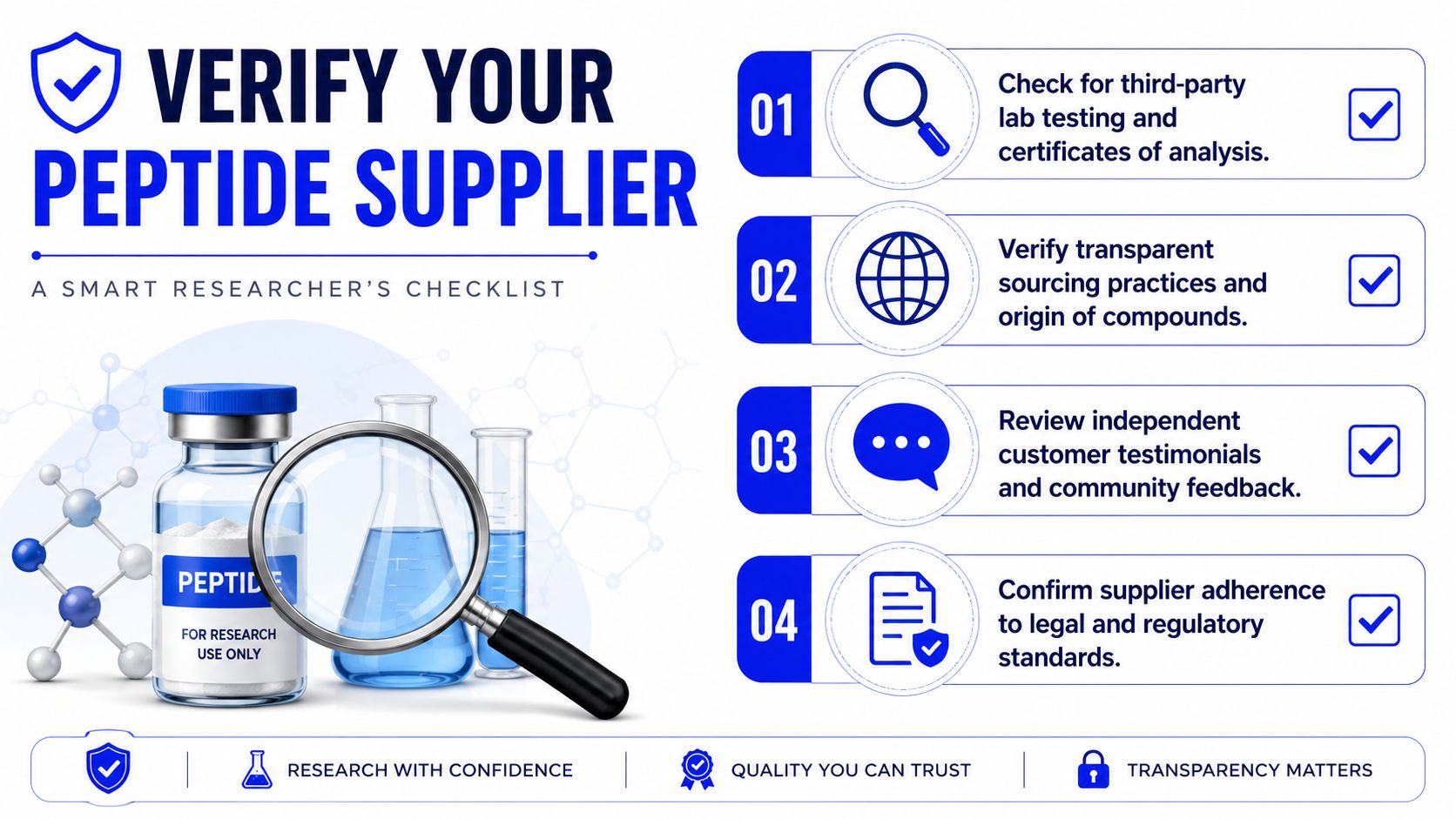
A serious supplier should be able to support three basic questions.
| Checkpoint | What you should look for | Why it matters |
|---|---|---|
| Identity | Mass spectrometry or equivalent identity confirmation | Confirms the material matches the claimed peptide |
| Purity | A stated purity result tied to the lot | Helps you assess consistency for analytical and preclinical work |
| Traceability | A unique lot number that matches the product paperwork | Keeps the vial, records, and internal inventory aligned |
The key point is matching. If the product page shows one lot, the vial shows another, and the COA shows no lot at all, your documentation chain is already weak.
Third-party testing matters more than house-only claims. First-party data may still be useful, but independent documentation gives procurement staff and investigators a cleaner basis for acceptance. That same mindset shows up in adjacent quality disciplines such as ensuring medical device safety, where traceable records and verification practices matter because downstream use depends on them.
Documentation should let another person in your lab reconstruct what was purchased, when it was received, and which batch entered which project.
Many bad listings tell on themselves before the order is placed.
A clean ordering experience is useful, but clarity matters more than polish. A compliant supplier should show the research-use designation, explain how batch documentation is handled, and make support reachable before you place the order.
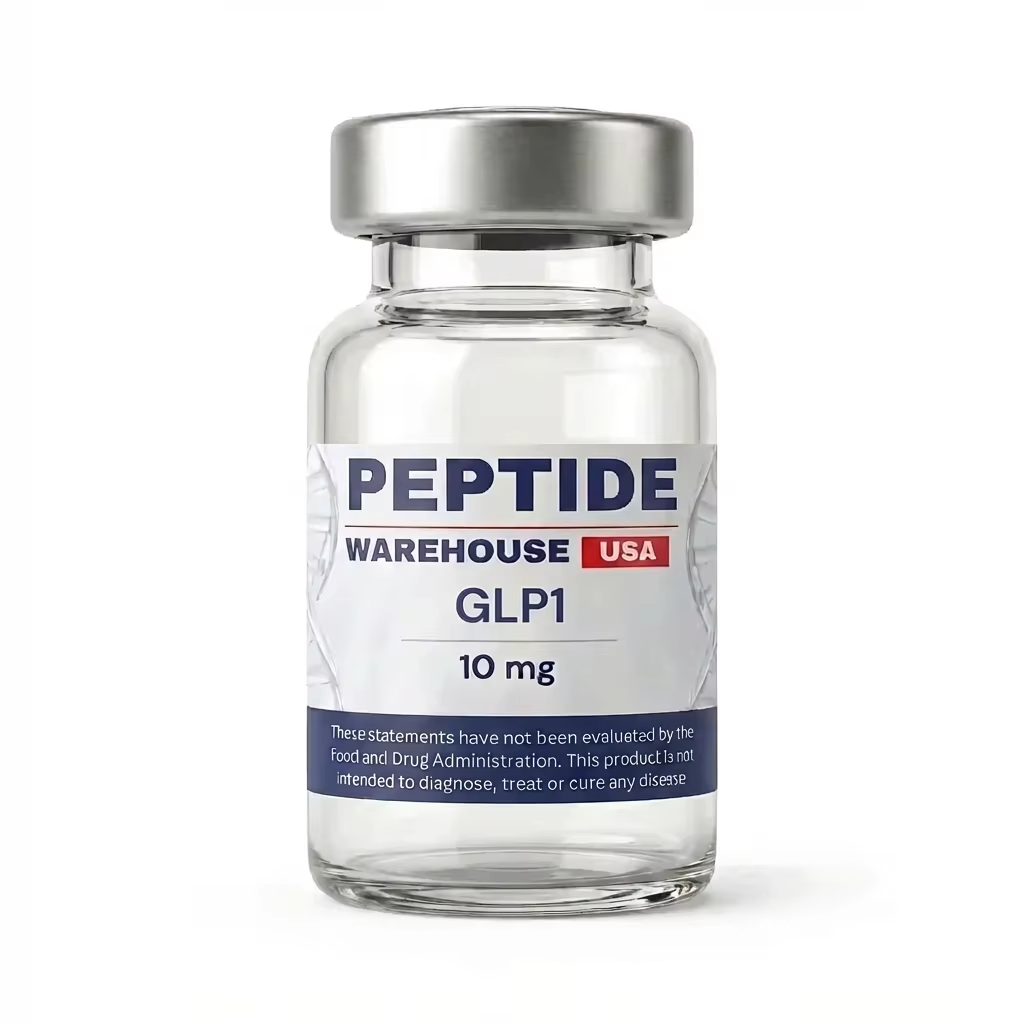
This is also where one practical difference among vendors shows up. Some suppliers list a peptide and price. Others, including Peptide Warehouse USA, present batch-supported research products with account management and documentation workflows that fit routine lab procurement more naturally. That doesn’t replace your own review, but it does make review possible.
If you can’t verify authenticity before checkout, don’t assume support will solve it after payment.
A compliant tirzepatide order starts before checkout. The purchasing record needs to stand on its own months later, when someone asks which lot entered a study, who approved the spend, or why a batch was accepted.
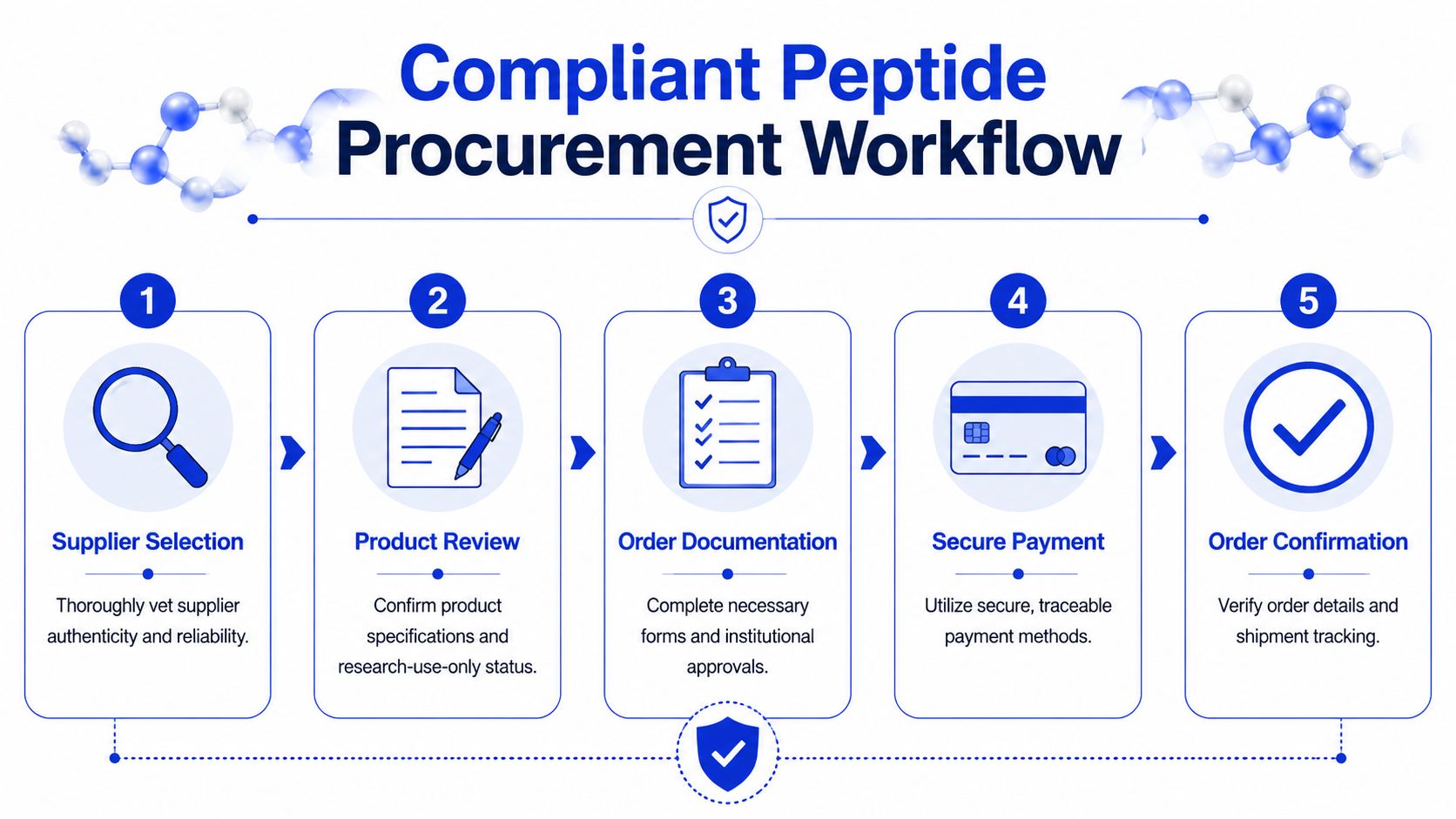
Use a named lab or institutional account instead of guest checkout. That single choice improves traceability for invoices, shipment notices, support correspondence, and any later dispute about what was ordered.
I treat peptide purchasing the same way I treat controlled reagent intake. If the order cannot be reconstructed from saved records, the material creates avoidable risk before it ever reaches the bench.
A workable procurement sequence is straightforward:
That process is not bureaucracy for its own sake. It prevents informal ordering habits from breaking chain of custody later.
Read the listing the way you would read a reagent specification sheet. Product name, concentration or fill amount, physical form, stated purity, storage language, and lot reference all need to align with what your protocol can support.
Form matters. If you are ordering lyophilized powder, decide in advance who will receive it, how it will be logged, and whether your study requires reconstitution at all. Presentation size matters too. Larger vials may lower cost per milligram, but they also increase the chance of repeated handling, relabeling, or extra freeze-thaw exposure after receipt.
That trade-off is practical, not theoretical. Procurement should support the study design, not force the bench team to improvise around packaging decisions.
Before submitting payment, verify four things your records should show clearly:
One more check is worth adding. Make sure the shipping name, billing entity, and receiving contact all match your lab’s actual workflow. Many ordering problems are not chemistry problems. They start with split records, personal email addresses, or a package sent to a location that cannot document receipt properly.
If a supplier such as Peptide Warehouse USA provides account-based ordering and batch-linked documentation access, that can reduce administrative friction. It does not replace internal review. It gives your lab a cleaner paper trail to review and retain.
Submit the order only after the documentation path, payment path, and receiving path are all clear. That is how you keep procurement defensible and study records reproducible.
Shipment received doesn’t mean material accepted. The receiving bench is where procurement becomes inventory control, and a surprising number of problems can still be caught at this stage.
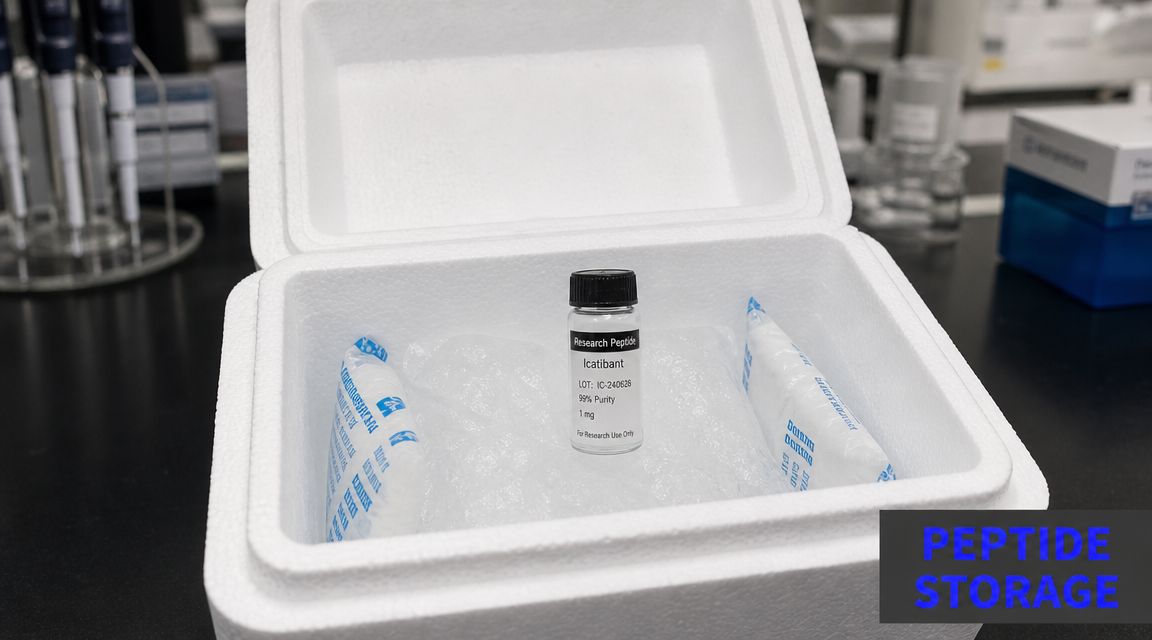
Start with the obvious. Check that the outer package is intact, the internal contents match the order, and the vial labeling is legible. Confirm that the lot number on the vial matches the paperwork saved during ordering.
Then inspect condition. You’re looking for cracked glass, compromised seals, unreadable labels, visible contamination, or any mismatch between the ordered item and the delivered item. If something looks off, quarantine it before it reaches project use.
A good receiving note should capture:
When a protocol calls for reconstitution, technique matters. Expert handling guidance emphasizes slow reconstitution with 1 to 2 mL of bacteriostatic water, adding the diluent down the vial wall, gently swirling rather than shaking, and allowing 5 to 10 minutes for the peptide to dissolve into a clear, particle-free solution according to the Elements Arms preparation guide.
That advice is practical, not decorative. Fast injection into the powder, aggressive shaking, or working past visible particulate issues creates preventable variability.
If the solution doesn’t become clear and particle-free, stop there. Don’t normalize a bad prep just because the order arrived on time.
A controlled reconstitution record should note the diluent used, the date, who performed the step, and the resulting working concentration used by the lab.
Labs usually lose peptide integrity through casual handling, not dramatic mistakes. Repeated warming and cooling, poor labeling after reconstitution, or storing working material without a documented chain can undermine later interpretation.
The safest approach is simple. Keep unreconstituted material in the specified lab storage conditions for dry peptide inventory. Once reconstituted, refrigerate according to your lab’s SOP, limit unnecessary handling, and label the vial immediately with the preparation date and responsible staff member.
The research-use distinction holds operational importance. Your lab is responsible for internal handling quality. The supplier can provide traceable material. Your team has to preserve that integrity after delivery.
A new staff member finds a tirzepatide product page, sees a low price, and asks whether the vial can be ordered under the lab account. My first check is not price or shipping. It is whether the seller states, plainly and early, that the material is for research use only and whether the rest of the page supports that claim.
“For research, laboratory, or analytical use only” sets the legal and operational boundary for the transaction. The supplier is offering a research chemical product, not a prescription drug product for human use and not a compounded preparation intended for patient care. That wording matters because it defines what the seller is representing and what your lab is agreeing to buy.
Clear disclaimers are a quality signal. Suppliers that present them prominently tend to keep cleaner separation between catalog sales, documentation, labeling, and customer support. Sellers that mix research terms with consumer wellness language create avoidable risk. In practice, that usually means more review work for your compliance lead and more ambiguity for the receiving team.
The distinction matters because approved tirzepatide products for clinical use follow a regulated medical pathway, while lyophilized research material sits in a procurement and handling category your lab must control internally. Some buyers come in with consumer search intent and assume those categories overlap. They do not.
What if a page uses wellness language and research language together?
Treat that as a supplier-screening failure until proven otherwise. A legitimate research vendor keeps intended use, disclaimers, and product labeling consistent across the page, checkout flow, and paperwork.
What if the paperwork arrives only after delivery?
That can be acceptable only under a written SOP for conditional receiving and quarantine. If your group cannot review the documentation before the vial enters active inventory, the product should stay segregated until the record is complete.
What if the batch number on the vial does not match the COA?
Do not use it. A lot mismatch breaks traceability, and traceability is the basis for any credible result tied to that material.
What if someone asks whether the vial can be handled like the approved injectable product?
The answer is no. The existence of an approved drug product does not change the status of a research-use listing, and it does not reduce your lab’s duty to follow internal controls for storage, access, training, and documentation.
A disclaimer should slow the buyer down. That is the point.
Well-run labs treat disclaimers as part of the quality system, not as legal boilerplate added by marketing. They shape purchasing authority, staff training, recordkeeping, and how exceptions are handled during audits or internal review. If your team is refining those controls, practical work on layout and material flow often helps more than another policy memo. This overview of R&D laboratory design is useful for that reason, especially where receiving, quarantine, and controlled storage happen in the same space.
A new vial arrives on a Friday afternoon. The label looks clean, the packaging looks professional, and someone wants to move it straight into active use on Monday. That is the point where disciplined labs separate themselves from careless ones. Confidence in tirzepatide procurement does not come from branding or speed. It comes from traceability, documented controls, and a purchasing record that can withstand internal review months later.
The standard is simple to state and harder to maintain under schedule pressure. Verify the company before the product. Match each vial to lot-specific records. Keep research-use boundaries explicit in ordering, storage, and study documentation. Record receiving conditions, storage parameters, and any reconstitution steps in a way another researcher could follow without guesswork. Train staff to stop on discrepancies rather than explain them away after the fact.
Those habits support reproducibility, but they also protect the rest of the operation. One poorly documented peptide lot can compromise comparison work, force repeat experiments, and create uncertainty that spreads well beyond a single study. If your team is tightening procedures around storage, receiving, and sample movement, this overview of R&D laboratory design is a useful operational reference because room layout, quarantine space, and inventory flow often determine whether good controls hold up in daily use.
Tirzepatide remains a serious research tool because the questions around it reach beyond a narrow weight-focused frame. As noted earlier, published outcomes data have expanded interest in the compound across metabolic, cardiovascular, and renal research contexts. That broader relevance raises the standard for sourcing. If the material is mislabeled, poorly characterized, or detached from defensible batch records, the study starts with avoidable uncertainty.
Buying tirzepatide peptide should be handled like any other controlled research procurement decision. Choose material your lab can identify, document, store correctly, and defend during review.
If you need a research-only supplier with batch documentation, account-based ordering, and USA-made peptide inventory, learn more from Peptide Warehouse USA and explore options that fit compliant laboratory procurement.