No products in the cart.


The biggest Direct Peptides coupon isn't automatically the best deal. A large headline discount can still leave you with an undocumented lot, unclear shipping conditions, or a product page that says little about what will arrive. For research procurement, the better question is simple: what does the discount buy you after documentation, delivery, and intended-use requirements are verified?
This guide treats coupon hunting as a verification exercise, not a race to find the largest percentage. You'll learn how to validate a peptide discount code, compare percentage offers with bundle pricing and account promotions, check the records that support a research purchase, and protect your lab from confusing a lower price with evidence of safety, efficacy, approval, or human-use suitability.
The popular advice is to find the biggest discount and use it before it expires. That advice works poorly for research materials. A coupon only has value when the underlying product, lot, shipping terms, and documentation meet your procurement standard.
A smaller verified offer can be more valuable than a larger unverified one. If the cheaper order lacks a lot-specific Certificate of Analysis, leaves storage conditions unclear, or creates uncertainty about chain of custody, the nominal saving may increase your actual procurement risk rather than reduce it.
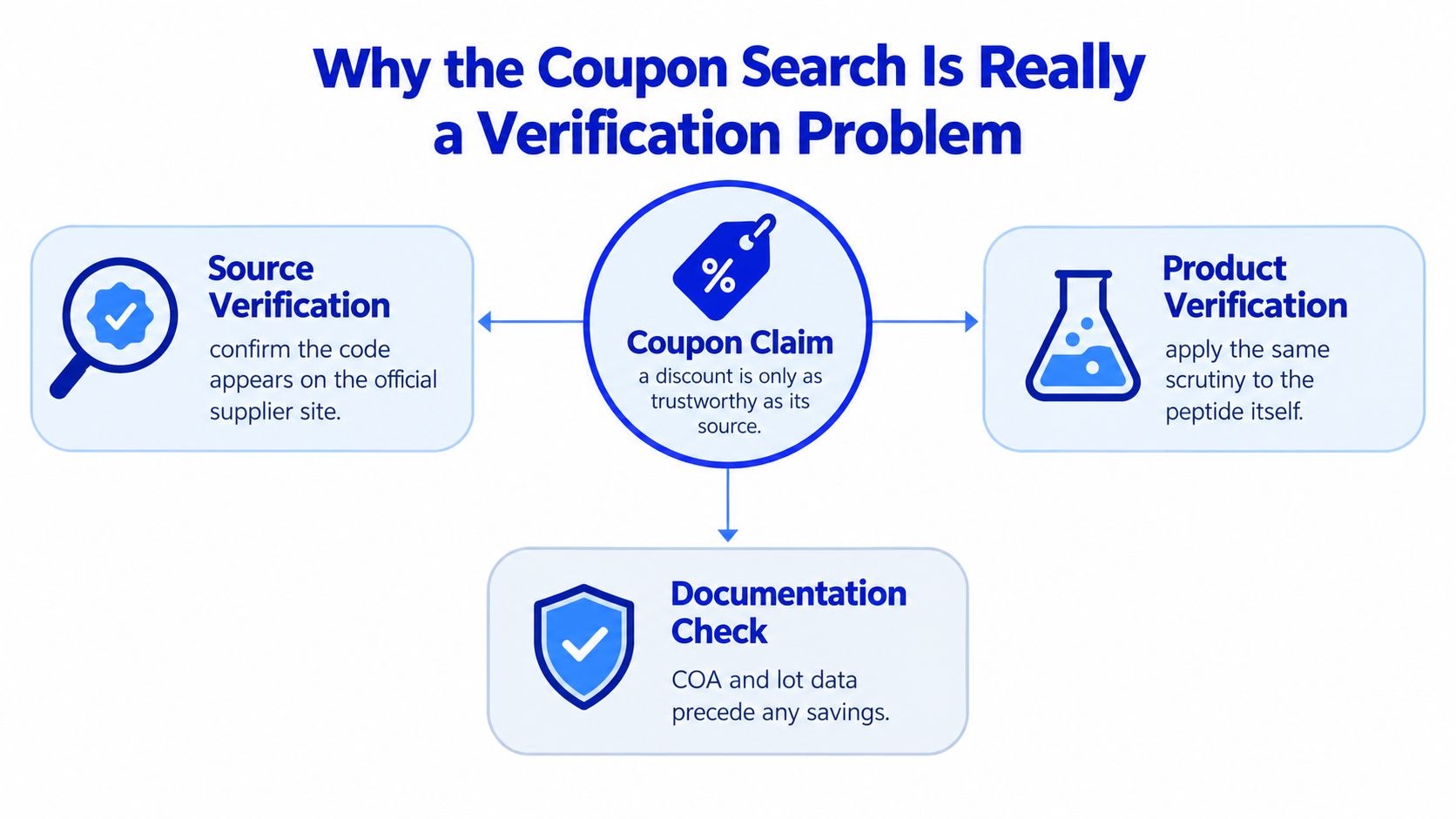
Define a useful coupon narrowly. It should be:
Coupon pages for Direct Peptides often answer only whether a code supposedly exists. They may not establish the expiration date, exclusions, minimum order value, shipping charge, stacking rules, bundle eligibility, or whether a first-order offer still applies after account creation. One review source reports no currently verified coupon, while another reports a purported 20% first-order offer and bundle pricing. That contradiction should be treated as unresolved, not as proof that either promotion is active. See the Direct Peptides coupon coverage and verification discussion before relying on a third-party claim.
Practical rule: Never let the discount become the strongest evidence in the order file. The lot record should be stronger.
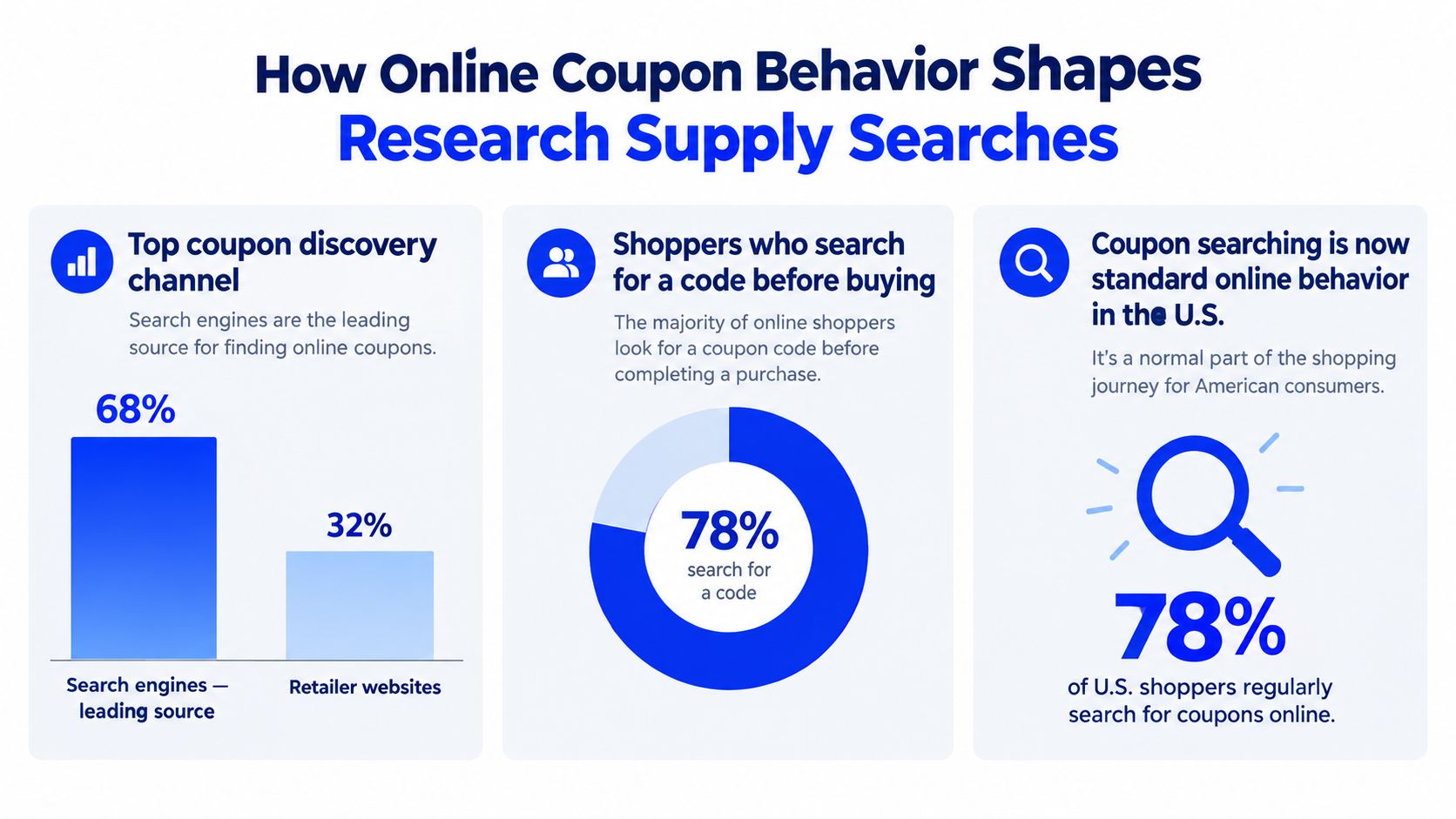
Searching for a coupon before buying is normal online behavior, not a sign that a buyer is unusually price-sensitive. In June 2024, data cited by eMarketer from SimplyCodes found that 62% of U.S. consumers said they actively searched for or used promo codes, discounts, or coupons when shopping online. Search engines led coupon discovery, with 59% using Google or another search engine to find a code before purchase, compared with 46% using coupon websites and 41% using retailer apps or websites. The figures are reported in eMarketer's coverage of coupon discovery behavior.
Economic pressure also affects how people shop. July 2024 data from Prosper Insights & Analytics and the National Retail Federation found that 26% of U.S. adults were using more coupons than before because of the economy, as reported in the National Retail Federation's consumer coupon coverage. A search such as “Direct Peptides coupon” therefore fits a familiar path to purchase: identify a supplier, compare terms, look for a code, and test the final checkout total.
Retail coupon behavior doesn't transfer cleanly to research chemicals. A shopper buying ordinary consumer goods may only need to confirm the code and final price. A lab buyer also needs to confirm the material's stated purpose, lot identity, analytical records, shipping conditions, and handling requirements.
The search itself may reflect interest in peptides associated online with weight loss, healing, repair, antiaging, or muscle growth. Those topics don't change the product's stated status. A research-use-only material must remain positioned for laboratory, analytical, or preclinical work, with appropriate disclaimers and records.
Search intent research can help a supplier understand the questions behind the query, but it shouldn't replace product verification. Teams building a content or procurement strategy can use this guide to find high-ranking Shopify keywords to map terms such as “peptide discount code,” “research peptide pricing,” and “coupon expiration” without turning the page into repetitive keyword copy.
The commercial signal is clear. Buyers want transparent pricing, but a responsible supplier must answer a second question at the same time: what exactly is being purchased, and what evidence supports the lot being shipped?
Run every coupon through the same workflow. Consistency matters because a code that works in a browser can still fail to apply to the product, quantity, account type, or shipping method your lab needs.
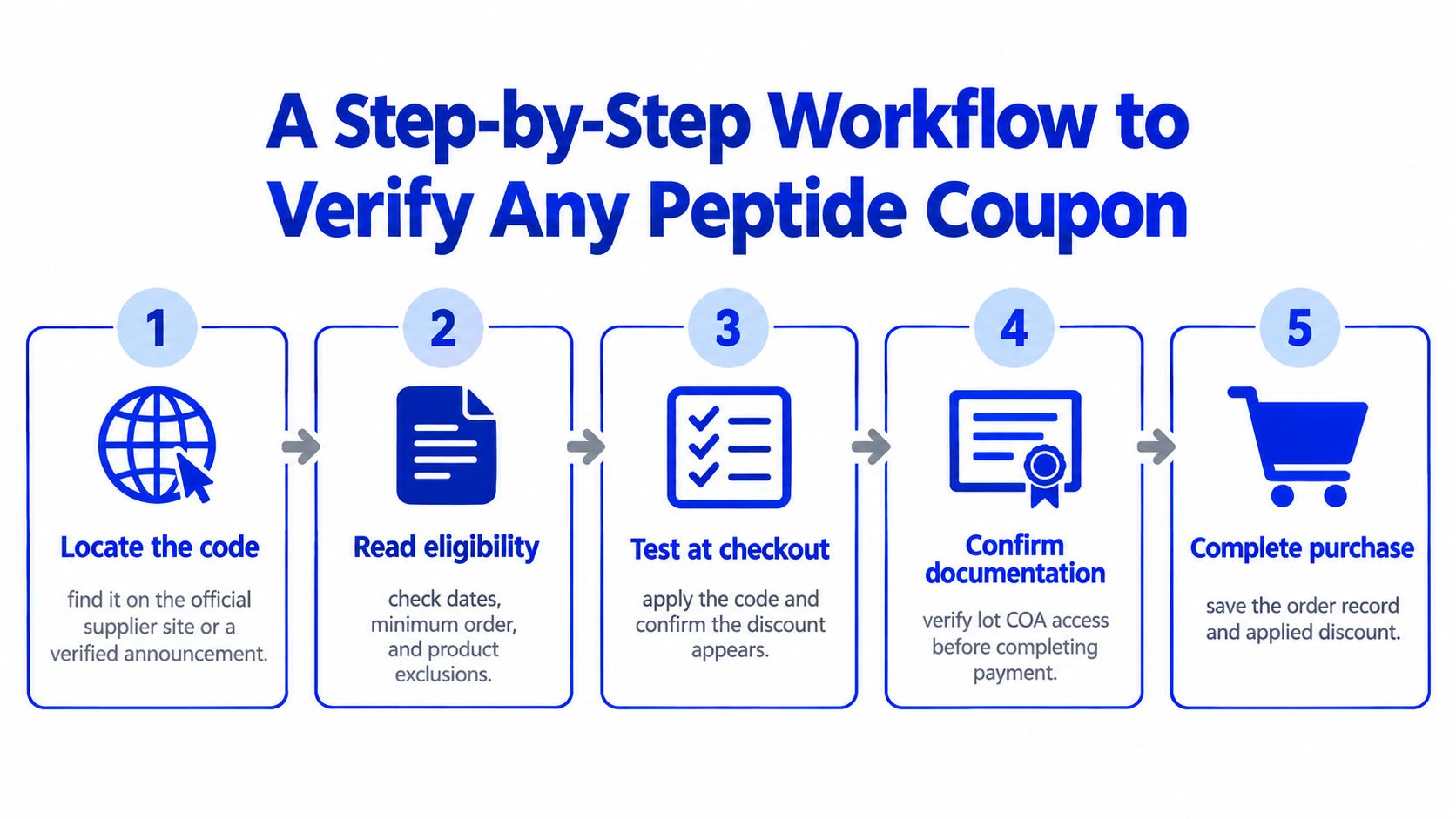
Start on the supplier's official website, product page, email, or verified account communication. Treat coupon aggregators as lead generators only. A third-party page can show an old code, an account-specific offer, or a promotion that never applied to the product you need.
Record the code exactly as displayed, along with the page URL and the date you checked it. If the supplier doesn't publish an expiration date, don't assume the code is permanent.
Look for the conditions that change the value:
An account-targeted promotion may not appear until registration. That doesn't make it universally available, and it shouldn't be represented in your purchasing records as a public code.
Use the exact product and quantity you expect to order, then test the code before committing. Check the pre-discount subtotal, the discount line, shipping, taxes, and the final amount. A coupon that lowers the item price but triggers a higher shipping charge may deliver less value than its headline suggests.
The test cart should also reveal whether the offer applies to the intended vial count. Bundle pricing may reduce the per-vial price automatically, while a percentage code may exclude that same bundle.
Before payment, open the product's quality records and confirm that the documentation corresponds to the lot you expect to receive. Look for a lot number, stated purity, test method, and available microbial or endotoxin information where relevant to your laboratory requirements.
Save the COA or its permanent reference with the quote and cart record. A code that works at checkout doesn't validate the material itself.
Store the order confirmation, applied code, final total, product name, lot information, shipping terms, and intended-use statement. For teams that already maintain formal purchasing controls, a practical Purchase Order Management Guide can help connect the discount record to approval and invoice workflows.
A multi-merchant analysis reported 11.7 million coupon validations and 1.79 million redemptions, with a 15.29% validated-to-redeemed rate. It also reported that 44.1% of non-batch redemptions occurred within the first hour. These are cross-sector benchmarks, not a peptide forecast, and they support testing a short, clearly timed campaign rather than assuming that code activity equals incremental demand. The figures come from Webtonic's promotion statistics analysis.
Track whether the coupon generated an additional order or merely discounted an order that would have happened anyway. For a lab, that means reviewing order value, repeat purchasing, refunds, payment fees, shipping, and net contribution rather than celebrating code usage alone.
Not all discounts reduce cost in the same way. A percentage code is easy to understand, but it may exclude bundles or shipping. A multi-vial offer can produce a better effective price, but it may encourage a purchase quantity larger than the lab currently needs. An account promotion can be useful, yet its terms may be difficult to reproduce across buyers.
Calculate the final landed cost for the exact order instead of comparing headline labels.
| Discount Format | Typical Savings Shape | Main Risk to Watch |
|---|---|---|
| Percentage-off code | Reduces eligible product prices by a stated percentage | Exclusions, minimum order rules, shipping, and non-stackable offers can shrink the actual saving |
| Multi-vial bundle price | Lowers the combined or per-vial price when buying a defined quantity | The bundle may not match current research demand, and documentation must cover the lot shipped |
| Account-targeted promotion | Applies after registration or through a supplier message | The offer may be personal, temporary, difficult to reproduce, or unclear to institutional buyers |
Percentage discounts work best when the eligible product is already identified and the supplier clearly states the exclusions. Don't assume that a code applies to every compound, blend, liquid, or ancillary item. Ask whether the reduction applies before or after automatic bundle pricing, and save the checkout result.
The effective discount is the difference between the normal final total and the discounted final total, divided by the normal final total. Include shipping and taxes in both totals when they change between carts.
Bundle offers require a different question: does the extra quantity serve a defined research need? Buying more vials to achieve a lower unit price can create storage, traceability, and expiration-management issues. A lower per-vial figure isn't automatically a lower procurement cost if unused material remains in inventory.
Check whether every vial in the bundle comes from the same documented lot or whether the supplier may split the order across lots. Your records should identify what arrived, not only what the product page advertised.
Promotions sent after account creation often target customer acquisition or retention. They may be legitimate, but the buyer should preserve the message, its eligibility language, and its expiration terms. An account-targeted offer also shouldn't be described as a universally available Direct Peptides coupon.
For institutional procurement, ask whether the promotion can be applied to the purchasing account and whether the invoice will show the discount clearly. That detail matters when finance staff reconcile the order later.
A discount should enter the procurement conversation only after the product file passes a documentation check. The checklist below is designed for a lab buyer who needs to defend the purchase later, not just complete checkout quickly.
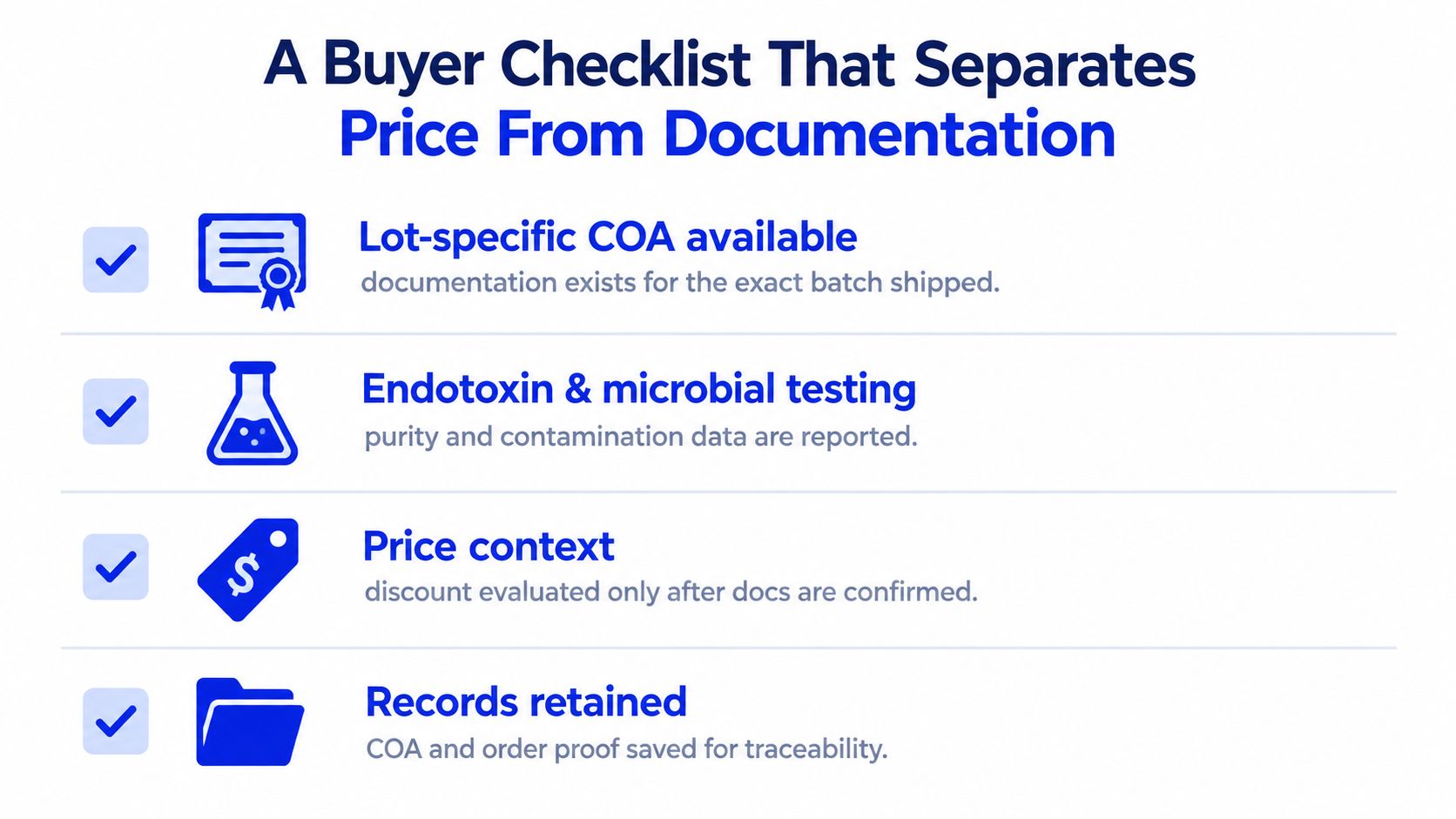
Ask whether a lot-specific COA is available before payment and whether the document identifies the batch that will ship. A generic product sheet isn't the same as evidence tied to the material in your order.
Review the stated purity percentage and analytical method. If the supplier claims microbial, endotoxin, sterility, or related testing, make sure the relevant report is accessible and clearly associated with the lot.
Document the supplier's stated manufacturing location, storage conditions, shipping method, and handling instructions. If USA-manufactured status matters to your lab, verify that claim in the supplier's own product or quality documentation rather than inferring it from a domain name.
Retain the invoice, lot number, COA, shipping confirmation, and any communication about substitutions. These records make it possible to investigate a discrepancy without relying on memory.
The page should clearly position the material for research, laboratory, analytical, or preclinical use only. Avoid suppliers or pages that use a disclaimer while simultaneously presenting dosing directions, testimonials, or promises about weight loss, healing, antiaging, muscle growth, or other human outcomes.
Documentation beats discount size. If you can't connect the price you paid to the lot you received, the coupon didn't solve the procurement problem.
Pricing analysis can still help you compare vendors, but it should come after quality screening. A structured track competitor pricing playbook is useful for monitoring commercial terms without allowing a low headline price to override documentation requirements.
A lower price doesn't change what a research-use-only product is. It doesn't establish safety, efficacy, FDA approval, sterility, suitability for injection, or suitability for treating a person. A coupon is a commercial mechanism, not scientific evidence.
The FDA has focused enforcement on online sellers whose websites, testimonials, dosing information, or other language indicates intended human use despite a research disclaimer. One source describes more than 50 FDA warning letters in a September 2025 action involving sellers making misleading claims about compounded or unapproved peptide products, as reported in this overview of peptide enforcement and legal status.
The Federal Trade Commission states that advertisers need adequate substantiation before making objective product claims, including claims conveyed by implication. For health-related products, its guidance describes competent and reliable scientific evidence as objective tests, analyses, research, or studies conducted and evaluated by qualified experts using methods generally accepted as accurate and reliable in the relevant profession. The requirements are summarized in the FTC Health Products Compliance Guidance.
Coupon copy should therefore stick to verifiable commercial details:
Don't imply that a discount proves a peptide works. Don't use a coupon page to provide dosing instructions or encourage human use. If your laboratory purchases material associated with health-related research, keep the invoice, lot number, COA, storage record, and internal intended-use description together.
The best Direct Peptides coupon is not the one with the loudest percentage. It's the offer attached to a clearly identified, appropriately documented research lot, with transparent checkout terms and language that stays inside the product's stated laboratory purpose.
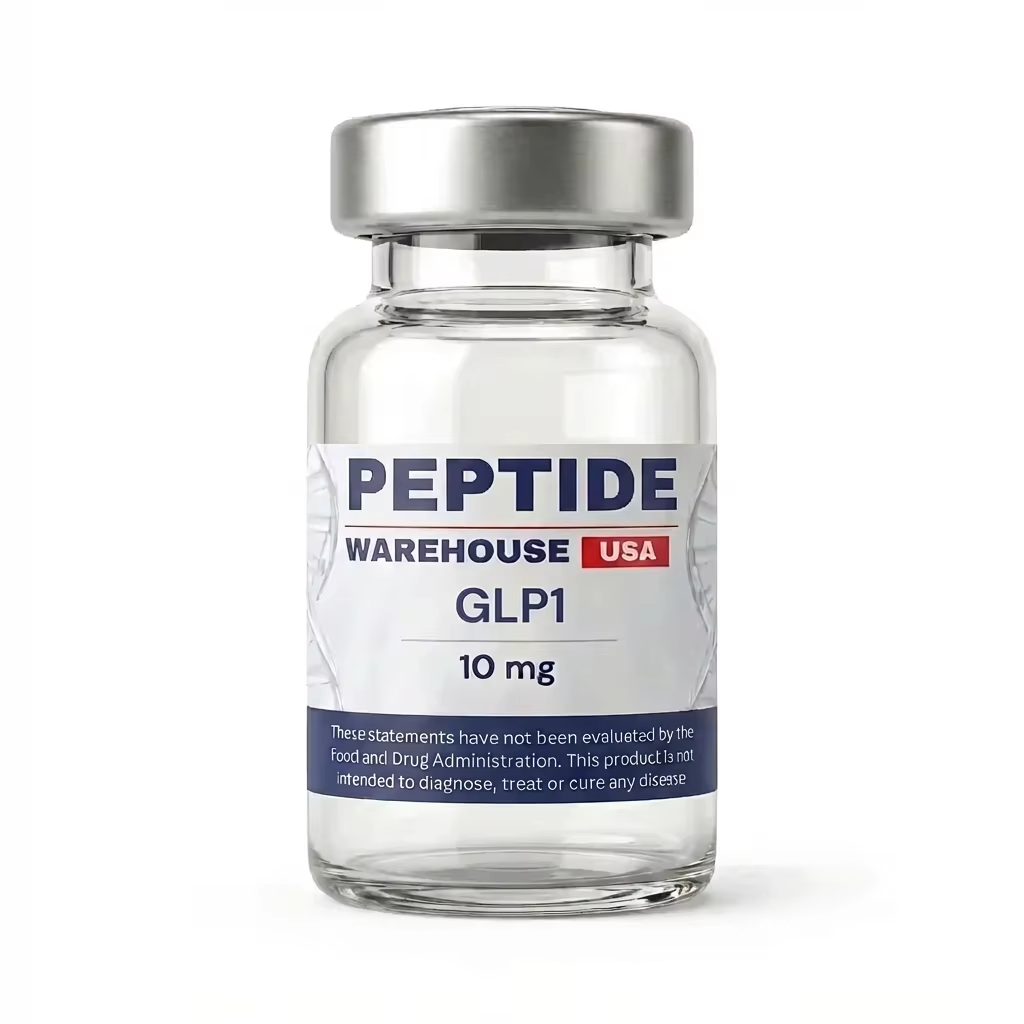
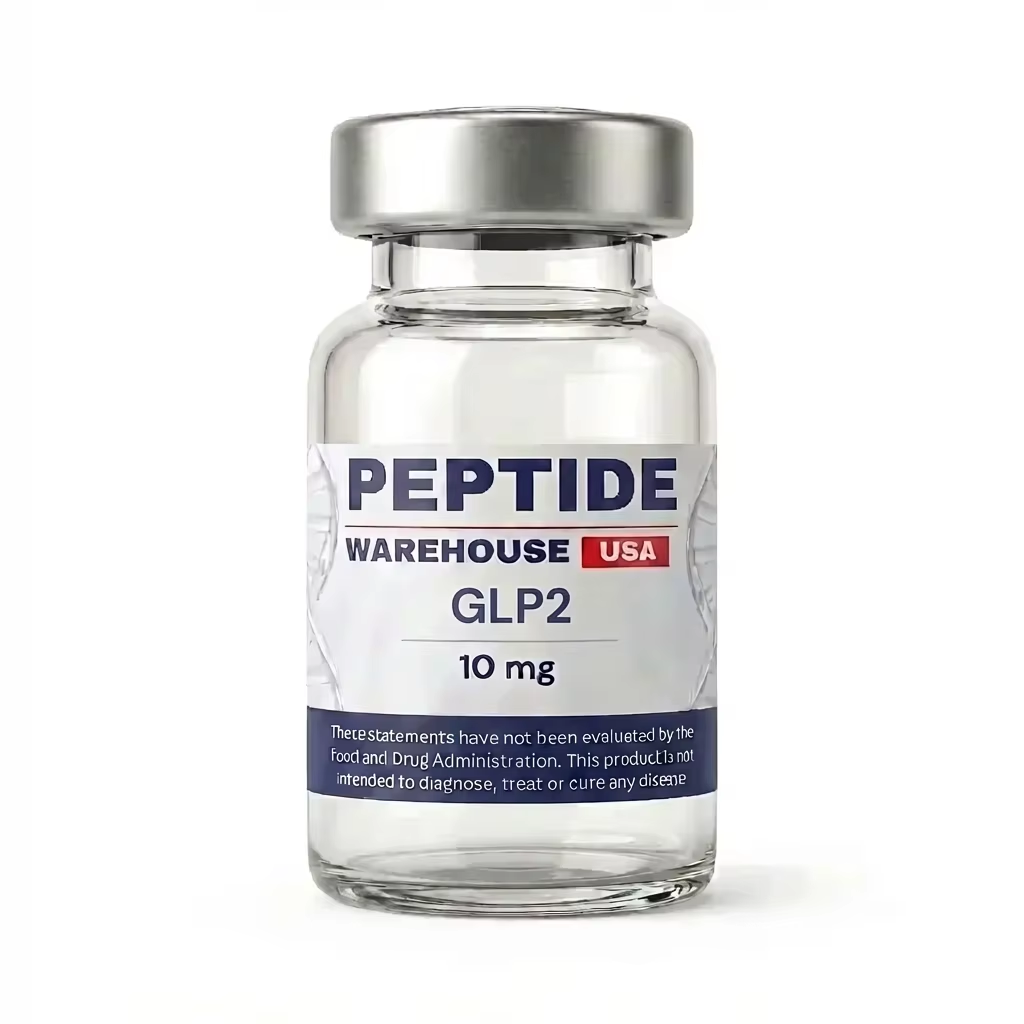
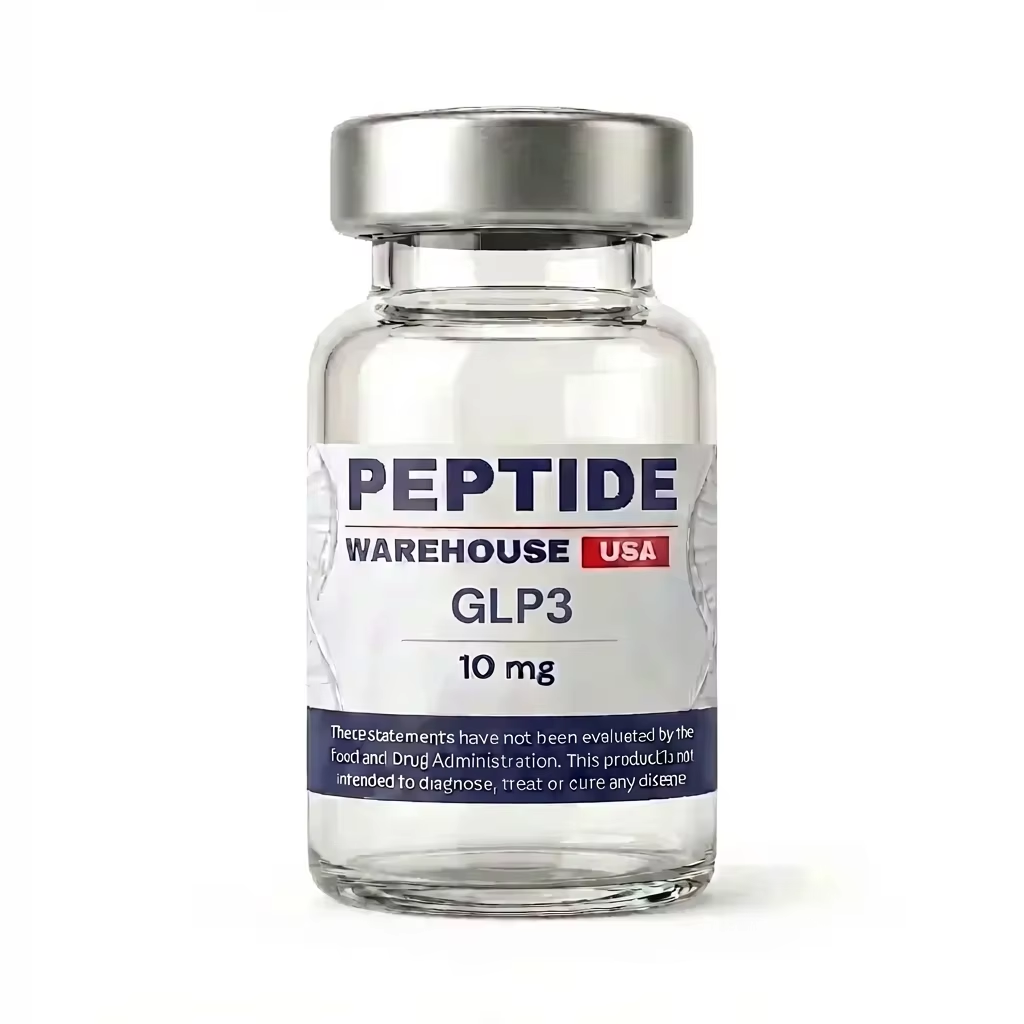
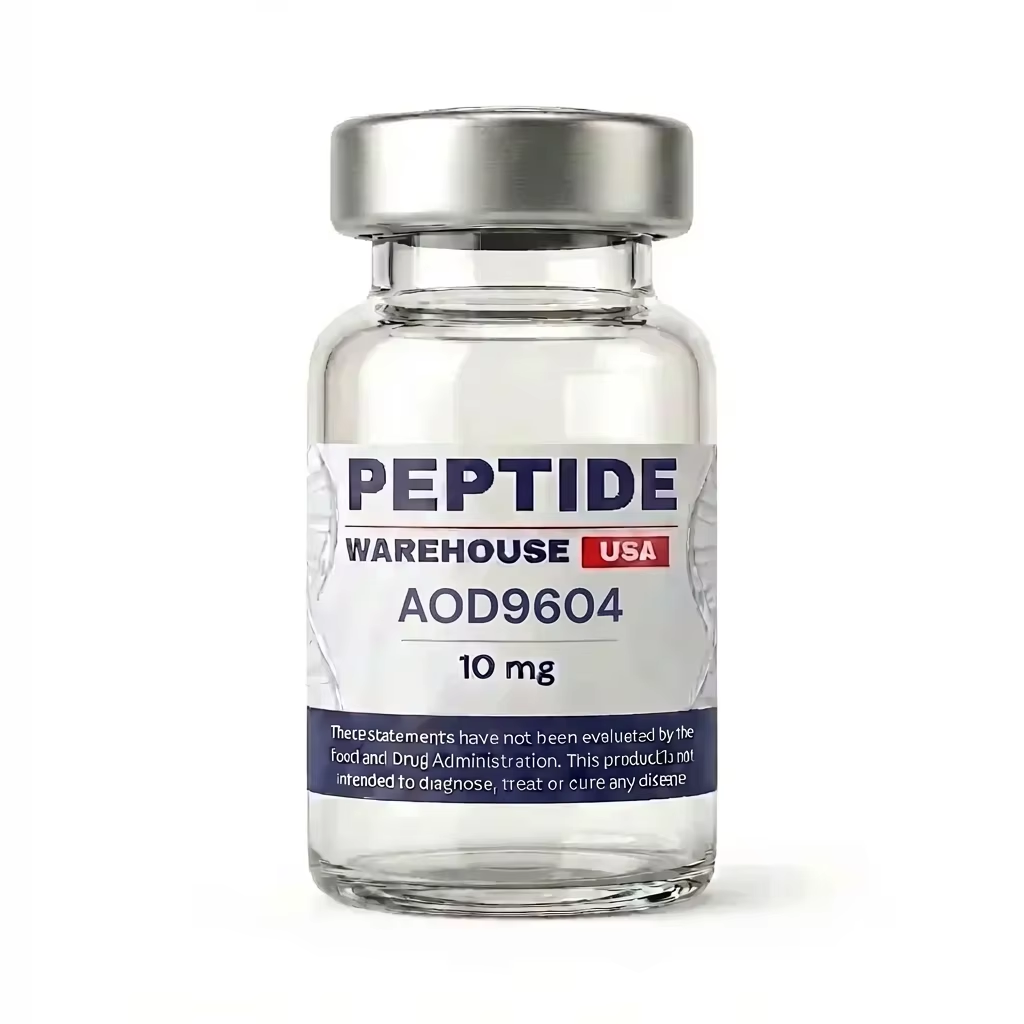
Peptide Warehouse USA offers USA-manufactured research peptides and related compounds with lot-specific COAs, microbial and endotoxin documentation, stated purity levels, and clear research-use-only positioning. Visit Peptide Warehouse USA to review documented options, compare procurement terms, and request the records your lab needs before ordering.