No products in the cart.


_______________________________________________________________________________________________
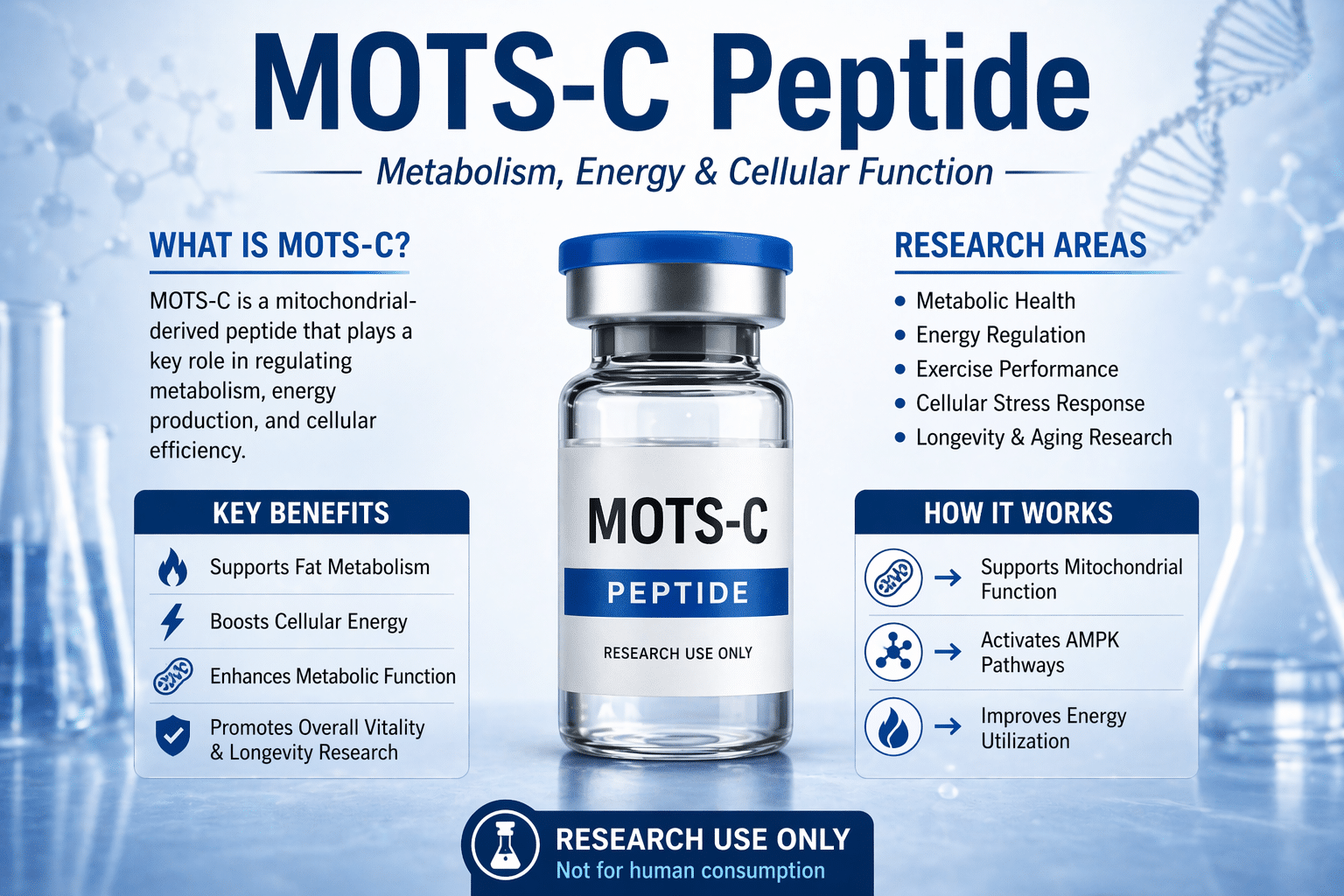
MOTS-C is a mitochondrial-derived peptide that has gained attention in research focused on metabolism, energy regulation, and cellular efficiency. Unlike many peptides that act through hormones or localized repair pathways, the MOTS-C peptide is studied for its role in how cells produce and use energy.
Because of this, it is often discussed in research related to metabolic function, fat utilization, and exercise performance models.
MOTS-C is a mitochondrial peptide studied for its role in regulating metabolism, improving cellular energy efficiency, and supporting fat utilization in research models.
The MOTS-C peptide is unique because it originates from mitochondrial DNA rather than nuclear DNA. This gives it a different role compared to most peptides studied in research.
It is associated with:
👉 In simple terms:
MOTS-C helps regulate how efficiently cells use fuel and respond to metabolic stress.
One of the main reasons the MOTS-C peptide has gained attention is its association with metabolic efficiency.
Research discussions often connect MOTS-C to:
👉 This is why it is commonly mentioned in models related to:
Unlike peptides that directly target appetite or hormones, the MOTS-C peptide is studied for its indirect role in fat metabolism.
It is often discussed in relation to:
👉 Important distinction:
This is not about forcing fat loss —
👉 it’s about optimizing how the body uses energy at the cellular level.
Most peptides fall into categories like:
The MOTS-C peptide stands out because it focuses on:
👉 Cellular metabolism and mitochondrial function
This makes it one of the few peptides studied in the context of:
👉 Different pathways, not direct competitors
👉 Browse research peptides:
https://peptidewarehouseusa.com/buy-research-peptides-usa/
The MOTS-C peptide is commonly discussed in research related to:
⚠️ These associations come from research discussions and experimental models, not clinical claims.
Mitochondria are responsible for producing energy in cells.
When mitochondrial function is optimized, it can influence:
👉 The MOTS-C peptide is studied because it interacts directly with this system.
mots-c peptide – Search Results – PubMed
A common misconception is:
👉 “MOTS-C is just another fat loss peptide”
That’s not accurate.
The real reason it’s studied is:
👉 Its role in regulating how the body uses energy — not just reducing weight
When working with research peptides like MOTS-C, quality and verification are critical.
Always look for:
👉 Explore high-purity peptides:
https://peptidewarehouseusa.com/
The MOTS-C peptide represents a different category of research compared to traditional peptides. Instead of focusing on hormones or localized repair, it is studied for its role in metabolic regulation and cellular energy efficiency.
Understanding this distinction is key to understanding why MOTS-C continues to gain attention in metabolic and longevity research.