No products in the cart.



The most popular advice about peptide BPC 157 is also the least reliable: “It's been studied for healing, so it must work for people.” That conclusion skips the central issue. BPC-157 has a substantial preclinical history and increasingly detailed mechanistic research, but its human evidence remains small, its regulatory position is unresolved, and it isn't FDA-approved for any medical use.
This guide separates what researchers have observed in laboratory and animal models from what has been established in humans. It also explains the 2026 FDA advisory vote, proposed tissue-repair pathways, research-grade handling, analytical verification, and the sourcing standards that matter when a compound has generated more enthusiasm than clinical certainty.
A large preclinical literature can make a compound look clinically mature before it has passed the tests that matter most for human medicine. BPC-157 has attracted attention through animal ulcer and mucosal-protection models, followed by broader preclinical work involving wound healing, tendon repair, ligament repair, and muscle injury. That history is scientifically important, but animal results don't establish human efficacy.
The translation problem is straightforward. A rodent model can isolate a defined injury, control exposure, and measure tissue changes under conditions that rarely match a human injury, human metabolism, or human medical history. A plausible mechanism can justify further trials. It can't replace well-designed clinical evidence.
Practical rule: Treat biological plausibility as a reason to investigate BPC-157, not as proof that it should be used as a treatment.
BPC-157's early identity also matters. Researchers at the University of Zagreb originally isolated this 15-amino-acid pentadecapeptide from human gastric juice in the late 1980s, and the proposed name “Body Protection Compound” reflects its connection to gastroenterology and tissue-protection research, not modern commercial branding. A 2025 review of BPC-157's history and evidence describes its synthetic derivation from that gastric fraction and emphasizes the distance between extensive preclinical work and clinical evidence.
The 2026 FDA advisory discussion made the evidence gap harder to ignore. An FDA advisory committee voted 8-6, with one abstention, to recommend adding BPC-157 to the 503A compounding bulks list, according to a 2026 review of BPC-157's FDA status. The recommendation was non-binding, and FDA staff continued to raise questions about effectiveness, human safety, immunogenicity, peptide impurities, active pharmaceutical ingredient characterization, and route-specific use.
That vote didn't convert BPC-157 into an approved medicine. It also didn't settle whether the compound is effective or adequately characterized for routine human use. Instead, it highlighted a distinction researchers must keep visible: a regulatory recommendation about compounding eligibility is not the same as clinical validation.
BPC-157 is a synthetic pentadecapeptide, which means it contains 15 amino acids. Researchers originally isolated the sequence from human gastric juice, where it was associated with a proposed protective gastric fraction. The compound's name refers to “Body Protection Compound,” while “157” identifies the particular sequence used in research.
A simple analogy helps. Think of the original gastric fraction as a large key ring containing many molecular pieces. Researchers focused on one smaller key, a stable sequence that appeared to preserve biologically interesting properties without requiring the complete parent structure. That analogy describes why scientists studied the fragment. It doesn't prove that the fragment produces a therapeutic effect in humans.
The hyphen in BPC-157 is a naming convention. You'll also see BPC 157 without the hyphen, and those forms generally refer to the same research compound. The punctuation doesn't change the amino-acid sequence or establish a different chemical entity.
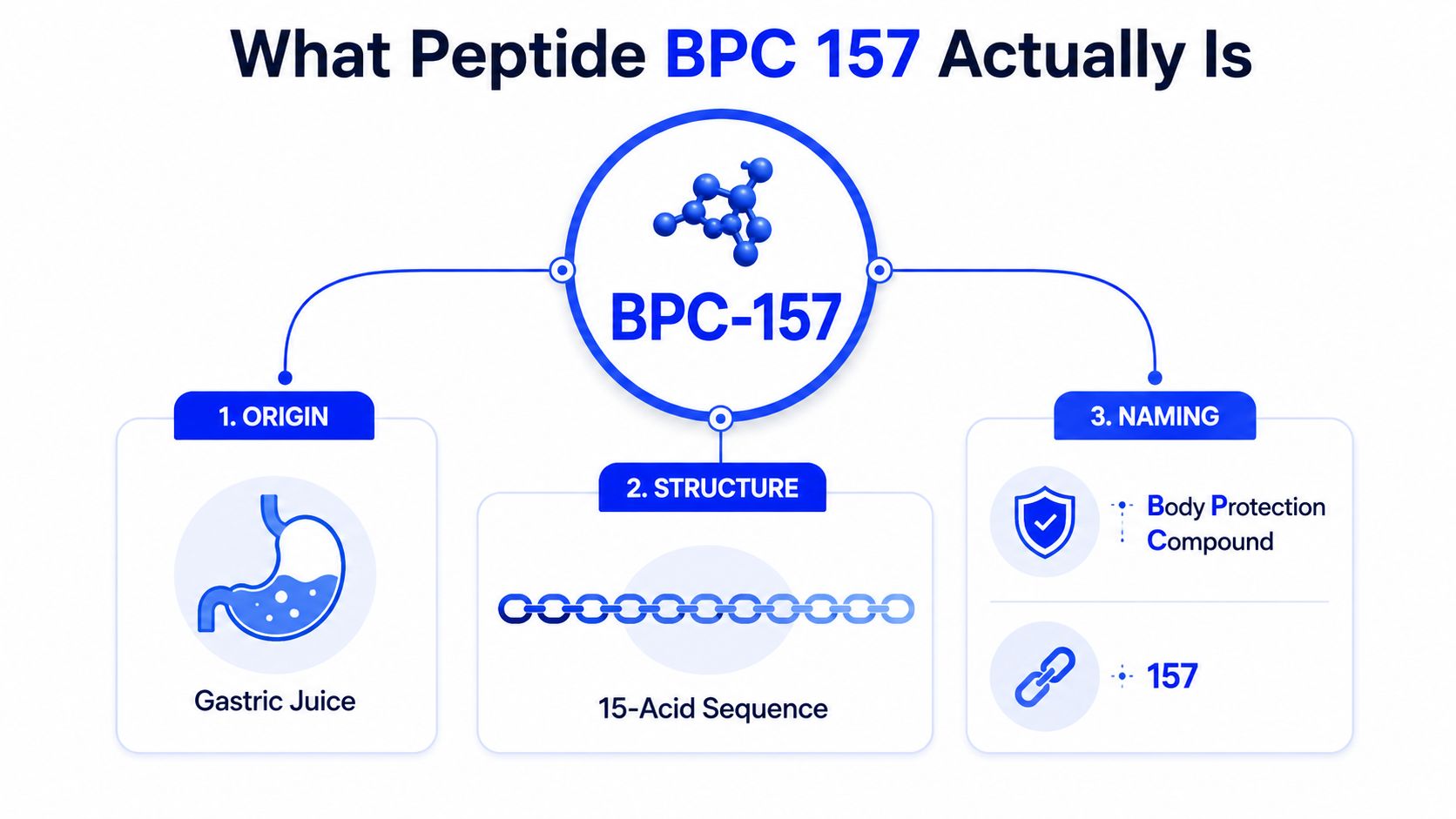
BPC-157 is commonly discussed as a research peptide, not as an approved pharmaceutical. It's often supplied as a lyophilized powder, a dried form designed to improve handling and storage before a laboratory prepares a solution for an approved experimental protocol.
That presentation creates confusion for buyers. A vial, label, certificate, or marketing page can describe a material's identity and purity, but those details don't establish that the material is suitable for human administration. The FDA status overview from Healthcare IT OnTime states that BPC-157 isn't FDA-approved for any medical use.
Researchers exploring peptide biology should also separate BPC-157 from unrelated discussions about cosmetic or regenerative applications. For broader background on peptide-related research questions, readers may find this resource on how peptides help thinning hair useful, but it shouldn't be treated as evidence that BPC-157 is an established hair or tissue treatment.
The material definition is the starting point for responsible work:
The most useful way to read BPC-157 literature is to follow a proposed cause-and-effect chain rather than accepting broad language such as “healing peptide.” One research pathway connects BPC-157 with angiogenesis, the formation of new blood vessels. In preclinical work, the compound appears to increase VEGFR2 expression and internalization, followed by activation of Akt and eNOS. This signaling is associated with endothelial-cell proliferation, migration, and new vessel formation, as described in research indexed by PubMed on the VEGFR2-Akt-eNOS pathway.
Why does that matter? Injured tissue needs oxygen and nutrient delivery, and vascular recovery can limit repair. A signal that supports endothelial activity could therefore improve perfusion in an experimental injury model. That is a mechanistic rationale, not a clinical promise.
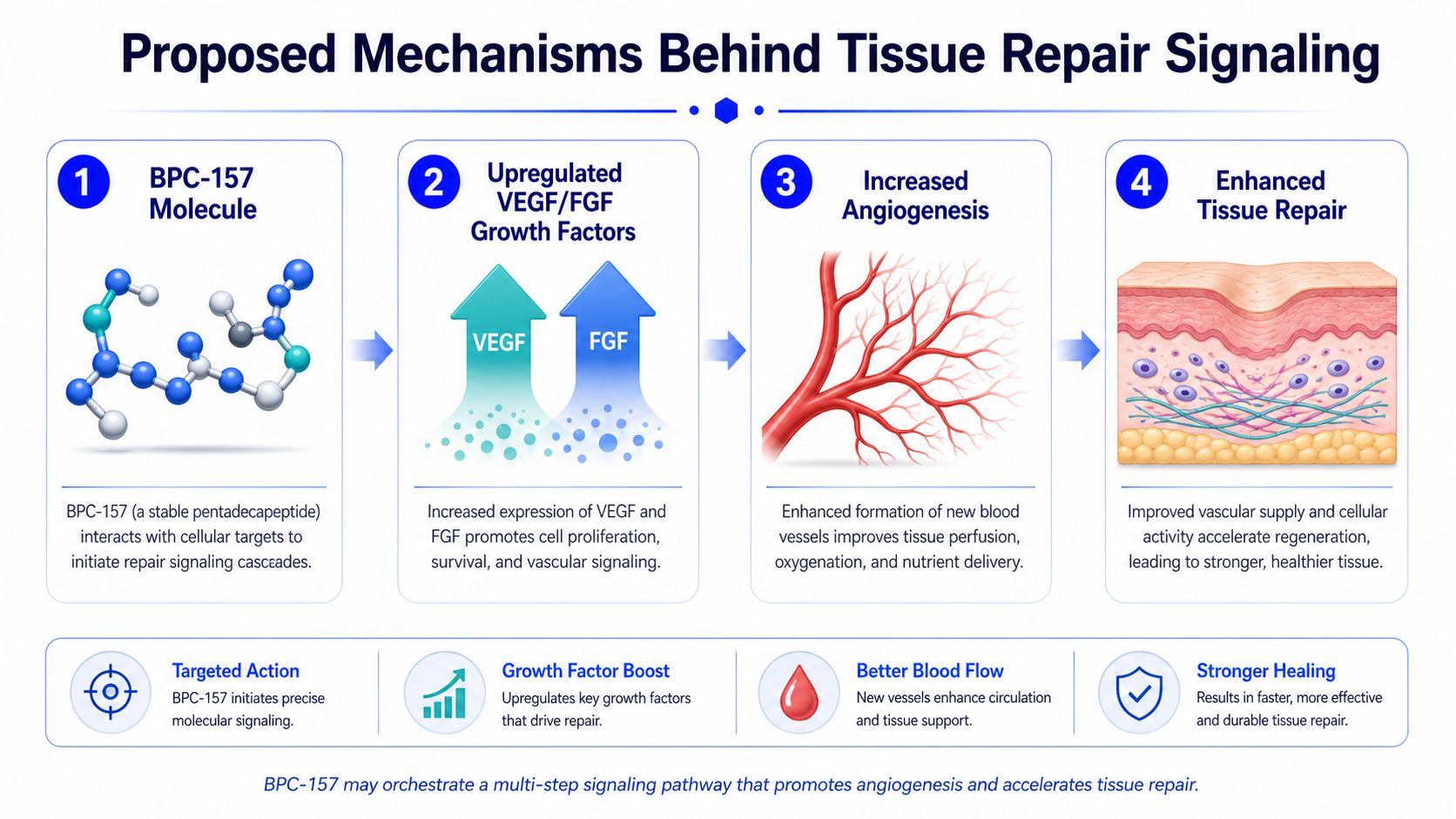
Recent mechanistic work adds another layer. BPC-157 was reported to interact with FBXO22, an E3 ubiquitin ligase adaptor, through the peptide's proline at position 3. The reported result was suppression of ubiquitination and proteasomal degradation of BACH1, a transcription factor. Stabilized BACH1 then increased growth-factor and receptor signaling associated with vascular endothelial-cell proliferation and tube formation, according to the 2026 mechanistic study in Cell Communication and Signaling.
It gives researchers a defined molecular sequence to test:
Other proposed pathways involve nitric-oxide regulation, endothelial protection, and inflammatory signaling. Earlier gastrointestinal models also helped establish interest in mucosal protection. Researchers should still distinguish between a pathway supported across several experimental systems and a mechanism reported in a limited setting.
Mechanism is valuable when it generates testable predictions. It becomes misleading when researchers use it as a substitute for a clinical endpoint.
The Sunridge Medical regenerative treatments resource offers broader context on regenerative approaches, but readers should keep those treatment discussions separate from the specific evidence base for an unapproved research peptide. For BPC-157, the precise receptor biology, downstream signaling, exposure-response relationship, and route-specific behavior remain incompletely mapped.
BPC-157's preclinical record spans multiple experimental areas, including gastrointestinal injury, wound repair, tendon and ligament models, muscle injury, and vascular signaling. Researchers have reported outcomes such as tissue protection, wound closure, cellular migration, and repair-related changes in animal or in vitro systems. Those findings explain why the peptide continues to attract laboratory interest.
They don't answer the human questions that determine medical adoption. Human researchers need reliable information about dose response, pharmacokinetics, long-term safety, immunogenicity, route-specific exposure, and clinically meaningful outcomes. As of early 2026, one research summary described the human evidence as consisting of three pilot studies, one set of Phase I/II trials reported only as conference abstracts, and one cancelled Phase I trial. The ClinicalTrials.gov record for a randomized, double-blind, placebo-controlled Phase 2 study shows that formal clinical interest is continuing in acute grade II hamstring strain.
| Research Domain | Preclinical Evidence | Human Evidence | Key Gap |
|---|---|---|---|
| Gastrointestinal protection | Animal models examined ulcer and mucosal-protection effects. | Comprehensive human evidence remains unavailable. | Human efficacy, dose response, and clinically relevant endpoints need evaluation. |
| Tendon and ligament repair | Preclinical work investigated tendon and ligament injury, including repair-related tissue outcomes. | The human trial record remains very small. | Researchers need controlled studies with validated functional and structural endpoints. |
| Angiogenesis | Studies report VEGFR2-Akt-eNOS signaling and endothelial activity in experimental systems. | No comprehensive clinical validation establishes the same pathway as a human treatment benefit. | Exposure, tissue distribution, and clinical relevance remain uncertain. |
| Safety | Preclinical studies provide biological and toxicological observations in experimental models. | Human safety evidence is limited, and BPC-157 isn't approved by the FDA or other global regulators. | Long-term safety, immunogenicity, impurities, and route-specific risks require study. |
A small human pilot involving two healthy adults reported that intravenous infusion of up to 20 mg produced no measurable effects on tested heart, liver, kidney, thyroid, or blood-glucose biomarkers, with no side effects reported, as summarized by Vitalway Health's discussion of the pilot study. That observation may support further safety investigation, but it can't establish effectiveness, general safety, or suitability for people with disease.
The correct conclusion is narrow: BPC-157 is promising enough to study, not established enough to treat as routine medicine.
The 2026 FDA advisory vote is easy to misread because “recommended for the 503A compounding bulks list” sounds like approval. It isn't. The vote addressed whether BPC-157 should be recommended for inclusion on a list relevant to bulk substances used by certain compounding pharmacies under Section 503A. It didn't approve BPC-157 as a drug, confirm effectiveness, or establish a general authorization for human use.
The committee voted 8-6, with one abstention, and the recommendation was non-binding, as reported in the FDA status analysis covering the 2026 advisory decision. FDA staff still identified unresolved questions involving effectiveness, human safety, immunogenicity, peptide impurities, API characterization, and route-specific use.
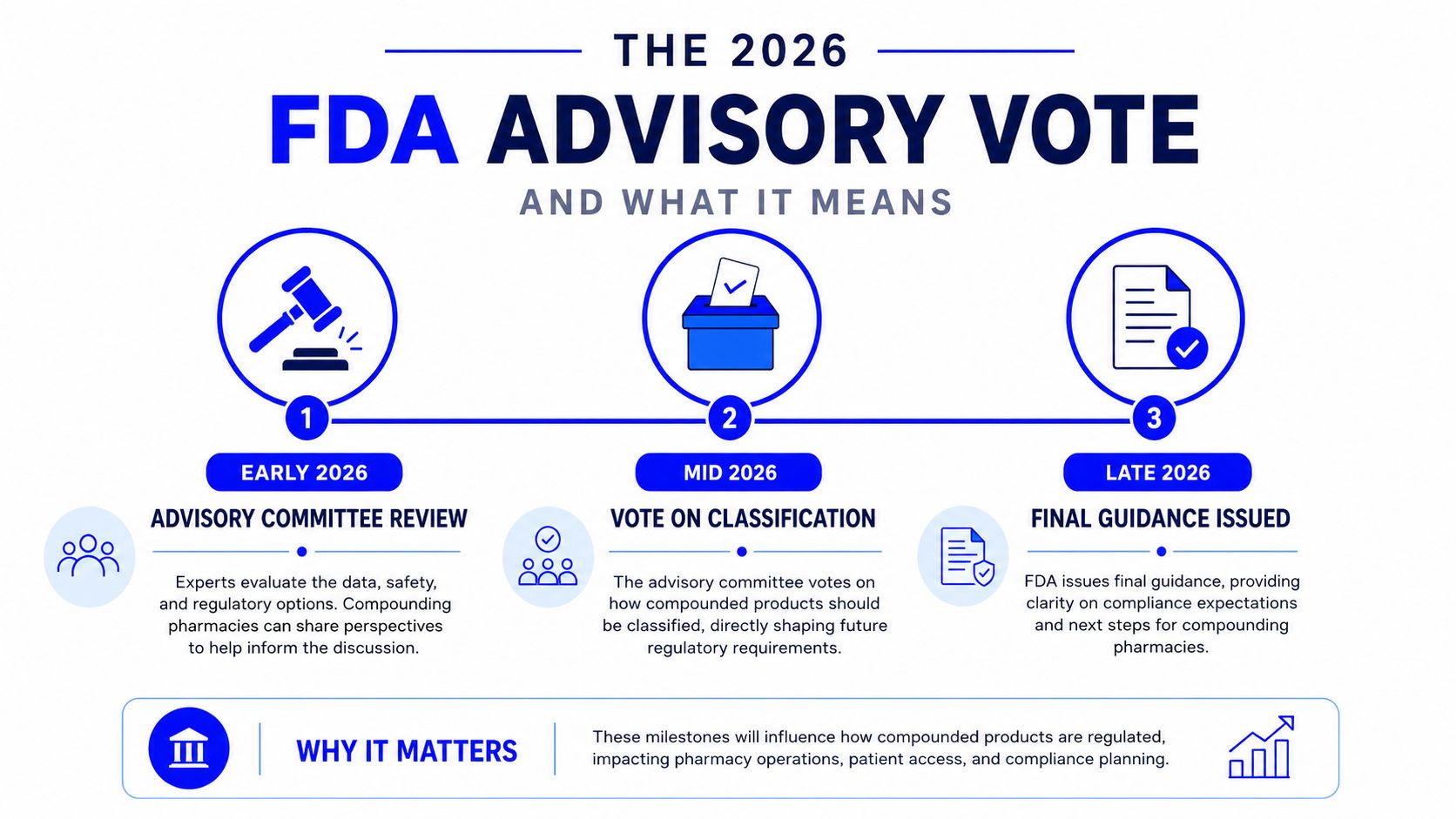
The vote doesn't mean BPC-157 is banned. It also doesn't mean every supplier, pharmacy, or product has met the same quality requirements. Researchers must distinguish among several categories:
The regulatory discussion also raises practical documentation questions. Labs and institutions should expect closer attention to lot identity, certificates of analysis, purity testing, impurity profiles, and the difference between research-grade material and compounded products. A certificate can support traceability, but it doesn't eliminate the need for institutional review or a protocol that matches the material and intended experiment.
For a visual explanation of the vote process, review the following educational video.
The key question after the vote is not “Is BPC-157 approved now?” The answer remains no. The better question is whether future regulatory decisions will be supported by sufficiently characterized material and sufficiently rigorous human evidence.
Reproducible peptide research starts before the first assay. BPC-157 is commonly supplied in lyophilized form, so the laboratory should document receipt condition, lot number, storage placement, handling history, and the identity and purity information provided with the batch.
Conservative handling is appropriate because published stability information across different buffers and storage conditions remains limited. Protect the material from avoidable moisture, heat, repeated temperature changes, and unnecessary light exposure. The exact storage conditions must follow the supplier's validated documentation and the laboratory's approved standard operating procedure, not an internet dosing or handling template.
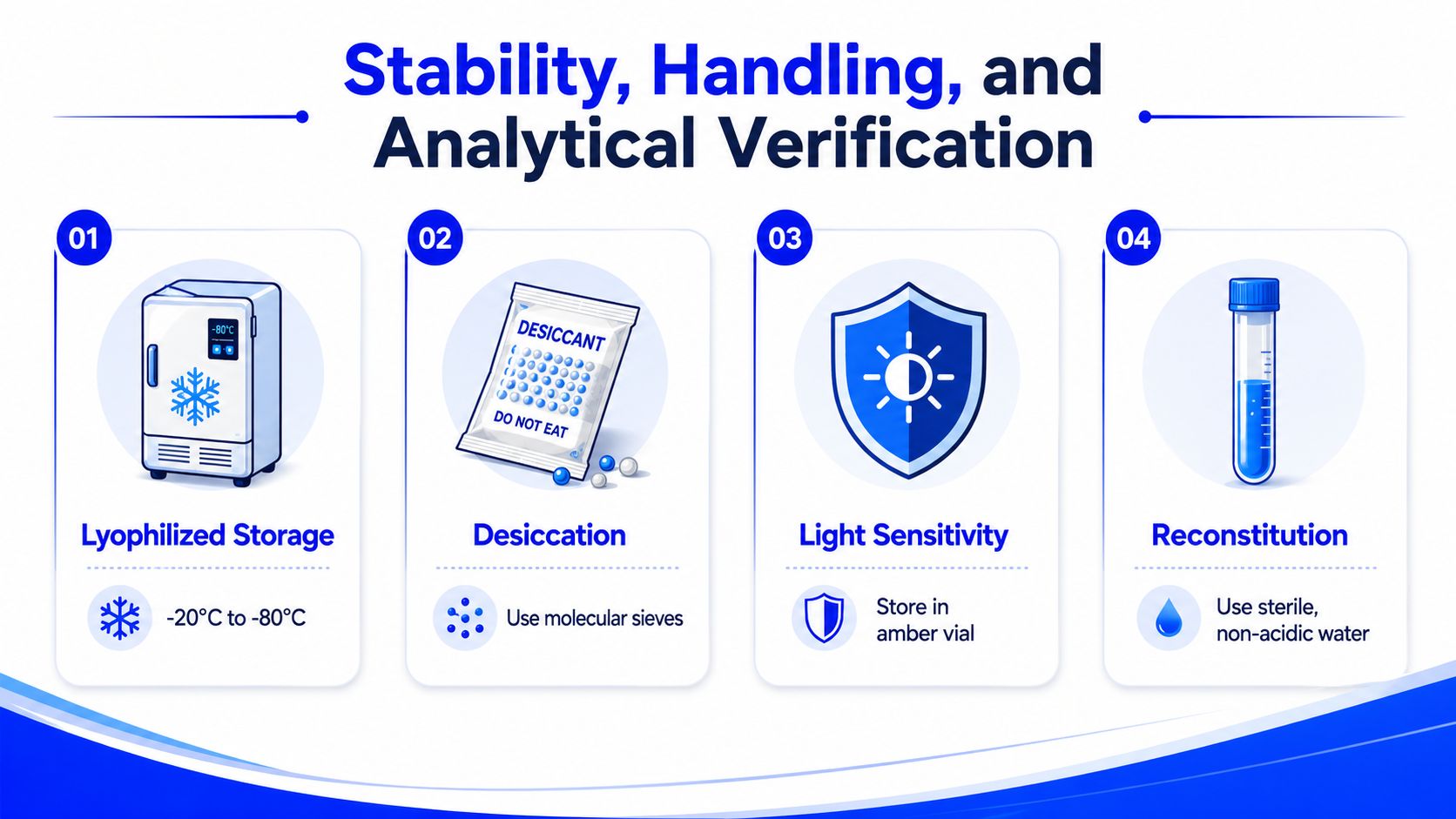
A sound workflow has four stages:
The infographic's handling suggestions include -20°C to -80°C lyophilized storage, desiccation control, amber-vial protection, and sterile, non-acidic water. Those are visual guidance points, not a substitute for validated batch-specific stability data or institutional procedures.
Researchers should request or perform HPLC purity analysis and mass spectrometry confirmation. HPLC can help identify the main peptide peak and reveal related impurities, while mass spectrometry can support molecular identity and flag truncation variants or degradation products.
A useful batch record should include:
Laboratory standard: If the batch identity and handling history aren't documented, a surprising assay result may reflect the material rather than the biology.
BPC-157 should be handled as an unapproved research compound, not as a consumer therapy. That distinction applies even when a vendor uses language about healing, recovery, muscle growth, anti-aging, gut health, or other outcomes. Preclinical findings can inform experimental design, but they don't authorize self-administration or support direct medical claims.
Institutional responsibility begins with the protocol. Researchers should obtain the required review before work begins, define the experimental purpose, document handling and disposal, and follow applicable chemical and biological safety procedures. If a study involves humans, the relevant ethics, regulatory, medical, and investigational requirements become more demanding, not less, because the compound lacks extensive clinical validation.
A credible research supplier should make verification easier, not encourage the buyer to bypass it. Look for:
Red flags include consumer dosage schedules, promises to repair a specific injury, vague purity language, and testimonials presented as clinical evidence. A low price also doesn't compensate for missing identity data, uncertain storage history, or absent lot documentation.
Peptide Warehouse USA offers research peptides and related compounds for laboratory, analytical, and preclinical applications. Its BPC-157 catalog includes research-use-only materials, batch documentation such as certificates of analysis, and additional testing records, while the company states that its products aren't for human consumption. Researchers should still review every lot-specific document and confirm that the material fits their own approved protocol.
Responsible sourcing isn't a marketing detail. It's part of the experiment. When the human evidence base is small and regulatory questions remain open, analytical rigor and chain-of-custody records help prevent a material problem from being mistaken for a biological discovery.
Peptide Warehouse USA offers research-use-only BPC-157 products and related peptide compounds with lot documentation intended to support laboratory, analytical, and preclinical work. Visit Peptide Warehouse USA to review available research options, product documentation, and sourcing information before selecting material for an approved study.