No products in the cart.


You've got a study scheduled, a deadline approaching, and a vial that looks promising. Then someone asks for the batch-specific Certificate of Analysis, mass-spectrometry result, endotoxin report, storage instructions, and regulatory status. Suddenly, choosing a peptide supplier becomes more than finding a product page with a purity claim.
A credible peptide research company supports the entire research supply chain. It helps researchers source custom sequences or catalog compounds, verify identity and purity, document each production lot, and move materials through a clearly defined Research Use Only framework. This guide explains what happens behind the storefront, which tests and documents matter, how procurement and shipping affect a project, and how to compare suppliers without confusing polished marketing with reliable laboratory support.
A new researcher may start by searching for a peptide by name, selecting a vial, and checking the stated purity. A procurement lead thinks further ahead. They need to know who produced the material, which lot it came from, whether the reported identity matches the intended sequence, and whether the documentation applies to the exact vial being ordered.
That distinction matters because a research supplier isn't a pharmacy, a clinic, or a finished-drug manufacturer. Research-grade peptides are supplied for laboratory, analytical, animal, or preclinical investigation, not for human administration or medical treatment, as explained in this overview of Research Use Only peptide status.
A serious supplier also makes its boundaries visible. Product pages should identify the material as RUO, explain that it isn't approved for human use, and avoid presenting laboratory compounds as treatments. The compliance language isn't a minor footer. It tells you whether the company understands the difference between selling a research input and making a medical claim.
Practical rule: Treat the supplier's documentation as part of the product, not as an optional attachment.
By the end of this guide, you'll be able to inspect a COA, distinguish chromatographic purity from molecular identity, ask better questions about endotoxin control, and identify operational warning signs before placing an order. You'll also have a practical way to compare custom synthesis providers, catalog suppliers, and companies offering peptide blends or multiple formats.
Modern peptide sourcing rests on a long technical progression. Emil Fischer's 1901 synthesis of glycylglycine demonstrated the deliberate chemical joining of amino acids. Robert Bruce Merrifield's 1963 solid-phase peptide synthesis breakthrough made peptide production more scalable and routine for research and commercial use, according to this history of peptide synthesis.
Merrifield's approach changed the supply chain because researchers no longer had to treat every sequence as an isolated chemistry project. SPPS, followed by automation and improved purification, supported custom peptides, peptide libraries, and standardized batch production. That history also explains why provenance, purity, and reproducibility are now central sourcing expectations.
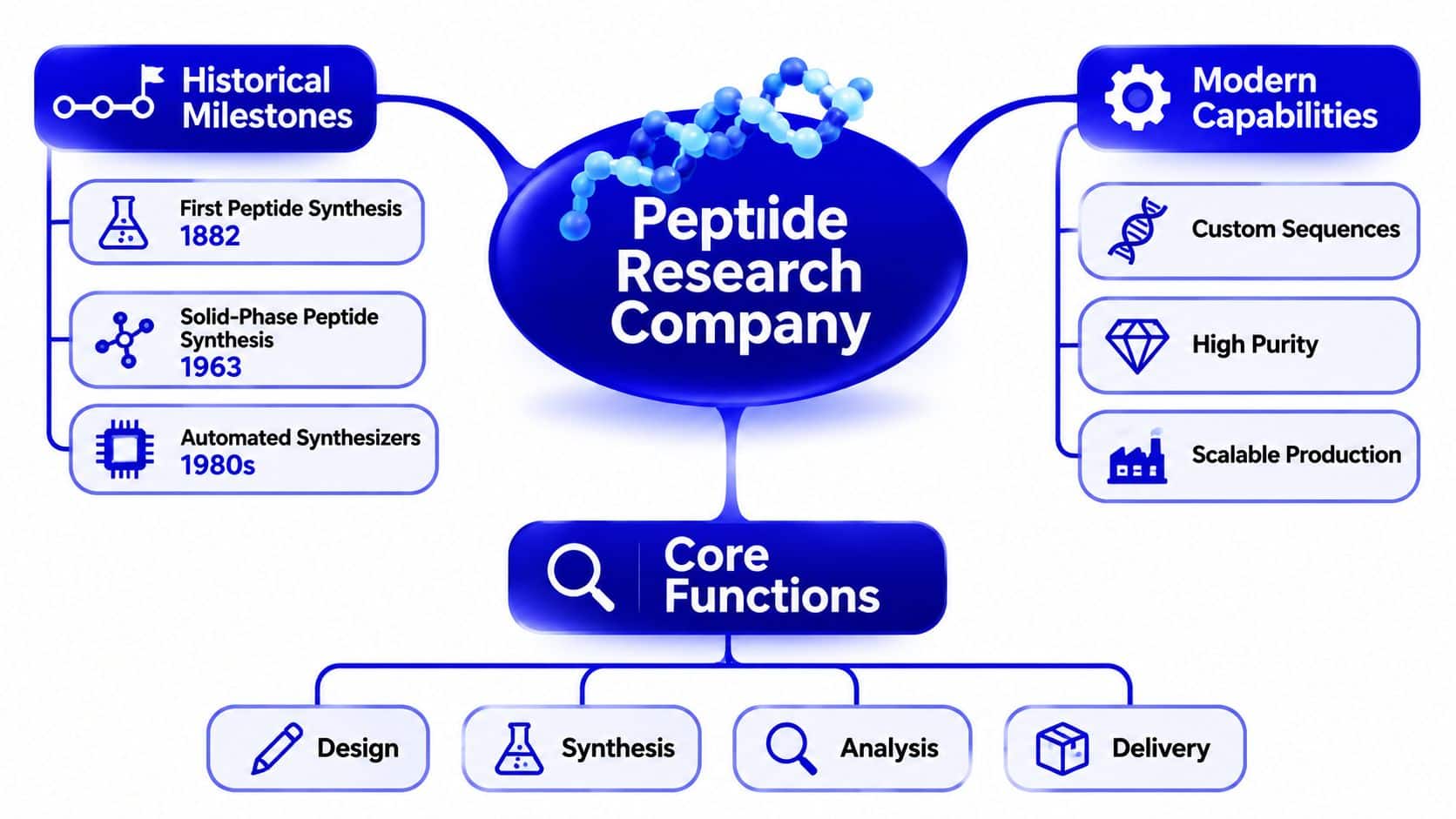
A contemporary peptide research company usually performs or coordinates several connected functions:
The business sits inside a broad ecosystem serving drug discovery, analytical testing, and preclinical research. The market context is substantial. One 2024 estimate valued the global peptides market at USD 43.12 billion, while a separate estimate placed peptide therapeutics at USD 46.4 billion in 2024, as summarized in the peptides market analysis.
North America is a leading region in peptide synthesis-related revenue, and the United States is repeatedly identified as a dominant market in industry analyses. For buyers, that concentration makes manufacturing origin, documentation, and fulfillment capability more relevant than a product name alone.
| Sourcing category | Typical format | Common lab use |
|---|---|---|
| Catalog peptide | Labeled lyophilized vial | Routine screening and exploratory assays |
| Custom peptide | Sequence-specific batch | Method development and specialized experiments |
| Peptide library | Multiple related sequences | Binding, screening, and discovery workflows |
| Analytical reference | Defined material with supporting data | Instrument qualification and assay development |
| Blend or combination | Multiple research compounds | Preclinical study design requiring more than one sequence |
A RUO label shapes the entire transaction. It defines the intended setting, limits how the product can be described, and helps the buyer separate legitimate laboratory sourcing from attempts to position research material as a consumer or medical product.
A supplier's catalog is only useful when the format matches the workflow. A research team developing an analytical method may want a single, well-characterized sequence in a dry form. A preclinical group may evaluate a combination of materials, while another laboratory may need a liquid format for a defined experimental process.
Custom synthesis is the most flexible service. You provide the sequence and requirements, and the supplier manages synthesis, purification, analytical testing, and lot documentation. Catalog inventory is faster for commonly requested compounds because the sequence and production route are already established. The tradeoff is flexibility. A catalog product may arrive sooner, while a custom sequence better matches a specialized assay.
Lyophilized powders are common because removing water can support storage and transport before laboratory reconstitution. The buyer still needs to follow the supplier's storage and handling information, because moisture, temperature, and repeated handling can affect material integrity.
Liquid preparations may reduce preparation steps for a defined workflow, but the researcher needs clear information about concentration, solvent, storage, and stability. A liquid isn't automatically more convenient if the product page leaves those details unclear.
Amino blends contain multiple amino-based research ingredients rather than one isolated sequence. They may suit exploratory workflows, but they're harder to interpret if the experiment requires a single defined molecular input.
Nasal sprays are another delivery format encountered in some catalogs. For RUO purchasing, the format doesn't change the regulatory boundary. A spray remains a research product and isn't approved for human use.
The same named peptide can therefore appear in several formats because different laboratories have different preparation needs. Format affects handling and workflow, but it doesn't replace identity confirmation or batch documentation.
A single-sequence order is easier to attribute when an assay produces an unexpected result. If the signal changes, the researcher has fewer variables to investigate. A combination stack introduces several materials and may be appropriate for a preclinical design, but each component should remain identifiable and documented.
Before ordering, record:
A credible peptide research company should make these choices understandable. If the product page only lists a name and a purity figure, the buyer has too little information to judge suitability.
The most important quality question isn't “What purity percentage is printed on the page?” It's “What evidence shows that this exact lot is the intended material and suitable for the stated research purpose?”
A Certificate of Analysis, or COA, should be batch-specific. The lot number on the certificate must match the identifier on the vial label exactly. A generic certificate from another production run doesn't establish the quality of the material in your shipment, as explained in this guide to batch-specific peptide COAs.
Reversed-phase HPLC or UHPLC with UV detection helps quantify overall chromatographic purity. It can show how much of the detected material appears in the principal peak, but it can't independently prove that the peak has the intended molecular mass.
LC-MS or HRMS adds that identity check. Mass spectrometry helps confirm molecular weight and assign co-eluting impurities, including closely related synthesis artifacts. The distinction is important because a purity percentage alone can create false confidence if the supplier hasn't also confirmed what the main peak represents, as described in this synthetic peptide analytical method case study.
Net peptide content is also different from chromatographic purity. Purity describes the relative composition detected by a method. Net content describes how much peptide is present in the container. A complete document should help you interpret both rather than treating them as interchangeable.
Bacterial lipopolysaccharides can trigger TLR4-driven inflammatory responses. In cell-based or preclinical assays, that contamination may alter readouts even when the peptide sequence is correct. The result can be a confounded experiment, not a meaningful observation about the research material.
USP <85> bacterial endotoxin testing is commonly used as a reference method. Results should be reported at the lot level in EU/mg. For sensitive in vitro and preclinical applications, thresholds below 1.0 EU/mg are often recommended, while some less sensitive research contexts may tolerate values under 10 EU/mg, depending on intended use and reconstitution concentration, according to this endotoxin testing explanation.
A broader testing stack may include sterility and heavy-metals testing. The right panel depends on the intended workflow, but the supplier should explain what was tested and which method was used.
| COA field | Why it matters | Red flag if missing |
|---|---|---|
| Batch or lot identifier | Connects the document to the vial | Certificate can't be tied to the shipment |
| HPLC or UHPLC purity | Shows chromatographic composition | Purity claim has no stated analytical basis |
| Mass spectrometry identity | Supports molecular-weight confirmation | Sequence identity remains uncertain |
| Net peptide content | Separates amount from purity | Researchers may misread the vial quantity |
| Endotoxin result | Helps assess assay-confounding contamination | No basis for sensitive cell or preclinical work |
| Test method and date | Adds analytical context | Results are difficult to interpret |
| Manufacturing traceability | Supports reproducibility across orders | Supplier can't explain product origin |
RUO labeling means the material is for laboratory research, analytical chemistry, animal testing, or preclinical investigation. It isn't approved for human administration or medical treatment. A supplier that displays this boundary clearly, along with an FDA disclaimer, gives buyers a better basis for compliant purchasing.
A technically sound product can still create operational problems if the supplier can't fulfill orders consistently. Procurement teams need more than a catalog. They need clear manufacturing origin, handling information, shipping policies, order tracking, support access, and a process for resolving damaged or incorrect deliveries.
Fast US shipping can matter when a study has fixed laboratory scheduling, but speed shouldn't replace documentation. A product that arrives quickly without a matching COA still creates a quality review problem. The product page should explain packaging, storage expectations, and any relevant transport considerations before checkout.
Look closely when you see:
Price can also provide a clue, although it isn't proof of quality. An unusually low price may reflect differences in scale, testing, documentation, formulation, or sourcing. Ask what the price includes before assuming two vials are equivalent.
A credible US-made supplier typically makes its origin and process visible. It should provide batch records or COAs, explain testing, publish shipping and returns information, and maintain a support channel that can answer technical procurement questions.
An age gate and an FDA disclaimer at checkout also show that the company has considered the regulatory context. These features don't prove analytical quality by themselves, but their absence can indicate that the seller treats research materials like ordinary consumer products.
Consider an analytical laboratory developing a method for detecting a peptide in a complex sample. The team may need a defined reference material, a matching lot identifier, and mass confirmation before interpreting instrument peaks. A catalog compound can support that workflow when its documentation identifies the sequence and connects the result to the vial in use.
A cell-based research group has a different concern. Even if HPLC and mass spectrometry support the intended peptide, endotoxin can introduce an inflammatory signal that distorts the assay. The team should review the lot-level endotoxin result and consider whether the reported value fits the sensitivity of the planned experiment.
A preclinical team evaluating a combination stack faces more variables. Each component should have its own identity and purity information, while the formulation and handling process should be recorded so researchers can distinguish an effect associated with the experimental design from an issue introduced during preparation.
For each use case, the same practical principle applies: keep the research material traceable from order to result. Record the supplier, lot, format, reconstitution details, storage conditions, and analytical documents in the study file.
This approach doesn't guarantee a particular experimental outcome. It does give the team a clearer way to investigate unexpected results, compare batches, and decide whether a finding can be reproduced with a later lot.
Compliance and procurement overlap, but they aren't identical. Compliance asks whether the material is labeled and documented within a research-only framework. Procurement asks whether the supplier can deliver the right material, in the right format, with the right records, at the time the laboratory needs it.
Use the product page for basic facts, then use supplier support to resolve gaps. Ask for the lot-specific COA, analytical methods, manufacturing origin, storage requirements, shipping conditions, and the process for reporting a damaged or mismatched shipment.
Create a simple comparison with these fields:
For teams building broader quality systems, this resource on pharmaceutical reliability insights offers useful context on how dependable operations support regulated and highly controlled environments.
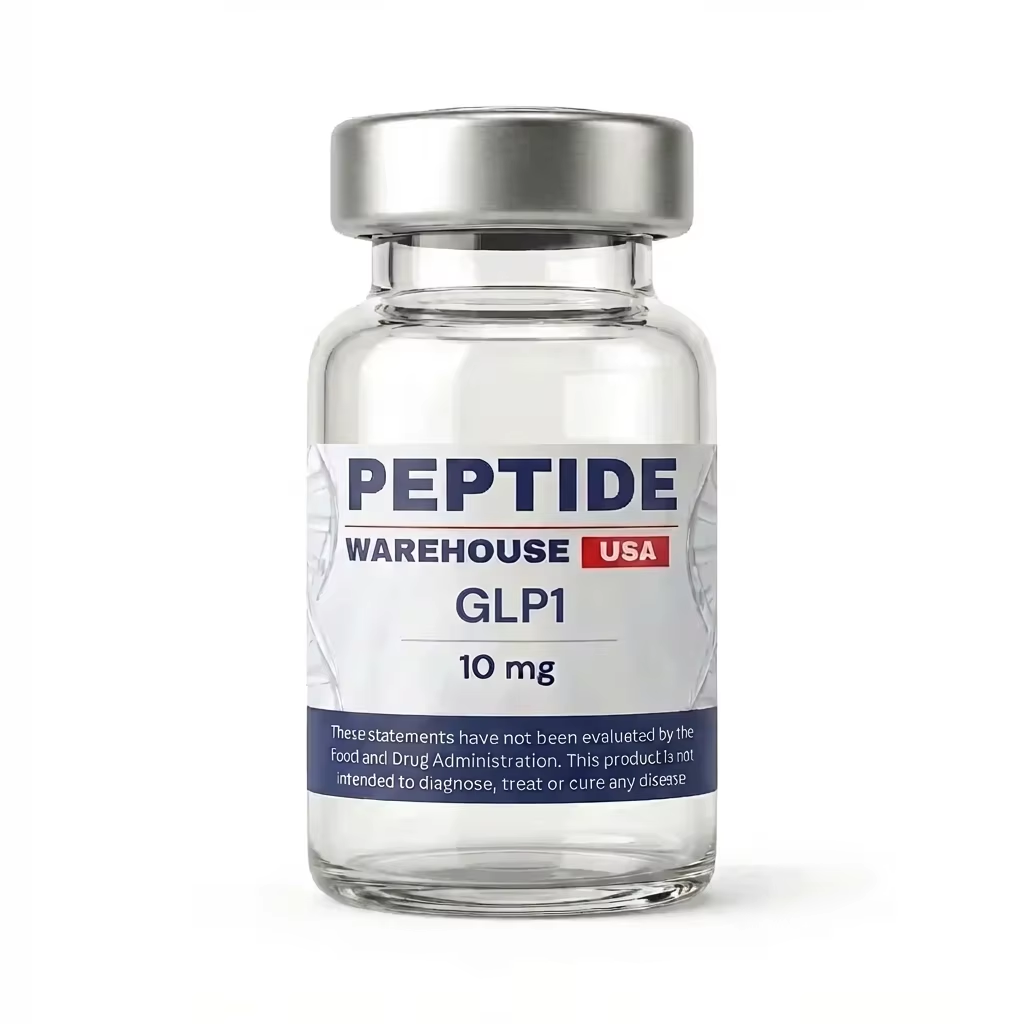
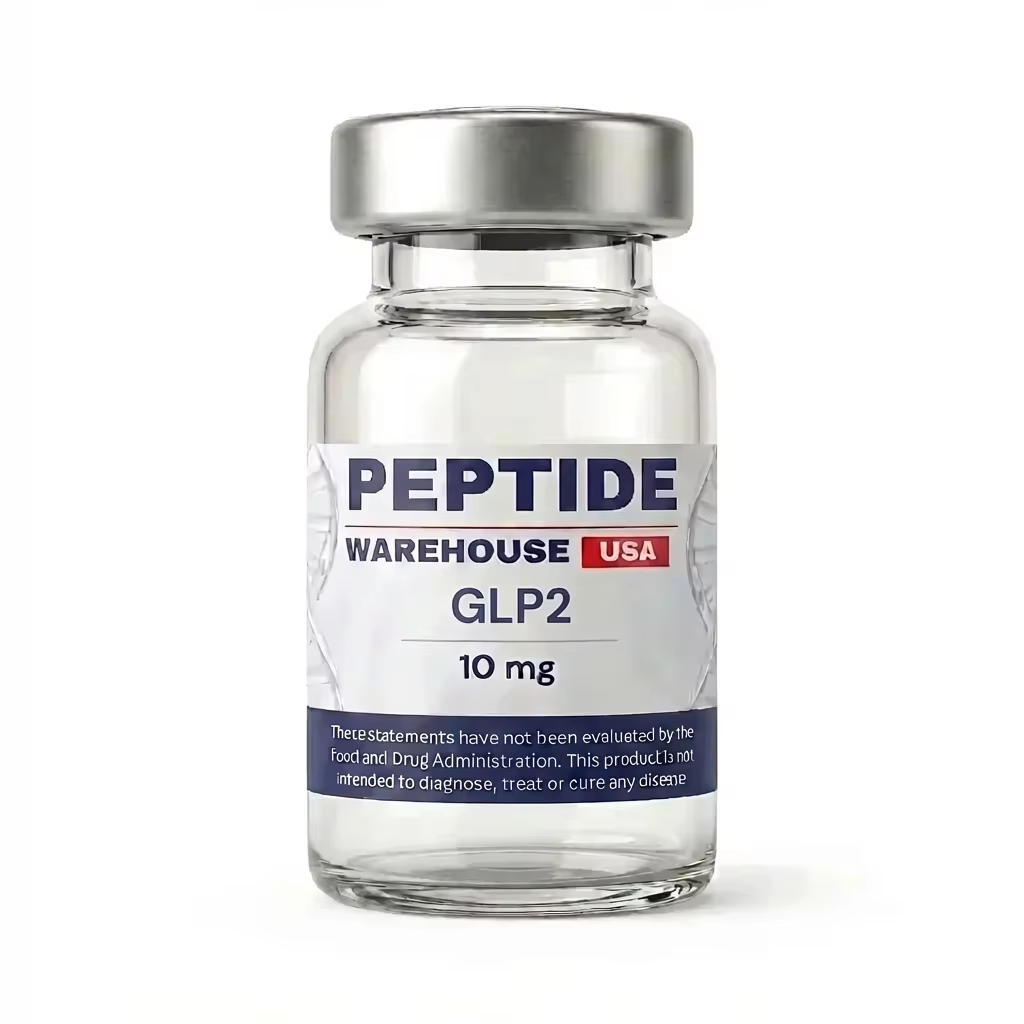
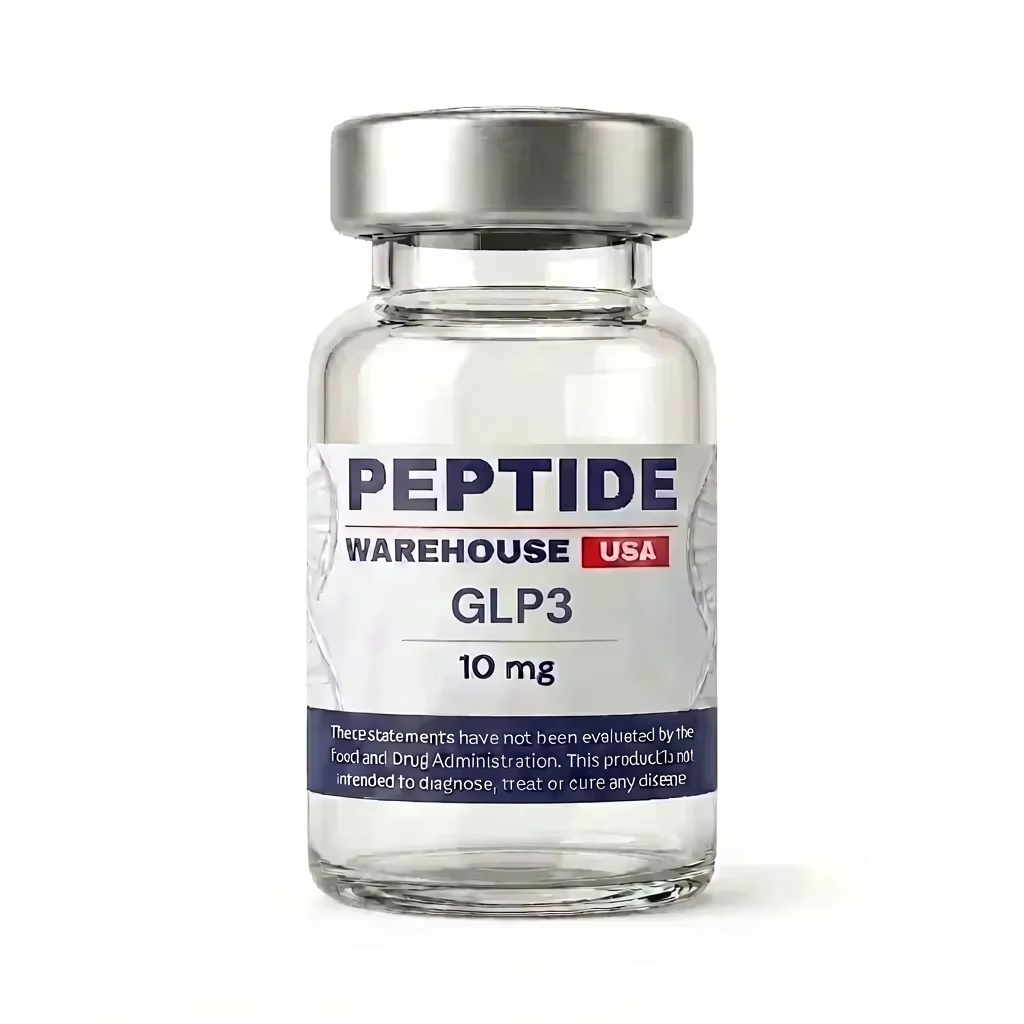
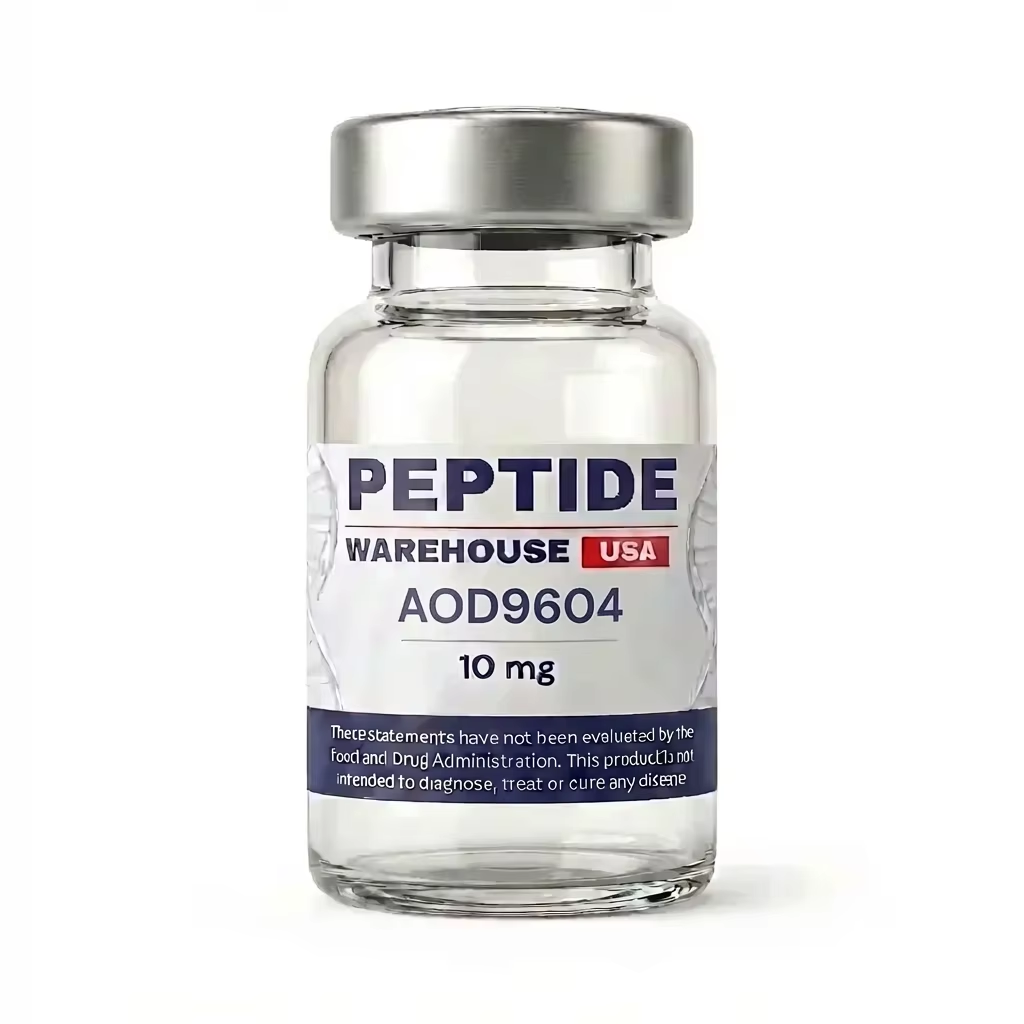
Peptide Warehouse USA is one example of a US-made, research-only supplier profile. Its catalog includes peptides, liquids, amino products, and nasal sprays, with product documentation that includes COAs and microbial and endotoxin reports. Treat that information as a starting point for review, then confirm that the specific product and lot meet your laboratory's requirements.
A peptide research company supplies materials for laboratory, analytical, animal, or preclinical investigation. It isn't a pharmacy or outsourcing facility, and its products aren't approved for human administration or medical treatment. A buyer should reject any supplier that blurs those boundaries through treatment claims or instructions for personal use.
A complete RUO COA should identify the production lot and match the vial label. It should document HPLC purity, mass-spectrometry identity, net peptide content, endotoxin levels, and batch traceability, as outlined in this guide to peptide COA documentation. Depending on the application, sterility and heavy-metals results may also be relevant.
No. Chromatographic purity measures the composition observed through the stated method, while mass spectrometry helps confirm molecular weight and investigate closely related impurities. You should review both results before treating a purity claim as evidence of identity.
Define the intended research use, choose the required format, request the batch-specific documentation, and verify storage and shipping information. Confirm the RUO disclaimer and make sure support can answer questions about the exact product rather than offering only generic marketing language.
If you're comparing suppliers, exploring a catalog such as Peptide Warehouse USA's can help you see how product formats, documentation, shipping information, and research-only boundaries appear in a real purchasing workflow.
Peptide Warehouse USA offers US-manufactured research peptides and related compounds for laboratory, analytical, and preclinical applications, supported by batch documentation, COAs, and microbial and endotoxin reporting. Visit Peptide Warehouse USA to explore the catalog and review the documentation before planning your next research purchase.