No products in the cart.



GLP-1 receptor agonists reduce more fat mass than muscle mass, with roughly 7.9 kg of fat mass lost for every 6.4 kg of muscle mass lost per BMI unit reduction. Native GLP-1 itself lasts only about 1–2 minutes, and just 10–15% of newly secreted GLP-1 reaches systemic circulation intact.
What does "peptides for metabolism" mean beyond appetite suppression and a lower number on the scale? In a research context, it describes short chains of amino acids that act as signaling molecules across glucose, appetite, energy-balance, adipose, and gut-brain pathways. These compounds differ from conventional oral metabolic drugs because their activity depends on receptor binding, peptide sequence, stability, formulation, and biological exposure.
This distinction matters for anyone comparing metabolic peptides, evaluating a research compound, or sourcing study material. A peptide can show strong receptor activity in a controlled assay yet produce inconsistent results if it degrades quickly, fails to dissolve properly, or reaches the wrong tissue.
The useful way to study this field is to move from first principles to experimental reality: define the signaling system, compare peptide families, examine fat mass versus lean mass, then build a sourcing and study workflow that protects reproducibility.
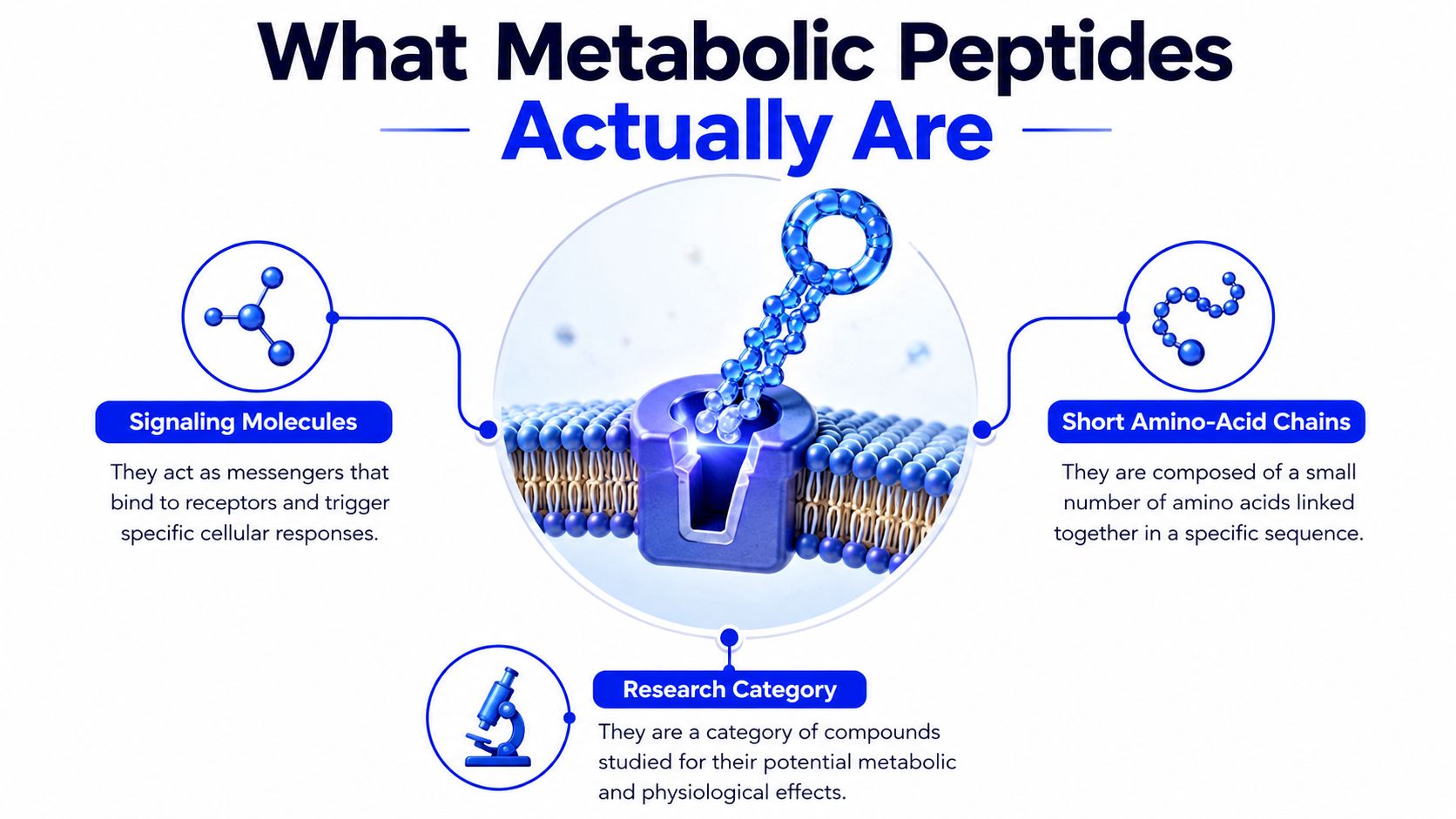
Could a short chain of amino acids influence appetite, glucose handling, energy use, and communication between tissues? Peptides for metabolism describe a research category built around that question. It includes naturally occurring hormones, synthetic analogs, engineered receptor agonists, and experimental compounds that act on metabolic signaling systems.
A peptide hormone works like a molecular key, while its receptor provides a selective binding site on a cell. The peptide's sequence and three-dimensional shape affect which receptor it can engage, how strongly it binds, and which signals follow. A GLP-1-like peptide interacts with the GLP-1 receptor. Other compounds act through receptors associated with growth hormone release, adipose signaling, or mitochondrial function.
The key-and-lock comparison is useful, but incomplete. Receptors can produce different signaling patterns as concentration, exposure time, receptor distribution, and cellular context change. For experimental planning, the sequence is the starting variable. Sequence influences binding, binding influences signaling, and signaling influences the measured endpoint.
The body produces peptide hormones as part of normal physiological communication. GLP-1, PYY, pancreatic polypeptide, insulin, and glucagon participate in processes involving glucose, appetite, and energy use. Research also examines GIP, oxyntomodulin, leptin, and related gut-brain peptides as connected elements of a broader metabolic network (recent metabolic peptide review).
Synthetic peptides can imitate a native hormone, extend its activity, change receptor preference, or engage more than one pathway. These design choices address a basic limitation of many endogenous peptides: their activity may be brief. A modified sequence can resist enzymatic breakdown, remain active longer, or create a more controlled exposure profile.
Peptides occupy a middle ground between small-molecule drugs and larger biologics. They may offer strong target selectivity, yet enzymatic degradation and clearance can limit their performance. Purity, sequence confirmation, solubility, and storage therefore affect the experiment itself, not only the purchasing process.
Practical rule: A peptide's label states its intended identity. Analytical documentation helps establish what arrived in the vial.
Researchers can separate the material assessment into three questions:
This framework gives body-composition studies a firmer foundation. It helps researchers distinguish a true biological difference, such as changes in fat or lean tissue, from variability introduced by the material or its handling.
Why can peptides that affect body composition produce such different experimental results? Their effects depend on the biological module they target, the receptors involved, and how long active material remains available. A growth-axis peptide and an incretin analog may both influence fat or lean tissue, yet they act through different signals and feedback systems.
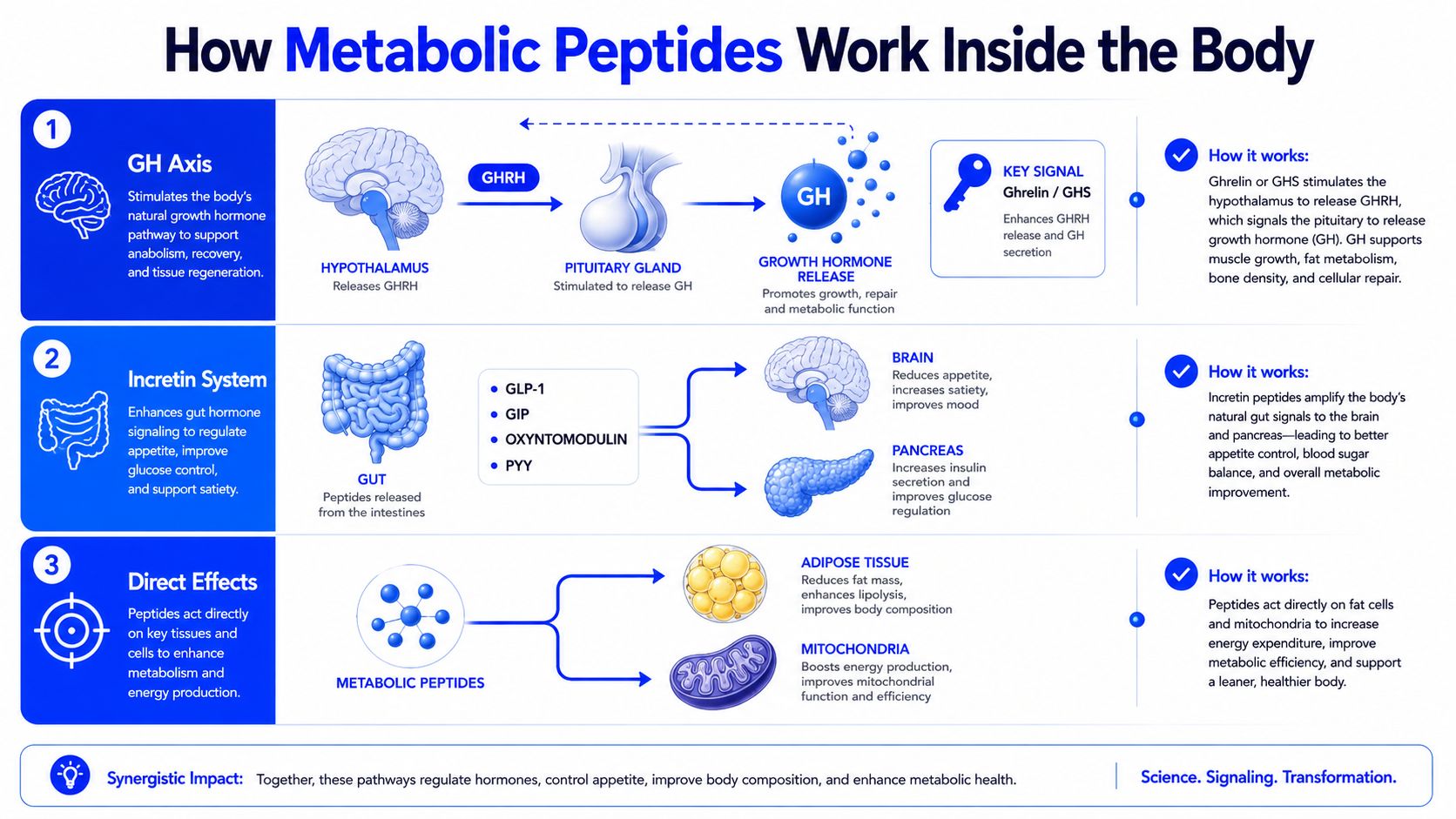
The growth hormone axis begins with signals that regulate pituitary release. Growth hormone-releasing hormone, or GHRH, acts through the pituitary, while ghrelin and growth hormone secretagogues influence growth hormone release through separate signaling routes. Researchers study these compounds in relation to lean tissue, adipose biology, recovery, and energy use.
Stimulating an axis does not produce a fixed metabolic result. The outcome depends on endogenous hormone stores, receptor expression, dosing schedule, feedback loops, species, and the condition of the experimental model. These variables can make the same compound behave differently across cell, animal, and other research systems.
The gut-derived incretin network connects the intestine with the pancreas, brain, and other tissues. After nutrient exposure, GLP-1, GIP, oxyntomodulin, and PYY participate in signaling related to appetite, glucose metabolism, lipid handling, and tissue crosstalk, as described in this metabolic peptide network review.
GLP-1 illustrates how several effects can arise from one receptor system. It can augment insulin secretion, inhibit glucagon secretion, slow gastric emptying, and reduce food intake. Together, these actions influence post-meal glucose control and energy intake (GLP-1 physiology review).
At the cellular level, GLP-1 activates a G protein-coupled receptor. The receptor raises intracellular cyclic AMP, or cAMP, which engages downstream effectors such as protein kinase A and Epac (GLP-1 receptor signaling review).
GLP-1 receptor activation → increased cAMP → PKA and Epac signaling → changes in cellular secretion, metabolism, and gene regulation.
Native GLP-1 is rapidly cleared, as discussed earlier. The table below therefore compares how different analogs address that constraint, including changes that can affect exposure and experimental interpretation (GLP-1 physiology source).
A third module includes direct effects on adipose tissue and cellular energy systems. Metabolic peptides may influence mitochondrial function, inflammation, energy expenditure, and organ-specific metabolism, so their relevance extends beyond appetite signaling.
For experimental design, receptor affinity is only one variable. Proteolysis, clearance, tissue distribution, formulation, and exposure time can determine whether a peptide produces a measurable result in a cell or animal model. These factors also matter when interpreting changes in fat mass alongside lean mass.
A short explainer can reinforce the relationship between peptide binding and intracellular signaling:
A mechanism-first comparison is more useful than a list of popular names. The same outcome, such as reduced fat mass or improved glucose handling, can arise from different biological routes and may carry different experimental limitations.
| Family | Representative peptides | Primary pathway | Typical research question |
|---|---|---|---|
| Incretin and gut-derived peptides | GLP-1, GIP, oxyntomodulin, PYY | Gut-pancreas-brain signaling | How does receptor activation affect glucose, appetite, lipid handling, or tissue crosstalk? |
| Growth-axis peptides | GHRH-related compounds, ghrelin mimetics, growth hormone secretagogues | Pituitary and growth hormone signaling | Does pathway stimulation alter lean tissue, adipose biology, or energy use in the selected model? |
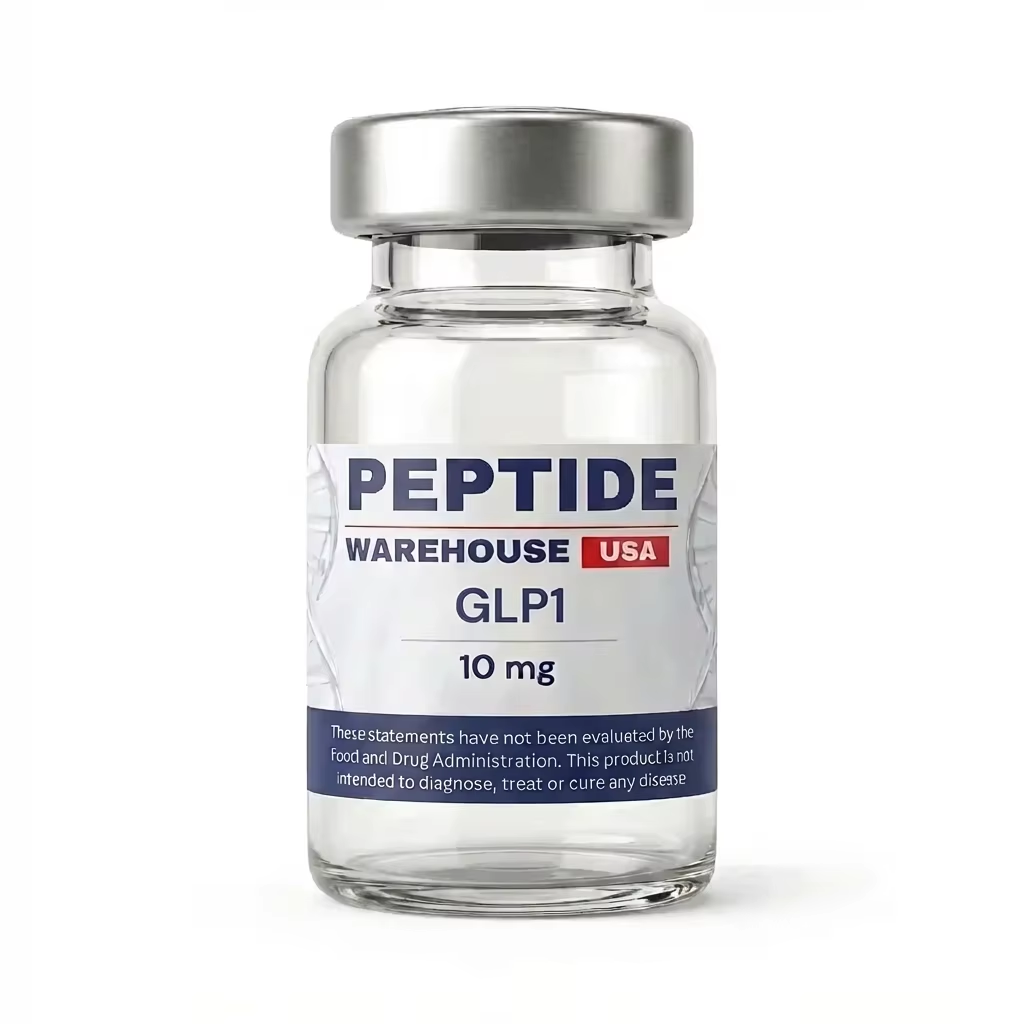
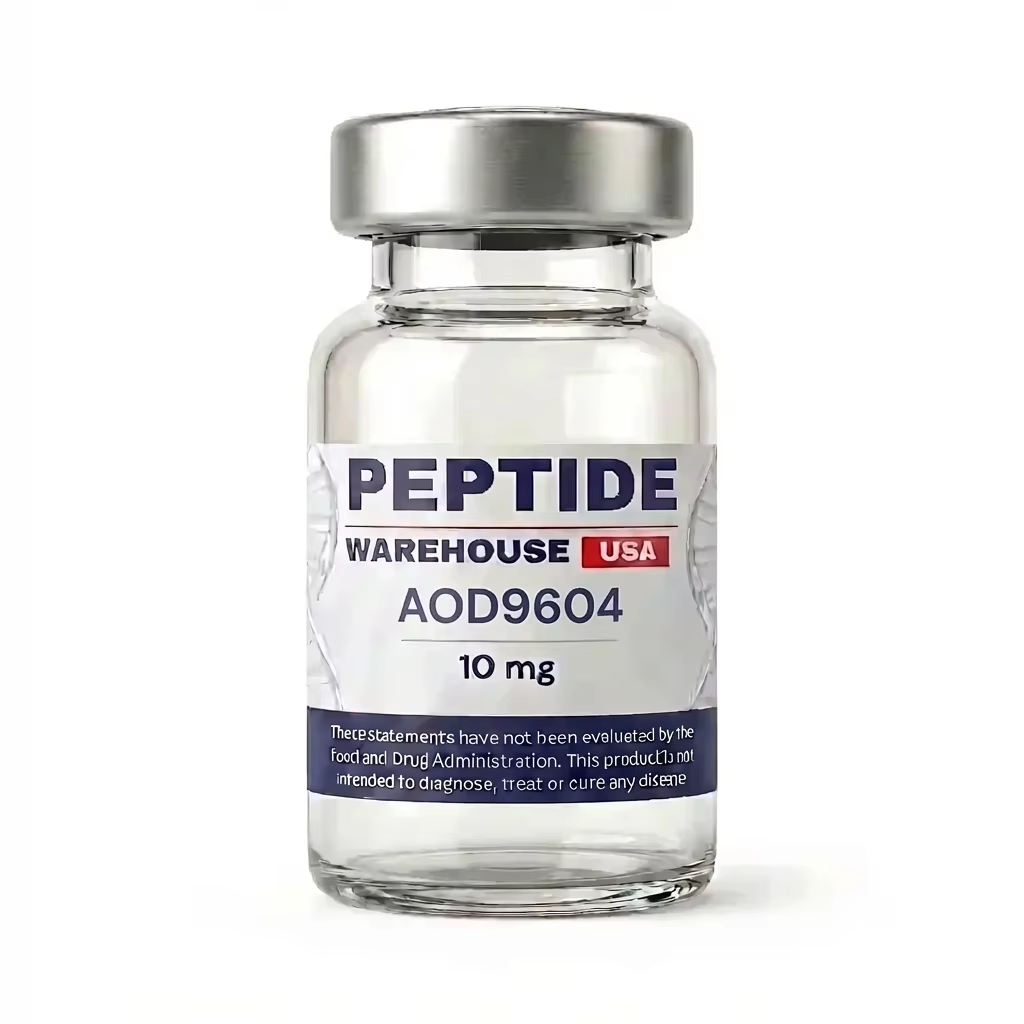
| Adipose and mitochondrial research compounds | MOTS-C, AOD-9604, 5-AMINO-1MQ | Fat metabolism, cellular energy, and nutrient utilization pathways | Does the compound change substrate use, mitochondrial efficiency, or adipose behavior? |
| Repair and recovery peptides | BPC-157, TB-500 | Tissue signaling and inflammatory pathways | Do changes in tissue health indirectly affect activity, nutrient handling, or body composition? |
Incretin analogs have the clearest connection to modern metabolic drug development, particularly for glucose and appetite pathways. The history of GLP-1 shows how a peptide identified in its truncated intestinal form, GLP-1(7-37), in 1986 became a clinically important target, with its discovery and drug development later recognized by the 2024 Lasker–DeBakey Clinical Medical Research Award (GLP-1 historical source).
Growth-axis compounds require more careful separation between pathway activity and validated outcome. A receptor or hormone response in a preclinical model doesn't automatically establish a body-composition result in another species or setting.
Mitochondrial and adipose peptides attract interest because they may address energy utilization more directly. Repair-oriented compounds can be relevant when tissue integrity, inflammation, or activity changes influence metabolic readouts, but their metabolic relevance may be indirect.
Researchers also need to distinguish “studied for” from “approved for.” A compound can have a plausible mechanism and published preclinical work while remaining investigational and unsuitable for human use.
Metabolic research often benefits from adjacent technical resources too. For example, understanding anatomical relationships can improve experimental communication and imaging interpretation, making this heart chambers and valves 3D resource useful when studies involve cardiovascular endpoints or organ-level anatomy.
Does a lower number on the scale show what a metabolic peptide changed? Weight alone cannot answer that. Total mass combines fat tissue, muscle, water, and other compartments, so the same weight reduction can represent different biological outcomes.
Recent genetic evidence indicates that GLP-1 receptor agonists reduce more fat mass than muscle mass, with roughly 7.9 kg of fat mass lost for every 6.4 kg of muscle mass lost per BMI unit reduction (University of Hong Kong body-composition evidence).
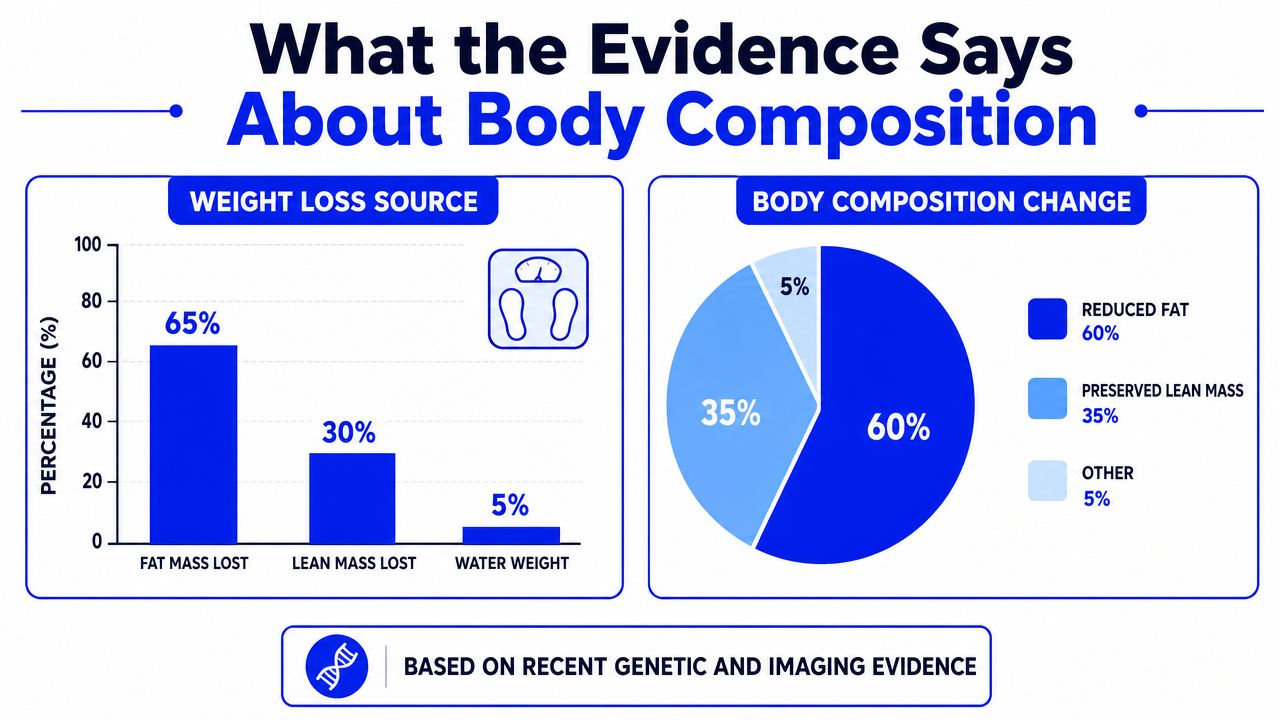
The finding still leaves lean mass as an important endpoint. Researchers and informed buyers should ask whether an intervention changes fat mass, lean mass, visceral fat, glucose regulation, energy expenditure, and tissue function, and whether those changes occur together in a favorable pattern.
Lean mass includes more than contractile skeletal muscle, and every measurement method has limits. DEXA, MRI, food-intake records, strength testing, and relevant blood biomarkers each capture different parts of the response. Used together, they can show changes that body weight conceals.
Resistance training and adequate protein also matter in body-composition studies. They do not prove that a peptide preserves muscle, but they help researchers separate compound effects from energy restriction, activity, and their interaction.
Endpoint selection should follow the peptide class and the research question. An appetite-focused incretin study may prioritize food intake, glucose control, and fat distribution. A mitochondrial or adipose-targeting study may need measures of energy expenditure, substrate use, or tissue-specific signaling. Repair-oriented compounds may require tissue-function or inflammation measures, because their metabolic effects could be indirect.
Next-generation research examines combinations such as GLP-1/glucagon and GLP-1/GIP-style strategies. Glucagon receptor activity may complement incretin signaling through effects on metabolic rate and lipid metabolism, including possible changes in liver fat and substrate use.
These remain research directions, not consumer recommendations. For experimental work, the practical question is whether combining pathways improves several defined endpoints without obscuring which receptor activity produced the observed result. Tolerability, plateauing response, and incomplete changes across metabolic measures all require separate assessment.
A good peptide study starts with a defined hypothesis, not a product name. “This compound supports metabolism” is too broad to guide model selection or analysis. A stronger hypothesis identifies the peptide, the biological system, the route, and the primary outcome.
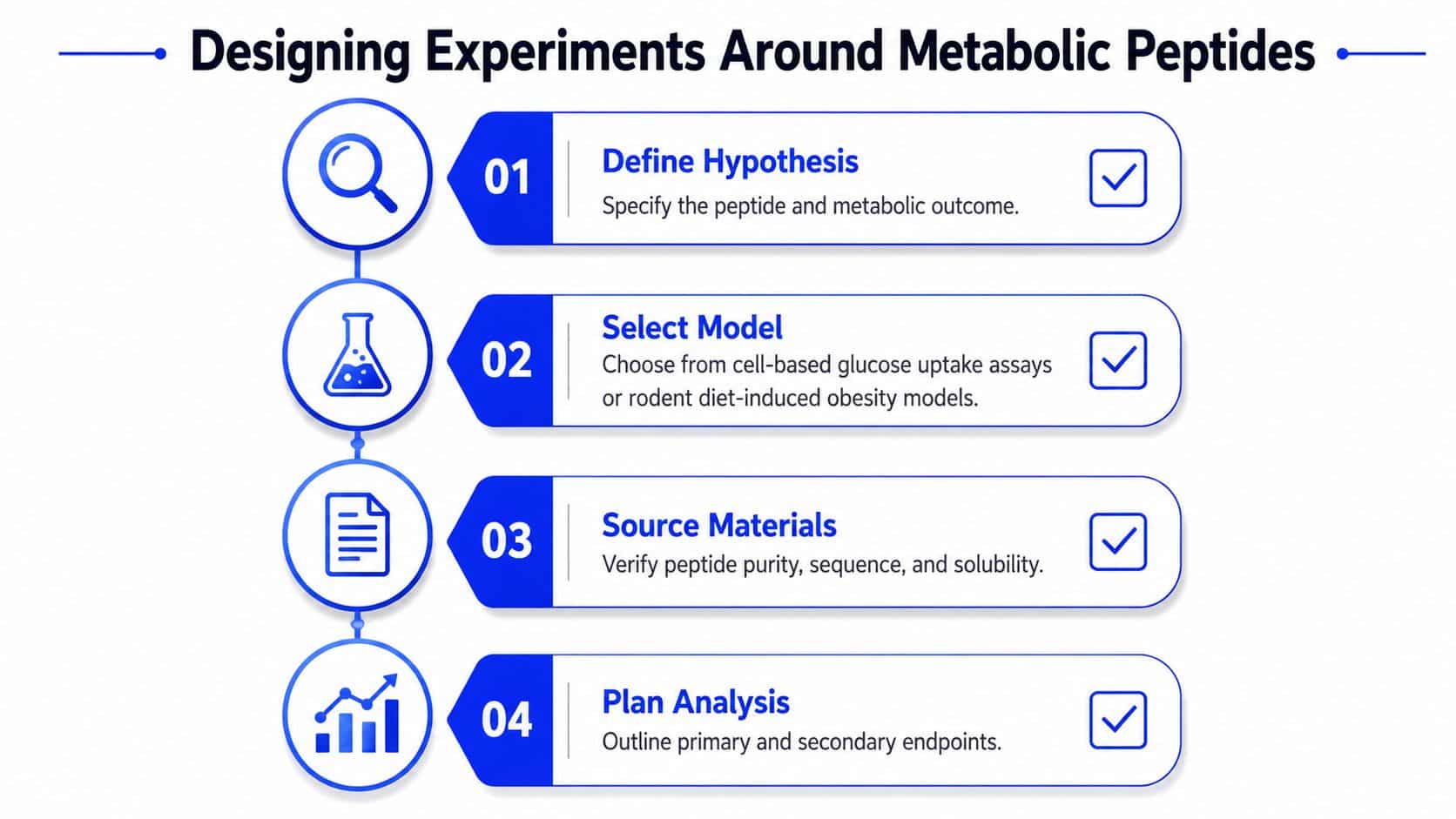
Cell-based glucose uptake assays can isolate receptor and signaling behavior under controlled conditions. Researchers might examine glucose transport, insulin responsiveness, cAMP production, or downstream pathway activation before moving to a more complex model.
Rodent diet-induced obesity models add whole-body context, including food intake, body weight, adipose tissue, glucose tolerance, insulin sensitivity, and organ-level effects. A hyperinsulinemic-euglycemic clamp can provide a more detailed assessment of insulin action, but the model requires careful technical execution and interpretation.
The model should match the question:
Relevant measurements may include fasting glucose, insulin, HbA1c, lipid panels, food intake, body weight, and body composition assessed with DEXA or MRI. The best endpoint depends on the mechanism. A peptide aimed at mitochondrial energy use shouldn't be judged only by appetite, while an incretin analog shouldn't be evaluated without glucose-related measurements.
Published literature can help establish dosing ranges, but researchers must account for species, route, formulation, and exposure. A dose that works in one model may not translate to another because receptor expression, absorption, metabolism, and clearance differ across species.
Experimental reality: Route mismatches, species-specific receptor expression, and unstable material can undermine a study before the first assay begins.
Peptides can degrade through proteolysis, oxidation, aggregation, or unsuitable storage conditions. A review of 25 FDA-approved peptide drugs identifies tissue peptidases as major drivers of degradation and describes stabilization approaches including amino-acid substitution, cyclization, terminal modification, and depot-like delivery systems (FDA-approved peptide stability review).
That's why formulation, reconstitution, aliquoting, temperature control, and freeze-thaw handling may affect efficacy more than a small change in dose selection. A procurement plan should document these variables alongside the biological protocol.
Sourcing starts with traceability. A lab needs to know what compound it ordered, which lot it received, how the material was tested, and how the supplier expects it to be stored.
A Certificate of Analysis, or COA, should be a baseline document rather than an optional extra. Researchers should verify that the COA identifies the compound, sequence or relevant identity information, lot number, test method, purity result, and testing date.
COA standard: Treat documentation as part of the sample. If the paper trail is incomplete, the experimental material is incompletely characterized.
Researchers should also review solubility information before ordering. A peptide that dissolves poorly in the selected buffer can produce an apparent lack of biological activity, while aggregation can complicate dosing and assay interpretation.
Storage instructions deserve equal attention. Cold-chain handling, light exposure, moisture, reconstitution conditions, and aliquoting practices can all influence material quality. A supplier's shipping and storage guidance should fit the lab's actual receiving and handling workflow.
All experimental materials require an appropriate compliance posture. Research peptides and related compounds should be treated as research use only, not as products for human consumption, and human administration belongs within the applicable medical, regulatory, and institutional frameworks.
Where is metabolic peptide research heading beyond appetite suppression? The field is shifting from single-receptor studies toward network design. GLP-1 remains central, while researchers examine combinations that coordinate appetite, glucose regulation, lipid handling, energy expenditure, and organ-specific metabolism.
Multi-agonists reflect this direction. Researchers are also applying multi-omics, computational modeling, and AI-assisted peptide design to identify sequences with greater selectivity, stability, tissue targeting, or distinct signaling behavior. These approaches may help test whether changes in body weight reflect reduced fat mass, preserved lean mass, or both.
The meaning of “metabolic” is widening. Studies increasingly consider mitochondrial function, inflammation, adipose communication, liver fat, and energy-substrate use alongside appetite and scale weight. That broader scope supports better questions, but it also requires endpoint panels that distinguish fat and lean tissue rather than treating total weight as the complete result.
For informed buyers and laboratory teams, practical priorities include:
Peptide Warehouse USA supplies research peptides and related compounds for laboratory, analytical, and preclinical applications. Its documentation includes COAs, microbial and endotoxin reports, and stated purity levels up to 99.5%. Researchers can review the catalog at Peptide Warehouse USA and use the available records to build a sourcing process suited to laboratory compliance and reproducibility.