No products in the cart.



You tweak a hamstring in training, or your knee still feels unstable weeks after a hard pivot, and the usual recovery playbook starts to feel thin. Rest helps, rehab matters, but many people eventually start searching for something more targeted. That's where peptides for muscle repair enter the conversation, not as a proven shortcut, but as a serious area of preclinical research that sits somewhere between regenerative biology and internet hype.
The problem is that online discussion often skips the part that matters most. Some peptides look intriguing in animal and lab models, yet that doesn't mean they've crossed the line into validated human use. If you're trying to sort mechanism from marketing, this guide takes the careful route.
You'll get a practical view of what peptides are, how researchers think they may influence muscle healing, which compounds get the most attention, and why safety, sourcing, and regulatory status matter as much as the biology itself.
Slow muscle recovery frustrates almost everyone who trains seriously. Even a modest strain can interrupt lifting, sprinting, field sport practice, or basic daily movement longer than expected. That gap between injury and full function is exactly why researchers keep studying more targeted biological tools.

Basic recovery methods still matter. Loading progression, sleep, protein intake, and skilled rehab remain the foundation. If you're dealing with a sports injury and want a grounded overview of conservative care, Aspen Falls Wellness offers a useful primer on injury-focused support.
Muscle healing isn't one event. The body has to manage inflammation, restore blood flow, coordinate repair cells, rebuild connective architecture, and reorganize tissue so the muscle can tolerate load again. That complexity explains why recovery often feels uneven.
Researchers are interested in peptides because peptides can act as signaling molecules. Instead of broadly pushing the whole system, they may influence selected repair pathways that control how tissue rebuilds.
Peptide research is compelling when it clarifies biology. It becomes misleading when preclinical signals are marketed as settled human outcomes.
A useful marker of that scientific interest comes from a preclinical evidence review. A 2024 systematic review in the Orthopaedic Journal of Sports Medicine analyzed 36 studies and found that peptides targeting angiogenesis, cellular migration, and growth factor expression consistently showed measurable effects on tissue repair endpoints in preclinical models, with satellite cell activation and VEGF-driven angiogenesis identified as the most frequently reported mechanisms of action for muscle recovery (vivepeptides.com summary of the review).
The confusion usually starts with language. Articles blur together cell studies, rodent models, anti-aging clinics, supplement culture, and black-market injectables as if they belong in one bucket. They don't.
A more careful way to think about peptides for muscle repair is this:
That distinction matters because the question isn't whether peptides can influence repair biology in principle. The question is which compounds have meaningful evidence, in what model, under what conditions, and with what safety profile.
A peptide is a short chain of amino acids. If amino acids are letters, peptides are short words, and proteins are full sentences. That simple comparison helps because most confusion starts when people hear “peptide” and assume it means either “small protein” or “performance drug.”
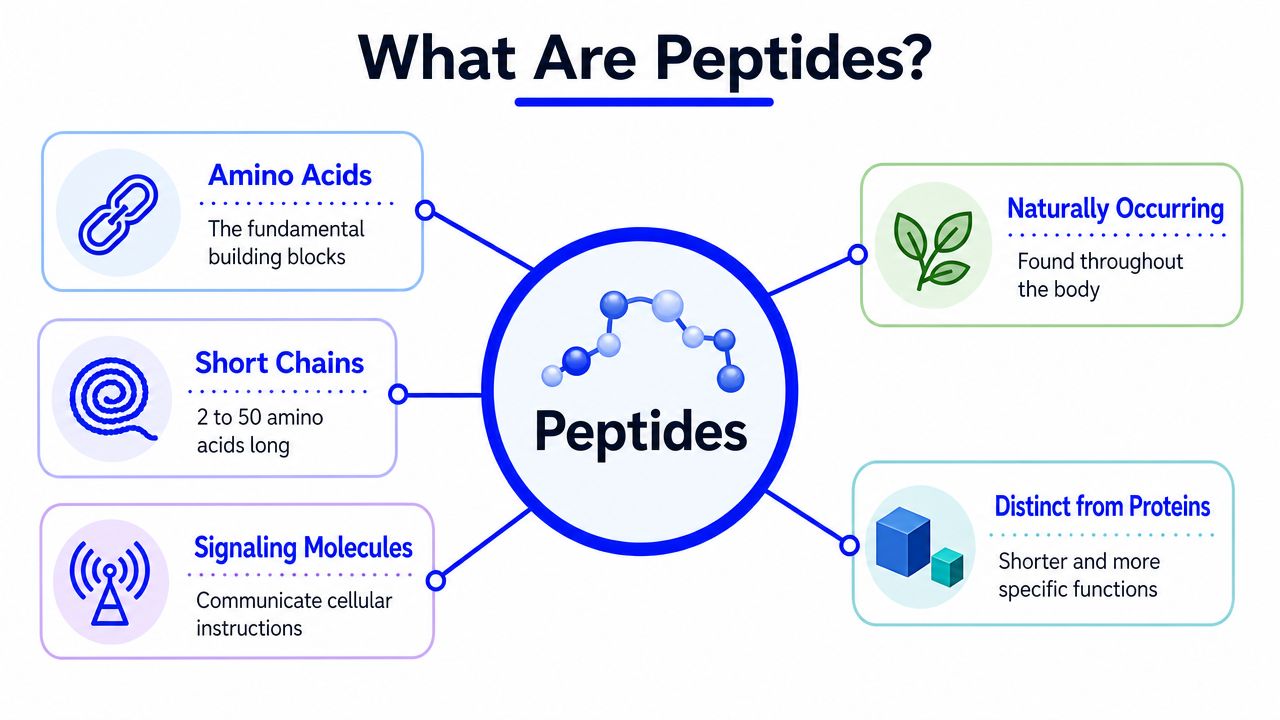
In biology, peptides often function like messages. A cell releases or responds to a peptide, and that signal can alter behavior such as growth, migration, inflammation, or repair. A practical mental model is a key-and-lock system. The peptide is the key. A receptor or binding target is the lock. If the fit is right, a specific action follows.
That specificity is why peptide science gets so much attention. Researchers aren't just asking whether tissue can heal faster. They're asking whether a defined signal can nudge a defined process.
For readers looking at the broader clinical environment, advanced peptide therapy options can show how these compounds are discussed in practice settings, though clinical marketing language should always be separated from the actual evidence standard for muscle repair.
Peptides and proteins are related, but they aren't the same thing in function or scale. Proteins are larger and usually handle more structurally complex jobs. Peptides tend to be shorter and often act as messengers.
Steroids are a different category entirely. They aren't amino acid chains. They don't work through the same signaling framework as most peptides discussed in repair research. So when someone lumps peptides for muscle repair together with anabolic steroids, they're collapsing two distinct biological ideas into one.
A clean distinction looks like this:
Specificity is attractive because tissue repair is not one switch. It's a timed sequence. New blood vessels need to form. Inflammatory signals need to be controlled, not erased. Repair cells need to migrate, divide, and organize matrix in the right place.
That's why peptide research often sounds narrow. One peptide may be discussed in relation to angiogenesis, another in relation to satellite cells, another in relation to connective tissue remodeling. That narrowness isn't a weakness. It's the point.
Here's a quick explainer if you want a visual overview of peptide basics:
A strained muscle does not recover through one single switch. Repair looks more like a staged construction project. Blood flow has to support the site, inflammatory signals have to rise and then resolve on time, and local repair cells have to rebuild functional fibers instead of leaving behind disorganized tissue. Peptide research is usually trying to influence one part of that sequence, not the whole process at once.
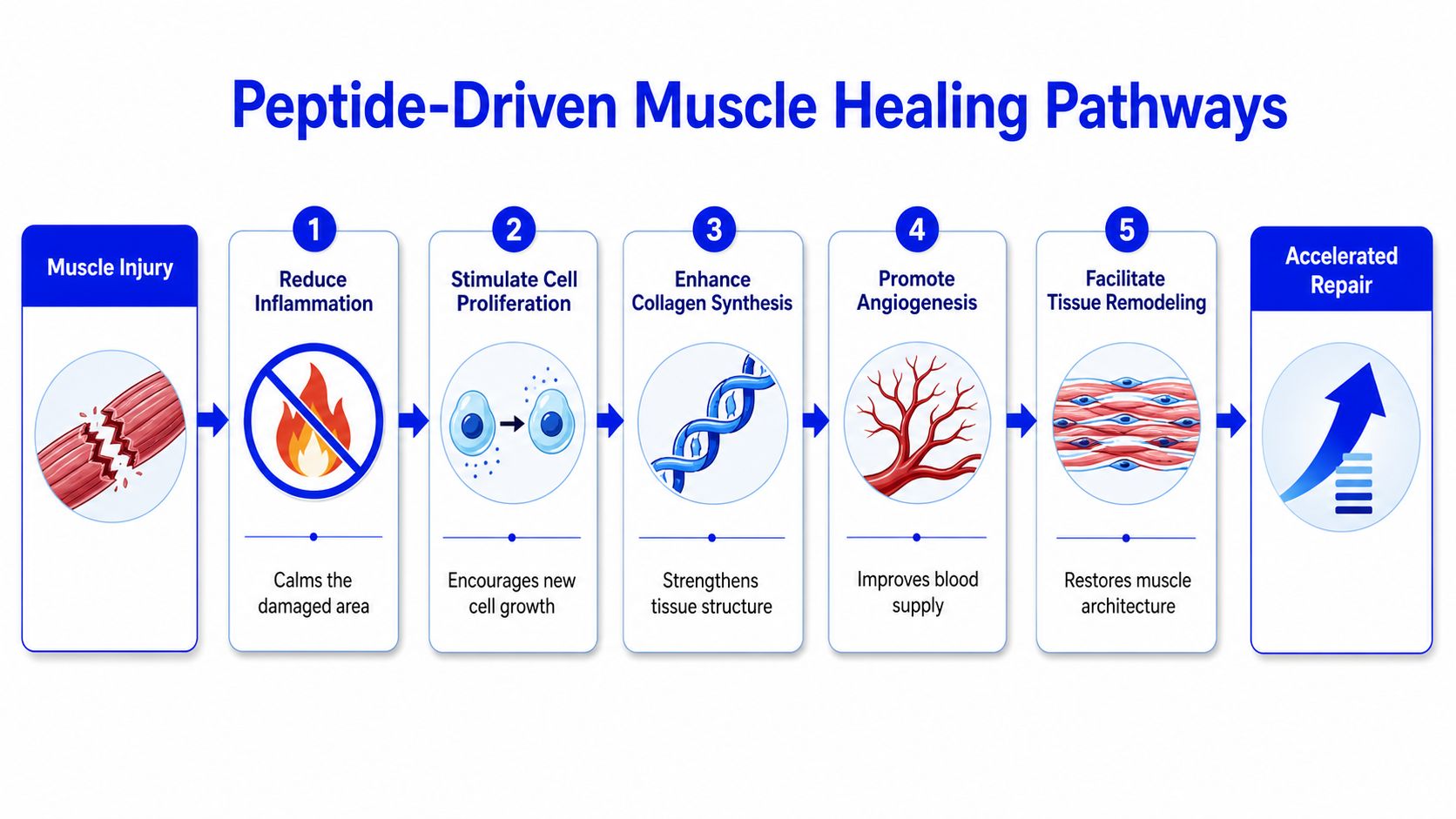
That distinction matters because broad claims about a peptide “speeding recovery” often hide a more limited finding from a cell study or animal model.
Muscle tissue repairs poorly if the local blood supply is inadequate. Oxygen, amino acids, immune cells, and growth signals all depend on microcirculation reaching the injured area. For that reason, angiogenesis, the formation of new blood vessels, appears again and again in preclinical muscle repair research.
A simple way to frame it is this: new vessels do not rebuild muscle fibers themselves, but they improve the conditions that make rebuilding possible. Better perfusion can support debris clearance early and tissue organization later.
Inflammation is part of normal healing. An early inflammatory phase helps clear damaged material and recruits the cells that begin repair. Trouble starts when that response is too weak, too strong, or persists longer than the tissue needs.
So the research question is usually about regulation, not suppression. A candidate peptide may look interesting if it shifts inflammatory signaling toward a more orderly transition from injury response to regeneration. That is a narrow claim, but a meaningful one.
One grounded example comes from work on collagen-derived peptides. In an experimental context, bioactive collagen peptides used with resistance training were associated with changes in muscle remodeling biology, including effects related to muscle protein synthesis, oxidative stress, and myofibrillar restructuring (American Journal of Physiology Cell Physiology). That does not validate every recovery peptide being marketed online. It does show how a peptide-related intervention can interact with repair pathways in a measurable way.
Practical rule: Useful healing signals are usually timed and specific. A stronger signal is not automatically a better one.
Blood supply and inflammatory control set the stage. Satellite cells help perform the actual rebuilding.
These resident muscle stem cells activate after injury, proliferate, and contribute new nuclei to regenerating fibers. If angiogenesis improves the worksite, satellite cells are part of the repair crew. Without effective activation and coordination here, healing can drift toward incomplete regeneration or fibrotic remodeling.
Experimental studies have examined peptides that may influence this step. One example is a PEDF-derived peptide called PSP, which has been studied for effects on muscle progenitor cell proliferation and regenerating myofiber growth in preclinical models. That is scientifically interesting because it targets a specific bottleneck in muscle regeneration. It is not the same as having human trial evidence that a peptide can reliably restore injured muscle in clinical practice.
Pathway-level thinking helps separate plausible biology from vague marketing. If a peptide is said to “help muscle healing,” the useful follow-up questions are specific. Is the proposed effect on vascular growth, inflammatory signaling, progenitor cell activity, extracellular matrix remodeling, or several of these at once? Was that effect shown in cultured cells, rodents, or humans?
Those questions sound technical, but they protect against overstatement. In this field, the gap between promising animal data and validated human outcomes is often the whole story. Many compounds discussed for repair remain research tools, sold in a research-use-only context, with limited human evidence and unresolved safety, sourcing, and regulatory questions.
A strained muscle in a rodent model can look dramatically better after exposure to a candidate peptide. Histology may show cleaner fiber organization, less disordered scar formation, or faster vascular response. The hard part is what comes next. Those findings do not automatically tell us what will happen in an injured human muscle, at a clinically useful dose, with an acceptable safety profile.
That gap matters most in the peptides that get discussed most often online.
BPC-157 is probably the clearest example of a compound with a strong reputation in preclinical discussion and a weak human evidence base. In animal and cell research, investigators have examined it for effects related to angiogenesis, collagen organization, and healing across several tissue types. Those mechanisms are relevant to muscle repair because injured muscle needs blood supply, matrix control, and coordinated regeneration rather than chaotic scar deposition.
The caution is straightforward. Human clinical evidence for muscle repair is sparse and does not support confident medical claims. So BPC-157 remains better understood as a research peptide with interesting preclinical signals than as a validated treatment for injured people.
TB-500 is commonly described as a synthetic fragment associated with Thymosin Beta-4, a peptide involved in cell migration and tissue response to injury. A useful comparison is a site supervisor rather than a builder. The interest is less about directly growing new muscle fibers and more about influencing the cellular movements and repair conditions that may shape healing.
That idea is biologically plausible. It is also easy to oversell. Public discussion often treats TB-500 as if mechanism alone were enough, but the human evidence for muscle-specific repair remains limited and difficult to interpret.
GHK-Cu sits in a different category. It is a copper-binding peptide better known from wound healing and skin remodeling research than from direct muscle regeneration studies. Researchers examine it because copper-related signaling can intersect with tissue repair, extracellular matrix turnover, and inflammatory control.
For muscle, the case is still indirect. A peptide can make sense on paper and still lack the kind of targeted human data needed to support clinical use for strained or torn muscle.
IGF-1 analogs attract attention because they connect more directly to muscle growth biology than peptides such as BPC-157 or TB-500. Instead of mainly shaping the repair environment, they may influence anabolic signaling itself, including pathways tied to muscle cell growth and regeneration.
That stronger biological pull is exactly why interpretation requires more care. Compounds that affect growth signaling raise broader questions about dosing context, off-target effects, endocrine consequences, and fairness or legality in sport. The science is not vague here. The biology is potent, and potent biology demands a higher evidentiary bar.
| Peptide | Primary Proposed Mechanism | State of Evidence |
|---|---|---|
| BPC-157 | Angiogenesis-related effects and more organized collagen deposition | Strong preclinical interest, but no validated high-quality human clinical evidence for muscle repair |
| TB-500 | Cell migration and tissue repair signaling concepts | Discussed widely, but human evidence for muscle repair remains limited and unclear |
| GHK-Cu | Tissue remodeling and repair-related signaling | Mechanistically interesting, but muscle-specific human evidence is limited |
| IGF-1 analogs | Growth-related signaling tied to muscle regeneration | Biologically potent area that requires careful clinical interpretation |
A peptide can have a plausible mechanism, encouraging animal data, and active commercial demand while still lacking the evidence needed for human therapeutic use.
One practical point often gets skipped in popular discussions. These compounds are frequently sold in a research-use-only context, which is a category statement rather than proof of clinical suitability. A supplier such as Peptide Warehouse USA may list compounds in this group, including BPC-157, GHK-Cu, and TB-500, with batch documentation intended for laboratory, analytical, and preclinical work rather than human consumption.
Once the conversation shifts from theory to actual bench work, the priorities become much less glamorous. Stability, documentation, handling discipline, and contamination control matter far more than forum lore.
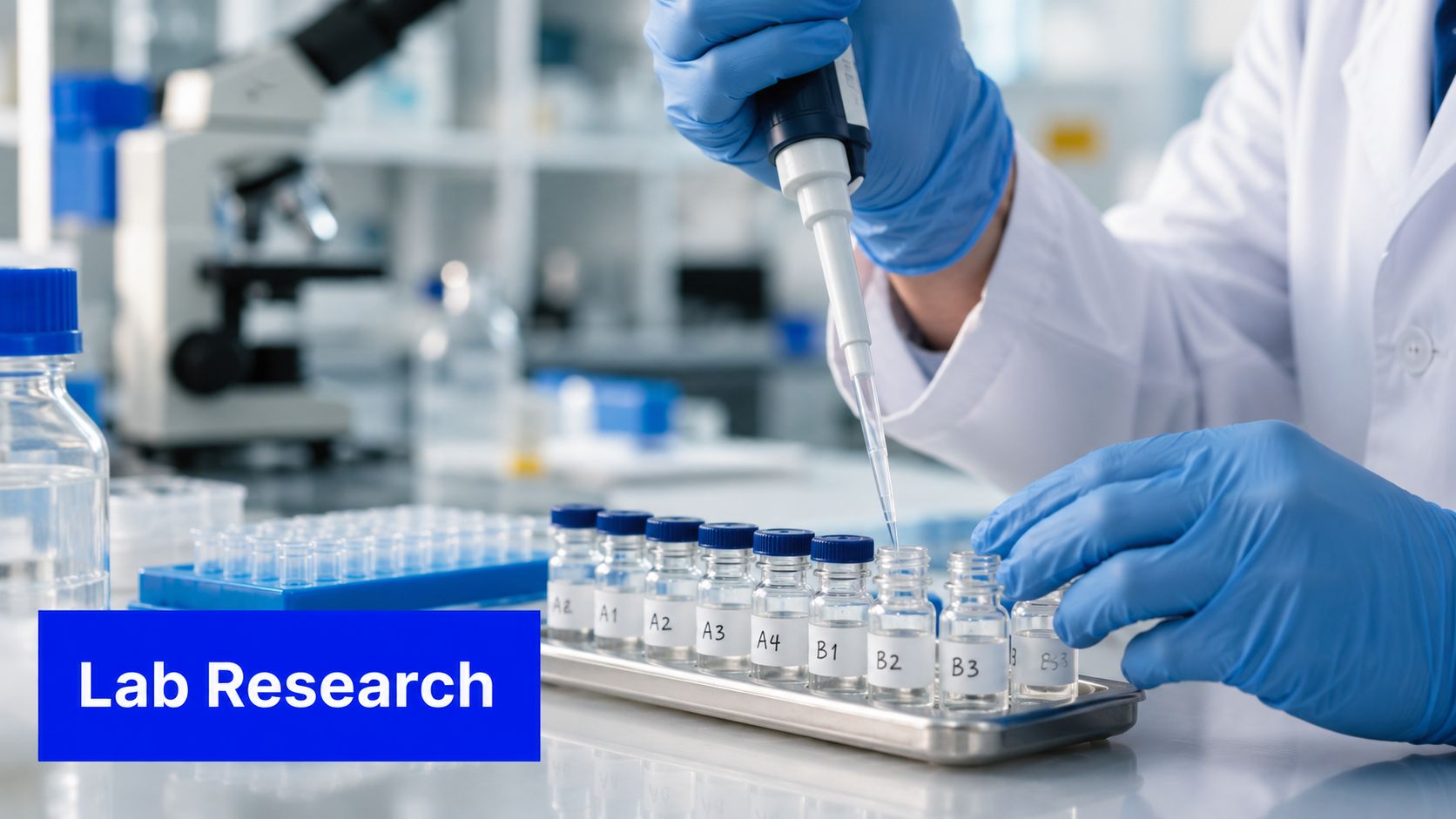
Many research peptides arrive as lyophilized powder, meaning freeze-dried material intended to improve storage stability before preparation. In a lab setting, researchers typically reconstitute these materials using a validated solvent protocol appropriate to the compound and the planned assay.
The basic principle is simple. Add solvent carefully, avoid rough agitation that can stress fragile material, and document final concentration clearly. Small handling errors can create big interpretation problems later.
A disciplined workflow often includes:
Storage is where otherwise careful work can fall apart. Different peptides may respond differently to temperature, light exposure, repeated freeze-thaw cycles, and time in solution.
That means researchers should rely on supplier documentation, internal SOPs, and compound-specific stability data where available. The most common avoidable error isn't a dramatic contamination event. It's casual handling that changes the material before the experiment even starts.
Experimental peptide work benefits from boring habits. Batch tracking, lot-specific records, and supporting documentation protect data quality.
A tight workflow usually includes:
Good peptide research depends less on excitement about a compound and more on whether the lab can reproduce what it thinks it saw.
A common real-world scenario goes like this. A peptide looks promising in rodent injury models, a vendor offers a vial labeled "research use only," and the temptation is to treat purchase as progress. In practice, that label often marks the start of the hardest questions, not the end of them.
For this category of compounds, safety is not just a pharmacology question. It is also a chain-of-custody question, a documentation question, and a regulatory question. If any one of those pieces is weak, the experiment becomes harder to interpret.
The FDA has not approved injectable peptides like BPC-157 or TB-500 for muscle healing, and the World Anti-Doping Agency (WADA) has explicitly banned them. Because they are often sold as unregulated “research chemicals,” there is no guarantee of purity, posing risks of contamination or mislabeling (Men's Health reporting on the regulatory and safety issues).
That point matters because buyers are not evaluating a finished, approved therapeutic product. They are often evaluating a material sold into a research channel with variable oversight. The difference is similar to the difference between a finished medical device and a prototype part. A prototype may still be useful for investigation, but it demands more verification before any result deserves confidence.
The same caution applies to efficacy claims. Market availability can create a false sense of legitimacy. If you want a broader reminder that “available” does not automatically mean “effective” or “well supported,” do supplements really work is a useful read from a physical therapy perspective.
A Certificate of Analysis, or COA, is best treated as a starting document. It can support confidence in a batch, but it does not replace independent verification or good procurement controls.
A useful COA should answer basic identity and traceability questions clearly:
A polished PDF is not the same as good evidence. If the lot number is missing, the methods are vague, or the document reads like marketing copy, caution is warranted.
Often, hype outpaces method. If identity, purity, or contamination status is uncertain, a biological signal becomes difficult to interpret. A positive finding may reflect the peptide, an impurity, a concentration error, or some combination of all three. A negative finding has the same problem.
That uncertainty also explains why "research use only" should not be read as a soft version of medical acceptance. It usually means the opposite. The material is being sold outside the pathway used for approved human therapies, so responsibility shifts back to the purchaser to verify what was obtained and how it can be used lawfully.
For athletes and clinicians working near sport, anti-doping rules are not a side note. A peptide can be scientifically interesting and still be incompatible with a compliant sports setting.
Gray-market sourcing raises the stakes further. If a product is mislabeled, contaminated, or inconsistent from lot to lot, the problem is not only personal risk. It also weakens any conclusion drawn from its use. In other words, poor sourcing does not just threaten safety. It degrades the quality of the evidence itself.
A careful working standard is simple:
Peptide science remains one of the more interesting frontiers in regenerative research because it asks highly specific questions. Can a short signaling molecule improve vascular response in damaged tissue? Can it influence inflammatory timing? Can it activate the cells that rebuild muscle?
Those are worthwhile questions. They also require discipline. The most significant underserved angle is the stark disconnect between promising animal data and the complete absence of high-quality human clinical trials for peptides like BPC-157. Authoritative sports medicine reviews confirm there is “no high-quality clinical evidence in human subjects” for BPC-157 in athletes (AMSSM Sports Medicine Update).
A balanced view of peptides for muscle repair looks like this:
The next step for the field isn't louder marketing. It's better trials, cleaner sourcing standards, and more honest communication about what's known versus what's being inferred.
That kind of progress helps everyone. It helps researchers generate better data. It helps clinicians avoid overclaiming. It helps athletes and patients understand where promise ends and proof begins.
If you're sourcing compounds for legitimate laboratory, analytical, or preclinical work, Peptide Warehouse USA is one place to learn more and explore options with batch-level documentation, COAs, and research-use-only positioning.