No products in the cart.


The most popular advice is also the least useful: find peptides manufactured in USA, check for 99% purity, and order. That shortcut treats a country and a percentage as a complete quality file. They aren't.
Origin can support traceability. A purity figure can describe one chromatogram. Neither proves identity, labeled content, microbial status, endotoxin status, FDA approval, or suitability for human use. You'll learn how to separate those claims, read a certificate of analysis line by line, and confirm U.S. manufacturing with lot-specific documents before checkout.
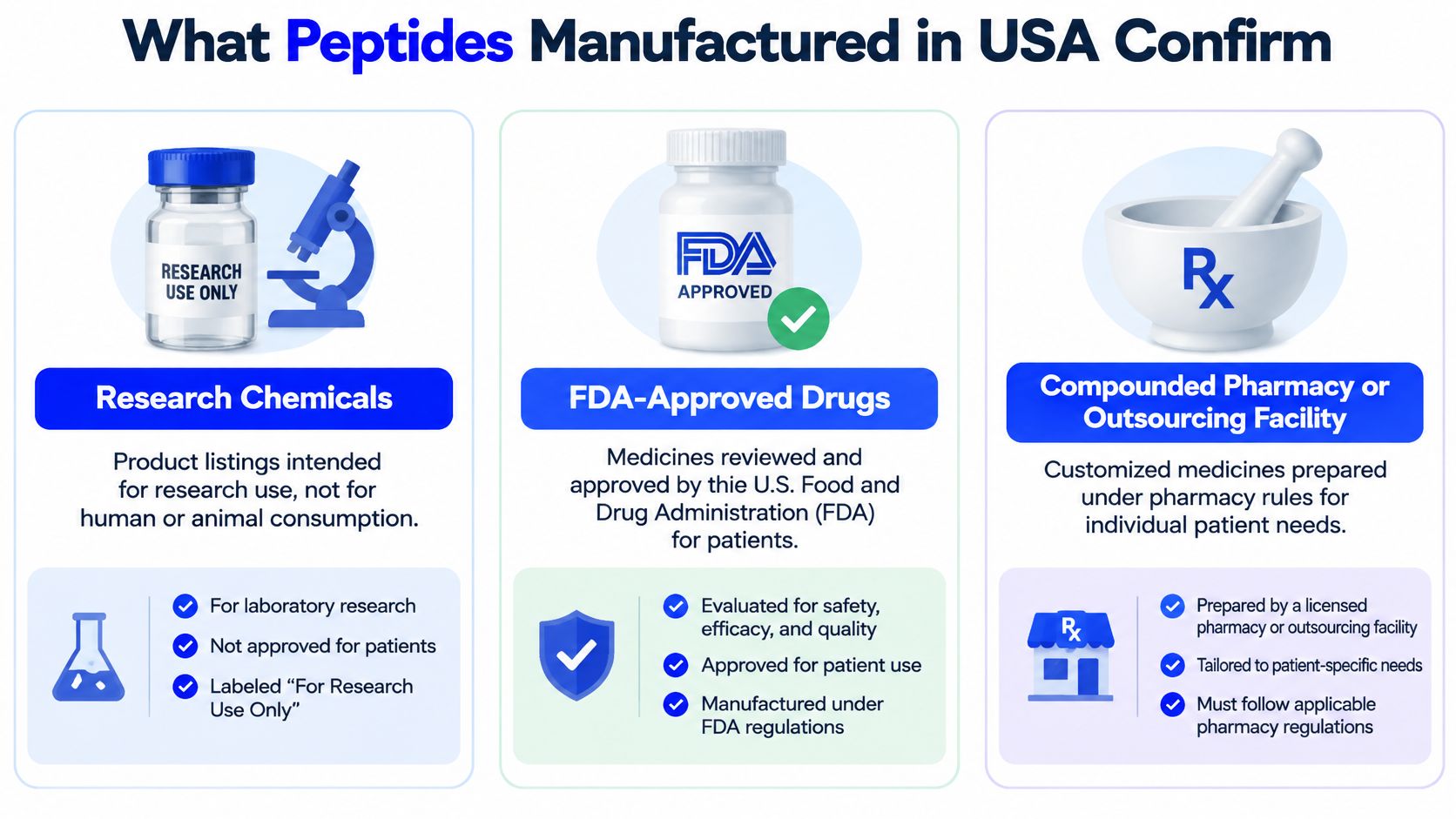
Buyers often collapse three supply categories into one. A research chemical, an FDA-approved drug, and a medicine compounded by a pharmacy or outsourcing facility aren't interchangeable, even when listings use similar names or packaging language.
Domestic production can improve documented origin, lot traceability, shipping predictability inside the country, and direct communication with the supplier. It doesn't by itself mean FDA approval, clinical efficacy, sterility for injection, or permission for human use.
The visual below separates the three categories before you compare any listing claims.
The FDA GLP-1 shortage communication emphasizes that shortage status affects compounding policy but does not remove other statutory or quality requirements. That distinction matters because demand and supply disruption don't change what a product category is, or what evidence supports it.
Use the table as a translation tool. Each row answers one question, and the right column stops you from stretching that answer further than the evidence allows.
| Claim | Evidence that supports it | What it does not establish |
|---|---|---|
| Made in the USA | Documented sourcing, production location, and lot records | FDA approval, clinical efficacy, or human-use suitability |
| HPLC or UHPLC purity percentage | Share of detected material in the principal peak | Correct identity, labeled content, endotoxin, or microbes |
| Identity result | Mass spectrometry or peptide-mapping evidence | Sterility for injection or interchangeability with a drug |
| Microbial and endotoxin tests | Lot-specific contamination status with method, units, and limit | Approval as a medicine or a compounded prescription |
| Research-use-only label | Supplier category is a research chemical | 503A pharmacy compounding or 503B outsourcing-facility status |
Country of manufacture maps to sourcing notes and batch records. Identity maps to mass or sequence evidence, while microbial and endotoxin status map to dedicated tests run on that lot.
A research-use disclaimer is therefore substantive, not decorative legal wording. It tells you the material belongs in the research category, not the manufactured drug or compounded prescription category.
Origin describes where production happened. It is not regulatory status, clinical authorization, or proof of therapeutic benefit.
Readers who want general background on how peptide therapy is presented in a clinical setting can review peptide therapy benefits explained as a separate resource. That context doesn't convert a research listing into a treatment, and it shouldn't be used to infer benefits of peptides sold for laboratory work.
Don't start with, "Is U.S. made better?" Start with, "What paperwork sits behind each claim on this listing?" If a seller can't connect origin, identity, purity method, and contamination testing to the same lot, you don't yet have a verifiable product file.
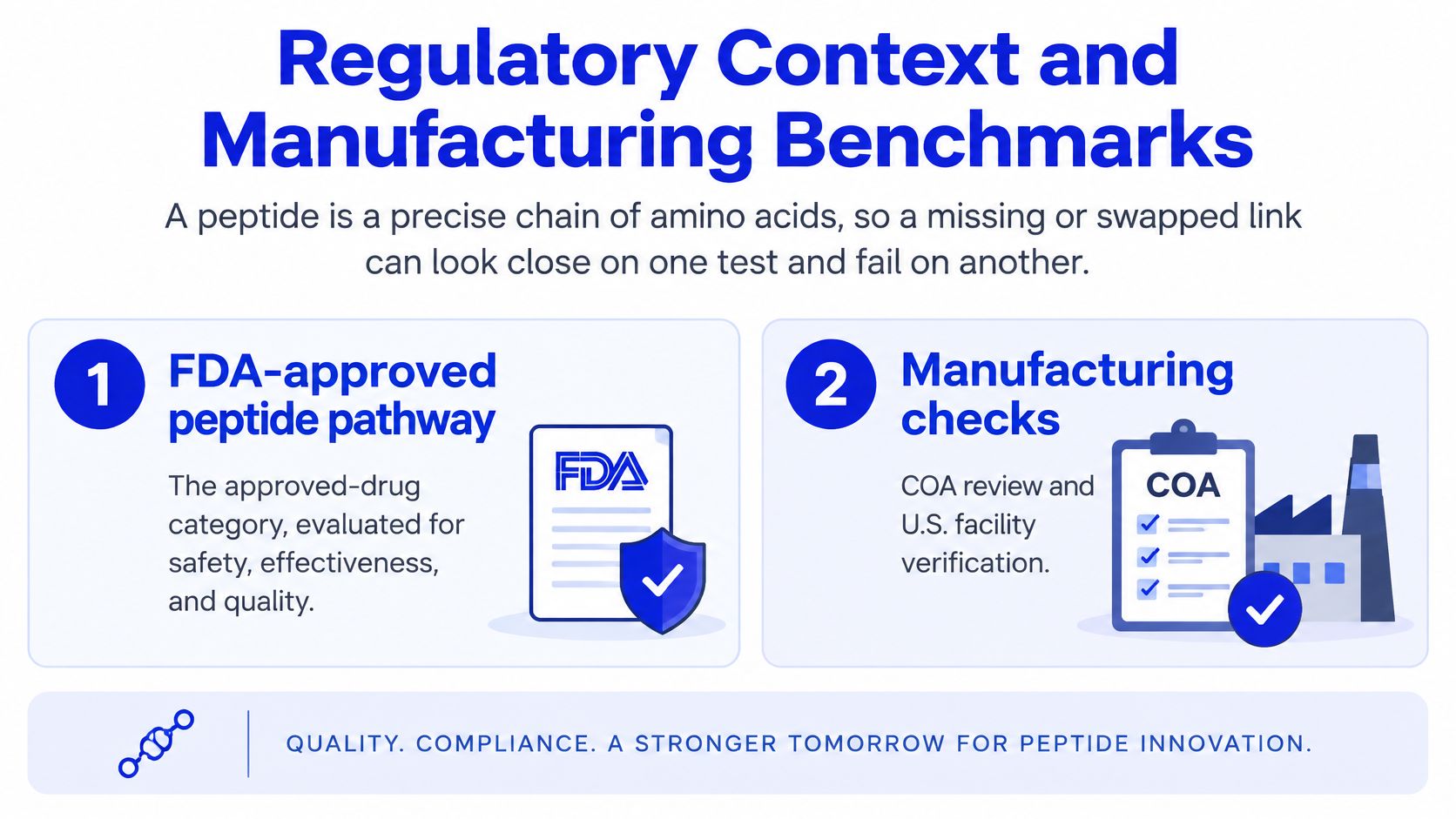
A peptide is a precise chain of amino acids. A missing or swapped link can look close on one test and fail on another, which is why sequence, stereochemistry, impurities, and consistency all need control.
That precision explains why peptide production isn't a generic powder-filling exercise. Small structural changes can create truncated species or related impurities that require suitable analytical methods to detect.
The infographic below frames the regulatory and manufacturing checks that follow from that chain analogy.
A 2025 review analyzing FDA authorizations reported that 48 of 420 new chemical entities approved between 2016 and 2024 were peptides, equal to 11.4% of the total. The yearly share ranged from 1 of 22 approvals in 2016, or 4.5%, to 10 of 51 in 2021, or 19.6%.
Those figures don't validate any research listing. They show that peptides are a recurring part of regulated drug innovation, supported by analytical laboratories, preclinical developers, manufacturers, and regulatory testing organizations.
Most peptide drugs are produced through chemical synthesis. Some, including glucagon, nesiritide, teduglutide, and teriparatide, may also use recombinant DNA technology as well as chemical synthesis.
Under 21 CFR Part 211, a quality-control unit must have authority to approve or reject components, containers, closures, in-process materials, packaging, labeling, and finished drug products. The same unit must review production records, investigate errors, and approve or reject products made by contract manufacturers.
The regulation also requires adequate laboratory facilities and written procedures for in-process controls and examinations of appropriate samples from each batch. For a buyer, that language becomes practical when you translate it into release questions.
This benchmark has a clear limit. Pharmaceutical CGMP criteria can help you assess manufacturing discipline and documentation, but they don't turn a research-use-only peptide into an FDA-approved drug.
A headline such as 99% or 99.5% HPLC purity answers one narrow question: how much of the detected signal sits in the main chromatographic peak. It's useful information, but it's only one line in a complete lot file.
That percentage doesn't prove the chain is the labeled peptide. It also doesn't prove the vial contains the labeled milligrams, or that endotoxin, microbes, heavy metals, residual solvents, or other process residuals are absent.
FDA guidance on synthetic peptide evaluation recommends orthogonal characterization because peptide quality depends on sequence, physicochemical properties, higher-order structure, aggregation, biological activity, and impurity profile. Orthogonal means using different methods that detect different failure modes, instead of repeating the same type of measurement.
A credible batch package pairs reversed-phase HPLC or UHPLC purity with mass spectrometry for molecular-mass confirmation. Where relevant, it adds sequence or peptide-mapping evidence, plus tests for stereochemistry, residual solvents, counterions, water content, and aggregation.
This combination reduces the risk that co-eluting or structurally altered species are counted as the target peptide. One clean-looking peak can't rule out every wrong sequence, truncated chain, or hidden impurity.
The same FDA materials identify a practical benchmark: peptide-related impurities at or above 0.10% should generally be identified. Newly observed impurities above 0.5% require particular scrutiny and justification.
Those thresholds give you a concrete question for a supplier. Ask whether the impurity summary names peaks at or above the identification level, and ask how any new impurity above the higher level was assessed against the specification.
| Quality item | Typical method | Ask for |
|---|---|---|
| Identity | Mass spectrometry or peptide mapping | Spectrum or identity result tied to the lot |
| Chromatographic purity | Reversed-phase HPLC or UHPLC | Method name, specification, and chromatogram |
| Related impurities | Impurity profiling against the 0.10% identify and above 0.5% scrutiny benchmarks | Impurity summary with acceptance criteria |
| Assay or net content | Quantitative assay | Result showing labeled amount, not only peak percent |
| Endotoxin | Bacterial endotoxin test | Result, units, limit, and test date |
| Microbial status | Microbial or bioburden method | Pass or fail with method and lot number |
| Process residuals | Residual solvents, water, counterions as relevant | Named test and specification |
Separate chemical purity from contamination control in your review. Aqueous handling, filtration, filling, or storage can introduce microbes, endotoxin, residual process chemicals, or degradation products after a chromatographic result is generated.
A useful COA therefore names the batch number, assay or purity method, identity method, microbial status, endotoxin result with units and limit, storage conditions, and test date. Missing units or limits make a result hard to interpret, even when the document says pass.
Decision rule: A lower headline purity with transparent, fit-for-purpose characterization can be more useful than a higher percentage supported by only one test.
These records still have boundaries. For research material, they don't establish human-use safety, efficacy, sterility for injection, or regulatory approval, and they shouldn't be read as evidence for injectable medicines.
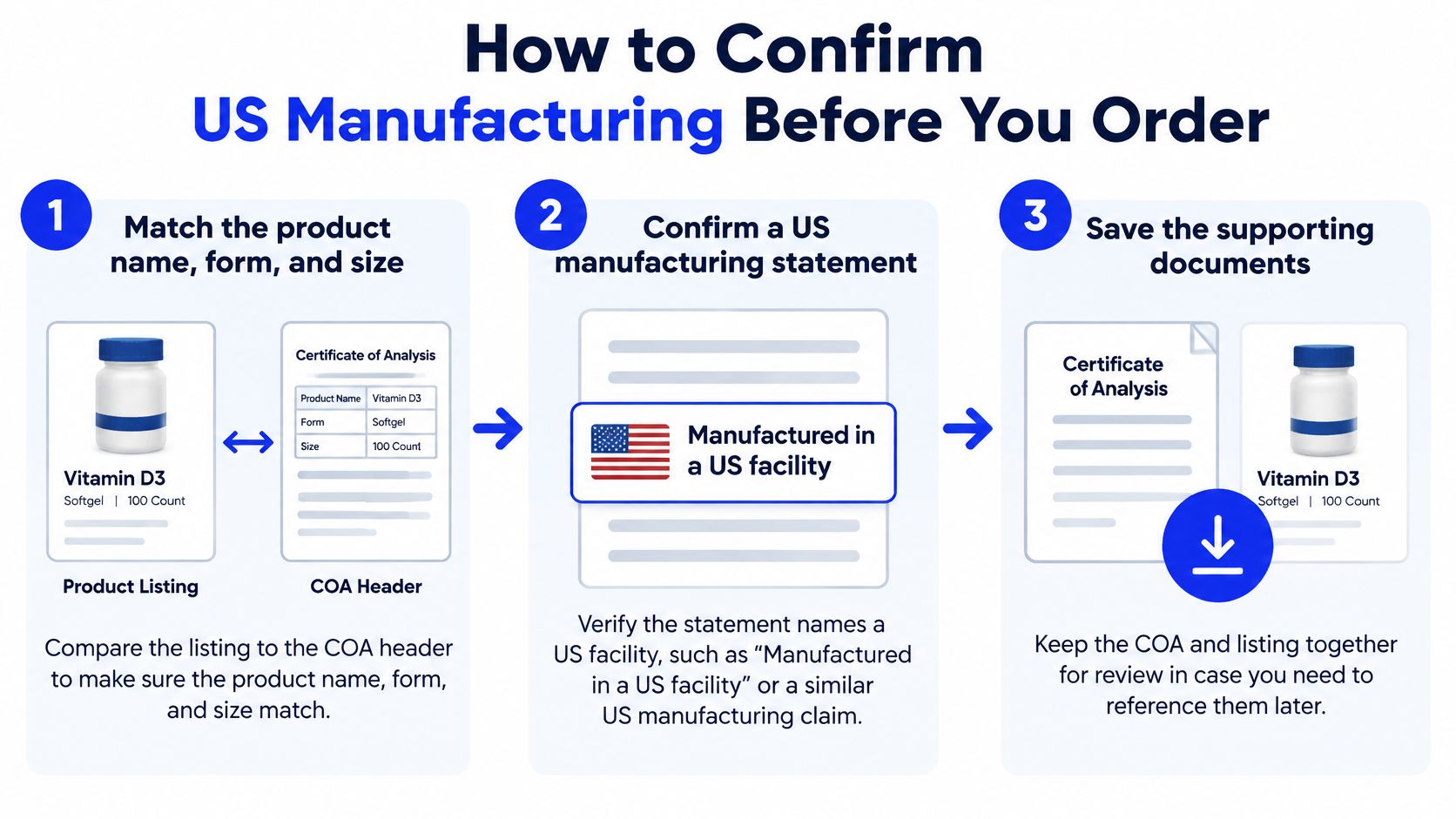
Use one numbered path and stop when a step fails. You're not collecting paperwork for its own sake; you're checking that the listing, the vial, and the lot file all describe the same material.
The process visual below summarizes the document-matching work before you apply the full checklist.
The short video below is useful as a visual pause point while you compare a listing against its supporting documents.
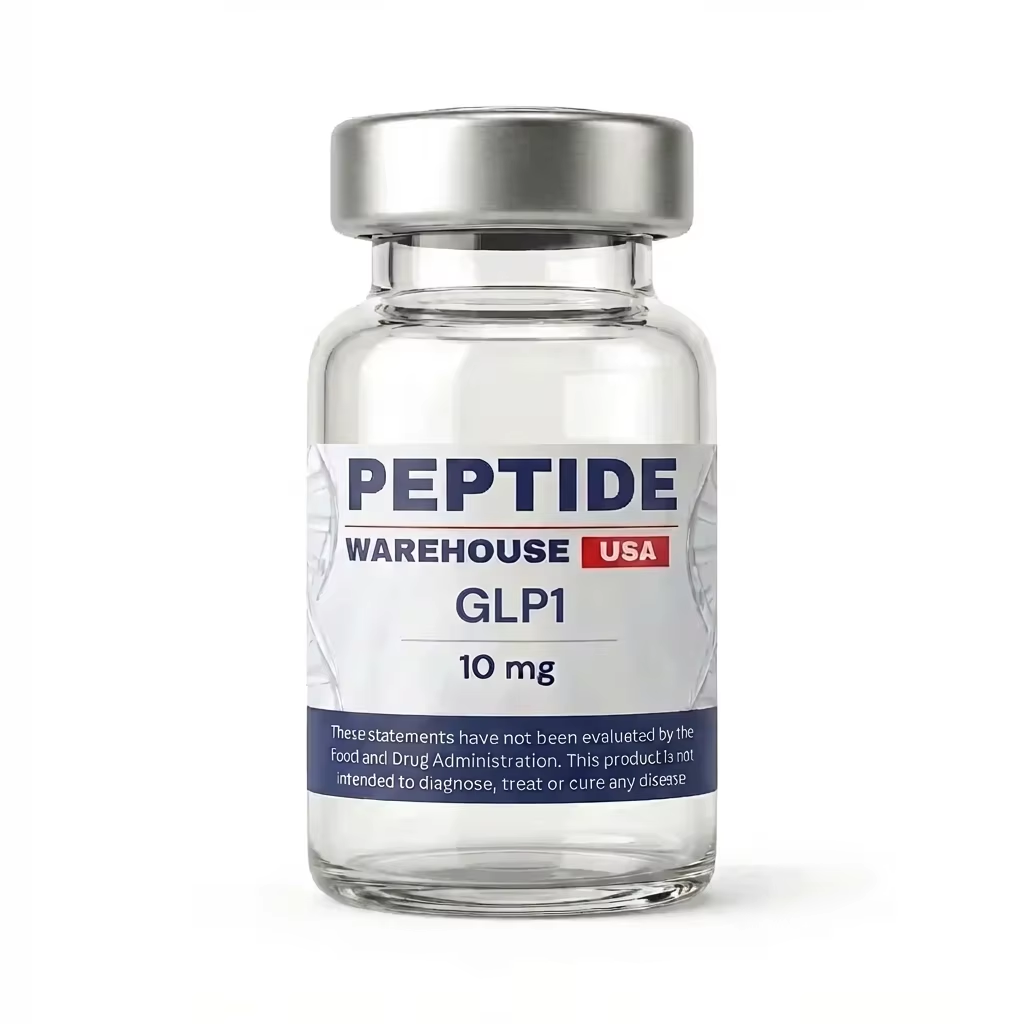
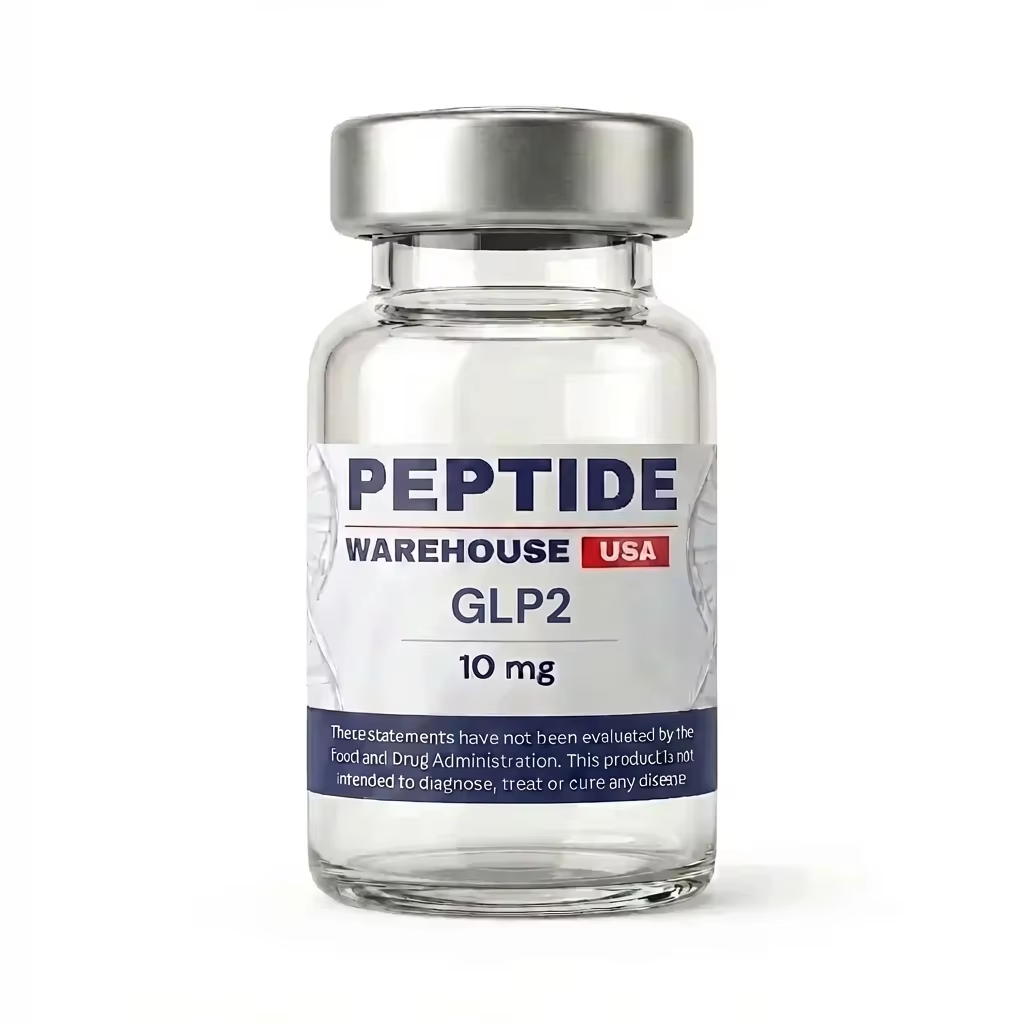
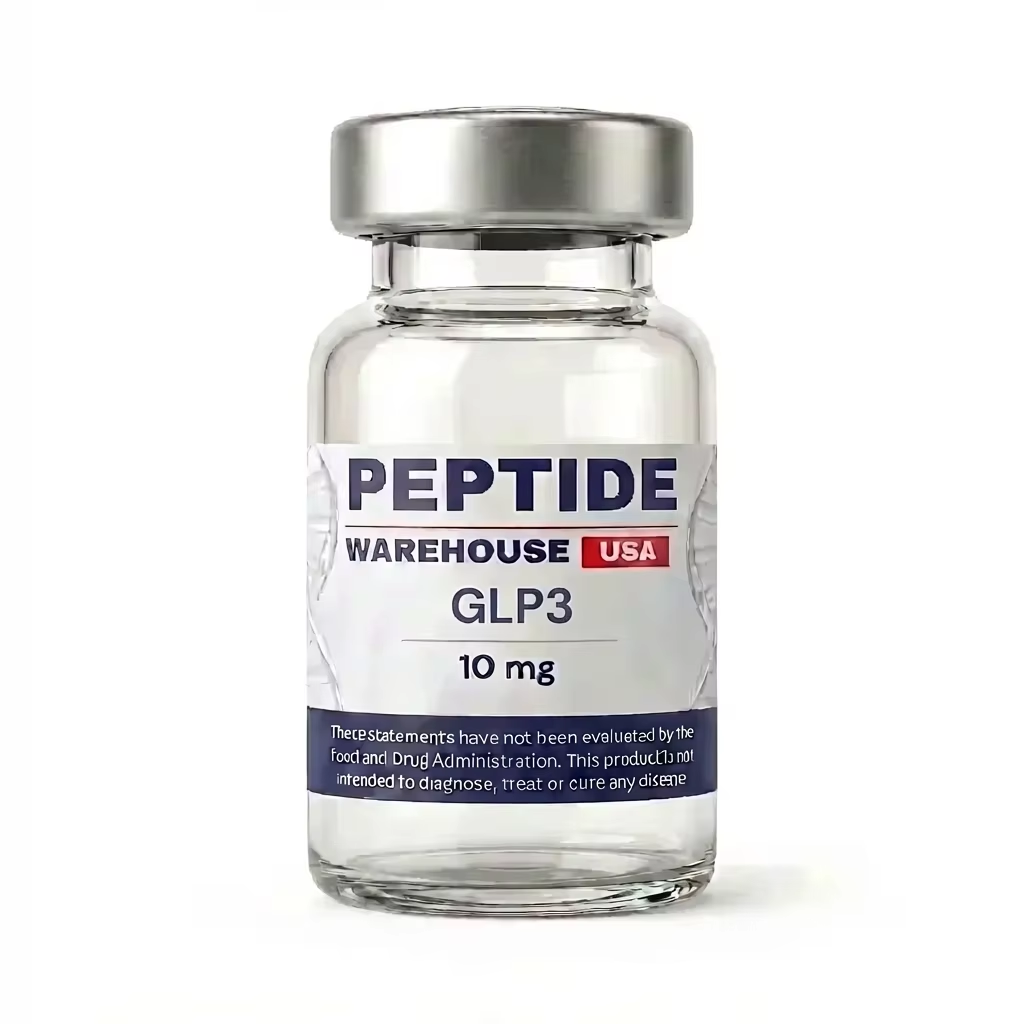
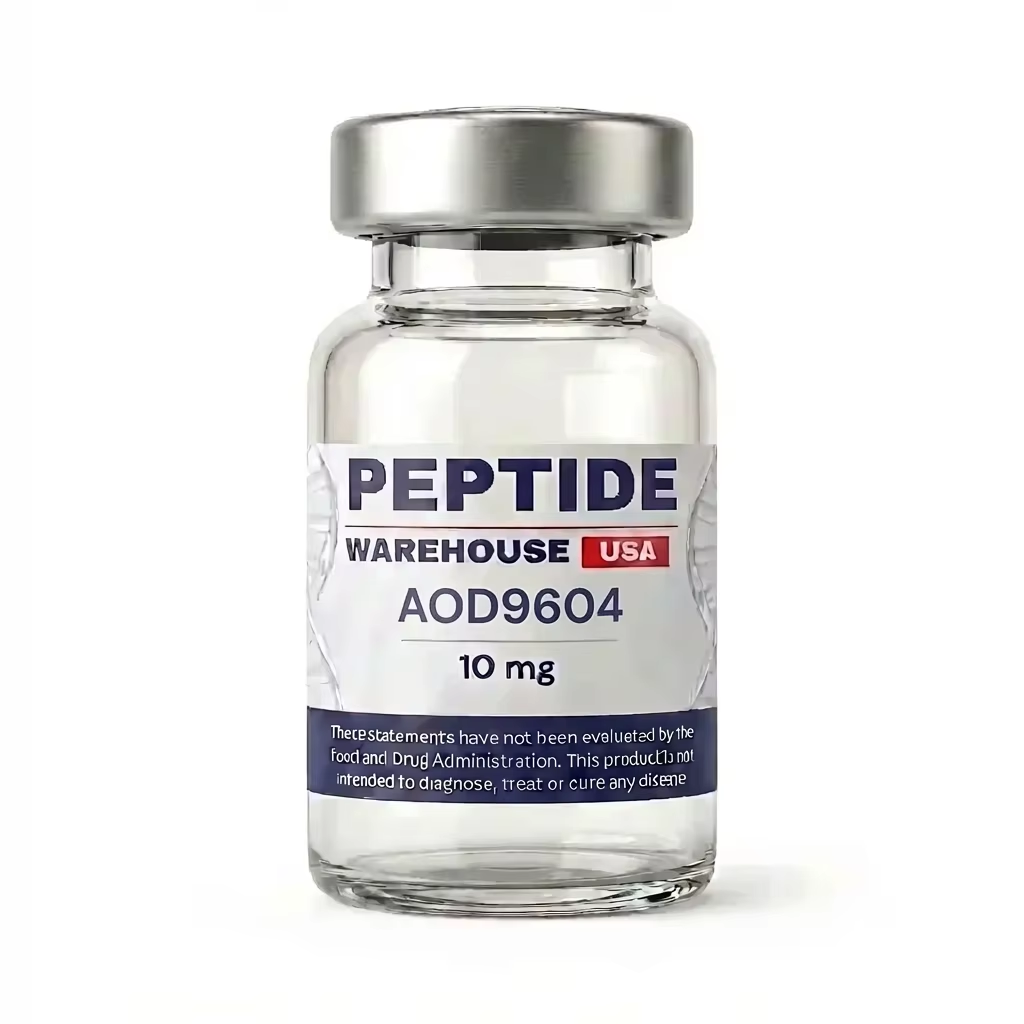
Our products are made in the USA and are batch produced and batch tested. We work with established manufacturing partners and third-party laboratories to ensure products meet defined purity and identity specifications, and we provide COAs with endotoxin and microbial reports.
Treat those statements the same way you'd treat any supplier claim. Match the advertised claim, including any advertised purity figure, against the specific lot documents for the item in your cart.
Different formats tempt buyers to lower the document standard. Don't. A blend, a single powder, and a spray or topical research format each need lot-matched evidence, even though the details you inspect differ slightly.
The photo below shows the basic pairing you should expect: physical vials tied to a verification record, not vials supported only by marketing copy.
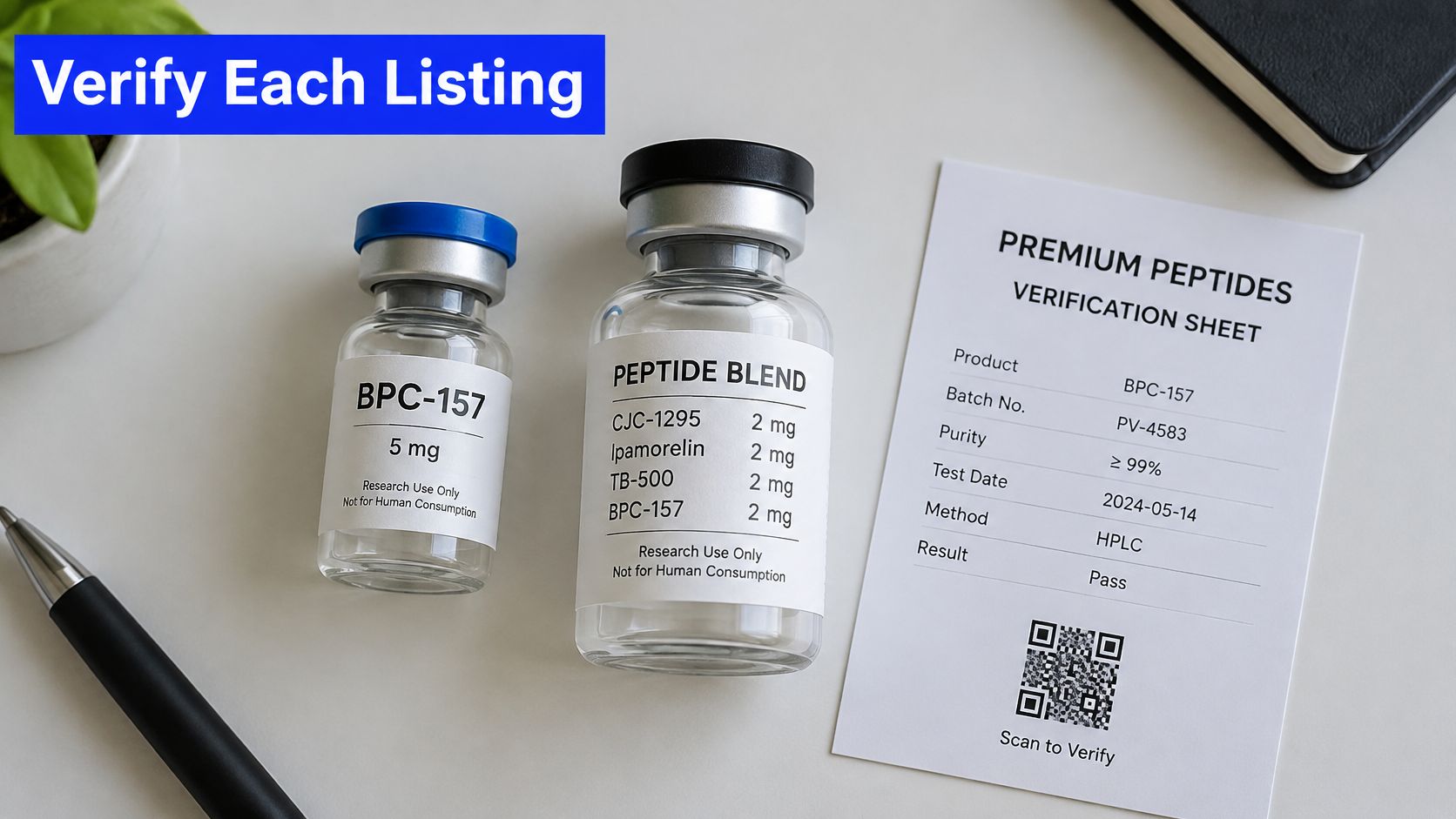
For a multi-peptide blend, check that each named component is identified individually. The stated amount for each component should match the COA or supporting assay information, rather than relying on a blended marketing name.
For a single lyophilized peptide, confirm the identity result, chromatographic method, and lot number refer to the same batch. Store the powder cool, dry, and protected from light, and keep the research-use labeling with the lot record.
For a topical or spray research format, format doesn't reduce the paperwork. Identity, purity method, microbial status, and endotoxin status still need to be tied to the lot being sold.
The USP peptide quality resources identify bacterial endotoxin testing as an official quality framework and list dedicated quality-attribute standards for synthetic peptide drug substances. Those standards support controlled testing of identity, strength, purity, and related impurities using suitable methods and reference standards.
A U.S. ship-from address with synthesis abroad is a different claim from peptides manufactured in USA. Ask which production step happened where, including synthesis, purification, filling, testing, and warehousing, so the origin statement is specific.
A COA reused across several lots also fails, even when its percentage looks strong. Traceability requires the tested batch number, methods, microbial status, endotoxin result with units and limit, storage conditions, and test date for the lot you receive.
Chemical characterization and contamination control answer different risks. Material can meet a chromatographic specification while still carrying issues introduced during aqueous handling, sterile filtration, filling, or storage, so review both parts of the file before you order.
A certificate of analysis is the lot-specific report listing the tested batch number, test dates, methods, specifications, and results. It may cover identity, chromatographic purity, assay, endotoxin, and microbial status, depending on the testing performed.
Ask for the document that matches your lot. A generic template, sample report, or COA for a different batch doesn't verify the vial in your order.
No. Country of manufacture describes origin and can support clearer traceability and supplier communication, but it doesn't confer FDA approval, clinical evidence, or permission for human use.
Approval belongs to a specific regulated drug product reviewed for patients. A research chemical doesn't gain that status because production, testing, or shipping occurred in the United States.
No. A badge is a headline claim, while the lot file is the evidence behind that claim.
The file should show the method, specification, chromatogram or result, and batch connection. Without those details, you can't tell what was measured, which sample was tested, or whether the result met a predefined limit.
Ask for the lot-specific COA, identity and chromatographic method names, microbial and endotoxin reports, and a manufacturing location statement. Also request written confirmation of research-use-only status.
Vague answers are a pause signal. If the supplier can't explain which lot was tested or where manufacturing occurred, learn more before you explore options at checkout.
Buy for laboratory or analytical work only when the lot file holds together. You need a U.S. manufacturing statement, a matching batch number, an identity result, a named purity method, and separate microbial and endotoxin reporting.
That combination doesn't make extravagant promises. It gives you a traceable research reagent whose origin, identity, purity measurement, and contamination status can each be checked against documents.
Pause when a listing offers a percentage with no method name or specification. Pause again when the COA doesn't name the lot, uses another product's header, or appears reused across batches.
We are a research chemical supplier. We are not a compounding pharmacy or compounding facility under Section 503A, nor an outsourcing facility under Section 503B, of the Federal Food, Drug, and Cosmetic Act.
Our products are sold for research, laboratory, or analytical purposes only and aren't for human consumption. Statements on our website haven't been evaluated by the U.S. Food and Drug Administration, and we don't provide medical advice, dosing instructions, or treatment guidance of any kind.
Learn more by opening a specific listing and comparing its paperwork before checkout. Explore options in the U.S.-made research catalog only after the lot file answers the origin, identity, method, and contamination questions, and contact us with questions limited to availability, documentation, and order status.
Compare U.S.-made research peptide listings by their lot-specific COAs, identity methods, and endotoxin and microbial reports, then choose only material whose documents match the batch offered. Visit Peptide Warehouse USA to explore the research catalog and review the documentation available for your next laboratory order.