No products in the cart.


You've got a protocol drafted, funding tied to timelines, and one weak point can still ruin the whole project: the vial you ordered. If the peptide is impure, mislabeled, contaminated, or inconsistently produced, the problem won't always show up as an obvious failure. More often, it shows up as noisy data, poor replication, and weeks of avoidable troubleshooting.
That's why choosing among research peptide companies is a procurement decision with direct consequences for data integrity. These suppliers aren't pharmacies, and they aren't selling approved drugs for human use. They operate inside a specialized research supply chain where documentation, traceability, and lot-level verification matter as much as the compound name on the label.
The commercial backdrop is large, but the true research-grade niche is much narrower. The broader peptide sector sits inside a therapeutics market valued between $46 billion and $141 billion in 2025 to 2026, while the research-grade synthesis vendor segment is estimated at $1.9 billion in 2026 according to market data on peptide therapeutics and research synthesis vendors. In that smaller segment, batch-specific COAs are the minimum standard, not a premium feature.
Most sourcing mistakes don't begin with obviously bad actors. They begin with a clean website, a product page that looks polished, and a COA download button that seems reassuring enough. New researchers often assume that if a vendor lists purity, posts a PDF, and claims third-party testing, the hard part is done.
It isn't.
Research peptide companies serve laboratories, preclinical teams, and analytical buyers who need traceable compounds for controlled work. They are not compounding pharmacies, and they are not legitimate channels for human therapeutic use. That distinction matters because the standards you apply should be based on reagent reliability, not consumer-style branding.
A careful buyer looks past the headline claims and asks a more useful question: can this supplier prove that this specific lot is what it says it is? In this market, paperwork isn't administrative clutter. It's part of the reagent.
Practical rule: If a vendor makes quality sound simple, your review process should become more rigorous, not less.
Research peptide companies synthesize, purify, package, and distribute peptides for laboratory, analytical, and preclinical use. Their role in the supply chain is straightforward. They provide the raw experimental materials used to study pathways, test hypotheses, evaluate compound behavior, and support assay development.
That distinction needs to stay clear from the beginning. A legitimate research peptide supplier isn't functioning like a clinic or pharmacy. It isn't preparing patient-specific prescriptions, and it shouldn't position products as if they're approved therapeutic options.
The best vendors behave more like disciplined reagent manufacturers. They focus on batch control, documentation, and traceability. Their value comes from consistency between lots, clarity in analytical records, and transparent handling of technical questions.
When that standard slips, the cost lands on the lab. You rerun assays. You question controls. You spend time troubleshooting biology when the underlying issue may be chemistry.
In practical sourcing terms, a reliable peptide vendor should be able to support each lot with evidence that addresses three separate risks:
A serious supplier treats those as separate questions because they require separate answers. High-performance liquid chromatography speaks to purity. Mass spectrometry supports identity. Additional contamination screening matters because clean sequence confirmation doesn't rule out other assay-disrupting problems.
Here's what doesn't work. Relying on generic claims like “tested for quality,” accepting an undated PDF with no lab name, or assuming that a domestic shipping address means domestic synthesis. Those shortcuts are common, and they're exactly why some labs end up with materials that create background noise instead of useful signal.
Most buyers know they should ask for a COA. Fewer know how to inspect one. That gap matters because many researchers can't distinguish a lab-verified COA from a self-generated PDF unless they've learned to check the testing lab's identity and cross-reference mass spectrometry results against the batch number, as discussed in this review of COA verification failures.
Before you compare vendors, compare documents.
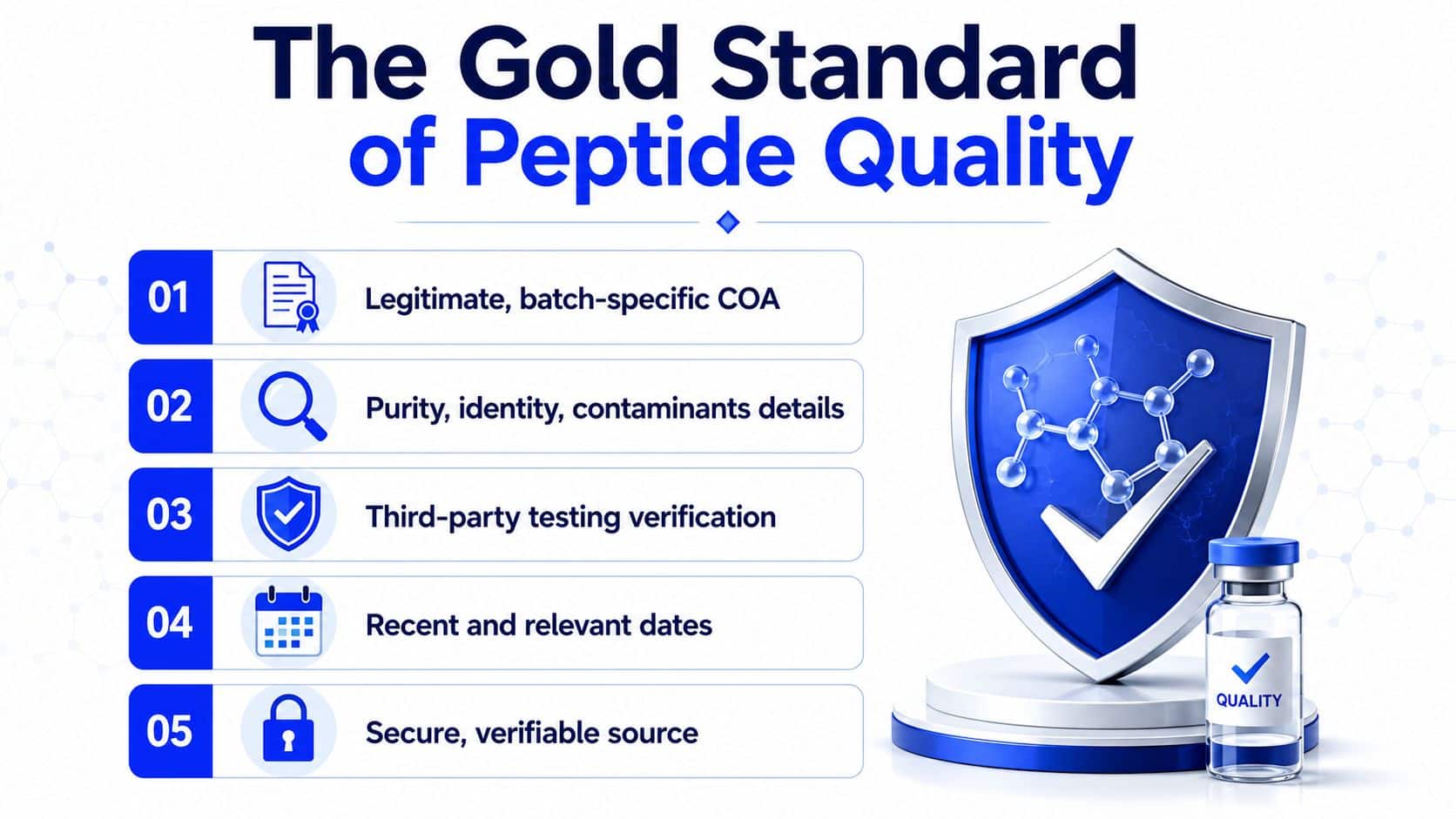
A legitimate, batch-specific COA should include the lot or batch number, date of analysis, testing laboratory identification, and actual test results with specifications. The strongest versions also include the raw HPLC chromatogram and make that record available before purchase or promptly on request, which aligns with practical COA standards for research suppliers.
If any of those elements are missing, the document becomes much less useful.
Watch for these red flags:
A COA should help you audit a batch, not ask you to trust a brand.
For research-grade peptides, the COA should explicitly state purity of 98% or higher, and independent third-party HPLC testing should confirm a single dominant peak at 98% area or greater, according to guidance on GMP-aligned peptide quality review. That doesn't mean every trace impurity vanishes. It means the intended compound dominates the sample to a degree suitable for serious research procurement.
Mass spectrometry answers a different question. It helps confirm that the molecular weight matches the stated peptide identity. If the batch number on the MS report doesn't line up with the COA and vial documentation, stop there. You're no longer verifying a lot. You're comparing disconnected files.
Researchers who are building stronger habits around document review often benefit from sharpening their broader skills for interpreting research findings, because the same discipline applies here. You're not looking for a reassuring headline. You're evaluating whether the underlying evidence supports the claim.
Quality marketing often travels with origin marketing. A supplier may imply domestic control because orders ship from the United States or customer support is US-based. That still doesn't tell you where synthesis occurred, who purified the crude product, or whether the analytical documents came from an independent lab.
A strong quality review connects four records to one lot:
| Checkpoint | What you should match |
|---|---|
| Product label | Compound name and batch number |
| COA | Same batch number and test date |
| HPLC report | Same lot, visible chromatogram |
| MS report | Same lot, matching identity confirmation |
If one of those links breaks, confidence drops quickly.
A supplier can be US-based and still depend on imported bulk powder with only final vialing done domestically. That arrangement isn't automatically disqualifying, but it does create a larger verification burden for the buyer.
Many US-based research suppliers are rebranding imported overseas peptides, and that can skew dose-response data and lead to replication failures. Labs that want tighter control often prioritize explicit in-house manufacturing disclosures for that reason, as outlined in this discussion of US-based peptide sourcing and imported relabeling.
The operational issue is control. If synthesis, purification, and primary quality review happen elsewhere, the reseller may only know what the upstream supplier told them. That weakens traceability.
You don't need to interrogate every vendor like an auditor. You do need direct questions that force clear answers.
Use this short screen:
If a supplier answers origin questions with branding language instead of operational detail, assume you still don't know the origin.
Legal labeling also reveals how well a company understands its role. The FDA does not approve research peptides for human consumption or therapeutic use, and legitimate suppliers must label them “For Research Use Only, Not for Human Consumption” while avoiding health or therapeutic claims, as explained in this overview of research-use-only peptide requirements.
That label isn't cosmetic. It tells you the company recognizes the boundary between scientific supply and improper consumer marketing. Vendors that blur that line tend to blur others too.
A vendor's compliance posture shows up before you ever place an order. Read the product page the way you would read a questionable methods section. If the company mixes research-use language with physique claims, anti-aging promises, or human dosing discussion, treat that as a control failure, not a marketing quirk.
The legal line is straightforward. Research peptides are sold for laboratory use, not as drugs, supplements, or consumer wellness products. A supplier that advertises outcomes in people is telling you it either does not understand that boundary or is willing to ignore it. Neither answer helps a serious lab.
This matters for another reason. Companies that cut corners in public claims often cut corners in documentation. I have seen the same vendors pair aggressive consumer-style copy with recycled certificates, vague origin statements, and batch records that do not withstand close review.
Start with labeling and claims, then examine whether the paperwork supports the story.
| Vendor behavior | What it signals |
|---|---|
| Clear research-use-only labeling | The company understands its role as a reagent supplier |
| No therapeutic, wellness, or human performance claims | Lower legal exposure and better process discipline |
| Batch records and COAs tied to a specific lot | Traceability you can actually audit |
| Specific answers about synthesis, purification, and testing | Real operational visibility |
| Product pages written like consumer supplement ads | High risk of weak controls elsewhere |
The forensic piece is where many buyers stop too early. A compliant-looking label is only the first screen. Check whether the lot number on the vial, COA, and invoice matches exactly. Review whether the test date is plausible for the stated inventory status. If a company claims to be US-based, verify whether that means domestic synthesis, domestic testing, or only domestic fulfillment. Those are different claims with different risk profiles.
There is a useful parallel in internal IP controls. Labs and manufacturers protect methods, vendor relationships, and formulation knowledge through documented procedures, as discussed in resources on developing a trade secret plan. The same discipline shows up in compliant reagent supply. Clear boundaries, documented processes, and consistent records usually travel together.
A vendor that cannot keep its legal claims clean is rarely the vendor that keeps lot integrity clean.
A failed peptide order usually looks fine at first. The vial arrives on time, the label is clean, and the COA PDF carries the right buzzwords. The problem shows up later, when the lot data does not reconcile, support cannot answer basic analytical questions, or repeat orders perform differently enough to put your assay at risk.
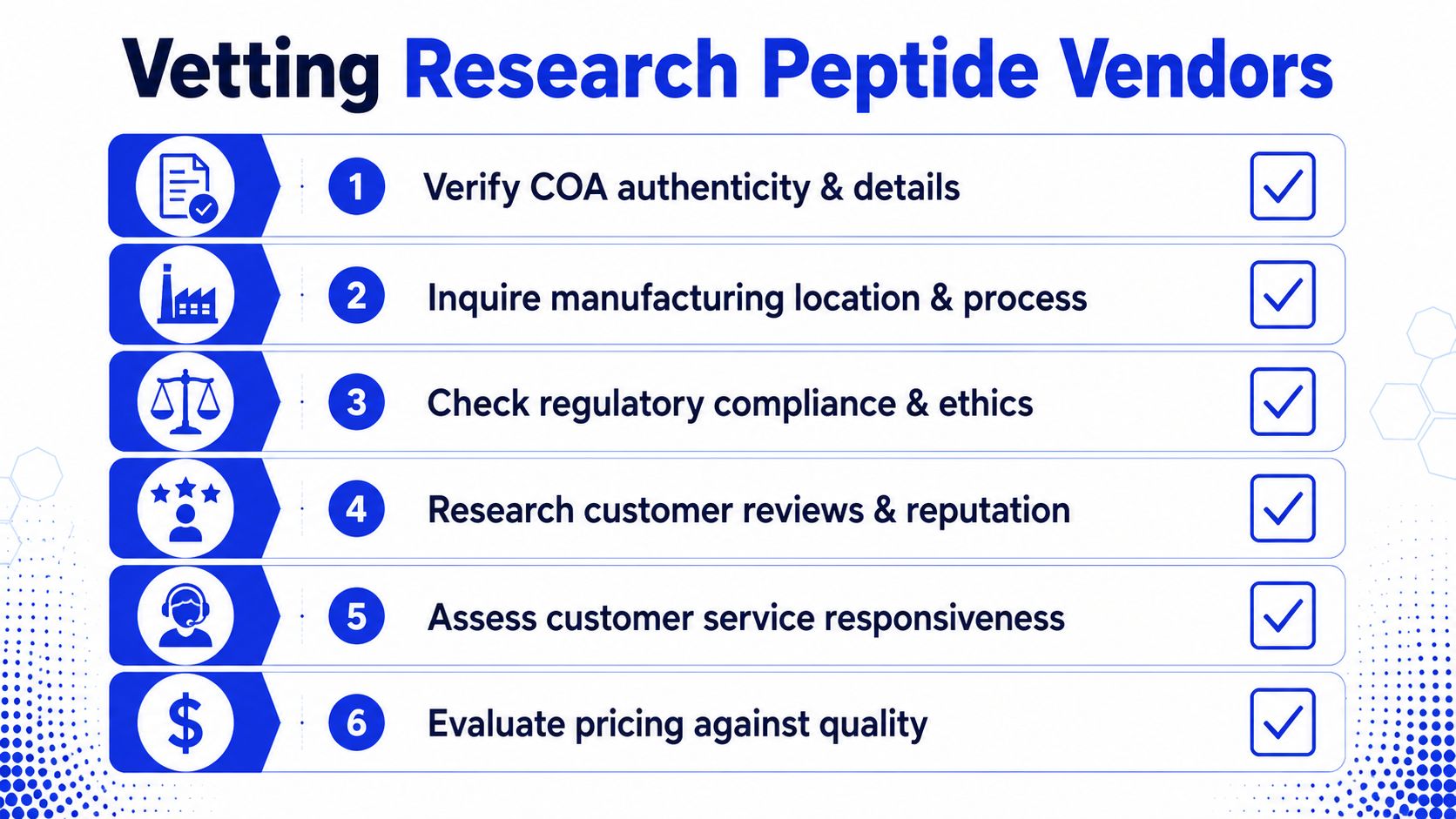
Use the first review to test whether the seller makes verification possible. A credible vendor does not just post polished product pages. It gives you enough lot-level detail to confirm that the paperwork belongs to the material being sold.
Start with these checks:
For a broader framework on document and source checking, this guide on expert tips for source reliability is useful because it reinforces three habits that matter in procurement: verify origin, verify authorship, and verify context.
One practical screen saves time. Ask the vendor to send the batch packet for the exact lot currently in stock, then read it as if you were auditing a deviation. Look for mismatched fonts inside the COA table, cropped lab headers, recycled chromatograms, or dates that do not fit the inventory story. Those details do not prove fraud on their own, but they often separate controlled operations from resellers who only know how to move product.
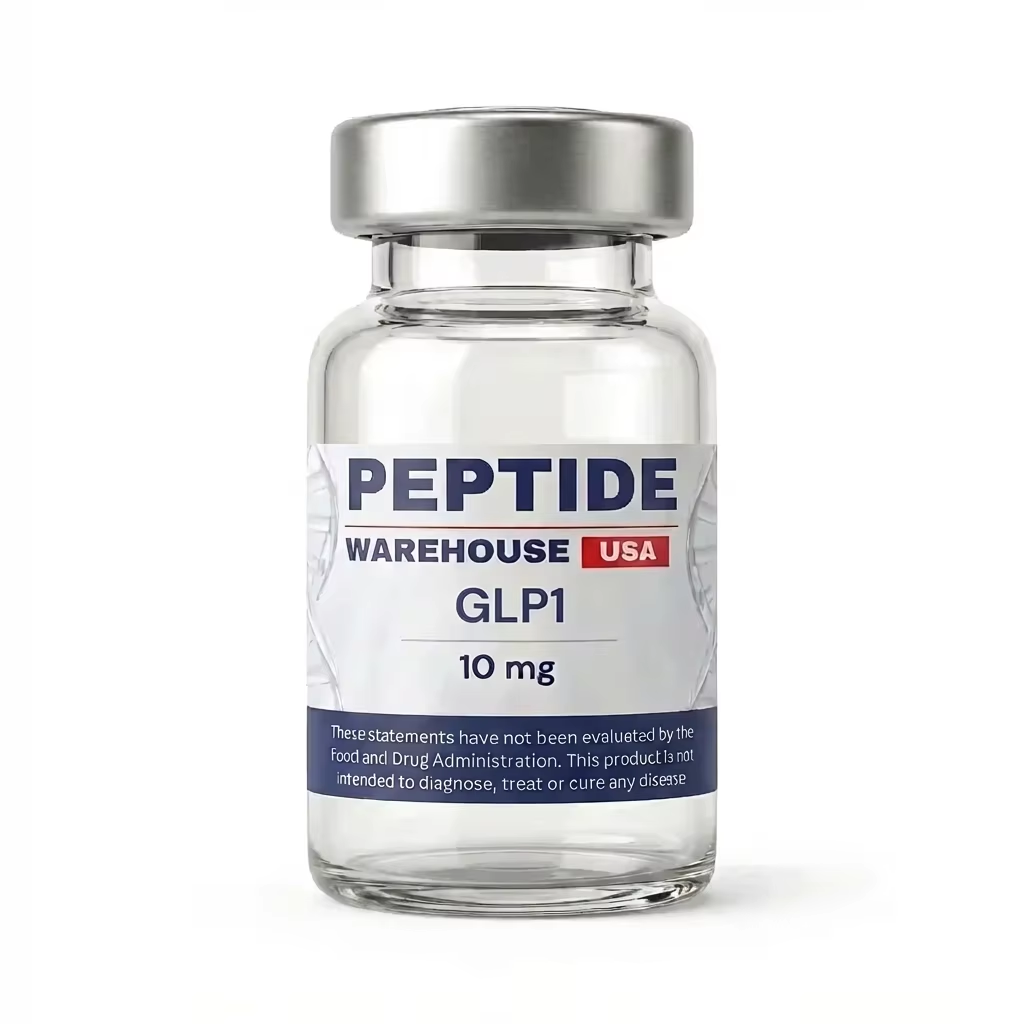
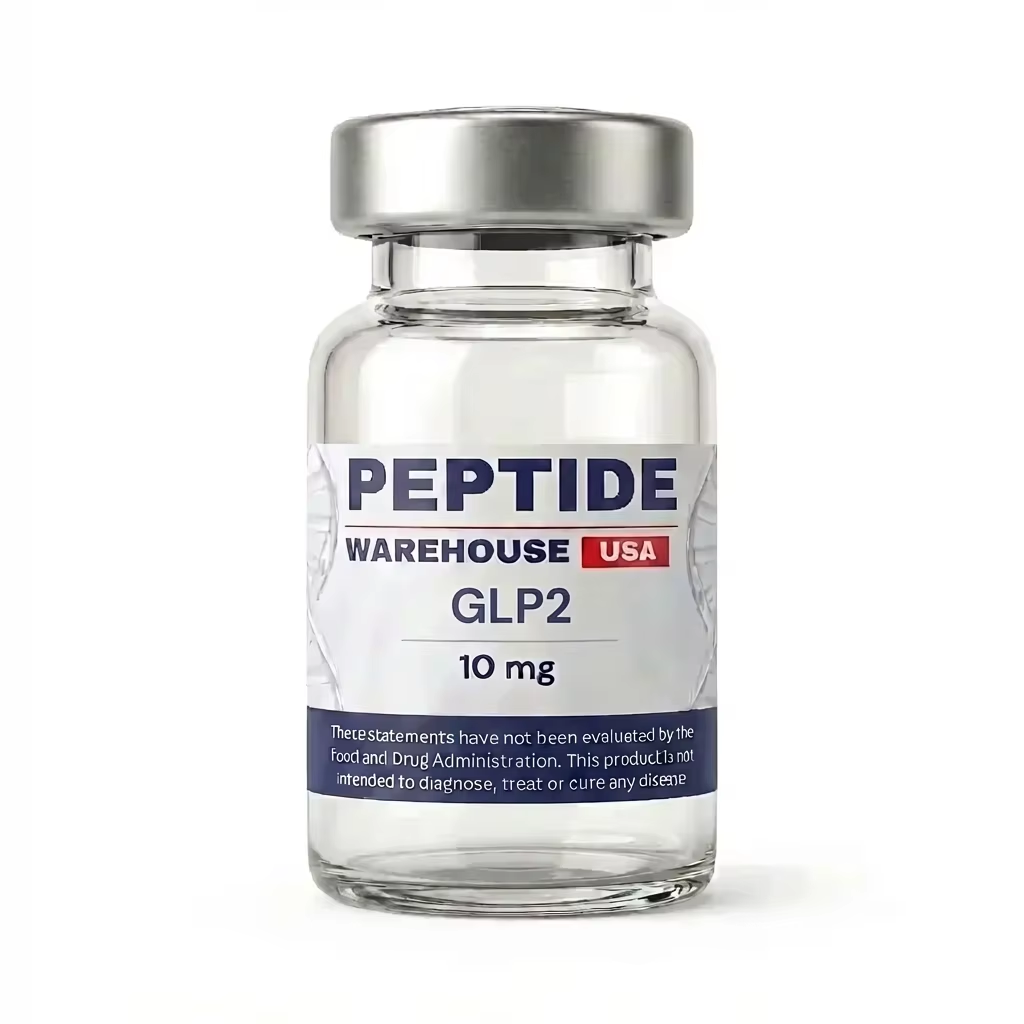
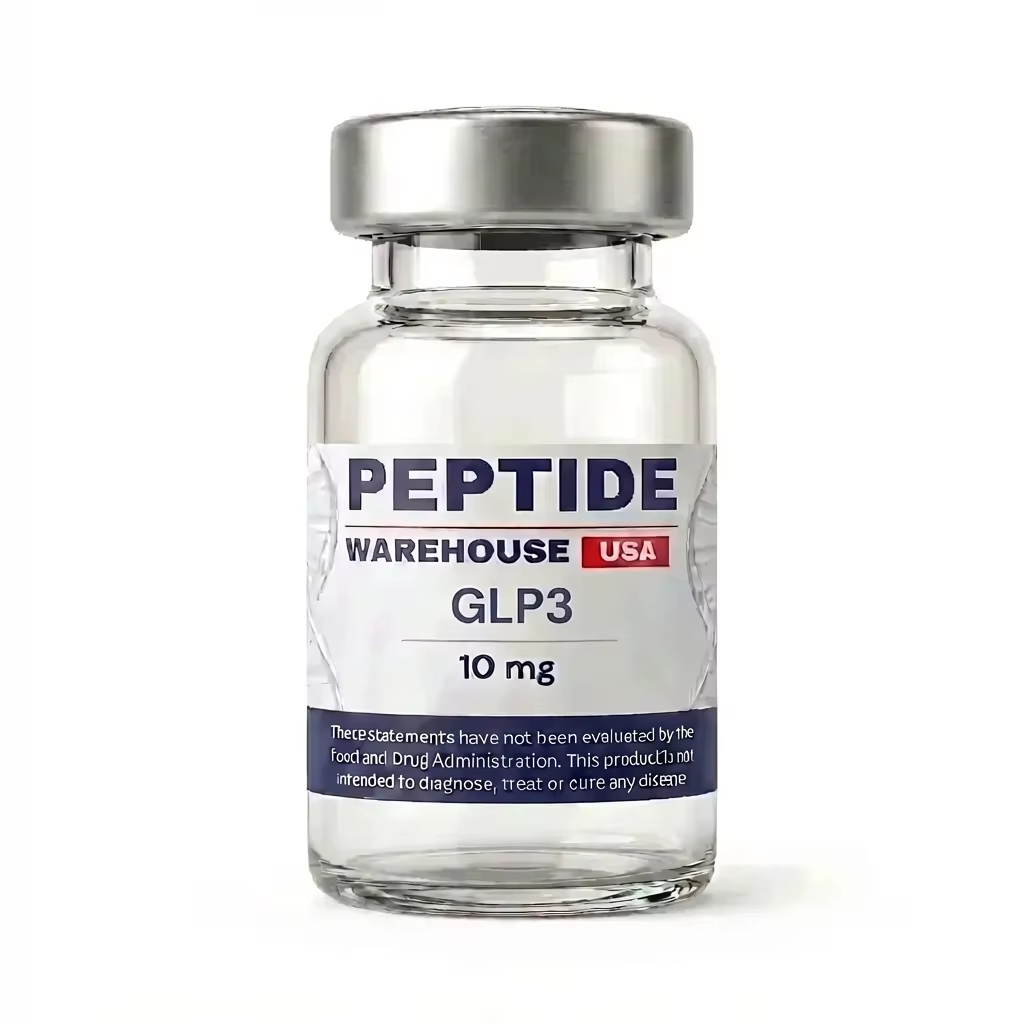
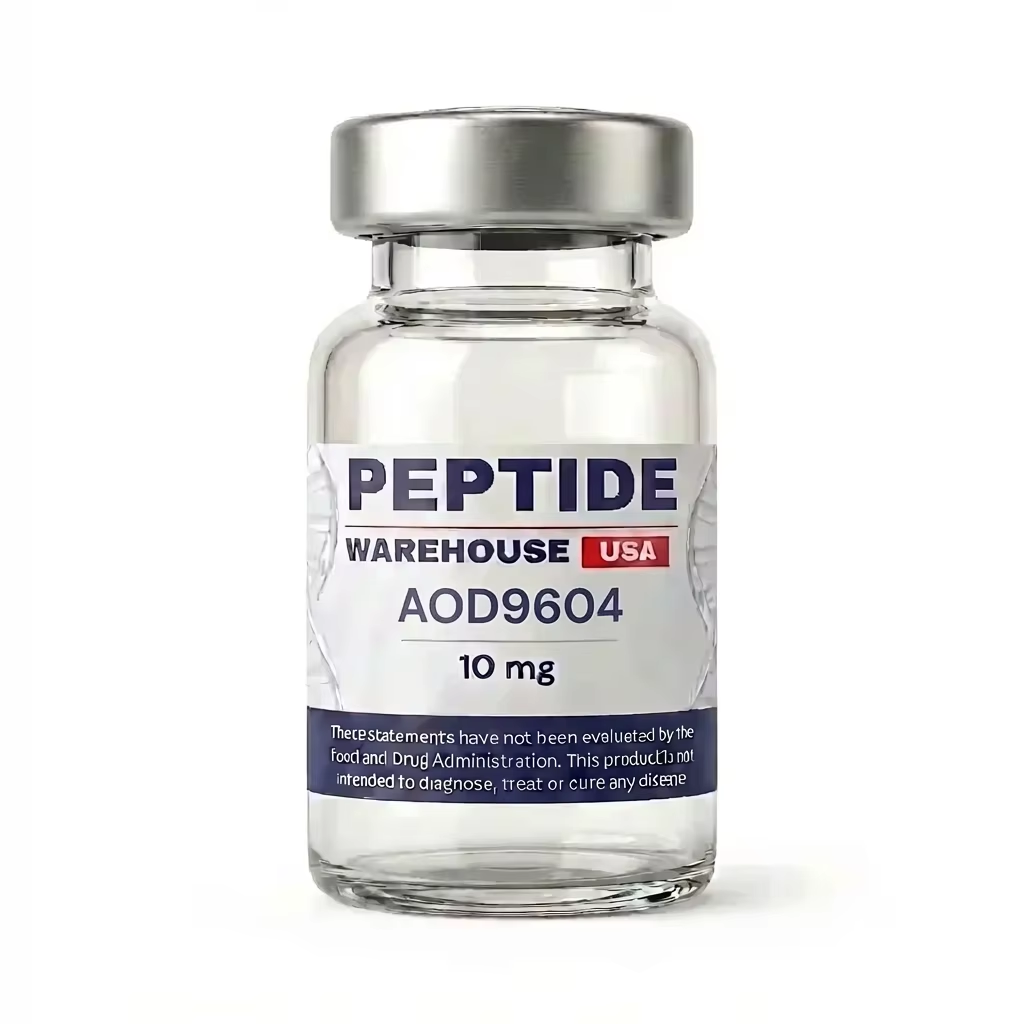
Peptide Warehouse USA is one example of a supplier that presents itself with batch documentation, account support, and order tracking built into the buying process. That does not replace due diligence. It does give a researcher a clearer starting point for verification than vendors that hide records until after checkout.
The strongest vendor is the one that makes independent verification straightforward.
A supplier that follows disciplined sourcing practices should make its standards visible at the lot level, not just in brand copy. That means accessible documentation, consistent regulatory language, and a buying process that supports technical review before and after purchase.
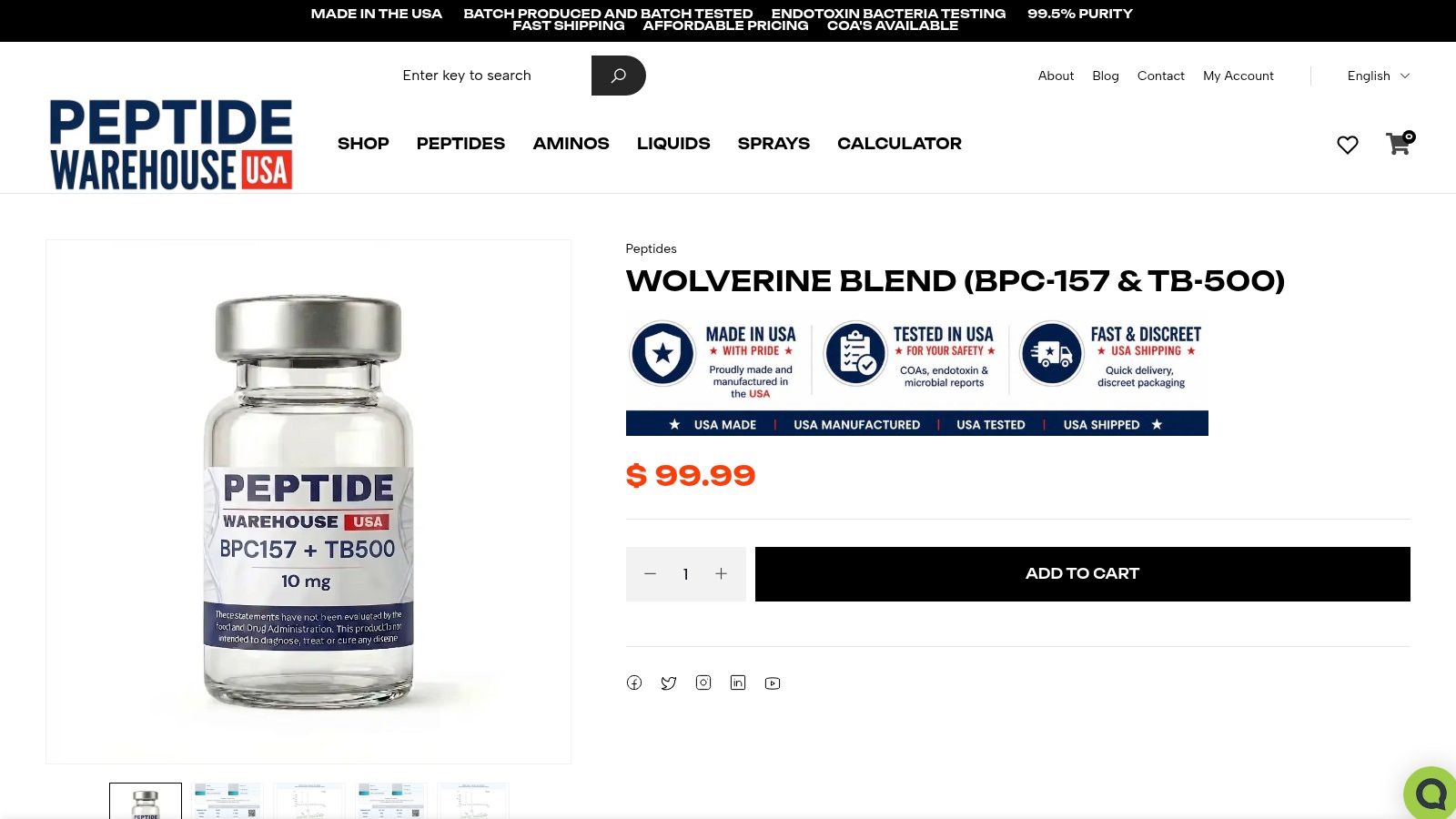
According to the company's published operating profile, Peptide Warehouse USA manufactures in the United States, supports each lot with third-party documentation, and provides COAs alongside microbial and endotoxin reports. The catalog includes compounds such as BPC-157, GHK-Cu, TB-500, Selank, Semax, and PT-141 for research, laboratory, and analytical use.
That matters because the strongest suppliers don't ask buyers to separate quality from logistics. They connect batch production, testing records, account access, shipping visibility, and support into one process.
Even with a supplier that appears organized, the buyer should still confirm a few points directly:
That approach keeps the purchasing decision grounded in verifiable records instead of assumptions.
The difference between usable data and wasted effort often comes down to a single sourcing decision. Reliable research peptide companies don't just sell compounds. They provide traceable lots, readable documentation, and operational transparency that lets a lab verify what it bought.
If you remember only a few points, keep these. Check whether the COA is batch-specific. Match HPLC and MS records to that lot. Question vague US-based claims. Reject any vendor that markets research peptides like consumer therapy products.
That diligence protects your budget, your timelines, and the credibility of your results. If you're evaluating suppliers for current or upcoming work, take the time to audit the paperwork first and the branding second. That order usually leads to better decisions.
If you want a supplier that aligns with research-use-only expectations, transparent batch documentation, and a US-based procurement workflow, explore Peptide Warehouse USA to learn more and review available options.