No products in the cart.


You're probably here because you typed TB-500 for sale into a search bar and got hit with a wall of listings that all look the same. Each one seems to promise high purity, a COA, and fast shipping, but none of that tells you whether the vial matches the label, whether the paperwork is batch-specific, or whether the product even fits your legal and research use case. That's the problem with this market, the obvious signals are easy to fake, and the meaningful ones take a little more reading.
For a first-time buyer, the goal isn't to chase the slickest product page. It's to separate identity, documentation, regulatory status, and handling from the noise so you can judge a listing like a lab procurement specialist would.
The easiest trap in a TB-500 for sale search is assuming every listing is competing on the same terms. Once you've seen a few pages, they all start to blur together, because many of them lead with the same basic promise, a COA and a purity claim. That makes price and shipping speed look like the only real differences, but those are the least important questions if you're buying for research.
A better filter starts with the document trail, not the headline. The most useful purchase decision usually comes down to whether the supplier can show sequence identity, lot traceability, and a recent certificate that belongs to the vial you'd receive. A pretty product page can't answer that for you.
Practical rule: if two listings both say “99%+ purity,” the one with the clearer batch documentation is usually the more useful research purchase.
A clean procurement review usually starts with six checkpoints. You want to know whether the product is the right molecule, whether the COA is tied to the right lot, whether the analytical data is current, whether contamination data is present, whether the product can survive shipping, and whether your intended use is legally allowed.
Those are the questions that keep buyers out of trouble:
That's the shift most pages never make. They sell the idea that the product is interchangeable, when in practice a bad document set can make even a good-looking peptide a poor buy. If you compare listings with this framework, you'll stop treating TB-500 like a commodity and start treating it like a controlled research material.
A first-time buyer can do everything right on price and still miss the point if the vial description is vague. TB-500 becomes easier to assess once you treat it as a defined chemical fragment, not a broad “healing peptide” label. It is the synthetic heptapeptide Ac-LKKTETQ, corresponding to amino acids 17 to 23 of thymosin beta-4, with a molecular weight of about 889 Da, or 889.2 g/mol. A credible certificate of analysis should match that identity to the vial label, not just the name TB-500. TargetMol's TB-500 compound reference is a useful anchor for that basic molecular identity.
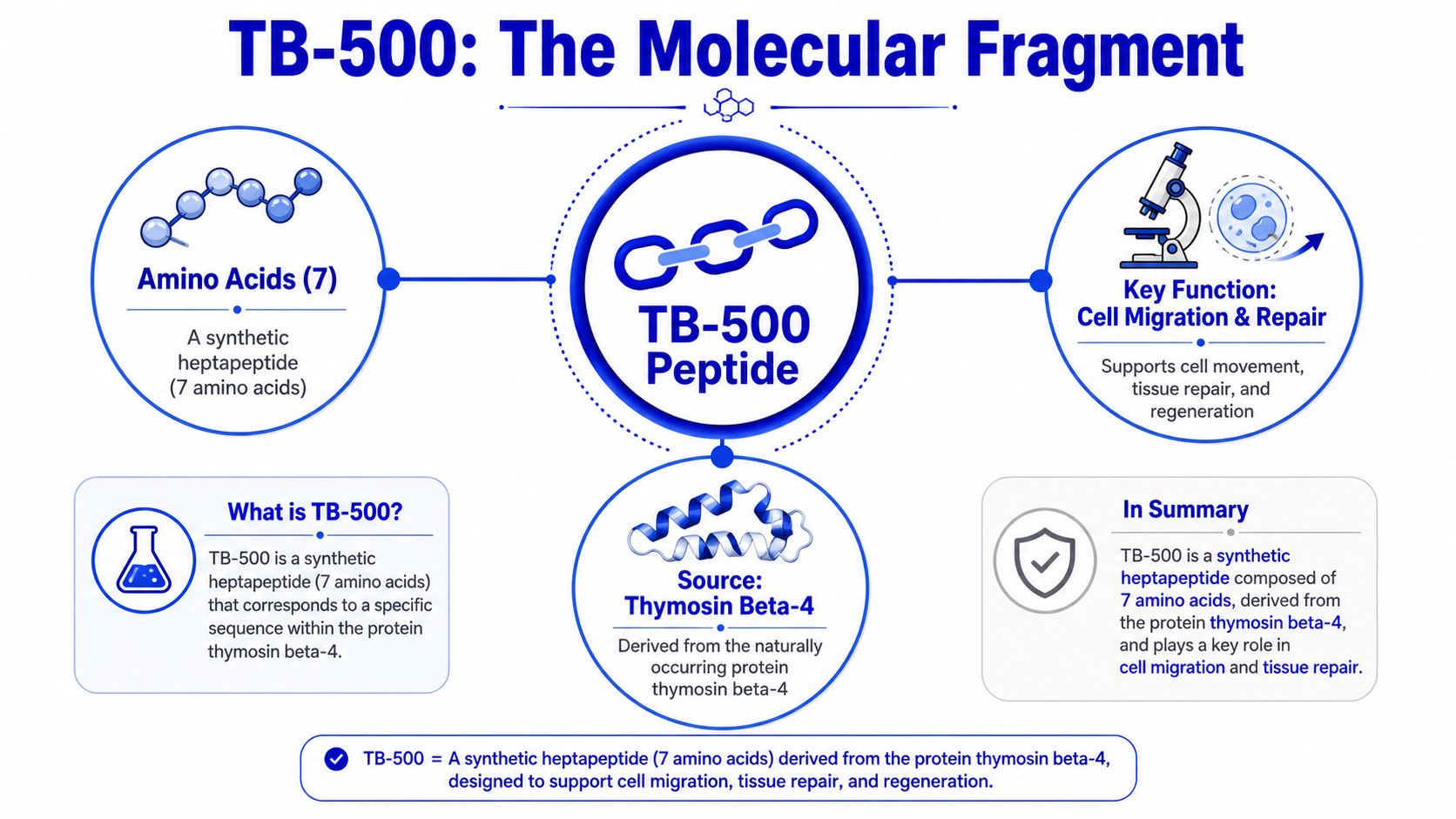
Thymosin beta-4 is the longer parent protein, while TB-500 is a short fragment taken from it. That distinction matters because the name alone does not tell you whether the vial contains the right sequence, the right form, or a mixed synthesis product. If a vendor cannot state the fragment clearly, the buyer is left guessing about the chemistry inside the vial.
Mass spectrometry is the check that helps close that gap. A short peptide can be mislabeled, truncated, or synthesized with impurities that are invisible from the outside. The vial may look ordinary, but the chemical content can still be wrong in ways that change the research result.
A credible COA should give you more than a purity percentage. It should show the peptide's sequence, its acetylation status, and some form of identity confirmation that lines up with the stated molecular weight. If those pieces do not agree, the document is not reassuring, even if the headline purity sounds impressive.
For buyers who have not read peptide paperwork before, the main point is simple. TB-500 is a defined fragment, so the documentation should read like a chemical identity record, not a sales brochure. Clear paper makes the purchase easier to judge. Vague paper is a reason to slow down and question what is being sold.
A TB-500 listing can look tidy on the page and still sit in a legal gray area once you ask what the vial is for. The safe starting point is simple, TB-500 is not FDA-approved for any medical use in humans, and it is treated as lawful to buy or possess only for qualified research purposes. For athletes, the boundary is stricter still, because the WADA Code's S0 non-approved substance category keeps it prohibited. The current sport and regulatory summary from BSCG states that status directly.
Bottom line: lawful research possession is not the same thing as medical approval, and it does not turn a vial into a consumer product.
Vendors often rely on “research use only” language. That phrase matters because it signals the product is not being offered as a human therapeutic, but it does not erase the compliance questions that follow. A seller still has to avoid medical claims, and a buyer still has to keep the vial inside a legitimate research setting.
The absence of human trial support matters for the same reason. A specialist review notes that searches of ClinicalTrials.gov and ANZCTR for TB-500-related terms returned no interventional trials as of 2026, and that the compound has no marketing authorization for human therapeutic use in Australia, the United States, or the European Union. The same review's status summary helps connect the trial gap with the authorization gap in one place.
A buyer who understands the regulatory map asks different questions. The focus should be whether the vendor can support research procurement with the right paperwork, and whether the lab can justify the purchase internally. That keeps the discussion on compliance, not on hopes about what the material might do once it arrives.
Athletes and teams need a stricter filter. WADA's prohibition makes the sports setting different from ordinary research buying, even when a product page looks harmless. If the intended use touches competition, the risk changes at once, so the same vial can raise very different questions depending on who is handling it and why.
A separate issue is the path from screening to procurement. A lab that already understands a timeline for tuberculosis screening knows that paperwork, intent, and handling all have to match the purpose on the form. TB-500 buying works the same way, except the regulatory checklist is about research status, not clinical care.
A COA should function like a checklist of proof, not a decorative PDF. The problem with many TB-500 listings is that they spotlight one number and hide the rest. A 99% purity claim looks reassuring, but without identity confirmation and contamination data, it doesn't tell you much about whether the material will behave the way your assay expects. Public product examples in the market show purity values ranging from 99.0% to 99.880%, along with mass-spec confirmation and endotoxin or sterility pass results, which is exactly why the whole document matters, not just one field. Blackwell Bio Labs' TB-500 product documentation reflects that broader documentation pattern.
| COA Field | What It Confirms | Acceptable Range | Red Flag |
|---|---|---|---|
| HPLC purity | How clean the lot appears chromatographically | Commonly 99%+ in research listings | A number shown with no batch context |
| Mass spec identity | The peptide matches the stated molecule | Clear identity match | Missing or vague identity data |
| Endotoxin or sterility | Whether contamination risk is controlled | Pass result or stated test outcome | No contamination data at all |
| Lot number | The paper belongs to the vial | Exact lot match | Mismatch between vial and COA |
Start with the lot number. If the document doesn't belong to the vial, stop there. A good-looking purity value can't rescue a mismatch between paperwork and product.
Then check whether the supplier shows identity confirmation. For small peptides, that's a big deal because truncation or synthesis-related impurities can hide behind a clean-looking chromatogram. If the COA doesn't mention mass spectrometry, you're relying too much on the vendor's word.
Endotoxin and sterility data matter for a different reason. A peptide can be chemically close to spec and still create bad downstream data if it carries bacterial residue. In cell work, that can distort inflammatory readouts, and in any assay where signal noise matters, it can make the result hard to trust.
If you want a useful reference for how a disciplined screening workflow gets documented in another context, the timeline for tuberculosis screening is a good example of why timing, traceability, and step order matter in any regulated process. The specific test is different, but the discipline of matching dates and records is the same.
A vial that looks intact can still be the wrong material, which is why receipt, storage, and handling belong in the quality review. TB-500 is a short, seven-amino-acid peptide rather than the full 43-residue thymosin beta-4 protein, so small labeling errors, truncation, or synthesis-related impurities may not show up by eye. A molecular reference such as The molecular reference from TargetMol helps anchor that point, because it shows you are dealing with a small fragment, not a large protein.

Start with the outside of the shipment before anything is opened. Check the vial label, the lot number, and the condition of the container, then compare all of it with the COA. If the paperwork and the vial disagree, quarantine the lot and do not place it into use.
Record the date of arrival and the person who received it. That may feel routine, but chain-of-custody notes are what let you trace when the vial arrived, where it sat, and whether transit conditions could have affected it.
Practical rule: a vial without a documented receipt trail is harder to defend in a research file.
Lyophilized powder needs protection from light and moisture, and it should be stored according to the supplier's stated conditions, which are often refrigerator or freezer based for research materials like this. Once the peptide is reconstituted, the stability clock changes. Purity on paper does not reset the chemistry in solution.
Many labs slip here because they treat purity as permanent. Temperature excursions and repeated freeze-thaw cycles can still degrade a lot that looked clean at release. A simple discipline helps:
If you need a general safety-document example for handling sensitive lab materials, the bleach SDS guide for Australia is a useful reminder that material handling starts with reading the paperwork before touching the product. Different substance, same habit, verify before use.
A polished TB-500 page can still hide weak documentation. The first thing to question is any badge that says “third-party tested” without the actual batch-linked report behind it. A label like that can sound reassuring, but by itself it tells you almost nothing about the lot in front of you.
Start with the test method. If a supplier says a vial was “tested” and leaves out whether the check used HPLC, mass spectrometry, endotoxin screening, or something else, the claim is too vague to support a buying decision. A careful buyer should be able to see what was tested, how it was tested, and whether the report matches the exact batch being sold.
Medical-style wording is the next place to slow down. Pages that hint at recovery, healing, or other therapeutic effects deserve extra skepticism because the public evidence base is still limited and much of the discussion sits in animal work, early research, or anecdotal reports rather than large clinical trials. That matters because marketing can sound more certain than the evidence supports, especially for a compound with no current marketing authorization for human therapeutic use in major markets and no registered interventional trial footprint.
A low price can catch attention, but it rarely tells the full story. In peptide procurement, a bargain may point to bulk relabeling, thin documentation, or a lot that was released without much analytical depth. If the vendor cannot explain how the lot was synthesized, verified, and released, the lower number on the page is not much of a reason to trust the vial.
A clean product page often says less, not more. The dull listing with lot-specific paperwork is usually the one worth reading twice.
Search habits can create another trap. A buyer may start with words like recovery, anti-aging, or fitness, then assume the market is built to answer that question. It usually is not. The better question is whether the vial is documented well enough for the research it is supposed to support.
One option in the U.S. research market is Peptide Warehouse USA, which positions TB-500 as a research chemical with batch documentation and stated research-use labeling. That does not reduce the buyer's due diligence, but it does show what a transparent listing should make easy to verify.
A good US buying workflow starts before checkout. Build a short vendor list, then ask each supplier for a recent COA tied to a specific lot number, plus any endotoxin or microbial data they can provide. If a site's age-gate and FDA disclaimer language are visible, that's a sign the seller understands the line between research supply and human use.
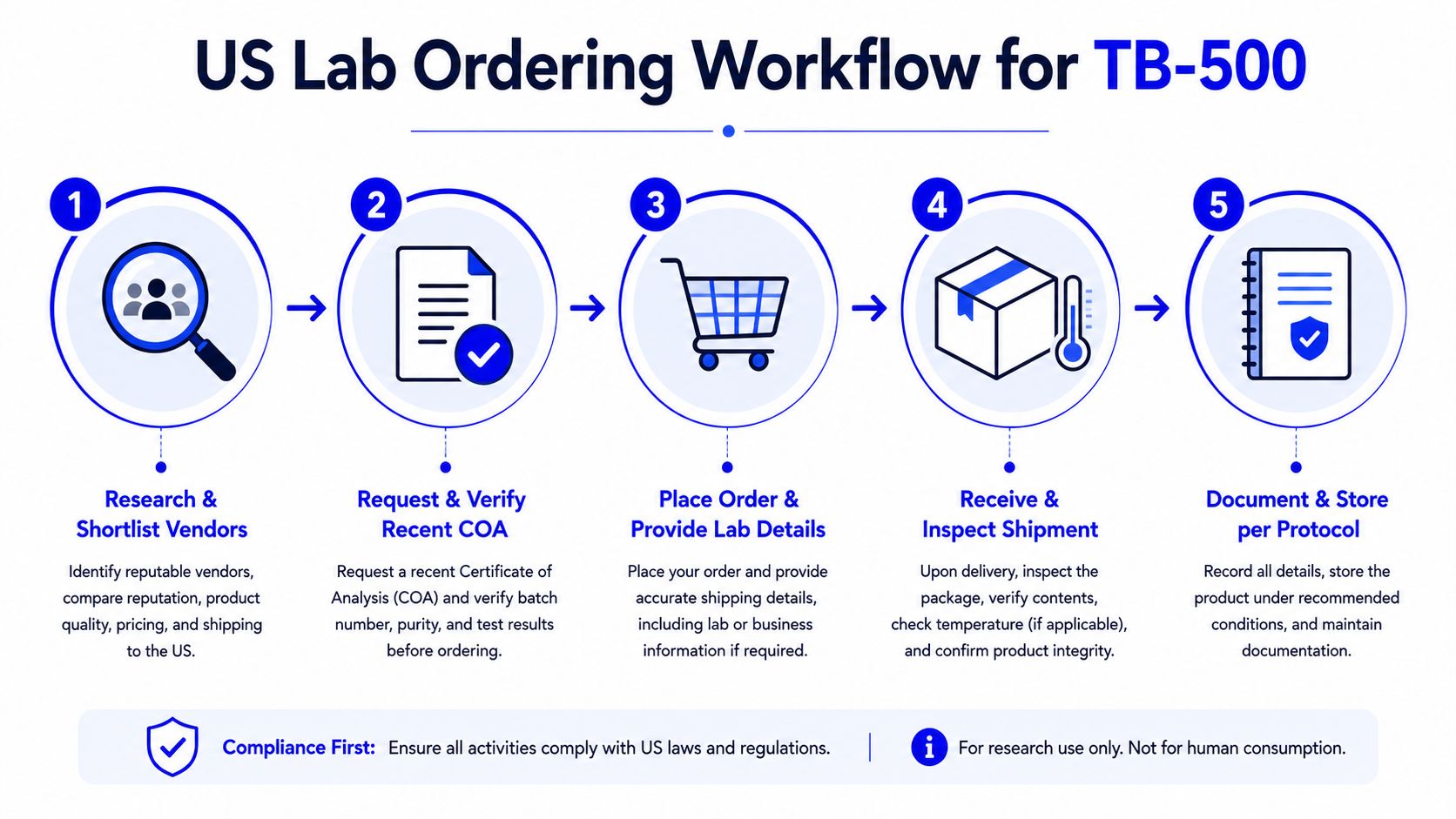
If you're comparing options, the strongest candidate is usually the one that makes those five steps easy to complete without chasing answers. Fast domestic shipping is nice, but it doesn't matter if the COA is stale or the label is vague.
Keep the final questions short and direct:
That workflow keeps the purchase grounded in procurement discipline instead of marketing language. If you're ready to compare a research-use TB-500 listing against those standards, Explore options at Peptide Warehouse USA and review the lot documentation before you place anything in your cart.