
No products in the cart.



A common approach to shopping for tissue repair supplements is to pick items off a recovery shelf. Collagen, peptides, vitamins, minerals, maybe a “healing stack,” then hope something covers the whole problem.
That approach misses the question. What part of tissue repair are you trying to support? A compound that helps build structural protein isn't doing the same job as one that influences cell signaling, and neither one replaces food, sleep, or mechanical loading.
This guide looks at tissue repair supplements by mechanism and evidence strength. That makes it easier to separate better-documented collagen research from the much thinner human data behind popular research peptides, and to understand where support nutrients fit into the larger repair process.
A tissue repair supplement isn't defined by marketing language. It's better defined by function.
If a compound is used to support one or more phases of cellular repair, it belongs in the conversation. That can include ingredients aimed at supplying structural building blocks, supporting signaling pathways, or helping create a biochemical environment where repair can proceed normally.
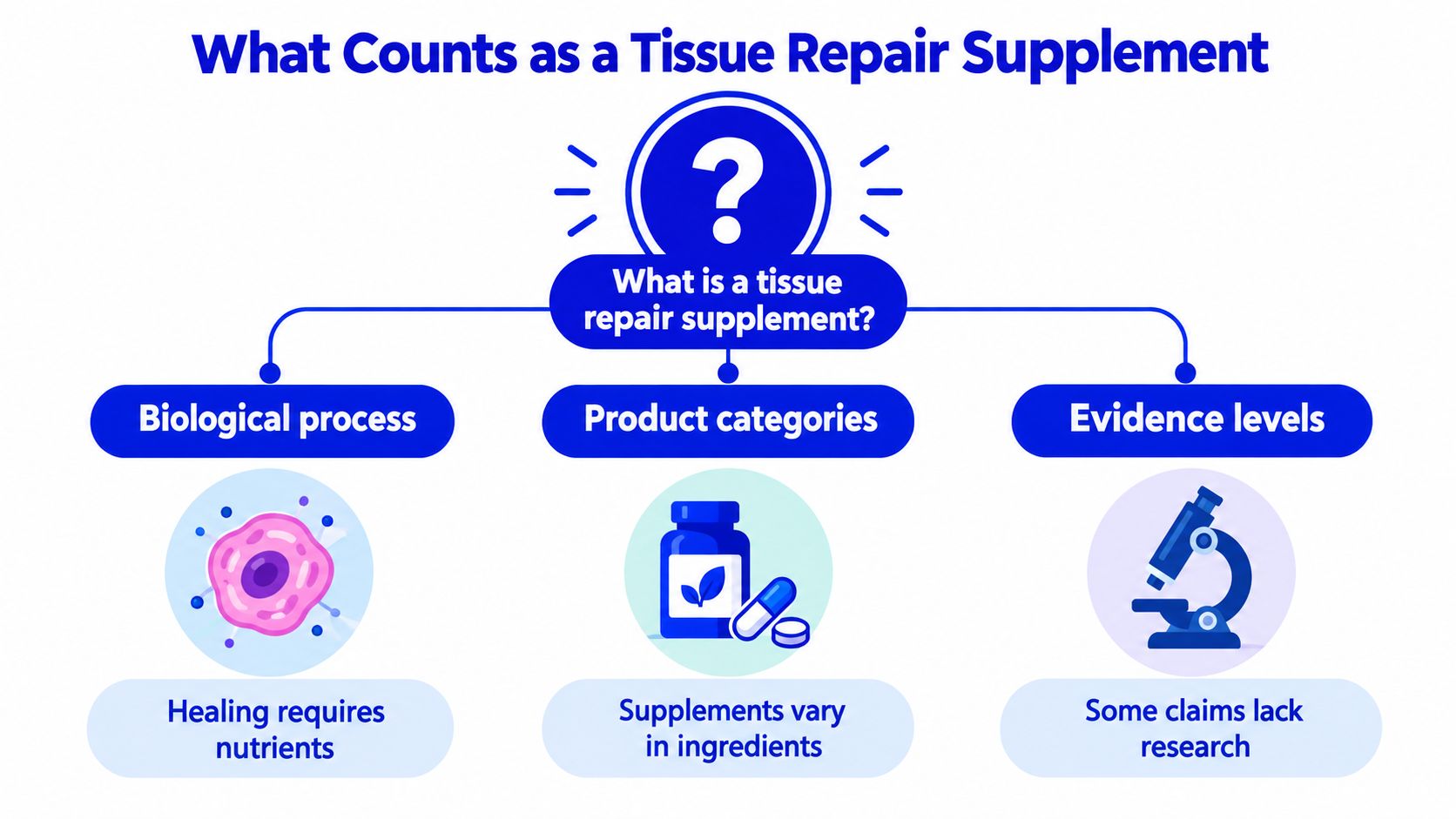
Most tissue repair supplements fall into four practical groups.
Readers often lump oral collagen, a wound dressing, and a lab peptide into the same mental bucket. That creates confusion fast.
An oral nutraceutical is regulated differently from a topical wound product. A research peptide sold for laboratory use sits in a different category again. For anyone comparing options, that distinction matters because mechanism, intended use, and evidence type often change with the format.
Practical rule: Don't ask whether a product is “for healing” in the abstract. Ask what biological step it's supposed to influence, and what kind of evidence supports that use.
Collagen deserves special attention because it sits at the intersection of basic biology and supplementation. A review notes that collagen is a key component of the extracellular matrix and plays a critical role in all phases of wound healing, acting in native fibrillar form and as soluble components in the wound environment in this wound healing review.
That doesn't mean every collagen product has the same evidence. It means collagen is biologically relevant enough that product claims should be judged carefully, not dismissed or accepted automatically.
Tissue repair isn't one event. It's a sequence.
A simple way to understand it is to picture a construction site with overlapping crews. One team stops the immediate damage, another clears debris, another rebuilds, and the last one strengthens and reshapes what was built.
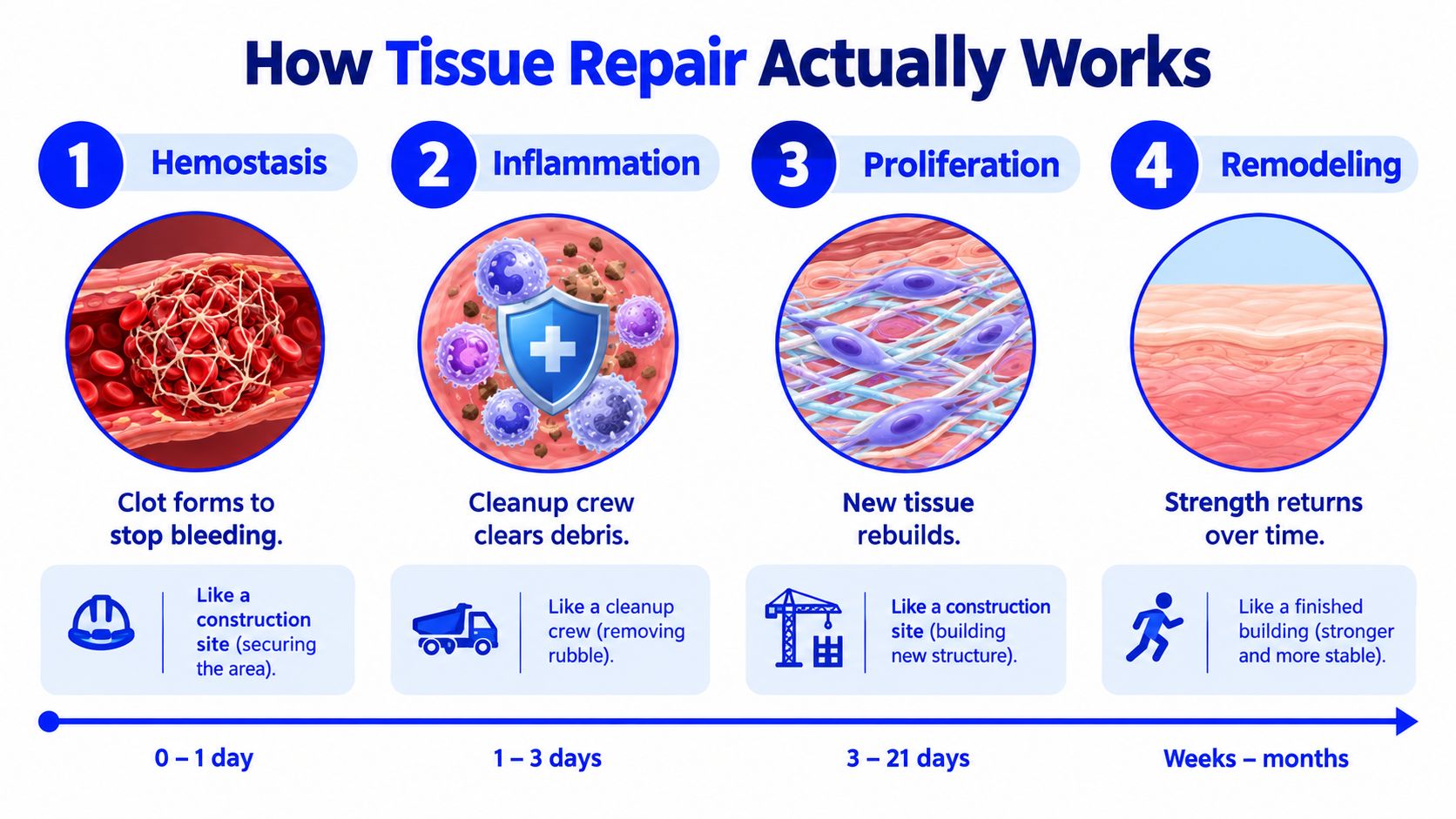
Hemostasis
This is the fast response. The body forms a clot and seals the area to limit bleeding.
Inflammation
Think cleanup crew. Immune cells move in, remove damaged material, and coordinate the next steps.
Proliferation
This is the rebuilding phase. Cells lay down new tissue, blood vessel support improves, and the wound or damaged area starts closing.
Remodeling
The body reorganizes and strengthens the new tissue over time. This phase is where structure and function become more refined.
A visual summary helps make the sequence easier to remember.
Different tissue repair supplements make more sense in different phases.
That's why “best supplement for healing” is such a weak question. The better question is whether the product matches the biological bottleneck.
When you look at any recovery product, sort it through three filters:
For readers also thinking about dietary protein in physical recovery settings, this overview of protein and chiropractic care is useful because it ties protein intake back to the practical demands of rebuilding tissue.
Tissue repair is sequential and overlapping. A product can sound logical and still be mistimed, mismatched, or oversold.
If one category has the clearest tissue-repair signal, it's collagen. That doesn't make every product equivalent, but it does place collagen ahead of many trend-driven compounds in both biological plausibility and real clinical interest.
A 2021 review describes collagen-based wound care as a long-established area and notes that a ClinicalTrials.gov search using collagen, skin, and wound identified 45 clinical studies, showing that collagen-centered repair research is a substantial topic rather than a fringe idea in this collagen review.
Collagen matters because tissue repair depends on both structure and signaling. Some products aim to supply peptides or precursors. Some research suggests those peptides may also influence how repair cells behave.
One clinical signal comes from a pilot trial of a hydrolyzed collagen-based supplement in men with burns involving 20 to 30% of body surface area. After 4 weeks, the collagen group showed significantly improved wound healing rate and serum pre-albumin compared with placebo, and the paper reported a hazard ratio of 3.7 for wound healing in the collagen group in this clinical study summary.
Human outcome data is one piece. Mechanistic work fills in the “how.”
A study using ex vivo human 3D skin-equivalent models reported that porcine-derived collagen peptides significantly improved wound closure, with effects linked to increased keratinocyte and dermal fibroblast integrin α2β1 signaling and activation of the ERK-FAK cascade in this PubMed study. In plain terms, collagen peptides may help cells at the wound edge move, attach, and re-cover the surface more effectively.
| Compound | Study Type | Measured Outcomes | Evidence Tier |
|---|---|---|---|
| Hydrolyzed collagen | Pilot human clinical trial | Wound healing rate, serum pre-albumin, hazard ratio for healing | Stronger human signal |
| Collagen peptides | Ex vivo human 3D skin-equivalent model | Wound closure, integrin signaling, ERK-FAK activation | Strong mechanistic support |
| Collagen peptides | Review of wound models | Cytokine and pathway modulation including TGF-β/Smad and PI3K/Akt/mTOR | Broad preclinical and review-level support |
| Growth factor related compounds | Mixed mechanistic and preclinical discussion | Cell signaling, proliferation, angiogenesis, matrix activity | Variable and compound-specific |
Collagen still gets overstated in some marketing. A neutral review notes that oral-collagen benefit for wound healing has insufficient independent human-trial support, while also noting a 10 g/day collagen hydrolysate trial in 120 pressure-ulcer patients that improved wound healing after 16 weeks, suggesting the signal may be real but context-specific in this clinical review summary.
That's the balanced view. Collagen has meaningful biological relevance and some measurable human data, but broad claims across every tissue-repair scenario still outrun the evidence.
This is the part of the market that gets the most attention and often the least careful reading.
BPC-157, TB-500, and GHK-Cu are discussed constantly in recovery circles. They don't all sit on the same evidence tier, and they shouldn't be treated as if they do.
BPC-157 is one of the highest-interest compounds in this category. The problem isn't lack of theories. The problem is lack of strong human evidence.
A 2025 orthopaedic systematic review screened 544 records and found only one human clinical study eligible, while later reviews emphasized that no completed randomized controlled human trial has established efficacy for tendon repair in this AAOS review PDF. Preclinical work suggests possible effects on angiogenesis, collagen synthesis, fibroblasts, and musculoskeletal healing, but that's not the same as proven clinical benefit.
TB-500 is typically discussed as a thymosin beta-4 fragment associated with cell migration and repair signaling in preclinical contexts. GHK-Cu is commonly discussed for collagen-related and gene-expression effects in older wound-healing literature and cosmetic biology conversations.
The key point is simple. These compounds may be biologically interesting, but their popularity online is often much larger than their human evidence base.
A research peptide can have a plausible mechanism and still remain an unanswered human question.
| Peptide | Proposed Mechanism | Strongest Evidence | Human Trial Data | Regulatory Note |
|---|---|---|---|---|
| BPC-157 | Angiogenesis, fibroblast activity, collagen-related repair signaling | Preclinical and systematic review discussion | Sparse human evidence, no completed randomized controlled human trial established for tendon repair in the cited review | Commonly treated as a research compound |
| TB-500 | Cell migration and repair-related signaling | Preclinical discussion | Limited publicly emphasized human trial support in this context | Commonly treated as a research compound |
| GHK-Cu | Collagen-related signaling and gene-expression effects | Mechanistic and older wound-healing literature discussions | Limited modern large-scale human repair trial clarity | Used in research and formulation contexts |
If you're comparing peptides, ask two separate questions.
First, what's the strongest evidence type behind the compound. Second, is the product being sold for research use or as a consumer supplement. Those are different lanes, and they shouldn't be blurred.
Primary tissue repair supplements often get the spotlight, but repair also depends on supporting nutrients that keep the cellular environment functional.
These compounds don't all act like direct “healing agents.” Many of them are better understood as cofactors, raw materials, or regulators that help the larger process move forward.
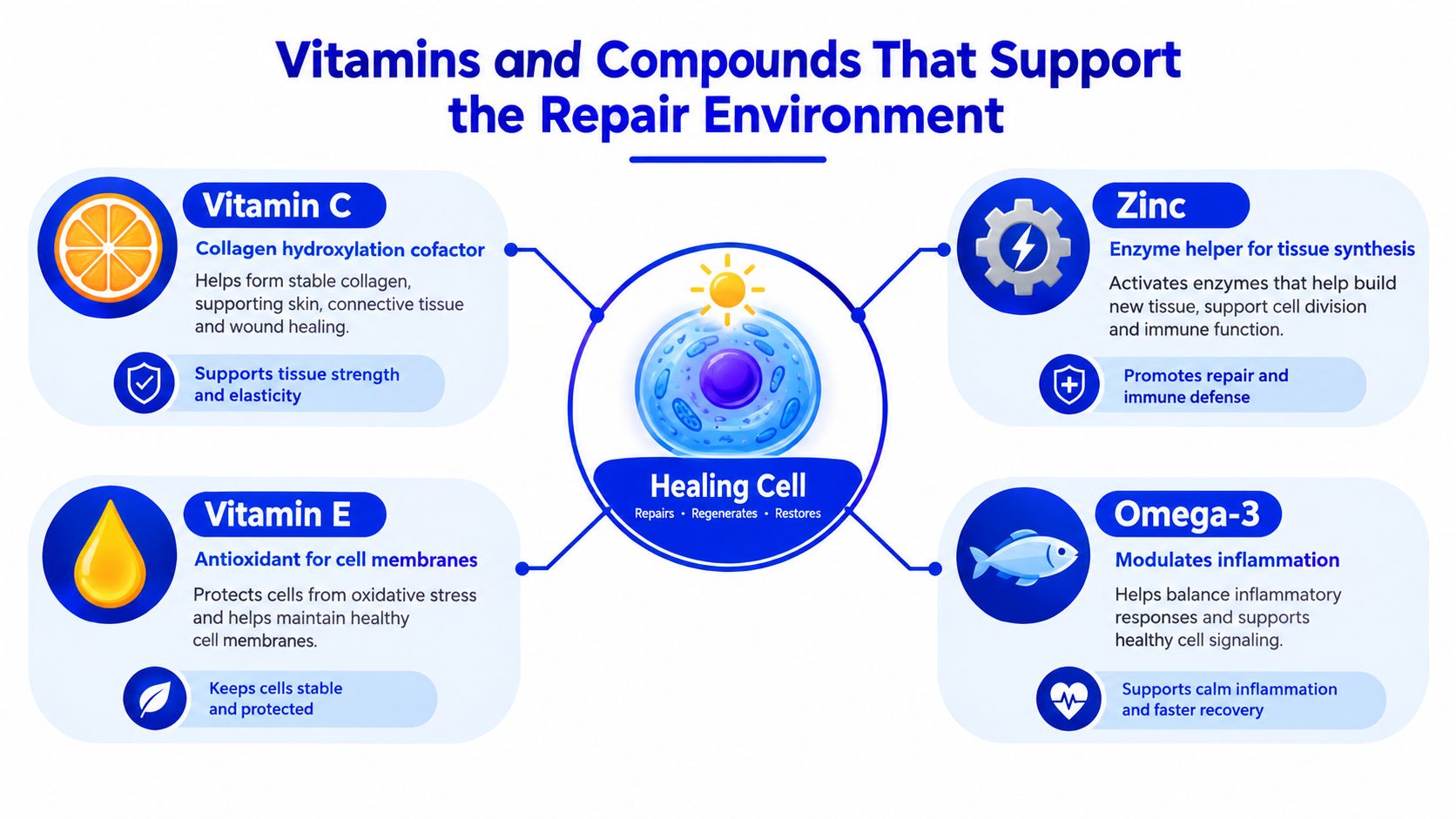
Some of the most commonly discussed support compounds include:
Readers often get lost. They ask which nutrient is “best,” when the better question is where it fits.
During inflammation, omega-3s and immune-supportive nutrients often enter the discussion. During proliferation, amino acids and micronutrients involved in cell growth and matrix production make more sense. During remodeling, nutrients tied to collagen assembly and crosslinking become easier to justify.
A supplement can help fill gaps. It can't replace the baseline diet that supplies energy, protein, and routine micronutrient intake.
For readers who want practical examples instead of a bottle-first approach, this guide to healing nutrients and meal ideas gives a helpful food-based view of recovery support.
Good repair nutrition usually looks less like a miracle ingredient and more like a well-supported system.
The biggest mistakes in this category usually come from mixing up marketing logic with biological logic.
A product can sound advanced and still be poorly matched to the problem. A higher dose can sound stronger and still fail to improve the outcome that matters.
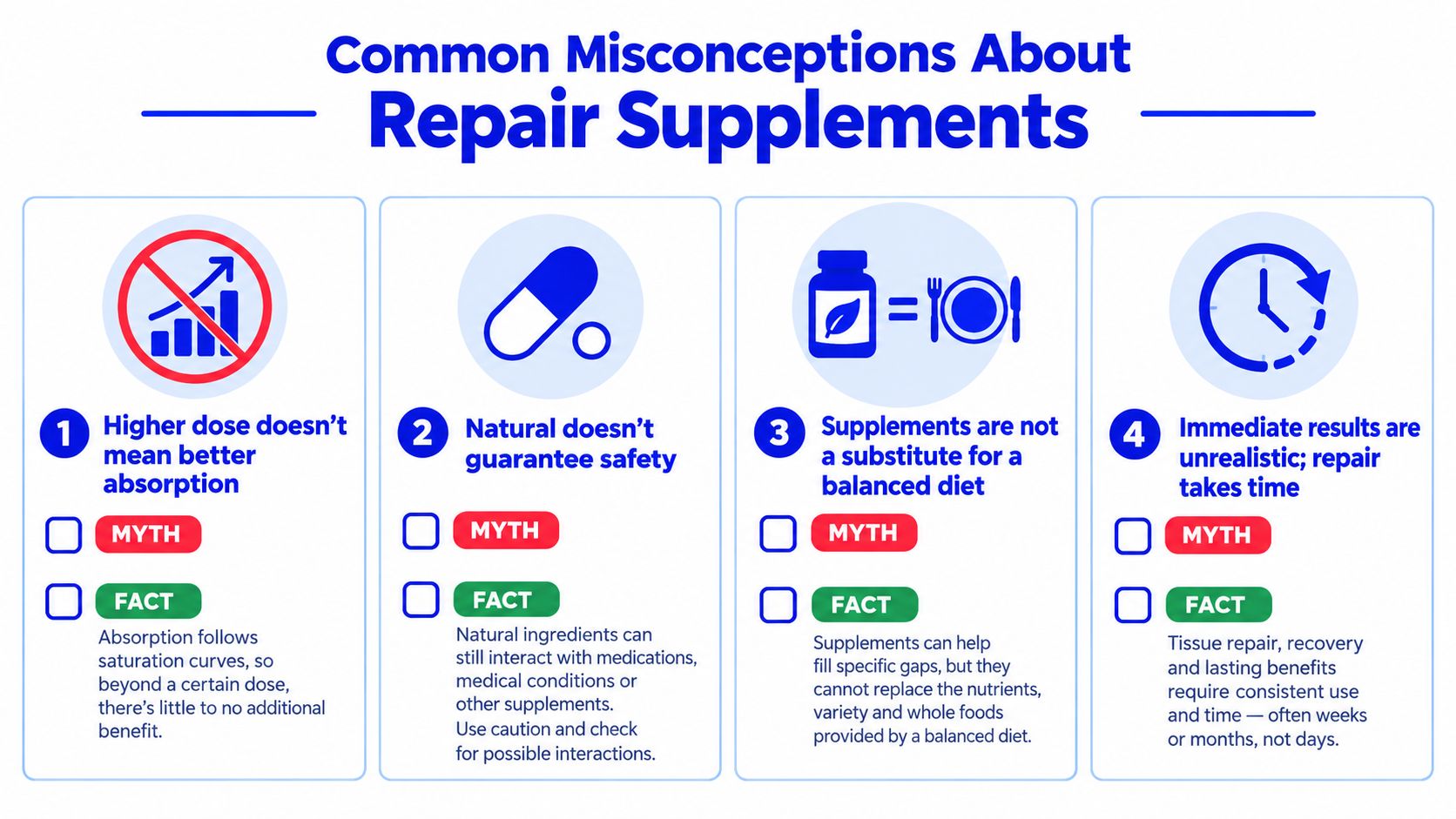
Repair biology doesn't work like turning up a volume knob forever. Absorption, timing, dose form, and tissue context all matter.
That's one reason readers should be cautious with claims that present bigger serving sizes as automatically more effective. In many categories, evidence is too mixed to support that shortcut.
Plenty of compounds are “natural” in origin and still thinly studied in humans. Natural origin says little about standardization, dosing clarity, contamination control, or evidence quality.
This matters even more in tissue repair supplements because buyers often assume a wellness label equals a mature research base. It doesn't.
Gym reports, forum logs, and social media before-and-after stories can point to questions worth studying. They don't answer those questions.
That's especially important with peptides and “recovery stacks.” A popular anecdote can outrun clinical reality very quickly.
No tissue repair supplement substitutes for enough protein, adequate sleep, or appropriate mechanical loading. Remodeling depends heavily on what the body does with the tissue after the initial repair response.
“Repair,” “recovery,” and “anabolic” are marketing words first. Treat them as claims to verify, not facts to inherit.
If you're looking at products in this space, documentation matters as much as branding.
A polished label can't tell you whether a batch matches its stated identity, purity, or contamination profile. Research-minded buyers need a simple verification process.
Start with the Certificate of Analysis, or COA. It should be batch specific, not generic, and it should match the exact lot you're evaluating.
Then look for third-party testing details. In research contexts, documentation such as microbial and endotoxin reports can matter alongside purity reporting, especially for peptides and related compounds.
Use this checklist:
FDA rules allow dietary supplement structure/function claims only when they are truthful and not misleading, include the required disclaimer, and avoid disease claims, as explained in FDA guidance on structure/function claims. FDA also states that these claims are not pre-approved, and the manufacturer must submit a notification no later than 30 days after marketing the supplement with that claim in this FDA structure/function overview.
For research-use peptide sourcing, some suppliers provide batch-level documentation such as COAs, microbial reports, endotoxin reports, and stated purity values. Peptide Warehouse USA is one example of a supplier that presents products for laboratory, analytical, and preclinical use with batch-specific documentation rather than positioning them as consumer-ready treatment products.
The easiest way to make sense of tissue repair supplements is to stop treating them as one category.
Some compounds are mainly about structural support. Some are about cell signaling. Some mostly help maintain the repair environment that lets other processes work. And the evidence strength changes a lot depending on which bucket you're in.
When you evaluate a product, build your own matrix around three questions:
| Question | Why it matters |
|---|---|
| What tissue am I thinking about | Skin, tendon, ligament, cartilage, and muscle don't share identical repair demands |
| What mechanism is being proposed | Structural input, inflammatory modulation, angiogenesis, migration, or remodeling support |
| What evidence tier supports it | Human clinical data, mechanistic evidence, preclinical work, or mostly anecdote |
That framework keeps flashy products from looking stronger than they are.
Collagen has the clearest combination of biological relevance and at least some measurable human tissue-repair data. A 2024 review also reported that collagen peptides may support wound healing through pathway modulation including TGF-β/Smad and PI3K/Akt/mTOR, with summarized effects of roughly 10% to 30% across incision, excision, mucosal, burn, and pressure-ulcer models in this 2024 review.
Research peptides are different. They're often interesting because the mechanisms sound compelling, but the human evidence is far less settled. That doesn't make them useless. It means the honest position is uncertainty.
If you're serious about this topic, track compounds by tissue target, mechanism, evidence tier, and product documentation. That single habit clears up most of the confusion in this space.
It also helps you separate educational interest from purchasing decisions. Some products are suitable for consumer supplement consideration. Others belong strictly in a research workflow.
Peptide Warehouse USA supplies research peptides and related compounds for laboratory, analytical, and preclinical use, including products often discussed in tissue repair conversations such as BPC-157, GHK-Cu, TB-500, and combination research stacks. If you want to review batch documentation, product formats, and research-use options in this category, visit Peptide Warehouse USA.
Leave a comment