No products in the cart.



Bodybuilding peptides are short amino-acid signaling compounds people discuss for growth-hormone release, recovery, fat loss, or recomposition, not dietary protein like whey. Many of the named examples sit in category S2 on the 2026 prohibited list, banned both in and out of competition, and they are not approved medicines for lifters.
Search results for what are peptides bodybuilding usually skip that line and sell the popular shortcut. A forum stack, a research sticker, or a high purity certificate is treated as if it were a green light for a bigger physique. That advice confuses a chemical signal with extra contractile muscle, and it confuses a lab printout with permission to use a vial on a person.
A fuller look can come from water, connective tissue, or real muscle protein, and none of those outcomes is guaranteed by a hormone bump. Online sale does not create a sport exemption or a medicine approval. This guide sorts the names, the signals, the evidence gaps, and the 2026 rules so you can tell a conversation apart from an authorized product. It is not a program, a stack sheet, or medical advice.
In gym talk, peptides means short chains of amino acids, or peptide-based signaling compounds, promoted for growth-hormone release, muscle recovery, connective-tissue repair, fat loss, or a change in body composition. They are not whey, casein, or another food protein. They are also not one drug class. Some act through hormone or growth-factor pathways, and several are prohibited in tested sport.
The World Anti-Doping Agency 2026 Prohibited List, effective January 1, 2026, places peptide hormones, growth factors, related substances, and mimetics in category S2, prohibited both in and out of competition. Sports regulators are treating many of these names as pharmacologically active performance substances, not as harmless supplements. That is the practical split. A compound can be discussed for research or preclinical work and still be off limits for athletes and a poor fit for unsupervised human use.
| Group | Discussed role | Examples | 2026 WADA status | Evidence usually cited |
|---|---|---|---|---|
| GHRH analogues | Signal GH release through the GHRH receptor, with possible IGF-1 effects | CJC-1293, CJC-1295, sermorelin, tesamorelin | S2, prohibited in and out of competition | Endocrine research, not proof of extra contractile muscle |
| GH secretagogues | Stimulate pituitary growth-hormone release | Ipamorelin, ibutamoren | S2, prohibited in and out of competition | Some human hormone data, not a bodybuilding approval |
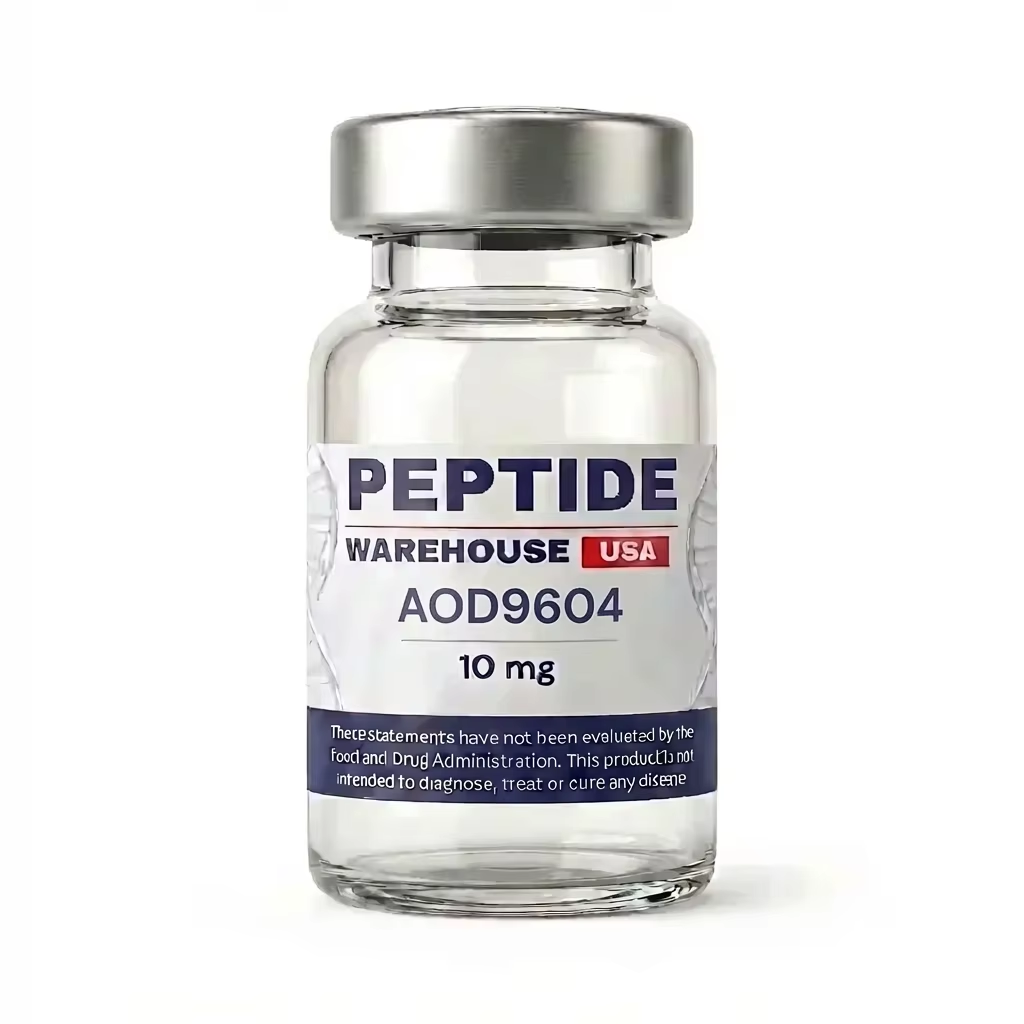
| GH fragments | Body-composition or fat-loss discussion | AOD-9604, hGH 176-191 | S2, prohibited in and out of competition | Limited lifter outcome data |
| Growth factors and thymosin derivatives | Tissue growth or repair signaling | IGF-1, mechano-growth factors, fibroblast growth factors, TB-500 | S2, prohibited in and out of competition | Lab, animal, or non-lifting contexts |
| Repair and copper peptides often named online | Injury, tendon, skin, or recovery anecdotes | BPC-157, GHK-Cu | Not in the named 2026 S2 examples cited here | Mostly laboratory or animal research |
Read the rows as a sorting tool, not as a shopping list. GHRH analogues such as CJC-1293, CJC-1295, sermorelin, and tesamorelin are framed as messages through the growth-hormone-releasing hormone receptor. Secretagogues such as ipamorelin and ibutamoren are framed as a nudge to the pituitary. Fragments such as AOD-9604 and hGH 176-191 show up in fat-loss talk. Growth-factor and thymosin names, including IGF-1, mechano-growth factors, fibroblast growth factors, and TB-500, are tied to tissue signaling.
BPC-157 and GHK-Cu stay in their own row on purpose. They dominate injury, tendon, skin, and recovery anecdotes, and they are not in that named S2 example set. The blank is not a clearance. It only refuses to invent a ban this list's named examples do not state.
A forum name, a stack, or a purity percentage is not a supplement approval.
Three mix-ups keep showing up in comment threads.
Mechanism comes next, then what a study would have to measure before a lifter claim holds, then the names people type, then sport and legal status. Lab paperwork cannot authorize personal use.
Picture a group chat. Dietary protein is the grocery bag. Someone still has to cook. A bodybuilding peptide, in the way lifters use the word, is closer to a text that tells a gland or tissue to change what it is already doing. Steroids are a different kind of outside signal, built around testosterone rather than a short peptide message.
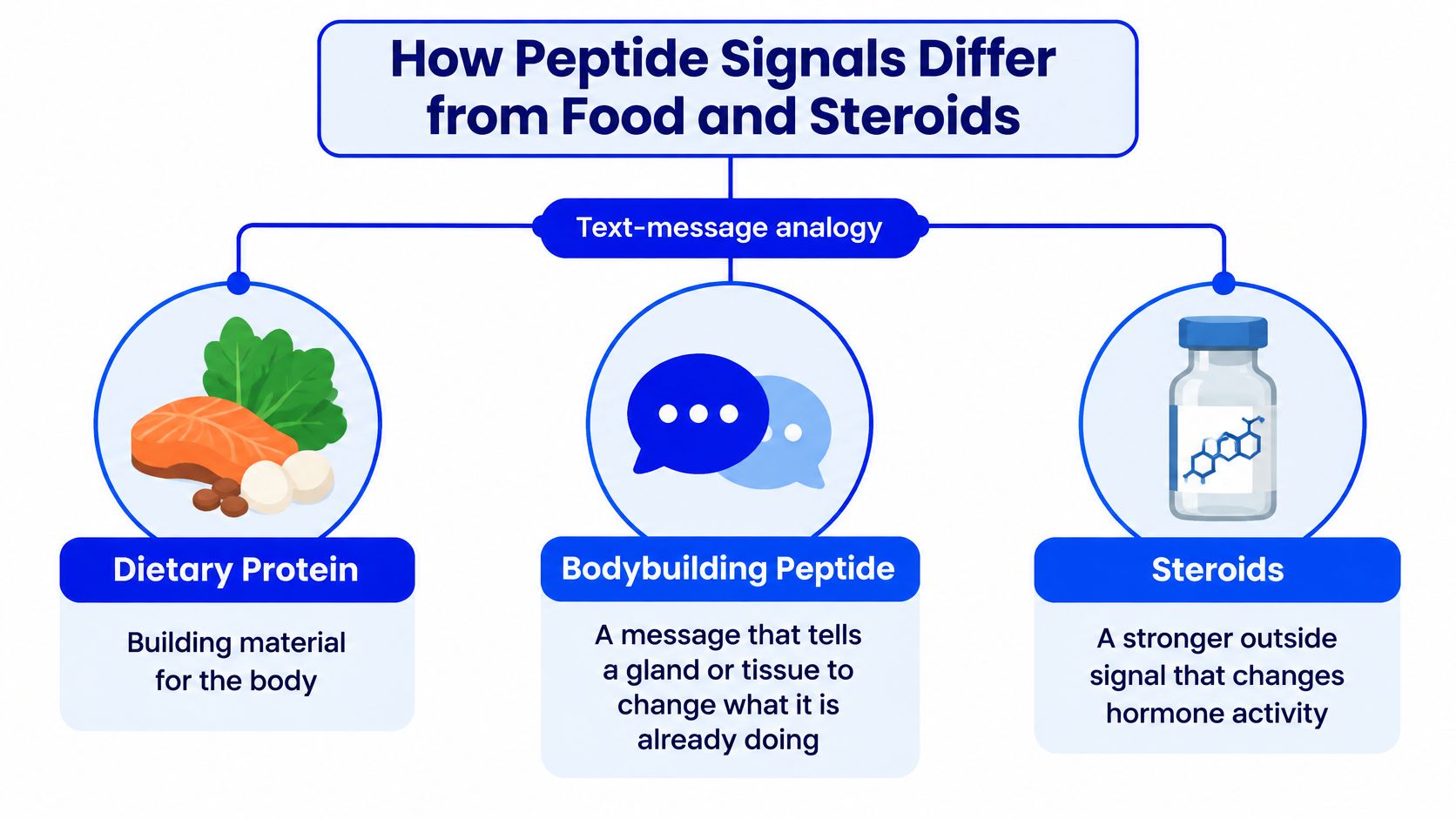
Say your training and meals are already set. Extra chicken is building material. Amino acids from food can be used to repair and build tissue, but the chicken does not dial a hormone on and off. A peptide discussed for growth hormone is the text. It does not become the brick.
These compounds are short amino-acid chains used experimentally or medically to influence signaling related to growth hormone, tissue repair, appetite, or metabolism. They are not a single pharmacological class. The 2026 Prohibited List PDF is useful here because it separates the routes instead of treating every vial as the same supplement.
GHRH analogues such as CJC-1295 and sermorelin act through the GHRH receptor. Think of a key that fits one lock on the signaling path that tells the pituitary to participate in growth-hormone release.
Secretagogues such as ipamorelin and ibutamoren work the other phrasing of the same idea. They stimulate the pituitary to release growth hormone. Ibutamoren is often discussed as an oral secretagogue, while many of the others are discussed as injectable research materials. That difference in form is not an instruction, and it is not a safety finding.
Downstream, the liver and other tissues may increase IGF-1 signaling, both hepatic and peripheral. Growth-hormone fragments such as AOD-9604 are discussed beside these routes, but a fragment is not the same message as a secretagogue or a GHRH analogue.
Elevating GH or IGF-1 is not the same thing as showing more contractile muscle. A fuller arm or a tighter waist in the mirror can reflect muscle protein accretion, fluid retention, or connective-tissue change. Which one you get still depends on training, nutrition, baseline endocrine status, and how much exposure occurred.
A pathway can be real in a research paper and still be the wrong basis for unsupervised human use.
Anabolic steroids sit in another biological category. They are synthetic substances related to testosterone, aimed at muscle and performance through androgen pathways, not through a peptide text to the pituitary. Peptides are not a gentle version of steroids. A change in size does not prove safety, effectiveness, or approval for either category. Products in this conversation stay in a research-use frame.
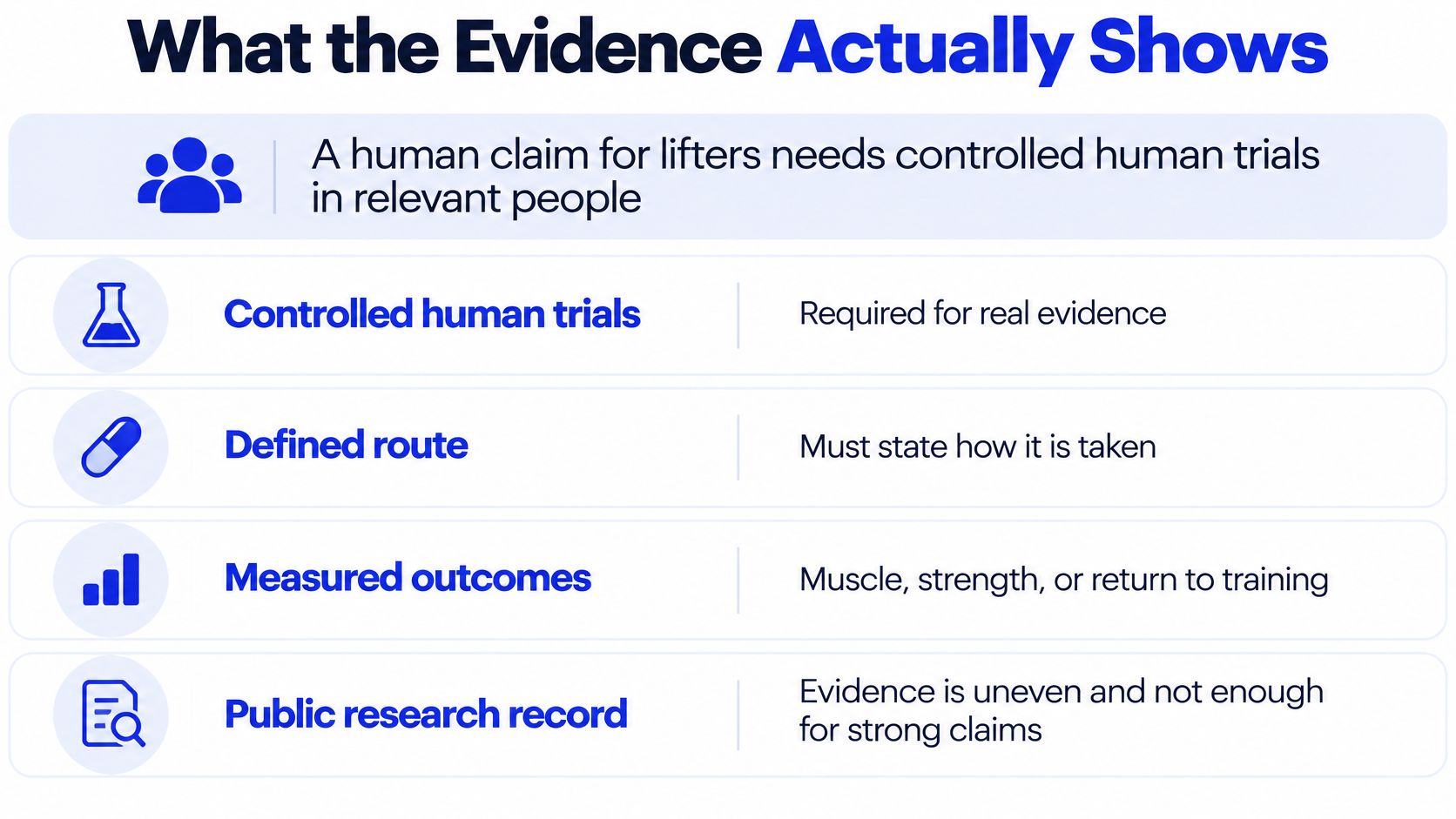
A human claim for lifters needs a higher bar than a hormone printout or a healed tendon in a rodent. You would want controlled human trials in relevant people, a defined route, and endpoints such as measured muscle, strength, or return to training. A rise in GH or IGF-1, or a marker in animal tissue, does not clear that bar.
Most beginner pages treat peptides as one category and jump to muscle gain, fat loss, recovery, or anti-aging. They skip the split between an FDA-approved medicine, an investigational compound, and a product sold online with only a research-use disclaimer. Neutral medical coverage on Drugs.com notes that compounds commonly discussed in bodybuilding, including BPC-157, TB-500, CJC-1295, MOTS-c, GHK-Cu, and others, are not FDA-approved for those human uses. Much of the record is laboratory or animal research, not adequately controlled human trials.
| Compound | Main setting reported | Endpoint people cite | Gap for a lifter |
|---|---|---|---|
| CJC-1295 and sermorelin | Endocrine research | GH or IGF-1 levels | A hormone rise is not measured muscle gain |
| Ipamorelin and ibutamoren | Hormone-stimulation research | GH pulse or IGF-1 change | Training, diet, fluid, and baseline hormones still decide the outcome |
| AOD-9604 | Fragment and metabolic studies | Fat-metabolism markers | Body-composition claims outrun lifter trials |
| TB-500 | Animal and tissue-repair models | Cell migration or healing markers | Not controlled proof of faster return to lifting |
| BPC-157 | Laboratory and animal models | Tendon, gut, or tissue markers | No adequate controlled trials in resistance-trained people |
| GHK-Cu | Skin and connective-tissue research | Collagen and tissue-quality markers | Cosmetic or lab findings are not muscle-growth evidence |
CJC-1295 and sermorelin are discussed from endocrine work on GH or IGF-1. That is a blood signal, not grams of contractile protein on a DEXA or a strength log. Ipamorelin and ibutamoren are discussed for GH pulses or IGF-1 changes. Training, food, fluid, and baseline hormones still decide what a lifter sees.
AOD-9604 is tied to fragment and metabolic markers. Fat-loss marketing runs ahead of trials in people who lift. TB-500 is tied to animal or tissue-repair markers such as cell migration, not controlled proof that someone returns to the bar faster. BPC-157 is largely laboratory and animal work on tendon, gut, or tissue markers. GHK-Cu is studied around collagen, skin, and tissue quality. A skin model is not biceps growth.
MOTS-c belongs in the same unapproved online conversation. It gets grouped with recovery and metabolism talk without a bodybuilding approval attached. A purity percentage or a third-party certificate does not create clinical efficacy, sterility after handling, dose safety, or long-term risk data. Separate FDA consumer material warns that some bodybuilding products can contain undeclared drug-like substances and may involve cardiovascular and liver harms.
Progressive training still does the work a vial is rumored to do. Pair any physique goal with muscle-building guidance for data-driven lifters before you treat a research chemical as the missing variable.
What study type, in whom, measuring what, would be enough to justify a human claim?
If the answer is an animal marker, a forum photo, or a purity number, the claim is not ready.
The names travel as stories. Each story sounds like a result. The public research setting behind it is usually narrower, and benefits of peptides in that setting should stay worded as associations. Studied for, and may relate to, are honest. Promised muscle is not.
A lifter with a sore elbow hears the injury story first, long before anyone asks what the study measured.

BPC-157 is the injury story. Lifters talk about tendons and nagging soft tissue. The public record is mainly experimental models, so the anecdote is not a treatment and the compound is not an approved repair drug for the weight room.
TB-500 is the full-body recovery story. People describe it as if soreness everywhere should fade. It is discussed as a thymosin-beta-4 derivative in tissue-repair research. That is a different claim from adding plates to a bar.
GHK-Cu is the copper peptide. Studies and product research frames point to collagen, skin structure, and connective-tissue quality. A skin or tissue model can be interesting chemistry. It is not a muscle-building result.
CJC-1295 plus ipamorelin is the classic forum stack. Read it as two messages aimed at growth-hormone release, often typed as one product name. It is a conversation about signaling, not a recipe. Amounts, timing, and administration steps do not belong in an explainer, and they are not implied by how often the pair is mentioned.
AOD-9604 is the fragment people attach to fat-loss talk. It remains a growth-hormone fragment discussion. It is not a proven cutting drug for a contest prep.
Incretin names such as semaglutide and retatrutide enter gym conversation through appetite and scale weight, including weight-class worries. They are not the same class as a repair peptide or a GH secretagogue.
A stack name is a conversation, not instructions. If a coach hands you a trio of abbreviations and calls it a protocol, you still do not have evidence, a sport ruling, or a medical plan.
This short explainer walks through why gym peptide talk and muscle evidence keep missing each other.
A research label, an online sale, or a high-purity certificate does not make a peptide an approved supplement, a proven muscle builder, or legal in tested sport. For many growth-hormone-related substances discussed by athletes, the answer to “Could this matter on a test?” is yes: WADA's S2 category prohibits them both in and out of competition under the 2026 list.
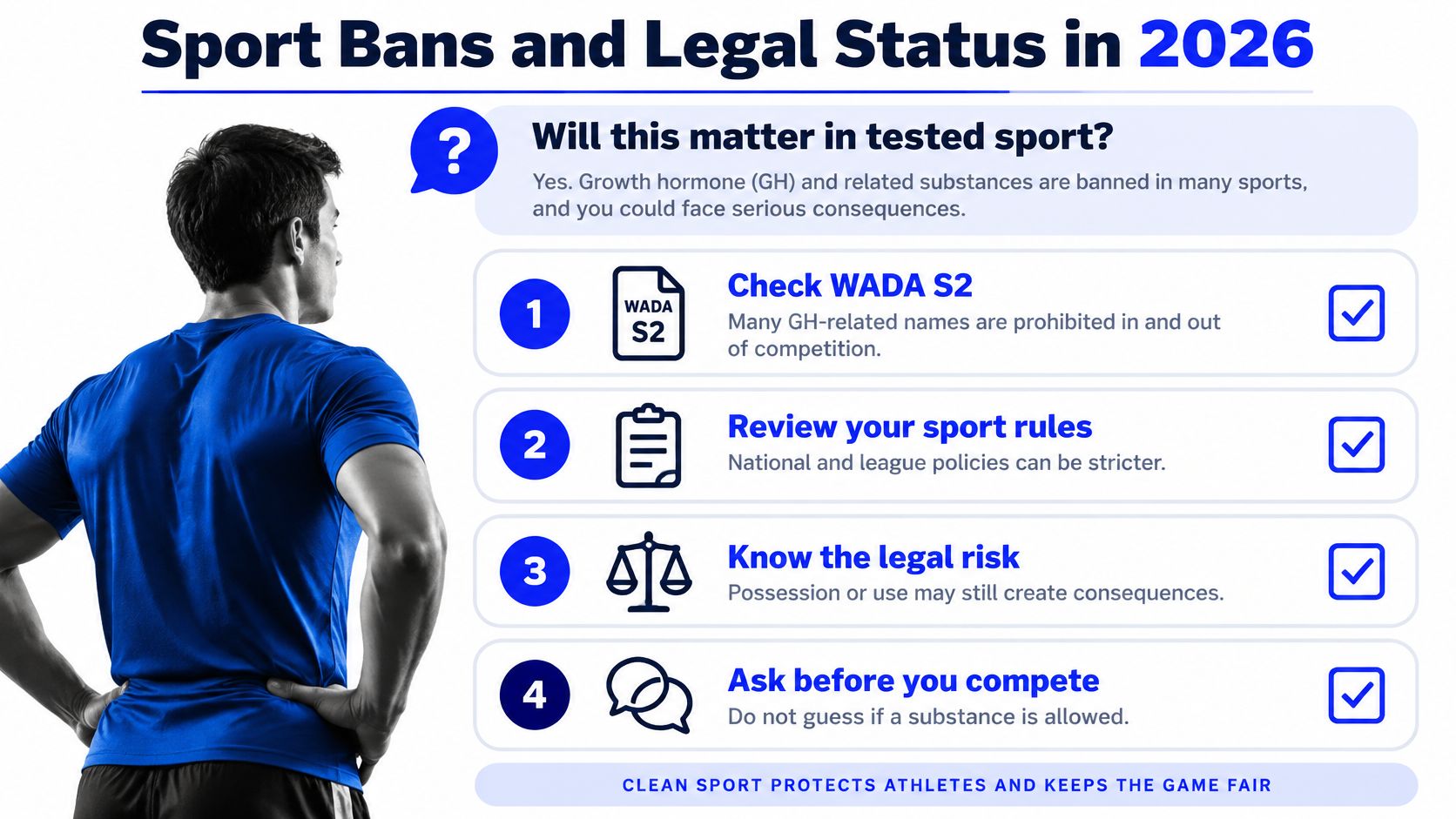
WADA's 2026 Prohibited List was approved by its Executive Committee on September 11, 2025, and took effect on January 1, 2026, according to the WADA Prohibited List. A research-use label does not create a therapeutic-use exemption. Federations may also set stricter rules, so international athletes need to check the global list alongside their national or league policy. An online checkout page has no bearing on eligibility.
Weight-loss drugs have entered weight-class discussions, and their status can be confused. A survey of sports physicians found that 12% knew of athletes using GLP-1 drugs without medical need, 53% incorrectly identified semaglutide's placement on the 2025 World Anti-Doping Agency Monitoring Program, 44% believed GLP-1 drugs should be prohibited, and 38% were unsure, as reported in Sports Medicine.
The terms describe different things. Monitored means a substance is being watched; prohibited means it is banned. A substance that is not prohibited is not thereby safe, effective, permitted by every federation, or ethically appropriate. Before competing, athletes should work with a sports-medicine clinician to check the current list and consider documentation, disclosure, and testing risk. A forum discussion cannot determine eligibility.
For non-athletes, the question shifts from competition rules to drug law. The FDA has identified peptide products promoted online, including tesamorelin and PT-141, as unapproved new drugs when marketed for human use without an approved application, according to an FDA warning letter. Under the Federal Food, Drug, and Cosmetic Act, introducing or delivering an unapproved new drug into interstate commerce violates sections 505(a) and 301(d).
A research-use-only label does not grant FDA approval, establish product quality, or provide a dosing pathway. Human-use decisions belong with a qualified clinician. Athletes should not confuse availability with eligibility.
Buyers treat a certificate as a green light for personal use. The certificate answers a lab question. Personal use is a different question, and collapsing them is how a research chemical gets mistaken for a supplement.
The FDA's consumer update on bodybuilding products warns that some products promoted for bodybuilding may illegally contain steroids or steroid-like substances, with potentially serious, even life-threatening risks. That warning still applies when the label says peptide, recovery, or performance supplement rather than anabolic steroid. Marketing language does not prove identity, sterility, concentration, or safety.
Only the first two are paperwork questions. Useful lab documentation is batch-specific. A certificate of analysis, identity testing, a stated purity figure, and matching endotoxin or microbial reports help a researcher trace a lot. They do not convert an unapproved research compound into a product authorized for human consumption.
We provide high-purity research peptides backed by third-party testing, including COAs, endotoxin, and microbial reports. Products are advertised with 99.5% purity, made in the USA, and batch produced and batch tested. Those points are an example of the documents a lab buyer can ask for. They are not a permission slip.
A COA does not prove sterility after someone reconstitutes a vial, does not set a safe human dose, and does not authorize consumption.
Keep analytical quality and authorization in separate columns before you look at any supplier. If the third column is personal physique use, the certificate never fills it.
A peptide discussed in bodybuilding circles does not become an approved supplement or a proven muscle builder because it carries a research label or a purity certificate. Nor does a supplier's paperwork establish whether a compound is permitted in tested sport. Anyone considering sport participation should check the current WADA list and their federation's rules. For medical questions, consult a qualified clinician. Peptide Warehouse USA does not provide medical advice, dosing instructions, or treatment guidance.
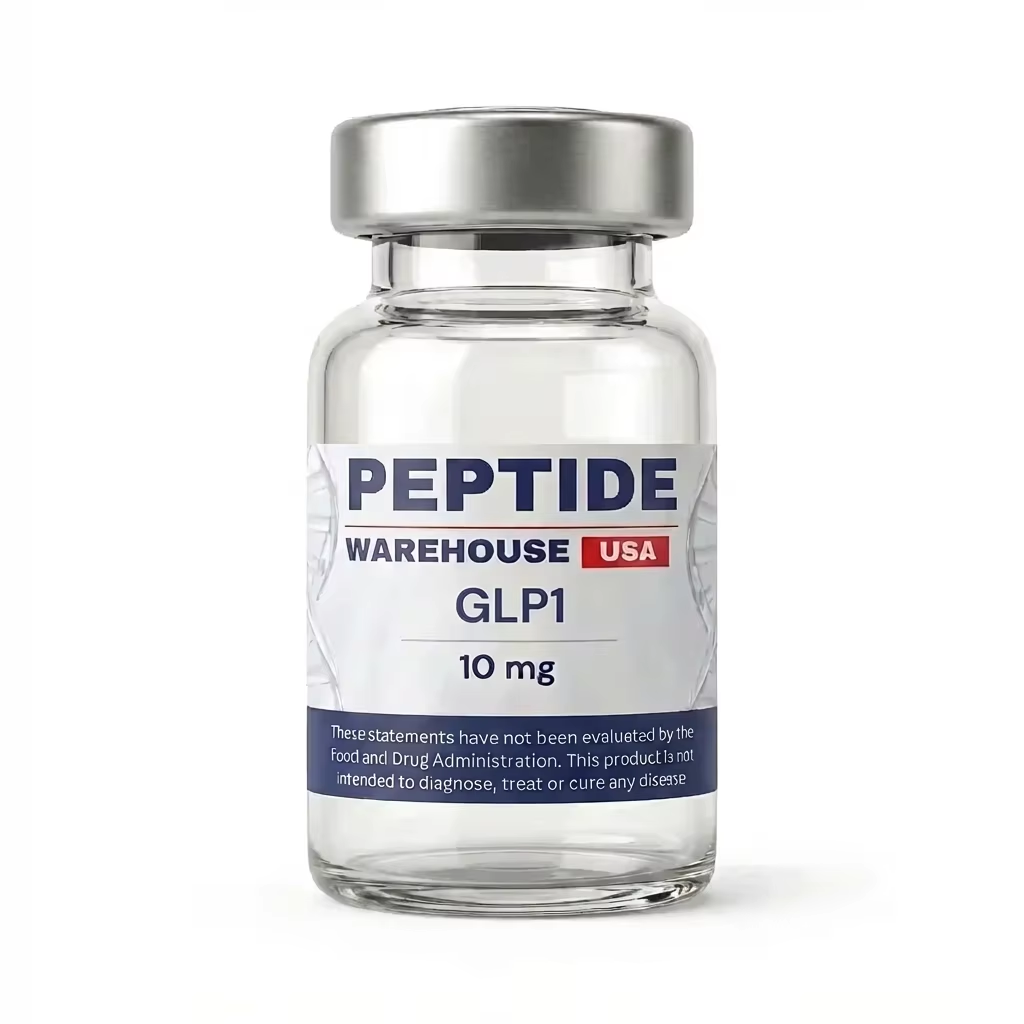
For laboratory, analytical, or preclinical work, focus on whether the supplier and documentation fit that purpose. Peptide Warehouse USA is a research chemical supplier. Its products are not intended for human or veterinary consumption, and its website states that its statements have not been evaluated by the FDA. Its products and information are not intended to diagnose, treat, cure, or prevent disease.
Peptide Warehouse USA sells research-use peptides. Before ordering, check the compound name and lot paperwork against the specific product being purchased. Its products are supported by third-party testing, including COAs, endotoxin, and microbial reports. That documentation helps researchers assess and trace a lot; it does not establish approval for human use or prove a bodybuilding benefit. Review the supplier's research-use products and documentation, and keep personal use separate from research procurement.
Visit Peptide Warehouse USA to review its research-use products and lot paperwork.