No products in the cart.


If you’re searching for where to buy PT-141, you’ve probably already noticed the problem. The market is split between pharmacy-based prescription channels and research-only peptide vendors, and many listings blur that line in ways that make evaluation harder than it should be.
That confusion matters. PT-141, also called bremelanotide, isn’t a product category you should buy based on headline price alone. The key decision is about verification, documentation, and supply-chain category. A legitimate purchase starts with knowing whether you are looking at a regulated medical product or a research-grade compound for laboratory use.
Most buyers don’t need more product listings. They need a way to screen vendors, interpret technical documents, and avoid treating a research chemical listing like a medication source. That’s where procurement discipline helps. The same habits that protect sample integrity in a lab also protect buyers from poor sourcing decisions.
PT-141 sourcing is easier when you stop treating it like ordinary online shopping. A sensitive compound should be purchased the way any lab would source a critical input. First define the use case, then confirm the supply chain, then verify the lot-level paperwork.
For research procurement, the first screen is simple. Is the seller clearly operating as a research chemical supplier, or are they presenting PT-141 through a prescription and pharmacy workflow? If that answer is vague, the listing already has a transparency problem.
The next screen is technical. Buyers should look for documented identity, stated purity, concentration where applicable, and batch-level traceability. Marketing language is easy to publish. Verifiable analytical documentation is harder to fake and far more useful.
Practical rule: If a seller makes strong quality claims but won’t show batch-linked documentation, treat the listing as incomplete.
That approach changes how you evaluate where to buy PT-141. Instead of asking only “who has it in stock,” ask:
A reliable sourcing decision usually feels less exciting than a bad one. The best vendors are often the ones that make fewer promises and provide more paperwork.
PT-141 sits in two very different channels, and buyers need to keep them separate from the start.
Independent clinical and pharmacy sources describe bremelanotide/PT-141 as a prescription product delivered by injection or intranasal routes. In procurement terms, the key issue is whether the listing is a prescription medication or a research peptide. That distinction determines the workflow, the documentation, and whether the product is appropriate for human-use dispensing or laboratory use only, as noted by Texas Center for Compounding on PT-141 nasal spray.

Online, these two channels can appear deceptively close. Both may use the name PT-141. Both may mention peptide quality. Both may present polished product pages.
But the backend is different.
A prescription pathway typically involves a medical intake, provider review, compounding, and then pharmacy fulfillment. A research pathway is structured around laboratory procurement, technical specifications, and research-use restrictions. The products aren’t interchangeable just because the name on the label looks familiar.
That’s the first risk-management point. The buyer has to verify category before comparing anything else.
This dual status affects more than compliance language. It changes what “good sourcing” looks like.
For a prescription product, the relevant markers are provider oversight, pharmacy procedures, formulation route, and dispensing controls. For a research-grade compound, the relevant markers are analytical identity, purity claims, batch traceability, and handling documentation.
Here’s a simple comparison:
| Procurement factor | Prescription-compounded PT-141 | Research-grade PT-141 |
|---|---|---|
| Intended channel | Medical prescribing and pharmacy fulfillment | Laboratory and analytical use |
| Common workflow | Intake, consultation, prescription, compounding, shipping | Direct order through research supplier |
| Key verification | Licensed prescriber and pharmacy process | COA, purity, identity, batch traceability |
| Interchangeable with the other? | No | No |
Buyers get into trouble when they compare a pharmacy product and a research listing as if they were competing versions of the same end use.
That’s why “where to buy PT-141” isn’t mainly a search problem. It’s a classification problem first, and only then a sourcing problem.
A common failure point shows up before the order is placed. A buyer finds a PT-141 listing with a clean label, a low price, and a high purity claim, but there is no clear way to verify what lot will ship, who tested it, or whether the paperwork matches the vial. For research compounds, that is not a minor gap. It is the core procurement risk.
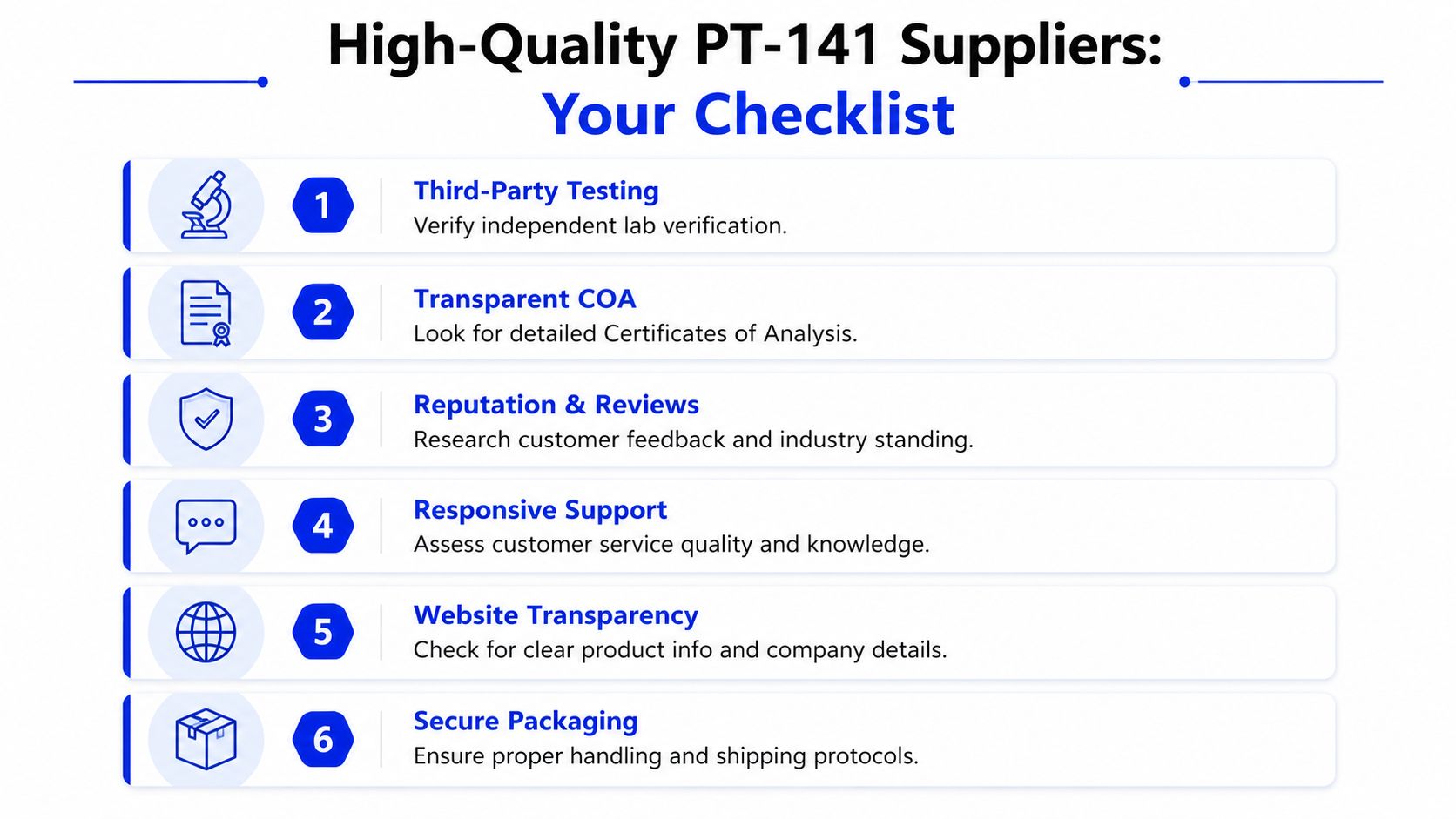
A credible supplier page gives you something to test against incoming material and batch records. One PT-141 product listing, for example, publishes a molecular weight, a stated purity level, and basic production details, which is far more useful than generic language about premium quality, as shown on Biotech Peptides’ PT-141 listing.
That kind of detail matters because it supports a verification workflow. You are not buying a marketing description. You are buying a specific lot of a sensitive compound that should be traceable from listing to documentation to received container.
Use the listing as an initial screen:
A thin listing is a warning sign. If the page avoids specifics, the supplier is asking you to accept avoidable uncertainty.
To help visualize the supplier review process, this overview is useful before you go further.
PT-141 sourcing gets safer when the review shifts from “Who sells it?” to “Who can document it?” That distinction separates a usable research supplier from a page that only looks convincing.
Check how the company handles routine quality questions. A supplier that works with research clients should be able to explain documentation practices, storage expectations, and shipping controls without falling back on sales copy. This is also the point where the difference between a regulated medical product and a research-grade compound matters in practical terms. Research procurement depends on lot traceability and analytical support, not on the controls used for prescription dispensing.
Useful signs include:
For buyers who want a stronger framework for reading quality paperwork, Woolf Software’s insights on COA data offers a useful reference point.
The pre-purchase exchange often tells you more than the product page.
Ask questions that require the supplier to connect the listing to an actual lot and an actual record set:
Short, direct answers are a good sign. Vague answers, delayed replies, or repeated references to brand language usually indicate a weak documentation process.
Price still matters, but it comes later. In peptide procurement, verification comes first, because once an unverified lot arrives, the cost problem has already turned into a quality problem.
A Certificate of Analysis matters only if it helps you verify the exact material in front of you. Many buyers stop at “COA available.” That’s too shallow.
The document should help you answer three questions. What is this material, how pure is it, and does this paperwork match the batch being purchased?
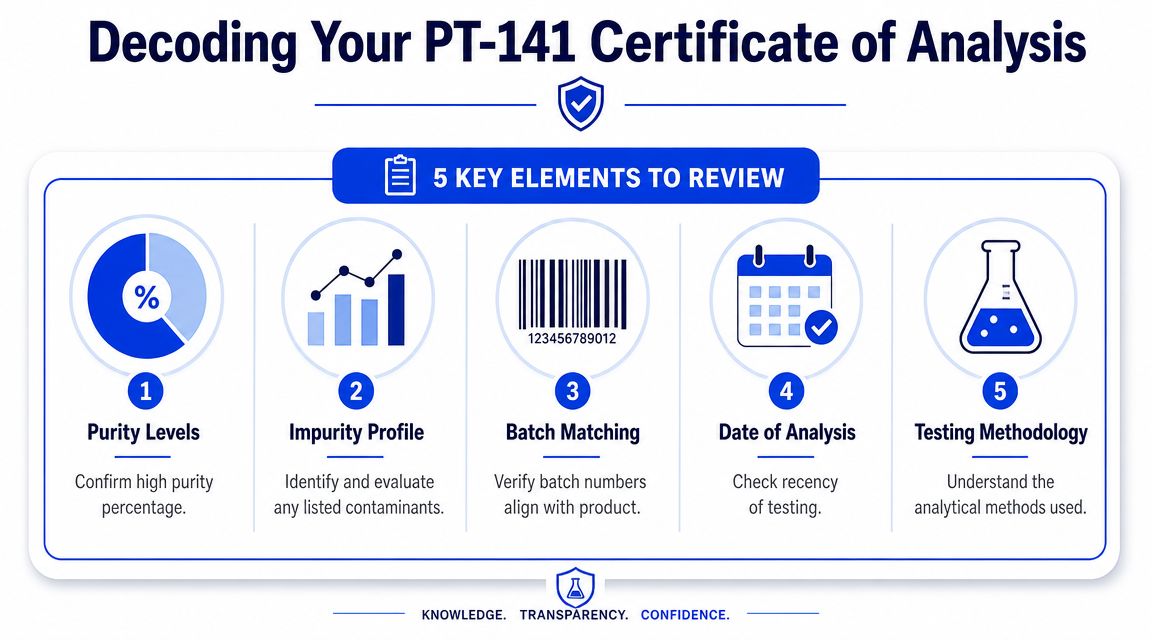
Start with the identifiers. The batch or lot number on the COA should align with the product label or order record. If those don’t match, the document has limited value.
Then review the analytical content. Purity information should be explicit, and the testing method should be identifiable. Dates also matter. Older paperwork isn’t automatically invalid, but recent analysis is easier to defend in a quality system.
A practical COA review usually includes:
For a deeper framework on how structured COA review supports lab decision-making, Woolf Software’s insights on COA data are a useful reference.
A serious supplier often provides more than a single PDF. Additional records can tell you whether documentation is part of an actual quality process or just a sales accessory.
That’s where supplementary reports become useful. Microbial and endotoxin records, when available, show the vendor is thinking beyond a headline purity number. They indicate broader attention to contamination control and lot characterization.
Documentation should reduce ambiguity. If it creates more ambiguity, it isn’t doing its job.
A quick review table helps:
| Document type | What it helps confirm | Why it matters |
|---|---|---|
| COA | Identity and purity claims tied to a batch | Establishes the baseline analytical record |
| Microbial report | Screening for contamination concerns | Supports cleaner handling expectations |
| Endotoxin report | Additional contamination-related assessment | Adds depth to quality review |
| Product label and lot record | Physical item matches paperwork | Reduces mix-up risk |
What doesn’t work is accepting a generic “sample COA” with no lot linkage. That may help you understand the format of a supplier’s testing, but it doesn’t verify the actual unit being shipped.
Once the supplier passes documentation review, the ordering process becomes a logistics exercise. Buyers should then expect the workflow to reflect the product category.
In the U.S. market, PT-141 offered as a compounded medication commonly follows a prescription pathway that may include an online medical form, telehealth consultation, and prescription-based compounding and shipping. One pharmacy listing presents a 10 mg/mL, 2 mL vial at $299. By contrast, research-chemical listings commonly present 10 mg vials with advertised purity of >99% or 99%, priced around $43 to $45, with offers such as free shipping on $200+ orders, as described by HydraMed’s PT-141 injection listing.
Those numbers aren’t just pricing trivia. They show two different market structures.
A pharmacy transaction is built around prescription access and formulation fulfillment. A research order is built around direct purchase of laboratory-use material with analytical claims attached to the product listing.
At the ordering stage, practical controls matter more than flashy design.
Use a short pre-purchase checklist:
This part of sourcing should feel routine. If checkout language is vague, policy pages are thin, or shipping information is hard to locate, that friction usually points to a broader operations issue.
The package arriving intact doesn’t mean quality control is over. Once PT-141 reaches the lab, storage discipline determines whether the material stays consistent.
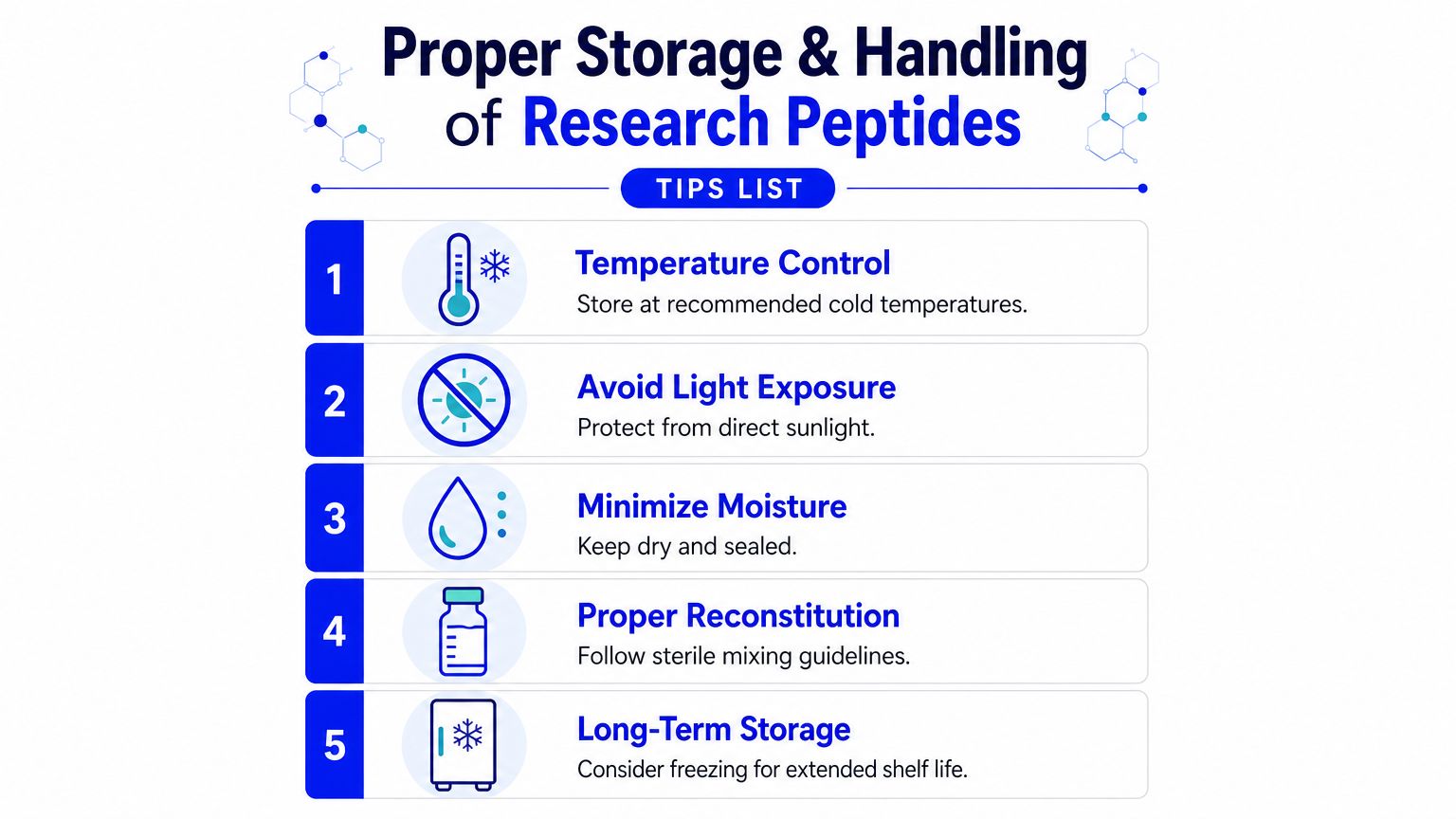
Research peptides should be treated as sensitive inputs, not shelf-stable commodities. Keep the vial sealed until it’s needed, and store it in a controlled, cool, dark environment according to your lab protocol and the supplier’s handling guidance.
Light, moisture, and repeated temperature swings create avoidable instability risk. Even a well-documented batch can be compromised by careless bench handling after delivery.
A few habits make a real difference:
Shortcuts here usually cost more than they save. Poor storage can turn a well-sourced product into an unreliable one.
A buyer finds PT-141 from two vendors with similar labels and very different paperwork. One listing clearly states prescription dispensing through a pharmacy workflow. The other is offered for research use only, with batch records and analytical documentation. That distinction determines how the material should be evaluated, ordered, stored, and used.
For PT-141, procurement starts with verification. Buyers need to confirm the product category first, then check whether the documentation supports that category and the specific batch being sold. In practice, that means treating the purchase as a quality control decision, not a price comparison.
Researchers who handle peptides regularly know where failures begin. They begin with unclear labeling, generic certificates, missing lot traceability, and product pages that blur the line between a regulated medical product and a research compound. Careful review at the ordering stage prevents those avoidable errors.
No. PT-141 appears in both prescription and research procurement channels, and those channels follow different standards, handling expectations, and legal requirements. Buyers should verify which category applies before assessing format, fulfillment, or cost.
No. A compounded nasal spray dispensed through a pharmacy serves a different procurement path than a research-grade powder supplied for laboratory work. Route of administration, prescription status, formulation controls, and intended use all change the evaluation criteria. Wells Pharmacy’s PT-141 nasal spray page shows how different that category can be from a research listing.
Verify the supply category and intended use statement. If a seller does not clearly identify whether the material is prescription-dispensed medication or research-use material, stop and request clarification before reviewing price, concentration, or shipping terms.
Start with a batch-specific COA tied to the lot offered for sale. Then check for supporting records that help confirm identity, purity testing, traceability, and controlled handling through fulfillment.
No. Low price can reflect weaker documentation, different formulation standards, inconsistent storage controls, or a different regulatory category. Without verification, it says very little about whether the material is suitable for serious lab work.
If you are evaluating PT-141 for laboratory procurement and want a research-use supplier with clear product categorization, batch documentation, and order management tools, explore Peptide Warehouse USA to learn more.