No products in the cart.

You’re probably here because a lab order can’t wait, a protocol is already scheduled, and the simple question of where to buy research chemicals has turned into a risk-management problem. That’s normal. In practice, the hard part isn’t finding a website with a catalog. It’s finding a supplier you can verify, document, and trust when a result depends on material identity and consistency.
New buyers often start with search results and product pages. Experienced buyers start with traceability, paperwork, and shipping readiness. If you remember one thing from this guide, remember this: the safest answer to where to buy research chemicals is “from a supplier that can prove what it is selling, document each lot, and support your procurement workflow.”
The research chemical market is broader than most first-time buyers expect. Some buyers picture a handful of familiar vendors. Instead, it is a fragmented supply network made up of manufacturers, distributors, specialty catalogs, and search aggregators that help researchers compare sourcing options.
That fragmentation matters because you’re not choosing from a neat shelf of standardized goods. According to eMolecules supplier aggregation data, some search platforms connect buyers to more than 210 suppliers and more than 83 million specialty chemistry and biology part numbers. That scale changes the buying strategy. It means procurement often depends on supplier discovery, verification, and quote comparison rather than loyalty to a single storefront.
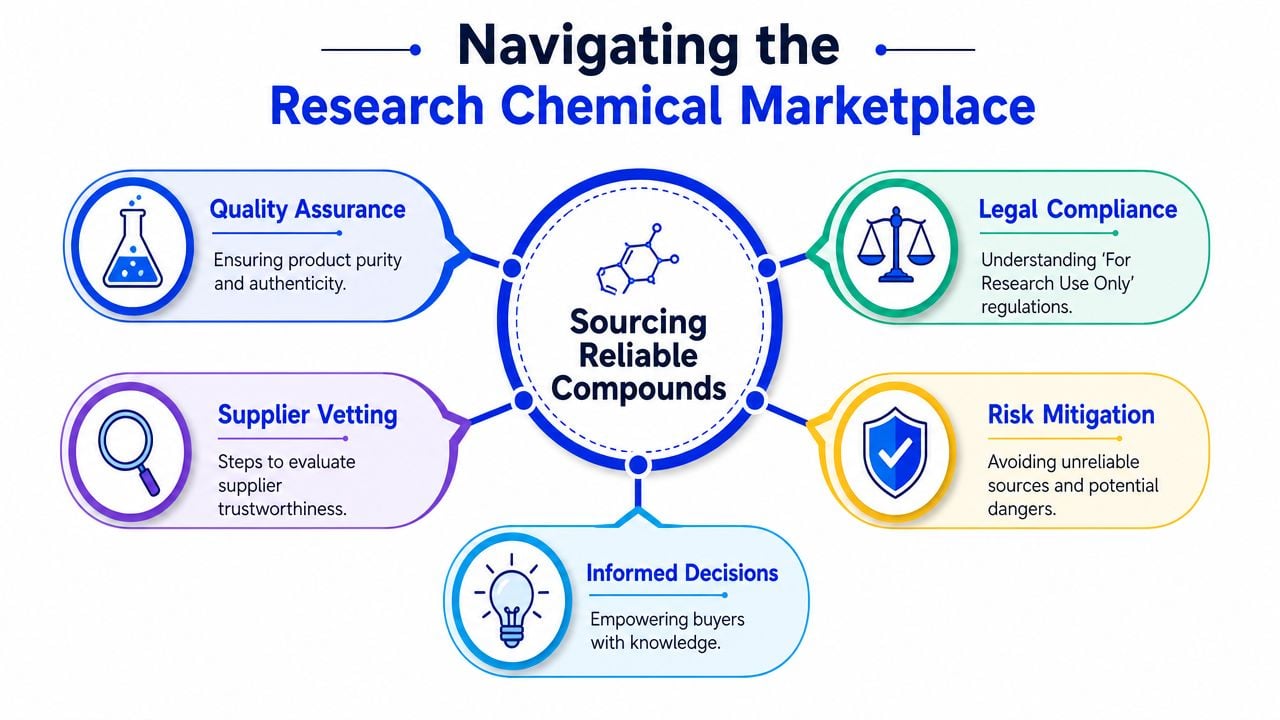
A list of “top suppliers” doesn’t solve the main problem. It tells you where someone bought once. It doesn’t tell you whether the product was backed by lot-level documentation, whether the item was in stock, or whether the vendor could support institutional purchasing requirements.
University procurement guides have long pushed researchers toward database-based supplier discovery rather than casual browsing. Buyers often locate sources through systems like supplier searches in SciFinder, Reaxys, directories, and catalogs. That’s a clue about how professionals buy. They search broadly, then narrow aggressively.
Practical rule: Treat every potential supplier as unverified until the documentation, stock position, and traceability check out.
When researchers ask where to buy research chemicals, they’re usually asking several questions at once:
A practical sourcing workflow looks more like procurement triage than shopping. Start with an aggregator or academic supplier search. Shortlist candidates. Then verify the things that affect your experiment and your records.
Here’s the trade-off most new technicians miss. A giant catalog can help you find obscure compounds quickly, but it can also hide inconsistency if the seller’s material control is weak. A smaller catalog with strong lot traceability can be the safer choice for recurring work.
That’s why the right question isn’t only “Where can I buy it?” It’s “Which supplier can defend this product on paper, in transit, and at receiving?”
A new technician usually spots the risk too late. The order confirmation looked fine, the bottle arrived on time, and then receiving asks for lot-specific paperwork that the supplier cannot produce. At that point, the problem is no longer sourcing. It is containment, documentation, and whether the material can be used at all.
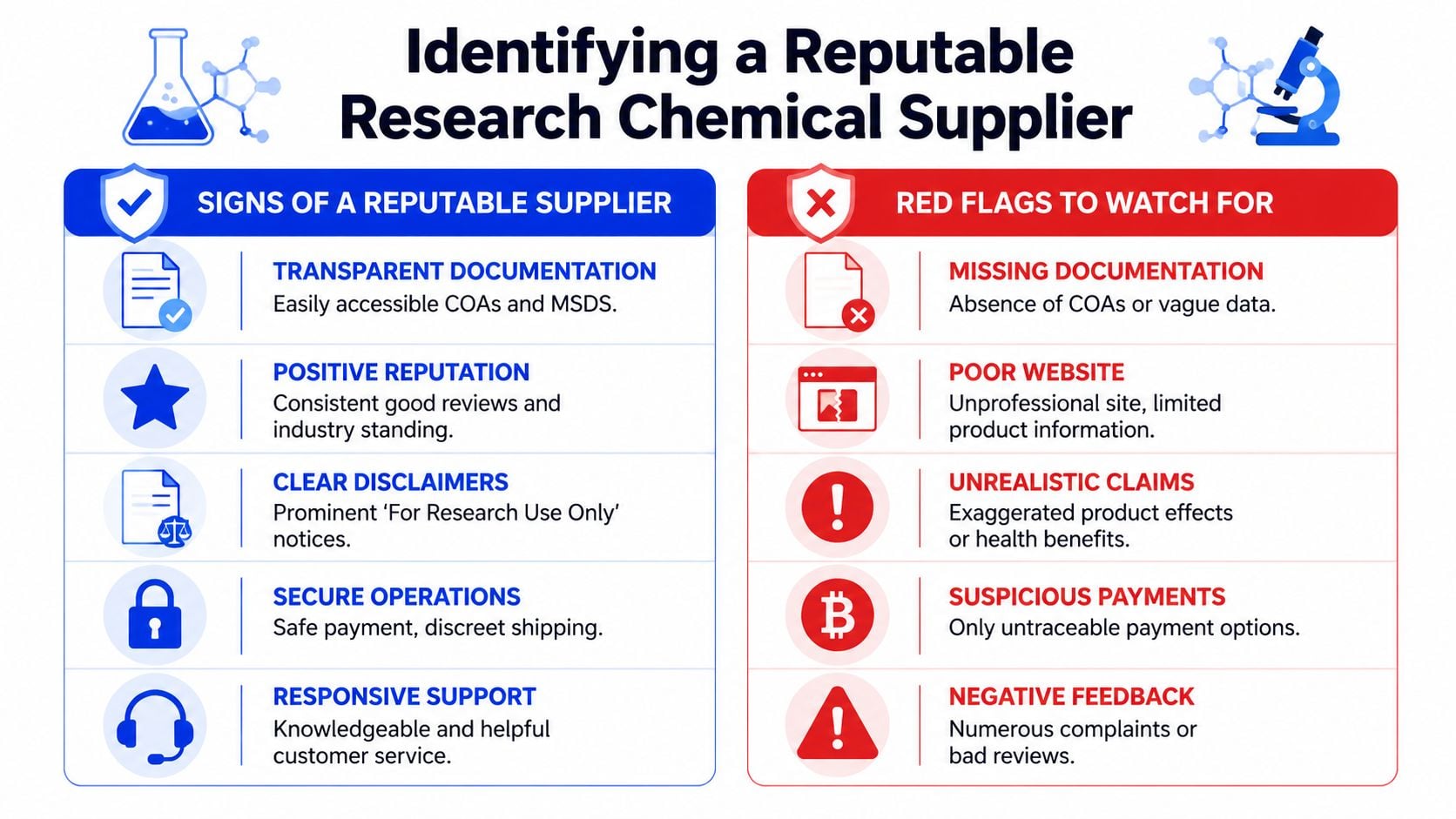
A reputable supplier shows control in the parts of the process you can inspect before you buy. The website does not need to look polished. It does need to show that the company understands traceability, research-use restrictions, and order handling.
Start with the public basics, then pressure-test them. Confirm that the business lists real contact details, a usable support channel, and product pages that identify the material without making irresponsible use claims. Then check whether the operational details hold up under simple questions.
Catalog size is easy to advertise. It is harder to verify whether the item you need is controlled properly, available now, and tied to a documented lot. That is why I treat broad selection as a secondary factor.
One public example is MuseChem’s catalog positioning. It is useful as a reminder that a large product range is not the same as supplier reliability. For repeat purchasing, I would rather see clear stock status and traceable batch handling than a massive catalog with thin documentation.
| Red Flag (Proceed with Caution) | Green Flag (Indicates Reliability) |
|---|---|
| Product pages make vague promises but show little documentation | Product pages identify the item clearly and connect it to documentation |
| Support avoids direct answers about lot records | Support can explain lot tracking and what documents are available |
| Stock status is unclear or seems inconsistent | Stock status is stated clearly, with realistic fulfillment expectations |
| Research-use language is missing or inconsistent | Research-use restrictions are prominent and aligned with ordering workflow |
| Contact information is sparse or hard to verify | Business contact details and support channels are easy to confirm |
| Every product looks available, but delivery terms are vague | Shipping and receiving expectations are stated in plain language |
The most expensive order is the one that arrives with weak paperwork and forces you to question the material after it is already inside the lab.
Good vetting starts before payment. Ask questions that require the supplier to describe an actual process, not recite sales copy.
A dependable supplier should be able to answer points like these:
Operational details matter here. As an example, some peptide suppliers present their catalogs with features like account management and order tracking. Those tools do not prove quality by themselves, but they do signal whether the supplier has built a process that supports repeat ordering, receiving, and recordkeeping.
If a supplier struggles to answer traceability questions before the order, expect more friction after delivery.
The fastest way to separate a credible supplier from a risky one is to read the paperwork like a receiver, not like a marketer. Public supplier lists are often incomplete, and CAS vendor discovery guidance underscores why practical buying criteria matter so much. When supplier directories don’t tell you everything, batch-level documents and traceability become your strongest filter.
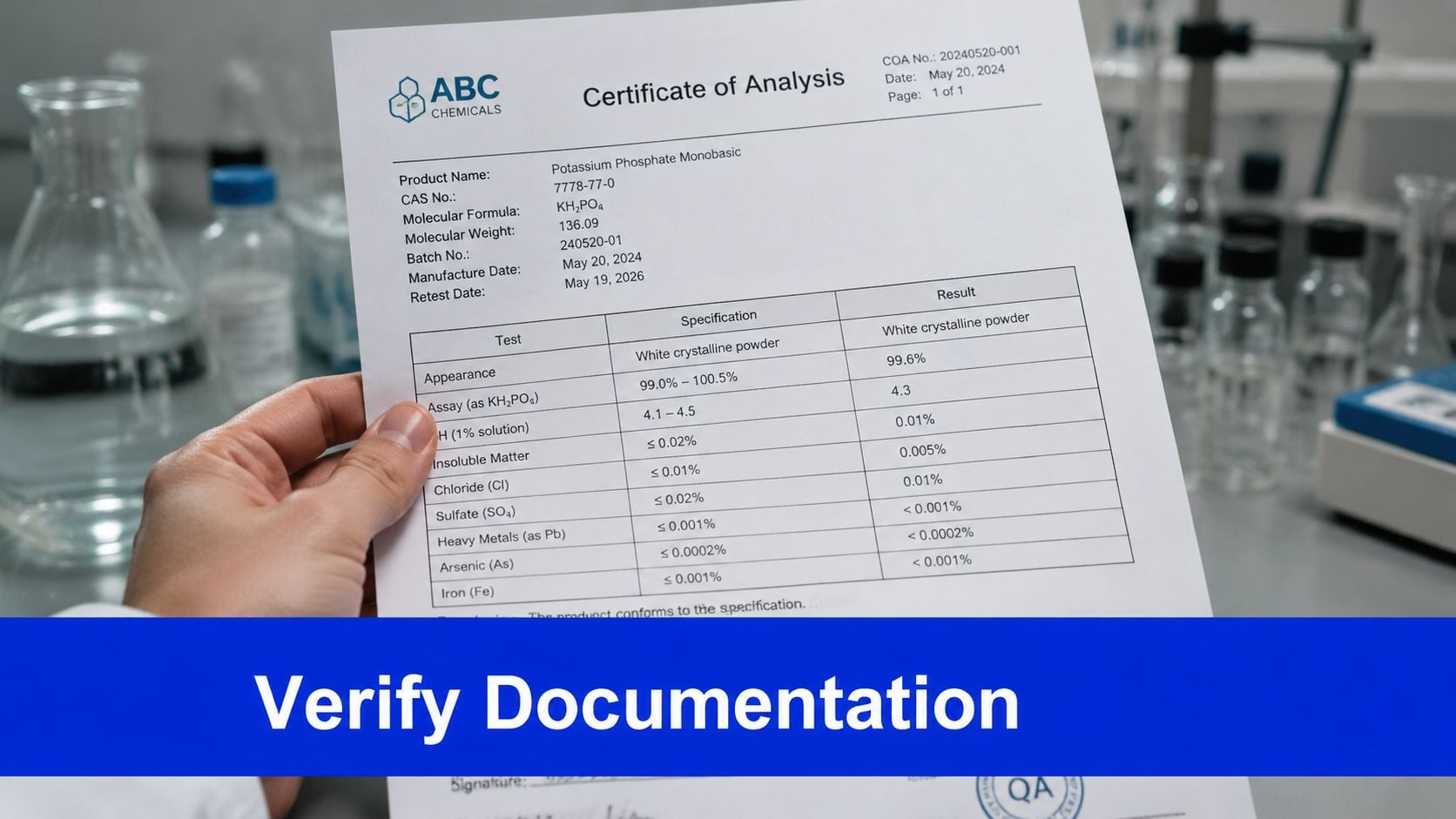
A Certificate of Analysis, or COA, is the core identity document most buyers should request and review. It should tie the product you ordered to a specific batch or lot. If that link is missing, the COA is much less useful.
Look for these features:
A COA that looks generic across many products deserves scrutiny. So does a document that gives a purity figure without method context.
A strong supplier doesn’t just say “high purity.” It shows how that claim connects to a lot, a method, and a release process. That’s the basis of traceability. It allows a lab to reconcile the website listing, the shipping label, the received vial, and the analytical paperwork.
If the lot number on the vial, invoice, and COA doesn’t line up, stop the receiving process until it does.
That simple receiving habit prevents a surprising number of avoidable problems. It also gives your lab a defensible record if you later need to investigate a discrepancy.
Depending on the material, buyers may see additional supporting records beyond the COA. These can include chromatographic output, safety documentation, and reports tied to contamination control. The point isn’t to become an analytical specialist overnight. The point is to confirm that the supplier’s claims rest on documents, not adjectives.
A practical explainer can help if your team is new to document review:
When reviewing support documents, keep the questions simple:
Don’t overcomplicate the standard. You’re not trying to prove perfection. You’re trying to avoid low-transparency vendors that can’t maintain consistent records.
Legal and shipping controls are part of the quality system. Buyers sometimes treat them as friction. In reality, they are one of the clearest signs that a supplier takes custody, documentation, and risk seriously.
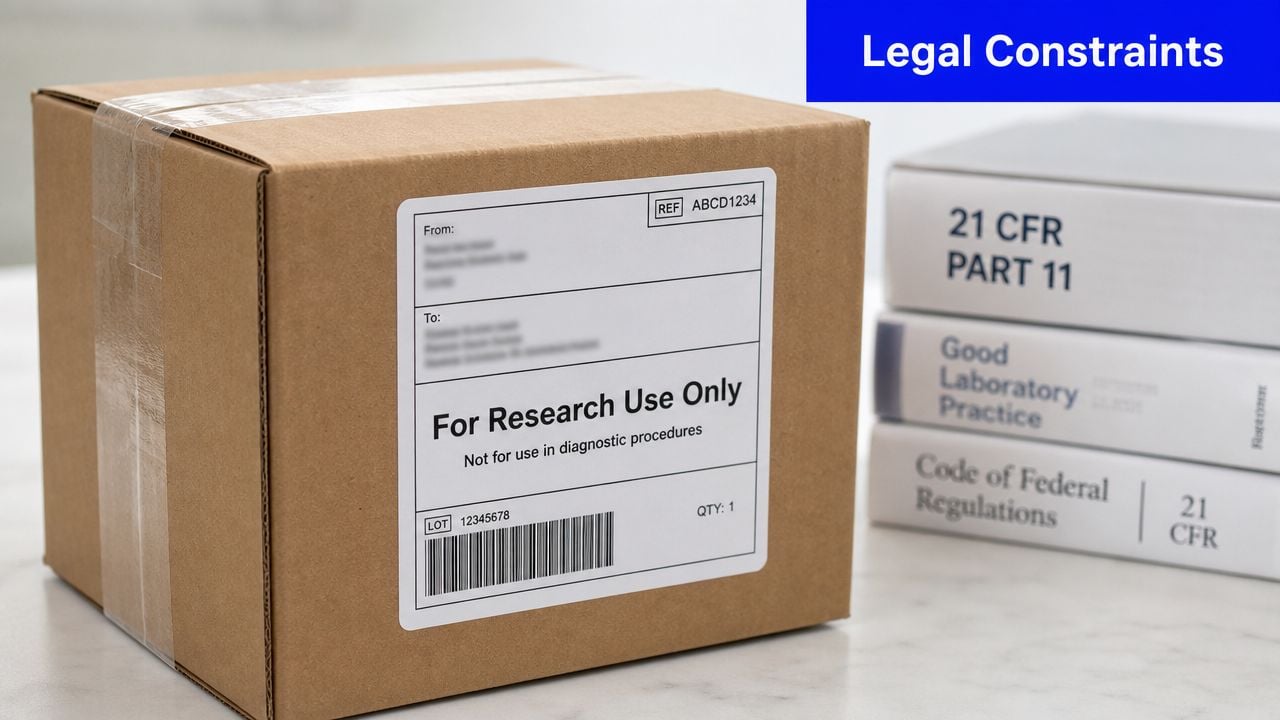
If a product is sold for research use only, treat that statement as an operating boundary, not a slogan. It affects labeling, intended use, order review, and sometimes where and how the product can be shipped. Serious suppliers state these limits clearly because loose language creates legal and handling risk for everyone involved.
That’s also why shipping restrictions shouldn’t surprise you. Hazard class, destination, import rules, and packaging requirements all shape fulfillment. If your team handles international or sensitive shipments, it helps to understand the basics of navigating hazardous freight rules before you place the order.
In regulated settings, procurement timelines can be slow and document-heavy for a reason. The NIDA Drug Supply Program ordering guidelines advise investigators to submit requests 6–8 weeks before planned experiments or before supply runs out, and require a package that includes a cover letter, current address, compound names and quantities, and for controlled substances a copy of DEA Form DEA-223. That’s a useful benchmark for what professional sourcing can look like.
You may not need that exact process for every order. But the mindset applies widely.
Compliance isn’t a barrier to procurement. It’s the filter that keeps questionable material out of the workflow.
If a supplier ignores shipping controls or treats documentation as optional, that isn’t convenience. It’s a warning sign.
Once a supplier clears your vetting process, don’t rush the transaction. Ordering discipline is what preserves all the due diligence you’ve already done. A lot of preventable problems happen between account creation and package receipt.
Use the legal lab or institution name, the correct receiving address, and the email designated for order updates. Avoid personal shortcuts that create confusion later. If the supplier has fields for billing, shipping, or compliance notes, complete them carefully.
For first orders, keep the internal record clean:
Start with a quantity that matches immediate research use and storage capacity. New buyers often over-order before they’ve confirmed that the supplier’s paperwork, packaging, and receiving process are consistent.
On the day the material arrives, check the basics before it goes into storage:
A good order isn’t complete when payment clears. It’s complete when the material is received, reconciled, documented, and stored correctly.
If your site has related procurement SOPs or receiving guides, this is the right place to point readers toward them with internal links such as your ordering policy, shipping page, or documentation overview.
Start with documentation, not testimonials. A legitimate supplier should be able to support the product with lot-level records, clear research-use positioning, and consistent answers about stock, shipping, and handling.
Price differences usually reflect more than the material itself. Documentation quality, batch control, shipping readiness, and customer support all affect what you’re really buying. A low price can become expensive if the paperwork is incomplete or the material can’t be verified on receipt.
No. Research chemicals are supplied for laboratory, analytical, or preclinical work according to the supplier’s stated use conditions. They should not be treated as interchangeable with pharmaceutical products, and buyers should follow the supplier’s research-only terms and applicable regulations.
Both can make sense. Marketplaces and supplier databases are useful for discovery and comparison. Direct suppliers can be easier to qualify once you know the exact product and documentation standard you need. The better route depends on whether your immediate problem is search breadth or supplier verification.
Quarantine the shipment until it has been checked. Confirm the product identity, lot details, paperwork, and label match. Then log it, store it correctly, and keep the documents attached to your inventory record.
The safest answer to where to buy research chemicals is never “the cheapest place.” It’s the source that reduces uncertainty, supports documentation, and fits your lab’s compliance standards. If you build your buying process around traceability and receiving discipline, you’ll avoid most of the problems that derail first-time purchases.
If you’re sourcing research-use-only peptides or related compounds and want a supplier that presents lot-supported documentation, account management, and ordering support in a U.S.-based workflow, learn more at Peptide Warehouse USA.