No products in the cart.

You’ve probably been there. A peptide order arrives on time, the label looks clean, and the vendor claims high purity. You run the study, the signal is noisy, the repeat looks different, and suddenly you’re troubleshooting assay setup, storage, handling, and protocol timing when the actual problem may be the raw material itself.
That’s why choosing among the best peptide suppliers isn’t a shopping exercise. It’s a research control. If the input is inconsistent, your data can look inconsistent for reasons that have nothing to do with the biology you’re trying to study.
Most supplier roundups stop at brand names and purity claims. That’s not enough. The useful question is simpler and harder: how do you verify that a supplier’s claims map to the vial in your hand? The answer lives in batch documentation, traceability, third-party testing, and the discipline to reject vendors that make verification difficult.
A peptide supplier becomes visible only when something goes wrong. The experiment drifts, replicate behavior changes, or an expected effect weakens for no clear procedural reason. Researchers often spend days checking buffers, plates, and instrument settings before they question the lot itself.
That delay is expensive. It burns materials, staff time, and confidence in the study design.
The best peptide suppliers don’t just ship product. They protect the chain of evidence around the product. That distinction matters more now because the market is expanding. The global peptide synthesis market was valued at USD 0.81 billion in 2024 and is projected to reach USD 1.41 billion by 2029, with a projected 11.7% CAGR, according to MarketsandMarkets research on peptide synthesis.
Growth brings options. It also brings more variation in quality systems, documentation habits, and fulfillment discipline.
When I review a new supplier, I’m not asking whether the homepage looks polished. I’m asking four bench-level questions:
Practical rule: If a peptide can’t be documented clearly, it can’t be trusted easily.
Use this table as a first-pass screen before you place any order.
| Evaluation area | What good looks like | What weak suppliers do |
|---|---|---|
| Documentation | Batch-specific COA with identifiable lot details | Generic certificate reused across listings |
| Purity evidence | HPLC and MS data tied to the batch | Purity claim with no underlying analytical context |
| Testing transparency | Third-party or independently verifiable results | “Lab tested” language with no accessible proof |
| Traceability | Clear manufacturing and batch trail | Unclear origin, unclear lot history |
| Support response | Answers technical questions directly | Replies with sales copy or avoids specifics |
| Compliance posture | Research-use framing and clear policies | Casual wording that creates avoidable regulatory risk |
Shipping and compliance also deserve more attention than most buyers give them. If your lab sources regulated or scrutinized materials across state or national lines, the operational fallout can extend well past a delayed parcel.
Think of supplier evaluation like foundation work. If the base is weak, every downstream result carries hidden risk. I use four pillars because they force a more disciplined review than vague phrases like “premium quality” or “trusted source.”
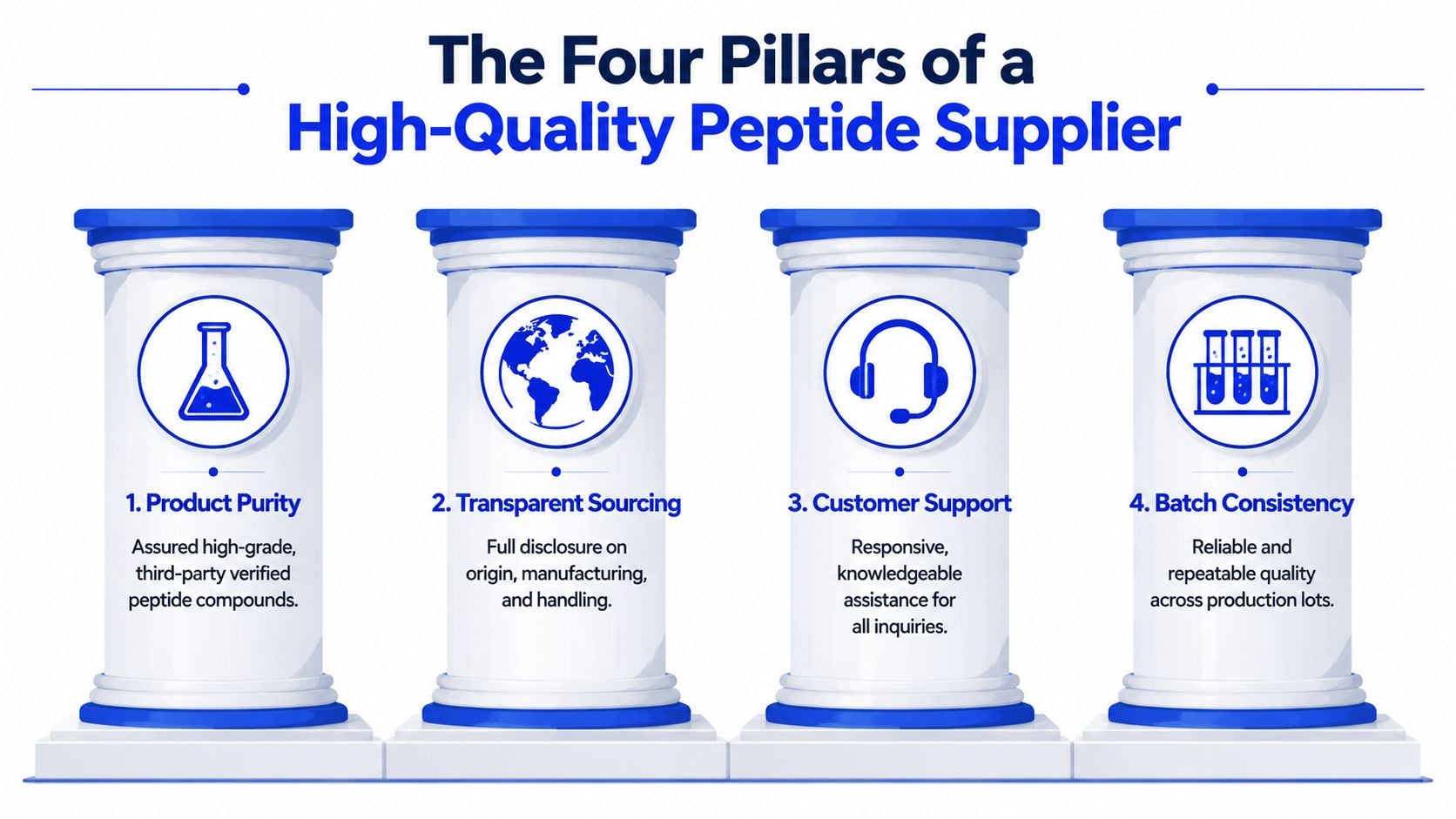
Purity is not just a percentage on a product page. It’s the starting point for interpreting whether your material likely contains the expected sequence with limited contamination from synthesis byproducts or related impurities.
That’s why I care less about the headline number than the proof behind it. A strong supplier treats purity as an analytical outcome. A weak supplier treats it as ad copy.
Useful signs include:
If you’re ordering compounds like BPC-157, TB-500, GHK-Cu, PT-141, Selank, or Semax for laboratory work, purity matters because impurity profiles can distort interpretation long before an issue becomes visually obvious.
Documentation separates a traceable batch from an attractive label. The current standard is not a generic product sheet. It’s a batch-specific Certificate of Analysis with HPLC and MS data.
That single distinction filters out a surprising amount of noise.
A useful COA should let a researcher answer basic questions quickly:
A product page can persuade. A batch-specific COA can be audited.
Internal testing matters, but independent verification changes the risk profile. Vendors always know more about their material than the buyer does. Third-party testing narrows that information gap.
What works in practice is simple. Prefer suppliers that either publish outside analytical support or can point to vendor-agnostic testing ecosystems where claims are benchmarked against measurable criteria. That doesn’t make every result perfect. It does make unsupported claims easier to reject.
When suppliers rely entirely on self-description, I assume I’ll need to verify more aggressively before trusting repeated purchases.
Traceability sounds administrative until you need to explain an outlier. Then it becomes scientific.
You want to know whether a supplier can connect the vial, the lot, the analytical record, and the production context in a way that survives scrutiny. That usually shows up in routine details:
Most problems can be caught before checkout if you audit the vendor methodically. The process doesn’t need to be complicated. It needs to be consistent.

The website is the screening layer. I use it to answer whether the vendor makes verification easy or hard.
A well-run supplier usually shows its habits immediately. Product pages are coherent. Research-use boundaries are stated clearly. Documentation is either accessible on-page or obtainable without friction.
Run through this checklist before you order:
Many buyers get lazy at this point. Don’t scan for the purity number and stop there.
Read the COA the way you’d review a record attached to any critical reagent. Confirm that the lot number on the document matches the lot number on the vial exactly. Check whether the certificate references analytical methods with enough specificity to be meaningful. Make sure the document looks batch-specific rather than broadly templated.
What I want to see most:
If the certificate can’t be tied directly to the vial, it’s not batch verification. It’s marketing support.
A short walkthrough can help if you’re training junior staff on what to look for:
Bad vendors often tell on themselves. Not with one dramatic mistake, but with small patterns that don’t line up.

The biggest one is document friction. If a supplier makes you request a COA through multiple steps, delays response, or sends a generic file that doesn’t map to the batch, that’s not an inconvenience. It’s a warning.
A 2025 review of 10 sites found that only 3/10 offered instant COA downloads without customer requests, and related Reddit discussions showed 68% of 200+ comments cited COA verification delays as a major pain point, according to this analysis of COA availability and buyer distrust. That lines up with what many labs already suspect. Transparency that arrives late isn’t much transparency.
Watch for these signs:
Some claims sound reassuring but mean almost nothing on their own.
Examples include “pharmaceutical grade” without supporting context, “lab tested” without accessible data, and “ultra pure” without method details. I also discount suppliers that flood the catalog with every trending compound overnight but provide shallow product detail pages.
A serious supplier reduces uncertainty before payment. A weak supplier asks you to buy first and trust later.
The best peptide suppliers usually don’t need to oversell. Their records do the work.
This choice is rarely about patriotism or branding. It’s about logistics, accountability, and how much uncertainty your lab can tolerate.
US-based sourcing can simplify communication, shipping timelines, and documentation follow-up. It can also make batch traceability easier when the supplier’s operations and support are closer to your institution.
The trade-off has become sharper as import scrutiny has increased. A cited market summary notes a 15% rise in seized peptide shipments from Asia and a 40% preference for US sources among surveyed researchers, as discussed in this overview of sourcing shifts and USA-made positioning.
For lab managers, the domestic case usually comes down to:
If your team imports regularly, it helps to understand the freight and customs side as well. This guide to mastering China to US logistics gives useful context for the shipment risks and process complexity that can affect research timelines.
International suppliers can make sense when you need specialized synthesis capability, custom work, unusual modifications, or access to manufacturers with deep GMP and scale experience. Large global firms often have broad technical infrastructure.
But international sourcing demands tighter purchasing discipline. You need better pre-purchase documentation review, stronger expectations around shipping conditions, and less tolerance for vague origin statements. If the vendor is overseas and the paperwork is weak, you’re stacking logistics risk on top of material risk.
That combination usually isn’t worth the savings.
A supplier earns trust when its paperwork holds up under routine lab scrutiny. That means the lot number on the vial matches the lot number on the COA, the analytical support is specific to that batch, and the supporting documents arrive without delay or evasive answers.
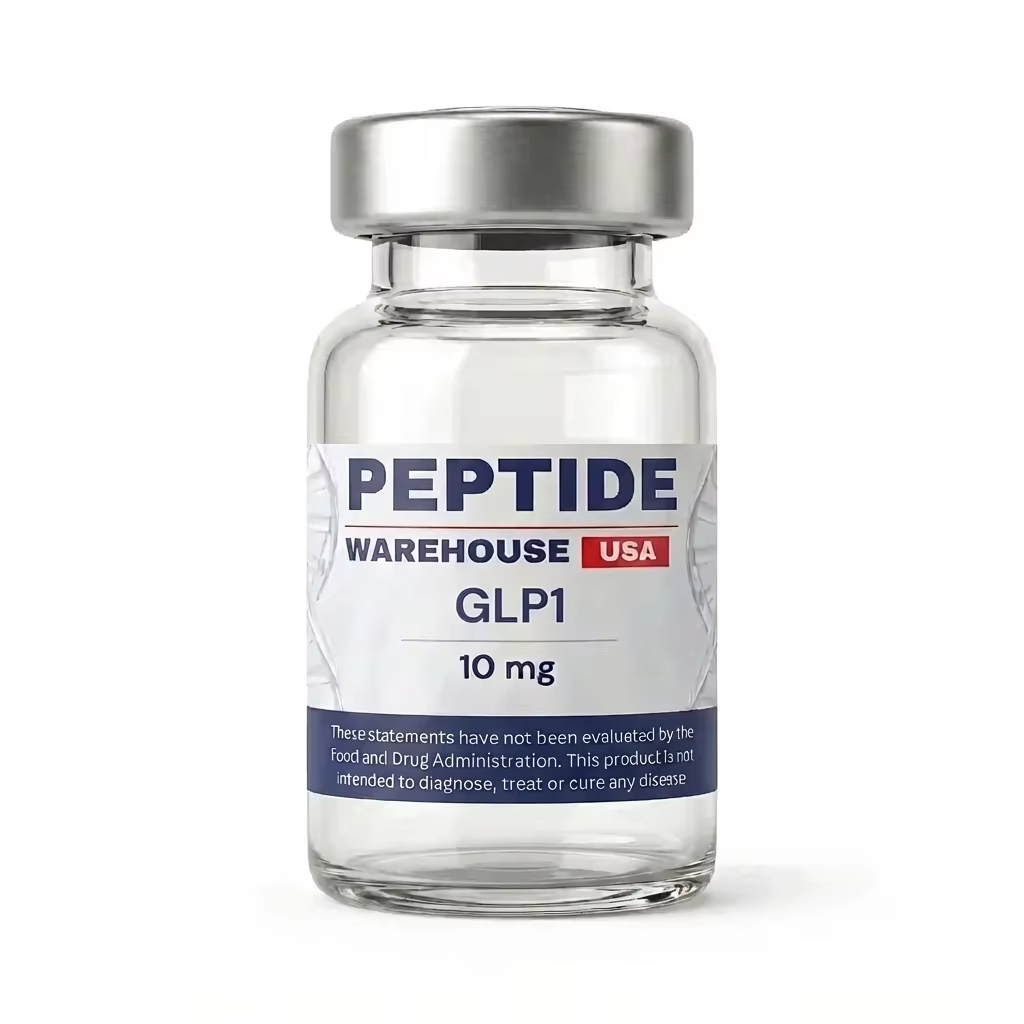
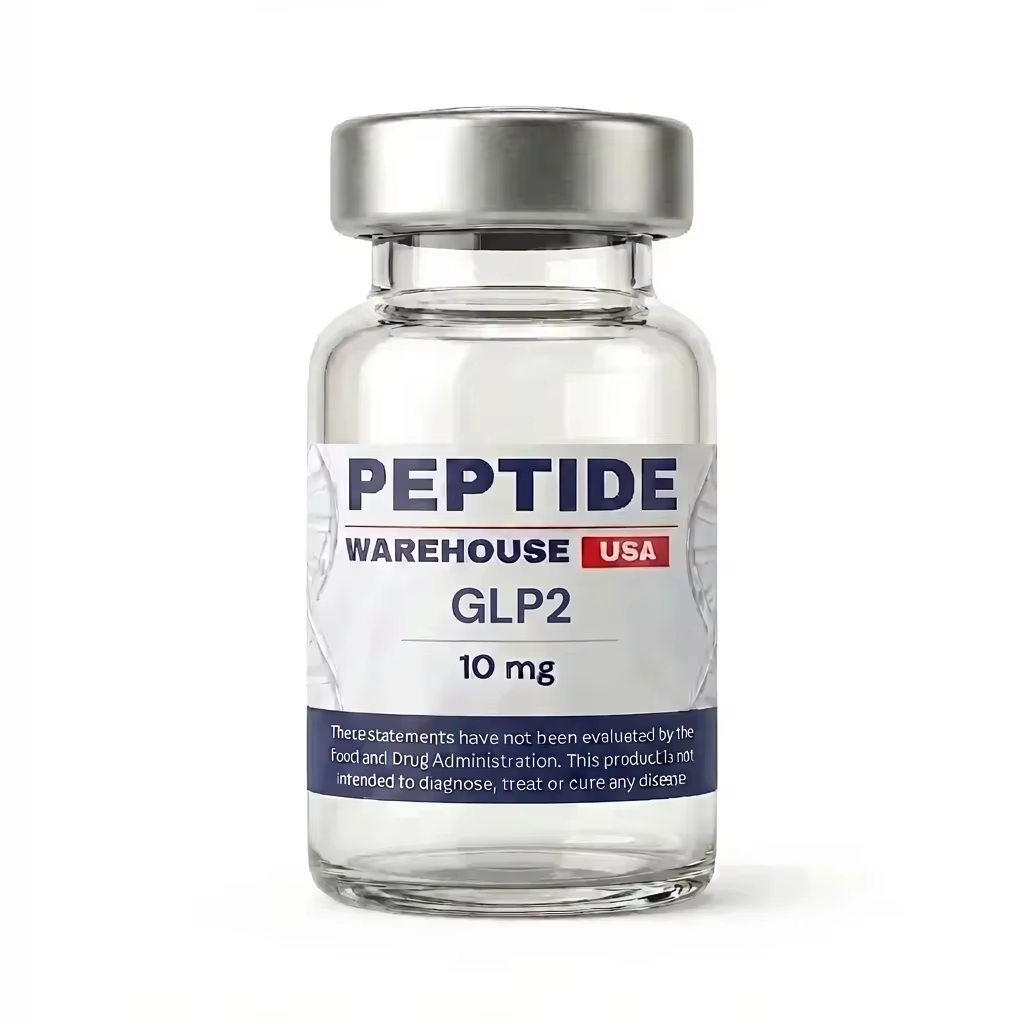
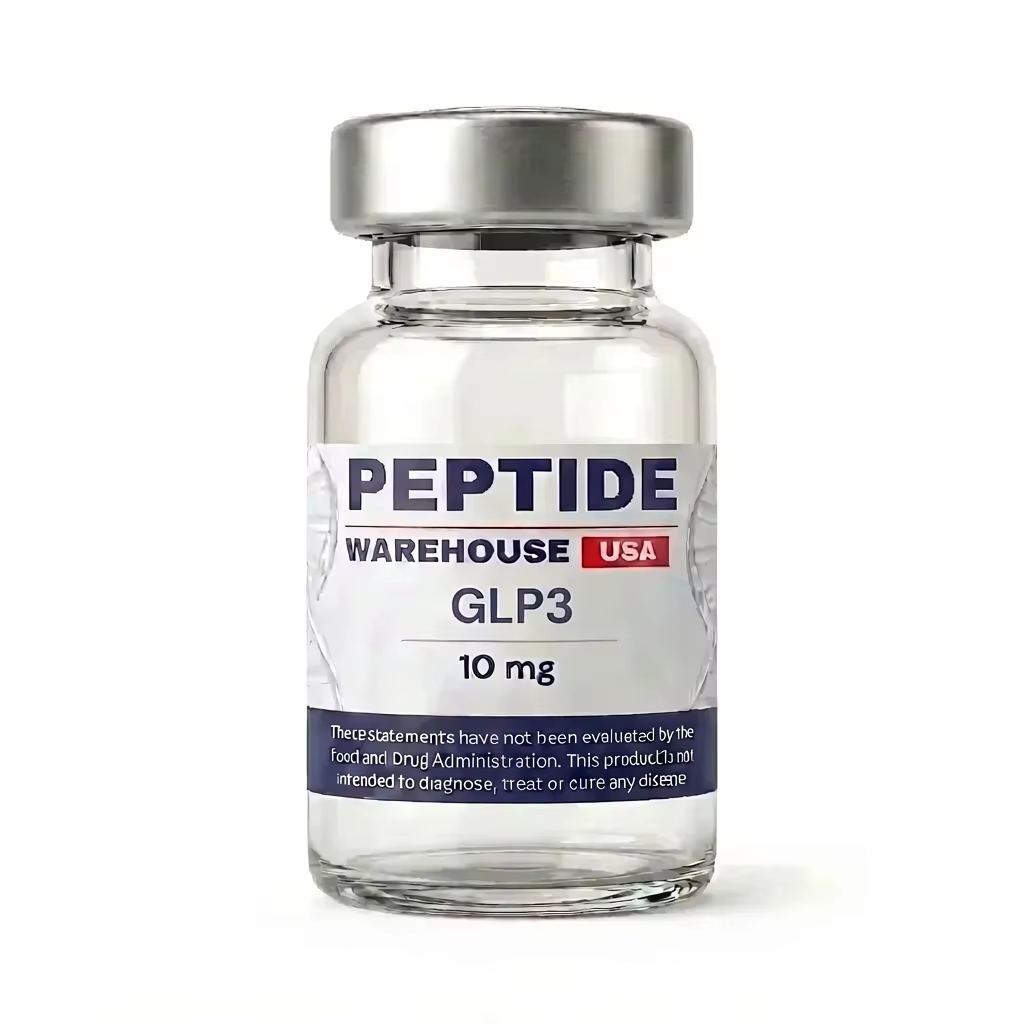
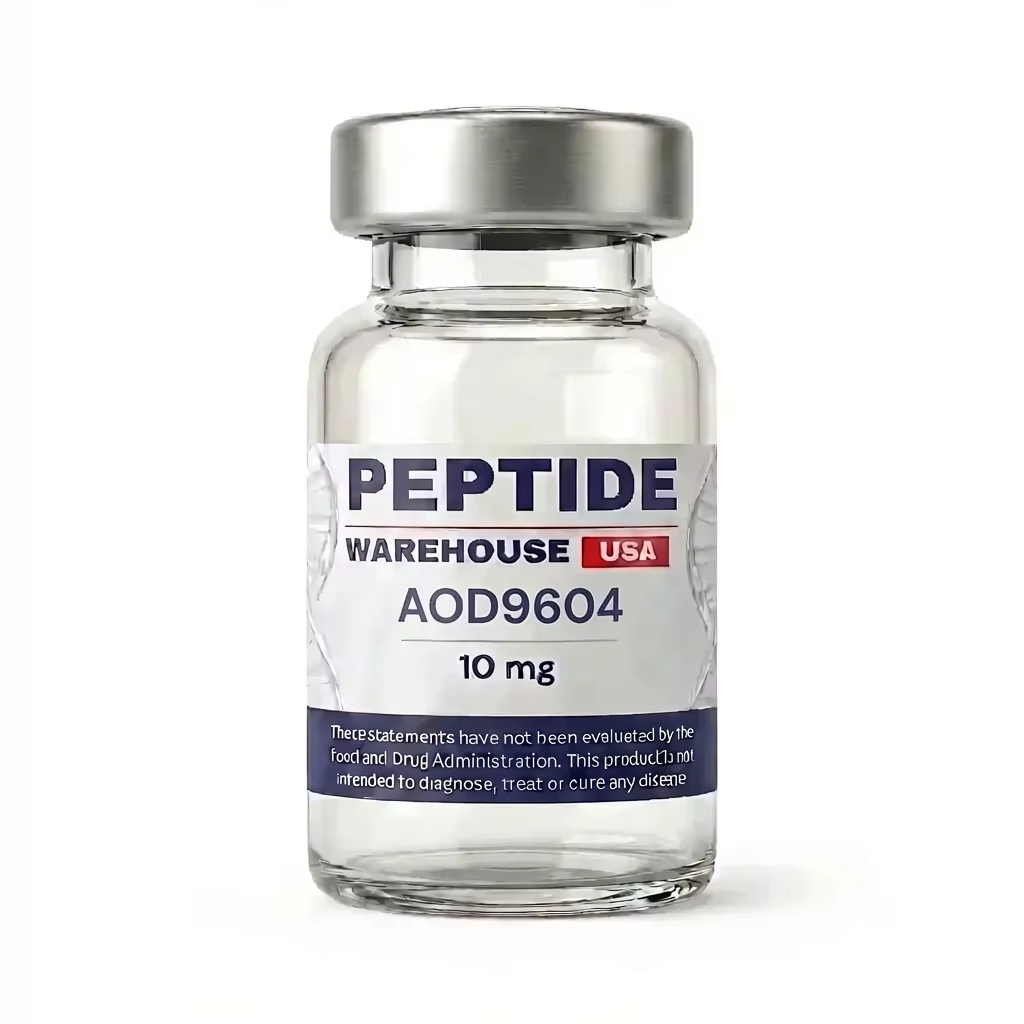
Peptide Warehouse USA presents itself like a supplier that understands how research teams review incoming material. Its catalog covers peptides, liquids, aminos, and nasal sprays such as PT-141, BPC-157, GHK-Cu, TB-500, Selank, and Semax for laboratory, analytical, and preclinical use. The company states purity levels up to 99.5% and provides batch-linked documentation that includes COAs, microbial reports, and endotoxin reports.
That matters because a stated purity figure, by itself, is not enough. What matters is whether a buyer can inspect the underlying documentation, match it to the received lot, and decide whether the material meets the lab’s release criteria.
Applied to the four pillars, the profile is clear:
In practice, this reduces a specific class of procurement problems. Staff spend less time chasing missing certificates, less time sorting out whether a generic test report applies to the vial in hand, and less time arguing over whether an outlier came from assay performance or input material.
I look for that kind of discipline before I care about marketing language. If a supplier can produce organized batch records and consistent supporting documents on request, the review process gets faster and the decision is easier to defend.
No supplier should be waved through on claims alone. Peptide Warehouse USA is useful here as an example of what a better-documented vendor profile looks like when you apply the same verification standard you should use for any source.
A peptide order can fail long before the vial reaches the bench. It fails when a lab accepts a purity claim without checking whether the documents, lot number, and test data hold up under review.
Use procurement as a release step, not a purchasing formality. The supplier should make verification straightforward enough that any trained researcher on your team can confirm what was ordered, what was tested, and whether the received material meets your lab’s acceptance criteria.
Keep this checklist in front of every buyer:
This discipline protects more than procurement efficiency. It protects interpretation. A weak input material review can turn a clean-looking experiment into a long troubleshooting cycle, especially with peptides where small differences in identity, purity, or contamination profile can alter downstream results.
Peptide Warehouse USA fits this framework to the extent that its materials can be reviewed against the same documentation standards discussed earlier. That is the right standard for any supplier. The name matters less than the paper trail.
Choose vendors whose claims can be checked line by line. That habit preserves staff time, reduces avoidable ambiguity, and gives your data a stronger foundation.