
No products in the cart.



The most popular advice about BPC 157 peptide online usually starts with a vendor list, a dosing chart, or a promise about recovery. That order is backwards for laboratory work. Before a researcher evaluates price, format, or shipping speed, the lab must establish whether the material is identifiable, traceable, appropriately documented, and legally suitable for the stated analytical purpose.
BPC-157 is a 15-amino-acid synthetic peptide, but its short sequence doesn't make it a routine consumer product. The responsible approach is to treat online procurement as a controlled laboratory supply-chain decision, not as ordinary e-commerce. This article focuses on supplier verification, analytical records, shipping controls, storage, and the boundary between research use and unapproved human use.
Online visibility does not establish clinical validation. The earliest PubMed entry cited by STAT dates to 1992, while a 2026 NIH review describes more than three decades of preclinical investigation without an approved formulation, validated dosing regimen, or completed Phase II clinical trial. The review also identifies a Phase I study, NCT02637284, designed for 42 healthy volunteers, but that trial ended without published results. This leaves a material gap in human evidence. The registered clinical-trial record helps separate ongoing research interest from established medical evidence.
Those limitations should determine how a laboratory evaluates an online supplier. Animal and mechanistic findings may support further investigation, but they do not establish a clinical success rate for injury recovery, bodybuilding, gut-related claims, or other consumer use cases. The procurement record should document the identity and analytical integrity of the material, without implying that it is safe or effective for people.
A retail buyer may compare a vial photograph, advertised purity, and delivery promise. Laboratory procurement requires a more controlled review:
The FDA has stated that BPC-157 is not approved for human use and has raised concerns about immunogenicity, peptide-related impurities, and active pharmaceutical ingredient characterization. Its materials also indicate that limited or no safety information exists for proposed administration routes. The FDA warning materials show why a research label cannot replace regulatory review.
Practical rule: No meaningful human safety data exists for BPC-157. Treat safety claims as unproven, and require analytical verification before the material enters research use.
Use a conservative purchasing workflow. Define the analytical objective, pre-approve acceptance criteria, verify the supplier, inspect the records, and quarantine the shipment until receiving checks are complete. This protects experimental validity and keeps marketing language out of the research record.
Supplier qualification begins before a batch arrives. A polished website can display the same claims as a transparent laboratory supplier, so the lab should evaluate the underlying process rather than the storefront design. The strongest vendors make it possible to connect a product page, manufacturing record, test report, lot number, and shipping record without relying on informal messages.
For a U.S. laboratory, USA-based manufacturing can simplify communication, shipping documentation, and traceability. It doesn't automatically prove quality, but it gives the procurement team a clearer starting point for documenting the chain of custody and resolving discrepancies. Overseas sourcing isn't automatically invalid either. The practical issue is whether the supplier can provide reliable records and whether the institution can accept the import, transport, and jurisdictional risks.
A supplier should clearly identify itself as a research chemical supplier, not present an unapproved compound as a prescription medicine, dietary supplement, or substitute for clinical care. A disclaimer saying “not for human consumption” is useful only when the rest of the business practices support that restriction. Consumer-facing recovery promises, dosing instructions, or treatment claims create a serious mismatch between stated research status and actual marketing conduct.
Ask the supplier for information that can be checked and retained:
A startup or small research group may not have a dedicated quality department. A structured guide to vendor risk for startups can help teams document ownership, supplier dependencies, and escalation paths before they commit to a recurring source.
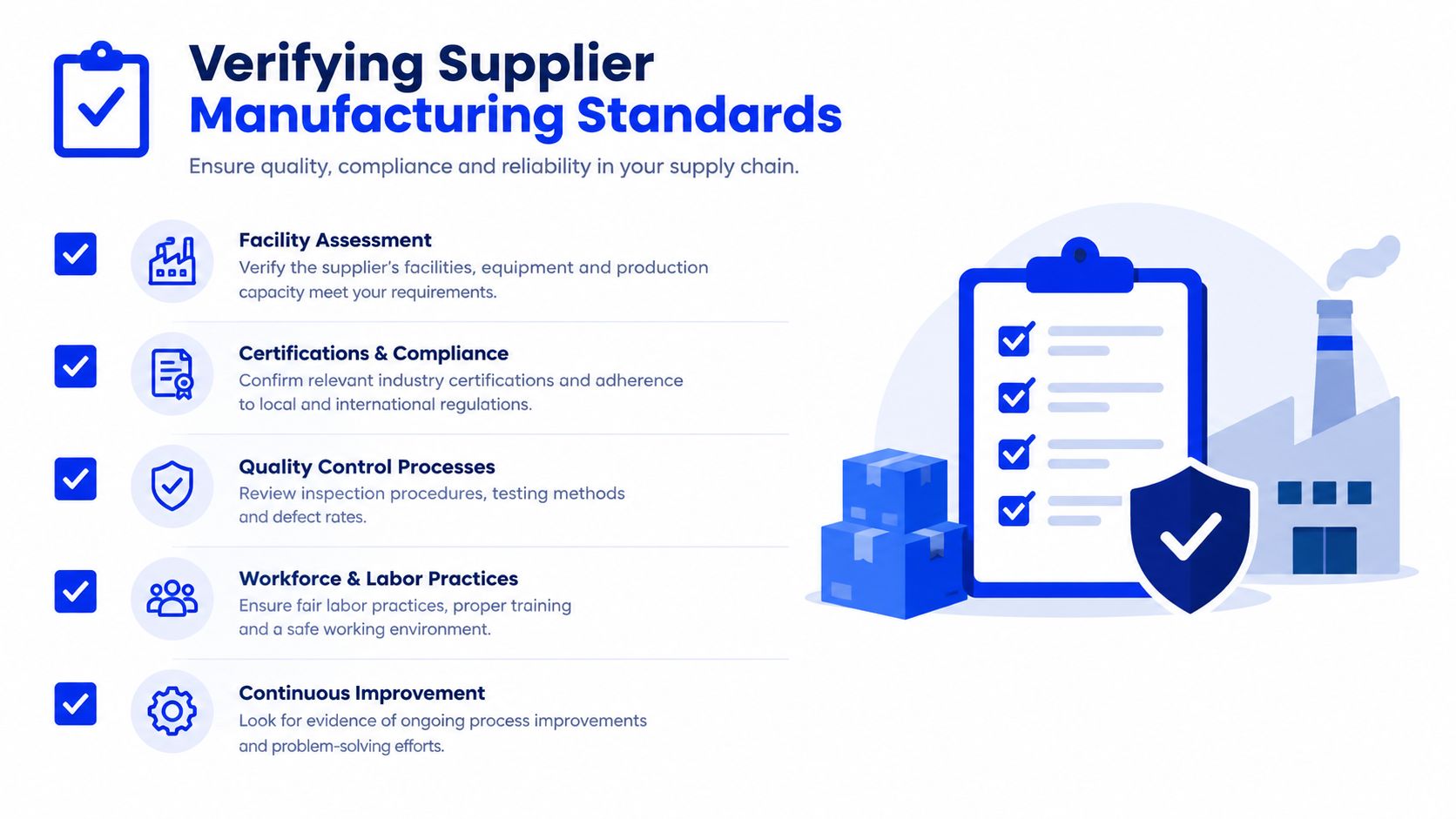
One attractive COA doesn't establish a dependable supply chain. Compare documentation across several lots when possible, look for consistent naming and methods, and investigate unexplained changes in appearance, packaging, test laboratory, or reported results. The lab should also keep an approved-supplier list with review dates, responsible personnel, and a documented reason for approval.
The procurement decision should reflect the experiment's sensitivity. A screening assay, identity investigation, and stability study may require different levels of characterization. If the supplier can't explain what was tested, when it was tested, or which lot the result represents, the material shouldn't be treated as analytically reliable because it was easy to order.
A peptide is only as defensible as the records attached to it. The first document to request is a lot-specific Certificate of Analysis, but the COA should be read as an index to the testing package, not as a complete analytical conclusion.
BPC-157 presents a particular documentation challenge. FDA materials state that there is no applicable USP or NF monograph for BPC-157 free base or BPC-157 acetate, and that the agency found insufficient clinical safety information and no human studies using proposed oral, subcutaneous, nasal, or transdermal routes. The same materials state that BPC-157 isn't a component of an approved product in any country and isn't listed in the European, Japanese, or International Pharmacopeias. The FDA briefing document explains why a supplier's internal specification shouldn't be confused with a recognized pharmacopeial standard.
Check the product name, lot number, issue date, sample date, test methods, laboratory identity, and authorized approval. The receiving technician should compare every field with the vial and purchase order. A mismatch is a quarantine event, not a clerical detail.
HPLC can help assess relative chromatographic purity, but it doesn't answer every identity question. The lab should determine whether the report includes an appropriate identity method, such as mass spectrometric confirmation, and whether the reported peak integration, reference standard, solvent system, and method limitations are disclosed. Don't accept a large purity number without asking what the number measures.
For preclinical and analytical work, endotoxin and microbial reports deserve separate review. These tests address different risks, and a microbial result isn't a substitute for endotoxin testing. The lab should define acceptance criteria in its approved protocol and consider the intended assay, matrix, exposure route within the model, and institutional biosafety requirements. Since the verified evidence doesn't establish a universal threshold for research-grade BPC-157, a supplier shouldn't be allowed to invent the laboratory's acceptance limit through a marketing claim.
| Document Type | Primary Purpose | Key Metric to Verify |
|---|---|---|
| Certificate of Analysis | Links the released material to a specific batch | Lot number, test date, methods, and approval |
| HPLC report | Assesses chromatographic profile and relative purity | Main peak, integration method, and method limitations |
| Identity report | Supports confirmation of the intended compound | Method used, result, and reference material |
| Mass spectrometry record | Checks expected molecular mass | Observed result compared with the stated specification |
| Endotoxin report | Evaluates endotoxin burden for the intended research use | Method, units, detection limit, and acceptance criterion |
| Microbial report | Documents tested microbial conditions | Sample details, organisms assessed, and result |
| Safety Data Sheet | Describes handling and hazard information | Storage, spill response, PPE, and disposal guidance |
A report with no testing laboratory, no lot identifier, or no method description has limited value. So does a report that uses a supplier logo but provides no independent laboratory details. Keep the original PDF, the purchase record, receiving photographs, and any correspondence in the same batch file.
The purpose of this review isn't to convert an unapproved compound into a clinical product. It is to reduce uncertainty in a controlled experiment and make the lab's conclusions proportional to the quality of the material and the evidence behind it.
Ordering a research peptide should start with an approved purchase request, not a personal checkout. The request should state the project, principal investigator, intended analytical or preclinical use, quantity, storage location, responsible custodian, and required documents. Institutional buyers should also confirm that the receiving department can handle the material under its chemical, biological, and waste procedures.
A supplier's age gate and FDA disclaimer can help establish the intended boundary of the transaction, but they don't resolve every legal question. The product must still be represented accurately, and the laboratory must not redirect research material into human use. Current U.S. regulatory scrutiny is significant. The FDA has described compounded BPC-157 as presenting potential immunogenicity concerns and limited safety information, so an online listing isn't proof of lawful clinical availability.
Before payment, confirm:
Domestic shipping may reduce some customs and import complications, but it doesn't turn BPC-157 into an approved medicine. A U.S. address, fast delivery, or professional packaging says nothing by itself about identity, sterility, clinical safety, or permitted use.
The receiving technician should photograph the outer package and vial, inspect the seal and label, compare the lot against the order, and log the condition on arrival. Place discrepancies in quarantine until the quality owner resolves them in writing. Don't “use a small amount to test it” when the identity or documentation is uncertain, because that can contaminate an experiment and destroy the clean chain of custody.
For drug-tested athletes, procurement creates an additional compliance concern. WADA places BPC-157 in S0, Non-Approved Substances, a category prohibited at all times when a substance lacks current governmental approval for human therapeutic use. The WADA Prohibited List should be checked directly for current status, while USADA's 2022 list update records that BPC-157 was added to the WADA list in 2022 and has no established safe dose or proven efficacy for specific medical conditions.
A receiving record doesn't protect a sample from poor handling. Lyophilized BPC-157 should remain in its original, clearly labeled container until a trained researcher verifies the lot, records the initial condition, and approves the material for the assigned analytical work.
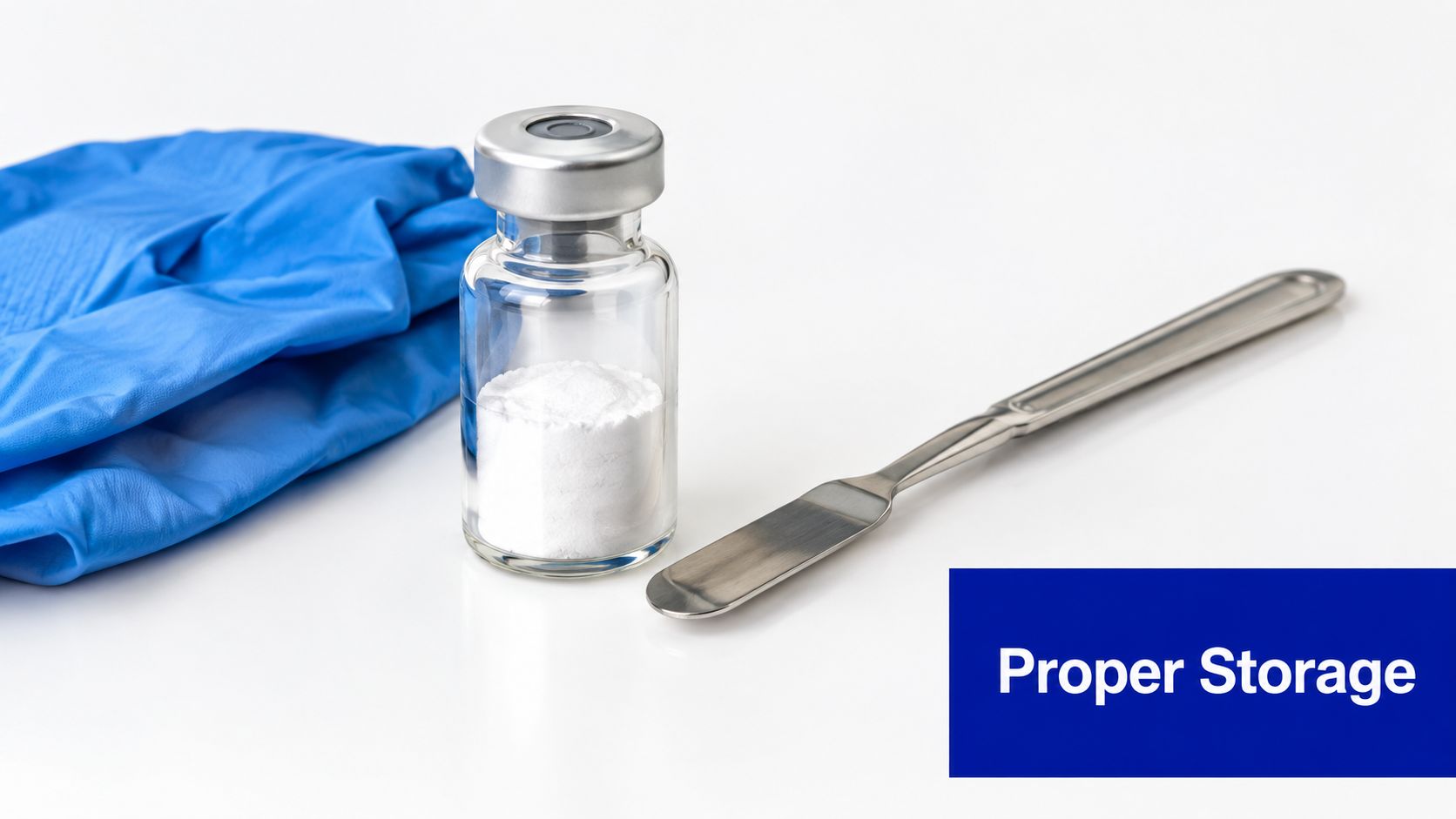
The sequence itself is short, but short doesn't mean indestructible. Moisture, repeated exposure to ambient conditions, light, contamination, unsuitable solvents, and unnecessary freeze-thaw handling can compromise an analytical sample. The laboratory should follow the supplier's documented storage instructions, the approved study SOP, and any available stability information rather than borrowing an internet dosing or storage chart.
At minimum, record:
The correct solvent depends on the analytical model, assay design, compatibility requirements, and the supplier's technical documentation. Bacteriostatic water shouldn't be treated as a universal solution for every in-vitro application, and no reconstituted material should be used outside the approved research protocol. The lab should establish container-specific storage and in-use periods from available evidence, not manufacture a precise shelf life from habit.
A useful bench routine is simple. One person prepares the material while another checks the calculation, label, and batch record. That second-person review catches transcription errors before they enter the assay and provides an auditable record of who handled the sample.
The following media can support staff onboarding, but it doesn't replace the laboratory's SOP, risk assessment, or supplier documentation.
The FDA has also highlighted unresolved concerns around peptide impurities and active pharmaceutical ingredient characterization. That makes clean handling important, but it doesn't make clean handling equivalent to proof of clinical safety. A well-maintained vial can still contain the wrong material, an unrecognized impurity, or a compound with no validated human use.
Compliance shouldn't end when the purchase order closes. A laboratory needs a living file that connects the research question, approved protocol, supplier decision, lot documentation, receiving check, storage history, use records, deviations, and final disposal. That file lets the institution explain what it bought, why it bought it, who handled it, and where the material went.
The regulatory picture can change faster than a laboratory's inventory cycle. FDA briefing materials reported that by 2025 there were no reported compounded drug products containing BPC-157, despite substantial public interest, while later reporting described a 2026 FDA panel vote concerning specialized pharmacy production. The FDA briefing materials and BBC's regulatory report should be treated as dated sources to review, not as permanent authorization for any particular supplier, formulation, or route.
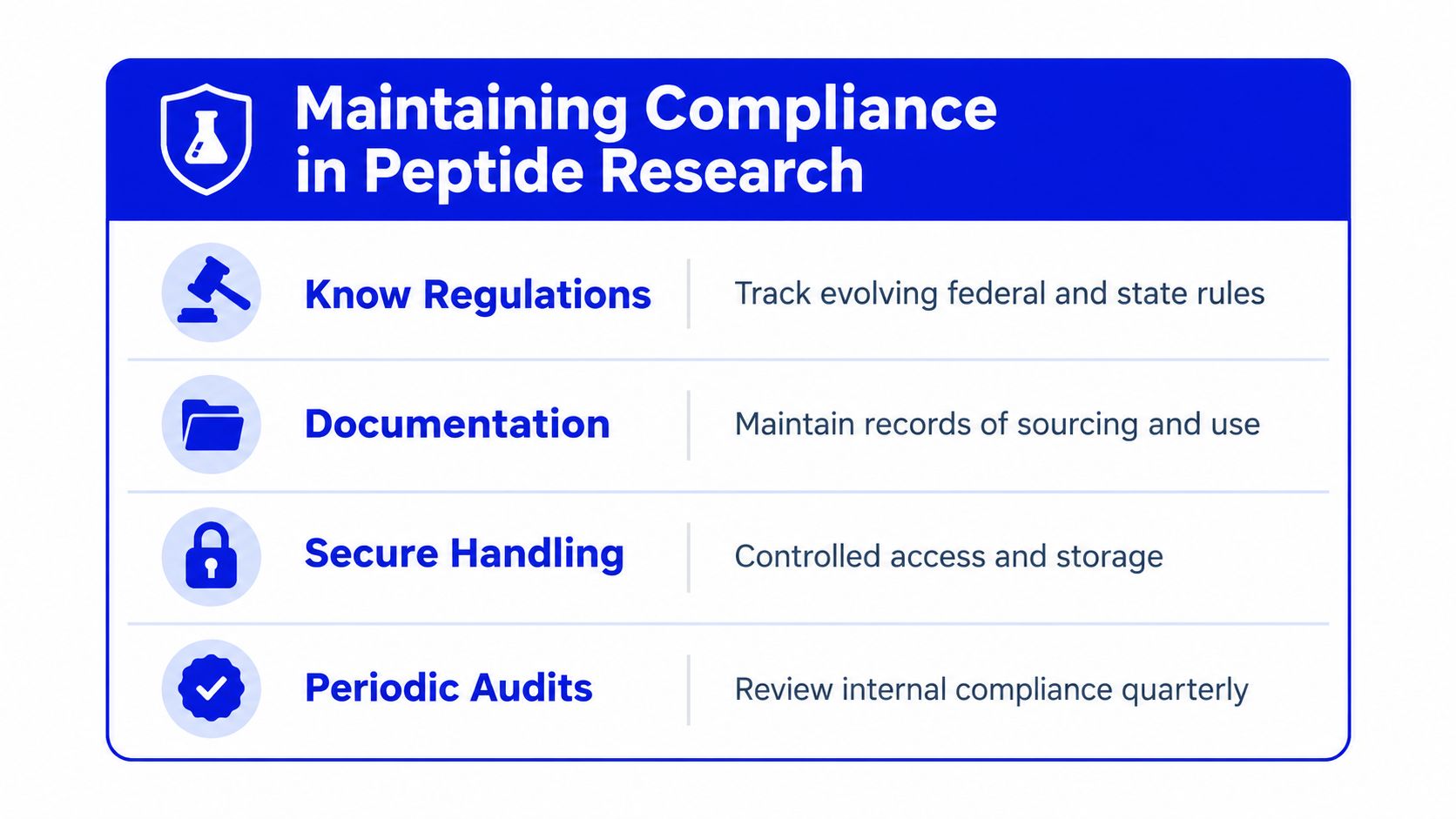
The boundary should remain explicit: analytical and preclinical research is not human treatment. Don't use research labels, internal test results, or anecdotal observations to support clinical claims. Don't create dosing instructions for people from an animal protocol, and don't let a product page become the source of medical or regulatory conclusions.
A defensible procurement program also knows when to stop. If a supplier can't provide traceable records, if the lot doesn't match the COA, if the package arrives compromised, or if the intended use exceeds the institution's approval, quarantine the material and escalate the issue. The fastest order is the one that doesn't create a preventable investigation later.
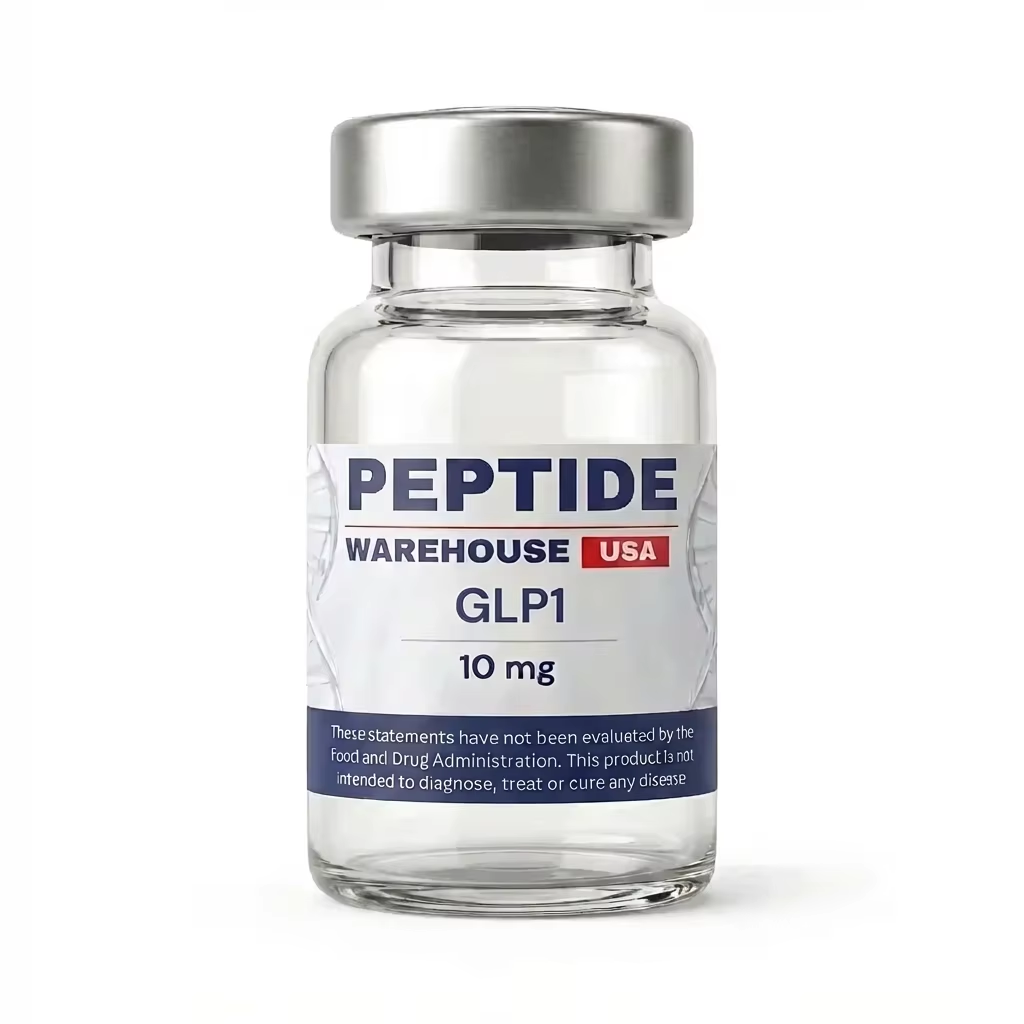
Peptide Warehouse USA offers USA-manufactured research peptides and related compounds for laboratory, analytical, and preclinical applications, with lot documentation that includes COAs, microbial and endotoxin reports, and stated purity information. Visit Peptide Warehouse USA to review its research-only catalog, account tools, shipping information, and documentation before making a procurement decision.
Leave a comment