No products in the cart.
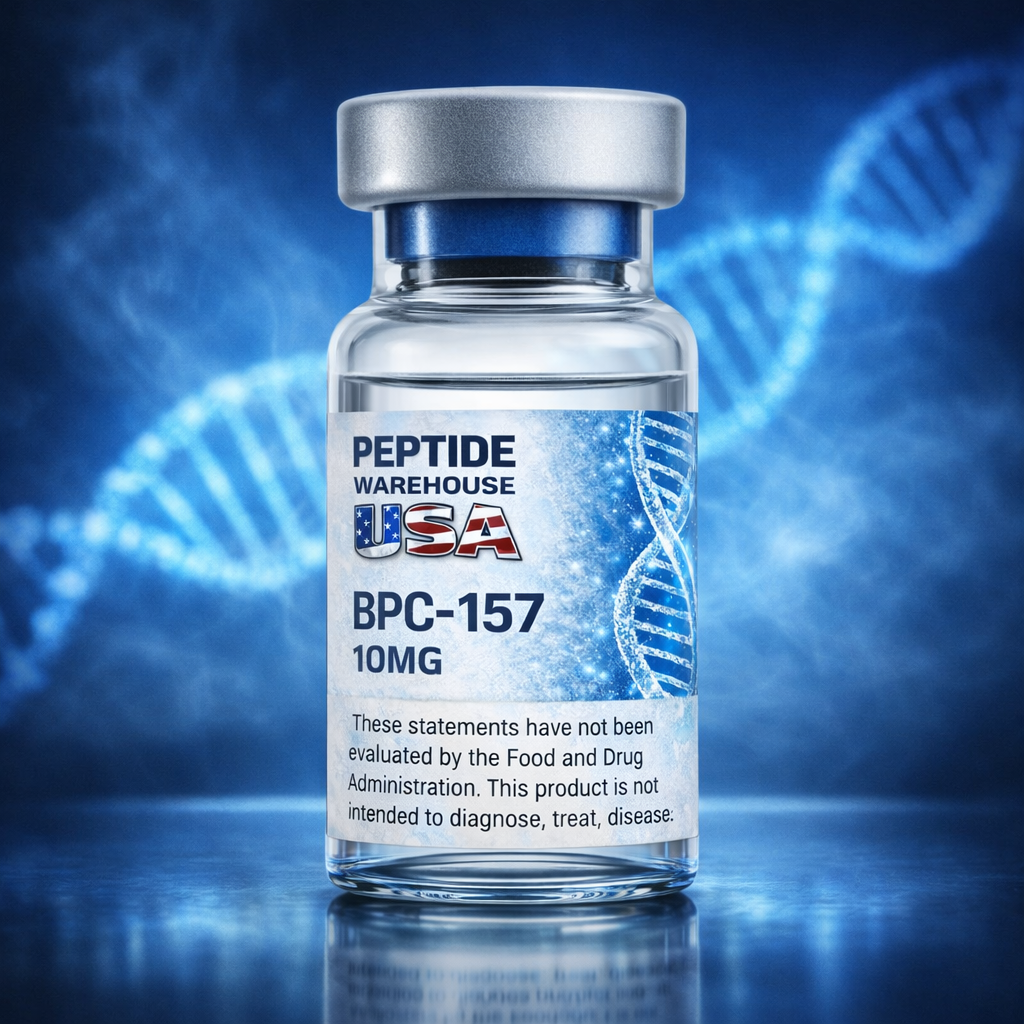


BPC-157 is one of the most widely discussed peptides in recovery and regenerative research. Known for its role in tissue repair, inflammation modulation, and blood flow support, it has become a foundational compound in research focused on healing and performance optimization.
Unlike many peptides that target a single system, BPC-157 is studied for its ability to support multiple biological pathways at once. This broad activity is one of the main reasons it continues to gain attention in research settings.
BPC-157 is a synthetic peptide consisting of 15 amino acids. It is derived from a naturally occurring protein found in the stomach and is often studied for its role in cellular repair and protective signaling.
Research interest in BPC-157 focuses on several key areas:
Because of this, BPC-157 is commonly associated with research involving muscles, tendons, ligaments, and gastrointestinal systems.
One of the main reasons BPC-157 stands out is that it does not rely on a single mechanism. Instead, it influences multiple biological processes that are critical for recovery.
BPC-157 is studied for its interaction with nitric oxide pathways. Nitric oxide plays a role in blood flow, oxygen delivery, and cellular signaling.
Improved blood flow may support nutrient delivery to tissues involved in repair processes.
Another key area of research is angiogenesis, the formation of new blood vessels.
This process is important because:
BPC-157 is also studied for how it influences communication between cells.
This includes:
Based on current research interest, BPC-157 is commonly associated with:
These combined effects are why BPC-157 is often considered a foundational peptide in recovery-focused research.
BPC-157 is widely used in research discussions because of its versatility.
Many peptides are designed to target a specific function. BPC-157, however, supports the overall environment required for healing.
Because of this, it is often used:
One of the biggest misconceptions is that BPC-157 is a “magic fix” for recovery.
In reality, research suggests that BPC-157:
Another common misunderstanding is that all peptides work the same way. BPC-157 is unique because it focuses on repair signaling, not hormone stimulation or metabolic pathways.
BPC-157 is often compared to TB-500 because both are associated with recovery research, but they function differently.
BPC-157:
TB-500:
Because of these differences, the two are often studied together.
👉 Learn more about this combination:
https://peptidewarehouseusa.com/wolverine-blend-peptide-bpc-157-tb-500/
This combination is commonly referred to as the “Wolverine Blend” and is studied for:
This pairing is studied for combining:
This combination is associated with:
BPC-157 is commonly explored in research involving:
These areas are the primary reason it remains one of the most discussed peptides in recovery research.
If you are looking for high-quality research peptides, it is important to choose verified sources.
👉 Buy BPC-157 (COA Tested & USA Manufactured):
https://peptidewarehouseusa.com/product/bpc-157-10mg/
BPC-157 is sold for research purposes only. Regulations vary depending on jurisdiction, and it is important to understand local guidelines.
Unlike peptides that focus on hormones or metabolism, BPC-157 is studied primarily for its role in tissue repair and recovery signaling.
Yes, BPC-157 is often studied as a standalone compound, but it is also commonly combined with other peptides depending on research goals.
BPC-157 remains one of the most versatile and widely discussed peptides in recovery research. Its ability to support multiple biological systems and improve the environment for healing makes it a key compound in many research protocols.
As interest in peptide research continues to grow, BPC-157 stands out as a foundational compound for studying repair, regeneration, and recovery pathways.