
No products in the cart.



BPC-157 research has a striking imbalance at its center. A 2025 evidence review identified only three published human pilot studies, involving fewer than 30 participants in total, while most of the broader literature remains preclinical rather than clinical (evidence review). That means the compound has generated substantial biological interest without producing the controlled human evidence needed to establish effectiveness, dosing, or long-term safety.
This distinction matters for BPC-157 benefits, healing applications, peptide stacks, or research-grade procurement. The most useful question isn't whether the findings look promising. It's which findings come from cells or animals, which have been tested in people, what each experiment measured, and where the evidence stops.
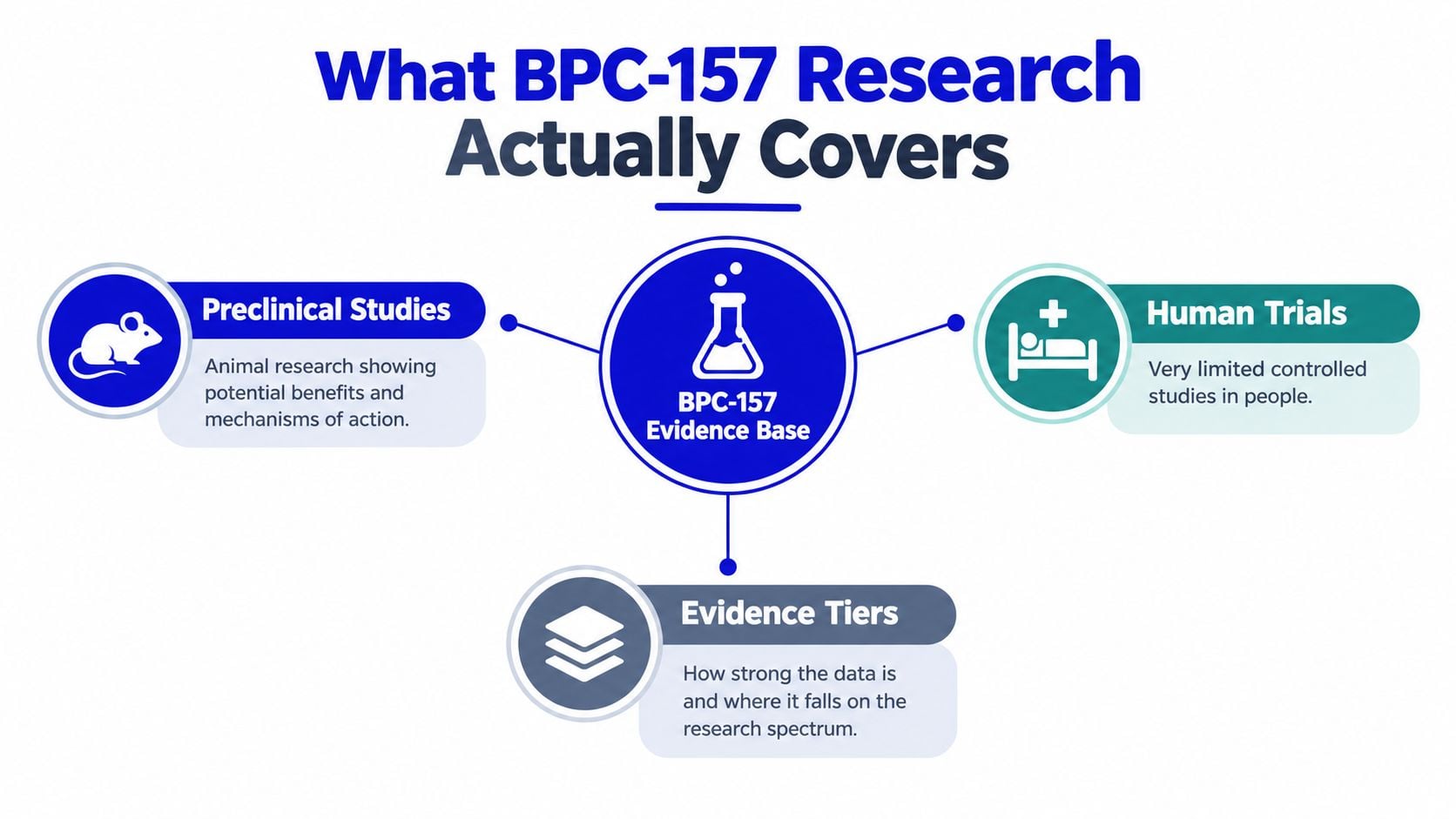
BPC-157 research spans three evidence tiers that answer different questions. Treating them as interchangeable turns biological signals into claims about clinical benefit.
The first tier is mechanistic research. These experiments examine pathway activity, gene expression, vascular signaling, cell migration, and tissue markers. Findings such as increased VEGFR2 or nitric-oxide signaling can indicate a possible biological process under controlled conditions. They do not establish faster recovery, improved function, or meaningful benefit in people.
The second tier is preclinical research using rodents, cell cultures, and other laboratory systems. Researchers have studied ulcers, wounds, tendon injury, vascular impairment, and tissue repair in these models. Each model measures a defined outcome, such as lesion size, blood flow, tissue strength, or a molecular marker. Results can support a mechanism for further investigation, while species differences in metabolism, immune responses, wound healing, and vascular biology limit direct translation to humans.
The third tier is human evidence. Pilot studies may provide early information about tolerability and help generate hypotheses. Small or uncontrolled studies cannot reliably establish efficacy, dosing, or long-term safety. Stronger conclusions require suitable comparators, validated outcomes, adequate follow-up, and independent replication.
Review each BPC-157 claim in sequence:
For laboratory buyers, these distinctions define the boundary between research and treatment. BPC-157 is an investigational research compound, rather than an established therapy or substitute for medical care. Research-use labeling, analytical documentation, and controlled experimental design support laboratory work. They do not convert a research material into an approved drug product.
BPC-157 is commonly described as a synthetic pentadecapeptide, meaning a short chain of amino acids containing fifteen residues. The sequence was derived from material associated with gastric juice and has historically been discussed under the name body protection compound. Early work connected the peptide with gastric cytoprotection, which helps explain why later researchers examined it in ulcer, wound, vascular, tendon, and other tissue models.
The origin story can create a misleading impression. A gastric-derived sequence isn't automatically a gastrointestinal medicine, and a synthetic laboratory peptide isn't the same thing as a naturally occurring preparation in the body. Researchers use a defined compound so they can control identity, concentration, route, and experimental conditions.
The early gastric research direction shaped much of the field. Investigators examined whether BPC-157 could influence experimentally induced ulceration and tissue damage in rodents. Later studies broadened the scope to vascular signaling, connective tissue, wound models, and ischemic injury.
That progression produced a compound with a wide preclinical footprint. It also encouraged a broad set of claims about gut health, tendon recovery, inflammation, wound closure, and systemic repair. Those claims shouldn't be treated as equivalent. A gastric-ulcer endpoint in a rat, endothelial-cell signaling in a dish, and a human musculoskeletal outcome represent different questions.
A research-grade BPC-157 material is intended for in-vitro, analytical, or preclinical laboratory work. Its label, documentation, formulation, sterility status, and intended use must be assessed within that context.
Researchers should distinguish:
These categories aren't interchangeable. A high-purity analytical result doesn't establish clinical safety, and a documented research compound doesn't carry an approved indication.
The strongest mechanistic theme in BPC-157 research is coordinated vascular and tissue-repair signaling, not a single proven receptor effect. Across preclinical models, investigators have examined VEGF and VEGFR2-related activity, ERK1/2 signaling, transcription factors such as Egr-1, c-Fos, and c-Jun, and nitric-oxide pathways (preclinical mechanism review).
One detailed line of research examined angiogenesis-related activity in rat ischemic hind-limb muscle and human vascular endothelial cells. Researchers used laser Doppler scanning to assess blood-flow recovery and analyzed vascular changes in tissue. In the treated rats, they reported increased vessel numbers and enhanced vascular expression of VEGFR2.
The endothelial-cell experiments reported increased VEGFR2 messenger RNA and protein expression, but not increased VEGF-A expression. Additional experiments described VEGFR2 internalization and time-dependent activation of the VEGFR2-Akt-eNOS pathway. Dynasore, an endocytosis inhibitor, suppressed the observed effects.
That design gives the finding more specificity than a general statement that BPC-157 “improves healing.” It identifies a pathway, a cell type, a vascular model, and an intervention that altered the result. It still doesn't establish that the same pathway produces a meaningful benefit in people.
Other preclinical work has examined ERK1/2 signaling and focal adhesion kinase-related activity in connective-tissue models. These pathways are relevant to cell survival, migration, cytoskeletal organization, and extracellular-matrix behavior. Researchers may assess them through protein-expression methods and phosphorylation readouts such as Western blotting.
Nitric oxide is another recurring theme. Studies have associated BPC-157 with nitric-oxide synthase expression and nitric-oxide production, processes that may affect vasodilation and microvascular function during experimental injury repair. The appropriate interpretation is pathway-level activity, not proof of improved circulation or treatment of a vascular disease.
| Proposed mechanism | Typical model system | Primary assay or readout |
|---|---|---|
| VEGFR2-related angiogenic signaling | Rat ischemic hind-limb model and human endothelial cells | Laser Doppler blood-flow scanning, vessel counts, messenger RNA and protein analysis |
| VEGFR2-Akt-eNOS activation | Cultured endothelial cells | Pathway activation, receptor internalization, inhibitor-response testing |
| Angiogenesis and vessel growth | Chick chorioallantoic membrane and endothelial cultures | Vascular growth observation and endothelial tube formation |
| ERK1/2 and repair signaling | Laboratory tissue and cell models | Protein expression and phosphorylation readouts |
| Nitric-oxide response | Vascular and injury models | Nitric-oxide synthase expression and nitric-oxide measurements |
| Tissue remodeling | Animal injury models | Histology, extracellular-matrix assessment, and functional testing |
Researchers also discuss possible dopaminergic and serotonergic effects, but these should remain hypothesis-level unless a study directly demonstrates the pathway with appropriate pharmacological, molecular, or behavioral controls. A change in animal behavior isn't automatically evidence of a defined neurotransmitter mechanism.
Interpretive rule: A pathway assay can explain how an effect might occur. It can't establish that the effect matters clinically.
The preclinical literature is broad, but its signals are easier to interpret when each claim stays attached to the model that produced it. Gastric studies have focused on lesion development and healing. Tendon studies have examined tissue outgrowth, cell migration, survival, and repair-related function. Vascular studies have assessed blood flow, vessel formation, and VEGFR2-associated signaling.
In a rat study published in 2004, investigators tested intramuscular and intragastric administration across several experimentally induced gastric-ulcer models. At doses of 400 or 800 nanograms per kilogram, BPC-157 reduced lesion development compared with saline or excipient controls, with inhibition generally ranging from 45.7% to 65.6% (rat gastric-ulcer study).
At the 800-nanogram-per-kilogram intramuscular dose, inhibition reached 65.5%, 65.6%, and 59.9% across three models. Famotidine produced inhibition rates of 60.8%, 57.2%, and 34.3% in the corresponding models. The report also described nearly healed ulcers and thicker granulation tissue in rats receiving the higher BPC-157 dose.
Those findings are important because they show measurable effects across multiple animal ulcer models. They don't establish equivalence to famotidine, human effectiveness, a human dose, or suitability for self-administration.
Preclinical tendon and ligament research has used rodent injury systems and cellular material derived from injured tissue. Depending on the experiment, researchers have assessed cell outgrowth, migration, survival under oxidative stress, tissue appearance, tensile properties, or functional movement.
Wound studies have included excisional skin models and other experimental injury systems. Bone research has used laboratory models of defects or fractures, with outcomes generally relying on imaging, histology, or structural assessment. These endpoints can describe tissue changes, but they don't answer whether a patient returns to activity sooner or avoids a clinically important complication.
Vascular experiments have combined rodent hind-limb ischemia with endothelial-cell testing, chick chorioallantoic membrane assays, and endothelial tube-formation assays. These methods examine vessel growth and perfusion under controlled conditions. They support a research hypothesis involving angiogenesis-related signaling, but they aren't substitutes for clinical endpoints such as limb salvage or durable vascular recovery.
For broader context on why wound biology varies between cases, the Vein and Wound Institute insights provide a useful discussion of factors that can influence slow wound healing. That context reinforces why a single laboratory mechanism can't explain every human wound outcome.
| Tissue or system | Animal or laboratory model | Primary endpoint | Reported direction |
|---|---|---|---|
| Gastric tissue | Rat experimentally induced ulcer models | Lesion development, ulcer appearance, granulation tissue | Reduced lesion development and improved healing appearance |
| Tendon and soft tissue | Rodent injury models and tendon-derived cells | Cell migration, survival, tissue structure, functional or biomechanical measures | Positive experimental signal in selected models |
| Skin and wound tissue | Excisional and related wound models | Wound closure and histological repair markers | Improved repair-related findings in preclinical work |
| Vascular system | Rat ischemic hind limb | Blood-flow recovery, vessel number, vascular markers | Increased vascular findings and perfusion-related signals |
| Endothelial tissue | Cultured human endothelial cells | VEGFR2 expression, pathway activation, tube formation | Mechanistic activity under laboratory conditions |
| Bone | Experimental defect or fracture models | Imaging, histology, and structural repair | Investigated for repair-related changes |
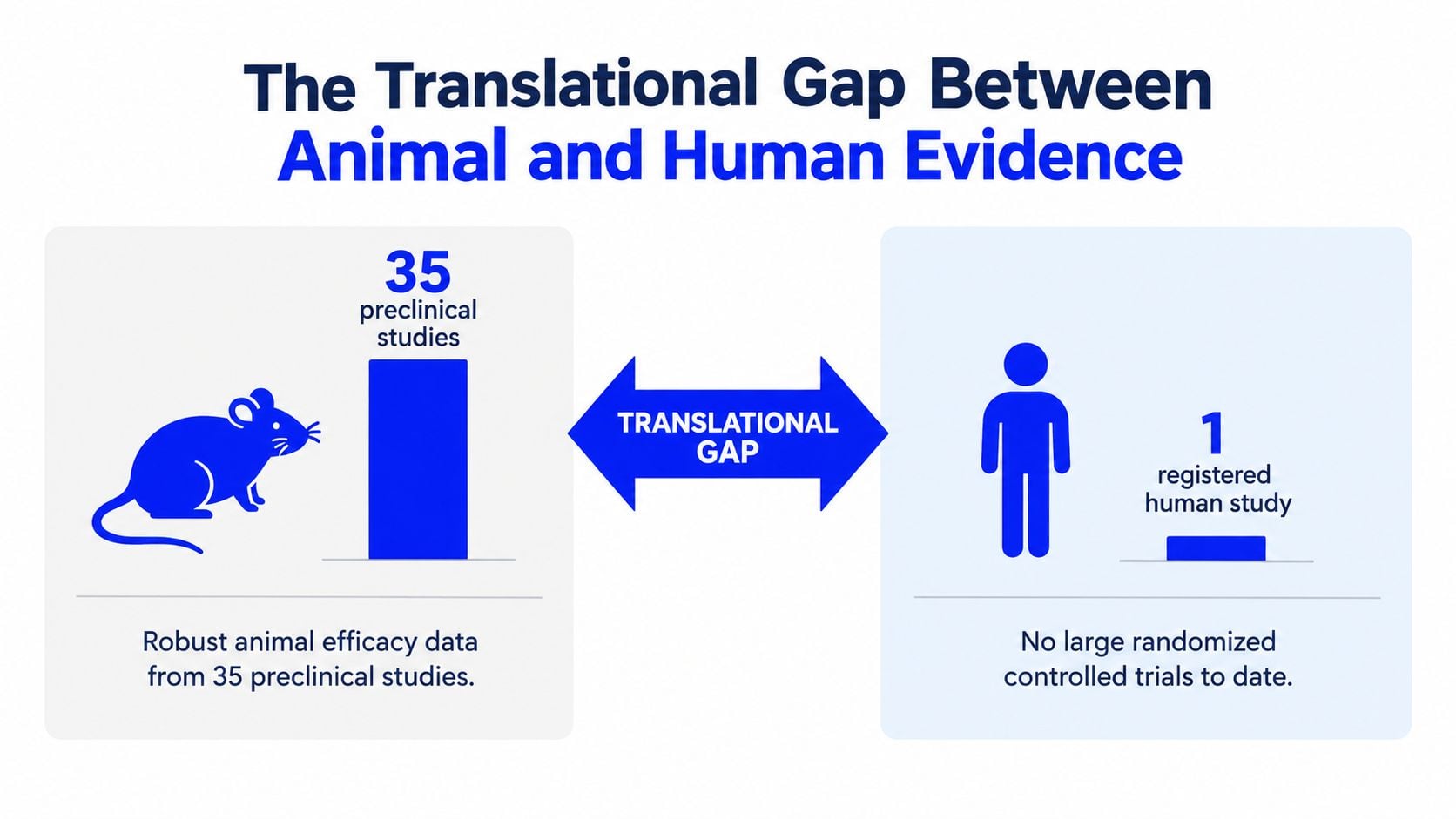
A systematic review identified 36 eligible studies in orthopedic and sports-medicine literature. 35 preclinical studies involved animals or laboratory systems, while 1 was clinical. This distribution defines BPC-157 research more accurately than the volume of positive findings does. The field contains a broad experimental record, but only limited direct evidence in people.
Human evidence remains preliminary. A separate human evidence review identified three pilot studies addressing knee pain, interstitial cystitis, and intravenous safety or pharmacokinetics. The reports involved fewer than 30 participants, and none used a randomized controlled design. Their findings can identify questions for testing, but they cannot establish efficacy or a reliable safety profile.
Animal studies commonly measure lesion area, histological appearance, vessel density, blood-flow signals, tensile strength, cell migration, and wound closure. Human trials must connect these surrogate measures to outcomes patients experience, such as ulcer recurrence, validated pain and function scores, tendon re-rupture, durable wound closure, or limb preservation.
Rodent results also do not establish human exposure or biological equivalence. Peptide metabolism, immune responses, tissue architecture, wound-healing biology, and nitric-oxide signaling differ across species. A treatment that changes a pathway in a rat model has not been shown to produce the same exposure, timing, safety profile, or functional result in people.
The regulatory status reflects this evidence gap. BPC-157 is not FDA-approved for any indication, and the available research does not establish an approved clinical use. A registered Phase I study of healthy volunteers was terminated without published results, leaving human pharmacokinetic and safety questions unresolved.
Preclinical consistency can justify more research, but it cannot replace controlled human evidence.
Laboratory handling begins with the experimental question, not with a human-use protocol. Researchers generally encounter BPC-157 as a lyophilized powder or as a reconstituted solution, and each format creates different requirements for storage, preparation, documentation, and contamination control.
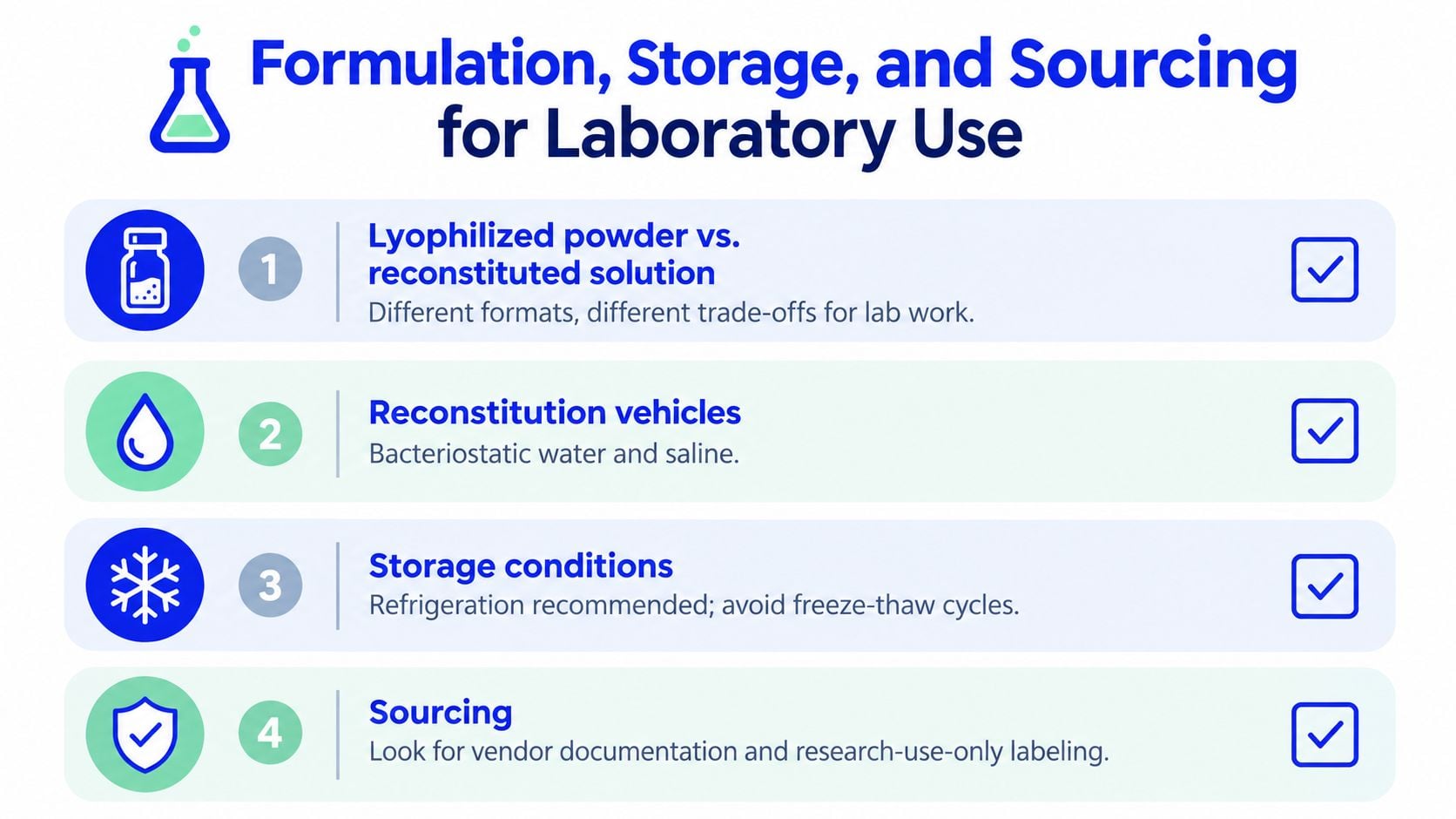
Lyophilized material can offer practical advantages for storage and shipment because the peptide is kept in a dry state until needed. Reconstituted solutions may be easier to deploy in an active experiment, but they introduce additional concerns involving solvent compatibility, sterility controls, concentration accuracy, and storage time.
Common laboratory vehicles may include bacteriostatic water or saline, depending on the validated protocol and the intended assay. The correct vehicle isn't determined by internet dosing discussions. It should be selected according to the experimental method, compatibility requirements, and institutional procedures.
Research protocols commonly call for refrigerated storage of solutions around 2 to 8 degrees Celsius and colder storage of powder around minus 20 degrees Celsius, but the supplier's stability data and product documentation should control the final decision. Researchers should protect material from unnecessary light, moisture, and repeated temperature changes.
Aliquoting can reduce repeated freeze-thaw cycles when a study requires multiple experimental runs. Clean handling, labeled containers, calibrated equipment, and recorded preparation times help preserve reproducibility. These practices support laboratory quality. They don't establish that a material is appropriate for human administration.
A sourcing review should examine more than a product-page purity statement. Useful documentation includes:
A stated purity above 98% can be a useful procurement threshold for research screening, but purity alone doesn't answer every quality question. Laboratories should also assess the analytical method, testing independence, storage conditions, and whether the documentation is specific to the supplied lot.
The most defensible position is neither blanket enthusiasm nor dismissal. BPC-157 research has produced recurring preclinical signals involving gastric cytoprotection, angiogenesis-related VEGFR2-Akt-eNOS activity, and tendon or soft-tissue models. Those signals justify carefully designed laboratory and animal studies.
They don't establish optimal dose, route, duration, comparative benefit, or long-term safety in humans. They also don't support treating a research peptide as a replacement for approved care. The distinction is especially important for readers searching for peptide stacks or the supposed benefits of peptides, because combining compounds can create additional uncontrolled variables rather than clarifying the evidence.
Before ordering or using a research material, investigators should document:
Researchers can use PubMed and Google Scholar to locate primary papers, then classify each result by model, route, endpoint, and study design. A pathway result should be recorded as a mechanistic result. A rat ulcer result should remain an animal-model result. Neither should be rewritten as a human treatment outcome.
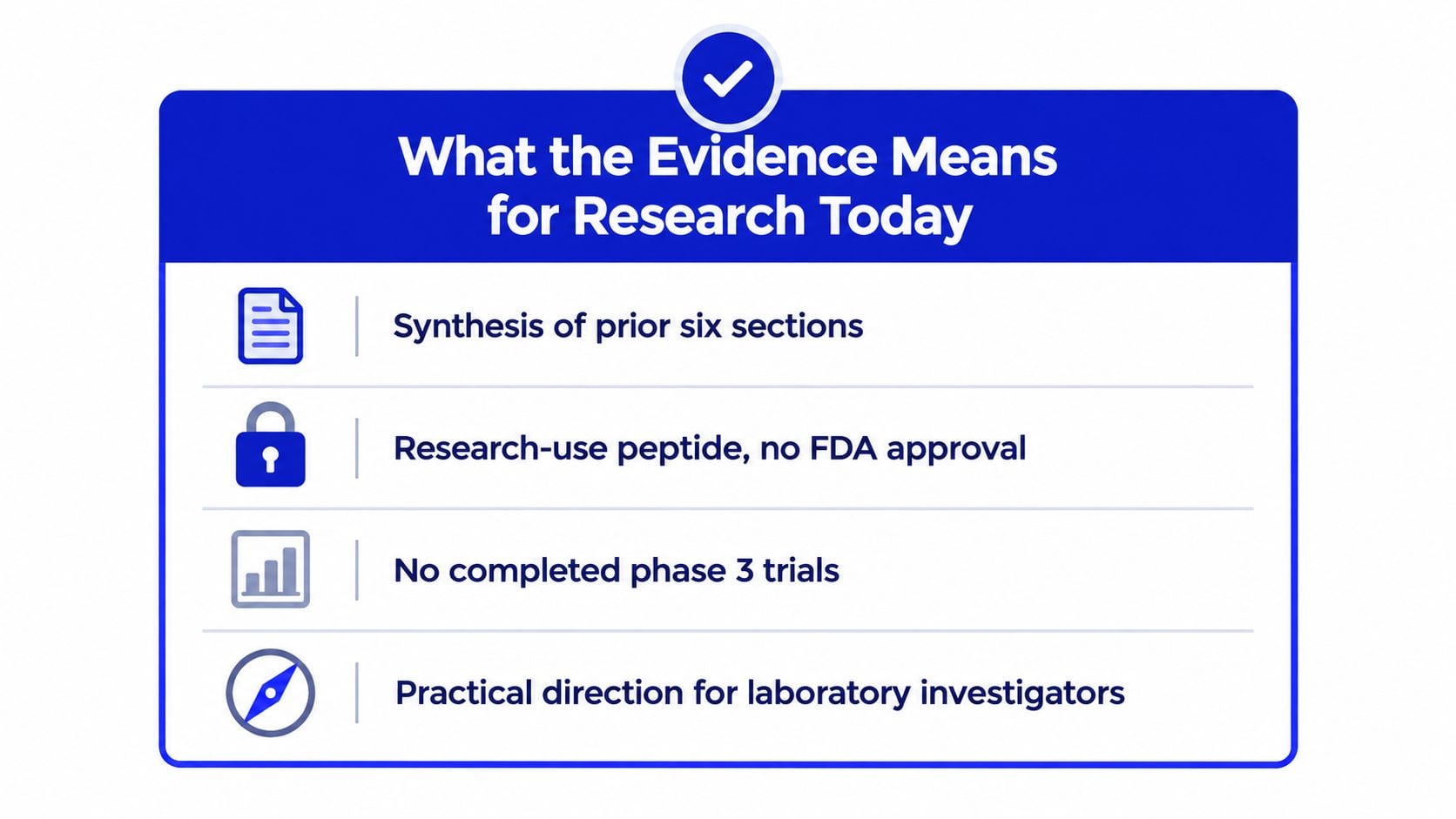
BPC-157 remains a research-use peptide, not an FDA-approved therapy. There are no completed Phase III trials establishing a clinical indication, and the available human evidence remains too limited to determine effectiveness or long-term safety.
For laboratory procurement, Peptide Warehouse USA offers BPC-157 research products, including a 10 mg BPC-157 spray designated for laboratory, analytical, and research use only, with product documentation described as including Certificates of Analysis, microbial reports, endotoxin reports, and stated purity levels up to 99.5%. Those procurement considerations apply to bench, analytical, and preclinical work only, not to human administration.
For laboratories evaluating BPC-157 research, Peptide Warehouse USA provides research-use materials and batch documentation to support identity, purity, and traceability checks. Visit the site to explore the available options, review the stated analytical documentation, and align procurement with your institution's laboratory and compliance requirements.
Leave a comment