
No products in the cart.


The most popular advice about BPC-157 usually starts with a dosing schedule, a “healing stack,” or a claim that the peptide is safe because animal studies look encouraging. That order is backwards. Before discussing concentration, reconstitution, or potential benefits of peptides, a laboratory team needs to establish what the evidence supports, whether the material is analytically verified, and whether the proposed work stays within research and regulatory boundaries.
BPC-157 is a synthetic 15-amino-acid peptide with a long preclinical history, but its human evidence remains surprisingly small. A responsible research program therefore treats it as an investigational compound, not as an established therapy, and separates observed laboratory mechanisms from unproven human outcomes.
BPC-157 didn't begin as a modern wellness product. Its history traces back to Croatian research focused on gastric protection and healing. One historical account links the early concept to 1975, when Predrag Sikiric proposed that the stomach produced a natural anti-stress healing substance. His group later reported a protein fragment in 1989, from which the 15-amino-acid peptide BPC-157 was identified, as described in the American Peptide Society's historical review.
That origin explains why the compound became associated with body-protection research rather than with a single commercial application. A 2026 review describes BPC-157 as a synthetic pentadecapeptide originally isolated from gastric juice and notes its continued study in animal models involving regenerative effects. Its research history spans roughly five decades, making it a familiar reference point in experimental tissue-repair work.
The important distinction is between the size of the preclinical literature and the size of the human record. ClinicalTrials.gov shows a Phase I safety and pharmacokinetics study registered in 2015, with the listing still being updated in 2026, while a separate Phase 2 trial registered in 2026 is evaluating acute grade II hamstring strain repair. That trial uses time to return to unrestricted sport and MRI-assessed injury volume at day 14 as co-primary endpoints, with completion expected in February 2027, according to the ClinicalTrials.gov Phase 2 listing.
Independent analyses describe the published human record as only a few pilot studies, selected Phase I and Phase II trial abstracts, and a cancelled Phase I trial. One review reports roughly 80 total human exposures across five published studies, with no randomized placebo-controlled trial reporting full results, as summarized in the human evidence review.
That means BPC-157's human evidence base is measured in dozens of exposures, not in the large patient populations needed to establish broad clinical safety. The appropriate laboratory classification is therefore clear: BPC-157 is an investigational research chemical with substantial preclinical interest and limited human evidence.
BPC-157 attracts research attention because its reported activity is distributed across several repair-related systems rather than confined to one receptor or one tissue. In preclinical models, investigators have observed patterns involving angiogenesis, fibroblast activity, collagen synthesis, vascular signaling, and tissue organization.
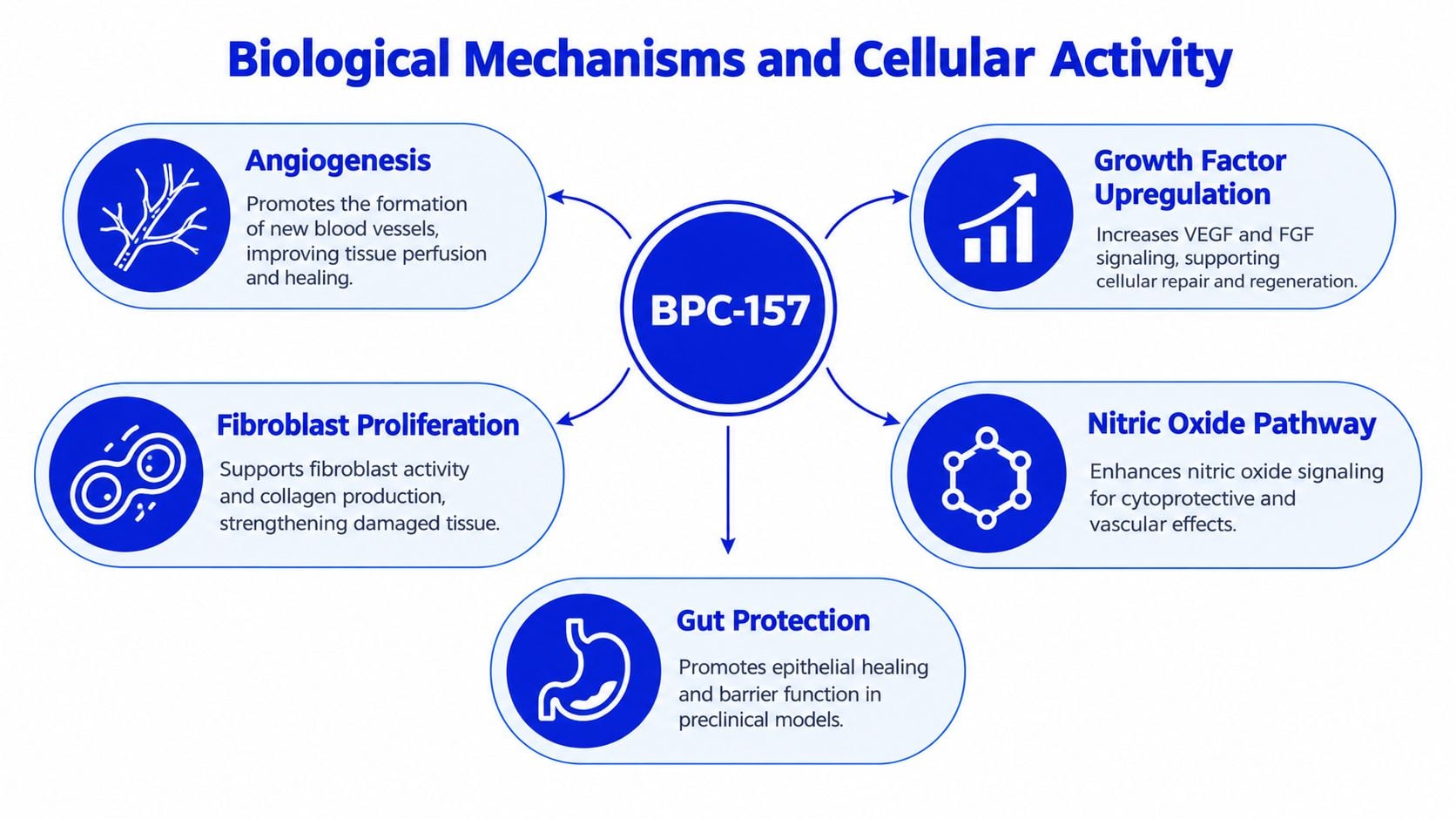
Angiogenesis is the formation of new blood vessels. In a damaged tissue model, that process can influence oxygen delivery, nutrient transport, and the movement of repair cells into the injury environment. Reviews of BPC-157 preclinical research describe coordinated signaling through VEGFR2, Akt-eNOS, ERK1/2, and nitric oxide pathways, which provides a mechanistic reason to investigate the peptide in muscle, tendon, ligament, and wound-healing assays rather than treating it as a single-purpose compound. The pathway discussion is documented in this preclinical tissue-repair review.
Nitric oxide modulation adds another layer. The preclinical literature links BPC-157 to changes in NO signaling and vascular responses, while also describing growth-hormone receptor upregulation. These observations don't establish a clinical benefit, but they help researchers formulate testable hypotheses about perfusion, cellular survival, and repair kinetics.
Fibroblasts produce and organize extracellular matrix components, including collagen. A tendon study reported dose-dependent increases in tendon explant outgrowth, along with fibroblast migration and spreading through the FAK-paxillin pathway, according to the same tendon and tissue-repair review.
FAK and paxillin are relevant because they participate in cell adhesion and movement. In an in vitro design, a research team might therefore examine cell migration, spreading, matrix deposition, and structural organization together. Measuring only a single endpoint can miss whether the compound changes cell behavior, matrix production, or both.
Practical rule: A plausible pathway is a reason to design an experiment, not permission to make a treatment claim.
The strongest interpretation is mechanistic. BPC-157 appears to influence several processes that are biologically relevant to tissue repair in preclinical systems. Researchers still need appropriate controls, validated assays, route-specific interpretation, and independent analytical confirmation of the test material before assigning meaning to an observed response.
The most useful application of BPC-157 research is not a generic “recovery” claim. It's the careful matching of a biological question to a model that can measure that question. Tendon studies, muscle injury models, wound assays, and gastrointestinal repair models each reveal different aspects of the compound's reported activity.
For tendon work, the laboratory may examine explant outgrowth, fibroblast migration, collagen-related endpoints, attachment quality, and biomechanical recovery. The tendon findings described in the preclinical review are especially relevant because they connect a visible structural response with a defined FAK-paxillin signaling pathway.
Muscle-strain models require a different design. The current Phase 2 human trial for acute grade II hamstring strain uses return to unrestricted sport and MRI-assessed injury volume at day 14 as co-primary endpoints, but those endpoints belong to that registered clinical protocol and shouldn't be presented as evidence that BPC-157 works in people. In preclinical work, investigators should define injury severity, timing, administration route, imaging or histological endpoints, and functional testing before beginning the study.
Wound-healing assays can evaluate closure, epithelial behavior, angiogenic markers, fibroblast response, and matrix remodeling. Gastrointestinal models reflect the compound's gastric-protection origins and can focus on epithelial integrity, lesion repair, and vascular responses. Each model answers a narrower question than the broad online language about “healing.”
A two-subject human pilot reported intravenous doses of 10 mg and 20 mg, a plasma half-life of under 30 minutes, concentrations returning to baseline within 24 hours, and primary renal clearance, as reported in the human pharmacokinetic analysis.
Those findings don't define a validated research dosing schedule. They do show why exposure timing matters. A study that collects samples only at a late time point could miss the relevant concentration window, while a tissue assay that measures a delayed structural response must distinguish short systemic exposure from downstream biological effects.
A sound protocol should document:
Handling begins before solvent touches the vial. Lyophilized peptide material should be inspected for compromised closure, unusual appearance, or evidence of moisture exposure, and the batch identity should be matched to its documentation. Any deviation belongs in the laboratory record.
This is a research-laboratory procedure, not a guide for human administration. Institutional biosafety rules, validated sterile technique, and the requirements of the approved protocol take precedence over generic online instructions.
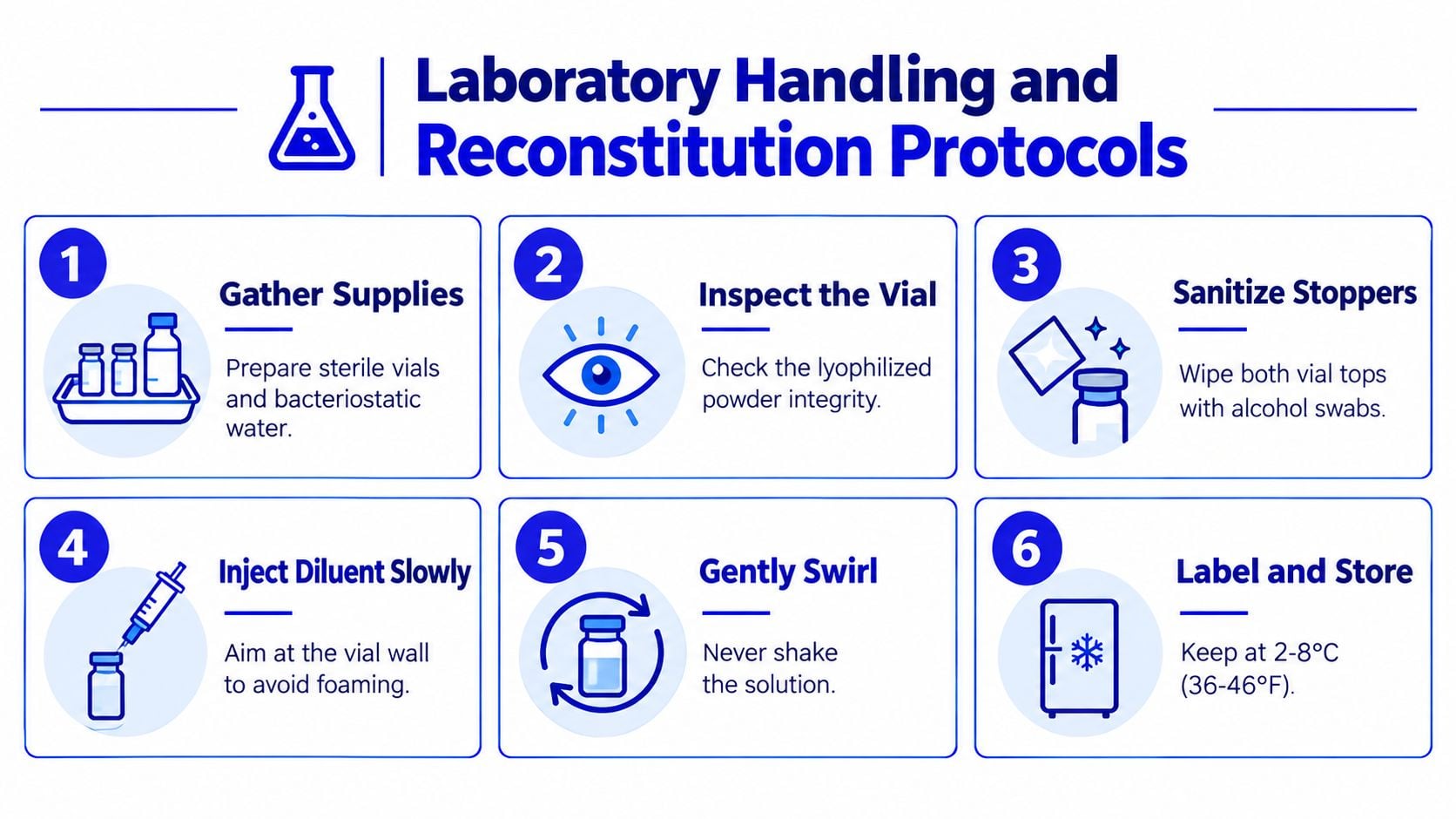
Gather supplies. Prepare the peptide vial, a validated sterile diluent selected by the protocol, sterile transfer equipment, alcohol swabs, labels, and the appropriate storage container. Don't substitute a diluent without confirming compatibility.
Inspect the vial. Check the label, lot identifier, closure, and lyophilized cake. Record the condition before opening or puncturing the stopper.
Sanitize the stoppers. Wipe the peptide vial and diluent container with appropriate disinfectant and allow the surfaces to dry. Rushing this step can compromise the work.
Introduce diluent slowly. Direct the solvent down the vial wall rather than onto the powder. This reduces foaming and unnecessary mechanical stress.
Gently swirl. Rotate the vial until the solution appears uniform. Never shake a peptide solution unless the validated method specifically requires it.
Label and store. Record concentration, solvent, date and time of reconstitution, operator, lot, and storage condition. Protect the solution from light and use the validated temperature range for the study.
A laboratory should not assume that a visually clear solution is chemically intact. If the study depends on concentration or structural integrity, establish an analytical check appropriate to the project and retain the remaining material under documented conditions.
For a visual demonstration of vial handling, use the embedded laboratory media below.
Calculation errors can invalidate an otherwise well-designed experiment. The essential distinction is between mass concentration, molar concentration, and the volume required to deliver a defined mass in a controlled assay.
Start with the mass concentration formula:
Concentration = peptide mass ÷ solvent volume
Keep units consistent. If a vial contains milligrams and the solvent is recorded in milliliters, the resulting concentration is milligrams per milliliter. To convert to micrograms per milliliter, multiply the milligram value by 1,000.
For a target mass:
Required volume = target peptide mass ÷ solution concentration
A hypothetical example illustrates the method without implying a clinical dose. If a research vial contains 5 mg of peptide and the protocol adds 2 mL of solvent, the concentration is 2.5 mg/mL, equivalent to 2,500 mcg/mL. A target of 250 mcg would therefore require:
250 mcg ÷ 2,500 mcg/mL = 0.1 mL
That calculation describes volume only. It doesn't establish that the target is suitable for a cell, animal, or human study. The protocol must define the scientifically justified amount, route, frequency, and sampling plan.
For molarity, convert the peptide mass to grams and divide by molecular weight:
Molarity = mass in grams ÷ molecular weight in grams per mole ÷ volume in liters
Because BPC-157 is a peptide, the exact molecular weight should come from the verified material specification or analytical documentation used for the batch. Don't copy a molecular-weight value from an unrelated listing, and don't treat nominal vial mass as proof of actual content without considering assay results.
| Peptide Mass | Solvent Added | Concentration | Volume for 250mcg Dose |
|---|---|---|---|
| 5 mg | 2 mL | 2.5 mg/mL | 0.1 mL |
| 5 mg | 5 mL | 1 mg/mL | 0.25 mL |
| 10 mg | 2 mL | 5 mg/mL | 0.05 mL |
| 10 mg | 5 mL | 2 mg/mL | 0.125 mL |
Use a second-person verification for every preparation. The reviewer should independently recalculate the concentration, target volume, unit conversion, and instrument setting before the material enters the experiment.
Also record the syringe or pipette resolution. A mathematically correct volume may still be impractical if the instrument can't measure it reliably. When the calculated volume is too small for the validated device, redesign the dilution scheme rather than estimating by eye.
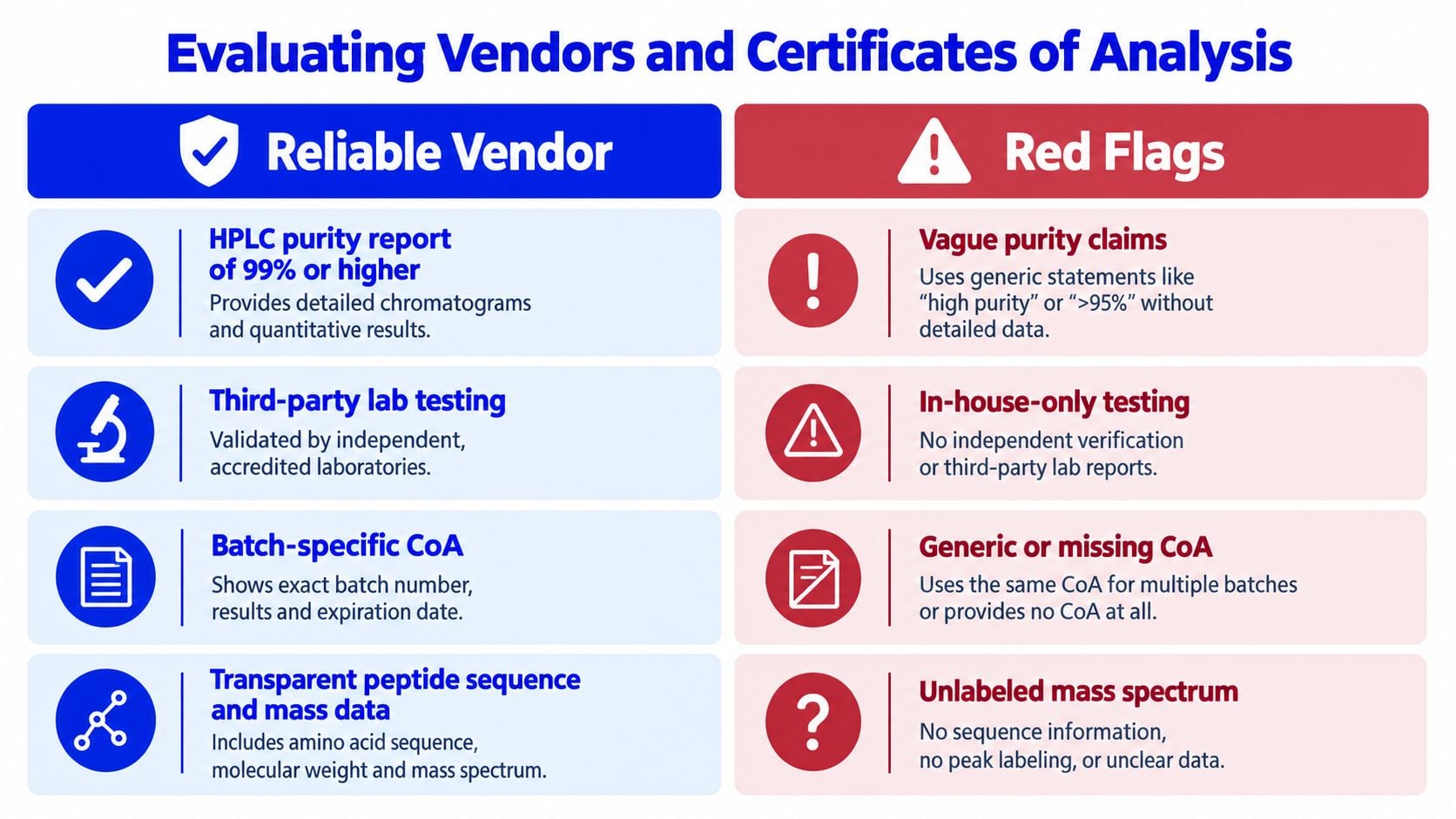
A vendor's purity headline isn't enough. The research team needs evidence that the named compound is present, the batch matches the stated identity, and the material is appropriate for the intended analytical or preclinical workflow.
HPLC helps assess chemical purity by separating components in the sample. A report should identify the batch, method or method context, chromatographic result, and the laboratory responsible for the analysis. A bare statement such as “high purity” doesn't allow meaningful review.
Mass spectrometry supports identity confirmation by comparing observed mass with the expected peptide mass. Mass data alone doesn't establish purity, and an HPLC result alone doesn't fully confirm sequence identity. The two methods answer different questions and should be interpreted together.
A credible package should also make room for quality controls that matter to the study:
| Reliable documentation | Red flags |
|---|---|
| Batch-specific CoA | Generic or missing CoA |
| Interpretable HPLC result | Vague purity claim |
| Mass data linked to peptide identity | Unlabeled spectrum |
| Third-party documentation where available | In-house-only testing with no method context |
| Microbial and endotoxin reports | No contamination information |
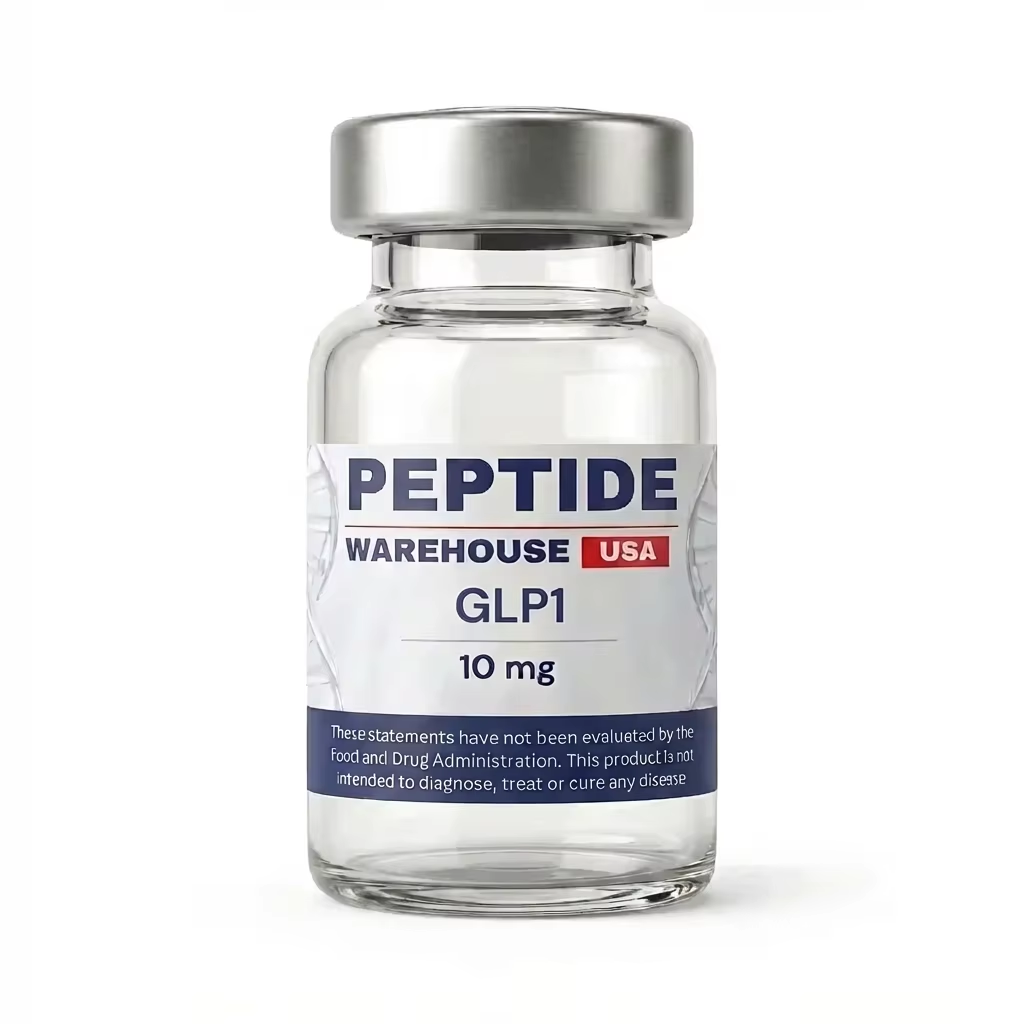
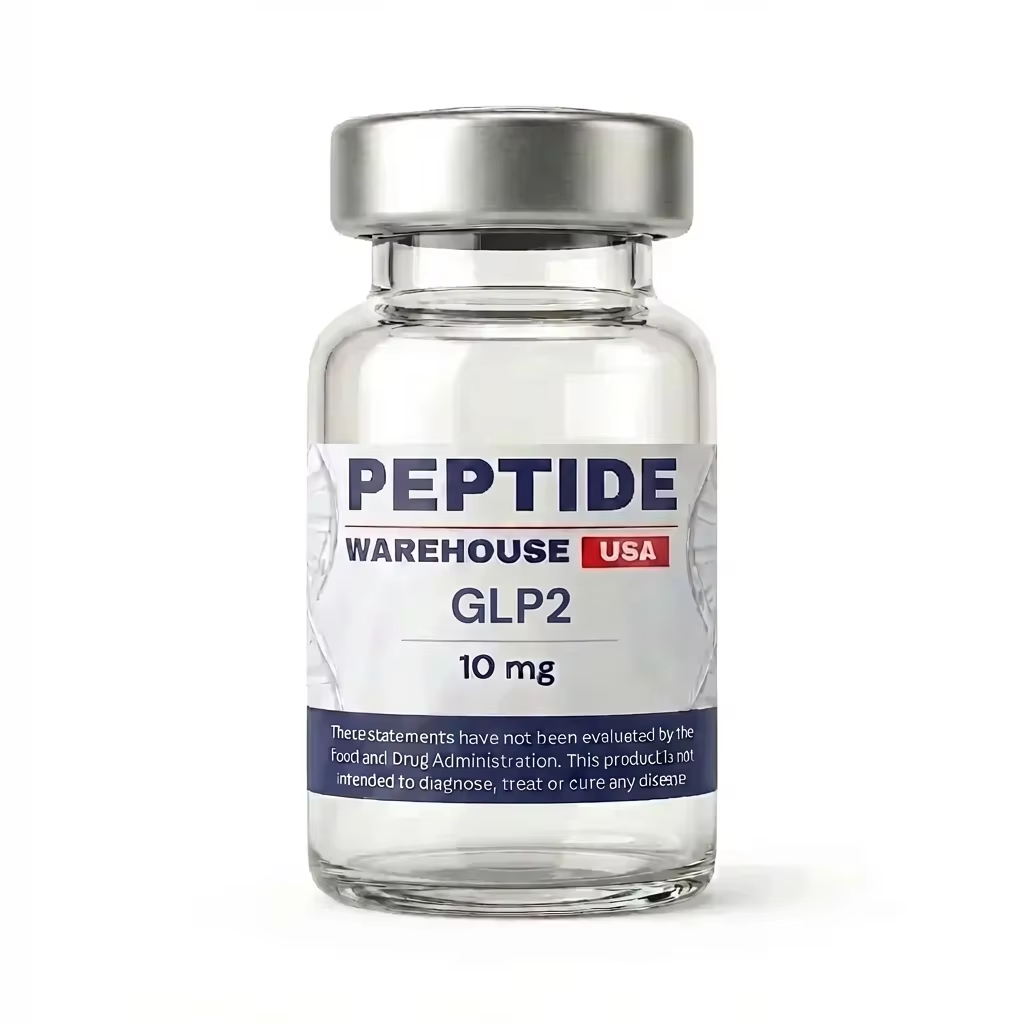
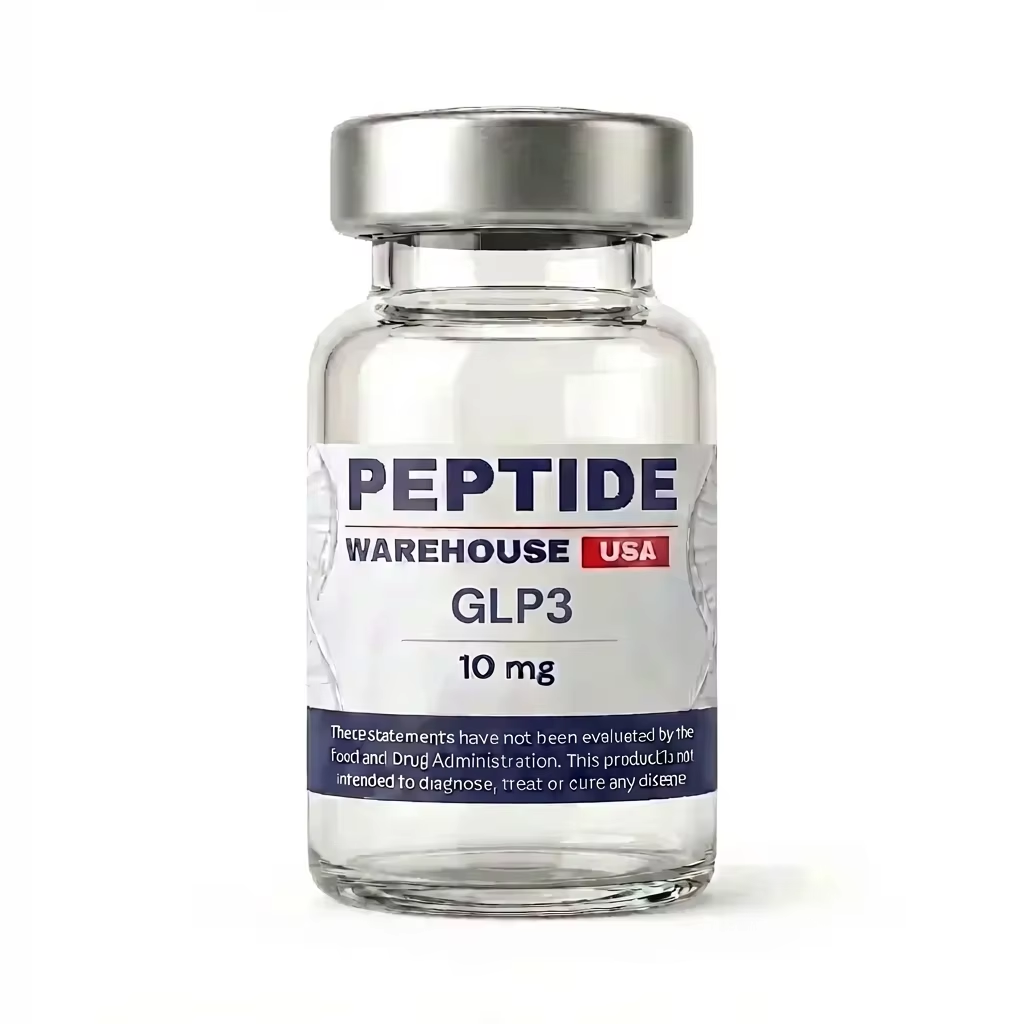
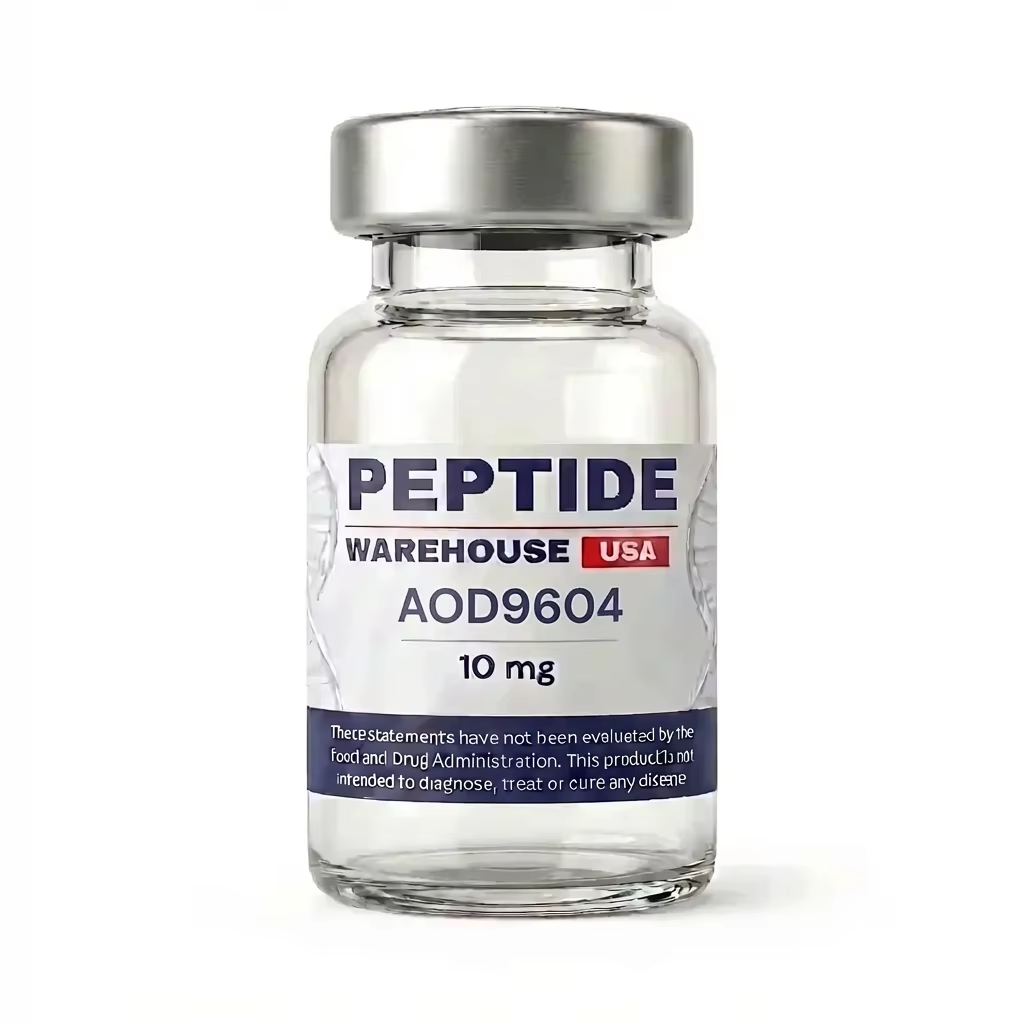
Peptide Warehouse USA lists BPC-157-related research products and describes documentation including COAs, microbial and endotoxin reports, and stated purity levels up to 99.5%. It operates as a research chemical supplier, not a compounding pharmacy or outsourcing facility, and its materials are designated for research, laboratory, or analytical use only. Those details should still be evaluated against the needs of the individual protocol, just as they should be for any supplier.
BPC-157 is not FDA-approved for any human indication. The FDA has stated that available evidence is insufficient to establish safety and harm profiles for compounding routes, and its materials describe BPC-157 as a Category 2 bulk drug substance under the agency's framework. The FDA's position means compounded use isn't permitted under that framework because the available data are inadequate to show that the substance wouldn't cause harm, as explained in the FDA briefing material.
The 503A question is separate from whether a compound is scientifically interesting. In 2023, the FDA said BPC-157 shouldn't be compounded, and a 2026 FDA briefing document again proposed not adding it to the 503A bulks list, according to the reported regulatory discussion. Researchers and institutional buyers should review current agency material rather than relying on old vendor language or informal social-media interpretations.
A legitimate laboratory framework requires clear separation between:
Anti-doping authorities prohibit BPC-157 and warn that no safe dose or safe treatment method has been established, as reflected in the FDA and sports-compliance discussion. A research label doesn't make an investigational peptide suitable for self-administration, and a certificate of analysis doesn't convert an unapproved compound into an approved medicine.
The most defensible operating position is conservative: maintain age and access controls, document intended use, preserve lot and analytical records, follow institutional approvals, and prohibit human consumption. The limited human evidence includes a Phase I pharmacokinetic study and exploratory clinical research, but it doesn't establish a general safety profile. One 2025 systematic review found 36 studies, 35 preclinical and only 1 clinical, reinforcing the size of the evidence gap in the PubMed review.
Peptide Warehouse USA offers BPC-157 research products and related compounds for laboratory, analytical, and preclinical applications, supported by batch documentation such as COAs and microbial and endotoxin reports. Visit Peptide Warehouse USA to review available research materials, documentation, and purchasing information, and evaluate each lot against your approved protocol before ordering.
Leave a comment