No products in the cart.

If you’re trying to buy peptides online in the USA right now, you’re probably running into the same problem most serious research buyers face. The old shortcut of picking a familiar vendor, placing an order, and moving on no longer works. Availability has shifted, claims are harder to trust, and the difference between a clean procurement process and a risky one often comes down to the details most websites hide.
That’s why a simple “best peptide vendors” list isn’t enough. Research procurement needs a repeatable due diligence process. You need to know how to screen suppliers, how to read batch documentation, how to spot compliance problems before checkout, and how to handle product correctly once it lands in your lab. If you buy based on branding alone, you’re gambling with research integrity.
The peptide market changed fast. Buyers who used to rely on a handful of recognizable online sellers are now dealing with disappearing catalogs, restricted checkout flows, and a flood of replacement vendors that look credible until you inspect the details. Recent data shows that major online ordering houses like Peptide Sciences and others have discontinued direct-to-consumer sales because of intensified FDA and state enforcement over quality control and oversight, which materially changed the research buying environment in the U.S. discussion of those enforcement-driven vendor changes.
That shift matters because peptide sourcing was already uneven. In the U.S. market, research peptide purity standards are often verified above 98%, with many suppliers guaranteeing more than 99% and some documenting up to 99.5% through third-party COAs and HPLC testing, yet independent quality control checks still show that not every batch from online vendors verifies cleanly, even for legitimate lab applications Peptides Source market purity overview. High stated purity on a product page doesn’t mean the vial in your shipment matches the claim.
Practical rule: Treat every peptide order as a quality system event, not a retail purchase.
The buyers who get into trouble usually make one of two mistakes. They either focus only on price and availability, or they focus only on purity percentages without checking whether the seller can prove identity, batch traceability, and compliance. Neither approach is enough.
A dependable process is slower, but it works. Screen the seller. Verify the batch. Review the labeling. Log the order. Inspect the shipment. Store the material correctly. That’s the difference between buying peptides online in the USA as a researcher and wandering into the gray market.
The legal question comes before the procurement question. If the supplier’s business model, labeling, or marketing language is wrong, the rest of the buying decision doesn’t matter.

The central dividing line is FDA-approved pharmaceutical product versus research-use-only chemical. The main regulatory pitfall for U.S. buyers is that distinction. Buying RUO peptides for personal use violates FDA regulations and places the transaction in a high-risk gray market where identity, purity, and sterility aren’t guaranteed Florida Healthcare Law Firm analysis of RUO peptide legality.
That’s why serious buyers need to read labels and product copy carefully. A research supplier can legally market peptides for in vitro research, laboratory use, or scientific investigation when it avoids claims about human consumption, therapy, or performance enhancement Unison legal overview of selling peptides online. The RUO framework isn’t a loophole for personal use. It’s a narrow lane for lab and analytical procurement.
A compliant buying process has a few visible traits:
One useful legal nuance often gets missed. RUO sellers may avoid certain federal licensing requirements if they market strictly for laboratory use and avoid human or animal consumption claims, but misleading language that implies therapeutic or performance-enhancing use can remove that protection and trigger enforcement Lumalex Law discussion of peptide licensing requirements.
Buy from a seller whose compliance language is a little boring. That’s usually safer than buying from one trying to sound like a wellness brand.
Problems usually start with mixed signals. A site says “not for human consumption,” then fills the page with lifestyle copy about body composition, repair, or energy. That contradiction tells you the seller understands the rule and is trying to market around it anyway.
Another trap is assuming federal rules are the whole picture. State-level restrictions can move faster, especially when products are marketed around muscle building or weight loss. If your institution has any youth-adjacent, sports-adjacent, or education-adjacent exposure, those details matter even more.
A practical compliance habit is simple. Archive product pages, labels, invoices, and batch records at the time of purchase. If anyone later asks what was bought and how it was represented, you’ll have a documented answer.
A failed peptide order rarely looks dramatic at first. The vial arrives on time, the label looks clean, and the site sounded credible. The problem shows up later, when the batch paperwork does not match the product, support cannot answer a basic technical question, or your lab has no usable record of what was purchased. A repeatable vetting process prevents that.
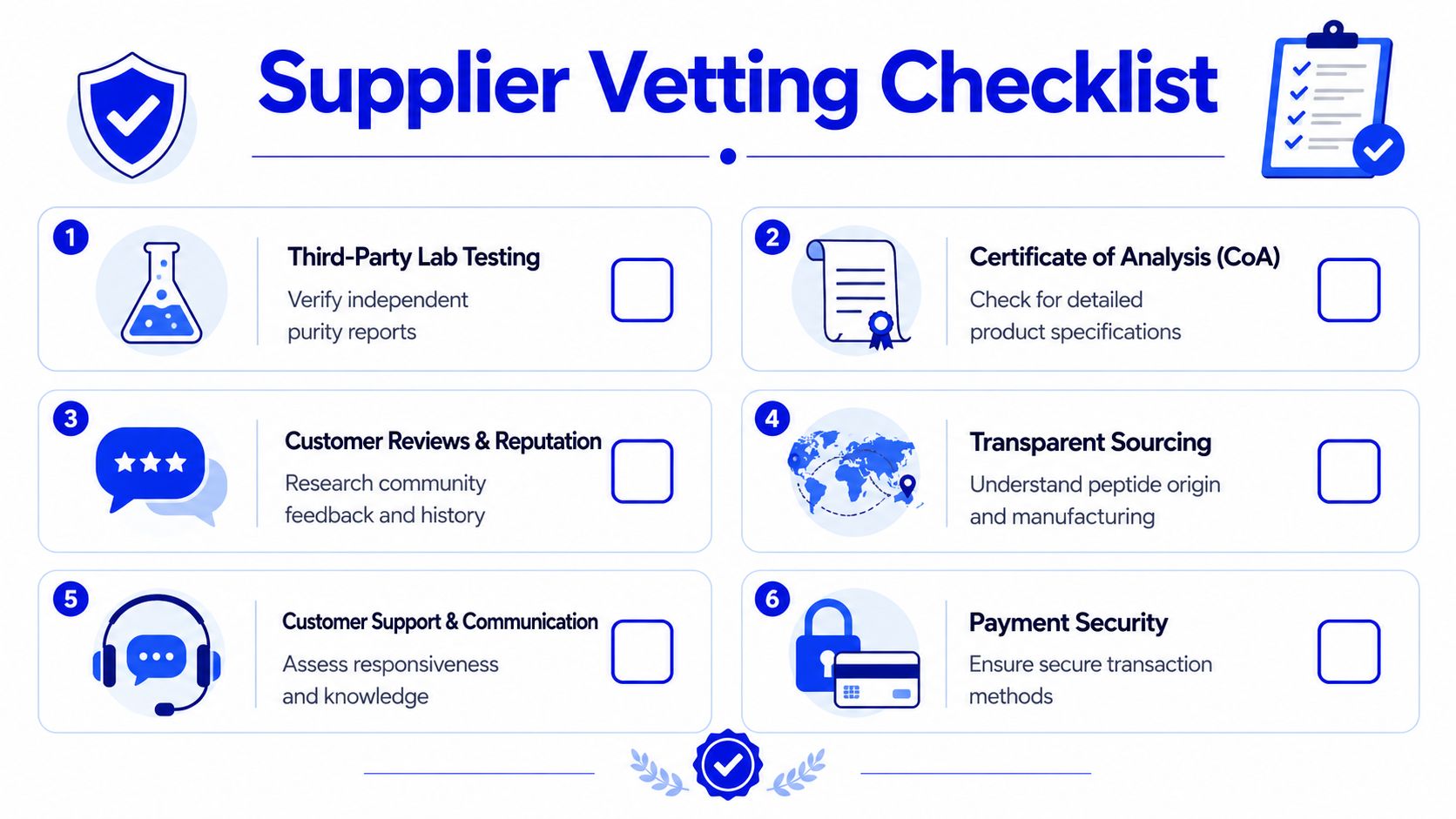
The first document to review is the batch-specific Certificate of Analysis. Practical quality checks for online peptide sourcing start with third-party testing and lot-level COAs, because that is the clearest way to verify the claimed purity profile and, where provided, microbial or endotoxin results Pure Health Peptides guidance on third-party testing and COAs.
A real COA reads like controlled documentation. It should list the compound name, the lot or batch number, the test method, the date, and results that can be tied to the exact vial you plan to receive. If those details are missing, the document has limited procurement value.
Watch for template paperwork. If several products appear to share the same COA format with only the compound name swapped out, or if no batch reference appears anywhere you can verify, treat the file as unconfirmed marketing material until the seller proves otherwise.
For a quick visual breakdown of what experienced buyers inspect, this overview is useful before you place an order:
Use the same review standard each time. That is how you avoid buying on presentation alone.
I put more weight on process discipline than branding. A supplier that maintains lot-specific documents, stable account records, and consistent support responses is easier to clear through internal review than a site built to drive impulse purchases.
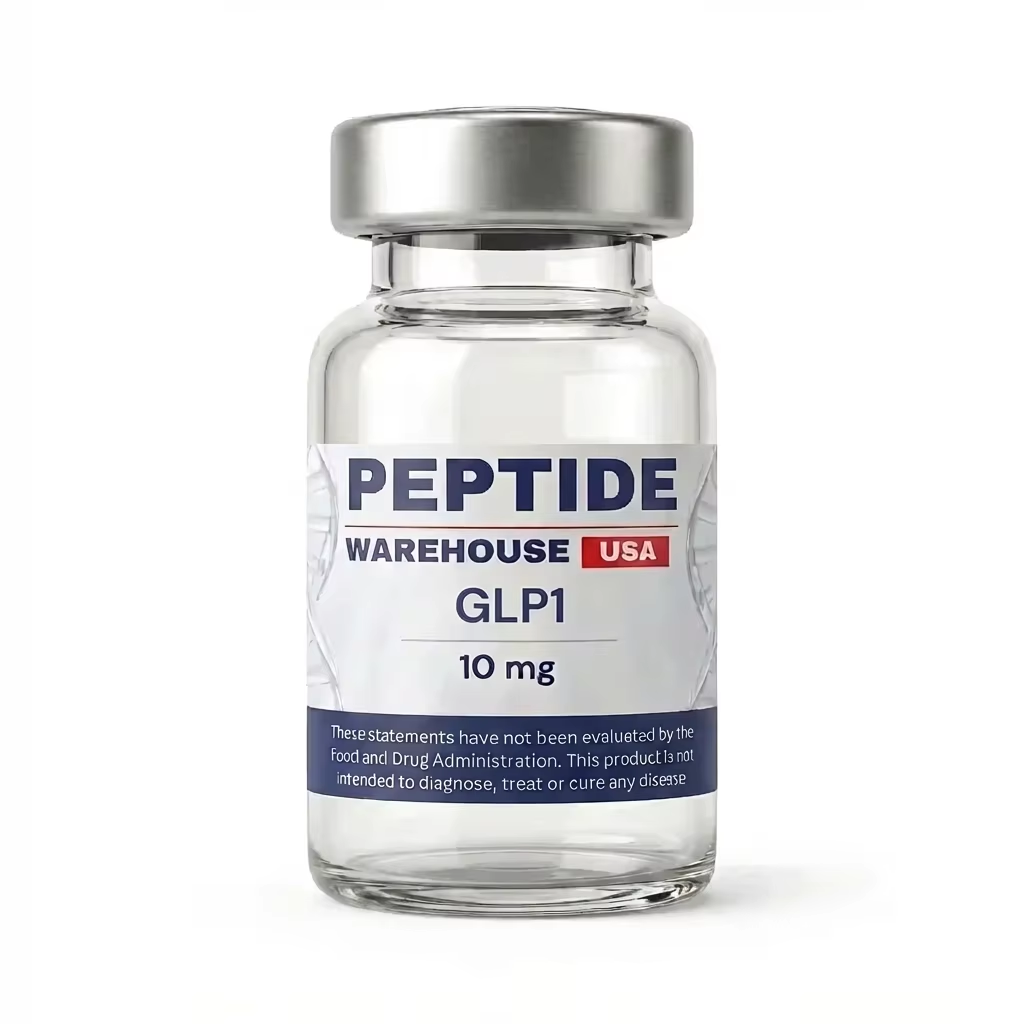
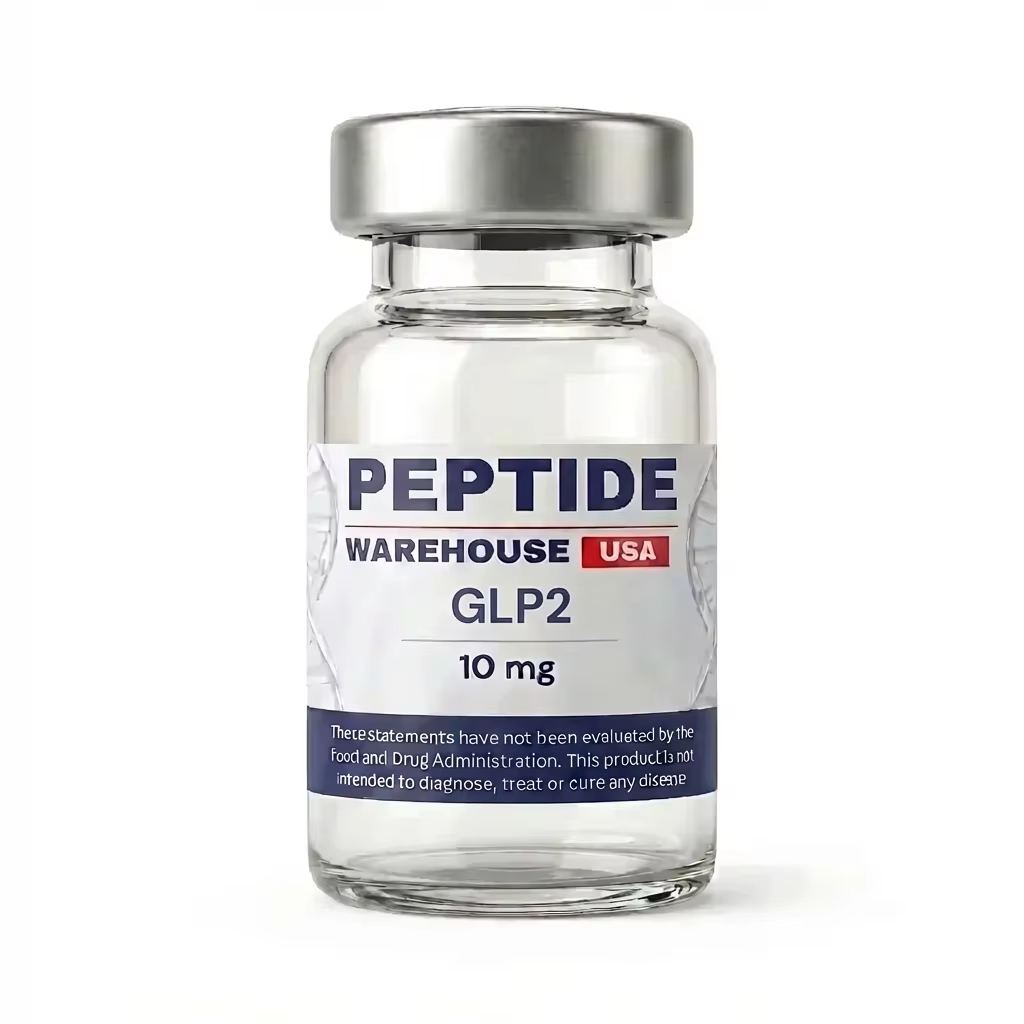
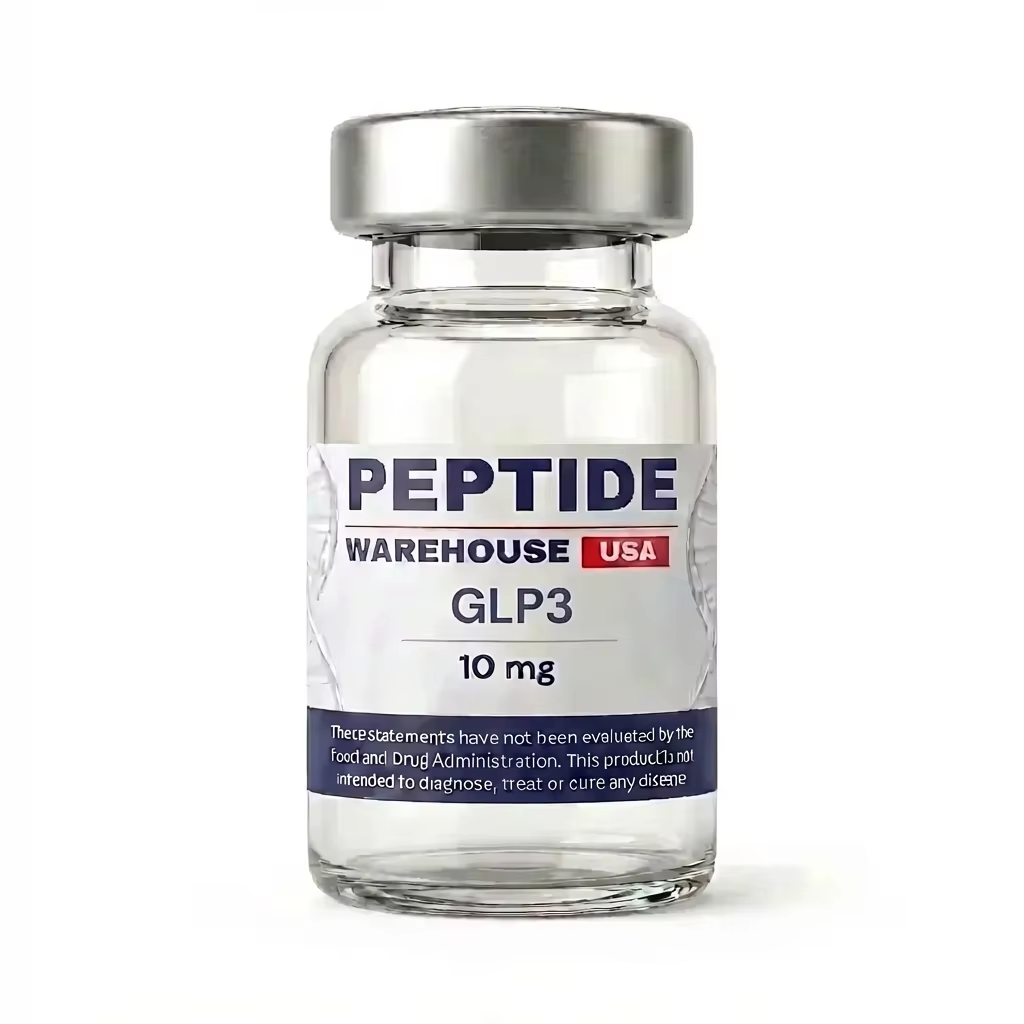
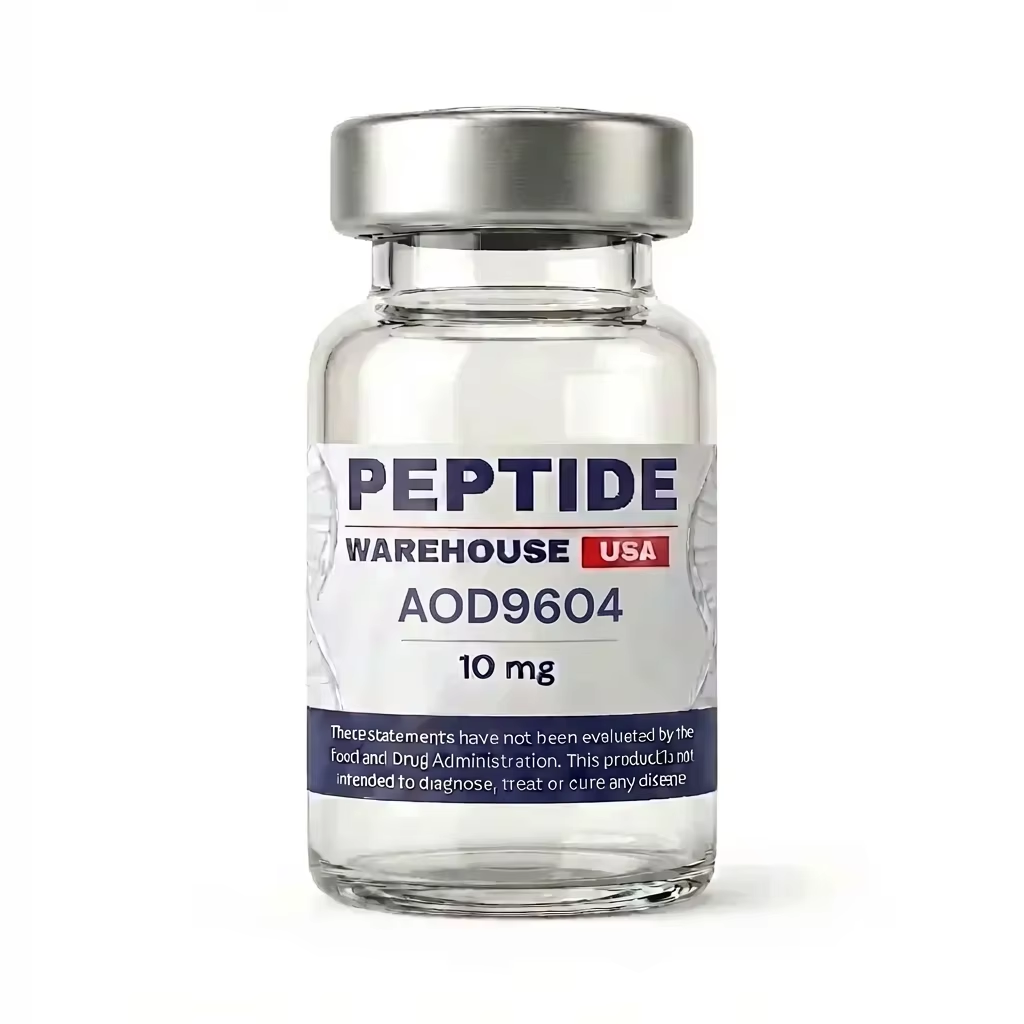
Peptide Warehouse USA is one example of a seller presented with U.S.-made research products, batch testing, COAs, microbial and endotoxin documentation, account management, and research-only positioning. That mention matters less than the framework behind it. Apply the same checks to any vendor, every time.
If you cannot connect the product page, the lot record, and the delivered vial, you do not have a procurement trail.
Test support before spending money. Ask a technical question that requires real operational knowledge, such as how the COA is tied to the lot number on the vial or whether the posted purity result is batch-specific. A disciplined supplier usually answers directly. A weak one stalls, replies with generic sales language, or avoids the question.
That trade-off matters in practice. A polished storefront may offer fast checkout, discount bundles, and broad product selection. None of that helps if your lab cannot verify what arrived. Reliable procurement usually feels a little slower and a lot more document-heavy. That is a good sign.
Once the supplier passes review, the ordering process should look more like lab procurement than e-commerce. That means you define the product format, verify documentation before checkout when possible, and keep a clean purchase record.
Most research buyers prefer lyophilized powder because it generally travels better and gives the lab more control over storage and reconstitution timing. Liquid formats can be convenient, but they add handling variables and make shipping conditions more important.
Before adding anything to cart, confirm:
If the site makes any of that hard to confirm, pause the order.
Use an institutional or dedicated procurement email when possible. Save screenshots of the product page, labeling language, and any posted batch data at the time of purchase. If the platform offers account creation, use it. Order history, shipment tracking, and invoice retrieval are part of your quality trail.
A few practical habits make a difference:
Shipping is part of product quality. For some peptides, transit heat, delays, or poor packaging can compromise confidence in the material even if the vial looks intact.
On delivery, review:
Short version: place the order slowly enough that you can defend it later.
The package arriving is the midpoint, not the finish line. Poor receiving and storage practices can ruin otherwise usable material.

Open the shipment in a controlled workspace. Check the outer packaging, inner packaging, vial condition, cap seal, and label readability. Then match each vial against the invoice and lot documentation.
Log what you received the same day. If there’s visible damage, labeling mismatch, or missing paperwork, isolate the item and contact the seller before it gets folded into working inventory.
Most labs reconstitute lyophilized peptides with a sterile diluent appropriate to the research protocol. The key is consistency. Use documented technique, label the vial immediately after reconstitution, and record the date, diluent, and any internal reference number tied to your study.
Avoid casual bench handling. Repeated warming, unnecessary agitation, and sloppy labeling create preventable variability.
Lab habit that pays off: Create a receiving sheet that captures delivery date, vial count, lot number, physical condition, and first storage location before anyone starts using the material.
Store according to the supplier’s handling guidance and your internal SOPs. In general terms, labs should protect peptides from light, contamination, unnecessary temperature cycling, and unlabeled transfers between containers.
Keep original packaging and lot references with the material whenever practical. If you aliquot, make the traceability obvious. A strong receiving system doesn’t just protect the peptide. It protects your ability to interpret the data that comes from it.
Scam detection is less about one dramatic warning sign and more about pattern recognition. Bad vendors usually reveal themselves through contradictions.

A quick comparison helps.
| Legitimate supplier behavior | Scam or high-risk behavior |
|---|---|
| Batch-specific COAs and supporting lab documents | No COA, vague testing talk, or generic PDFs |
| Research-only product positioning | Heavy wellness, physique, or anti-aging marketing |
| Clear contact and policy pages | Minimal business identity or evasive support |
| Secure checkout with standard records | Pressure toward irreversible payment methods |
| Specific labeling and lot traceability | Product pages built around hype and urgency |
If a vendor scores badly in more than one column on the right, don’t try to rationalize the purchase.
One of the clearest red flags is wellness-style promotion attached to research chemicals. Many “research-only” compounds sold online were abandoned by pharmaceutical companies because of safety concerns, yet they’re still marketed and used by consumers despite those risks report on safety concerns and ongoing consumer marketing of research-only peptides.
That’s why language matters. A seller can’t credibly claim strict research use while also suggesting physique benefits, healing outcomes, anti-aging effects, or human performance changes. The more the copy reads like influencer marketing, the less seriously you should take the compliance posture.
A vendor that talks like a supplement brand usually operates like one.
Some red flags are operational rather than scientific.
A solid vendor doesn’t need theatrical urgency. It needs documentation, consistency, and a purchase trail.
Yes, peptides can be sold online in the U.S. when they’re marketed strictly for in vitro research, laboratory use, or scientific investigation, without claims about human consumption or therapeutic effects. The legal issue isn’t just possession. It’s how the product is marketed, labeled, and intended to be used.
Yes. State restrictions can apply even when a seller uses research-only language. As of April 22, 2025, New York law prohibits the sale of products marketed for muscle building or weight loss to people under 18, and that can apply even if the product is labeled “not for human consumption,” with similar legislation introduced in several other states Token of Trust summary of peptide-related state restrictions.
That means institutional buyers and individual researchers should read both product language and state-specific restrictions carefully.
Usually not, unless your organization has a clear import review process and is prepared for customs, documentation, and chain-of-custody complications. Cross-border sourcing adds more variables to an already sensitive procurement category. Domestic supply with transparent lot documentation is generally easier to defend and easier to manage.
A research supplier sells compounds for laboratory, analytical, or preclinical use and should avoid claims about treating people. A licensed pharmacy dispenses approved medications or other legally permitted preparations within a regulated healthcare framework. If you need a product for medical use, that’s a pharmacy and clinician question, not a research vendor question.
They confuse product-page confidence with actual quality control. A polished site, a high stated purity number, and fast checkout can still hide weak documentation. The safer approach is slower. Verify the batch, verify the labeling, and keep a complete record of the transaction.
If you need a U.S.-based research supplier with batch documentation, account tracking, and research-only positioning, Peptide Warehouse USA is one option to explore. Learn more, review the available documentation, and explore options that fit a compliance-first procurement process.