
No products in the cart.


Cagrilintide is a long-acting amylin analog under active late-stage investigation, with multiple 2026 studies listed on ClinicalTrials.gov, and it is sold strictly for laboratory research use. The most important buying decision is identifying whether you need standalone cagrilintide or a cagrilintide and semaglutide combination.
Could a search for cagrilintide peptide buy be sending you toward the wrong compound? That happens because the most visible clinical headlines often concern CagriSema, a fixed-dose combination, while laboratory buyers may be looking for standalone cagrilintide. The two products are related, but they aren't interchangeable for study design, analytical work, formulation testing, or preclinical research.
This guide approaches sourcing from a lab-management perspective. It separates clinical evidence from procurement claims, explains which documents deserve attention, and shows why purity, batch traceability, formulation, intended use, and regulatory language matter more than a dramatic headline. It also keeps the boundary clear: research peptides aren't approved instructions for human use, and purchasing decisions should remain aligned with institutional procedures and applicable law.
But do you know what you're getting? The phrase cagrilintide peptide buy describes a procurement search, yet results often answer a different question. They may emphasize CagriSema trial outcomes, semaglutide comparisons, or future obesity-program news rather than identifying the material inside a supplier's vial.
Standalone cagrilintide is the compound a laboratory selects when the study requires the amylin analog alone. CagriSema is a fixed-dose combination of cagrilintide and semaglutide. Novo Nordisk's REIMAGINE 2 announcement reports dose pairings of 2.4 mg/2.4 mg and 1.0 mg/1.0 mg. In that study, the higher pairing produced 14.2% weight loss after 68 weeks versus 10.2% with semaglutide 2.4 mg. Those results describe the combination trial. They do not establish the composition, concentration, or performance of a standalone cagrilintide vial.
Before placing a product on a purchase shortlist, define four points:
Practical rule: A CagriSema efficacy headline cannot verify that a standalone cagrilintide listing has the same composition, concentration, or suitability for your protocol.
A usable product page should identify the material, lot, testing methods, and permitted use. If it presents weight-loss claims without batch evidence, treat it as marketing copy rather than a sufficient purchasing record.
Cagrilintide is a long-acting, acylated amylin analog designed for once-weekly subcutaneous administration. That design matters because an experiment involving sustained exposure has different formulation and sampling requirements from one involving a short-lived compound or a single rapid bolus.
The pharmacokinetic profile gives procurement teams a practical reason to inspect identity and formulation details closely. For cagrilintide 2.4 mg, one report describes a half-life of 184 ± 7.4 hours and a median time to peak concentration of about 24 hours. These values indicate sustained exposure, so researchers planning concentration measurements, exposure windows, or comparative formulation work need a material specification that matches the intended protocol. The pharmacokinetic and phase 3 analysis provides the relevant context.
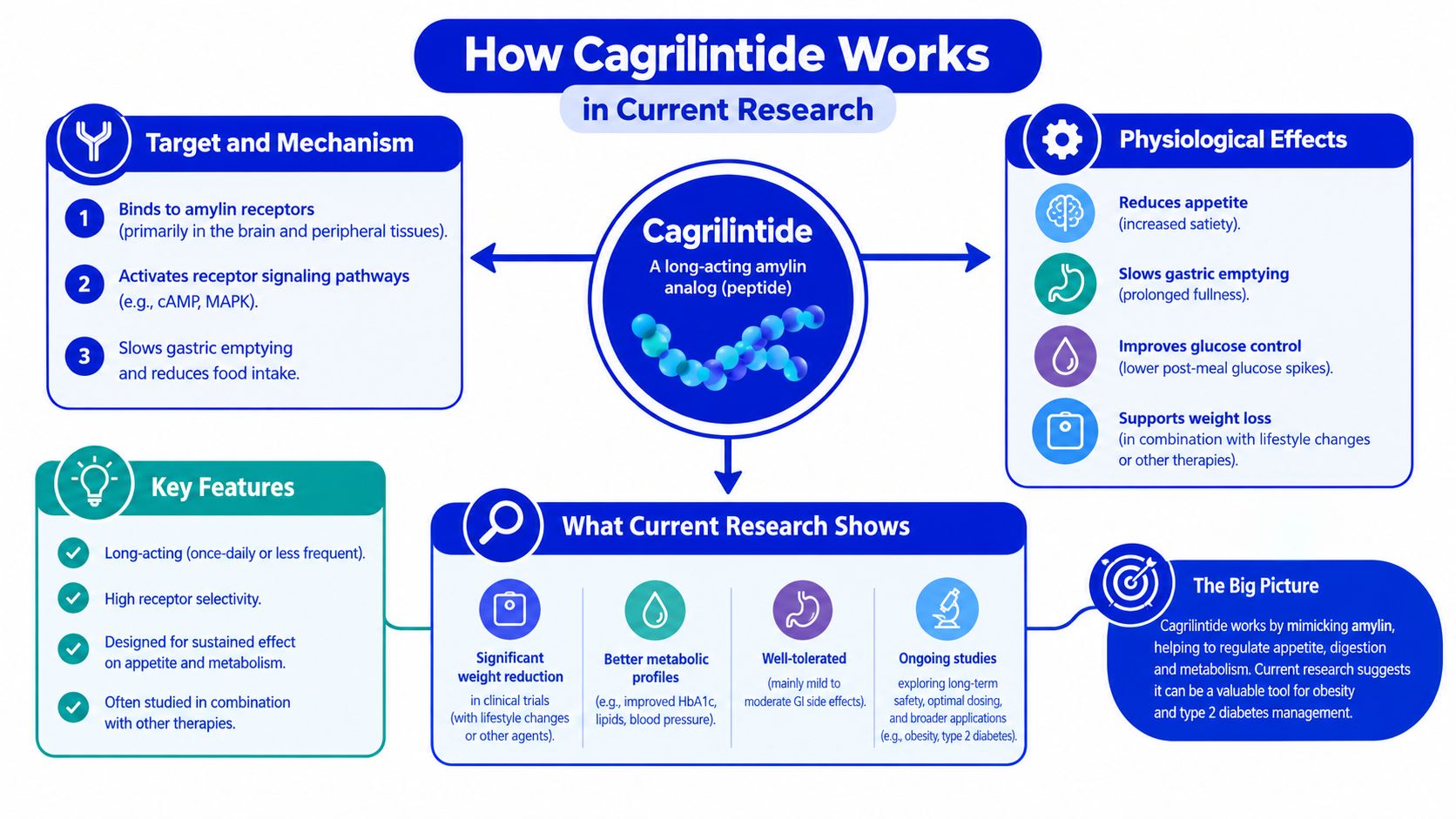
A phase 2 obesity trial evaluated cagrilintide doses from 0.3 mg to 4.5 mg over 26 weeks. The 4.5 mg group achieved 10.8% mean body-weight reduction, or 11.5 kg, compared with 3.0%, or 3.3 kg, with placebo. The published phase 2 report makes the important point that the response was dose-dependent. For a lab, that doesn't establish a human-use recommendation. It establishes why the compound remains a relevant candidate for controlled research involving exposure, dose response, and combination effects.
Later phase 3 work reported 11.8% weight loss at 68 weeks versus 2.3% for placebo with once-weekly cagrilintide 2.4 mg monotherapy, while the cagrilintide and semaglutide combination reached 22.7% in the cited analysis. Those results support a research distinction between monotherapy and combination designs. They don't justify assuming that a supplier's standalone material reproduces a fixed-dose combination.
When evaluating a cagrilintide peptide buy option, connect the product specification to the experiment:
A low unit price can't compensate for a material that doesn't match the experimental question.
The current registry picture argues against treating cagrilintide as a discontinued concept or a finished commercial category. As of 2026, ClinicalTrials.gov lists active studies including NCT05567796, NCT07220642, NCT07220759, NCT07253285, NCT07597018, and NCT07607587. The NCT07220759 registry entry describes a phase 3 program measuring body-weight change over 64 weeks, while another listed study compares cagrilintide versions in a bioequivalence study with an estimated start date of 2026-05-18.
For buyers, active development has two implications. First, terminology may shift as sponsors test monotherapy, combination products, higher doses, pediatric populations, and formulation variants. Second, commercial pages may borrow language from clinical development without explaining whether their own product corresponds to a trial formulation.
A registry entry can help you identify the research context, endpoint, population, intervention, and study status. It shouldn't be treated as validation of a private supplier, but it can expose mismatches between a product claim and the compound being studied.
One relevant record, NCT05567796, was active but not recruiting as of 2026-08-31, with an estimated completion date of 2026-10-19. The entry lists cagrilintide subcutaneous 2.4 mg in combination with semaglutide subcutaneous 2.4 mg once weekly. The ClinicalTrials.gov record for NCT05567796 is therefore helpful for precise terminology, but it describes a combination research intervention rather than standalone cagrilintide.
Another record, NCT07253285, lists a pediatric and adolescent weight-management study started on 2026-01-08, including cagrilintide 2.4 mg monotherapy and CagriSema 2.4 mg once weekly. The NCT07253285 listing illustrates how broad the field of development has become. It also reinforces the need to identify population, intervention, and formulation before comparing products.
Registry activity shows development momentum. It doesn't prove that every online listing is authentic, equivalent, or suitable for your protocol.
A study endpoint can help a lab plan reference work, assay development, or material comparisons. It can't guarantee when a supplier will have a particular format, and it shouldn't be used to infer regulatory status. Treat future study dates as planning information, then verify current inventory, lot documentation, and shipping terms directly.
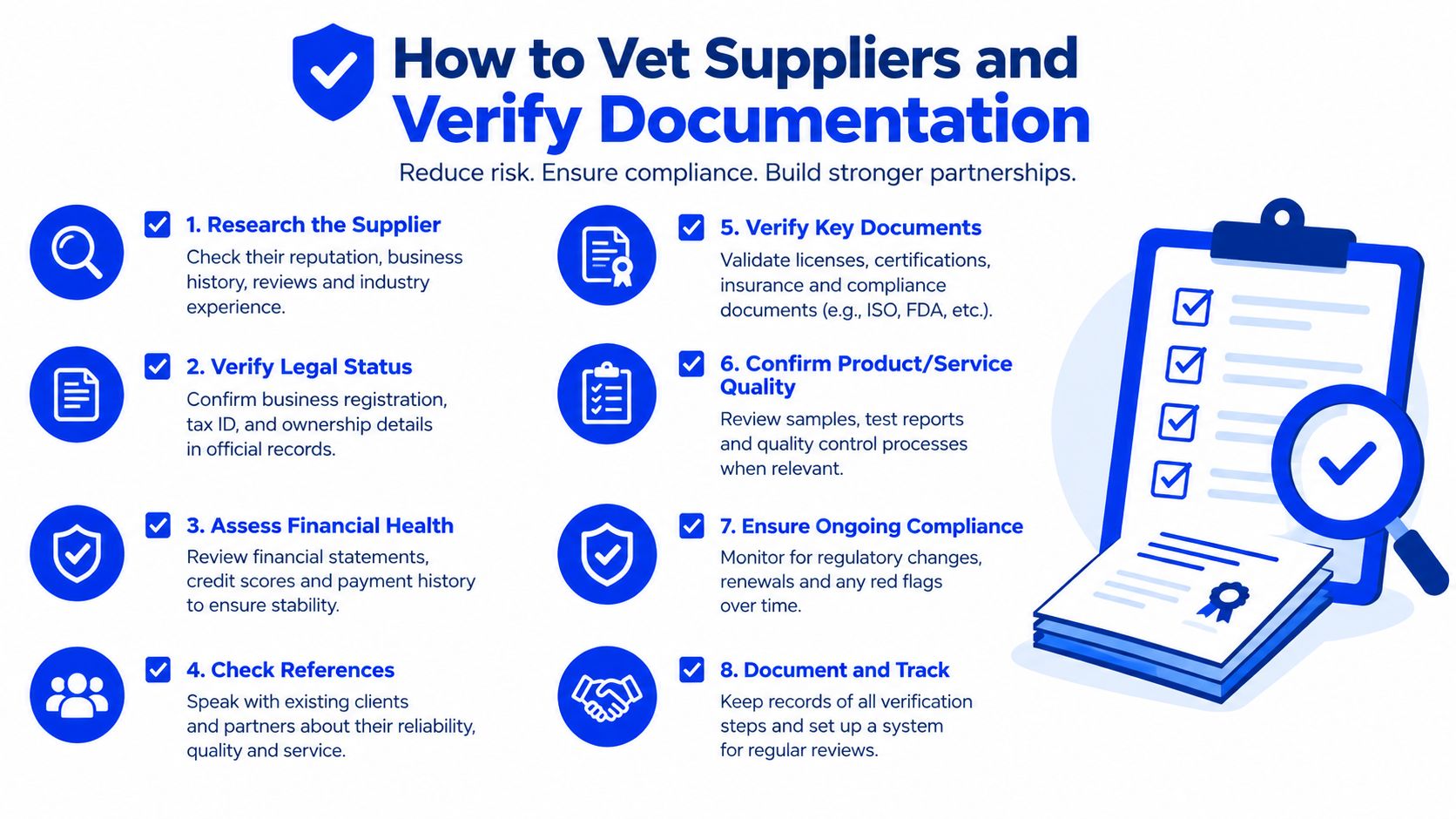
Would you approve a cagrilintide peptide buy from a product thumbnail alone? A defensible decision starts with the lot. The supplier should identify what was tested, when it was tested, and which results apply to the batch your lab may receive.
Begin with the Certificate of Analysis. A useful COA links the product name or identifier to a specific lot and states the purity method or test basis. A generic certificate with no lot connection leaves uncertainty between the document and the vial.
| Procurement question | Stronger evidence | Weak evidence |
|---|---|---|
| What is the material? | Clear compound name and product identifier | Broad “fat-loss peptide” language |
| Which batch was tested? | Lot-specific COA | Undated or universal certificate |
| How pure is it? | Stated purity with test documentation | An unsupported purity badge |
| Is contamination addressed? | Microbial and endotoxin reports where applicable | No biological quality information |
| Can the shipment be traced? | Batch, order, and support records | Anonymous marketplace fulfillment |
Review records for purity, identity, microbial testing, and endotoxin testing where those controls fit the intended work. Confirm that the supplier explains the manufacturing location, batch production, storage requirements, shipping conditions, and response if the delivered material differs from the order.
Legal wording also matters. FDA warning letters in 2025 and 2026 show that “research use only” and “not for human consumption” disclaimers do not automatically prevent enforcement when website evidence indicates human-use intent. The FDA warning letter to Gram Peptides shows why disclaimers cannot be separated from the site's overall presentation.
For a monotherapy project, a standalone cagrilintide listing may fit the protocol. CagriSema is a branded combination involving cagrilintide and semaglutide, so it should not be treated as the same material. A combination study requires an accurately defined combined product or separately documented compounds, depending on the protocol and analytical controls.
The lower-priced option can create extra cost if the supplier cannot provide records for deviation review, repeat testing, or material traceability. A better-documented batch may cost more upfront, while incomplete paperwork can create labor, delays, and reproducibility problems that never appear on the product page.
Does the lowest vial price represent the lowest procurement cost? Usually, the answer depends on what the supplier documents and how much work your lab must do after delivery. Purity documentation, lot testing, lyophilized presentation, manufacturing controls, shipping reliability, and support records all affect the cost of usable research material.
Lyophilized cagrilintide may fit a lab that manages reconstitution through a validated internal process, provided the supplier supplies suitable handling information. A ready-to-use solution can reduce preparation time, but it calls for closer review of concentration, excipients, storage, container compatibility, and shipping conditions. The format should match the protocol and the lab's controls, rather than the product page's convenience claims.
Compare the following before approving a purchase:
Clinical headlines can also distort a sourcing comparison. A supplier offering standalone cagrilintide is not offering the CagriSema intervention unless the label and supporting documentation establish the combined composition.
Novo Nordisk reported that CagriSema 2.4 mg/2.4 mg achieved 23.0% weight loss after 84 weeks under the treatment-policy estimand, while tirzepatide 15 mg reached 25.5% in the same analysis. The company also reported that the trial did not meet its non-inferiority goal and described a higher-dose phase 3 study of CagriSema 2.4 mg/7.2 mg as planned for the second half of 2026. The company announcement archived by the SEC documents that clinical program, not the price or identity of standalone research cagrilintide.
For procurement, separate the clinical program from the material specification. Confirm composition, batch records, and handling requirements before comparing quotes.
Large weight-loss figures attract attention, but they don't answer the procurement questions a lab manager has to resolve. They don't tell you whether a product is standalone or combined, whether the lot is traceable, or whether the material suits an analytical or preclinical workflow.
Recent discussion of REDEFINE-1 has also emphasized body-composition findings, including interest in lean-mass preservation and metabolic quality rather than scale weight alone. The body-composition analysis commentary supports a broader interpretation of efficacy. Researchers are assessing what kind of weight change occurs, not just how large the headline number appears.
A compound can look attractive in an efficacy comparison while creating practical questions around dose escalation, adverse-event monitoring, sample collection, and study completion. Current development efforts are still refining dose and risk-benefit questions, with active phase 3 work and additional higher-dose CagriSema research planned for late 2026.
That uncertainty doesn't make cagrilintide irrelevant. It makes disciplined sourcing more important. A lab shouldn't purchase a material because a combination trial produced an attention-grabbing result if its actual project examines standalone amylin signaling, formulation stability, analytical characterization, or comparative exposure.
Use the following decision filter:
More reported weight loss isn't automatically a better buying rationale. The right material is the one that answers the research question with the least avoidable ambiguity.
A reliable procurement workflow starts before the order. Write the material specification in the same terms used in your protocol, inventory records, and review documents.
Your brief should define:
Use this brief to compare suppliers. Request missing documents before purchase, not after delivery. A vendor that cannot clearly explain the lot, testing method, product identity, or intended-use boundary should be removed from consideration.
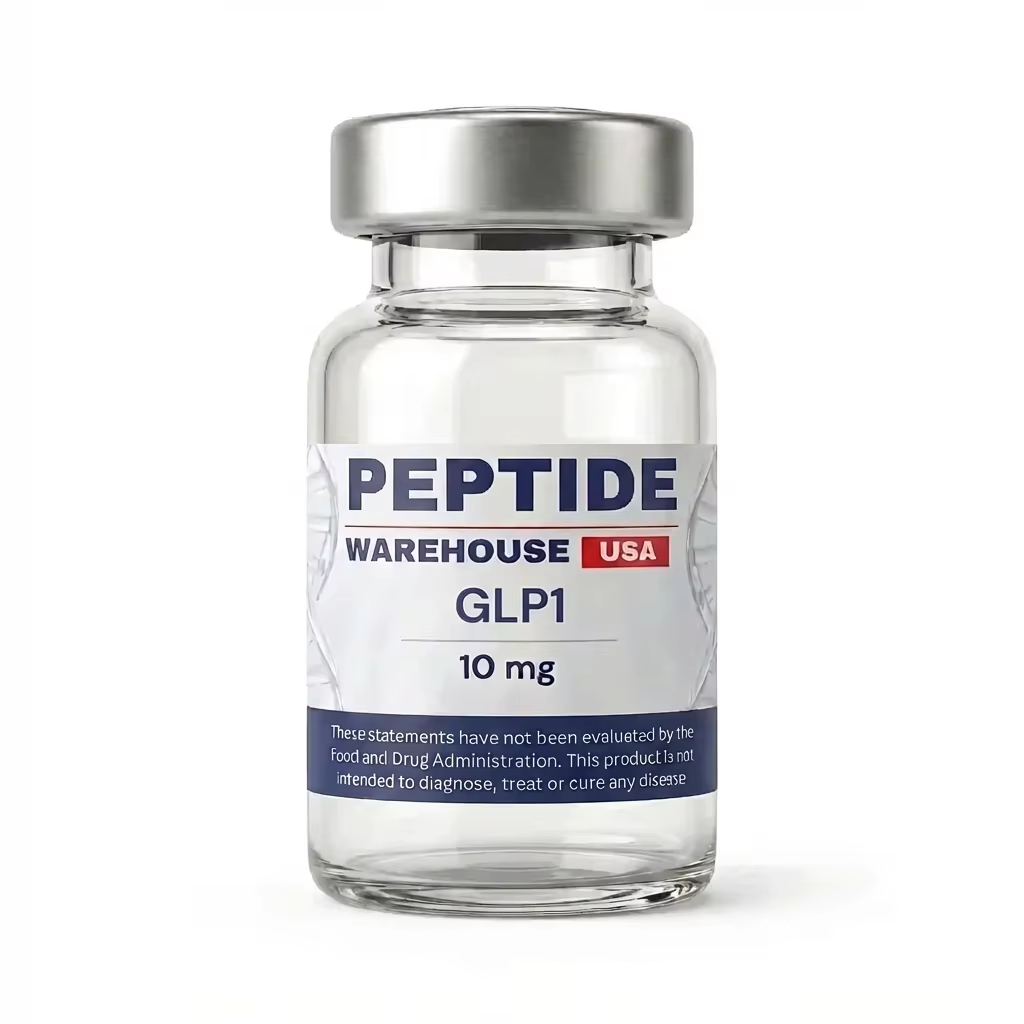
Peptide Warehouse USA is one available research supplier listing cagrilintide and describing USA manufacturing, batch production, third-party COAs, microbial and endotoxin reports, stated purity levels up to 99.5%, account management, and order tracking. Verify those claims against the product page and lot documentation tied to your order. The company states that its products are for research, laboratory, or analytical use only and not for human consumption.
At delivery, confirm that the label matches the purchase order and that the lot number matches the COA. Record packaging condition, storage transfer, received documents, and discrepancies before the material enters controlled inventory.
Complete the review with these questions:
The strongest cagrilintide peptide buy decision is a documented match between compound identity, formulation, research purpose, quality evidence, and compliance controls. Checkout speed matters less than resolving those points before the order is released.
Peptide Warehouse USA offers cagrilintide and other research peptides for laboratory, analytical, and preclinical applications, with product documentation and research-use labeling. Visit Peptide Warehouse USA to explore options, review sourcing information, and contact support about the documentation required for your workflow.
Leave a comment