
No products in the cart.


Most advice about the cheapest research peptides is lazy. It treats a vial like a commodity and stops at the lowest sticker price. That's how buyers end up paying twice: once at checkout, then again when a weak batch, bad paperwork, or missing verification forces a rerun.
If you buy research peptides like validated lab inputs instead of bargain supplements, the decision changes fast. The question isn't “Who's cheapest?” It's “What's the lowest cost per verified milligram after documentation, shipping, replacement risk, and procurement friction?” That's the standard serious buyers use, and it's the only one that protects your budget.
Research-use products also come with a compliance line you should take seriously. Products in this category are commonly sold strictly for laboratory and research purposes only, not for human or veterinary use, and not approved by the FDA for human consumption, treatment, or diagnosis, as reflected in research-use-only terms for peptide sales.
The cheapest vial is often the costliest order in the room.
Procurement teams do not buy peptides to win a price comparison. They buy them to keep studies moving, satisfy documentation checks, and avoid reruns. A low invoice means nothing if the material arrives with weak records, questionable identity, or support that disappears after payment.
Cheap peptide listings exploit a bad buying habit. They push buyers to compare sticker prices while ignoring the costs that show up later: verification work, delayed receiving, replacement orders, troubleshooting, and the lab time burned sorting out a preventable problem. That is why "cheapest research peptides" is usually the wrong search. The better question is which supplier gives you the lowest cost per verified milligram that your lab can use.
A low list price tells you only the opening charge.
It does not tell you:
One bad vial rarely stays a one-vial problem. It spreads into assay delays, new approval requests, extra receiving checks, and awkward conversations about why the "cheap" order now costs more than the better-documented option would have.
Use a buyer's rule here. If the price looks suspiciously low, assume something was cut. Find out whether it was purity work, analytical confirmation, packaging controls, document handling, or post-sale support.
Judge peptide offers by total cost of ownership. Start with cost per milligram, then add the parts buyers usually ignore: lot-specific documentation, shipping terms, replacement friction, and the time your staff will spend verifying that the material is what the label claims.
That standard changes purchasing decisions fast. Suppliers selling the lowest sticker price often fail once you account for missing paperwork, slower resolution, and the risk of ordering twice. Buyers who protect budgets do not chase the cheapest vial. They buy verified value.
Low peptide pricing usually comes from one of three places. Easier chemistry, larger production volume, or corners cut after synthesis.
Buyers who only compare vial prices miss how suppliers build those numbers. A vendor can advertise an attractive 5 mg price, then save margin by accepting lower crude yield, doing less purification, skipping lot-specific analytical detail, or using weaker packaging and slower fulfillment. A 2026 market review summarized those pricing bands across budget and premium tiers, and tied much of the spread to synthesis difficulty and post-production handling in this peptide cost breakdown.
A peptide price starts with chemistry, but it does not end there.
Core cost drivers include:
That is why two vials with the same peptide name can be priced very differently.
Shorter, higher-volume peptides often cost less for legitimate reasons. Suppliers that run repeat demand through stable processes can spread setup costs over more batches and quote tighter prices without gutting quality.
The useful question is not whether a price is low. The useful question is whether the chemistry and the paperwork support that price.
| Peptide Class | Typical Pricing Pressure | What Usually Explains It |
|---|---|---|
| Simple peptide | Lower | Shorter sequence, fewer synthesis steps, easier purification |
| Medium-complexity peptide | Moderate | More difficult assembly, tighter purification, lower yield |
| Complex peptide | Higher | Longer sequence, modifications, harder analytical confirmation, more discarded material |
Cheap orders become expensive orders.
Suppliers under price pressure usually cut in predictable places: weaker purification targets, recycled or generic COA templates, incomplete chromatogram data, broad assay ranges, thin customer support, and shipping methods that put temperature-sensitive material at risk. None of those shortcuts appear in the headline price.
RUO language also gets abused. As explained in this overview of RUO regulatory limits, research-use-only status is a sales designation. It is not proof of purity, potency, sterility, or independent verification. If a seller uses RUO wording to avoid basic lot documentation, treat that as a purchasing risk, not a bargain.
The cleanest way to read peptide pricing is simple. Price follows complexity, yield, documentation, and handling. If a quote sits far below the normal range for a difficult peptide, assume the supplier removed a cost layer you will have to pay for later.
The best savings in this market usually sit in boring places. Mature compounds. Clear per-milligram math. Domestic fulfillment. Public documentation. Buyers lose money when they ignore those basics and chase an extreme outlier.
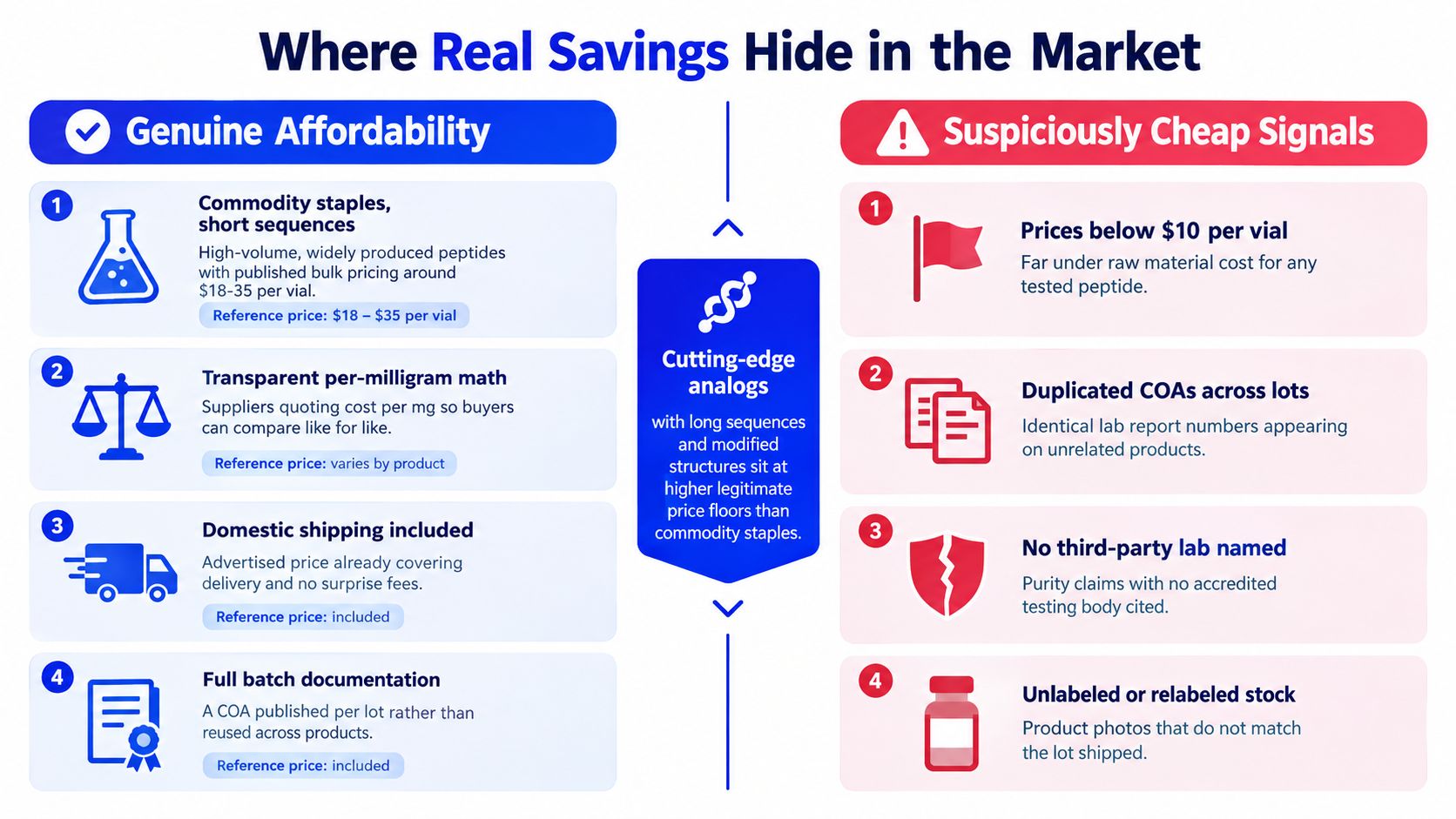
The peptide market isn't one market. It's a mix of commodity compounds, niche compounds, and high-demand newer molecules that attract very different pricing behavior.
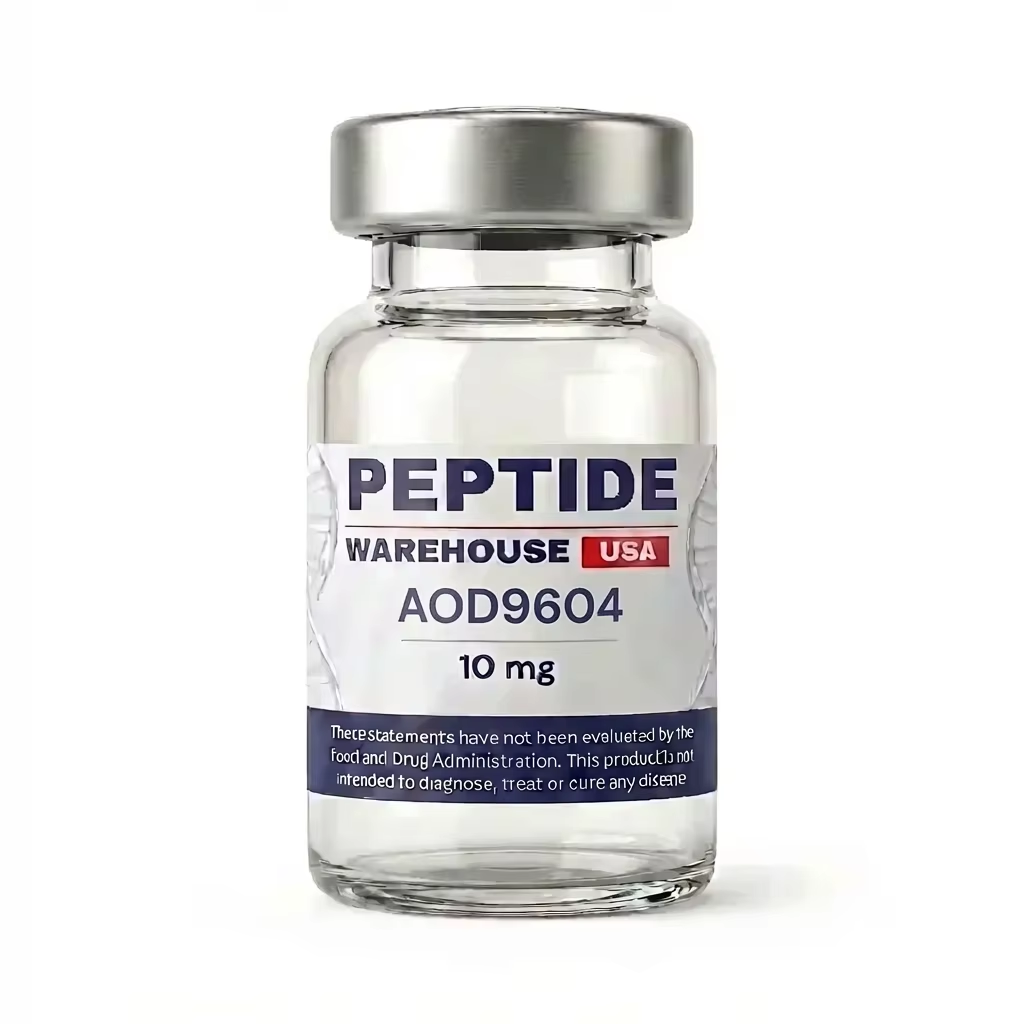
A 2026 market index found a median around $6.37/mg across 26 peptides and 70 vendors, with a 110× within-market range from NAD+ at about $0.10/mg median to AOD-9604 at about $11.00/mg in this peptide price index. That spread tells you something important. “Cheapest” often says more about the compound category than the supplier.
Some buyers wrongly assume expensive means inflated. Not always.
Emerging incretin and amylin compounds often sit higher because synthesis complexity and demand keep them there. Meanwhile, commodity compounds like NAD+ and GHK-Cu tend to stay flatter and cheaper. That's why a mid-priced listing for a more complex peptide can still be fair, while an ultra-cheap listing for that same class can be a warning sign.
Cheap research peptides are often cheap because they're simple and common, not because one seller discovered a secret source of magic efficiency.
Real savings usually come from process discipline, not miracle pricing. Focus on these:
A separate 2026 pricing report noted that the same compound can range from about $15 to $120 for a 5 mg vial depending on supplier, and that discounting and post-code pricing can materially change the effective cost in this peptide pricing report. That's why total procurement cost matters more than the headline number on a category page.
A Certificate of Analysis is either proof or prop. Cheap peptide sellers know many buyers will glance at a purity number, see a PDF, and stop asking questions. That is how low sticker prices turn into expensive procurement mistakes.
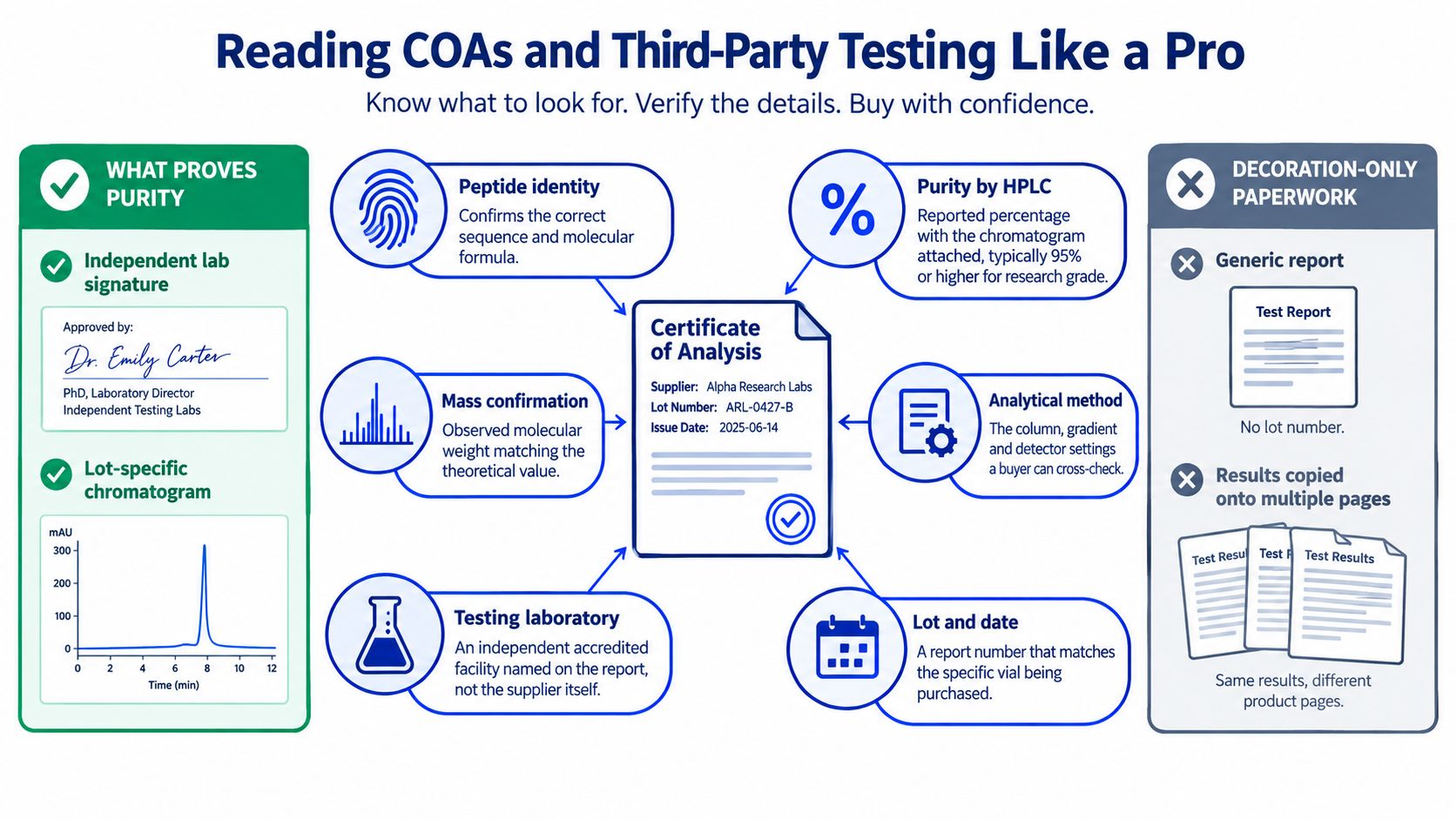
A useful COA answers two procurement questions fast. Is the compound what the label says it is? Does the report tie to the exact lot in your hand?
One vendor states that every batch ships with an online-verifiable Certificate of Analysis from a third-party lab, and that each report covers HPLC purity plus mass-spectrometry identity in this COA verification example. That standard matters because purity alone does not confirm identity, and identity alone does not tell you how clean the batch is.
Check for these specifics:
Start with consistency, not the headline number.
A strong COA has matching lot numbers, sensible dates, readable test methods, and a lab you can verify outside the seller's site. A weak COA usually looks polished but thin. The formatting is clean, the chemistry is vague, and the lot linkage falls apart the second you compare the vial to the document.
For readers who want a broader quality-marking refresher beyond peptides, the NSF and USP seals guide helps clarify the difference between independent certification marks and seller-controlled claims.
Documentation is the core product. The powder is only useful if the paper trail survives scrutiny.
Bad sellers rarely skip documentation. They imitate it.
Watch for:
One more point matters here. A seller can slap RUO language on a page and still create risk through the full context of the sale. The FDA evaluates intended use that way, as summarized in this review of FDA warning-letter logic.
Most peptide buying mistakes happen before checkout. Buyers move too fast, trust the product page, and assume they can clean up unanswered questions later. Usually they can't.
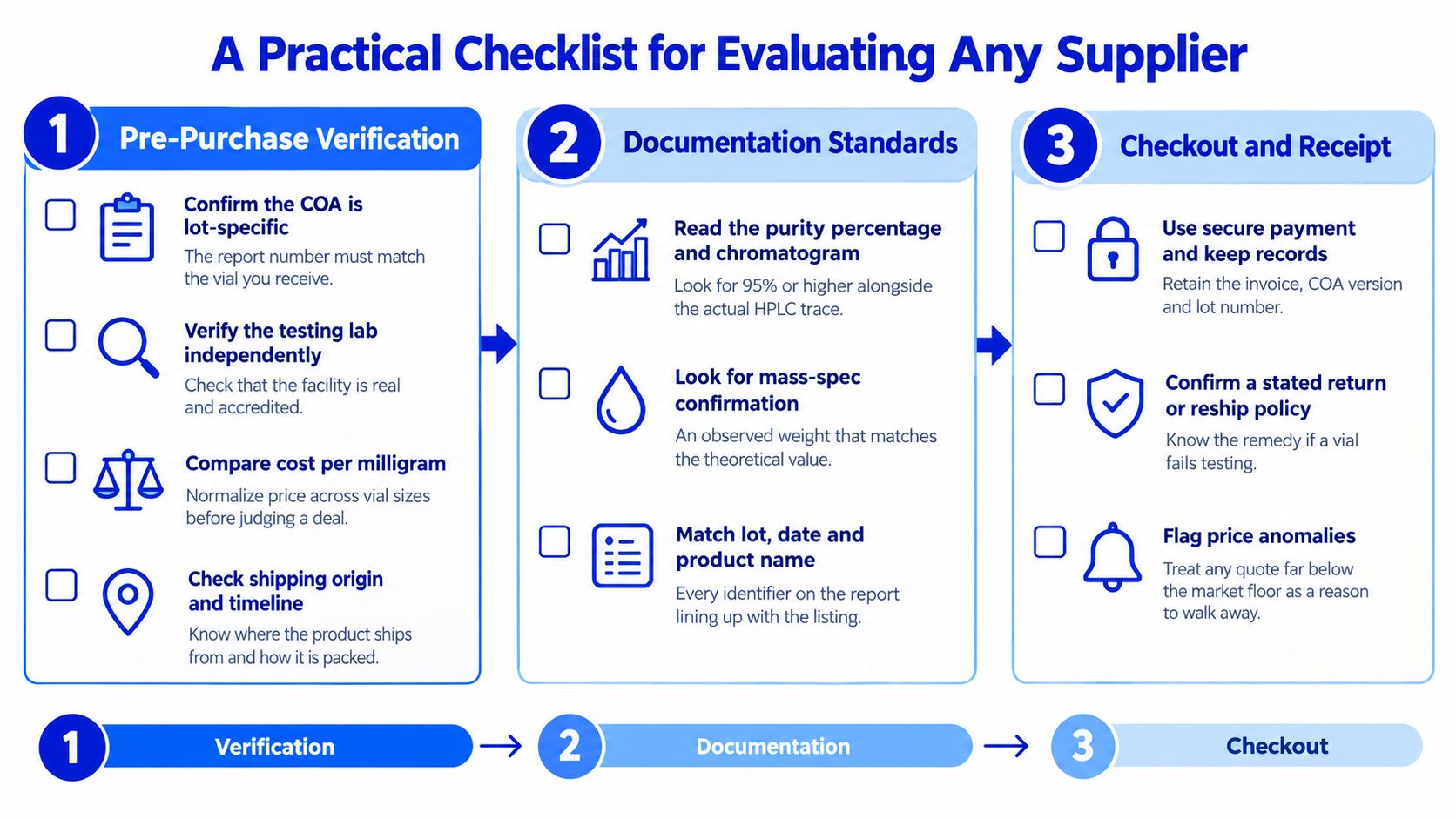
Start with the basics. If the supplier fails these, stop there.
A helpful framework for thinking through side-by-side evaluation is comparative analysis types explained. It's not peptide-specific, but it's a good reminder that comparisons only work when you normalize the criteria first.
Many “cheap” suppliers fall apart.
Look for:
One current market benchmark found research-peptide prices ranging from $1.67 to $21.00 per mg across nearly 1,000 tracked price points, while another listed semaglutide at a median $12.00 per mg and tirzepatide at a median $9.00 per mg across tracked vendors in this peptide market index. When a quote sits far outside normal market behavior, documentation needs to get stronger, not weaker.
Don't stop screening once the cart looks good.
When the order arrives, confirm:
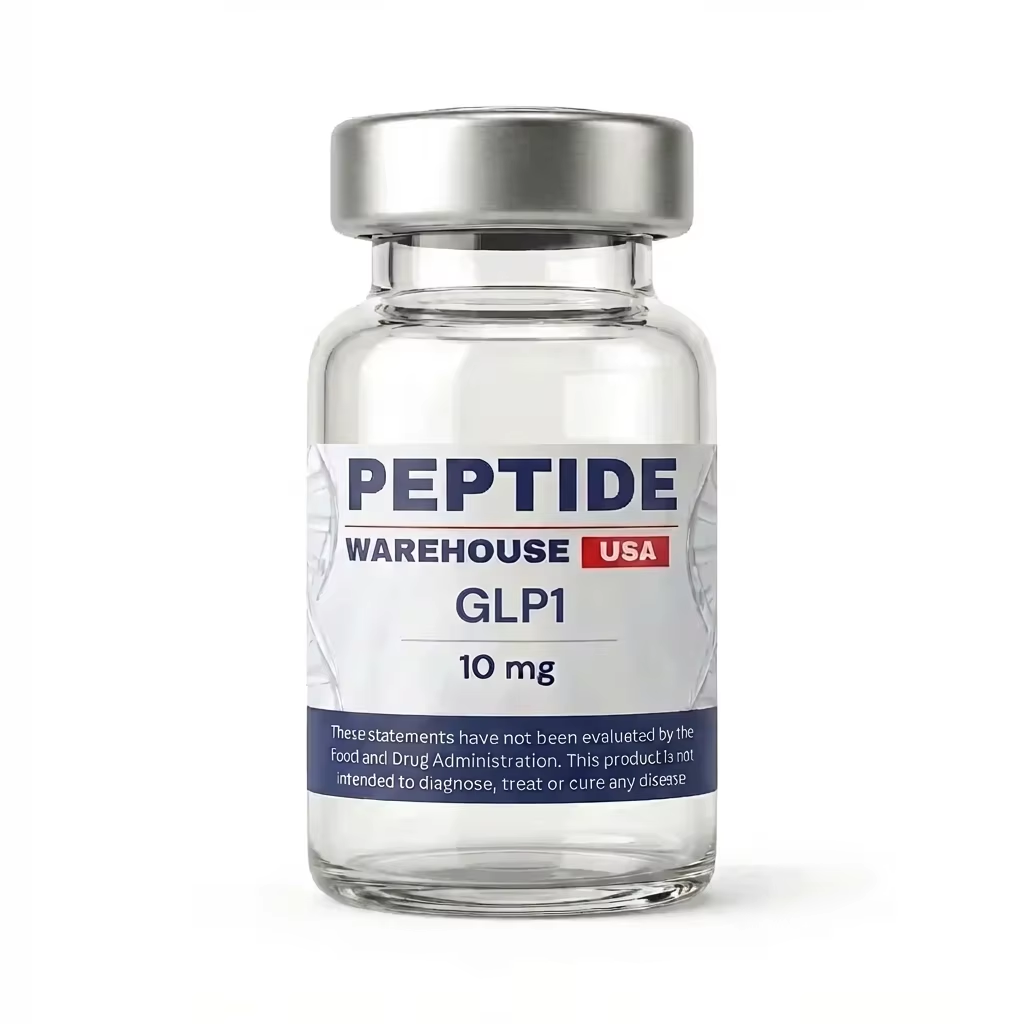
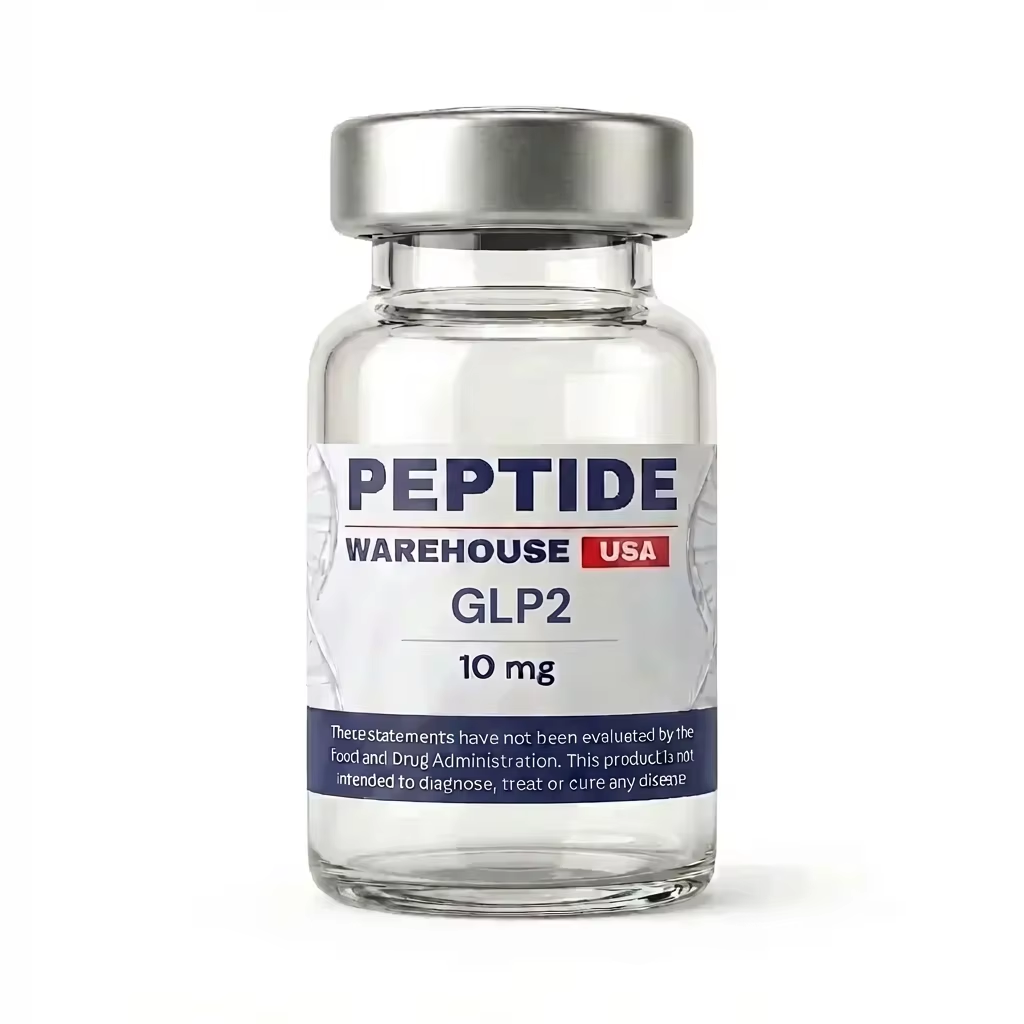
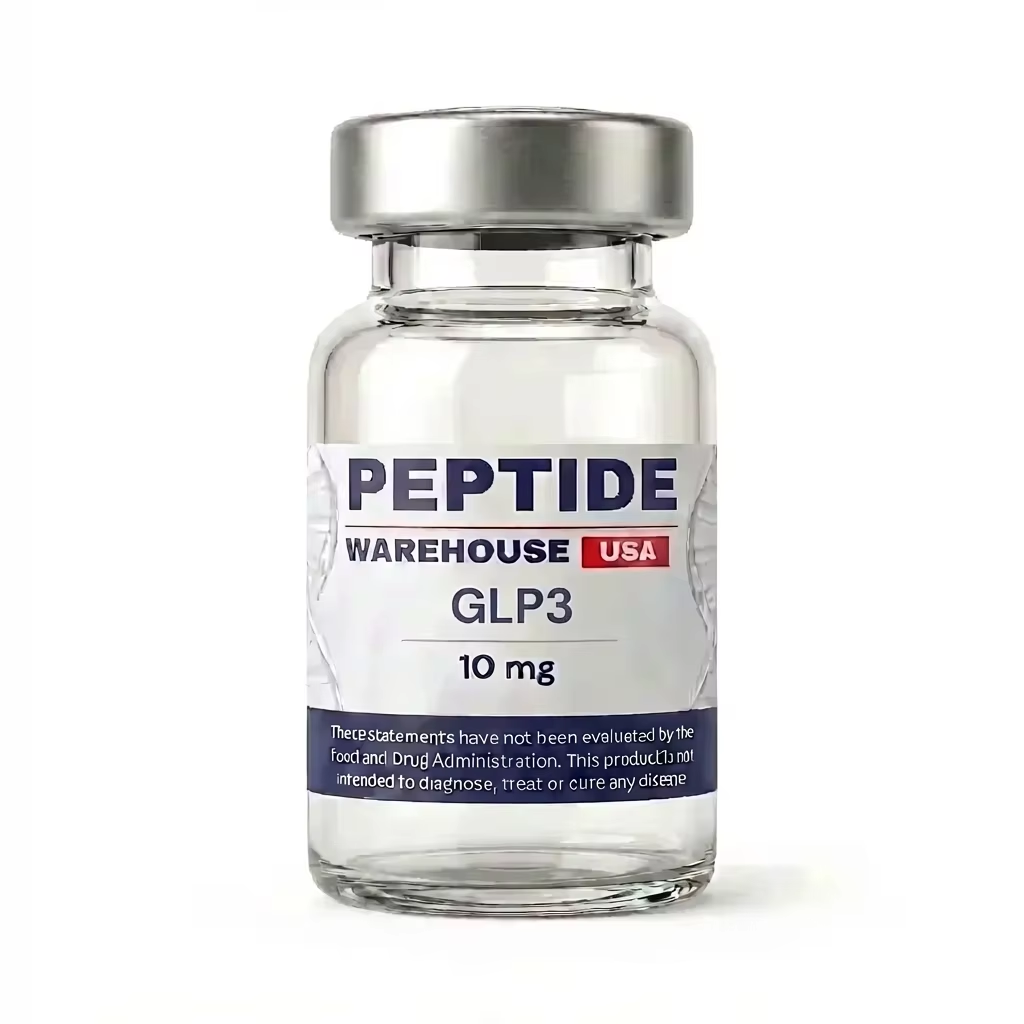
One factual example in this category is Peptide Warehouse USA, which states that its catalog is batch-tested and accompanied by third-party documentation including COAs, microbial and endotoxin reports, with products sold strictly for research, laboratory, or analytical use only. That kind of batch-traceable setup is what buyers should compare against any supplier, not treat as a premium extra.
If a supplier fails more than two checklist items, I wouldn't place a substantive order. I'd move on.
Some warning signs are subtle. Most aren't. Buyers ignore them because the price is tempting.
The classic red flag is the recycled COA. Same file structure, same formatting, suspiciously similar values across unrelated products. If a seller reuses paperwork, assume they cut corners somewhere else too.
A low price by itself isn't proof of a scam. An implausibly low price combined with weak verification usually is.
Watch for:
Bad vendors expose themselves fastest.
Look closely at:
Bad sellers often reveal themselves in how they sell, not just what they sell.
A few examples:
The lowest-sticker-price vendors also tend to be the hardest to fix problems with. That's why every skipped verification step acts like a cost multiplier later. Failed confirmation work, contaminated handling, relabeling suspicion, and project delay all cost more than the “savings” that got you there.
Two buyers can start with the same budget and end up in very different places because one shops for price and the other shops for verified value.
Buyer A goes for the cheapest listing they can find. The order looks like a win at checkout. The packaging arrives plain, the batch data is weak, and the vendor response slows down the moment questions start.
Buyer B spends a bit more on a supplier with published third-party documentation, clear lot tracking, and transparent analytical support. The order isn't the lowest-priced option, but it arrives ready to trust.
| Factor | Buyer A (Lowest Sticker Price) | Buyer B (Verified Supplier) |
|---|---|---|
| Initial budget | $400 allocation | $400 allocation |
| Selection method | Lowest advertised price | Documentation-first screening |
| Payment path | Direct transfer style purchase | Standard documented purchase trail |
| Packaging | Unmarked or minimally informative | Batch-traceable labeling |
| Batch documentation | Weak or missing | Published third-party COA |
| QC outcome | Fails independent verification and requires replacement | Passes verification and proceeds |
| Timeline effect | Delay, reorder, duplicated work | Project stays on schedule |
| Real budget outcome | Effective spend doubles within the project cycle | Single purchase completes the work |
The lesson isn't subtle. A cheaper order only helps if it works the first time.
In this representative comparison, the $90 difference in sticker price translated into a $400 variance in total project cost, because one buyer bought a vial and the other bought a verified research input. That's what procurement decisions do. They reshape downstream budgets, timelines, and confidence in the data.
Cheap peptides that arrive with weak paperwork, vague labeling, or questionable test data are not cheap. They are budget leaks. The only price that matters is cost per usable, documented milligram after shipping, verification, delays, and replacement orders.
Buy from suppliers that can prove what is in the vial before you send payment. Require batch-specific COAs, third-party HPLC and mass spectrometry data, and traceable labels that match the lot paperwork. If your work calls for it, require endotoxin and microbial reporting too. That package is not a premium add-on. It is the minimum standard for a purchase that will hold up under scrutiny.
Good procurement cuts failure before it starts. Teams that stay with documented suppliers spend less time chasing missing files, arguing over batch identity, or retesting material that should have been verified before shipment. They protect the experiment, the schedule, and the budget in one decision.
Ignore the loudest discount. Inspect the evidence, the shipping terms, and the replacement policy. Verified value is the version of cheap that still looks cheap after the box is opened.
Peptide Warehouse USA offers US-made research peptides and related compounds with batch-specific documentation, including COAs and additional reporting that helps buyers evaluate value beyond sticker price. If you want to compare documented options instead of gambling on the lowest listing, visit Peptide Warehouse USA and review the available research-use products for yourself.
Leave a comment