No products in the cart.


A new researcher often meets the same problem on day one of sourcing peptides. One supplier labels a vial “premium.” Another says “lab tested.” A third fills the page with confident claims and very little batch documentation. In that situation, the core question is simple: which lot can you verify well enough to trust in a research setting?
That question carries extra weight with BPC-157 because the human evidence base is limited. For that reason, careful buyers cannot rely on branding, testimonials, or polished product pages. They need records that hold up under scrutiny.
A quality control chemist approaches sourcing the way a pilot approaches a preflight checklist. The label matters less than the instruments. For BPC-157, those instruments are the documents and test records behind a specific batch: a readable COA, clear lot traceability, method details, and answers to basic safety questions. Without that paper trail, “high quality” is only a claim.
The goal is not to find the loudest supplier. The goal is to build a verification process you can repeat. That means learning what the paperwork shows, what it leaves out, and which gaps should stop a purchase until the supplier provides a clear answer.
Finding the highest quality bpc 157 takes more than comparing labels. Two vials can look identical on a product page and perform very differently in a lab if one contains synthesis byproducts, poor documentation, or weak lot control.
New buyers often assume quality means one thing. In practice, it means several things working together. The peptide must be the right molecule, clean enough for the intended research setting, consistent from lot to lot, and supported by records you can review before you commit inventory dollars.
A useful way to think about peptide procurement is to compare it with buying a calibration standard. You wouldn’t accept “trust us” as proof that an analytical standard is correct. You’d want identity, purity, lot details, and supporting paperwork. BPC-157 should be handled the same way.
Practical rule: If a supplier can’t show documentation before purchase, treat every quality claim as unverified.
That mindset protects your data. It also protects your time. Bad material doesn’t just waste a vial. It can distort assay results, force repeats, and leave you unsure whether the signal came from the peptide or from contamination.
When experienced QC staff evaluate a research peptide, they usually reduce the discussion to four core checks:
These are the practical markers that separate a research-grade supply chain from a marketing exercise. If you keep those four pillars in view, most sourcing decisions become clearer.
A new researcher often starts with the label on the vial. A quality reviewer starts with the paper trail.
That difference matters. In peptide sourcing, “high quality” does not mean persuasive marketing, polished packaging, or claims about what the compound might do in a study. It means you can verify what the material is, how it was characterized, which lot it came from, and whether the records are detailed enough to support repeatable work.
For BPC-157, that standard is especially important because buyers can easily confuse research interest with material quality. Those are separate questions. One concerns the design and limits of the evidence base. The other concerns whether the vial in your hand contains the stated peptide, in the stated condition, with documentation that holds up under scrutiny.
A practical way to judge quality is to treat the supplier’s documents like incoming inspection records. If the paperwork is thin, vague, or delayed until after payment, the risk goes up. If the records are batch-specific, dated, and tied to clear test methods, you have something you can review.
Marketing terms such as “premium,” “highest grade,” and “ultra pure” are only useful if a document backs them up. Without that support, they function like a glossy label on an uncalibrated balance. It may look professional, but it does not improve the measurement.
This is the filter that helps buyers avoid a common mistake. They ask, “Does this supplier sound confident?” A better question is, “Can this supplier show me lot-specific evidence before I buy?”
Use this quick screen:
| Claim on product page | Useful follow-up question | What a strong answer includes |
|---|---|---|
| “High quality BPC-157” | What tests were run on this lot? | Named methods, lot number, test date, result |
| “Third-party tested” | Which lab performed the work, and is the report batch-specific? | COA tied to the exact lot being sold |
| “Research grade” | What release criteria must a batch meet before sale? | Clear acceptance limits, not broad language |
| “99% pure” | Purity by which method, and can I see the chromatogram? | Method identified, result reported, traceable record |
A good peptide file should answer four basic laboratory questions.
First, is it the right material? That calls for identity evidence such as sequence confirmation or mass data tied to the lot.
Second, how clean is it? Purity data should show how much of the sample corresponds to the target peptide and whether related byproducts were assessed in a credible way.
Third, is the lot suitable for controlled research handling? That requires more than a purity number. Contamination control, storage conditions, and release testing all affect whether the material behaves predictably.
Fourth, can you expect the next order to match the current one? Repeatability matters because a single acceptable batch is not the same as a controlled supply process.
These checks work like inspecting a chain, link by link. If one link is weak, the whole chain becomes less trustworthy.
Strong suppliers make it easy to trace a claim back to a record. Weak suppliers rely on broad promises, reused COAs, cropped screenshots, or language that sounds technical without naming the actual test performed.
Watch for small signs of care. Does the lot number on the vial match the lot number on the COA? Are the results specific, or do they read like a template pasted across every batch? Is the document current enough to reflect the material being shipped now, not a historical example from some earlier run?
A careful buyer reads those details the way a chemist reads an instrument printout. Small mismatches often signal larger process problems.
By the time you finish this check, “high quality” should no longer feel vague. It should mean documented identity, measurable purity, controlled handling risk, and records solid enough to defend your purchasing decision.
Purity is usually the first number buyers notice, and that makes sense. Still, purity is often misunderstood. A purity value doesn’t mean the vial is perfect in some abstract sense. It means a test has estimated how much of the sample corresponds to the target peptide versus other detectable components.
Vendor documentation describes BPC-157 as a synthetic 15-amino-acid peptide, and at least one U.S. supplier advertises HPLC-certified purity at ≥99% with batch-specific third-party COAs in its BPC-157 product documentation. That’s a strong benchmark because impurities from peptide synthesis can materially alter bioassay results.
If you’re new to this, here’s the important nuance. The remaining fraction in a high-purity sample isn’t “nothing.” It may include closely related fragments, deletion sequences, oxidation products, residual solvents, or other synthesis leftovers. Some of those may be chemically similar enough to complicate interpretation.
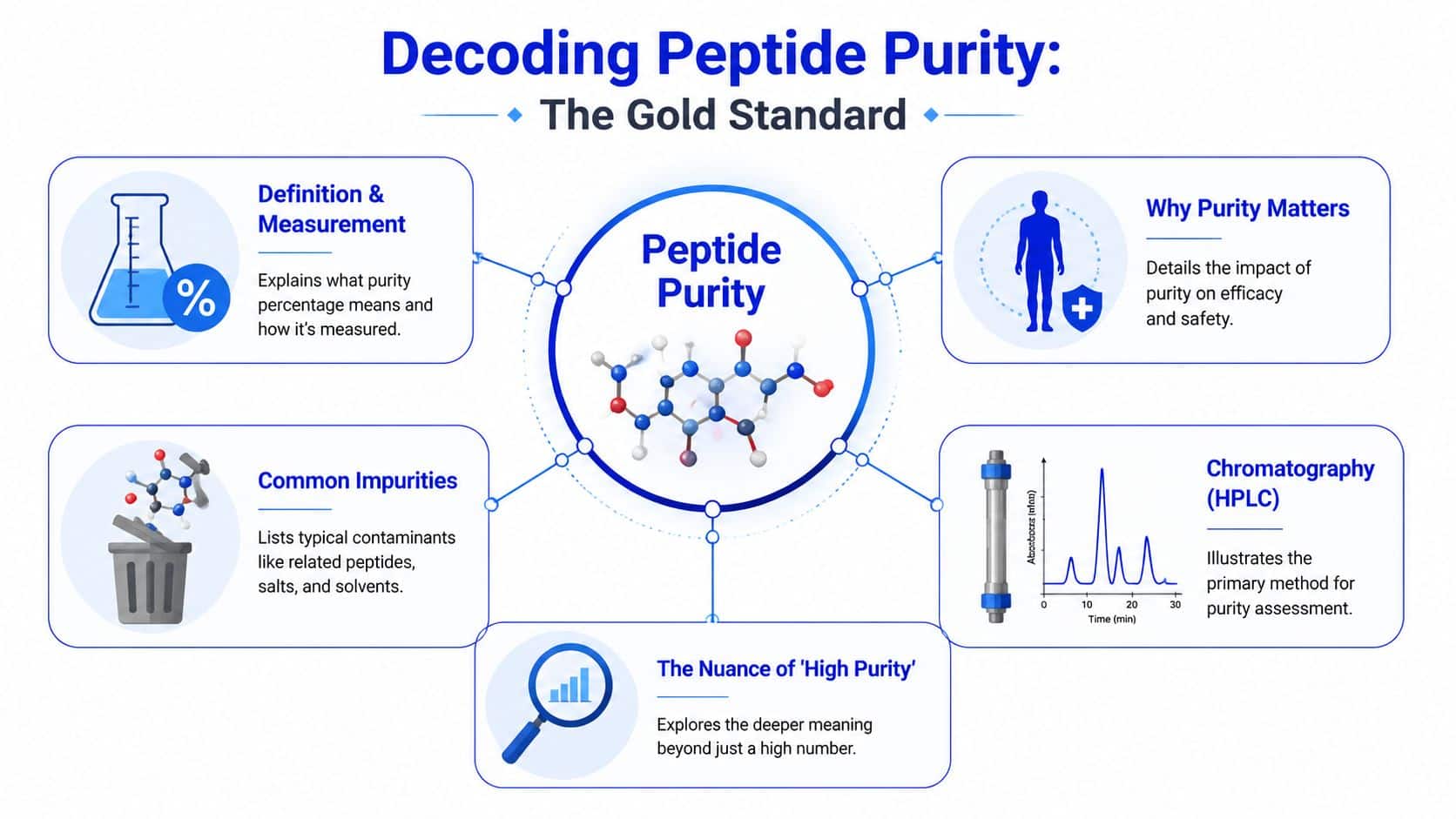
HPLC is the purity tool most buyers should expect to see. The easiest way to understand it is to picture a footrace where different molecules run through a course at different speeds. The target peptide reaches the detector at one characteristic time, while impurities arrive earlier or later depending on how they interact with the system.
The instrument records those arrivals as peaks. The area of the main peak is then compared with the total signal from the sample. That gives the lab a practical estimate of purity.
A good HPLC report helps you answer questions like these:
Think of HPLC as a sorting line, not a slogan. It separates what’s in the vial so you can judge the material by data instead of adjectives.
For buyers seeking the highest quality bpc 157, that’s the standard to hold. Don’t settle for “tested for purity” without seeing the actual report or the lot-specific COA that contains it.
A COA is the working document behind most credible quality claims. If you can read it confidently, you’ll spot strong suppliers faster and eliminate weak ones with less guesswork.
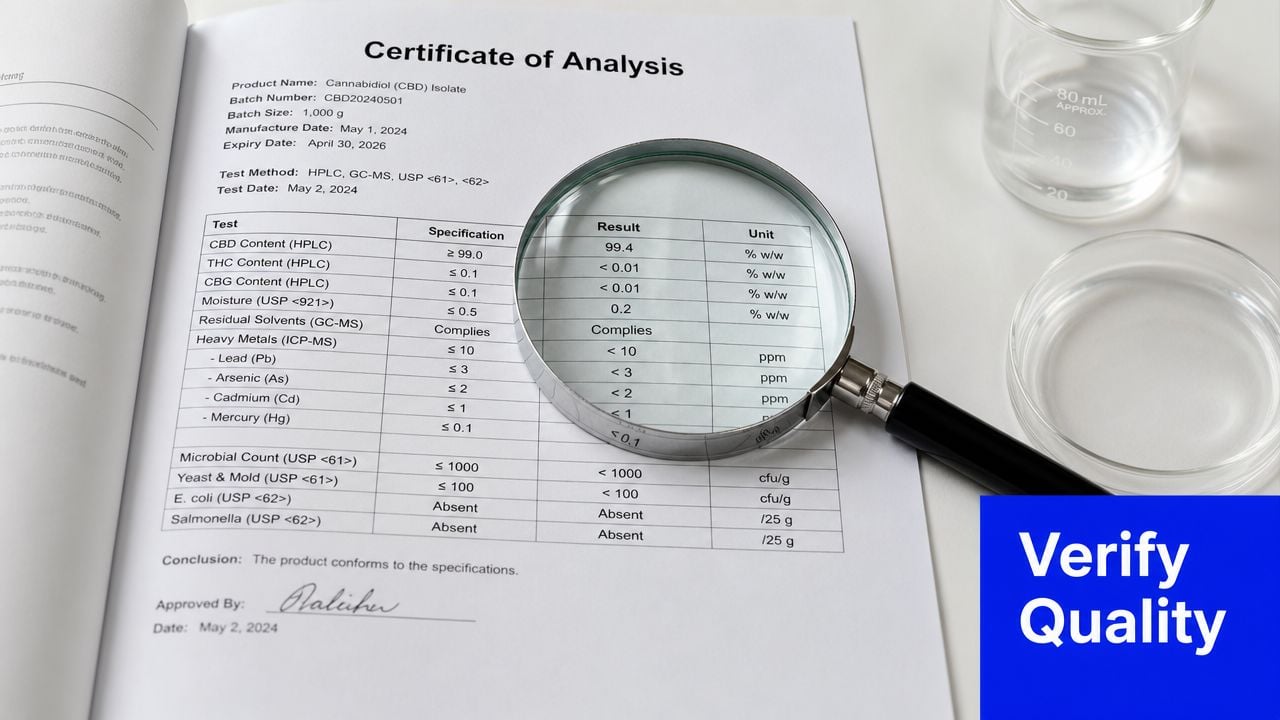
Some COAs are little more than a polished PDF. They list a product name, a high purity number, and not much else. A useful COA gives you enough detail to connect the document to the exact vial in front of you.
Because human evidence for BPC-157 remains limited, lot-to-lot reproducibility becomes especially important. A medical summary emphasizes that the most actionable supplier benchmark is transparent batch testing, including COAs and microbial or endotoxin reports, and that the best-quality BPC-157 is the batch you can verify analytically and trace end-to-end in this clinical overview.
That leads to a basic rule. If the COA doesn’t support traceability, it doesn’t support confidence.
| Component | What It Is | What to Look For |
|---|---|---|
| Product name | The labeled identity of the material | Clear identification as BPC-157 |
| Lot or batch number | The unique production identifier | Exact match to the vial label |
| Test date | When analysis was performed | A clearly stated date tied to the lot |
| Purity result | Chromatographic estimate of target content | A specific HPLC result, not vague language |
| Identity confirmation | Evidence the material is the correct peptide | Mass spectrometry or equivalent identity support |
| Specifications | Acceptable quality limits | Clearly stated pass/fail criteria |
| Analyst or lab signoff | Accountability for the test | A named lab, analyst signoff, or formal release |
| Additional contamination data | Supporting cleanliness information | Microbial and endotoxin reporting when available |
The lot number is where many buyers stop too soon. A lot number only helps if the supplier can connect it to underlying records. Ask whether the same lot appears on the label, COA, and any supplemental reports.
If you want a quick visual primer on how to inspect lab paperwork, this walkthrough is a useful companion before you compare vendors:
Here’s the fast screen for a COA:
A strong COA doesn’t need to be flashy. It needs to be specific.
A clean chromatogram is important. It isn’t the whole story. You can have analytically pure peptide and still have a batch that introduces contamination-related noise into your work.
Microbial contamination is straightforward to picture. If bacteria, mold, or yeast are present, the material is compromised. Endotoxins are trickier because they aren’t live microbes. They’re bacterial byproducts, often associated with cell wall remnants, and they can still trigger unwanted biological responses in research settings.
A simple analogy helps. Think of a kitchen counter that looks spotless after cooking with raw ingredients. It may appear clean, but invisible residue can still cause trouble. Endotoxin risk works the same way. The organism may be gone, but the residue can still interfere with what happens next.
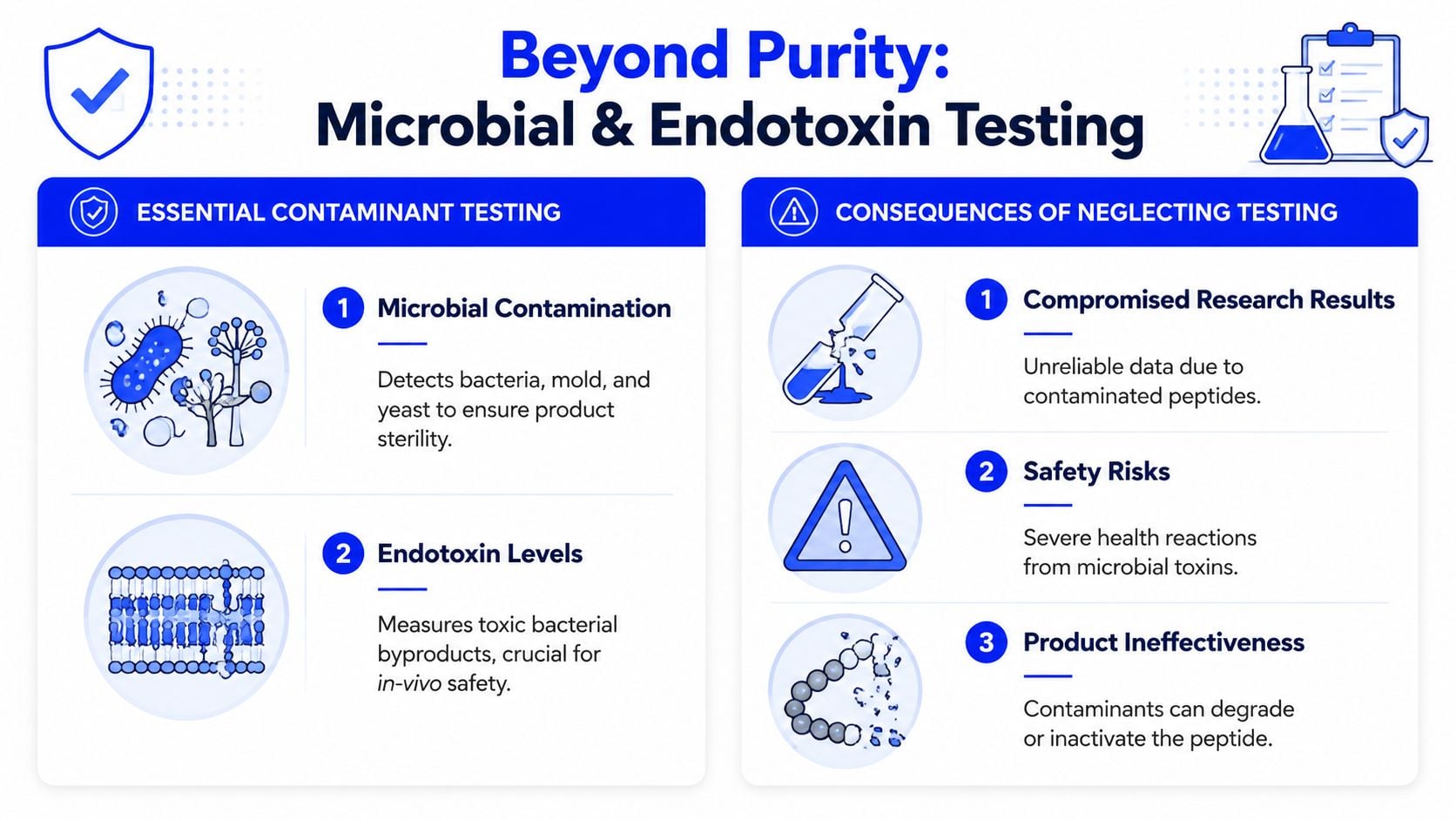
When buyers chase only a purity number, they can miss the contamination question entirely. That’s a mistake, especially in sensitive laboratory workflows where a hidden inflammatory trigger can confound interpretation.
Ask suppliers for more than one document. A stronger verification package includes:
A vial can be chemically impressive and still be biologically messy.
That’s why the best peptide sourcing decisions don’t stop at purity. They ask whether the material is both pure and clean enough for the work in front of you.
Quality isn’t fixed at the moment a peptide leaves production. It has to survive packaging, shipping, storage, and handling. Buyers often focus on test results and forget that poor storage can undo good manufacturing.
BPC-157 is commonly supplied as a lyophilized powder, which means it has been freeze-dried for stability. That form helps preserve the peptide during storage and transport more effectively than a ready-to-use liquid would in many research settings.
The synthesis side matters too. Peptides are built step by step, and every step creates opportunities for incomplete reactions or side products. That’s one reason analytical testing matters so much afterward. Production quality and testing quality work together. One cannot replace the other.
A fresh, well-documented batch can still degrade if it’s handled carelessly. Light, heat, moisture, and repeated exposure during routine use can all chip away at integrity. You won’t always see that damage with the naked eye.
Use a simple custody mindset in your lab:
A useful analogy is photographic film. It may leave the manufacturer in excellent condition, but light, humidity, and bad storage can ruin it before use. Peptides aren’t film, of course, but the lesson is similar. Initial quality and preserved quality are not the same thing.
If you want the highest quality bpc 157, your responsibility doesn’t start and end with the purchase order. It continues at receiving, storage, and day-to-day handling.
Once you know what quality looks like on paper, supplier screening gets easier. You’re no longer buying from branding. You’re buying from evidence, process control, and transparency.
Regulatory context matters here. The World Anti-Doping Agency classifies BPC-157 as an S0 “Unapproved Substance,” and in late 2023 the FDA flagged BPC-157 as presenting significant safety risks in compounding contexts, as discussed in this regulatory overview of BPC-157. Serious suppliers respond to that environment by emphasizing testing and documentation, not therapeutic storytelling.
That principle carries beyond peptides. If you’ve ever evaluated outside technical vendors, the logic is familiar. A clear process, specific deliverables, and visible accountability matter whether you’re buying lab materials or hiring specialized service providers. This is why practical checklists such as MD TECH TEAM’s web designer guide are so useful. They remind buyers to evaluate proof, communication, and transparency rather than polished claims.
Ask peptide suppliers questions that force specifics:
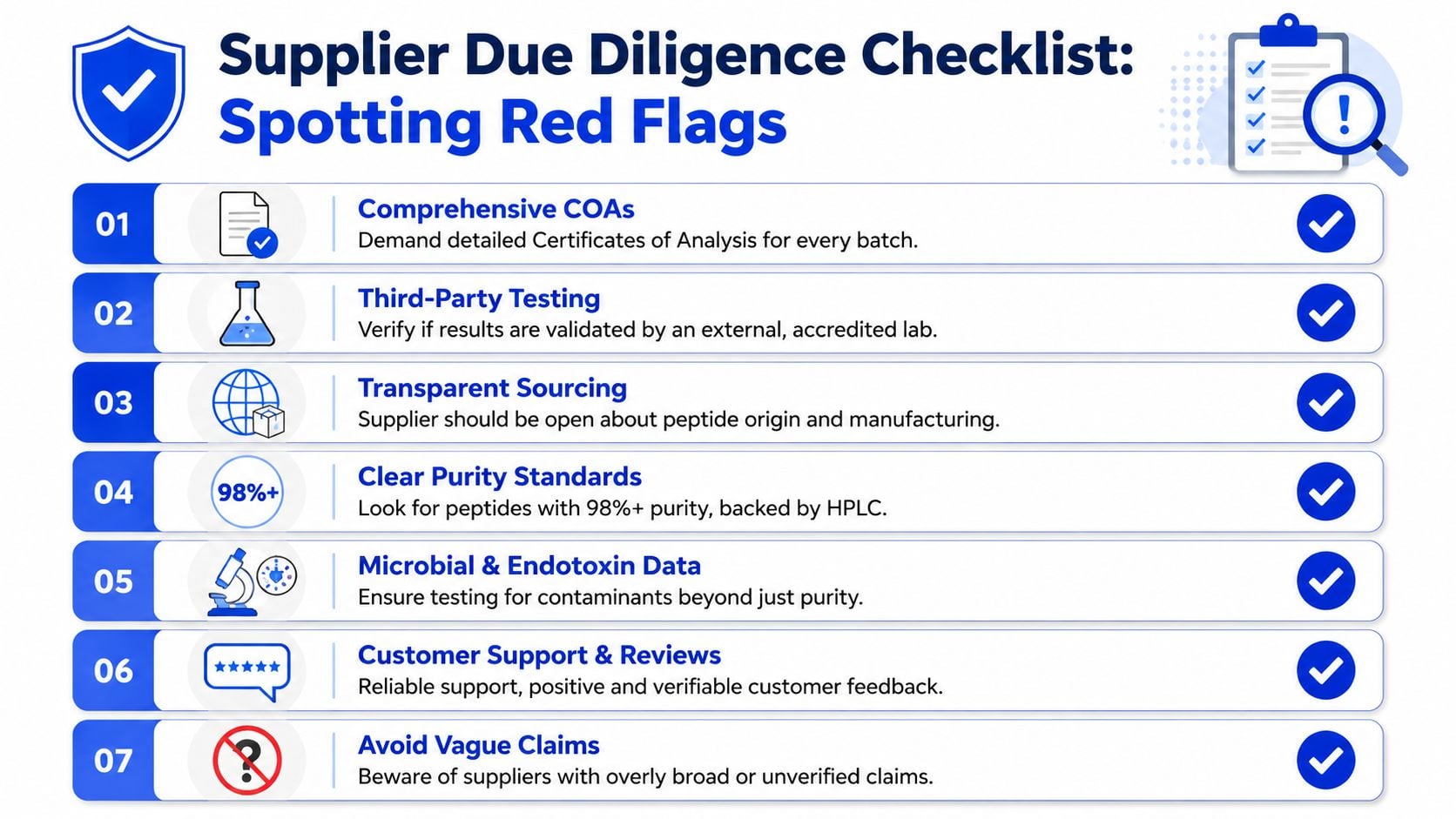
The fastest way to spot a weak supplier is to watch what they emphasize. If the site pushes dramatic outcome claims but makes testing data hard to find, priorities are off.
Common red flags include:
Buy the batch, not the slogan.
For a new researcher, that single habit prevents many avoidable mistakes. The highest quality bpc 157 is rarely the one with the loudest promises. It’s the lot backed by documentation you can inspect, understand, and defend.
If you’re comparing research suppliers and want a source that emphasizes batch testing, transparent documentation, and research-use compliance, learn more about Peptide Warehouse USA and explore options for analytically supported peptide procurement.