
No products in the cart.


If you're comparing two vials of BPC-157 and both suppliers promise 99% purity, the real problem isn't the number on the page. The problem is that one folder has a clean paper trail and the other has a marketing claim dressed up as documentation. That's the difference between a legit BPC-157 research purchase and a label that only looks professional.
A researcher usually notices the issue only after the vial arrives, when the lot number doesn't match the COA, the testing lab isn't named, or the purity line has no method behind it. A procurement specialist starts earlier, with the documents, because paperwork is what lets a lab defend a purchase during review. If the compound can't be traced, it isn't really verified.
Two COAs sit on a bench. Both say 99% purity, both have polished layouts, and both make the same quiet promise: trust us. A new buyer might compare prices first. A procurement specialist looks at the lot number, the testing method, and the name of the lab before anything else.
A legit BPC-157 supplier earns trust through documents that can be checked line by line. The first question isn't whether the peptide sounds promising, it's whether the batch can be traced from synthesis to release. Who made it, who tested it, and what exact lot is in the vial?
Practical rule: if the lot number, test report, and product label don't point to the same batch, the paperwork isn't doing its job.
That mindset matters because a research material is only as defensible as its records. A polished product page can't replace a COA, and a COA can't replace traceability if the batch identity is missing. Buyers who treat documents like lab evidence usually catch problems before they become procurement mistakes.
For a new researcher, that shift is the key. Don't start with the peptide itself, start with the question a quality control analyst would ask: can I prove what this tube is, and where it came from?
BPC-157 still sits in the investigational category, not the approved-medicine category. The U.S. Anti-Doping Agency states that it is not approved for human clinical use by the FDA or any other global health authority, and that no human clinical trials have established efficacy for any diagnosis or treatment. A 2025 review found only three published human pilot studies, and the broader clinical evidence spans fewer than 30 participants across those three uncontrolled studies USADA, PubMed.
That status changes how you read paperwork. Without approved labeling, a drug master file, or a validated therapeutic claim, the Certificate of Analysis becomes the main identity document a supplier can offer. It doesn't prove medical benefit, but it does show whether the material was characterized with enough rigor for research use.
The regulatory picture is also clear. A 2023 FDA classification identified BPC-157 as a Category 2 bulk drug substance raising significant safety concerns, while the World Anti-Doping Agency places it in S0, non-approved substances, which means athletes can't use it at all PMC review, WADA Prohibited List. That combination tells buyers something important, research availability is not the same thing as medical legitimacy.
A supplier can sell a research compound and still owe you a rigorous batch record. The paper trail matters more, not less, when the compound isn't an approved medicine.
A real COA doesn't start with purity. It starts with identity. The header block should show the supplier name, product name, lot number, manufacturing date, and any expiry or retest date. If those fields are missing or generic, the document already has a weak foundation.
A quality control analyst usually scans the identity panel before anything else. For peptides, that often means HPLC and mass spectrometry traces, because one shows the retention behavior and the other checks molecular weight. A legit result shows the method used, the observed match, and enough data to connect the report to the exact lot.
After identity, look at the purity panel. A serious report gives a numeric result and a method reference, not a vague phrase like “tested for purity.” That distinction matters because “tested” can mean almost anything, while a method and value can be reviewed, compared, and archived.
Then comes contamination control. A complete COA often includes endotoxin testing, usually by LAL or a kinetic chromogenic method, and microbial testing for total plate count and specified organisms. If a supplier sells research material intended for analytical work, these lines are the difference between a document that looks official and one that can support actual lab review.
Look for the parts that a real analyst would sign off on:
| Anatomy of a BPC-157 Certificate of Analysis | Typical Method | What a Legit Result Shows |
|---|---|---|
| Identity | HPLC, mass spectrometry | Compound name, molecular match, lot-specific data |
| Purity | HPLC area percent | Numeric purity with stated method and acceptance criterion |
| Endotoxin | LAL or kinetic chromogenic | Measured limit, not just a claim of cleanliness |
| Microbial quality | Plate count, specified organism screen | Recorded results tied to the same batch |
| Release details | Analyst sign-off, instrument ID | Traceable review by a named lab |
The simplest test is also the best one. If the document reads like a laboratory record, you're getting closer to something defensible. If it reads like a sales page, keep your guard up.
In-house QC is useful, but it's not the same as independent verification. When a supplier tests its own material, the report still has value, but the conflict of interest is obvious. A third-party lab reduces that problem because it sits outside the sale itself.
The strongest reports usually come from labs that disclose their methods and accreditation. An ISO/IEC 17025-accredited lab signals that the testing process itself is controlled, not just that someone ran an instrument. For a researcher, that matters because the point isn't to admire a clean PDF, it's to know the result can stand up to scrutiny.
Independent labs also make it easier to see whether the supplier is using appropriate methods. HPLC can support a purity percentage, mass spectrometry can support sequence identity, LAL can support endotoxin control, and microbial panels help show whether the batch looks suitable for research handling. The lab's contact details, reference standards, and instrument descriptions all add confidence that the report is more than a branding exercise.
A supplier can say “tested.” A third-party lab can show how it was tested, by whom, and under what quality system.
| Attribute | In-House QC | Third-Party Lab |
|---|---|---|
| Conflict of interest | Higher | Lower |
| Independence | Limited | Stronger |
| Documentation value | Useful, but internal | More defensible for review |
| Method transparency | Varies | Usually clearer |
| Buyer confidence | Depends on trust in supplier | Depends on named outside reviewer |
This doesn't make every outside report perfect. It does make the paper trail easier to defend, especially when the supplier is trying to prove that a batch is suitable for research use rather than just attractive on a product page. For buyers, independent testing turns a claim into evidence.
A lot number is the thread that keeps the whole batch story together. It should appear on the vial, the outer package, the COA, and any storage documentation that comes with the shipment. If one of those pieces uses a different code or skips the number entirely, traceability starts to break.
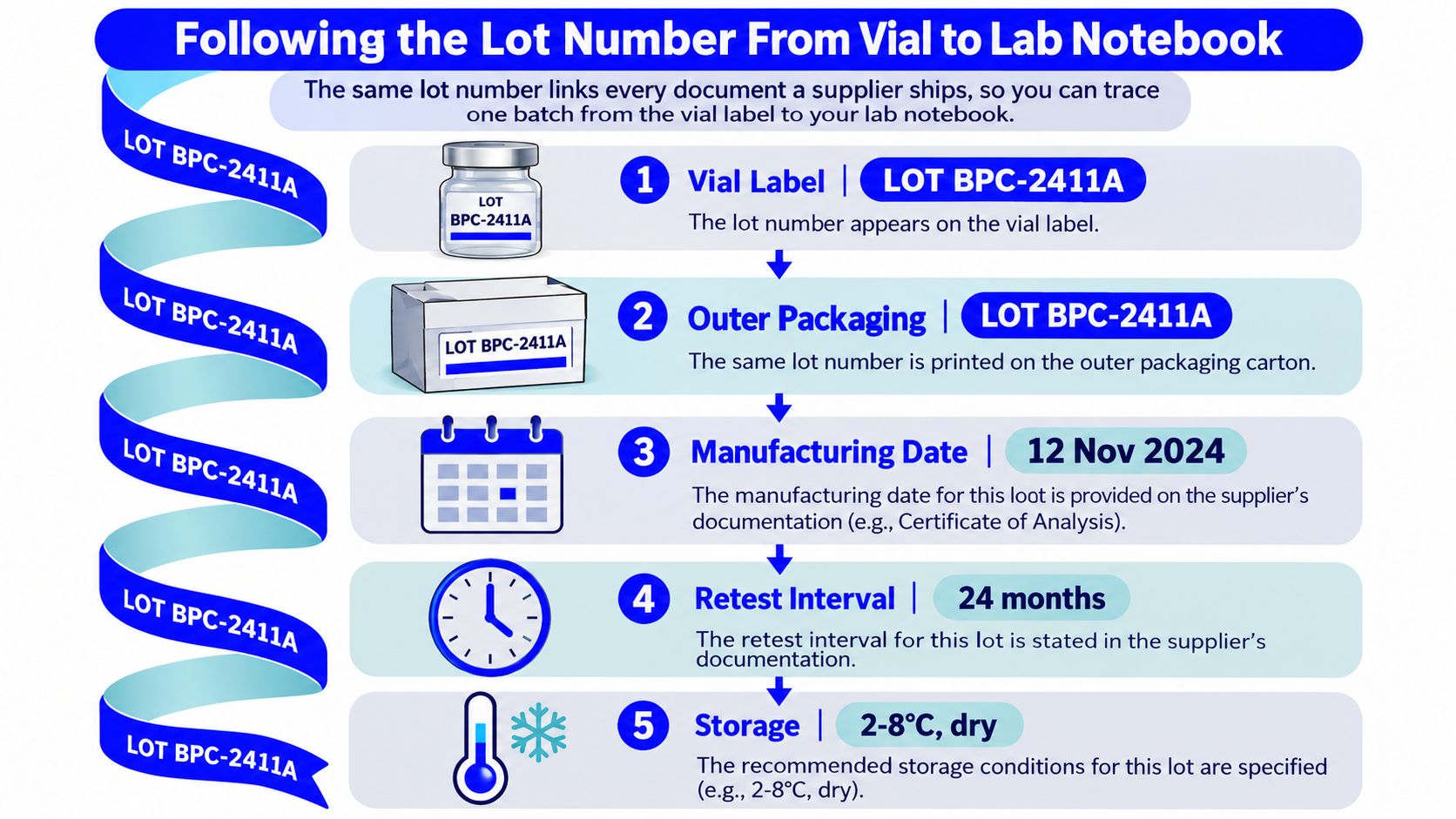
When the shipment arrives, the lot number should go straight into your lab notebook or procurement log. Match it against the COA, the safety data sheet, and the box label before the material is moved into storage. That habit matters because later you need to show exactly which batch was used in which experiment.
A legitimate batch can usually be traced back to a synthesis run, a purification campaign, and an analytical release decision. If the supplier says only that the product was “batched on demand,” but gives no stable batch identity, you don't really have a chain of custody. You have a guess.
Storage instructions matter because they tell you whether the supplier treated the material like a research compound or just a retail item. Look for temperature guidance, handling notes, and any retest interval. Those details don't prove efficacy, but they do show whether the seller thought through preservation and traceability.
A good habit is simple:
Without that thread, a purity number becomes unattributable. With it, your lab can explain exactly what was received and when.
The worst supplier problems are often visible before a vial ships. You just have to treat the documents like evidence instead of decoration. If a page feels polished but empty, that's usually because the substance of the record is missing.
A few warning signs deserve immediate attention:
These are not cosmetic issues. An undocumented purity claim won't survive a lab audit, and missing endotoxin data can make cell work unreliable. When a supplier also leans on recovery language or dosage-style claims, the compliance risk gets worse, because the marketing copy and the analytical record are no longer cleanly separated.
A research supplier should sound technical, not therapeutic. If the product page talks about healing, dosing, or performance effects, but the batch files are thin, that's a mismatch. The safer pattern is the opposite, strict research language on the page and complete batch documentation in the file.
BPC-157 buyers should treat that mismatch as a stop sign. A compound can be real, while the documentation still fails the standard a lab needs.
A compliant supplier keeps the product identity and the user purpose separate. That usually shows up in plain phrases like “not for human use” or “investigational only”, plus the absence of any recovery, dosage, or therapeutic framing. The wording should stay technical from the product page to the COA to the safety sheet.
The cleanest documentation set sounds almost repetitive because it avoids ambiguity. It identifies the material as a research compound, states that it isn't for human use, and avoids any language that sounds like treatment guidance. That's not just style, it's a compliance boundary.
When the language slips into testimonials, bodybuilding references, or wellness claims, the line gets fuzzy fast. A lab that buys from a vendor like that inherits a paper trail that looks commercial first and scientific second. Auditors notice the difference right away.
| Label Element | Compliant Phrasing | Warning Phrasing |
|---|---|---|
| Intended use | Research use only | Recovery aid, performance support |
| Human use | Not for human use | Safe for personal use |
| Product framing | Investigational compound | Wellness peptide |
| Claims | Analytical or laboratory language | Healing, dosing, antiaging |
| Documentation tone | Technical and batch-specific | Promotional and testimonial-driven |
A legit BPC-157 supplier keeps those categories separate. That separation is one of the clearest signals that the vendor understands the difference between research distribution and consumer marketing.
A procurement officer has a supplier's product page, COA, and ordering documents open before the purchase order is approved. Treat the file like a chain of custody: every document should point to the same compound, lot, and research-use-only purpose. The process should be repeatable enough for another lab member to review later.
Read the COA as a quality-control record, not as a marketing badge. It should identify the tested batch, show who performed the testing, and give the lab enough information to file the result with its purchasing records. If the supplier cannot provide a current COA or will not identify the testing laboratory, stop the review rather than filling the gap with assumptions.
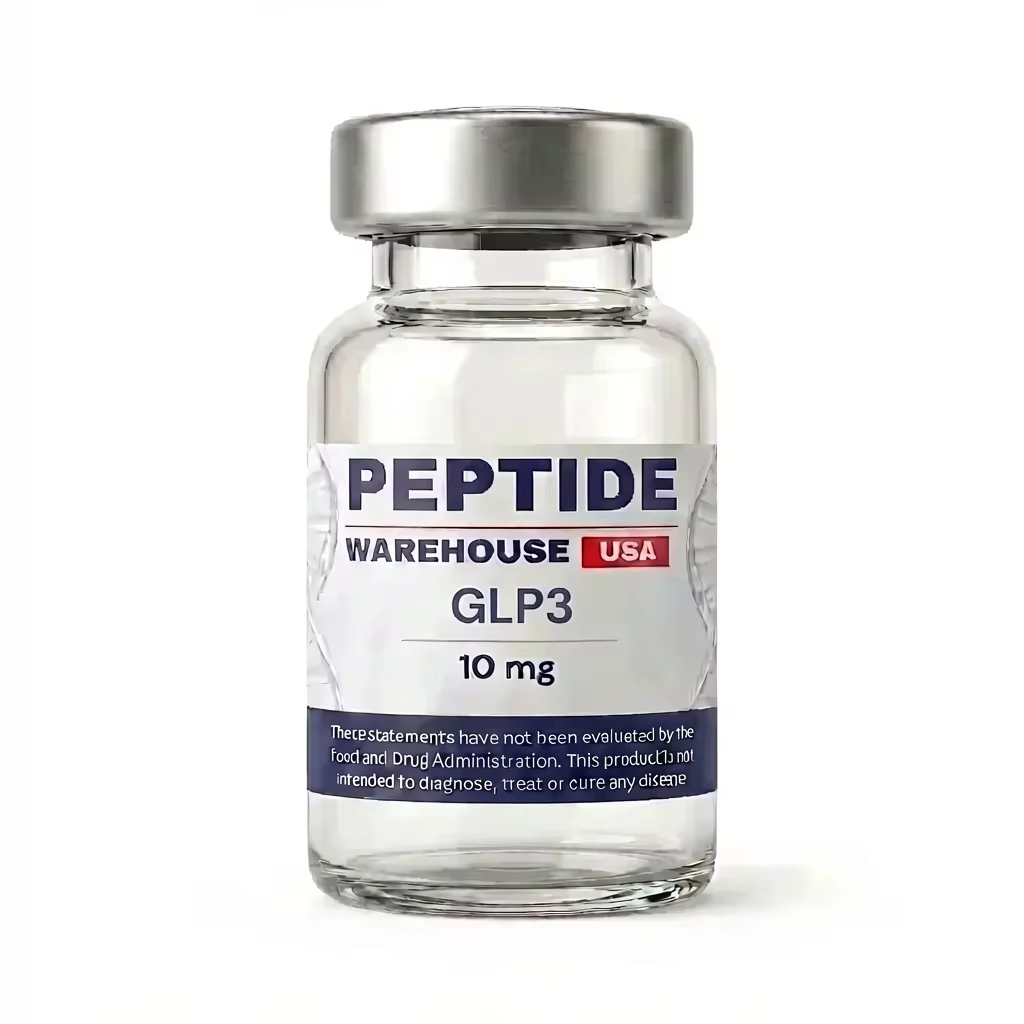
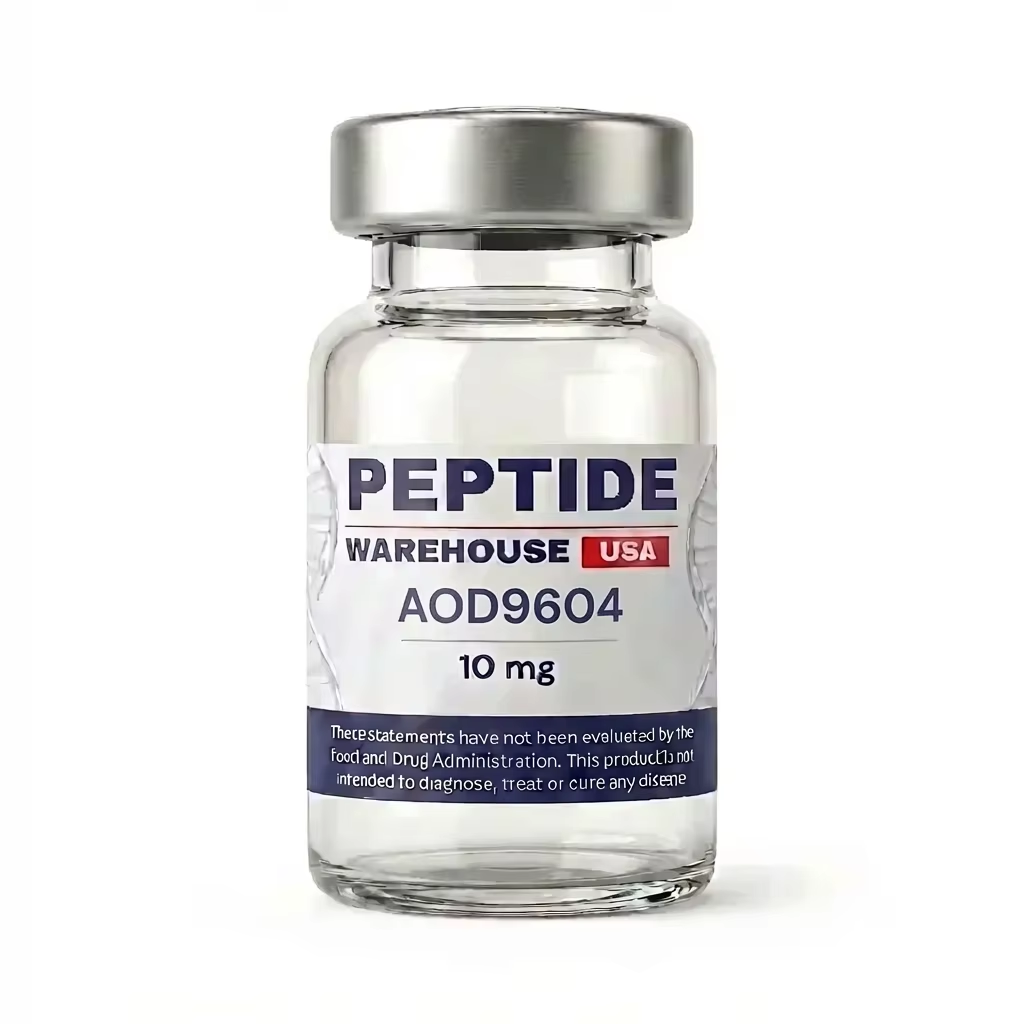
For a research-only supply chain with traceable batch paperwork, Peptide Warehouse USA is one supplier that states it provides batch documentation with research-use-only products. Review those records before the vial reaches the bench. Visit Peptide Warehouse USA, compare its documentation with the next supplier's file, and keep the selected records with the purchase order and lab notebook.
Leave a comment