
No products in the cart.


Batch-to-batch variability across commercial peptide samples has been reported at 18–22%, so documentation verification matters more than product count alone. A reliable peptide research lab should be able to connect the vial in your freezer to lot-specific identity, purity, content, and chain-of-custody records.
The shipment arrives on time, the vial looks intact, and the supplier's website lists an impressive catalog. Then the first assay produces an unexpected result. The chromatogram contains an unexplained shoulder, the measured content doesn't align with the stated purity, or the lot number on the vial doesn't clearly match the analytical report.
That situation is more common than many procurement teams expect. Peptides research labs don't buy catalog descriptions. They buy experimental confidence, and that confidence depends on whether the supplier can prove what was made, tested, shipped, and received.
A lab manager reviewing a new shipment rarely starts by assuming the material is wrong. The first check is usually simple: inspect the seal, compare the vial label with the purchase order, and open the certificate of analysis. Problems emerge when the paperwork is too generic to answer basic questions about the exact lot.
A COA may show an attractive purity percentage but omit the analytical method, test date, chromatogram, mass spectrum, quantitative content, or laboratory identity. Without those details, the document describes a product category rather than the vial on the bench.
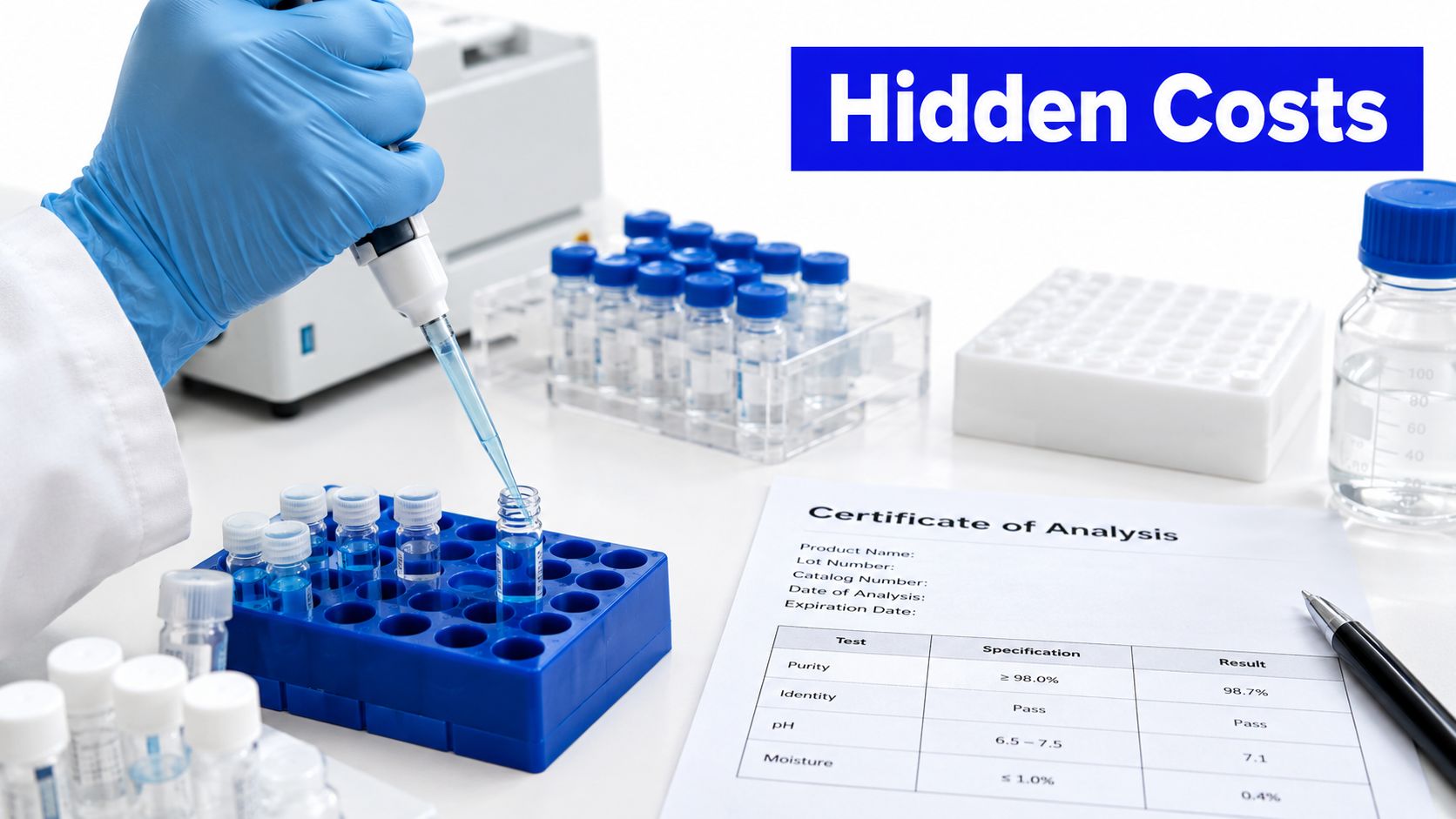
Reported testing across commercial peptide samples from twelve major suppliers found batch-to-batch variability of 18–22%, according to recent coverage of peptide supplier verification. That range doesn't automatically prove that every supplier performs poorly, but it does show why a single favorable COA shouldn't be treated as permanent evidence of consistency.
The hidden cost appears in the experimental workflow:
Practical rule: Treat the COA as part of the sample, not as an administrative attachment.
The important question isn't only, “What purity percentage is printed on the page?” It's whether the supplier can independently support identity, chain of custody, lot-specific analytics, and release testing. Catalog breadth is useful only after those foundations are in place.
A supplier with fewer well-documented compounds can be more useful than one with a large catalog and thin records. For a research group, documentation depth protects reproducibility before the first pipette tip touches the vial.
Quality assessment works best when each analytical method answers a different question. Independent peptide research labs typically use at least two orthogonal analytical methods to evaluate identity and purity, because one instrument can miss defects that another method reveals. Independent laboratory guidance recommends UHPLC-HRMS for impurity detection and characterization, particularly where truncated sequences, racemization, and side reactions may evade a single-method review.
Reversed-phase HPLC remains the central purity assay for research-use peptides. A typical method uses a C18 column, an acetonitrile and water gradient, and UV detection at 214–220 nm, as described in practical peptide purity testing guidance. The resulting chromatogram helps show whether the principal peak dominates the sample and whether additional peaks require investigation.
Mass spectrometry addresses molecular identity. MS or LC-MS/MS can help determine whether the observed molecular mass matches the expected peptide and can reveal material that appears clean by chromatography but has the wrong mass. UHPLC-HRMS adds higher-resolution impurity characterization, which is valuable when closely related byproducts are difficult to separate or interpret.
Orthogonal confirmation and suitability testing complete the picture. Peptide mapping, amino acid analysis, and NMR can provide additional structural evidence, while endotoxin and microbial testing help assess whether material is suitable for a particular downstream research workflow. Suitability depends on the model, so a lab should define its acceptance criteria before ordering.
| Method | Purpose | What It Detects |
|---|---|---|
| Reversed-phase HPLC | Measures chromatographic purity | Main peak, related impurities, truncated products that separate chromatographically |
| MS or LC-MS/MS | Confirms molecular identity | Expected molecular mass and mass-related identity discrepancies |
| UHPLC-HRMS | Characterizes impurities at high resolution | Closely related impurities, side reactions, and unexpected molecular species |
| Peptide mapping, amino acid analysis, or NMR | Adds structural confirmation | Sequence or composition evidence that supports identity |
| Endotoxin and microbial testing | Evaluates downstream suitability | Biological contamination relevant to the intended research application |
A purity result and a content result answer different questions. Purity describes the proportion of chromatographically relevant material, while quantitative content helps establish how much usable peptide is present in the vial.
Labs that publish both values provide more actionable release data than labs that publish purity alone. A disciplined review also checks the method conditions, sample preparation, lot number, testing date, and whether the attached chromatogram belongs to the same batch.
A strong COA can't protect a peptide that is mishandled after delivery. The lab needs a written workflow that starts at receiving and continues through storage, reconstitution, aliquoting, use, and disposal.
Inspect the shipment immediately. Check the package, vial seal, label, and visible condition of the lyophilized material. Record damage or discrepancies before placing the vial into inventory.
Match the records. Compare the vial's lot number with the purchase order and COA. Save the original files in the same inventory record as the product identity, supplier, arrival date, and assigned storage location.
Move the material into controlled storage. Keep lyophilized powder cool, dry, and protected from light. The correct condition depends on the peptide and the supplier's instructions, so the laboratory's SOP should define approved storage conditions rather than relying on memory.
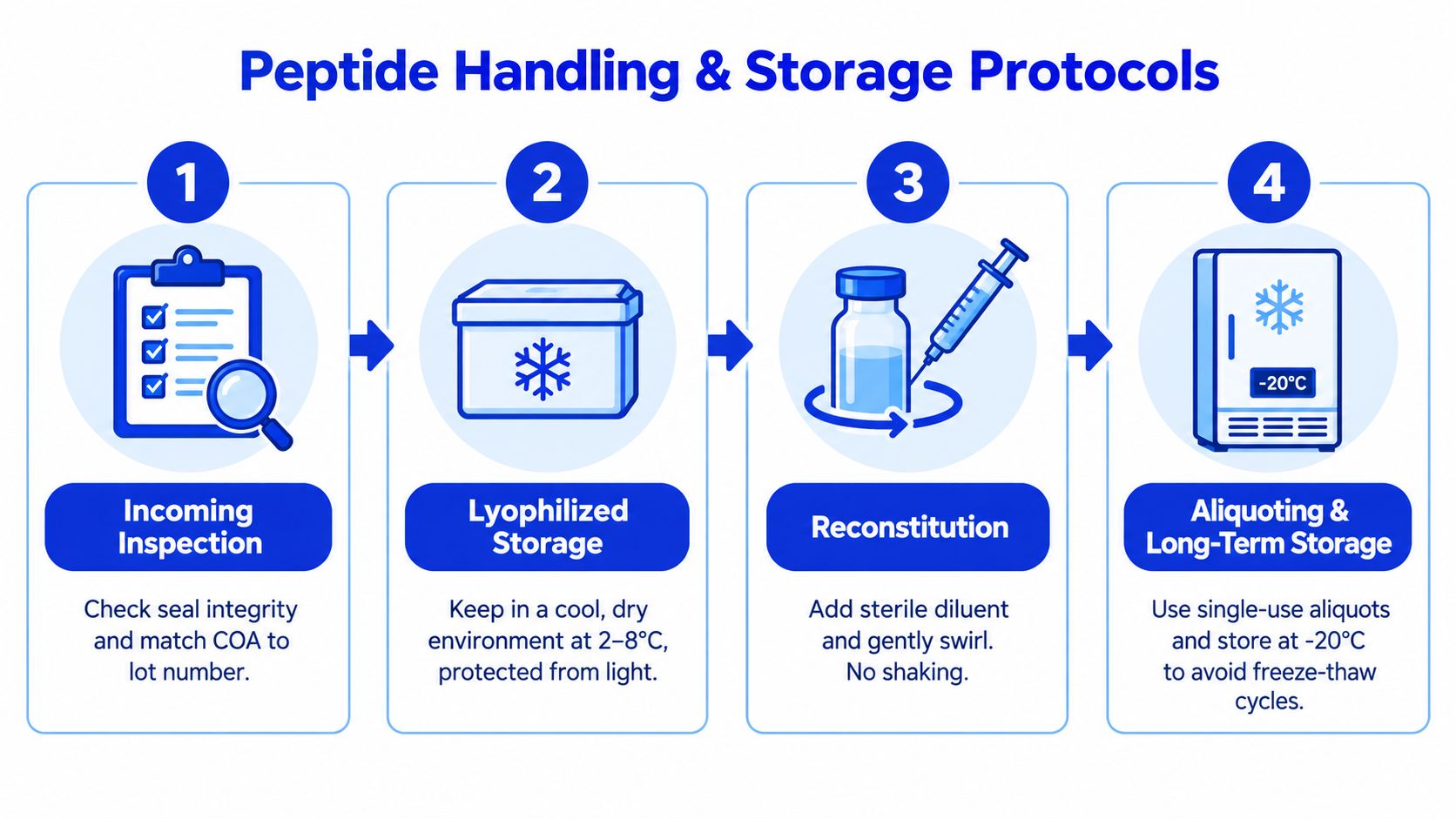
Bring the vial into the clean preparation area, use the approved sterile diluent, and add it slowly against the vial wall. Gentle swirling is preferable to aggressive shaking, especially when the peptide's physical behavior or solubility is sensitive to handling.
If the solution won't be used immediately, prepare single-use aliquots and label each one with the peptide identity, lot, concentration, preparation date, operator, and storage location. Limiting repeated freeze-thaw exposure reduces one avoidable source of variability.
The inventory record should show who opened the vial, when the solution was prepared, how much was removed, and which experiment received it. A simple usage log can preserve traceability when several researchers share the same lot.
Use the supplier's stability information and your laboratory's validated procedures to determine discard dates. Don't extend use merely because a solution looks clear. Appearance can't confirm identity, concentration, or absence of contamination.
Domestic and imported sourcing can both work. The better choice depends on the lab's tolerance for transit uncertainty, its documentation requirements, institutional purchasing rules, and the degree of supplier communication needed during qualification.
The market context is substantial. One recent estimate places the peptide synthesis market at approximately USD 1.90 billion in 2026, with a projection of USD 2.59 billion by 2031 and a 6.39% CAGR. The same assessment assigns North America roughly 41.71% of market share and solid-phase synthesis 75.36% of revenue. A separate assessment estimates the market at USD 746.7 million in 2025, projecting USD 1.64 billion by 2034. These are different market models, so they shouldn't be combined as though they were one measurement. See the peptide synthesis market assessment for the underlying estimates.
| Factor | Domestic Sourcing | Imported Sourcing |
|---|---|---|
| Shipping coordination | Often simpler communication and fewer handoffs | May involve more carriers, customs processes, and transit variables |
| Documentation access | Local teams may obtain clarifications more easily | Response times and document formats can vary by supplier and jurisdiction |
| Regulatory alignment | May fit institutional purchasing and review processes more directly | Requires closer review of import, labeling, and institutional requirements |
| Batch testing | Depends on the individual supplier, not geography alone | Depends on the individual supplier, not geography alone |
| Upfront price | May not be the lowest quoted price | May appear attractive before shipping and administrative costs |
| Escalation | Easier to establish a direct quality contact in some cases | Escalation may require coordination across regions |
Domestic sourcing doesn't guarantee a valid COA, and imported sourcing doesn't automatically indicate weak quality. Geography is a screening factor, not a substitute for analytical evidence.
Ask every candidate supplier for the same records, then compare the answers:
The lowest invoice can become the most expensive option if the material arrives late, lacks usable records, or forces the lab to repeat qualification work. A slightly higher purchase price may be justified when it reduces uncertainty, but the decision should rest on evidence rather than assumptions about domestic or imported origin.
A verification-first pipeline reverses the usual buying sequence. Instead of selecting a catalog item and asking for paperwork after checkout, the lab qualifies the supplier's evidence before approving the material for experimental use.
Start with a supplier file that contains the legal business details, quality contact, product specification, lot-specific COA, analytical traces, storage instructions, and any available microbial or endotoxin reports. The file should also record open questions and the person responsible for resolving them.

A practical review asks:
Labs can also use broader procurement principles to optimize sourcing with data insights, especially when they compare suppliers across documentation completeness, delivery performance, and exception handling rather than unit price alone.
After receipt, quarantine the vial until the lot number, seal, label, COA, and purchase record agree. If the material is selected for a critical study, the lab can perform an incoming verification test using an appropriate analytical method before releasing it to general inventory.
The escalation rule should be explicit. Missing lot linkage, unexplained differences between documents, or an absent identity result should trigger a hold, not an informal assumption that the product is acceptable.
A short training video can help purchasing and laboratory staff recognize why document review belongs inside the material-release process:
The strongest pipeline creates a closed loop from supplier qualification to receiving inspection, analytical release, inventory control, and post-use review. When an experiment produces an unexpected result, the team can identify the exact lot and retrieve the supporting evidence without reconstructing the history from scattered emails.
A broad catalog can make a supplier look capable, but it doesn't demonstrate manufacturing control. For a laboratory buyer, the meaningful question is whether the supplier can document the specific compound, lot, analytical method, and release decision tied to the vial.
The market is moving away from product-count comparisons. Recent coverage describes a research-peptide market with limited enforced quality floors, limited third-party audit requirements, and nonstandardized testing expectations. The same source reports 18–22% batch-to-batch variability in testing across twelve major suppliers, which is why documentation should be treated as a procurement requirement rather than a convenience.

“Research use only” is a use designation, not a universal shield. Independent legal analysis explains that the FDA may consider marketing claims, syringes or reconstitution supplies, and dosing tools when determining objective intent. A disclaimer may not protect a seller when other evidence indicates intended human use, as discussed in legal analysis of FDA peptide enforcement.
That distinction matters to institutional buyers. A responsible supplier should clearly separate laboratory, analytical, and preclinical applications from human or veterinary use, while the purchasing organization should apply its own compliance review.
Look for evidence of:
A smaller catalog with complete records can support better science than a larger catalog that leaves identity and traceability uncertain. The differentiator isn't how many peptide names appear on a webpage. It's how much verifiable evidence arrives with each order.
Institutional procurement improves when the laboratory turns quality expectations into a repeatable approval process. Start by writing a supplier questionnaire that every candidate must answer before the first purchase.
Request the exact lot-specific documents you expect to receive, including:
Next, define what happens when a document is incomplete. A quarantine status, named reviewer, response deadline, and release decision prevent researchers from using material just because the experiment is scheduled.
Keep supplier performance records after approval. Track whether documents arrive with the shipment, whether lot identifiers match, how quickly quality questions are answered, and whether later orders maintain the same level of detail. This turns sourcing from a one-time judgment into an evidence-based relationship.
The benefits of peptides research labs depend on controlled experimental conditions, not on a product label alone. A verification-first process gives scientists a clearer basis for interpreting results and gives procurement teams a defensible standard for approving suppliers.
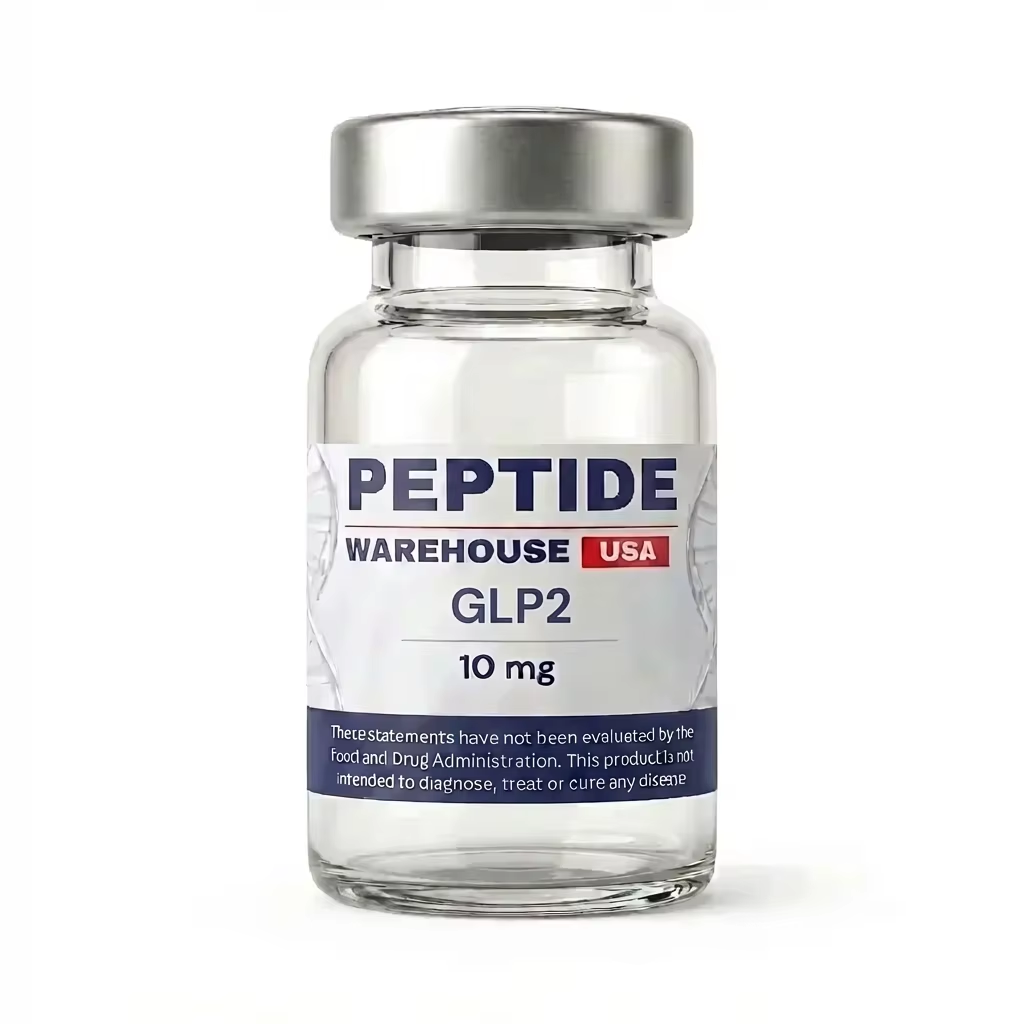
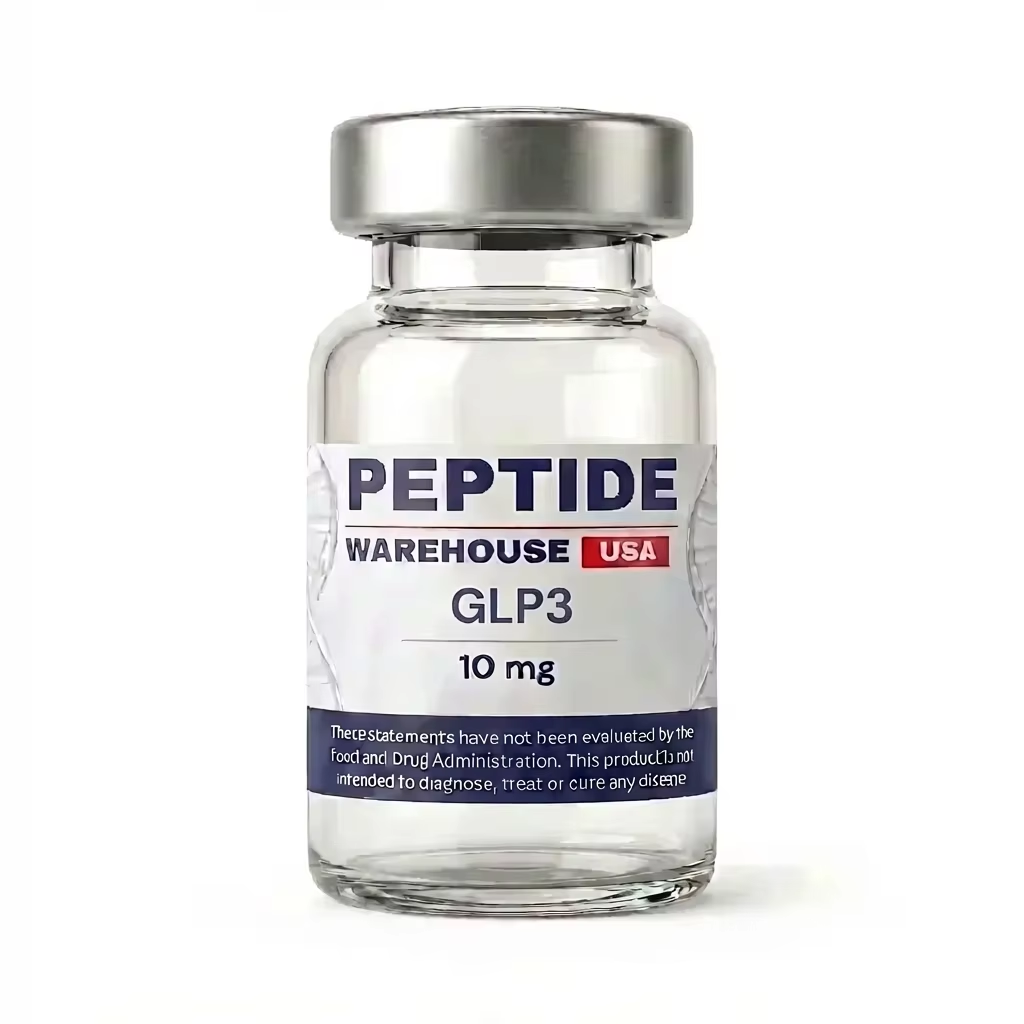
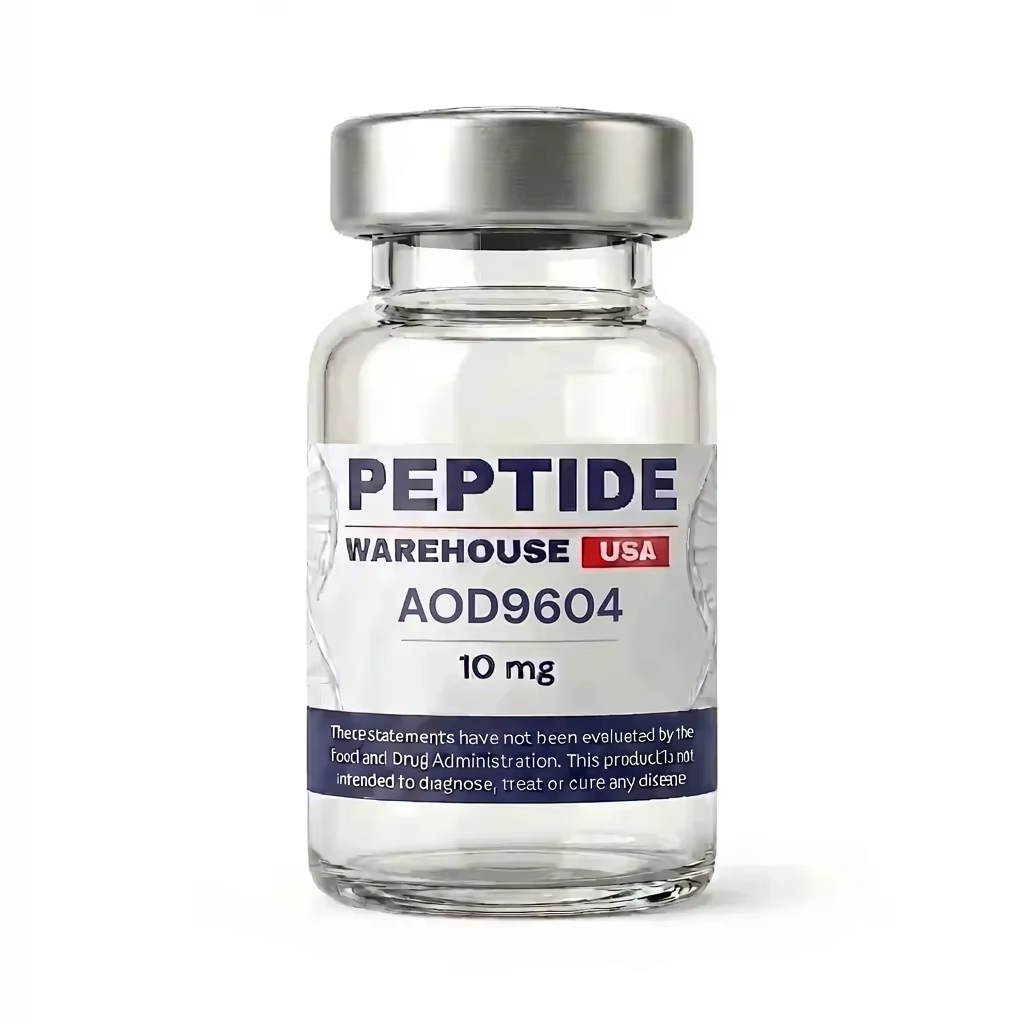
Peptide Warehouse USA offers USA-manufactured research peptides and related compounds for laboratory, analytical, and preclinical applications, with lot documentation that includes COAs, microbial reports, and endotoxin reports. Visit Peptide Warehouse USA to explore options and request the records your laboratory needs before placing an order.
Leave a comment