
No products in the cart.



The popular advice on peptides TB-500 BPC-157 usually starts with a simple question: which one is better, or should they be combined in a recovery stack? That framing is convenient for consumer marketing, but it isn't scientifically sound. BPC-157 and TB-500 represent different biological hypotheses, have different preclinical signals, and lack controlled human validation for the combination.
A more useful analysis asks what each compound does in laboratory models, which endpoints support the interest, how mature the evidence is, and whether a supplier can document identity and batch quality. This research guide separates mechanistic promise from clinical proof, then connects each peptide to appropriate study designs and procurement controls.
The “peptide stack” is a marketing category, not a validated biological unit. BPC-157 and TB-500 are often grouped as tools for tendon repair, inflammation, muscle recovery, or general healing, yet no published controlled human trial has tested their combination for any indication. AP coverage of the evidence gap describes limited human evidence for BPC-157 and no identified human studies for TB-500.
The distinction begins with molecular identity. BPC-157 is a synthetic 15-amino-acid peptide first described in 1993 by Predrag Sikiric and colleagues. It was derived from a larger protective protein found in human gastric juice, and preclinical work has examined angiogenic, cytoprotective, inflammatory, and tissue-repair pathways. Its status remains that of an unapproved research compound for medical use in the United States, with human evidence limited. This review of BPC-157 biology and regulatory status summarizes that evidence and regulatory context.
TB-500 has a different evidentiary boundary. The research-market name is commonly associated with thymosin beta-4 biology, especially the short actin-binding fragment Ac-LKKTETQ. The WADA-linked investigation identifies that segment and helps separate direct TB-500 questions from the wider thymosin beta-4 literature. That distinction matters because findings for the full protein cannot automatically establish effects for a shorter fragment.
A “which is stronger?” comparison treats unlike compounds as though they shared one endpoint. BPC-157 is more plausibly examined through vascular signaling, endothelial behavior, cytoprotection, inflammatory modulation, and histological recovery. TB-500 has a narrower rationale involving actin-related cell movement, extracellular-matrix organization, tissue mechanics, and structural repair.
The appropriate choice therefore depends on the model and its prespecified endpoints. An endothelial-migration study should measure migration, pathway activity, and related cellular outcomes rather than adopt a forum's recovery ranking. A tendon-repair study should prioritize histology and biomechanical testing instead of using broad healing language as its primary result.
Research principle: Treat BPC-157 and TB-500 as separate investigational tools until a properly designed study demonstrates otherwise.
For institutional buyers, this separation supports cleaner protocols, defensible procurement records, and closer alignment among compound identity, model, assay, and conclusion. The defensible position is to assess each preclinical signal on its own terms, verify laboratory quality, and stop at the boundary where human evidence remains absent.
BPC-157's wide preclinical profile is a reason to narrow the question, not to promote a universal recovery stack. An independent pharmacology review reports no identified high-affinity receptor and describes recurring associations with nitric-oxide modulation, VEGFR2-PI3K-Akt-eNOS signaling, endothelial migration, and tube formation in animal and cell models. The pharmacology review therefore supports pathway-focused investigation rather than a confirmed therapeutic mechanism in humans.
BPC-157 is most defensibly studied as an exploratory compound in models of vascular remodeling, endothelial behavior, inflammatory modulation, and tissue repair. Suitable readouts include angiogenic markers, endothelial migration, tube formation, histology, and functional recovery. A positive result in one readout should not be presented as evidence for human benefit in another.
Assay design determines interpretation. A compound associated with nitric-oxide signaling raises different questions from one examined through matrix organization or load-bearing performance. Before selecting methods, researchers should specify whether the primary hypothesis concerns pathway activity, cellular behavior, tissue morphology, or functional recovery.
This breadth can support work across ischemia, wound, tendon, and gastrointestinal models, while also creating interpretive risk. Without a defined primary endpoint, several positive signals may be combined into the vague claim that the compound “supports healing.” Procurement and protocol decisions should instead connect compound identity, model, assay, and conclusion. Claims about efforts to prevent muscle loss on Wegovy belong to a separate research question and should not be treated as evidence for BPC-157.
TB-500 is commonly associated with thymosin beta-4 biology and the actin-binding fragment Ac-LKKTETQ. This association supports a more defined structural-repair hypothesis involving cell movement and extracellular-matrix organization. Evidence concerning the named fragment should remain separate from findings on the full thymosin beta-4 protein.
A rat Achilles tendon study compared BPC-157 and TB-500 and found improved histopathology and extracellular-matrix organization for both. TB-500 alone showed a statistically significant biomechanical gain in maximum load-to-failure at four weeks versus controls. The tendon study illustrates why histological improvement and mechanical performance must be reported as separate endpoints.
For tissue-repair laboratories, TB-500 can therefore be assessed against structural organization and biomechanics. Matrix architecture, cell migration, tensile performance, and related tissue-level outcomes offer more specific tests than broad consumer recovery language.
Training design remains a separate source of variation. A science-based periodization guide provides context for structuring loading and recovery independently of investigational compounds, helping researchers distinguish a peptide signal from an effect produced by the training protocol.
The evidence gap is asymmetric. BPC-157 has limited early human data, whereas FDA scientific staff reportedly found no completed randomized controlled trials establishing TB-500 efficacy or optimal dosing. BPC-157 remains unapproved for medical use in the United States, and its human evidence consists of small pilot studies rather than large confirmatory trials. The regulatory and clinical review summarizes this distinction.
A 2025 review indexed in PubMed Central describes a phase I safety study involving 32 healthy male volunteers. That finding represents early safety exploration, not proof of efficacy for injury repair or another marketed application. The review summary places the study within a limited human evidence base. A separate narrative review concludes that well-designed human trials remain necessary before BPC-157 can be recommended for clinical use in musculoskeletal medicine. That review separates preliminary safety findings from clinical recommendation.
| Feature | BPC-157 | TB-500 |
|---|---|---|
| Biological identity | Synthetic 15-amino-acid peptide derived from a larger protective protein found in human gastric juice | Research-market name commonly tied to thymosin beta-4 biology and the Ac-LKKTETQ fragment |
| First described or characterized context | First described in 1993 by Predrag Sikiric and colleagues | Actin-binding segment highlighted in WADA-linked research |
| Main preclinical emphasis | Nitric-oxide modulation, VEGFR2-PI3K-Akt-eNOS signaling, endothelial migration, tube formation, cytoprotection, and tissue repair | Actin-related biology, cell movement, extracellular-matrix organization, histological repair, and tissue mechanics |
| Useful research endpoints | Angiogenic markers, endothelial assays, histology, inflammatory markers, and functional recovery metrics | Matrix organization, cell migration, histopathology, maximum load-to-failure, and exploratory biomarker shifts |
| Human evidence | Limited early-stage evidence, including a phase I safety study in 32 healthy male volunteers | FDA scientific staff reportedly found no human studies establishing efficacy or optimal dosing |
| Clinical status | Not approved for medical use in the United States | No established therapeutic approval supported by completed randomized controlled efficacy trials |
| Combination evidence | No published controlled human trial has tested the BPC-157 and TB-500 combination | No published controlled human trial has tested the combination |
| Compounding context | Discussed in recent FDA compounding deliberations and reported on a 2023 high-risk compounding list | FDA briefing materials proposed TB-500 free base as not included on the 503A bulk drug substances list, and coverage placed it on a 2023 high-risk compounding list |
The regulatory question has direct procurement consequences. The FDA briefing document proposes that TB-500 free base be not included on the 503A bulk drug substances list, affecting whether compounders can use it in pharmacy-compounded products in the United States. The FDA recommendation summary explains the status in the context of 503A compounding.
A research listing does not establish therapeutic suitability. Regulatory classification, human evidence, product identity, and intended use remain separate questions, each requiring its own documentation. Training design is another independent variable. A science-based periodization guide can help laboratories define loading and recovery conditions separately from investigational compounds, improving interpretation of any observed peptide-associated signal.
Lyophilized research peptides demand controlled handling because the material's analytical performance depends on more than the label. A well-designed assay can still produce misleading results if the powder is reconstituted inconsistently, exposed to unsuitable conditions, or subjected to unnecessary mechanical stress.
The first control is documentation. Before opening a vial, record the lot, stated peptide identity, storage condition, reconstitution solvent, target concentration, preparation date, and operator. Those details create a chain of custody between the purchased material and the assay result.
Post-reconstitution stability shouldn't be guessed from internet schedules. It depends on concentration, solvent, container, temperature, light exposure, sterility controls, and the analytical method used to detect degradation. A laboratory should establish its own acceptance criteria through stability testing rather than assuming that a general handling rule applies to every formulation.
Bench rule: If the preparation history isn't recorded, the assay result is harder to interpret, even when the biological signal appears convincing.
Bacteriostatic water may be specified in some workflows, but solvent choice must follow the validated research protocol and intended application. These materials are for laboratory, analytical, or preclinical research, not human administration. Any work involving animals, cells, or bioactive compounds should follow the relevant institutional approvals, biosafety procedures, and facility requirements.
Compound selection should begin with the biological question, not the popularity of a product name. BPC-157 is most defensible in exploratory models examining angiogenic, cytoprotective, and inflammatory pathways. TB-500 has a more focused preclinical rationale for experiments measuring cell movement, extracellular-matrix organization, and mechanical tissue performance.
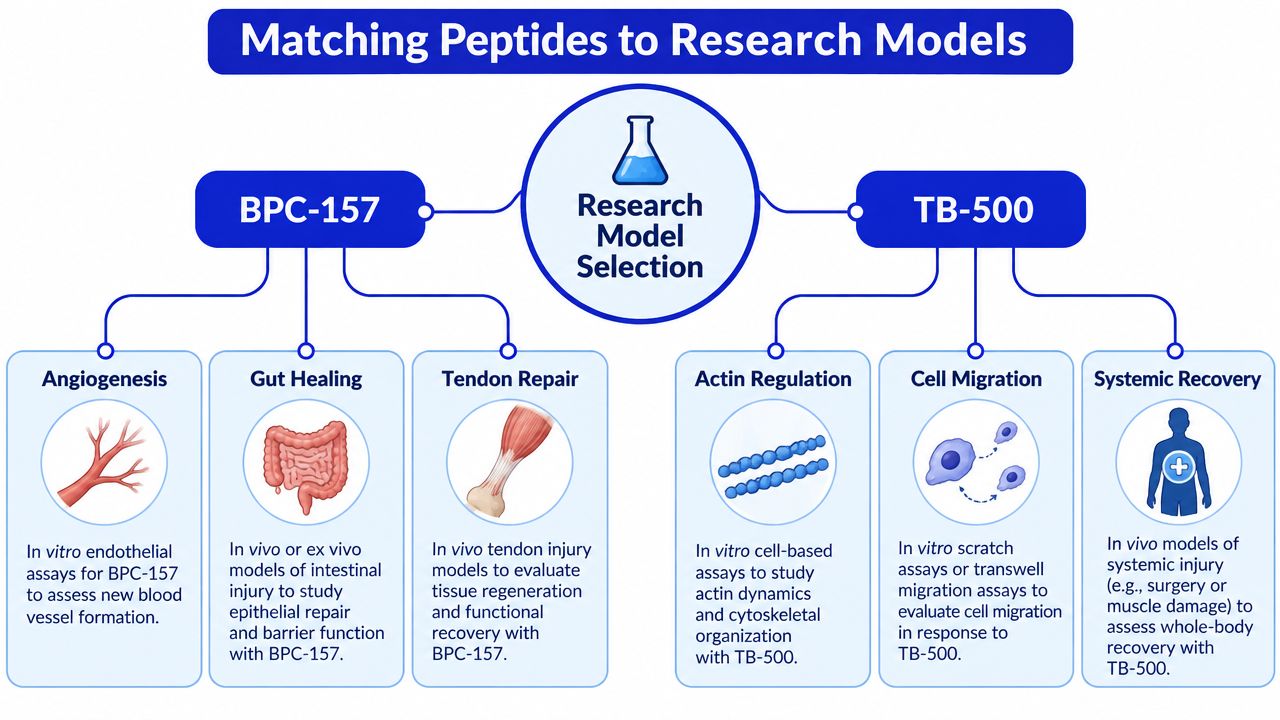
BPC-157 is a rational candidate for exploratory work involving:
BPC-157's breadth allows one research program to examine connected pathways. It also increases the need for prespecified endpoints and mechanistic controls.
TB-500 is better aligned with studies of structural repair and tissue mechanics. In tendon models, maximum load-to-failure provides a functional endpoint that complements histopathology and matrix organization. Cell-migration assays and actin-related readouts can test whether observed effects are consistent with the compound's association with a thymosin beta-4 fragment.
A useful study architecture can separate:
The emerging first-in-human Phase 1/2 study registered for TB-500 in stable atherosclerotic cardiovascular disease is designed to examine safety, tolerability, pharmacokinetics, and exploratory cardiovascular biomarkers. A tendon and translational study source describes this clinical-pharmacology direction. It does not establish treatment benefit. It indicates a research path centered on exposure, safety, and biomarkers rather than informal recovery claims.
The practical rule is direct. Choose BPC-157 when the hypothesis concerns vascular or inflammatory pathway modulation. Choose TB-500 when it concerns cellular movement, matrix organization, or tissue mechanics. Combining both without a defined primary question can add interpretive noise instead of demonstrating synergy.
Procurement quality is part of experimental design. A peptide with uncertain identity, incomplete documentation, or inconsistent handling can turn a negative assay into an ambiguous result. Researchers should evaluate the supplier with the same discipline they apply to a protocol.
A Certificate of Analysis should identify the compound, lot, analytical method, test date, and reported result. The document should be traceable to the specific batch being purchased, not a generic file reused across products. If the COA lists purity, the buyer should also ask how identity and purity were determined and whether an independent laboratory performed the testing.
A useful procurement file includes:
The number on a COA isn't enough by itself. The method, sample identity, laboratory, and chain of custody determine how much confidence the result deserves.
Domestic manufacturing can simplify communication, documentation, and shipping oversight, but location alone doesn't prove quality. Buyers should still confirm batch production procedures, storage conditions, packaging integrity, customer support, and how quickly the supplier can provide records.
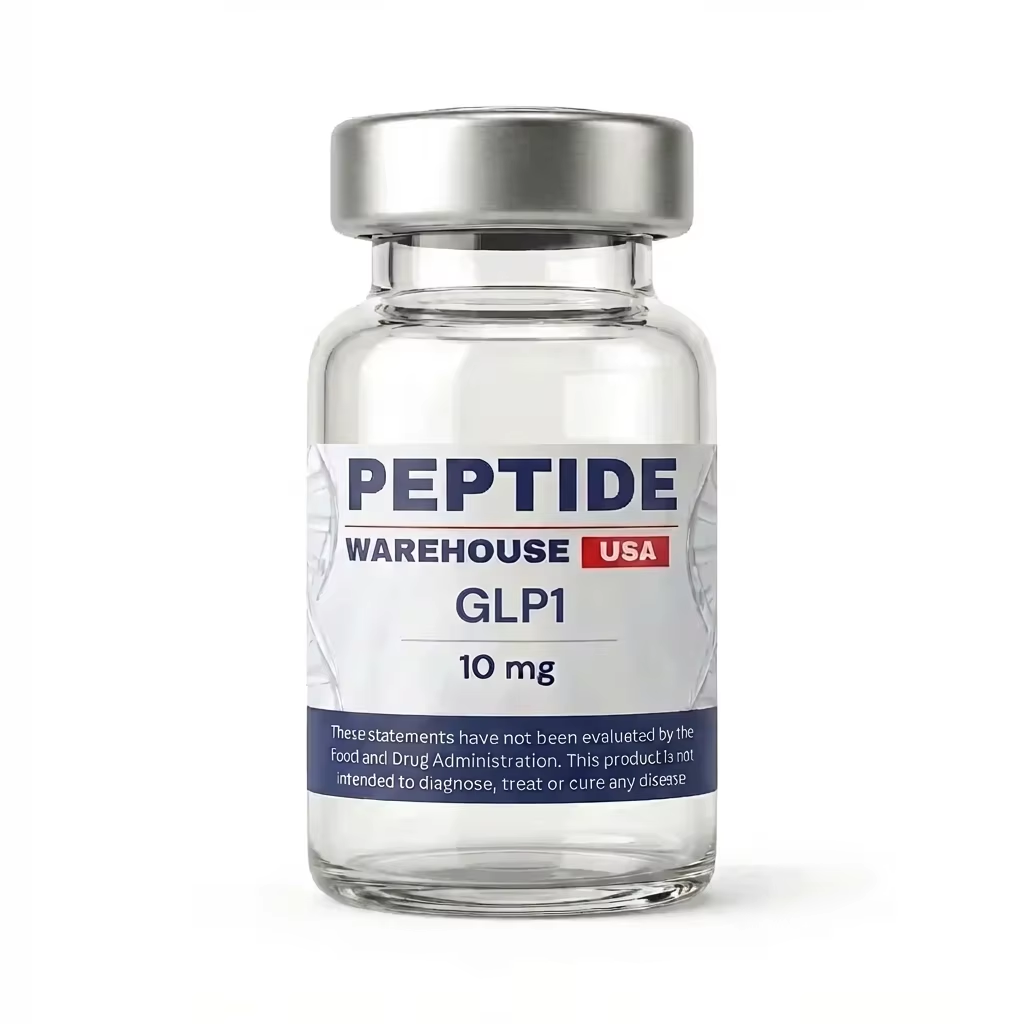
Peptide Warehouse USA describes itself as a U.S. supplier of research peptides and related compounds, with batch testing, COAs, microbial and endotoxin reports, and products labeled for research, laboratory, or analytical use only. Its catalog includes BPC-157 and TB-500 categories, but the company isn't a compounding pharmacy or outsourcing facility, and those products aren't intended for human consumption.
A procurement team can score suppliers against the same questions each time:
For broader context on how supplement claims should be evaluated, the Bandana Rx 2026 joint report offers a useful reminder that product language and evidence quality aren't the same thing. The same discipline applies to investigational peptides.
BPC-157 and TB-500 should be purchased and evaluated as distinct investigational compounds, not as a prevalidated recovery package. BPC-157 offers a broad preclinical platform for studying angiogenic, cytoprotective, inflammatory, and tissue-repair pathways. TB-500 offers a more focused rationale around actin-associated biology, cell migration, extracellular-matrix organization, and tissue mechanics.
Neither profile supports casual therapeutic certainty. BPC-157 remains unapproved for medical use in the United States, and its human evidence is limited. TB-500 has an even clearer clinical evidence limitation, with FDA scientific staff reportedly finding no human studies establishing efficacy or optimal dosing. The absence of combined human validation means a BPC-157 and TB-500 stack should be treated as a hypothesis for research, not as an established intervention.
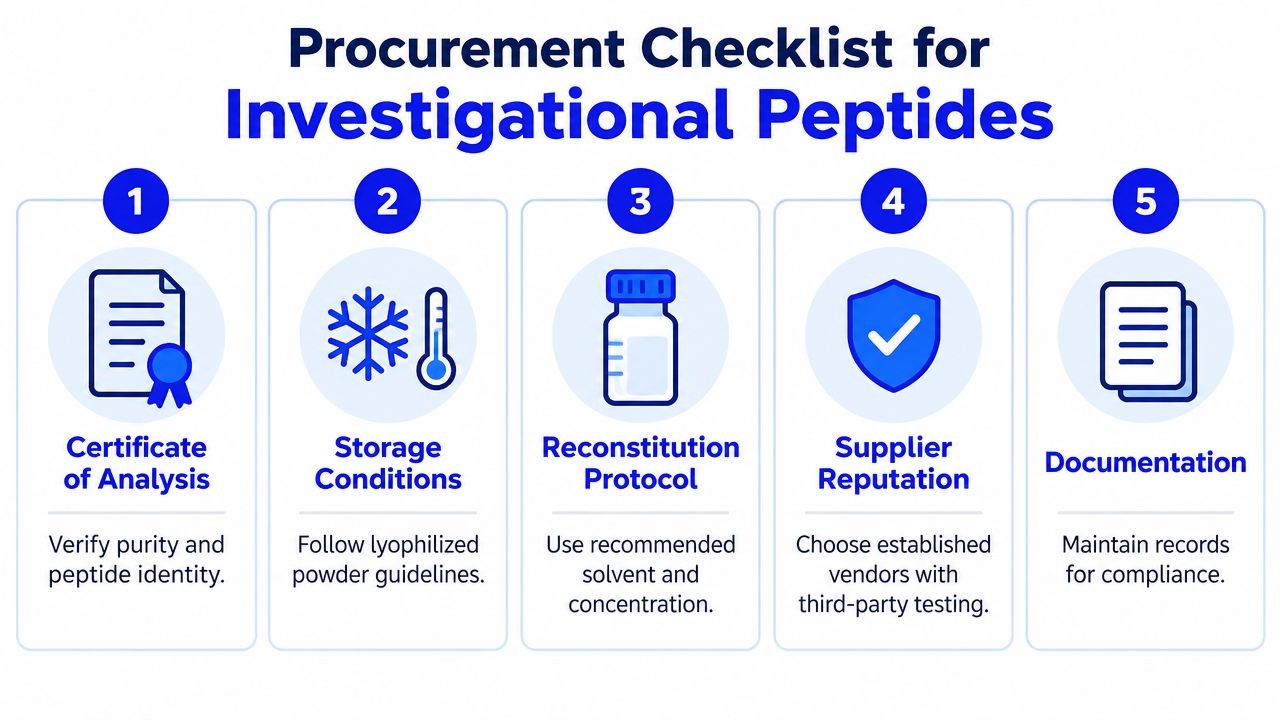
The strongest procurement decision is the one that preserves interpretability. A traceable batch, documented analytical testing, controlled handling, and a model-specific hypothesis won't turn preclinical findings into clinical proof, but they will help a laboratory generate results that can be assessed.
Peptide Warehouse USA offers U.S.-manufactured research peptides, including BPC-157 and TB-500 products, with batch documentation, Certificates of Analysis, microbial and endotoxin reports, and stated purity levels up to 99.5%. Visit Peptide Warehouse USA to explore research-use-only options and review the documentation available for your laboratory procurement process.
Leave a comment