
No products in the cart.



A postdoc has been asked to order a small lot of a custom peptide for a signaling assay. Three suppliers offer apparently similar products, and the cheapest quote looks attractive until the package arrives and the principal investigator asks for the HPLC chromatogram, mass spectrometry trace, net peptide content, endotoxin result, and lot-specific documentation. The problem isn't that the peptide can't be synthesized. The problem is that the purchasing decision was made without defining what evidence the laboratory needed.
That situation is common with research lab peptides. A purity percentage can look reassuring while leaving identity, counterions, water content, contamination, storage history, and regulatory positioning unresolved. This buyer's guide treats peptide procurement as a documentation and risk-control process, not a chemistry purchase alone.
The postdoc starts with a reasonable task: order a small quantity of a custom peptide for a new cell-based assay. During the first hour, she finds several suppliers, compares catalog prices, and notices that one vendor can ship immediately while another requires custom synthesis. The lower quote wins because the specifications appear comparable.
The trouble starts when the lot arrives. The vial carries a product name and a stated purity, but the attached report is a generic certificate rather than a document tied clearly to the lot. Her PI wants to review the actual HPLC and MS evidence before the peptide enters the assay. The team now has to ask questions that should have been answered before the purchase order was approved.
A procurement officer should separate the commercial comparison from the technical comparison. A catalog peptide may offer shorter lead time, while a custom synthesis may better match the required sequence or modification. Neither option is automatically better, and neither price makes up for missing quality records.
Before comparing quotes, confirm:
A laboratory may also need to decide whether a rush order is worth the reduced review time. Fast delivery helps only when the supplier can release the same documentation quickly and the receiving team has a defined acceptance process.
Practical rule: Attach the required analytical and handling documents to the PO before the supplier starts work, not after the vial arrives.
The same discipline applies to the surrounding laboratory workflow. Clear receiving records, storage logs, and responsible disposal reduce uncertainty when a result looks unusual. Teams planning broader equipment or materials management can also consult the Reworx lab recycling program as a resource for responsible laboratory asset handling.
Research-use-only, or RUO, peptides are laboratory materials intended for in vitro, ex vivo, analytical, or preclinical research. They aren't approved drugs, dietary supplements, cosmetic ingredients, or materials sold for clinical, veterinary, or consumer use. RUO labeling identifies the intended-use lane, but it doesn't establish product quality by itself.
That distinction matters because an RUO product hasn't been evaluated as a human or animal treatment. A compliant product page, invoice, vial, and supporting paperwork should keep the language focused on laboratory research rather than dosing, administration, therapeutic outcomes, or consumer benefits. The RUO explanation for peptide buyers provides useful background on that distinction.
Catalog peptides are predefined products that a supplier keeps available or produces repeatedly. They can simplify ordering when the sequence, modification, salt form, and analytical requirements match the protocol.
Custom synthesis is used when a lab needs a specific sequence, label, terminal modification, unusual amino acid, or other defined structure. The buyer should approve the final specification before synthesis begins because a small change in sequence or salt form can affect the analytical result and the experiment.
Peptide libraries contain many distinct sequences produced in parallel. Libraries support screening and discovery work, but the documentation must make clear whether each individual member has been characterized or whether the report describes the library process more generally.
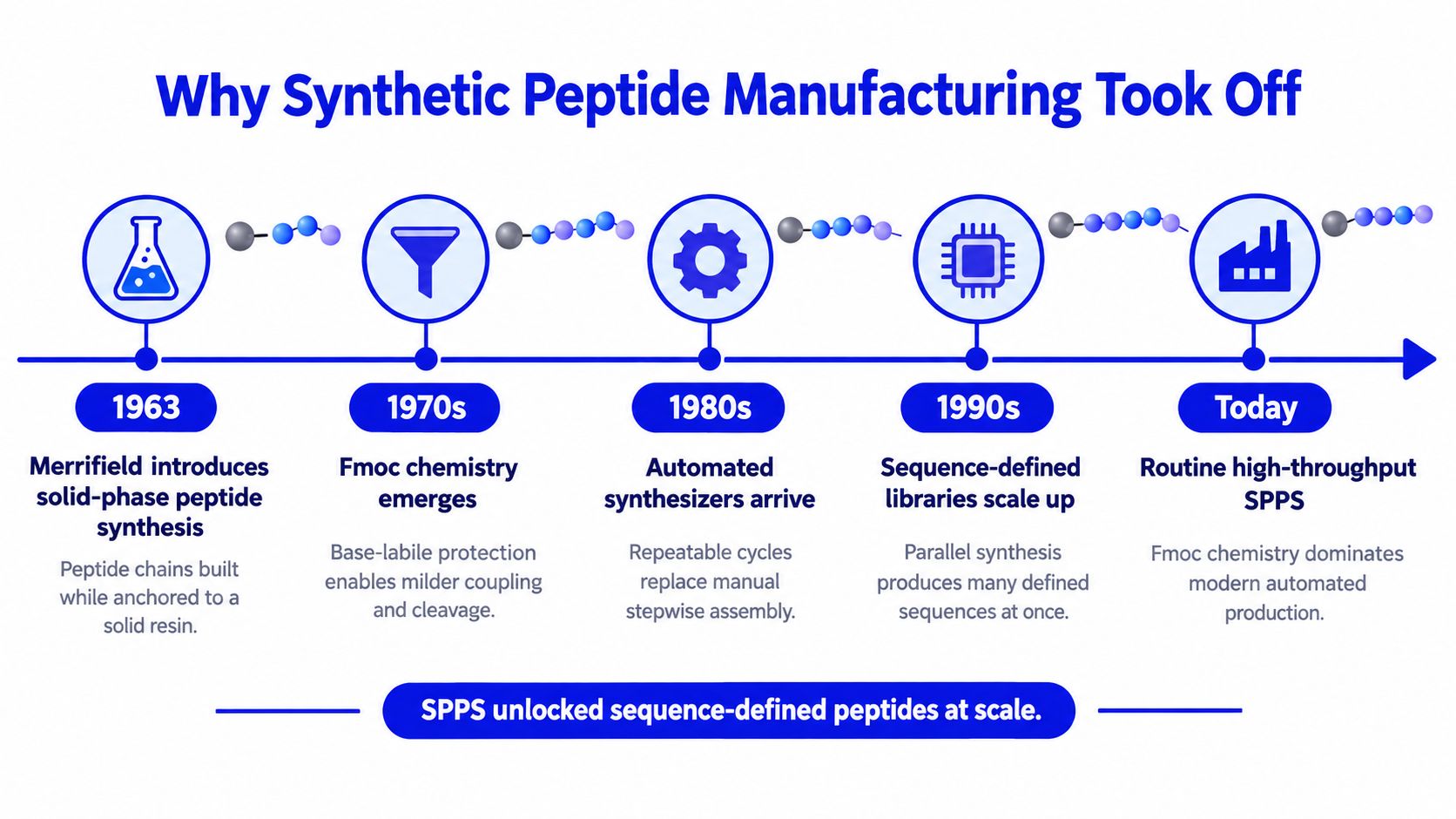
The manufacturing history helps explain why these materials can be produced as defined chemical products rather than extracted biological mixtures.
RUO status therefore creates a purchasing responsibility. The label tells the lab not to infer clinical safety or effectiveness. The COA, test methods, contamination reports, storage evidence, and supplier records tell the lab whether the material is suitable for its specific research purpose.
A procurement officer receives a peptide vial with a clean product label but no lot-specific testing. The sequence may be correct, yet the paperwork cannot show what was made, tested, or released. Synthetic manufacturing changed that purchasing problem by making sequence-defined materials repeatable and traceable.
Robert Merrifield published solid-phase peptide synthesis, or SPPS, in 1963. The method anchored a growing peptide chain to a solid resin, allowing repeated cycles of protection, coupling, washing, and deprotection without isolating the intermediate after each step. He later demonstrated the approach by assembling ribonuclease A, a 124-amino-acid protein, in 1969. The history of the synthetic peptide revolution describes how those milestones influenced modern production.
For buyers, the lasting change was control over the manufacturing record. A supplier could assign a lot, test that lot, and connect the results to the material in the vial. That connection turns a Certificate of Analysis from a general product sheet into evidence about a particular batch.
Automation followed. The first automated peptide synthesizer appeared in 1965, and Fmoc-based chemistry expanded through the 1970s and 1980s, including the first commercial Fmoc amino acids in 1986. These developments supported repeatable synthesis, chromatographic characterization, and mass confirmation for research materials.
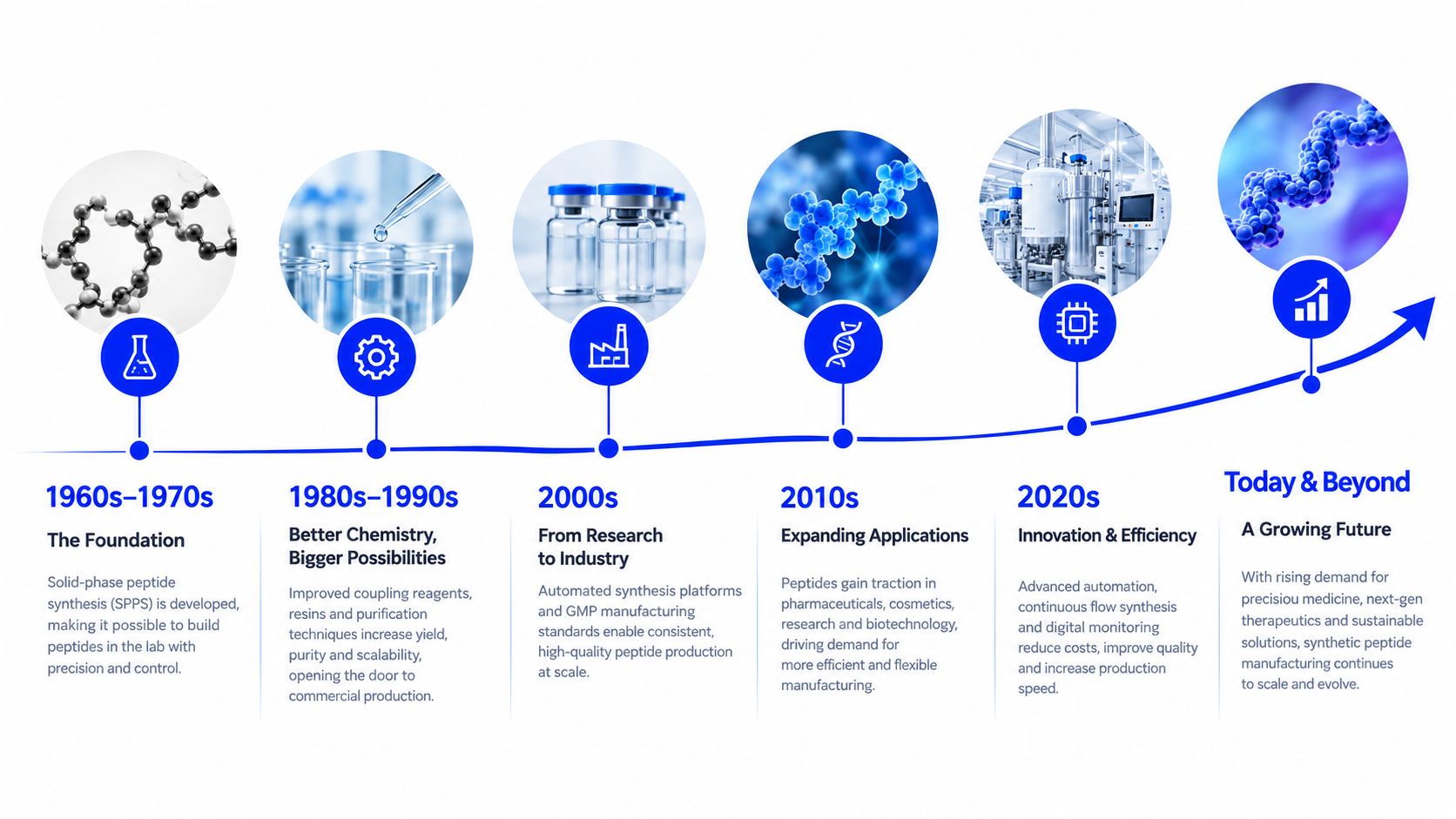
The practical lesson is simple. SPPS made defined production possible, while responsible procurement verifies whether the supplier documents each lot with enough detail to support identification, comparison, and traceability. The chemistry established the capability. The records determine whether a buyer can rely on it.
A COA should answer a basic question: What exactly was tested, how was it tested, and does the result apply to the vial being purchased? A single purity figure can't answer all three.
Reversed-phase HPLC is commonly used to estimate chromatographic purity by integrating ultraviolet absorbance, often around 210–220 nm, and comparing the principal peak area with the total detected peak area. That result describes the chromatographic profile. It doesn't prove molecular identity, and it may underrepresent impurities that don't absorb strongly at the selected wavelength. This HPLC and LC-MS guide explains why HPLC and MS answer different quality questions.
Mass spectrometry provides the orthogonal identity check. Review the theoretical mass, observed mass, ion assignment, and stated tolerance. A peptide can show a convincing HPLC profile while still failing identity confirmation if the measured mass doesn't match the expected structure.
Net peptide content is another separate issue. Lyophilized materials may contain 5–15% water and 10–25% residual counterions, such as TFA or acetate, so the amount of actual peptide can be materially lower than the chromatographic purity result. Procurement should compare purity and content rather than treating either value as a complete description.
| COA Field | What to Verify | Red Flag |
|---|---|---|
| HPLC purity | Chromatogram, wavelength, integration method, and specification | A percentage with no trace or method |
| MS identity | Theoretical and observed mass, ion assignment, and tolerance | Identity asserted without mass data |
| Net peptide content | Assay method, reported content, and calculation basis | Purity presented as usable peptide mass |
| Counter-ion disclosure | TFA, acetate, or another salt form identified | Salt form omitted |
| Test method | SOP or method reference, including revision information where available | Unclear or nontraceable method |
| Lot identifier | Batch number matching the vial label exactly | Generic certificate or mismatched lot |
TFA and other counterions may affect reconstitution, concentration calculations, and assay behavior. A lab shouldn't assume that the labeled mass equals the active peptide mass or that every vial has the same salt composition.
If a lot fails the supplier's stated specification, the correct response is documented rejection and investigation. Negotiating the specification after the result arrives weakens the acceptance process and makes later comparisons harder.
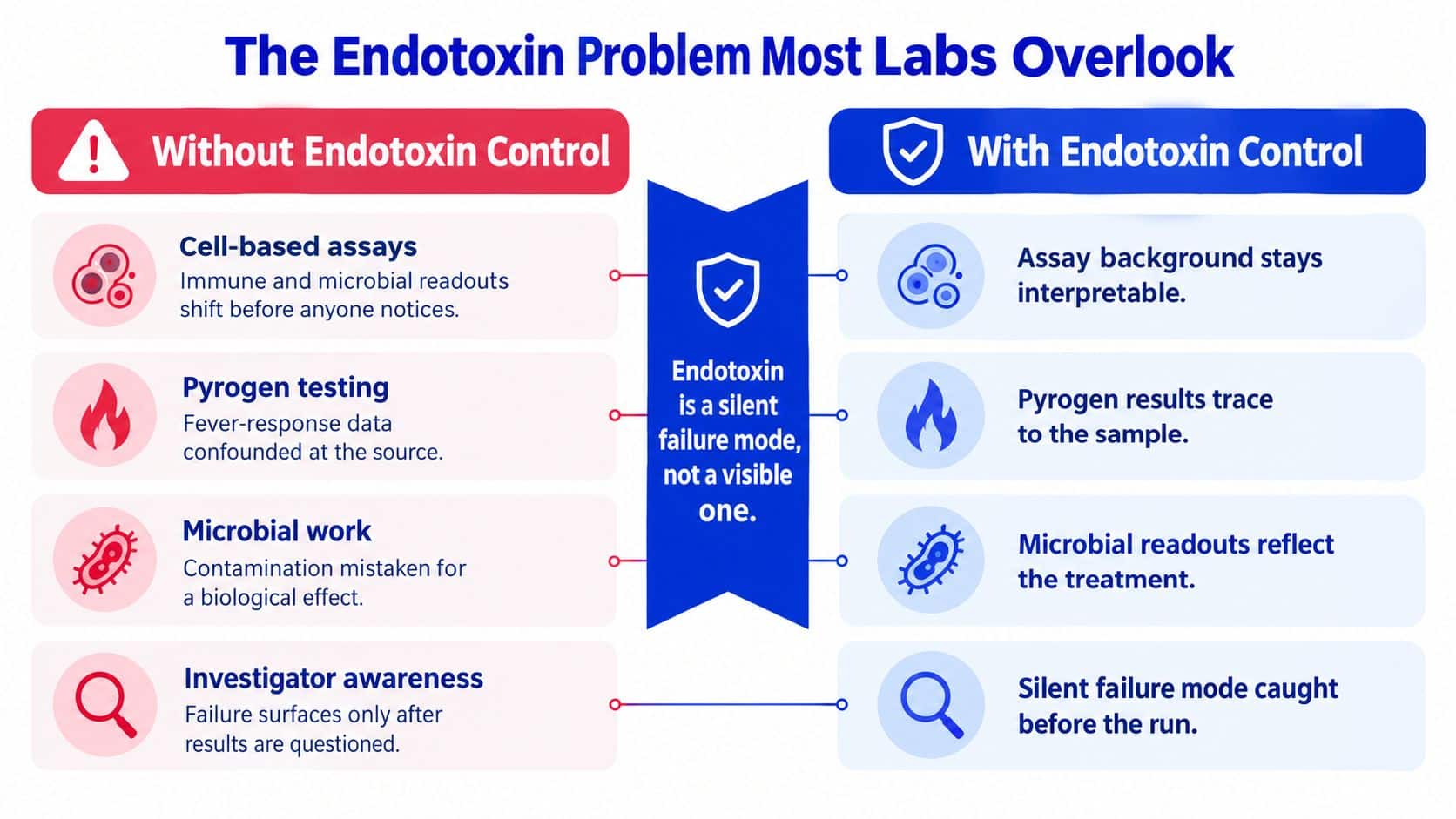
A peptide can pass chemical review and still disrupt a cell-based assay. HPLC and MS generally do not reveal endotoxin or viable microbial contamination, so the procurement file must cover biological contamination as a separate risk. The research peptide endotoxin guidance explains why endotoxin control belongs alongside, not inside, chemical characterization.
Contamination may enter through raw materials, synthesis or purification equipment, glassware, handling, lyophilization, or packaging. Treat the supplier's report like a chain-of-custody record: it should connect the result to the exact lot and show whether the test supports the planned use.
Ask the supplier which assay was used, whether the result is lot-specific, and whether the stated limit matches the application. LAL testing is common. In gel-clot testing, the reaction is checked after incubation at 37°C for about 60 minutes. For cell-culture work, final working concentrations below 0.1 EU/mL are often used as a practical benchmark. A pharmaceutical parenteral reference of 5 EU/kg/hour does not replace a research-use acceptance limit.
“Low endotoxin” is a product description, not sufficient evidence for a contamination-sensitive protocol. The documentation should include:
A contaminated reagent can trigger unexplained cytokine release, harm sensitive primary cells, or activate innate immune pathways before the investigator finds the source. The result is both a purchasing failure and a data-interpretation problem. Keep the report with the purchase record so a later assay review can trace the material, method, and acceptance decision.
A lot can arrive with a complete quality record and still become unreliable in the receiving laboratory. Storage and handling are therefore part of the lot's chain of control. The procedure should preserve the material while recording conditions that could later affect an assay.
For lyophilized peptides, laboratories may use minus twenty degrees Celsius for shorter-term storage and minus eighty degrees Celsius for longer-term storage, when those conditions agree with the supplier's stability information. “Store dry” requires more than placing a vial in a freezer. Peptides may absorb moisture, so desiccated storage, intact seals, and brief exposure to ambient air help protect the powder.
A cold vial should equilibrate before opening. Opening it immediately can produce condensation and add moisture to a hygroscopic powder. Use pre-cooled tubes and low-protein-binding containers when the protocol requires reliable recovery at low concentrations.
Once reconstituted, the material needs a separate control plan:
Short records prevent long investigations.
At receipt, document the delivery date, lot number, vial condition, storage location, reconstitution solvent, concentration, and operator. These entries help separate a supplier issue from moisture exposure, a temperature excursion, a concentration error, or repeated freeze-thaw cycles. The result is a procurement record that supports both material control and later interpretation of assay results.
A vial marked research use only can still create a compliance problem if the surrounding transaction suggests human use. Regulatory coverage describes FDA warning letters during 2024–2025, explaining that disclaimers do not determine regulatory status when other evidence points toward human-use intent. The same coverage notes that several peptides remained or became restricted in compounding pathways in 2026. Buyers therefore need a jurisdiction-aware review, not a generic statement that a product is “legal to buy.” See the FDA regulatory overview for peptide procurement for that context.
Start with the full purchasing record, not the vial label. Auditors and institutional reviewers may examine product pages, invoices, customer communications, packaging, and certificates together. Therapeutic claims, testimonials about personal outcomes, in vivo dosing protocols, or clinical-style packaging can weaken the stated RUO position even when the label itself uses compliant wording.
A useful test is whether another reviewer could understand the intended use without asking the buyer to fill in missing context.
The procurement file should identify the supplier, connect the paperwork to the shipped lot, and show consistent research-only language. Depending on institutional policy and jurisdiction, request:
Treat inconsistencies as review findings. For example, research-only wording on a vial does not resolve a product page that promotes therapeutic outcomes, while a lot-specific COA cannot compensate for an unidentified supplier. The record should make the intended use, responsible parties, and material traceability clear.
The buyer must also avoid adding dosing instructions or clinical claims to internal purchasing documents. Researchers and institutions need to review state-level rules, import requirements, controlled-substance restrictions where applicable, and local policies governing preclinical materials.
| Warning Letter Finding | Regulatory Trigger | Buyer-Side Documentation Required |
|---|---|---|
| Human-use or therapeutic language | Evidence that the product is marketed beyond laboratory research | Archived product and purchasing language showing research-only positioning |
| Dosing or administration instructions | Indication of intended human or animal use | Confirmation that no dosing protocol is supplied with the product |
| Supplier-chain opacity | Difficulty identifying the manufacturer or responsible distributor | Vendor identity, traceability records, and shipment documentation |
| Missing RUO status on conformity paperwork | Inconsistent intended-use documentation | Lot-specific CoC or equivalent record with RUO language |
| Clinical-style presentation | Packaging or presentation that suggests an approved treatment | Photographs or receiving records showing research labeling |
Keep records showing what was ordered, why it was ordered, who supplied it, which lot arrived, and what testing supported release. Compliance is controlled through evidence, not through a label alone.
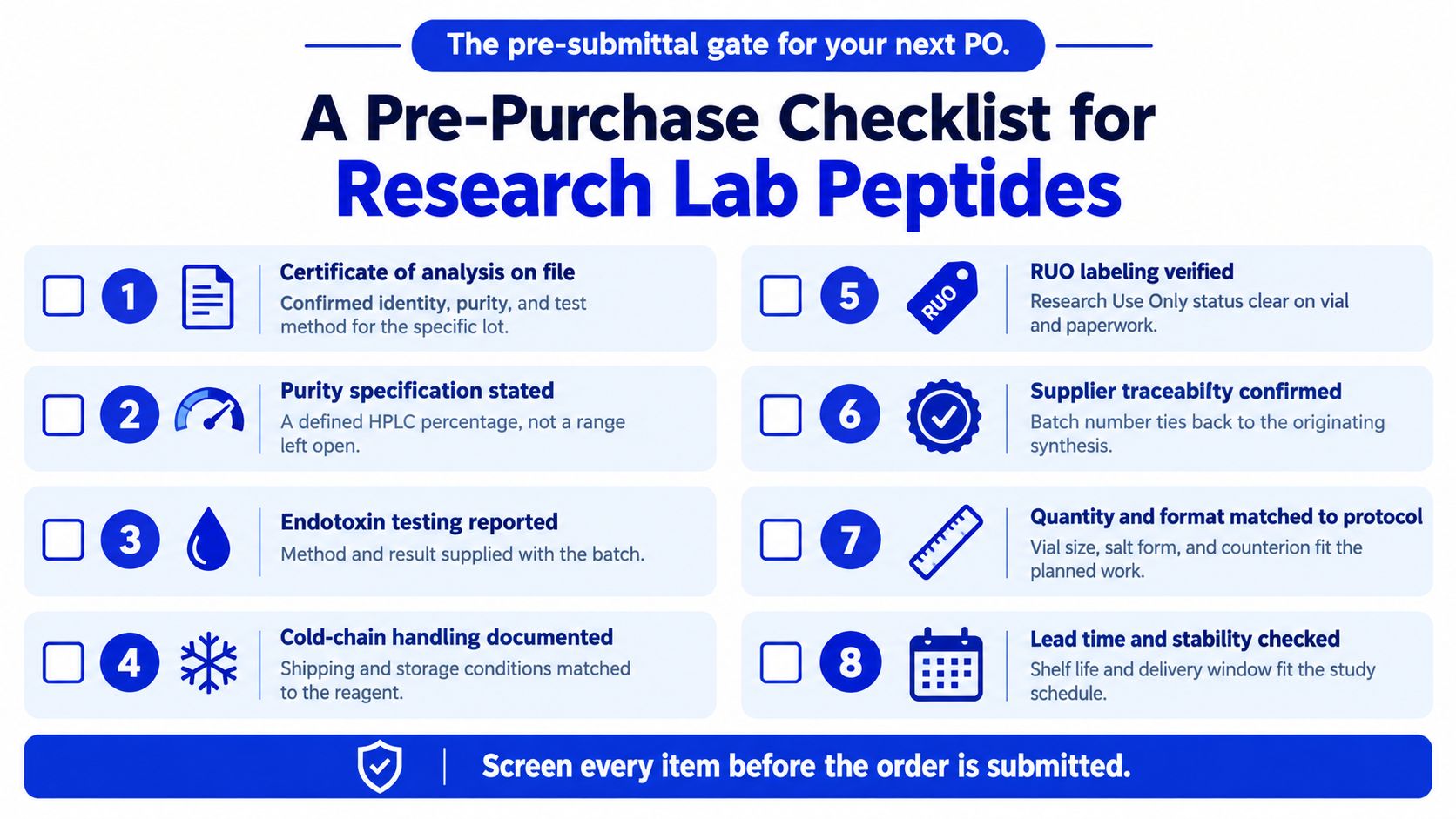
Treat the next purchase order as a pre-submittal gate. The checklist shouldn't sit in one buyer's inbox. Add it to the laboratory's procurement policy, supplier qualification process, and receiving SOP so every new peptide receives the same initial review.
Request the batch-specific COA. Require the HPLC trace, MS confirmation, methods, specifications, and lot number. The research peptide procurement framework emphasizes that the COA's value depends on matching the tested batch to the vial label exactly.
Verify net peptide content. Ask whether the supplier used amino acid analysis, elemental analysis, or another stated method. Use that result when calculating working concentrations.
Review endotoxin and microbial data. Require the assay method, result, units, and limit. A stated threshold without the lot report shouldn't close the review.
Check residual solvents. Confirm that the panel and acceptance criteria align with the laboratory's risk assessment and the relevant ICH Q3C framework.
Confirm the physical format. Verify lyophilized presentation, vial size, salt form, counterion, and vacuum or seal integrity documentation where specified.
Match storage to stability evidence. Confirm shipping temperature, recommended storage, and available stability information before selecting a delivery schedule.
Preserve traceability. Store the COA, invoice, purchase order, receiving record, and any test report in a contract-traceable location. The lot must remain identifiable after the project changes hands.
Verify RUO labeling. Check the shipping carton, vial, insert, invoice, and digital product documentation for consistent research-only language.
Write an acceptance remedy into the terms. The commercial agreement should allow replacement or credit when the material fails the pre-agreed identity, purity, contamination, or handling specification.
Equipment reliability and documentation practices often overlap in regulated laboratory operations. For broader maintenance and pharmaceutical equipment considerations, the Forge Reliability pharmaceutical guide can help teams think about traceability beyond the peptide vial itself.
A borderline result needs escalation, not an informal exception. Place the lot on hold, record the discrepancy, request the supplier's investigation, and ask the technical owner to decide whether additional testing can resolve the issue.
If the problem affects a released or used lot, open a CAPA that identifies the failure, immediate containment, root-cause review, corrective action, preventive action, and effectiveness check. Switch vendors when the supplier repeatedly provides generic records, cannot resolve lot mismatches, changes specifications after testing, or treats contamination data as optional.
Use the checklist as a living filter. Review it after assay failures, supplier changes, custom synthesis projects, and updates to institutional policy.
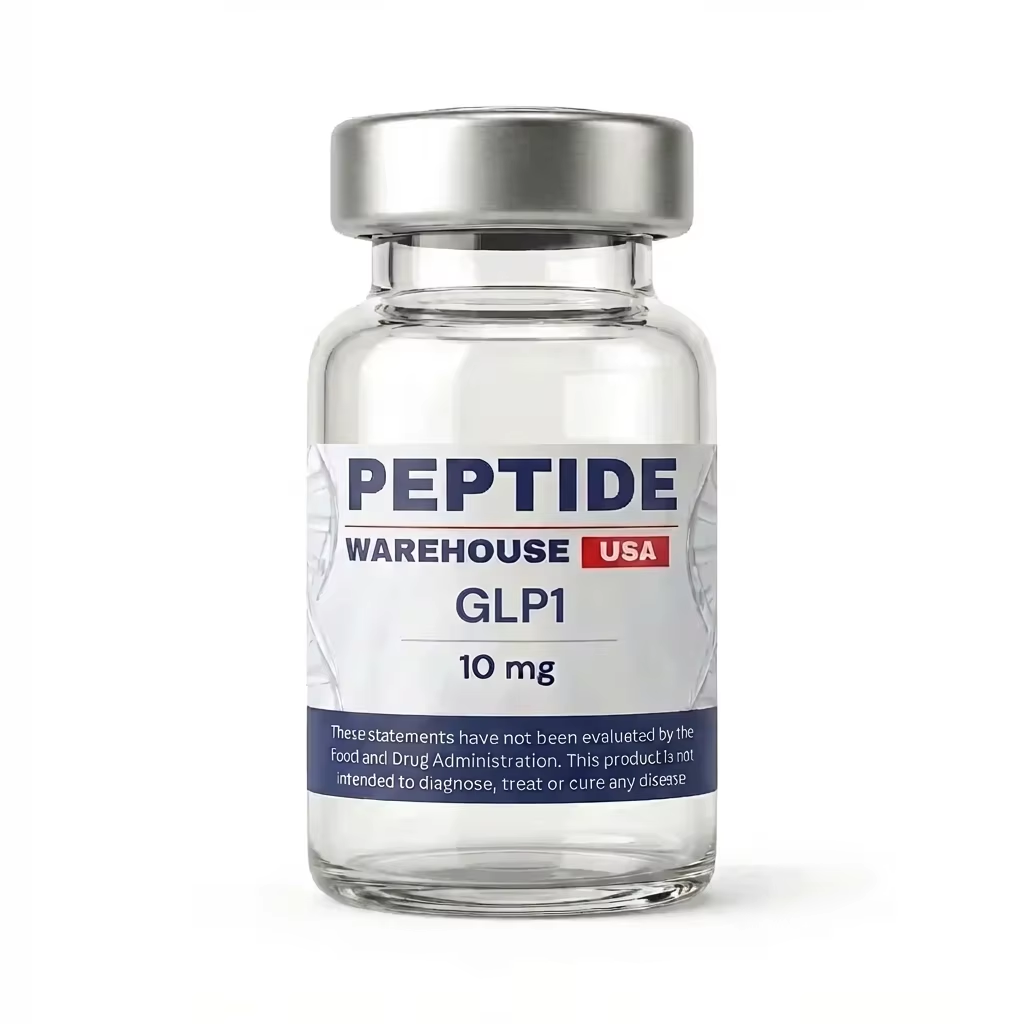
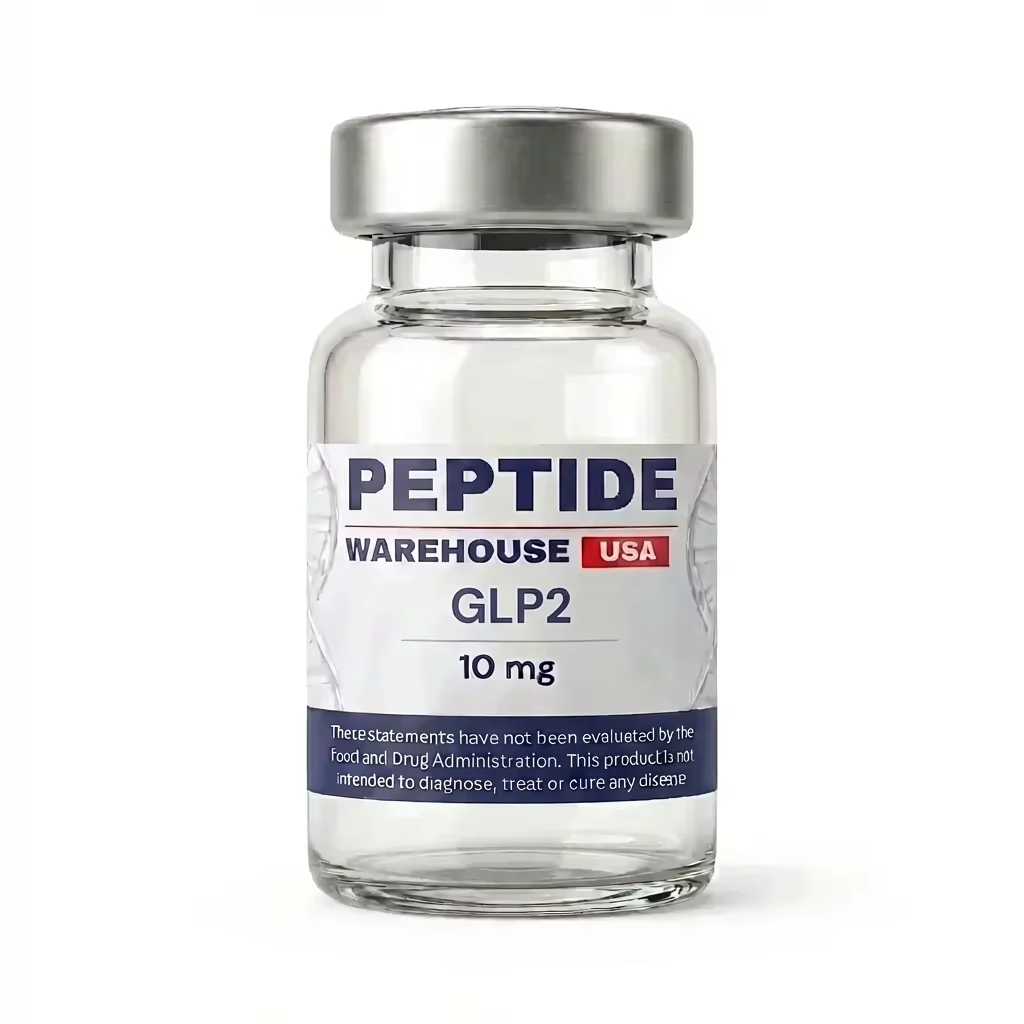
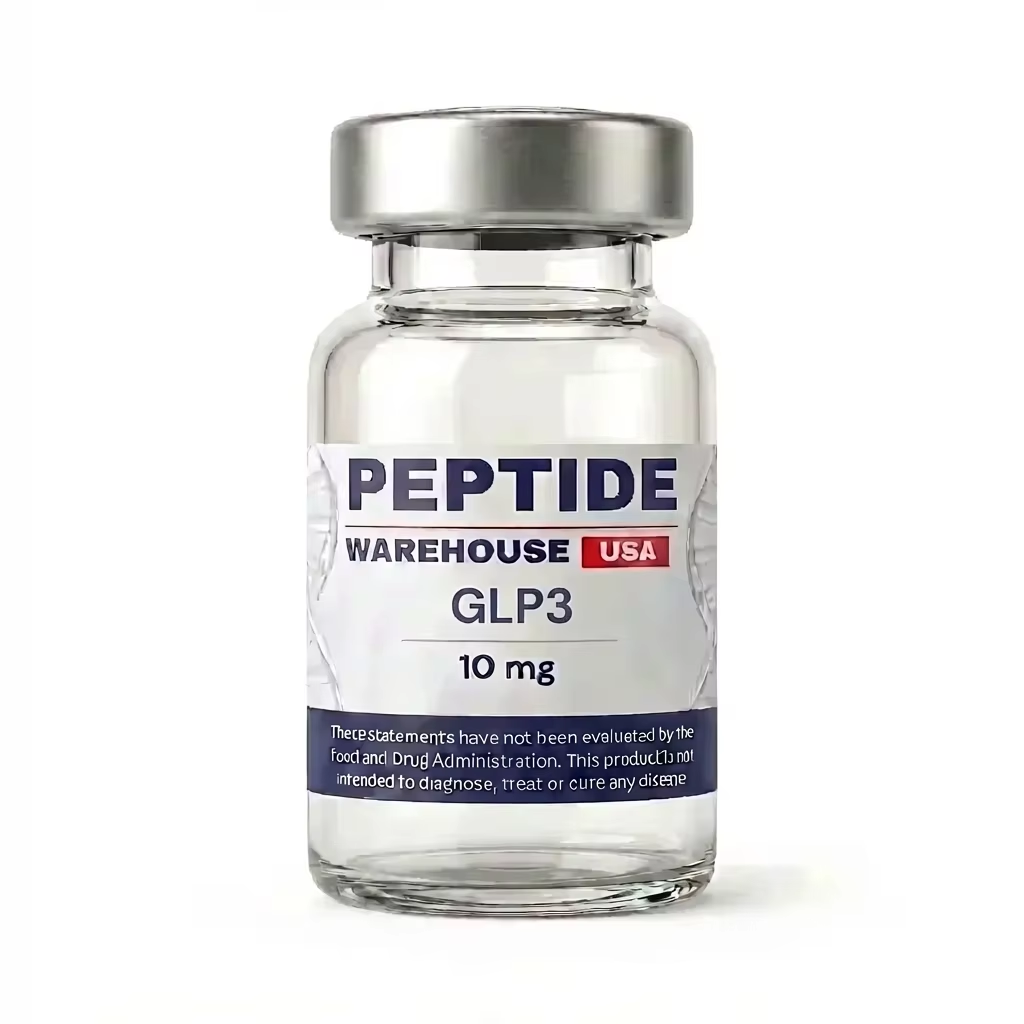
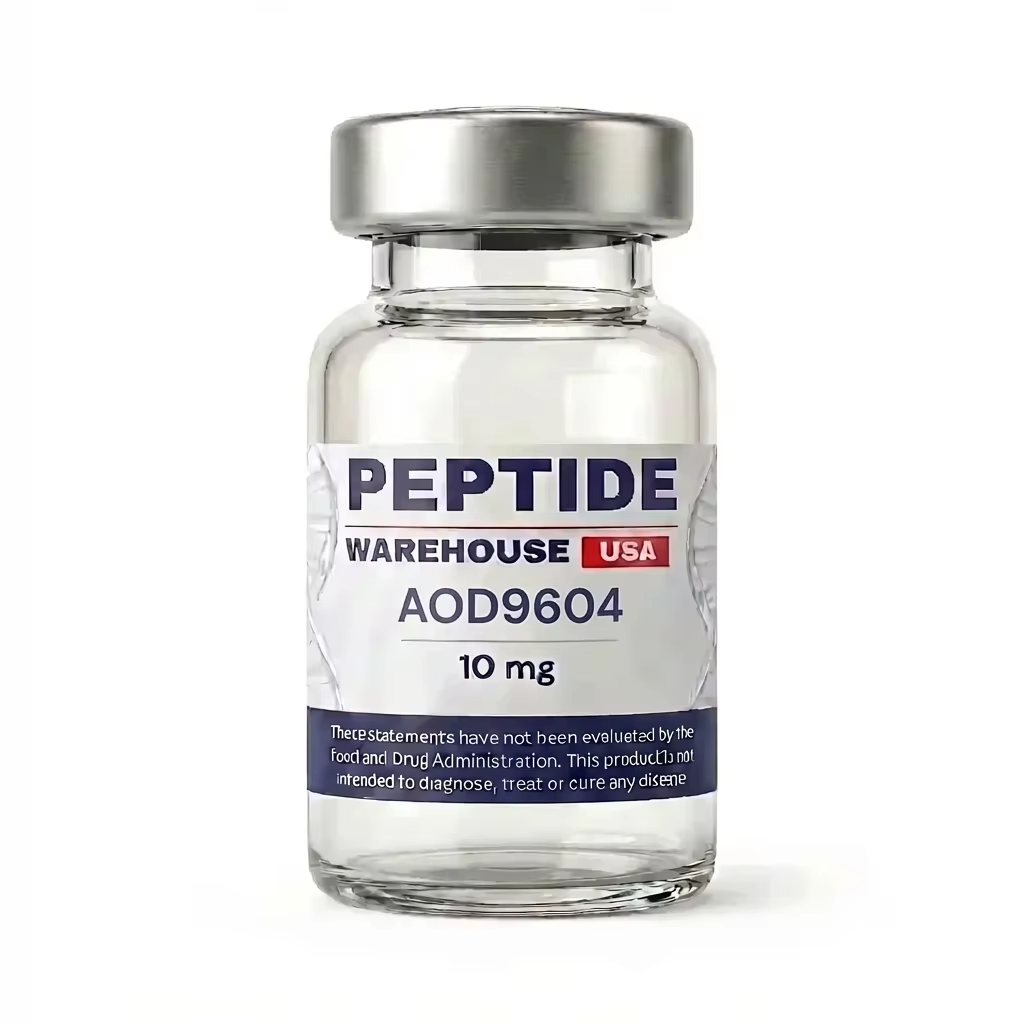
Peptide Warehouse USA offers research peptides and related compounds for laboratory, analytical, and preclinical applications, with batch documentation that can include COAs plus microbial and endotoxin reports. Review the available materials, confirm that the lot-specific records match your protocol, and visit Peptide Warehouse USA to explore options for a documented research supply workflow.
Leave a comment