No products in the cart.


You're probably in the same spot many researchers hit sooner or later. You need a peptide for a legitimate lab workflow, you search online, and within minutes you're looking at dozens of vendors that all say “high purity,” “USA made,” and “research use only,” but very few show enough proof to trust the label.
That's the main problem with Research Peptides USA as a search topic. The issue isn't finding sellers. It's separating documented laboratory suppliers from sites that lean on vague claims, recycled certificates, or language clearly aimed at human use while hiding behind a research disclaimer.
A careful sourcing process matters more now because peptide research infrastructure in the United States keeps expanding. The U.S. peptide therapeutics market was valued at USD 14.3 billion in 2021, grew to USD 15.3 billion in 2022, and reached USD 17.6 billion in 2024, reflecting a growing research environment that depends on reliable materials, according to peptide therapeutics market data from Global Market Insights.
Buying research peptides in the U.S. should be straightforward. In practice, it rarely is. A new buyer usually sees polished product pages, purity claims, and a flood of peptide names such as BPC-157, GHK-Cu, PT-141, TB-500, Selank, and Semax, but the important details are often buried or missing.
That's where due diligence has to become routine, not optional. A peptide may look acceptable on a storefront page and still be poorly documented, improperly handled, or marketed in a way that creates legal and quality concerns for the buyer.
Three checks usually sort serious suppliers from everyone else:
Practical rule: If a supplier makes it easier to buy than to verify, the risk is already too high.
For a working lab, the point isn't to find the cheapest vial. It's to source material that won't compromise an assay, waste a study cycle, or create documentation gaps when someone asks where the material came from and how it was validated.
Researchers who handle sourcing well usually do the same few things consistently. They confirm the legal status of what they're buying, they read the analytical paperwork themselves, and they treat “American-made” as a claim that needs evidence. That approach is slower up front, but it prevents avoidable problems later.
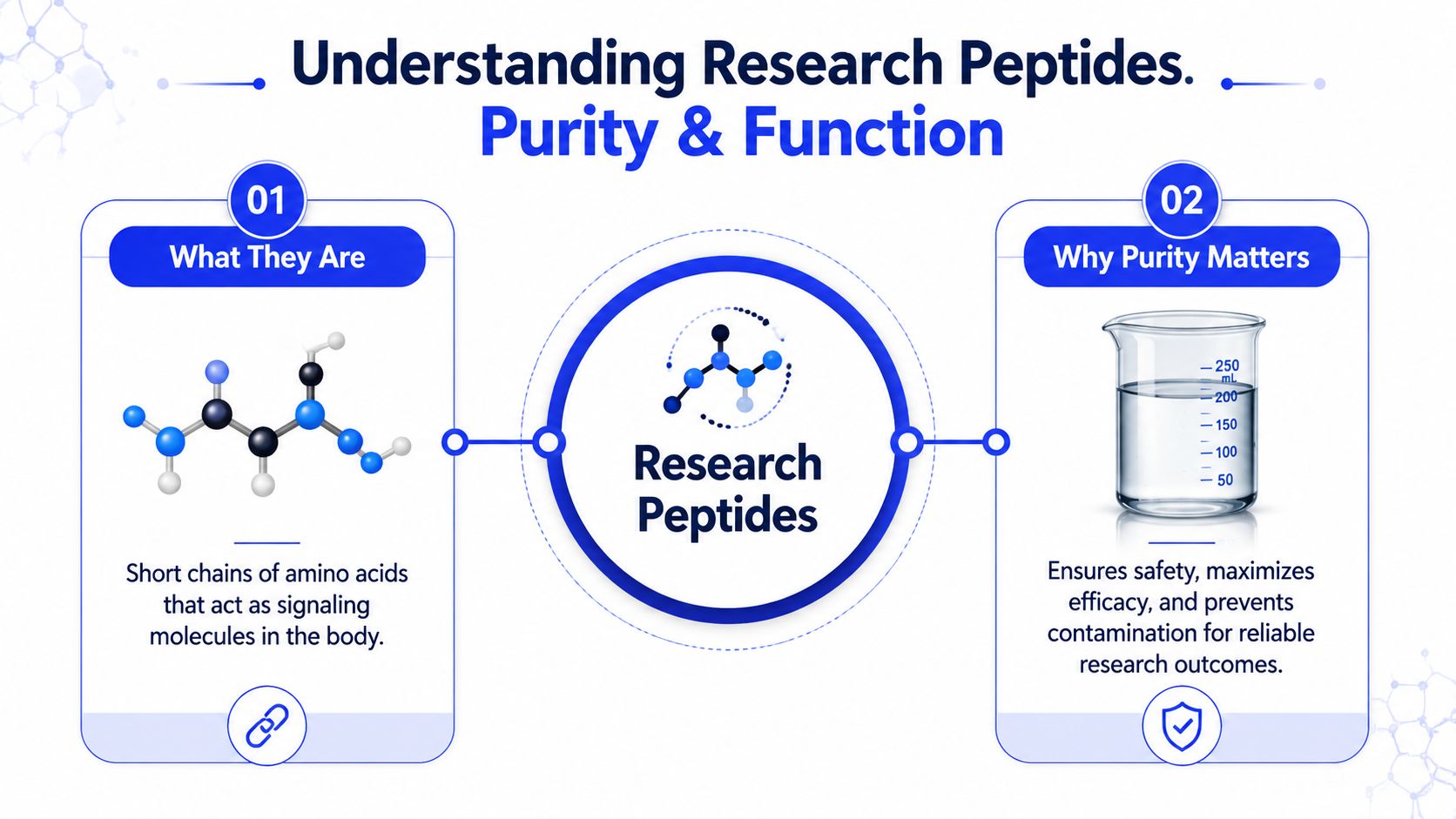
Peptides are short chains of amino acids. In research settings, they're often used as tools for receptor work, signaling studies, analytical method development, formulation evaluation, and preclinical investigation.
The phrase research peptides sounds simple, but the label creates confusion. Many buyers assume “research-grade” means a product is broadly equivalent to a regulated drug standard. It doesn't.
A useful way to think about it is this. Research-grade material is like receiving carefully prepared raw ingredients with analytical paperwork. Pharmaceutical-grade material is the finished meal produced under a separate, much stricter regulatory system.
That distinction matters because products sold for laboratory research purposes are not regulated as prescription medications and are not required to meet the same manufacturing, sterility, potency, labeling, or oversight standards that apply to FDA-regulated drug products or legally compounded medications, as explained in this peptide quality and safety guide.
So when a vial says “research use only,” that language isn't decorative. It identifies the intended setting for the material. It also tells you what the seller is, and what the seller is not.
A research supplier can still be careful, transparent, and technically strong. But the buyer has to verify those qualities with records and testing documentation, not assumptions.
Purity matters because peptide experiments are sensitive to small deviations. Impurities can shift binding behavior, alter signal strength, complicate interpretation, or introduce inconsistent baseline noise across runs.
In practical terms, higher-purity material gives you a cleaner starting point. It doesn't guarantee a perfect experiment, but it removes one major source of preventable variability.
Here's the mistake I see most often in new buyers. They stop at the purity figure printed on the product page and treat that number as the full quality story. It isn't. Purity percentage answers one question. Research integrity requires several.
Consider the difference:
| Check | What it tells you | What it does not tell you |
|---|---|---|
| Purity result | Relative chemical purity | Endotoxin or microbial status |
| Mass confirmation | Identity consistency | Handling quality after production |
| Product label | Intended use | Whether the batch paperwork is real |
| COA presence | Documentation exists | Whether it is batch-specific and current |
A good peptide result starts long before the assay. It starts with what was in the vial, how the batch was tested, and whether the documentation actually matches the lot in your hand.
That's why quality control has to move beyond broad language like “high purity” or “lab tested.” Serious suppliers show the data.
The legal side of peptide sourcing is where many buyers get tripped up. They see online discussions about compounding, supplier disclaimers, and specific peptide names, then assume the rules changed more than they did.
Near the start of any compliance review, I look for one thing first. Is the supplier clearly operating as a research chemical source, or is it using research language as a thin shield while implying human use?

A notable regulatory update did occur. In 2026, HHS Secretary Robert F. Kennedy Jr. announced the removal of 12 specific peptides from the FDA's Category 2 restricted list for compounding pharmacies, including BPC-157, TB-500, GHK-Cu (injectable), Semax, and Semax-like compounds, due to withdrawal of nominations. Despite these removals, distribution of research chemicals and unapproved peptides for human consumption remains illegal in 2026, according to this 2026 peptide regulation update.
That's the sentence buyers need to read carefully. Removal from that restricted list did not transform these compounds into approved products for consumer use. It also didn't erase the distinction between laboratory sourcing and human-use distribution.
For legitimate research procurement, the boundary is straightforward in principle, even if online marketing often muddies it.
Researchers should expect a compliant supplier to do the following:
What suppliers should not do is just as important. If a site pairs “not for human consumption” language with obvious dosing cues or benefit claims aimed at consumers, it's telling you two different stories at once.
Later in the buying process, I also pay attention to customer support replies. If a vendor answers a research question with real batch information, storage guidance, and documentation, that's one thing. If they answer with lifestyle promises or wink-and-nod usage talk, that's another.
For readers who want a broader visual overview of the policy environment, this explainer is useful:
The legal test isn't whether a site uses the phrase “research use only.” The legal test is whether the seller behaves like a research supplier from top to bottom.
That's the standard worth using when you screen vendors.
A new vial arrives, the label looks clean, and the product page promised high purity. None of that helps if the lot number on the vial does not match the certificate in your files, or if the supplier cannot show who ran the testing. In peptide sourcing, paperwork is part of the material.
I screen suppliers the same way I review incoming lab reagents. Start with traceability, then confirm analytical support, then decide whether the vendor has earned a place in your procurement list. Price and shipping still matter, but they come after verification.
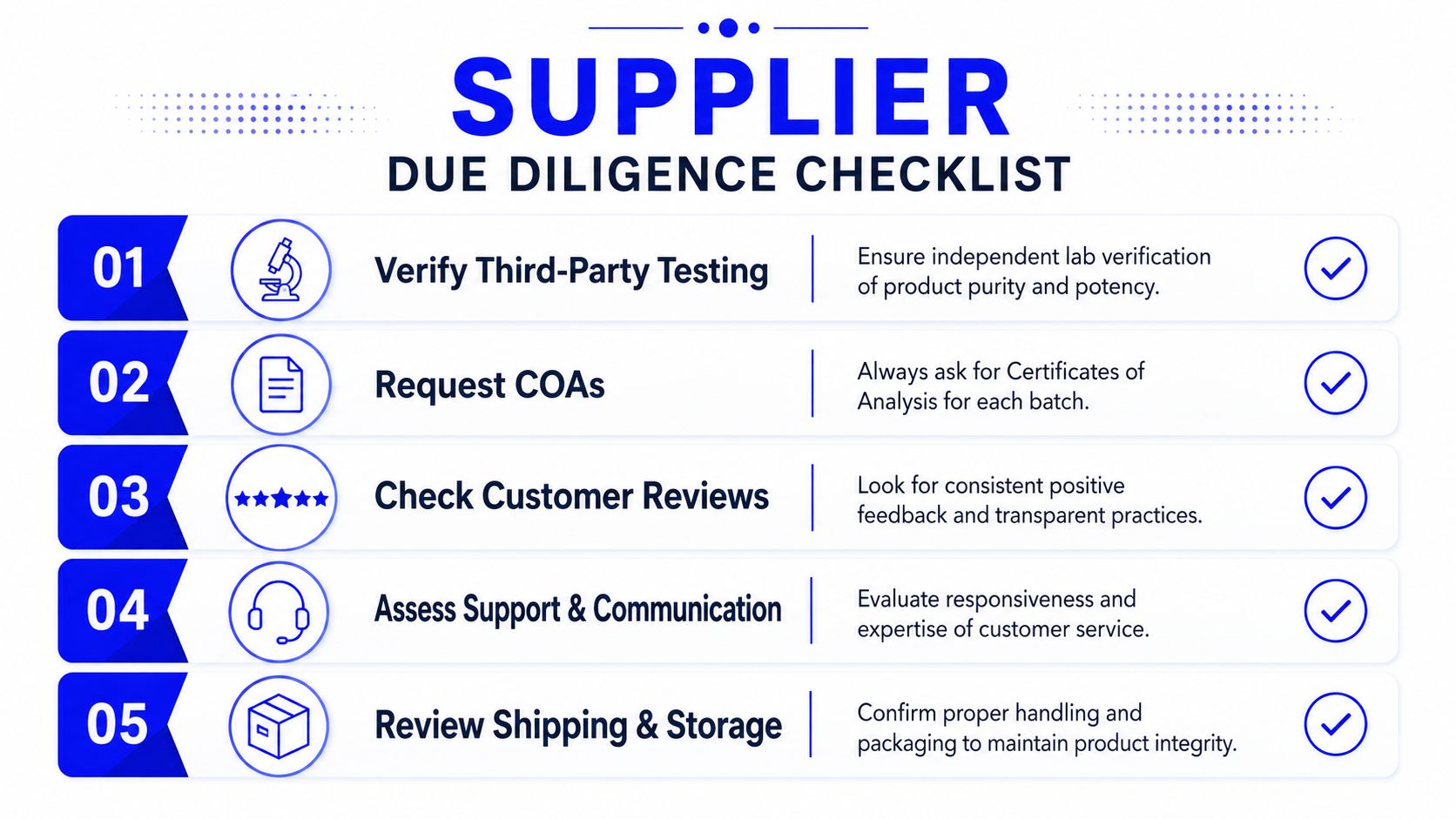
A supplier worth reviewing should make core quality records easy to request or download. If basic batch documentation is buried, missing, or inconsistent, treat that as a process problem, not a website problem.
Use this checklist before placing an order:
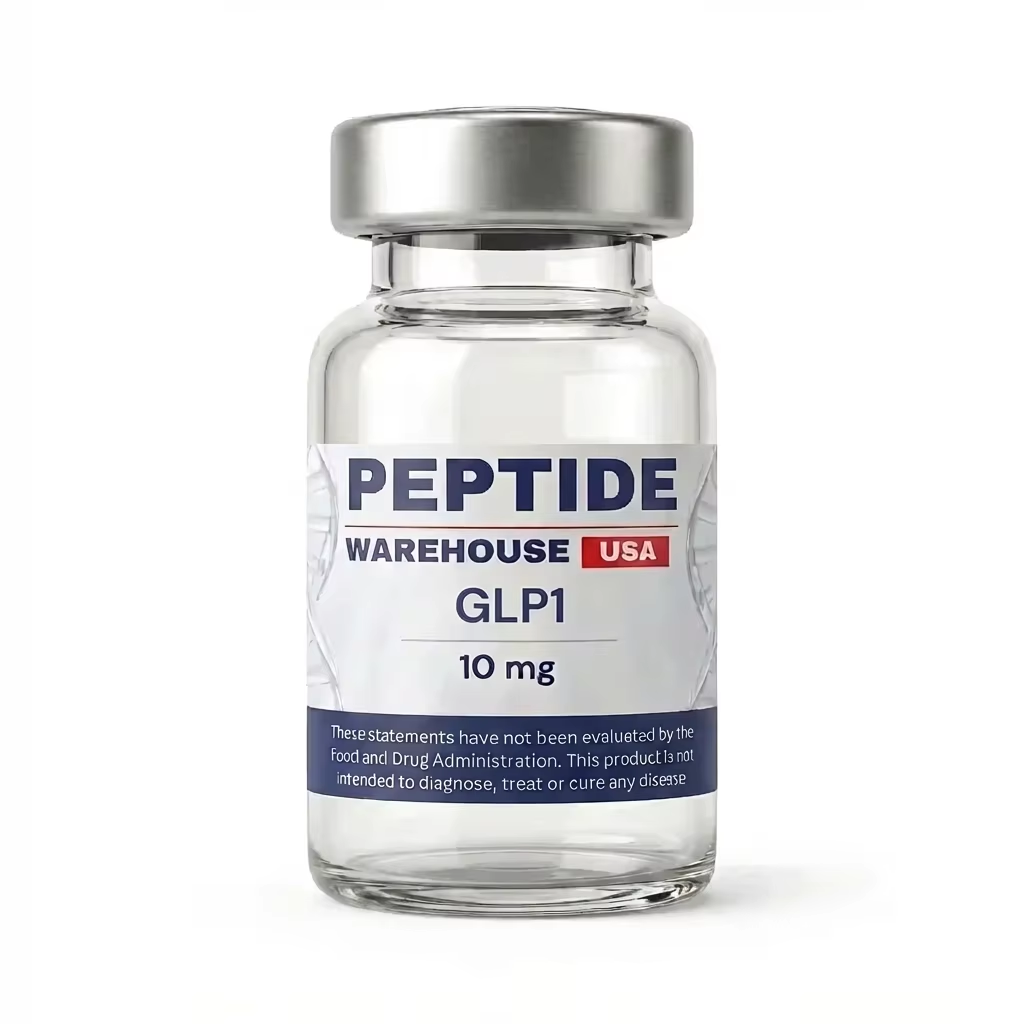
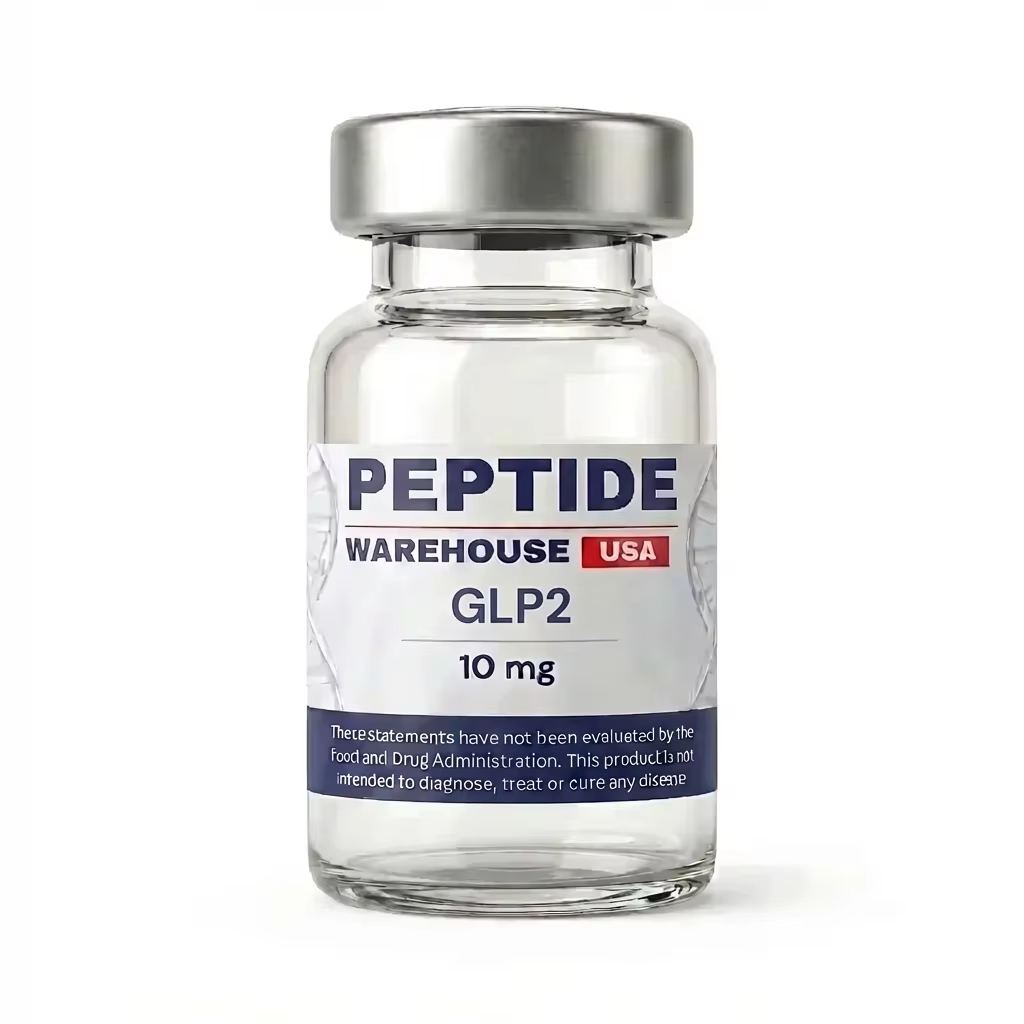
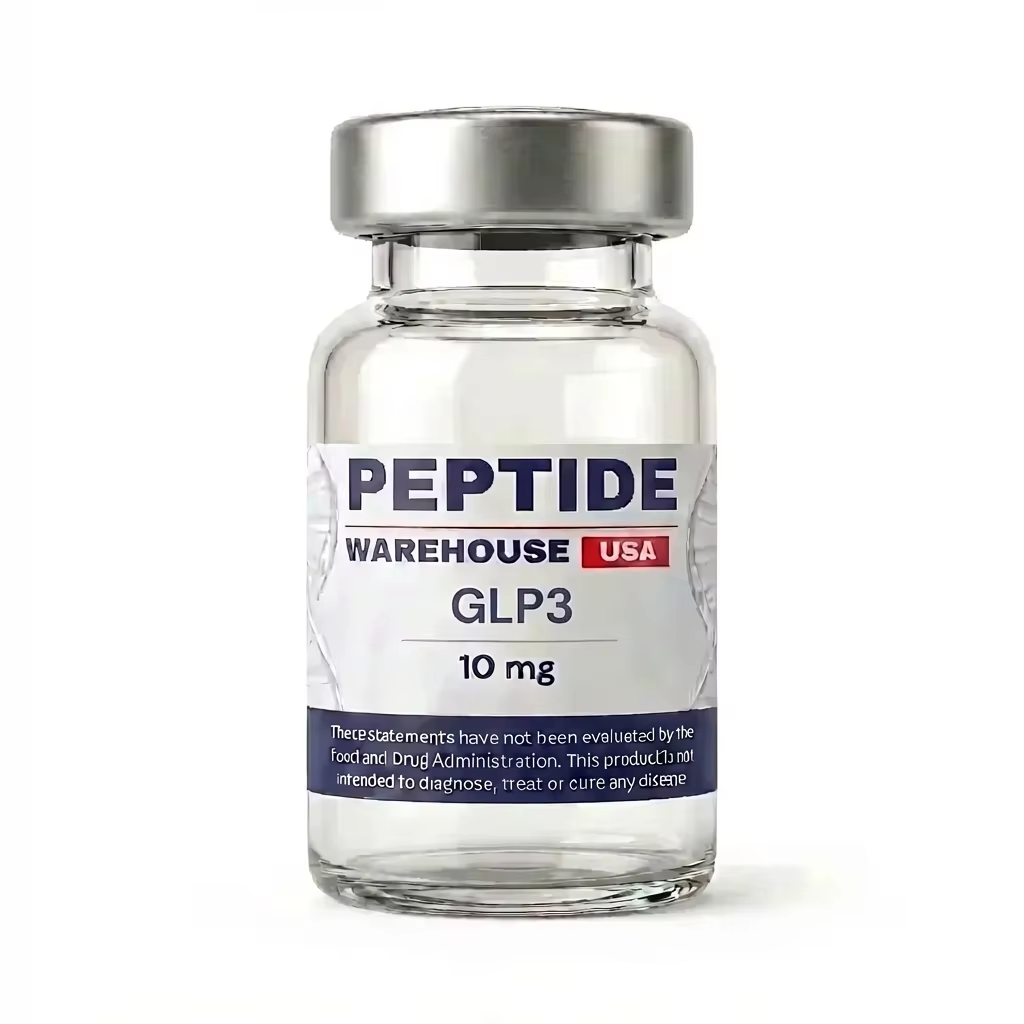
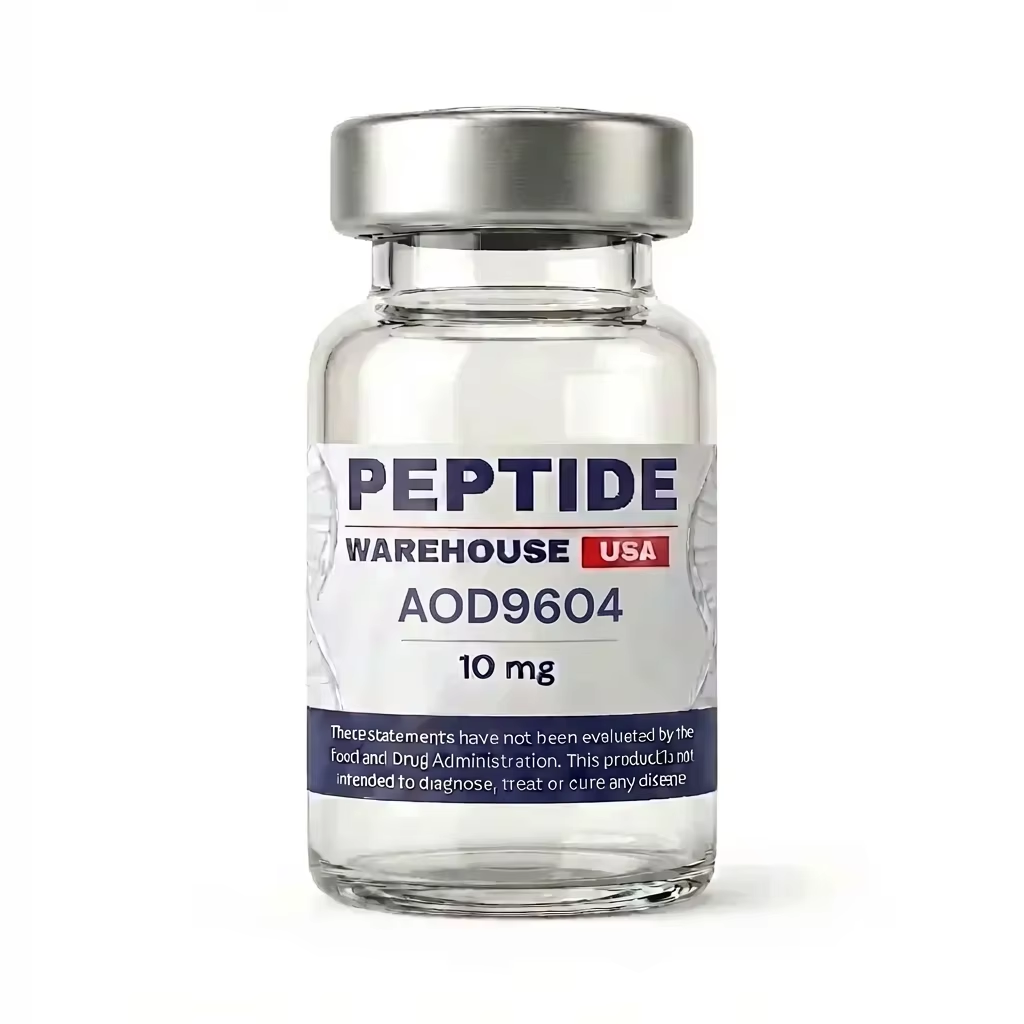
Peptide Warehouse USA is one example of a supplier that presents lot-level documentation for research-use products. The useful takeaway is not the brand name. It is the model. Buyers should look for the same recordkeeping discipline from any vendor under review.
A COA only helps if it answers the right questions.
Start with product identity. The peptide name, lot number, and test date should line up with the exact item being purchased and the exact vial received. Then confirm the analytical method is named clearly enough to understand what was measured.
After that, check whether the document is specific or generic:
| COA element | What to verify |
|---|---|
| Product identification | Name and lot match the listing and label |
| Test method | Analytical method is stated clearly |
| Result format | Purity and identity results are readable, not vague |
| Date and traceability | Document appears current and tied to a batch |
| Issuing party | Third-party lab involvement is visible where claimed |
Then review what the COA does not cover. Many certificates address identity and purity but say nothing about endotoxin burden, bioburden, fill accuracy, or storage controls. If a supplier advertises those checks, ask for the supporting records directly.
One habit prevents a lot of avoidable errors. Verify the lot number on the vial before the material enters inventory. A generic certificate attached to the wrong batch creates clean paperwork and poor traceability.
Some warning signs justify extra questions. Others justify ending the purchase.
Watch for these:
That last point gets missed often. Poor handling can damage a good batch before it reaches the bench.
If you are training a junior buyer, give them a simple rule. Approve suppliers based on records you can cross-check, not claims you can only read.
Once supplier quality is sorted, the next question is usually which compounds fit the research objective. The answer depends on the study design, the assay model, and the mechanism you're trying to explore.
Some peptide names appear often because they map to recurring areas of laboratory interest, including tissue signaling, receptor interaction, neurobiology, and peptide formulation work.
Here are several compounds researchers commonly encounter in U.S. catalogs:
These are research contexts, not medical instructions. That distinction has to stay intact from product selection through documentation and handling.
A practical way to narrow options is to start with the problem your lab is trying to solve.
If the project centers on tissue-response pathways, compounds like BPC-157, GHK-Cu, and TB-500 often enter the discussion. If the work is neurobiology-focused, Selank and Semax are more likely to fit the initial review list. If the emphasis is receptor interaction, PT-141 may be more relevant.
That selection process also depends on infrastructure. Labs doing formulation, storage, and screening work need equipment, cold storage, organized receiving, and clean handling workflows. For teams equipping drug development labs, facility setup has a direct effect on how consistently peptides are stored, logged, and moved through research operations.
A peptide catalog is not a study plan. Pick the compound after the research question is clear, not before.
When you review product pages, this is also the point where internal product documentation becomes useful. Product-specific COAs, batch records, and related technical notes often tell you more than summary marketing copy. If a supplier offers related articles or product pages for compounds such as BPC-157, GHK-Cu, TB-500, Selank, Semax, or PT-141, those can help you compare formats and documentation practices before ordering. Learn more and explore options only after the paperwork checks out.
Good sourcing work can still be undone after delivery. Peptides are sensitive materials, and once they reach the lab, the responsibility shifts from the supplier's handling system to yours.
For receptor-binding and quantitative biological studies, literature sets a minimum purity threshold of greater than 95% to avoid distorted outcomes, and standard analytical methods such as HPLC and mass spectrometry can confirm identity and purity percentage. But those tools cannot detect biological contaminants such as bacterial endotoxins, heavy metals, or microbial growth, which can corrupt data before the experiment begins, as noted in this report on peptide impurity thresholds and contamination limits.
Receiving is the first quality checkpoint after purchase. Don't just confirm that the box showed up. Inspect the condition of the shipment, the vial labels, and the supporting documents.
A clean receiving routine usually includes:
If a peptide arrives with handling instructions, follow those instructions first. Internal SOPs should reflect the supplier documentation for that specific material.
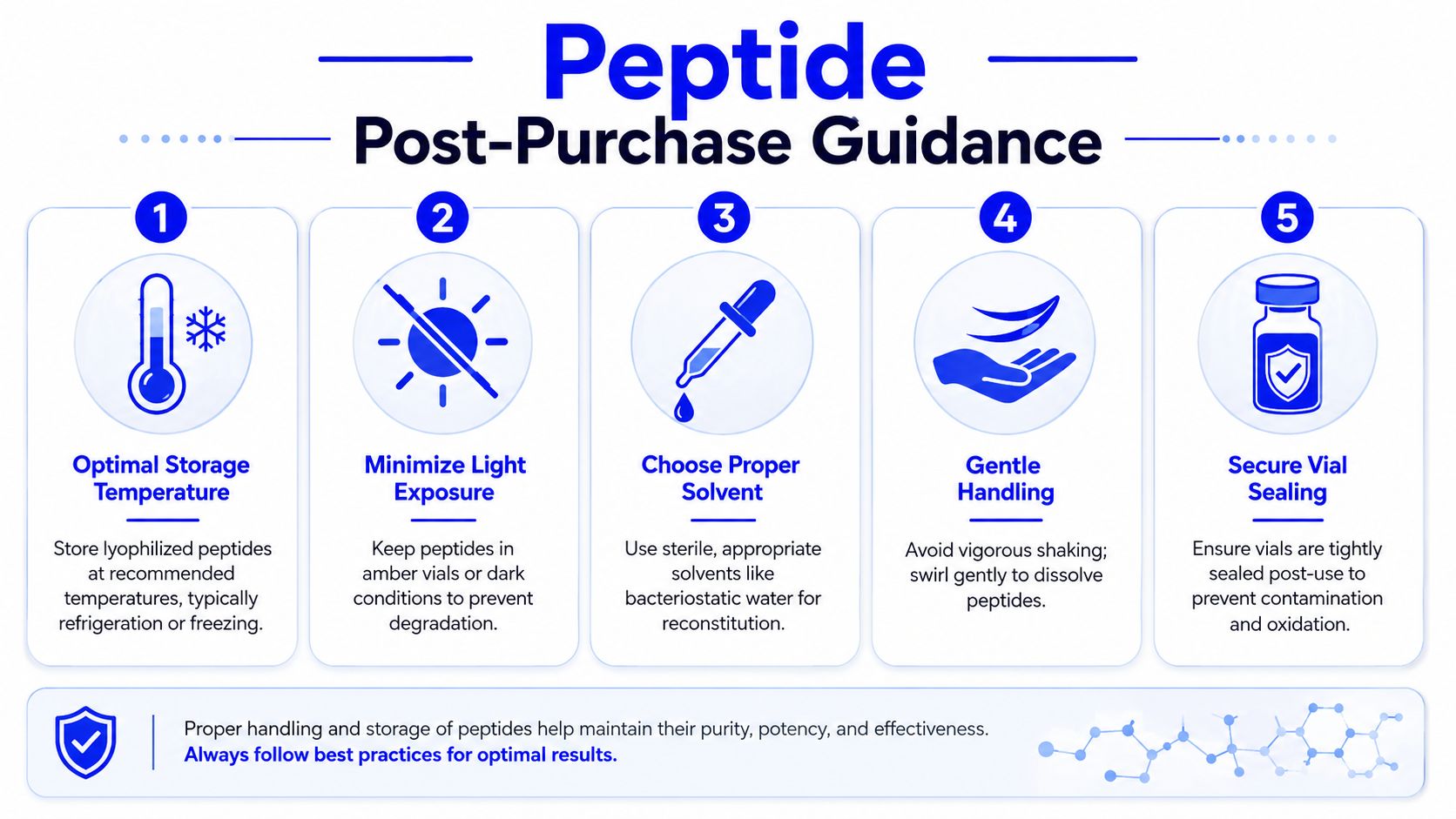
Lyophilized peptides are generally easier to store than reconstituted material, but they still need disciplined handling. Keep them in a cool, dark, stable environment appropriate for the product instructions, and avoid repeated unnecessary exposure to heat, light, and ambient moisture.
For reconstitution, work as cleanly as your lab standards require. Use an appropriate sterile solvent when your protocol calls for it, add it carefully, and dissolve with gentle swirling rather than vigorous shaking.
A practical sequence looks like this:
“Most peptide loss in the lab doesn't come from chemistry. It comes from rushed handling, weak labeling, and preventable contamination.”
If you're managing shared inventory, aliquoting can reduce repeated vial access and lower contamination risk. The less often a stock vial is opened, the easier it is to preserve consistency across runs.
The safest way to approach Research Peptides USA is to treat sourcing as part of the experiment, not a separate purchasing task. The supplier, the paperwork, the legal framing, and the handling process all affect whether the material is fit for serious laboratory use.
Three habits make the biggest difference. First, respect what “research use only” means. Second, verify every batch through COAs and supporting contamination records instead of trusting product-page language. Third, stay inside the legal line by avoiding suppliers that blur laboratory sales with human-use marketing.
That combination is what lets a lab buy with confidence. Not certainty based on branding, but confidence based on traceability, documentation, and disciplined handling.
Apply the same standard to every compound, whether you're comparing BPC-157, GHK-Cu, TB-500, Selank, Semax, or PT-141. The peptide may change. The due diligence shouldn't.
If you want a research-focused source that aligns with that documentation-first approach, explore Peptide Warehouse USA to review its catalog of USA-made research peptides and supporting batch records. Learn more, compare options, and use the same verification standard outlined above before placing your next order.